Colton rolled out of bed in the dark. Despite the trazadone and weed, he hadn’t slept well. His mind was stuck, replaying the three things hanging heavy over him—his daughter Gina’s pill problem and the money he shelled out to keep her out of jail, whether his bad knee would hold up for another season of guiding deer hunters, and his need to lay up meat for winter. As soon as he came to some peace with one thing, his mind moved to the next. By the time it circled back to where it started, the peace had faded.
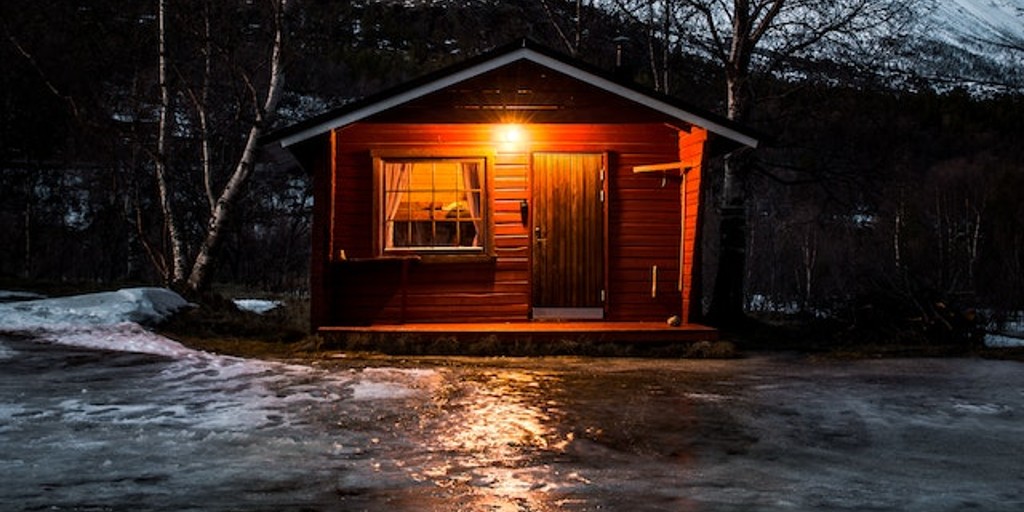
He clicked on his lantern. His knee throbbed and buckled as he stood. Coupled with the cold, Colton knew the throbbing meant snow later that day. He pulled on his Carhartt work pants and jammed his feet into his insulted Muck Boots. He pulled on a heavy flannel work shirt.
Colton stoked the dying embers in the small wood burning stove. He put a kettle of well water on the stove top for coffee, then headed outside to the little cabin porch and lit a joint. Colton thought about his daughter, Gina. He shook his head. There was no preventing this. It’s us and this goddamned place… He noticed the soft rain falling and the wind picking up.
Colton went back inside and made coffee.
##
Colton sat in the ground blind he built at the pinch point near the creek bottom and the stand of pines. He liked the smell of that blind, all the pine, and pitch, and the decay of the needles, and the creek mud. The deer will be moving early today, he thought.
Colton planned to shoot the first deer he saw. He needed meat, so he took his shotgun instead of his bow. Gun season was a still few weeks off. Technically it was poaching but winter was coming and he needed to layup at least two deer to feed everyone.
Colton sat and listened. Hunting always took him to a place of being that connected him to something bigger than himself. He heard a grunt, followed by a wheeze, and snort off in the distance—tell-tale sounds of a buck lusting for a doe in heat.
Looking through the small opening in the brush blind, Colton could just make out trees and bushes in the gray light. Slow down big fella. Don’t get here before I can see you, he thought. He placed his barrel on the little ledge he built into the viewing hole of the hide. He clicked off the safety on his Remington 870, a slug already chambered.
Just after first light, the young buck appeared like a ghost 30 yards away broadside. Shit where did you come from little fella, Colton thought. He put his iron sights just behind the little 4×4’s shoulder, took a breath, and squeezed the trigger. He heard the thwack.
He’s small but it’s a start, he thought. Colton took out his pouch of Spirit and papers and rolled a cigarette; he’d have a smoke and let the deer die in peace.
Colton found the blood tail, easily passing by the red speckles and splotches on the fallen leaves looked like blood. At the base of an ash tree just off the game trail near the creek, Colton found a pool of blood where the buck had rested. Colton scanned the ground, then spotted the dead buck in a stand of brambles 15 feet away.
Grabbing its slender rack, he pulled the deer from the brambles, thankful for his heavy Carhartt pants and coat. He took out his Buck 110 knife, the blade sharp but worn from countless deer seasons, and field dressed the buck. Colton set aside the liver and heart. He smoked a joint while he worked, then began the long hike back to his cabin, dragging his deer.
##
Colton strung the skinned deer on the hoist he rigged near the cabin. He looked at the sky; he decided to let the carcass cool overnight and butcher it the next morning. This meat won’t freeze up before midday tomorrow, he reasoned. He cleaned the heart for his supper, and put the liver in a pan to soak overnight, and went back into the cabin.
Inside, he stoked the woodstove, and warmed his coffee. He smoked another joint, then a hand rolled another Spirit cigarette. He sat at the little handmade table, and in the dim light coming through the cabin’s sole window, wrote his daughter Gina a letter. It was short:
Dear Gina Marie–
You got a chance now. Don’t throw away the gift of rehab from that judge. She coulda give you jail. Most would. Don’t break your momma’s heart like your sister done. Think of Rhett and the lil one comin. Get clean girl.
Love- Paps
Tomorrow he’d take his ex-wife Tracy fresh deer meat, visit with his grandson Rhett a bit, and mail the letter. He would spend tomorrow afternoon processing meat—butchering, grinding in fat for burger, and canning stew chunks. He liked those days. For the rest of the day, he would rest his knee and enjoy the quite of an early winter day. He lit another joint and looked out the window. The rain and wind stopped, and the sky turned battleship gray, the lull between storms.
JD Clapp is based in San Diego, CA. His work has appeared or is forthcoming in Wrong Turn Literary, Café Lit, The Milk House, Fleas on the Dog, The Whisky Blot, among several others. His story, One Last Drop, was a finalist in the 2023 Hemingway Shorts Literary Journal, Short Story Competition.
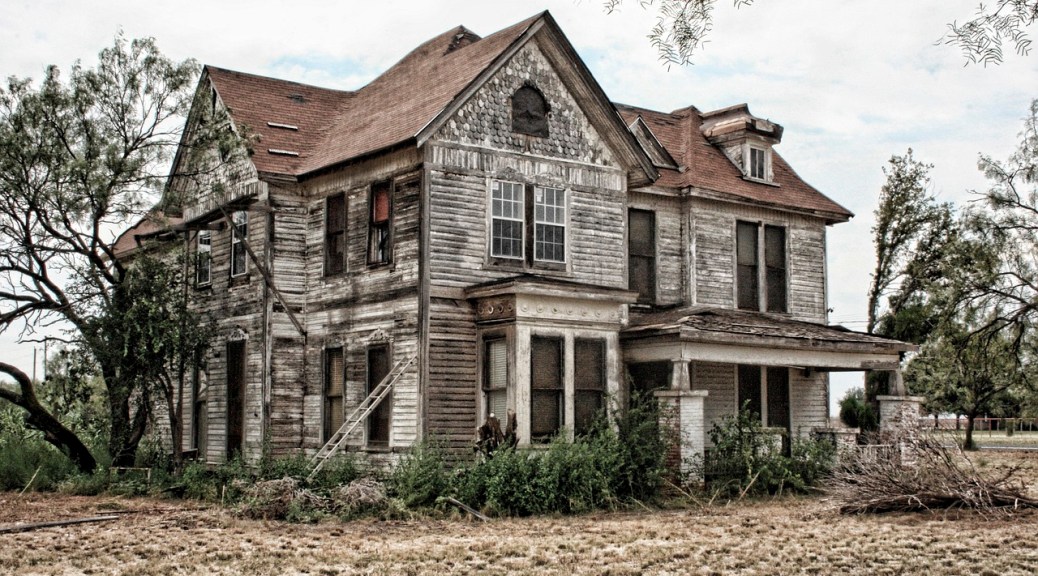
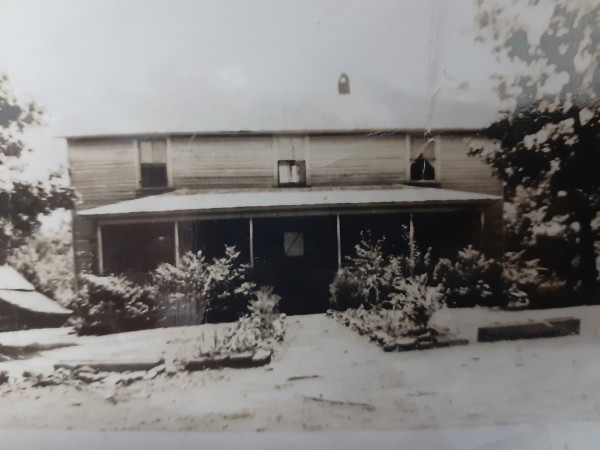
The porch sagged under the damp weight of rotting board-lumber and planks. Many times, Ruth had seen sweating, virile men insert fresh timbers, some still secreting sticky sap, to lift and support sagging porches. Sagging porches were a common feature among the rural cottages and shacks that still stood in her memories. This porch, the very porch of her fondest recollections, was presently far too putrefied for support by even the freshest of sticky timbers and the most virile of sweating men. The remnant proud paint and poor whitewash could cling only to the very edges of the decaying siding and soffit. Ruth surveyed the disintegrating structure from the tangled brier thicket that had once been the front yard, the bright flowers her mother had planted now throttled by hardier and more dangerous vegetation.
Ruth feared that her modest weight might represent the proverbial straw that fell the entire structure, and yet she decided that summoned souvenirs of childhood might justify the risk. She proceeded with an abundant caution.
The floor creaked, and perhaps even swayed, but didn’t collapse. The front door, though moisture swollen and stiff, opened with a strong shoulder shove. Ruth had always been a woman of strong shoulders. The opening door stirred thick dust that then floated in the rays that bore through the cracked and dirty windows of the front room. Though the scent and sights of decay and corruption were omnipresent, the home appeared much as it did when she had found her mother those three decades ago lying on her bed, cold and stiff, her hands folded across her chest as if preparing for an inevitable and endless slumber.
Ruth recalled the sadness of that morning and how the solemn men had wrapped her mother in a white sheet and slid her into the back of the long cream-colored hearse. She recalled how she had lingered for an hour or more among her mother’s pink and blue hydrangeas and wept. She recalled how she had driven by the homeplace many times and contemplated selling it or even burning to the ground. She finally decided that the lodging should pass into oblivion at its own pace, much as she had decided for herself, as if she and the structure shared a common senescence.
Ruth examined each room, its contents, and evocations. Finally, she came to her mother’s bedroom. She approached the large travel trunk that rested at the foot of the black iron bed frame. As a girl, Ruth had fancied that the trunk cloistered priceless treasures. A brass key still protruded from the lock and Ruth had but little trouble turning the key and opening the lid. Inside, she found neatly folded fine linens and bedcovers. At the bottom of the chest, as if purposely hidden, she discovered a most beautiful and colorful patchwork quilt with perfectly hand-sewn geometric figures forming perfectly aligned rows and columns. Her mother, and her mother before her, had faced, bated, and backed many quilts. Ruth kept and treasured those coverings, but she had never seen this one. It appeared new, as if it had been completed only a few weeks, or even days, before.
Ruth neatly folded and returned all of the other lines and bedding to the trunk, but kept the new quilt pulled close to her breast.
She then carefully placed the quilt on her mother’s bed, making certain that it was perfectly aligned. She stepped back to admire its craft and symmetry and decided that it was the most elegant quilt she had ever seen.
Ruth then noticed that she was unaccountably tired and that her shoulders sagged with fatigue. She decided to recline atop the quilt on her mother’s bed, and soon found herself in a state of what one could only describe as complete bliss, as if she had consumed a hypnotic potion of some sort. She lingered in this state for what must have been an hour or more before falling into a deep and absolute sleep. She began to dream of her childhood and of all the seasons and of all her revelry in all of those seasons. She saw all of these things through her very eyes, as if she were seeing them once more in actual time. Dreams and visions of her youth continued, and she could identify her lodging, its fresh white paint and level porch. She could see and touch the pink and blue petals of her mother’s flowers. She could detect the sweet scent of pound cake wafting through the open window. And finally, she could hear her mother humming soothing hymns from inside the kitchen.
Alan Caldwell has been teaching in Georgia since 1994 but only began submitting writing in May 2022. He has since been published in over two dozen journals and magazines. He is being nominated for the Pushcart this year.
“Stringing Ristras” at El Rancho de las Golondrinas, Santa Fe, Photo by Larry Lamsa. No changes have been made to this photo. This photo is under the Creative Commons Attribution 2.0 Generic license.
It was the farthest north she had ever been, but it was nowhere near as far north as Clementina wanted to go. She had learned from maps that north was up. She had learned from lying on her back looking at clouds that the sky was up. She had learned in science class that the moon was in the sky up beyond the Earth’s atmosphere. She had learned in church that heaven was up somewhere beyond the moon—even beyond the stars.
Clementina wanted to go north to heaven and see her abuela; stand beside her again at the cracked Formica-topped kitchen counter and fold their Christmas tamales tight until they had made an even hundred. She wanted to go, but not yet.
She would settle for going north to the moon, but only if her friend Francisca could go with her. Francisca was Jicarilla Apache on her mother’s side and named after Francisco Chacon,
the Apache chief who kicked blue coat ass at the Battle of Cieneguilla in 1854. Clementina thought an ass-kicker would come in handy on the moon.
Clementina had been a little bit north before to Truth or Consequences with her mother for what her mother called a “girls’ spa weekend.” They had paid to sit in a hot spring pool and drink Coca-colas, the good ones from Mexico with real cane sugar. Her mother said she could have stayed all day soaking her bones, but they only had enough money for an hour. They saved enough to have carne adovada that night at La Cocina—with red chile, of course. Carne adovada requires red.
Clementina had traveled even farther north on a school trip to Socorro to see the Very Large Array of radio telescopes that listen for messages—greetings or jokes or recipes—from aliens in the north part of the universe. She laughed to herself to think of what an alien joke would be like. Would an alien recipe look anything like her tía Julia’s recipe for posole?
But now she was way up north in Albuquerque—the big city. It was an annual trip for her father, Miguel, a big man with a small chile farm who had been growing chiles forever. The harvest had been good, but it had been hard to find pickers. Miguel had picked along side the others from dawn to past dusk while Clementina helped feed them all. Miguel shipped most of his crop to the big processors, but he always saved the best of his chiles to bring himself to Albuquerque on his old flatbed truck with the removable sides. They were perfect chiles with just the right amount of heat.
Miguel loved having Clementina with him anytime, and she had finally been free to accompany him on his delivery to the Hatch Chile pop-up store in the South Valley that had been selling Miguel’s special chiles every year for over twenty years. Tiago, the proprietor, took time off from his regular job to sell chiles when the harvest came in. The site for his pop-up was a buddy’s vacant used car dealership, and Tiago depended on Miguel’s chiles. His customers knew they were the best.
Miguel sounded the horn when they pulled into the cracked asphalt parking lot next to the small shed where Tiago had his makeshift office. A small, black dog leapt up from under an outside table and barked a greeting. Tiago came from the shed wearing a green cap that read, “Chile Heaven.” It matched the chipped sign that hung over the shed. Tiago had used the same sign since the beginning.
The men hugged and slapped backs while Clementina patted Zoro, the grinning dog. Miguel brought his friend over and introduced him to his daughter, pride puffing his chest and widening his grin. “Bienvenida, señorita,” Tiago said, bowing low. “At last, I meet the famous Clementina. I have heard about you for 20 years!” Clementina laughed, “I’m only 13.” “Yes,” Tiago said, “But your papa has been talking about you for 20 years.”
Tiago had red chile ristras hanging across the front of the shed and roasting baskets ready to fill. It was mid afternoon, and Tiago knew it was the perfect time to begin roasting the chiles. Soon the distinct aroma would fill the neighborhood, and by the time people were getting off from work, the parking lot would be crowded with patrons carrying everything from burlap sacks to washtubs to fill with the seasonal staple they craved.
Clementina and Miguel pitched in to keep the chile roasting baskets full and turning and also to help serve customers. It was a fiesta atmosphere with mariachi music blasting from Tiago’s battered CD player. The site was crazy busy for a while, but by 7:30 p.m., the roasters were quiet. Tiago pulled a chain across the entrance.
Miguel went to Blakes for cheeseburgers, and they sat in lounge chairs eating and enjoying the evening air. They would soon drive back to Hatch, and it would be late when they got in. It had been a long, full day. Clementina felt good. Her papa had wanted her company, and she knew she had been a big help to him and Tiago.
Clementina lay back in the webbed, aluminum chair and looked up at the shifting clouds. She thought about being all the way north in Albuquerque from her little home in Hatch. Clementina knew she and Francisca may not make it to the moon, but maybe, when they were older, they could go as far north as Santa Fe. They may or may not have to kick ass when they got there. Clementina knew she would not be with her abuela for a while, but she also knew her abuela would have loved to be with her there that day under the big New Mexico sky in Chile Heaven.
David Cameron catches poems and stories half-formed from an off-hand comment or a surprising twist of phrase. His career was as a Presbyterian pastor in Virginia and New Mexico, and a Meals on Wheels director in western NC where he now lives with his wife and son.
“I just feel for his folks, I do. Them good people. See them at church every Sunday. Well, at least did before it happened. Haven’t seen them since.
“But no, them just good solid townsfolk. Hope they get through this all right. Hope people don’t blame them for what David did.
“I’m sure they would have raised him right. I mean Culla, his older brother, he turned out fine. Granted, I ain’t had much to do with him now he’s moved out of town, though I ain’t never heard of anyone with an issue with him. But I guess sometimes good trees can bear bad fruit, right?
“That’s really the only way I can explain it. Now, was there anything I can get you while you in here? Tammy, my wife, she bakes the pies herself, best in the state I can tell you that much.”
Susan Knowles, former teacher at St Johns College (now retired)
“I’ve been thinking a lot about whether we should have seen it in him, about whether there was something we could have done to help him. I know not a lot of people will have any sympathy for him, but you don’t do something like that unless your seriously damaged.
“So, I suppose I’ve been trying to rack my mind to understand if that damage occurred when he was attending St Johns. If he was already on this path when he was with us, I didn’t notice, but maybe I should have. Maybe if I had noticed we could have gotten him the help he needed or done something. I don’t know. It’s hard to see a situation like this and not think someone could have intervened.
“But hard as I’ve been trying to remember, I don’t think David was too different to the other students I taught. I would have taught hundreds in my time at St Johns. Some of them you worry about. David wasn’t one of them, but he was… I don’t know.
“Maybe looking back with what I know now makes gives a sinister tone to my memories. He wasn’t a bad student, like I said, I’ve had far worse. But there were times when he seemed detached. Or maybe that’s not the right word. David was bright enough but sometimes he seemed apathetic. Not distracted, like a lot of kids are at that age, but just uncaring – not really concerned about anything academic or social, or anything really.
“Maybe that should have worried me more than it did. But he was never particularly difficult or disruptive or caused any trouble. Except, of course, for that one time with Dexter Martin.”
Walker Thomas, David’s friend
“Yeah, I never knew what Dexter did to piss David off so bad. David was always a target at school. The others knew I’d fight back, so when they said stuff about me, they did it behind my back. But with David they knew they could say and do just about anything to him and he wouldn’t retaliate. Course, they’re the same folk who are now saying David was always a bad kind. They’re full of it though, they were much worse – gave David all kind of grief.
“Dexter though, never saw him do anything towards David. He was a couple of years below us, and even though we were kind of the punching bags for a lot of the other kids, it tended to come from kids who were in our class or occasionally from the years above.
“Maybe Dexter said or did something fairly minor to David and that just happened to be the straw that broke the camel’s back. You can only keep absorbing that kind of crap for so long, sooner or later you’re going to snap. Maybe Dexter just happened to be there at the wrong time.
“I didn’t see it start, but I tell you what, it was no mean feat pulling David off Dexter. I was always a few inches taller than David, even back then, but he was surprisingly strong, at least, he was when he was angry, and when I hauled him off Dexter he was seething. It was lucky for Dexter I was there though, David seemed pretty keen on turning his face to jelly.
“He never told me what Dexter did to provoke him. I remember asking him point blank why he had been so hell bent on breaking his knuckles on Dexter’s face. He just told me to forget about it. I always wondered though if it was something to do with Maisie though. David always had a crush on her, and I think around then she and Dexter had a thing going. I remember David telling me he was planning to ask her out. I tried to talk him out of it without being as blunt as telling him she would laugh it his face then probably joke about it with all her friends. Pretty sure David never asked her, so I must’ve gotten the message across.
“We didn’t see each other much after school. I was working nights at the factory while he was working days at the abattoir, so we just kind of drifted apart a little. The odd time I did see him around town though he was still same old David. Still a friend. People might think I’m mad for saying that after all that’s happened, but screw them, they don’t know shit.”
Odette Wells, mother of Carson Wells (victim #1).
“Don’t listen to a word that Thomas boy said. He was always trouble. Once caught him slashing the tyres of a car near the corner store. Little devil didn’t even know whose car it was. That was just his idea of fun. I would have reported him to sheriff, but I didn’t out of sympathy to his mother. You know her husband died from an infection – was the result of some kind of accident he had in the factory. I didn’t want to create more trouble for her.
“That was some ten years ago now, but I sure don’t believe that Thomas boy has changed a jot, he’s just gotten bigger.
“What he said about David is a load of rubbish too. I always said he and David was trouble, didn’t I, Ron. Never liked Carson being round those boys, but in a small town like this you can’t really do much about that.
“You know, I wish David hadn’t killed himself before the police got there. Would have liked to see him cook on the electric chair. Don’t look at me like that, you heard what he did to my boy, the chair would have been the least he deserved, and you could have bet I would be there to see him fry.”
Earl Bailey, On the Road Automotive Repairs owner
“Yeah, David had been apprenticing here for a couple of months. Quick learner you know, would’ve been a solid mechanic.
“He told me he couldn’t stand the smell of the abattoir, said the stench of pig carcass lingered in his nose even after he got home. Guess after that, going home with the smell of oil in your nose ain’t too bad.
“I wasn’t sure of him when I first took him on. There was times when I would tell him something and I wasn’t really sure it was getting through to him. Had that kind of zoned out stare that some people have – usually older folk mind you. But after a couple of weeks, I realised that what I was telling him was getting through, so I started giving him a few more responsibilities, even let him lock up at the end of the day a couple of times that final week.
“What can I say? I just didn’t see it in him. Maybe I’m an old fool, but I… I don’t know. David could sometimes get peoples hackles up. He would sometimes say things that most normal folk would see but would have the good sense not to say anything about. I don’t think it was David was intentionally being impolite, but some people took it that way.
“Still, even if he was, it’s a hell of a long way to go from being impolite to skinning folk and whatever other heinous stuff he supposedly did. You know I heard he hung’em on meat hooks he stole from the abattoir. Hooked ‘em just below the collar bone and left them their hanging in that old barn whilst they was still alive.
“That’s what I heard anyway. Me, I’m not too sure of it. That just doesn’t line up with the David I knew. Given, there were folk who knew him better, but the last three months I would have seen him as much as anyone, and I’m meant to believe during that time he’s going off at the end of the day and cutting strips of skin off some poor innocent folks hangin’ in his uncle’s old barn.
“I should probably stop runnin’ my mouth before it gets me in any trouble. Wouldn’t be the first time that happened and it won’t be the last. I’m just saying, I didn’t see it in him.”
Kip Driscoll, Royal’s Service Station attendant
“I’m sorry sir, I don’t know if I got a lot to say. All I know I already told the sheriff. Helped him as much as I could, but I don’t think I that was all that much.
“Yeah, I guess I was the last one to see David alive. That’s what the sheriff said anyways. Kind of makes me feel a little uncomfortable if I’m honest with you sir.
“Can’t say I really knew him all that well, although my sister, Maisie, she was in the same class as him at school, maybe you should talk to her about him. Actually, she probably would rather you not. Forget I mentioned it.
“I could always tell when it was David drivin’ in to get some fuel though. His truck always made this coughing sound when it rumbled in. He said he was going to get Mr. Bailey to have a look at it now he was apprenticing for him. Said he reckoned it was something wrong with the exhaust. Guess he never got around to it though.
“Yeah, he came in here on Sunday. Didn’t have much to say. He almost always got some licorice with his fuel, but this time he just paid for the fuel. Paid over actually. Told me to keep the change for myself. Guess he knew what he was going to do, knew he didn’t need no money where he was going.
“The sheriff was saying that he probably used the truck to cart the victims off to the barn. They didn’t find any blood or nothin’ in the back, but they reckon he might have wrapped ‘em in a tarp and driven them off there while they were unconscious or bound. Gives me the creeps to think there could have been times when he came in and filled up here with someone lying in the back. Sheriff said I should try not to think about that, but it’s hard not to.
“One thing I have been wonderin’ is why I wasn’t one of them. The people he did all those things to, the sheriff was saying he seemed to just take people at random, that he just had passing connections to the victims and that they hadn’t actually wronged him in anyway.
“And that gets me thinking. There was nights when he came in here to fill up and it was just me manning the station. If he wanted to grab someone without being seen than I would have been the perfect target – late at night, on the edge of town, certainly wouldn’t have been any witnesses. But I guess there isn’t really anyway to know what someone who does something like that is thinking, is there?
“There isn’t really a lot more I can say though. I should probably get back to the counter sir.”
Lyall Beckett, Harris Meats Abattoir manager
“We get a lot of boys come through here. Most only last a few months, if that. This generation doesn’t really have the stomach for hard work. They think showing up is enough. They never had that work ethic knocked into them like we did.
“I didn’t have a whole heap to do with David, which probably means he was one of the better workers. Have you spoken to Earl? He could probably tell you more.
“You have? Well, I wouldn’t really have much to add.
“Only thing of note was one time we did think he was stealing from us. Yeah, we thought he had taken a bunch of the meat hooks. When I asked him about it, he looked guilty as hell. At first, he said he didn’t know anything about what happened to them. He wasn’t a good liar, but he was determined to avoid telling the truth until I let him know we’d have to fire him if he didn’t own up. That’s when he let it slip that Walker Thomas had stolen them. David didn’t want to tell me because Walker was his friend. I suggested he should find some better friends, but I don’t think he ever took my advice. “No, we never reported Walker for it. Pretty sure he just climbed in though one of the windows, it’s not exactly Fort Knox here. But I didn’t think reporting it would do much good, you know, not with Walker’s uncle being the sheriff and all.”
Klaus Nannestad is a media advisor living in Victoria, Australia. He has previously had short stories feature in Theme of Absence, Defenestration, Little Old Lady Comedy and Darkfire Magazine.
There are strange visions in the
Bible Belt, where my grandmother
Witnessed Ezekiel's Wheel flaming
Over the north pasture, while a Fiery Cross
Awakened lonely sharecroppers from
Feverish and weary dreams. The Sunday
Morning Radio Gospel Hour would always
Explain everything to me while outside the whisper
Of a breeze was the Voice of God offering soft
Assurances to the Carolina pines. Truly, they
Were needed for as a youth I, too, expected
Ferocious miracles: maybe on a foggy night in
The bottom hollow there would appear a dark
Battalion of hooded horsemen bound for angry
Glory on some apocalyptic mission, chanting
War cries while their exhausted stallions seem to
Strangle in the haze of their own bloodstained breath.
I also thought I saw their quarry in retreat, a field
Of mist-shrouded tree stumps transformed by a
Night of shadows, smoke, and moonlight into a ghostly
Army of lost souls rendered immobile by the burning
Shields of the Heavenly Hosts; yet even these portents
Will yield to their own destiny for these nights, too,
Shall have their own death rattle where heavy morning
Showers will be a thousand silver coins sealing the
Eyes of darkness, the rain sounding like a falling of
Spikes, on the tin roof of my grandmother's house,
The last rites closing the coffins of the night.
Thomas White has a triple identity: speculative fiction writer, poet, and essayist. He blends horror, noir, gothic, satire and sci-fi with philosophical and theological themes. A Belgium-based magazine, the Sci-Phi Journal, honored by the European Science Fiction Society with its Hall of Fame Award for Best SF Magazine, published one of Mr. White’s stories.
His other poems, fiction, and essays have appeared in The Chamber Magazine, as well as in online and print literary journals and magazines in Australia, the United States, Canada, and the United Kingdom. He is also a Wiley-Blackwell Journal author who has contributed essays to various nonliterary journals on topics ranging from atheism, Artificial Intelligence, the meaning of evil, Plato, The Matrix, and reality as a computer simulation. In addition, he has presented his essays to the West Chester University Poetry Conference (West Chester, Pennsylvania), as well as read his poetry on Australian radio.