flirting, flashing ivory and brown legs under skirts
for that handsome young new preacher.
Oh, his wife is so not impressed.
I hear he’s ‘blessed,’ the ladies say.
They think I don’t know
and maybe I don’t, but
You’ll hear that again some day.
And I am always watching. I even
keep one eye open when I pray.
“Bow your heads.” The preacher sways.
Silence. Calm. I listen, peek about.
Congregation is quiet, save for deaf Uncle Doc,
Still talking, didn’t hear “let us pray.”
“We have all fallen short of His Grace,
We know we’re not worthy.
Lord, please forgive us.”
I see the guilt on your face.
And I am always watching. I even
keep one eye open when I pray.
One eye open, lookie lookie!
Is that man picking his nose?
Searching for salvation while
digging for a boogie?
They whisper, they scold, they yawn,
they scratch that private place,
wishing they were someplace else
while the praying preacher drones on and on…
And I am always watching. I even
keep one eye open when I pray.
The deacon counts the green bills
— one for God, one for me!
Did that lady pull cash from her bra?
Sweaty titty money in God’s tills.
Have you strayed, had an affair?
The preacher prays for the harlots,
the drunks, the liars, thieves, cheaters.
Why does Mrs. Titsy have a look of despair?
And I am always watching. I even
keep one eye open when I pray.
Uh, oh, here it comes! Momma’s slap!
Eyes closed. End of fun.
Michael M. DeWitt Jr. is a multiple-award-winning journalist, longtime editor of the 144-year-old The Hampton County Guardian, author of four books, including Images of America – Hampton County, Wicked Hampton County and Fall of the House of Murdaugh, and host of the Wicked South Podcast. DeWitt’s work has been published in print and online around Gannett’s nationwide USA TODAY Network, and he has appeared on ABC’s 20/20, CBS’s 48 Hours, Dateline NBC, and Netflix documentaries.
As a humorist, DeWitt’s award-winning Southern humor newspaper column, “Southern Voices, Southern Stories,” was published in newspapers from Cape Cod to northern California, and he has been a regular contributor for South Carolina Wildlife magazine, Sporting Classics magazine, and its online counterpart, Sporting Classics Daily.
Please share this story to give it maximum distribution. Exposure is our authors’ only pay. You can also help our contributors gain exposure by linking to them and to RFM’s homepage.
Three hours to go.
Coming from lonely highways,
over mountain passes
through rural towns.
Relaxed drive, audiobook novel.
Dogs asleep in backseat sun.

Startled, as too soon awakened,
dust whorls through Lone Pine.
Wind shakes out dirty rugs across road,
blinds, screams, tears down Vacancy signs,
does not slow for traffic.
Peeled-off metal panels from gas station pumps
cartwheel across the parking lot
while gasoline hoses dance like cobras on asphalt.

Jacket hood pasted to my head,
I herd my dogs into car from rest stop,
pull out onto road, slowly.
I drive with hands welded to steering wheel,
chassis swings, bumps, gyrates.
Wild throws confetti of leaves, celebrates
my cautious return to concrete coliseum
to face roaring velocity in my unarmed armor of car.

I pass through Lone Pine, dodge debris,
now filled with gasoline and determination,
I head slowly toward home.
The gusts fade with the miles,
they soon halt as I drive in to Olancha.
The road is mine again.
My speed picks up, I am on my way, faster,
back in the race I always have with myself
every time I return
across 357 miles, straight yellow lines, weather,
toward home, nothing gets in my way.
Death Valley Lake
Dry.
Void of activity.
Ancient.
The ceaseless wind repeats.
W
I
D
E
Spread out like cracked china,
wrinkled linen tablecloth.
No fish today, this once inland sea.
Harsh.
Sun. Heat. Clouds.
Little rain.
Empty lifeless bottom.
Crust.
Uneven trails of salt.
The Earth's tears.
Starter Home
I knew we had to fix it, sell it,
make it disappear.
The family home in the mountains
for over sixteen years,
my ex called it the starter house,
but it never was.

Pine cabin on an acre and a half,
twelve miles from a small town,
an hour away from Bakersfield,
four seasons of seclusion .

We’d taken so many photographs
of the bobcats, deer, rainbow of birds
that adorned the view.
a home I thought I'd never leave.

I planted 35 trees,
now they’re thriving
since my now husband installed irrigation
they were dry,
as I was, in conservative horse country.

I will choose what to bring
back from the cabin.
The wildlife was always the best part,
and now I am the one who roams free.
Diane Funston has been published in journals including Lake Affect, F(r)iction, Penumbra, Still Points Quarterly, among others. She served as Poet-in-Residence for Yuba-Sutter Arts and Culture. Her chapbook, “Over the Falls” was published by Foothills Publishing. She lives in rural California with her husband and three rescue dogs.
Facebook Diane Funston Author and Artist
Instagram @Diane Funston
Please share this story to give it maximum distribution. Exposure is our authors’ only pay. You can also help our contributors gain exposure by linking to them and to RFM’s homepage.
Financial donations through either our GoFundMe or Buy Me a Coffee accounts will help expand our global reach by paying for advertising, more advanced WordPress plans, and expansion into more extensive Content Delivery Networks.
Nobody had seen him since the fall. After sheepherding, he’d come by Crooked Creek Ranch to bathe and leave his summer’s pay with my grandparents for safekeeping; had hooked up the field cultivator to spread and work the summer’s worth of chicken manure into a small alkali flat that was a thriving hay meadow in my grandfather’s mind’s eye; had been seen loafing and sipping on Picon Punch at the bar in the Basque restaurant in Mica; had stopped over at the Shooting Star Ranch to shine as a deft roper during their autumn branding and arranged to winter there in exchange for maintaining their tack and harness. As usual in the fall, he had scooped up his prospecting gear from the Dreaming Lion Ranch and headed south. That was the last anybody had seen of him.
He would usually have been back as October’s warm spell, Indian Summer, was cooling, before bitter cold and deep snow were serious risks in the mountains. Here in the valley, he would set trap lines for the winter. Maybe he had sensed bad winter coming and headed south on the eternal search for gold (or golden solitude with no responsibilities), far enough south that the Sonoran desert held him, ever promising but never delivering, all winter long. But, then, he would have drifted back to the Beckworth Meadows by April in time for lambing, spring round-ups, and deep disking the vegetable gardens. Yet he did not come. People began to wonder if the early snow had caught him and the Tormentoso winter had devoured him.
Then, a very old pickup truck rattled and clattered up to the Crooked Creek ranch house and out tumbled a disreputable looking bundle with a wild bushy beard and an unkempt mane. A pick and rucksack and a fat, 6’ square object (later revealed to be a cattail quilt) spilled out after him. He straightened up, squared his shoulders, futilely smoothed the mane, strode to the door, knocked, and then bowed respectfully to my grandmother. She stood stock still, then greeted him stirring warmth with exasperation. She jerked her head sideways. Obediently, Luke walked around the house to the patio facing east.
He set a wooden stool beside the galvanized metal washtub, then placed another nearby. He began shedding fabric, furs, feathers and cattail fuzz. Even stripped down, he still sported an unfamiliar fur. There was a terrible stink, but maybe he was used to it. He sat in sunlight, absorbed in simply being. He was the scrawniest man I had ever seen.
My grandmother came out in a canvas apron and perched on the other stool. Luke hung his head and offered her his left arm — looking close you could see that his fur was not natural, but rather involved a ruin of weirdly dark and hairy waffle-cloth long underwear. Waffle cloth is normally a light oatmeal color, with bright narrow raised edges around square hollows, the squares about half an inch on a side. But not this version.
She looked at his arm and then up into his eyes and shouted, “I’ve never seen a man go without a bath so long that his body hair’s grown through his Long Johns!” His body hair had wound its way through the waffle cloth, encasing him in an outer skin that was both him and not him.
With firm, deft, graceful movements, she began clipping the wiry hairs down close to the cloth. Remonstrating and occasionally expostulating — I could not hear the words — she eased the first two fingers of her left hand under the cuff of the sleeve, working it a little loose. She drew out a pair of nail scissors with the right hand, slid them in, and snipped. One square of the waffle cloth was detached. Relentlessly, but unhurriedly, she worked her way around that wrist. Luke regarded it with bemusement, blew softly on his newly bare wrist, and smiled.
She snipped and lifted her way around the next row of squares, then the next. Onward, she worked her way up from the wrist, first clipping the hairs on the outside and then working underneath the fabric. Having trimmed the hairs on the outside meant that on some of the squares, the hairs slid through when she lifted the cloth with the scissors. Then, with a bigger scissors, she cut off the fabric.
On the stubborn squares, she eased the nail scissors under the fabric. She snipped the hairs one by one to free the cloth.
She and Luke began to sing. In some places, the fabric disintegrated as she worked. Shadows glided from the west. Finally Luke stood, naked as a baby, the long underwear in rags about his feet, some sores and angry patches on his skin.
Cowboys who had been moving furniture during the weekly mopping of the house’s concrete floor staggered out, carrying huge kettles to pour into the washtub. My grandmother returned to the house. Luke folded his skinny frame into the tub and sat there for half an hour. Then he grasped the scrub brush, worked up a good foam on the soap, and scrubbed — wherever the skin was whole — from the crown of his head to the soles of his feet. Then a dip to rinse. My grandmother returned, donned rubber gloves, dipped a washcloth in a bucket of clean water and carefully cleaned injuries and sores. After he toweled himself off, she set to work with the medicines. As the day waned, he was decorated, almost tattooed, with purple gentian violet and vermilion mercurochrome on his sores and injuries, a wild and savage look, but recognizably human.
“Thank you Ma’am, Bless you for your kindness. Never again, Ma’am,” he promised. “Welcome back,” she said. “You’re a sight for sore eyes, even if not a pretty one.” They laughed.
Please share this story to give it maximum distribution. Exposure is our authors’ only pay. You can also help our contributors gain exposure by linking to them and to RFM’s homepage.
Financial donations through either our GoFundMe or Buy Me a Coffee accounts will help expand our global reach by paying for advertising, more advanced WordPress plans, and expansion into more extensive Content Delivery Networks.
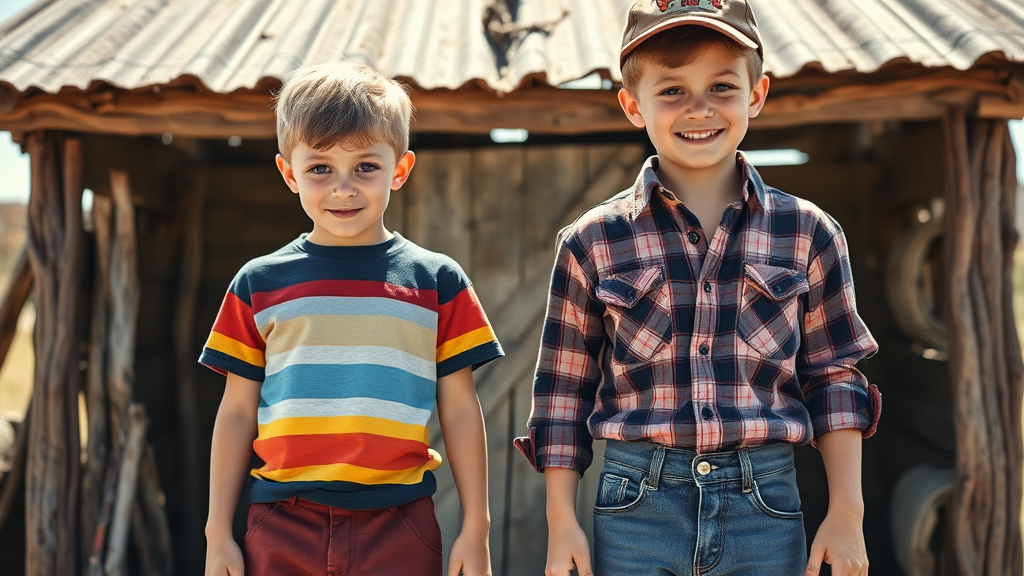
There is a Polaroid of my cousin Nathan and me standing in front of the coal shed. The coal shed is bare plank wood with a corrugated tin roof. Written on the back of the picture in blue ink is Philip and Nathan, 1972. I was 6, Nathan was 12. I’m wearing a four-color horizontally striped t-shirt and maroon pants; he’s wearing a plaid button-up collared shirt, denim bell bottoms and a Mid South Mack cap—the bulldog logo still discernible in the center of the crown. Our arms dangle at our sides after my mother, who took the photo, told us to uncross our arms. Both of us are squinting in the sun, making our smiles look forced. The photo is very faded after fifty years. I only know that my pants are maroon, not the pinkish color in the photo, because they were my favorite pants.
Nathan came to live with my family before I was born. His mother was unable to care for him because she was sick, but we were never told what her illness was. It’s not unusual to see extended families in Eastern Kentucky—cousins, aunts, uncles, grandparents all living under the same roof—but when Nathan’s mother recovered Nathan had already been with us for so long he stayed with us after she moved to Chattanooga, Tennessee. When I was brought home after being born at the Pineville Community Hospital, Nathan kicked a hole in the living room wall and ran to his bedroom.
Nathan spent his allowance money on wrestling magazines and cut out the pictures of his favorite wrestlers to pin up on the bedroom wall. He had an autographed picture of his most favorite wrestler, Ric Flair, that he often stared at in bed before going to sleep. He told me many times I was never to touch it. When I was three, I was moved out of my parents’ bedroom and into Nathan’s. “I’m your big brother,” he told me. “I was sent here to take care of you.” He would tell me stories as we lay there in the dark; stories about monsters in the woods behind our house, stories about man-eating fish in the river that could jump out of the water and get you, venomous snakes hiding in the weeds. Those stories made me afraid, but they didn’t make me afraid of him. Until he told me the story that did make me afraid of him.
When Nathan was six years old he killed our grandmother. “One night I just did it.”
“Why?” I asked.
“I don’t remember,” he said. “I think I was really mad about something. Don’t tell anyone.”
“I won’t.”
“You better not.”
“I said I won’t.”
* * *
I never met my grandmother, I knew her only from the old black and white portrait in an oval frame that hung on the wall in the living room along with portraits of other family members. Her portrait, like many of them, looked like those old west photos of women with pulled-back hair and masculine facial features. The day after Nathan told me he killed our grandmother, I walked over to the Highway 119 General Store where my mother worked as a cashier and stocker. “What happened to mammaw?” I asked.
She put the last bottle of Nehi in the cooler and slid the glass lid shut. As she stacked the plastic bottle crates she said, “Philip, God called her home when it was time. She’s in heaven with Jesus now. It’s best forgotten. I don’t want you to talk about it no more.” She went to the front of the store to ring up the purchase of someone with a Moon Pie and an RC Cola. She came back to take the bottle crates to the rear of the store for the delivery driver to pick up the next day.
“I just want to know what happened,” I said, more quietly than the first time.
“It’s something that shouldn’t be thought about. Run along back home and play. I have to work now.”
* * *
For my eighth birthday I got a Rubik’s Cube and the next day I found it under my bed with five of the colored stickers peeled off. That Christmas I got a Shazam action figure and a few days later it was in pieces after the rubber bands inside had broken. When my bicycle seat had been slashed I showed it to my mother. “Think of all the poor children in the world who don’t even have a bicycle at all,” she said.
Nathan was quick to anger and I did my best not to provoke him. Whenever I did he would punch my shoulders or pinch my ears. My parents trusted Nathan enough to leave me in his care, even letting him take me fishing to the river a half mile from our home. If I caught the first fish I risked another one of his lashings, so I learned how to secretly remove the bait from my hook before my first cast. His anger never lasted very long, within a day or two he would go back to telling me stories and reassuring me that I really was his little brother and he was there to take care of me. “You know you don’t deserve it,” he said. “but I’ll still take care of you.”
When Nathan was fourteen his face broke out in huge red boils and white pustules. He would spend evenings after supper in front of the bathroom mirror popping them, leaving pus splatter on the glass. The white cream that a doctor had prescribed for him wasn’t working and it frustrated him. One Saturday afternoon after watching a TV science fiction show where one of the characters was a swordsman, he began leaping about and parrying with a leatherman’s awl that he had taken from my father’s steam trunk and yelling, “Look! I’m Lieutenant Sulu! Prepare to swordfight!” He was jabbing the thing close enough to frighten me, but he kept telling me he was just playing and wouldn’t hurt me. Then he jabbed the thing right through my left cheek.
I howled for hours as my mom tried to stop the bleeding both inside and out. The next day as she was driving me to the Daniel Boone Clinic I told her Nathan had done it on purpose, that he was mad because his face had broken out and he wanted to mess up my face, too. “No, he didn’t sweetheart, it was an accident. You have to play careful.”
Nights in our bedroom he would repeatedly apologize and ask to look at the stitch in my cheek. He would lift the gauze and pick at it with his fingernail even as I was telling him it hurt. It was a month before it healed enough for the doctor to remove the stitch. The scar was a pink elliptical.
* * *
My father was asked to pull the float for the 119 General Store in the upcoming Mountain Laurel Festival parade. Every year Mr. Ingalls, the owner of the store, pulled the float but he had passed away a few months ago and his widow asked if my father would like to do it. My father broke the news to us as we sat at the supper table. He told me I could ride on the Massey Ferguson tractor with him in the parade like he sometimes let me do as he plowed our field. However, the day before the parade my father told me he was going to let Nathan ride with him instead of me.
“But why? You said I could ride with you.”
“You can ride next year. Nathan’s going to be 17 next year, so let’s let him ride this year.”
My mother, sitting next to my father, rose from the sofa and went to the refrigerator for a bottle of Coke to mollify me. I had been telling everybody at school I was going to be in the parade. I refused to accept the pop. Nathan, seated in the wicker chair next to the coal stove, smirked and shrugged his shoulders at me.
The volcano of my rage erupted. “He’s a murderer!” I screamed, pointing at Nathan. “He killed mammaw! He told me all about it!”
Nobody said anything, nobody’s expressions changed. My mother returned the bottle of Coke to the refrigerator.
* * *
Things happened pretty fast after that. My mother packed an old Amelia Earhart suitcase with my things and I was sent to Aunt Dorothy’s to live. Aunt Dorothy was 65, widowed, and addicted to cooking sherry. “It won’t be long,” my mother said as we walked over. Aunt Dorothy’s home was just fifty yards away across a creek and up a small hill. “Nathan’s had a hard life, Philip. I hope you understand.” No, I did not understand. I was her son and she was abandoning me. And to Aunt Dorothy of all people! Her home was a moldy shack and she hadn’t bathed or changed her clothes in nobody knows how long. She looked like a bowling ball with stick figure arms and legs.
My father had telephoned ahead, and as soon as my mother and I went in I was sent to the kitchen where a bag of Fritos and a bottle of Sprite awaited me on the round wooden table. They whispered in the front room for about five minutes or so and then came back to the kitchen. “It’ll be just for a little while,” my mother said, patting my wrist. “I’ll come by tomorrow morning to get you to go watch the parade.” I told her I didn’t want to go. “All right then.” She patted my wrist again and then walked back home.
I spent almost that entire summer at Aunt Dorothy’s. Sunday nights we had supper at my mother’s, and while Nathan and I both participated in the conversations, we never spoke to each other.
On the last Saturday night of August, Aunt Dorothy and I were watching Love Boat and Fantasy Island like we always did. She was reclining on the sagging sofa holding a plastic tumbler of sherry on her belly. “You and Nate will be friends again, Phil,” she said after a sip. “You’re like a little brother to him.”
“No we won’t,” I said without taking my eyes off the television. “And we aren’t brothers.”
“Of course you are. He loves you and you love him.”
I couldn’t take it anymore. “He killed mammaw! He’s the murderer and I’m the one that gets kicked out!”
She sat up on the sofa and set her tumbler on the cluttered coffee table after another sip. “Lord amercy, where do you young’uns come up with this nonsense,” she whispered, jiggling a cigarette out of its pack. “First of all Phil, you ain’t kicked out. We go over there once a week, sometimes more.” She paused to exhale and rub her weary eyes. “This was all so long ago. Nathan was only five or six years old at the time. Pappaw was drunker’n hell like he always was. Mammaw’d had enough and told him to get his drunk ass out of the house. He took the poker from the fireplace and commenced to beating the tar out of her. She was on the floor unconscious with blood coming out of her ears, nose, and mouth before he finally stopped. Pappaw knelt on the floor crying for her to wake up, wailing to high heaven that he was sorry and that he loved her. It wasn’t til Herschel came home that they was found. The whole kitchen floor was covered in mammaw’s blood. Nathan was hid behind the ice box, he saw the whole thing. Mammaw died the next day in the hospital.”
* * *
The weekend before the new school year started, Nathan moved to Chattanooga to be with his mother. I moved back home and had the bedroom all to myself. I wiped the booger smears off the wall next to Nathan’s former bed with a paper towel and Formula 409. Our family grew over the space that Nathan had left almost like he had never been there.
Almost five years to the day after Nathan left us, we attended his wedding in Chattanooga. During the long drive down, I wondered if he’d forgotten me, but upon our arrival I received the heartiest greeting of all when he stuck out his hand saying, “Phildo! How the hell are you little brother? Long time no see.” We stayed overnight at Nathan’s mother’s house, which he and his bride also lived in. My mother kept Nathan’s wedding portrait on her nightstand until the day she died. It scarcely resembled a wedding portrait, Nathan in a cheap Botany 500 suit, his bride Angelina in a Kmart casual skirt suit. Nathan is smiling with his lips closed, Angelina isn’t smiling at all and no matter how long I look at it I can not make out the expression on her face.
When I cleaned out my mother’s home in 1999 after she died, I found all of Nathan’s cut outs of pro wrestlers, including the autographed one of Ric Flair. I telephoned Nathan in Chattanooga to see if he’d like me to send it to him.
“I never had an autographed picture of Ric Flair,” he said.
“Sure you did. You always used to tell me not to touch it.” He insisted he’d never had an autographed picture of any pro wrestler and launched into a story about catching a 30 pound channel catfish in the Tennessee river over the summer. One fish tale led to another and as he talked, I listened for any evidence of what he’d seen as a child, listened for any trauma that might still be living within him. After his final fish tale I asked again if he wanted me to mail him the picture.
“Naw. Just do whatever you want with it.”
I fingered the small pit on my left cheek as we said our goodbyes and hung up.
Hugh Blanton’s latest book is Kentucky Outlaw. He can be reached on X @HughBlanton5.
Please share this story to give it maximum distribution. Exposure is our authors’ only pay. You can also help our contributors gain exposure by back linking to them and to RFM’s homepage.
Little Jesalee finally shucked her first shell. For months, the preteen was only allowed to shovel empty oysters, crunching loud into the pail. The broken bits smelling like hot streets she'd left in Baltimore across the bays before coming to Bivalve, NJ.
Her family shack was some way in the marsh; though no shore seen there, the shuckers owned the air.
The knife was heavy, but her mommy held the wood handle steady in her hand, showing just how to break it open and get the meat for frying.
Jesalee held the smooth inside, as mommy rushed back to work. Shells fell on and on and, for the girl never stopped, long after she'd left.
Matthew Sorrento is editor of Retreats from Oblivion: The Journal of and Film International Online. His poetry has appeared in The Five-Two and The Ekphrastic Review, and he has contributed reviews and essays to the Los Angeles Review of Books, CrimeTime, and Noir City Magazine, with introductions forStark House Press Crime Classics and booklet essays for Arrow Video. He teaches film studies at Rutgers-Camden, and his edited collection, Becoming Nosferatu: Stories Inspired by Silent German Horror (co-edited with Gary D. Rhodes), is forthcoming from BearManor Media.
Matthew says about this poem: “The poem reflects the experiences of late-19th/early-20th-century Delaware Bay oyster workers in South Jersey, many of whom came from the Chesapeake. I have provided a link about their history, in case it’s of interest. “
Please share this story to give it maximum distribution. Exposure is our authors’ only pay. You can also help our contributors gain exposure by linking to them and to RFM’s homepage.