In the realm of the Djinn, warmth emanated from apples. Apples were big fireballs that grew on smoky trees whose size, shape, or color never changed. Djinns, who looked like glowing strings, treated these apples as a display in the magnificent orchard and never ate them because fire was the stuff of life in this realm. Wild stallions ran on open russet plains, where a river of lava flowed from charred mountains and formed a valley. Djinns called it the Valley of the Red. They ensconced in this valley to soak up the fire released from the lava.
Down by the Valley of the Red, another realm existed. This was a more verdant realm, unlike the red lands of the Djinn. Djinns frequented this realm out of curiosity, to learn more about the inhabitants. Djinns had an insatiable desire to learn and absorb. While Djinns lived for thousands of years, Mortals of the other realm were transitory. Djinns speculated whether or not Mortals metamorphosed in death and became Djinn at any point in time. Conversely, were the Djinns, Mortals at any point in time? Djinns knew about mortality; they were the fine infinite fire creatures, who were deemed to be superior to any other transients. Occasionally, they also burnt out, but that was when they bathed in the Valley of the Red to get regenerated.
One fine afternoon, Djinn Aggi sat steeped in the Valley of the Red when a firefly flew in from the realm of the Mortals. It whispered news that the Flamenco cave dance would be performed in the verdant mountains of Sacramento. The dancer was a young Romani girl called Drina. Aggi knew many tales about the persecution for hundreds of years. Romani men, women, and children being slaughtered, many fled to exile themselves as they moved from one place to another without ever settling anywhere, known as the nomads.
Aggi frequented the Flamenco dance. Although the Djinn saw it all on its timeline when the persecution happened thousands of years ago, viewing it in art form, gave a new perspective; it made the history of suffering even more poignant, and sublime. He asked the firefly to make a magic potion yet again and turn it into a Romani boy. The firefly had that power, but only to transform the Djinn for twenty-four hours. After that, it would revert into a fire creature that it originally was. In these twenty-four hours, it would have a Mortal heart, a nose, eyes, and an image in a male body with a full range of Mortal emotions, however, he would still, retain some Djinn powers. The Djinn boy would be able to fly across realms. The magic enabled it to become Mortal once every month in the Djinn calendar. The Djinn was accustomed to visiting ancient places, customs, and cultures thousands of years old. It had seen and known many kings, and events; he knew the underworld.
In the realm of the Mortals, a cave was replete yet again, with Flamenco musicians and dancers. A young Romani girl, Drina was on the floor. The dance ensued as her musicians clapped, and sang. Songs rose to a crescendo. Drina looked at her audience in the dimly lit cave fire. There was one that caught her attention. He was a redhead, wrapped up in a robe. Unlike the others, his eyes were red. Drina smiled at him and he smiled back. Aggi felt a strange passion rising. This particular transformation enlightened it of Mortal passion—to feel what they feel. Why and how did love feel? That mortal could even die for love. He never felt this previously when he visited the realm of the Mortals.
Imparting a Flamenco story was crucial for Drina—one of persecution. The fiery dance rekindled an age-old, story. The spirited dancer had been longing to tell her rendition to an audience. As the dance ensued, her eyes spoke, her bosom heaved, and her footsteps tapped the cave floor in a show of a feisty desire to erase this history; all that was too painful to endure.
She danced by a slow fire inside the cave with the accompaniment of musical instruments. A fire burned within her; since the inception of this race, this ancient dance was carried out through many generations of her tribe. This evening, she decided what instruments, she wanted to dance to, tambourines, bells, or castanets. She chose them all. Her red skirt swished and swirled wildly around. With every tap, thousands of defiant embers sparked off the floor.
Hands above her head, he parted her long dance fingers and pointed them toward the cave walls, lit up with etches of slaughter, of being devoured by mythical creatures on the wasteland who were her ancestors. Romantic Ronda—the Romani dancer carried the memory of this beautiful place in her heart, bore it all, and relived the story of the beheading of the Gitanos by the Rulers of the kingdom. Her dance revealed it through the whine of her waistline art, while she suppressed a cry when she thought of men and women thrown into the deep La Yecla gorge. Until she could not dance anymore; until the all-consuming fire, consumed her. The dancer fell on the floor. In the light of the fire, before everyone, Aggi felt a pain he never felt before, her pain was his pain as he saw this dance of Romani persecution.
Drina looked at him and she transmitted love to him; his red eye was captivating. The young, spirited Aggi, made up his mind that very moment to transport them both to the realm of the White where they could woo each other. The realm of the Djinn was too hot for Drina, she would melt in seconds. The Mortal world was beset with the dangers of persecution. The only one world open for them was to travel into the realm of White where both could be safe. He felt love in his heart for this woman, he wanted to take her away. He knew what he needed to know about Mortals, which was enough for him. He came forward to make her free and happy again.
Aggi lifted her body and shifted her into a realm of White. Light as a feather, she looked down and smiled upon those, still eyeing her; she burned in the enigma of this crowning point of love for the world to note, to remember all that was too painful for her to ignore. What she endured for thousands of years; in this dreadful paradox of art, fame was earned through the sadness of the esteemed Flamenco dance.
In the realm of White, the sphere was dominated by light. Aggi had entered this realm before when the firefly performed the magic on the Djinn land. He had traveled through a portal that had opened before his eyes. In this domain of the lights, and breathing the same air, the Mortals floated in the ether. Aggi felt ethereal, too since, the magic could not revert him into full-fire Djinn for twenty-four hours.
When both were traveling to this realm of White, Drina fell asleep. As she woke up, she found her hand, in hand, and entwined into Aggi’s like an ivy vine. He kissed her and they made love under a profusion of white flowers, Drina saw that these flowers secreted sweet nectar, and pollen grains, Drina touched the nectar mesmerized before Aggi could stop her. She was in his lap. Aggi was cognisant of the impact of the nectar on Mortals. Mortals were allowed to breathe in the realm of the White, but only if they didn’t touch anything was the only constraint. He stood up and before anything could happen to her, Aggi attempted to take Drina out of the realm of White.
“What is this?” Drina asked.
“What is what?” Aggi answered.
“Why do I fade?” Drina asked.
“Because, you aren’t allowed to touch any flowers, or the nectar, here.”
“But I breathed the pollen. Why have you brought me here? What is this place?”
“Without pollen, Mortals couldn’t breathe here, however, the nectar has ingredients to turn a Mortal into light in twenty-four hours.”
“How do you know so much?”
“Should I have told you?”
“Tell me what?”
“That I’m a Djinn turned Mortal?”
“What?”
Drina fainted after that.
Aggi realized that only a couple of hours were left until he too turned into full Djinn and Drina faded into full light. He ran to the brink of the realm of White and flew them back into the realm of Mortals. He lay her down in a forest and her form returned. She opened her eyes and smiled at Aggi. She caressed his face and kissed his forehead and his lips.
“I can be here for another half an hour.”
“Must you return?” she asked.
“Yes, I must but I can meet you once in Djinn calendar month.”
“Take me with you, Djinn Aggi, I do not wish to be without you.”
“I don’t know how.”
“Find a place where I shall not melt. You shall not be fire. We can be one entity.”
Aggi thought fast before his time ran out. His Mortal facade was coming off, the heat was rising from his body and was visible. Clouds gathered. The sky cracked up and the firefly came down towards them. It could have a solution, another magic potion to turn them both into one entity. And for eternity?
The firefly found them and flew around them. Drina and Aggi continued to look for a solution. In the realm of the Mortals, neither Aggi nor Drina knew how to live together in peace, nor communicate with her people about his magical existence. Drina had only to touch the nectar in the realm of White, not even taste it, she had begun to fade into light. Firefly whispered of a fourth realm, the realm of Time where they could both be the same entity, eternally.
Before firefly could tell them about the catch in the realm of Time, they became euphoric and, they were so engrossed in kissing each other that the catch eluded them until Aggi’s body heated up, his newfound skin pores began to emit puny balls of fire. ‘What’s this?’ Drina asked surprised. She was still in full Mortal form, but Aggi was changing and disintegrating. One whom she fell in love with, the redhead and the red-eyed boy, who brought her up into the realm of White and saved her from the sharp incisive lights cutting her up until she faded.
Beads of sweat appeared on Aggi’s body. He began to pulverize. His body was on fire and his skin was flaking off. Something to do with the transformation, Drina reasoned. What would she turn into? Where could she go? Aggi was becoming a Djinn again. The firefly turned back and forth until Aggi became full fire. But another transformation occurred. Aggi was now turning into ash. He lay before Drina in an inanimate heap of ash.
“What happened?” Drina began to cry. She didn’t care; she wanted Aggi to be Djinn again. Let him live. In the realm of Time, Aggi and Drina could be one entity but only as ash and dirt where each would absorb the other in time. That was the catch. Reverting to a Djinn, Aggi’s mortal body shed and became ash under the new magic potion for the Realm of Time.
Her thousand years of tears came undone. Tears of persecution, and love for Aggi the Djinn, flowed unhindered. She collected Aggi’s ash and placed it on her lap in the forest before the firefly. The firefly saw her pain, the depth of her love for the flame Aggi once was. The firefly cupped her tears in hollyhocks and poured it over the ash. The ash began to stir, and it started to rise like a fire twister. In the twister, Drina saw a flame, flying and breathing again. Djinn cooled down and found the strength to stand, bodily back; both breathed the same air on the realm of Mortals.
A metamorphosis had occurred here, in the realm of Mortals, a miracle allowed them to be together as they both desired. They took each other’s hand; hand in hand, Drina and Aggi walked abreast towards the edge of the realm of Mortals. Then they stopped. They stood spellbound as they watched the fretful firefly, turning into a gaseous mass, dissipating into a star.
Mehreen Ahmed is Bangladeshi-born Australian novelist. She has published ten books to date and works in Litro, BlazeVox, Chiron Review, Centaur Literature. While her novels have been acclaimed by Midwest Book Review, Drunken Druid Editor’s Choice, shorts have won contests, Pushcart, James Tait, and five botN nominations.
Please share this to give it maximum distribution.
The children met the stranger on the edge of town, at the edge of the day. The voice was a woman’s. She wore a long green dress, stained with patches of damp dirt, crisscross laced together at the front of her chest to cinch in the beige chemise below it. A full skirt, full sleeves and a dark drape over head concealed her features.
No one dressed like this anymore. But if her clothing gave the impression of a very old woman, the straightness of her posture did not.
“Come, children, come and sit beside me. I have a story to tell you.”
The children felt only curiosity. Strangers had never come here, not during their lifetime, so they had not been taught to fear them. They climbed up to where she stood, careful not to dislodge too much of the loose, dried out soil, trying to avoid the scratching scraping stones and the spiky splinters.
“Be careful not to cut your little feet. The ground was not always so withered. Once it was soft and spongy, all covered in soil, rich and dark and moist. And the birds – how can I describe their song? The wood pigeons coo, coo, the lilt of the blackbirds, the shriek of the swooping gull. Buzzards mewling over green fields and forest edges, and the swooshes and shadows of a dark wing in winter.”
The children’s eyes widened in their small faces. They had seen pictures of birds, but had not known they sang.
“This was where the Rowans were, on the threshold, keeping the boundary. At this time of year, they were at their most spectacular, crowned with great clusters of bright warm berries. Those berries fed many a desperate creature through the dark cold. We used to tie Rowan branches to our animals and hang them over our doors to protect us from bad luck, to keep the living alive and the dead at peaceful rest.”
The children looked at each other through the silty smog, trying to read their companions’ eyes. They had covered their mouths to protect their throats from burning, as they always did when they climbed a hill into the cloud. They felt their curiosity grow, but now it was streaked with something darker, something unquiet.
The bravest child, the child who would never fit in to this world, and already knew it, piped up.
“Do you know what trees looked like? I thought no one did,” they asked, cheeks hot and voice a rush with excitement. “I thought people could only guess, which is why every picture is different.”
The rasping sound was a little like laughter. Then again, these children had heard or made such little laughter in their lives, that they may have struggled to recognise it even were it not so distorted.
“Trees change, grow, cycle in and out with the seasons. Sometimes covered in bloom and blossom and sometimes bare, opening up to the sun or stripped right back against the cold. And they were all different. At the same time that Rowan was shaking out her crimson hair, Hawthorn was dancing out white flowers. Oak’s gnarled trunks were strong and solid, while willow’s soft branches gently flowed down to caress the earth.”
She had been gathering Rowan berries when they first rode in, on horses too exhausted to look anywhere but down. When the man on the chestnut mare dismounted, his horse slid forwards, first her knees, then her head, the white flash on her face slumped all the way to the ground. The man jerked the bridle, trying to get her to raise her head, the bit crashing against her teeth. Few saw it, but it was there, the moment and impulse of cruelty, right from the start.
“I’m Matthew Hopkins,” he announced, striding into the inn, though no one had yet asked. He held himself apart from the villagers, constantly shifting any time anyone stepped too close. But some did come near enough to smell the dried sweat and the damp off him. Not fresh, clean damp like a soft spring rain, but something mildewy and rotting. The kind of smell that didn’t fit with his fine clothes, or his grand talk.
The next time she saw him, they were at her namesake, not gathering berries, but plundering them.
“What are you doing, what madness is this?”
Hopkins did none of the work, but watched and controlled all of it. When he smiled, it was more chilling than when he did not.
“I am glad you are here, Rowan, on this very great day. After all, some of this victory belongs to you too. It was you who first made rowan jam.”
Sitting outside of the tale, the children stirred, but did not speak. Rowan jam? Was this woman, then, a poisoner? Would she poison them?
“If you want jam, I can give you some. If you want to learn to make it, I can teach you. But we only take what we need from the trees.”
When Hopkins laughed, he threw his head back. His neck rose from the high collar he always wore, and she had never seen a neck like it. Not so much one neck as tens of them, so many deep, thin folds stacked on top of each other. The oldest people in the village did not have necks so wrinkled, and Hopkins claimed to be a man of his thirties, dressed as such and carried himself with a young man’s swagger. The hands were always in gloves, and it was only now that he had removed one to inspect some berries before crushing them between his fingers that it was obvious, the hands were old.
“Women’s ambition is so small. We don’t need to learn. We have reinvented your methods. You’ll see, you’ll see how fast we have to run to win the race.”
“There is no race. The berries need time to stew, for the poison to leach away and the good to rise. What can heal can also harm, if you rush the craft, and destroy the balance.”
“No, no, woman, you don’t understand! Nothing is turned to gold at the speed of a snail.”
He stepped very close. Gone was the smell of the ditch and the unwashed body, but there was something else coming from him, a different kind of undefinable rot, there on his breath. There was a faint tinge of grey, like ash, to his skin, and up close, a twitch around the eye. He had his hair pulled back, as was the fashion, but tight, very tight, distorting the face from what it truly was, raising the cheekbones and narrowing the eyes.
“You’ve had such success in other villages,” she said, as he brought his hand, his unexpectedly mottled hand, close to her arm. “Why, then, do you receive no visitors? Why no letters?”
His first and second fingers thrust spitefully into her shoulder, their imprint lingering after he turned and walked away. When he threw a feast to celebrate the preparation of such an abundance of jam, and the putting of it into jars ready for the markets, she was not invited. Nor were any of the women who had seen the disastrous mishandling of the fruit, and had counselled the men to stop. For three days the town was laid low, every person who had attended the feast crippled with cramps, unable to keep even water inside their writhing bodies. It should have been their lesson. But they had become too feverish in their lust for speed, too weak in their souls to learn.
The children listened, a different thought in every young mind. They had all quietly sniggered at the statue in the town centre, and how the mayor went to admire his own likeness every single morning. But not all of their minds were ready to receive this new information, turn it over, examine it.
“Rowan is poison! We all know that. That’s why Mayor Hopkins led the purge, charging into the forest to fight the evil trees!”
“And bring the modern world to us.”
“And us to the top of the modern world.”
They learned this by rote and repeated it several times a day, starting as soon as they could talk. Rowan’s voice was weighted down by sadness, as slimy water pulls down a broken boat.
“Fight? There was no fight. Only those who can defend themselves can fight. They came at night, riled up like stampeding bulls, strange lights in their eyes, chanting strange things. They came for the Rowans first. Hopkins spoke, the others listened, repeating what he said over and over until the repetition drove all reason out. It was time for men to take control. We shouldn’t be content to live with the land as equals, because everything should belong to men. Tame it, control it, or burn it.
“Hopkins said that Rowan was dangerous, the poison tree, and that her berries were too bright, that the workers were distracted by the colour. They pulled them up, ripped the trees apart, and when they did, I felt it. I felt as though my limbs were being stretched, then ripped apart by men who would prefer to destroy me and anyone like me than accept a minor blow to their pride.
“He shouted that they had to take the willows too. That they needed space for metal, not for wood. The men slashed at her gentle limbs until there was nothing left. They would not even spare the stumps. they gouged out huge chunks of her chopped flesh, right in the very heartwood of her, and packed the wounds they created with salt, to burn the last of her away, from the inside. Can you imagine the pain?”
She was talking about non-human things as if they were alive. Was she crazy? Some people went crazy, just like some people went careless. The people who left and never came back, the people bad things happened to in the factories.
“We saw the regret on the men’s faces, when the dawn drove their madness away. We saw the shame. But it was too late. Without our guardian forest, the change came quickly.”
“The first Bleak Winter,” one of the children whispered.
“The days got darker, the air colder. There was a new ferocity to the storms, and strange beasts came down from where part of the forest used to be. Beasts with eyes like we had never seen, which would snatch people away, or kill and savage us for sport, before racing away and disappearing back over the hill.”
“The wolves of winter!” one child cried, and the rest shivered. They all knew about the wolves of winter. Their parents had dug their houses underground, to hide from them. They knew the names of the relatives they had never met, because the Wolves of Winter had snatched them.
“But the worst came from inside. Cattle and children alike took to the ground, exhausted. I had no jam to revive them, or even any willow to help with the pain, so the disease took root as it never had before. Instead of filling back with life, tired and aching limbs filled up with black poison blood, which rotted the legs away even while the heart still beat. Villagers walked the streets with mouths turned to sponge, putrid blood and splintered teeth dropping like hailstones onto the paths. Bodies bruised at the slightest touch. Nothing lived long after the loss of the teeth. And nothing grew here, ever again.”
“It was because of the witch! We all know that!”
The child with the laziest mind started the chant, and the others joined in.
“What can heal can also harm…and those that cure can kill.”
“That’s why they hang witches.”
“None of you have seen a hanging. Not even you.”
The face in shadow fixed the face of one of the boys, like a pin fixes a butterfly to a board. “She was so lonely. She would have liked to have seen you. One last time.”
“They…they wouldn’t let me…”
The others fidgeted. They had been told not to talk about that, not to even think about her.
“When they hang a human, it takes a very long time. The rope is thick and rough. It burns and scrapes and scratches the skin and it chokes so slowly. The body dangles and swings like a broken branch in the wind. The eyes pop the face swells the limbs jerk and twitch and sometimes even break themselves they jerk with such force! Everything comes out of the body, from the way it is flooded with fear and from the way it gives up. Piece by piece by piece they squeeze the life out of it and there is nothing gentle, nothing quick, nothing about it that is not completely barbaric. Wolves and snakes and bears and all the predators of deep dark that you have been thought to fear would not do it to their own kind, would not do it to any other creature. The blood and vomit comes from the mouth the eyes pop out the skirts are soaked there is nothing about the body nothing at all that is not completely ruined, mutilated, and bodies that were once in their own way perfect and touched with love are brought down, dishonoured like this. You must never, ever let them do it again. You must never do it.”
The whole time she had been telling the story, she was wrapped in her cloak, like a shroud. As she spoke her last, she moved, and the children screamed, because where they expected a hand there was only a shape, that was the ghost of how a hand should be shaped. It was neither fair nor dark, like any of theirs, but in between, a sickly grey, something dry and shrivelled and the skin, was it even skin? Something leathery pulled back and twisted over something more than bone, but not much more than bone.
“I am going to the place you have called home. But your home should be your roots, and that place is as uprooted as its trees.”
She tossed her hood back and the head, my god, the head! The hair was still there, straggled and tanned an unnatural colour by the peat which still clung in lumps to what had been the face, was still under the nails, long and curved as though they had never stopped growing even as the rest of it rotted and curdled. There were no eyes left, but they knew, she could see.
“Your parents and grandparents have burned this path to their own front door. What will happen tonight, children, however it may scar you, it is only justice. It was their cruelty which turned my heart black. And, with rowan gone, the dead can come back.”
Naomi Elster’s writing has been published and performed almost 30 times, including in Imprint, Crannóg, and Meniscus, and at the Smock Alley Theatre. She has campaigned for reproductive justice and pay equality. She has a PhD in cancer and leads the research department of a medical charity. Originally from Laois, in the Irish midlands, she now lives in London.
Please share this to give it maximum distribution.
Rural Fiction Magazine would like to publish more writers from around the world, regardless of your country of origin.
RFM is seeking short stories, poems, reviews and press releases, on rural fiction books that reflect the beauty, tranquility, joys, anguish, sorrows, humor, tragedy, comedy, and drama of rural life. RFM believes that all stories are about people and that genre is secondary. Therefore, RFM is open to almost all genres such as mainstream, literary, romance, horror, western, mystery, thriller, historical, realist, coming of age (Bildungsroman for those who speak German), science fiction, magical realism, dystopian, etc, so long as they are connected to rural life and culture anywhere in the world.
Your work must be in English. It can a translation from your native language, but it must be in English, which is spoken around the globe and gives the work and author substantial worldwide exposure.
For more information on what RFM is accepting and on the submissions guidelines, please go to our submissions page.
Please note that there is no pay for this other than a publication credit and exposure to the American and English markets. However, all rights remain with the author.
Currently, RFM is publishing material within a few weeks of acceptance, though this may vary depending on the number of submissions.
Please share this announcement to give it maximum exposure.
True!—nervous—very, very dreadfully nervous I had been and am; but why will you say that I am mad? The disease had sharpened my senses—not destroyed—not dulled them. Above all was the sense of hearing acute. I heard all things in the heaven and in the earth. I heard many things in hell. How, then, am I mad? Hearken! and observe how healthily—how calmly I can tell you the whole story.
It is impossible to say how first the idea entered my brain; but once conceived, it haunted me day and night. Object there was none. Passion there was none. I loved the old man. He had never wronged me. He had never given me insult. For his gold I had no desire. I think it was his eye! yes, it was this! He had the eye of a vulture—a pale blue eye, with a film over it. Whenever it fell upon me, my blood ran cold; and so by degrees—very gradually—I made up my mind to take the life of the old man, and thus rid myself of the eye forever.
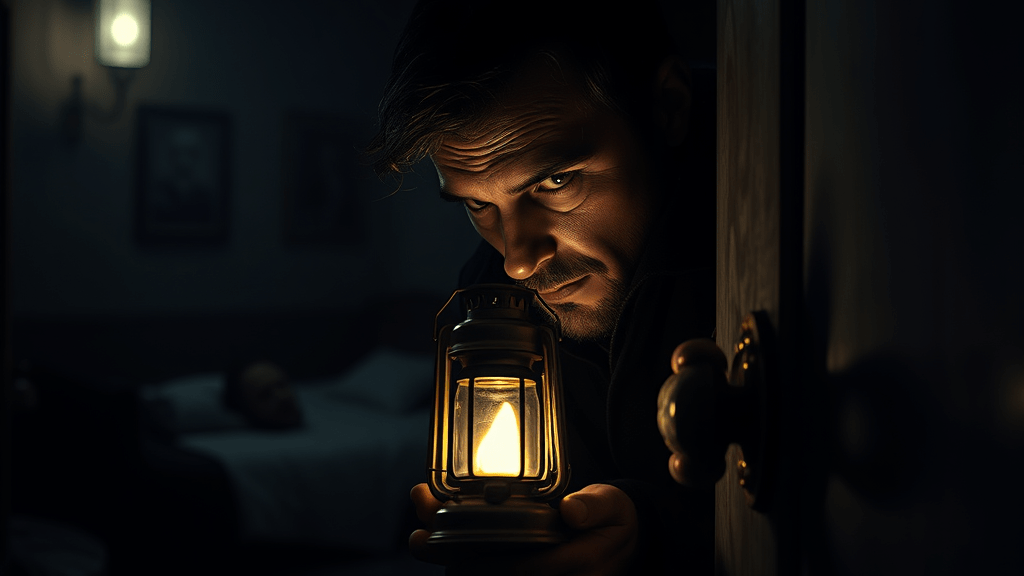
Now this is the point. You fancy me mad. Madmen know nothing. But you should have seen me. You should have seen how wisely I proceeded—with what caution—with what foresight—with what dissimulation I went to work! I was never kinder to the old man than during the whole week before I killed him. And every night, about midnight, I turned the latch of his door and opened it—oh, so gently! And then, when I had made an opening sufficient for my head, I put in a dark lantern, all closed, closed, that no light shone out, and then I thrust in my head. Oh, you would have laughed to see how cunningly I thrust it in! I moved it slowly—very, very slowly, so that I might not disturb the old man’s sleep. It took me an hour to place my whole head within the opening so far that I could see him as he lay upon his bed. Ha!—would a madman have been so wise as this? And then, when my head was well in the room, I undid the lantern cautiously—oh, so cautiously—cautiously (for the hinges creaked)—I undid it just so much that a single thin ray fell upon the vulture eye. And this I did for seven long nights—every night just at midnight—but I found the eye always closed; and so it was impossible to do the work; for it was not the old man who vexed me, but his Evil Eye. And every morning, when the day broke, I went boldly into the chamber, and spoke courageously to him, calling him by name in a hearty tone, and inquiring how he has passed the night. So you see he would have been a very profound old man, indeed, to suspect that every night, just at twelve, I looked in upon him while he slept.
Upon the eighth night I was more than usually cautious in opening the door. A watch’s minute hand moves more quickly than did mine. Never before that night had I felt the extent of my own powers—of my sagacity. I could scarcely contain my feelings of triumph. To think that there I was, opening the door, little by little, and he not even to dream of my secret deeds or thoughts. I fairly chuckled at the idea; and perhaps he heard me; for he moved on the bed suddenly, as if startled. Now you may think that I drew back—but no. His room was as black as pitch with the thick darkness, (for the shutters were close fastened, through fear of robbers,) and so I knew that he could not see the opening of the door, and I kept pushing it on steadily, steadily.
I had my head in, and was about to open the lantern, when my thumb slipped upon the tin fastening, and the old man sprang up in bed, crying out—“Who’s there?”
I kept quite still and said nothing. For a whole hour I did not move a muscle, and in the meantime I did not hear him lie down. He was still sitting up in the bed listening;—just as I have done, night after night, hearkening to the death watches in the wall.
Presently I heard a slight groan, and I knew it was the groan of mortal terror. It was not a groan of pain or of grief—oh, no!—it was the low stifled sound that arises from the bottom of the soul when overcharged with awe. I knew the sound well. Many a night, just at midnight, when all the world slept, it has welled up from my own bosom, deepening, with its dreadful echo, the terrors that distracted me. I say I knew it well. I knew what the old man felt, and pitied him, although I chuckled at heart. I knew that he had been lying awake ever since the first slight noise, when he had turned in the bed. His fears had been ever since growing upon him. He had been trying to fancy them causeless, but could not. He had been saying to himself—“It is nothing but the wind in the chimney—it is only a mouse crossing the floor,” or “It is merely a cricket which has made a single chirp.” Yes, he had been trying to comfort himself with these suppositions: but he had found all in vain. All in vain; because Death, in approaching him had stalked with his black shadow before him, and enveloped the victim. And it was the mournful influence of the unperceived shadow that caused him to feel—although he neither saw nor heard—to feel the presence of my head within the room.
When I had waited a long time, very patiently, without hearing him lie down, I resolved to open a little—a very, very little crevice in the lantern. So I opened it—you cannot imagine how stealthily, stealthily—until, at length a simple dim ray, like the thread of the spider, shot from out the crevice and fell full upon the vulture eye.
It was open—wide, wide open—and I grew furious as I gazed upon it. I saw it with perfect distinctness—all a dull blue, with a hideous veil over it that chilled the very marrow in my bones; but I could see nothing else of the old man’s face or person: for I had directed the ray as if by instinct, precisely upon the damned spot.
And have I not told you that what you mistake for madness is but over-acuteness of the sense?—now, I say, there came to my ears a low, dull, quick sound, such as a watch makes when enveloped in cotton. I knew that sound well, too. It was the beating of the old man’s heart. It increased my fury, as the beating of a drum stimulates the soldier into courage.
But even yet I refrained and kept still. I scarcely breathed. I held the lantern motionless. I tried how steadily I could maintain the ray upon the eye. Meantime the hellish tattoo of the heart increased. It grew quicker and quicker, and louder and louder every instant. The old man’s terror must have been extreme! It grew louder, I say, louder every moment!—do you mark me well? I have told you that I am nervous: so I am. And now at the dead hour of the night, amid the dreadful silence of that old house, so strange a noise as this excited me to uncontrollable terror. Yet, for some minutes longer I refrained and stood still. But the beating grew louder, louder! I thought the heart must burst. And now a new anxiety seized me—the sound would be heard by a neighbour! The old man’s hour had come! With a loud yell, I threw open the lantern and leaped into the room. He shrieked once—once only. In an instant I dragged him to the floor, and pulled the heavy bed over him. I then smiled gaily, to find the deed so far done. But, for many minutes, the heart beat on with a muffled sound. This, however, did not vex me; it would not be heard through the wall. At length it ceased. The old man was dead. I removed the bed and examined the corpse. Yes, he was stone, stone dead. I placed my hand upon the heart and held it there many minutes. There was no pulsation. He was stone dead. His eye would trouble me no more.
If still you think me mad, you will think so no longer when I describe the wise precautions I took for the concealment of the body. The night waned, and I worked hastily, but in silence. First of all I dismembered the corpse. I cut off the head and the arms and the legs.
I then took up three planks from the flooring of the chamber, and deposited all between the scantlings. I then replaced the boards so cleverly, so cunningly, that no human eye—not even his—could have detected any thing wrong. There was nothing to wash out—no stain of any kind—no blood-spot whatever. I had been too wary for that. A tub had caught all—ha! ha!
When I had made an end of these labors, it was four o’clock—still dark as midnight. As the bell sounded the hour, there came a knocking at the street door. I went down to open it with a light heart,—for what had I now to fear? There entered three men, who introduced themselves, with perfect suavity, as officers of the police. A shriek had been heard by a neighbour during the night; suspicion of foul play had been aroused; information had been lodged at the police office, and they (the officers) had been deputed to search the premises.
I smiled,—for what had I to fear? I bade the gentlemen welcome. The shriek, I said, was my own in a dream. The old man, I mentioned, was absent in the country. I took my visitors all over the house. I bade them search—search well. I led them, at length, to his chamber. I showed them his treasures, secure, undisturbed. In the enthusiasm of my confidence, I brought chairs into the room, and desired them here to rest from their fatigues, while I myself, in the wild audacity of my perfect triumph, placed my own seat upon the very spot beneath which reposed the corpse of the victim.
The officers were satisfied. My manner had convinced them. I was singularly at ease. They sat, and while I answered cheerily, they chatted of familiar things. But, ere long, I felt myself getting pale and wished them gone. My head ached, and I fancied a ringing in my ears: but still they sat and still chatted. The ringing became more distinct:—it continued and became more distinct: I talked more freely to get rid of the feeling: but it continued and gained definiteness—until, at length, I found that the noise was not within my ears.
No doubt I now grew very pale;—but I talked more fluently, and with a heightened voice. Yet the sound increased—and what could I do? It was a low, dull, quick sound—much such a sound as a watch makes when enveloped in cotton. I gasped for breath—and yet the officers heard it not. I talked more quickly—more vehemently; but the noise steadily increased. I arose and argued about trifles, in a high key and with violent gesticulations; but the noise steadily increased. Why would they not be gone? I paced the floor to and fro with heavy strides, as if excited to fury by the observations of the men—but the noise steadily increased. Oh God! what could I do? I foamed—I raved—I swore! I swung the chair upon which I had been sitting, and grated it upon the boards, but the noise arose over all and continually increased. It grew louder—louder—louder! And still the men chatted pleasantly, and smiled. Was it possible they heard not? Almighty God!—no, no! They heard!—they suspected!—they knew!—they were making a mockery of my horror!—this I thought, and this I think. But anything was better than this agony! Anything was more tolerable than this derision! I could bear those hypocritical smiles no longer! I felt that I must scream or die! and now—again!—hark! louder! louder! louder! louder!
“Villains!” I shrieked, “dissemble no more! I admit the deed!—tear up the planks!—here, here!—It is the beating of his hideous heart!”
Edgar Allan Poe (né Edgar Poe; January 19, 1809 – October 7, 1849) was an American writer, poet, editor, and literary critic who is best known for his poetry and short stories, particularly his tales involving mystery and the macabre. He is widely regarded as one of the central figures of Romanticism and Gothic fiction in the United States and of early American literature. Poe was one of the country’s first successful practitioners of the short story, and is generally considered to be the inventor of the detective fiction genre. In addition, he is credited with contributing significantly to the emergence of science fiction. He is the first well-known American writer to earn a living by writing alone, which resulted in a financially difficult life and career.
This ebook is for the use of anyone anywhere in the United States and most other parts of the world at no cost and with almost no restrictions whatsoever. You may copy it, give it away or re-use it under the terms of the Project Gutenberg License included with this ebook or online at www.gutenberg.org. If you are not located in the United States, you will have to check the laws of the country where you are located before using this eBook.
By Woden, God of Saxons, From whence comes Wensday, that is Wodensday, Truth is a thing that ever I will keep Unto thylke day in which I creep into My sepulchre—
Cartwright.
Whoever has made a voyage up the Hudson must remember the Kaatskill mountains. They are a dismembered branch of the great Appalachian family, and are seen away to the west of the river, swelling up to a noble height, and lording it over the surrounding country. Every change of season, every change of weather, indeed, every hour of the day, produces some change in the magical hues and shapes of these mountains, and they are regarded by all the good wives, far and near, as perfect barometers. When the weather is fair and settled, they are clothed in blue and purple, and print their bold outlines on the clear evening sky; but, sometimes, when the rest of the landscape is cloudless, they will gather a hood of gray vapors about their summits, which, in the last rays of the setting sun, will glow and light up like a crown of glory.
At the foot of these fairy mountains, the voyager may have descried the light smoke curling up from a village whose shingle-roofs gleam among the trees, just where the blue tints of the upland melt away into the fresh green of the nearer landscape. It is a little village of great antiquity, having been founded by some of the Dutch colonists, in the early times of the province, just about the beginning of the government of the good Peter Stuyvesant, (may he rest in peace!) and there were some of the houses of the original settlers standing within a few years, built of small yellow bricks brought from Holland, having latticed windows and gable fronts, surmounted with weather-cocks.
In that same village, and in one of these very houses (which, to tell the precise truth, was sadly time-worn and weather-beaten), there lived many years since, while the country was yet a province of Great Britain, a simple good-natured fellow of the name of Rip Van Winkle. He was a descendant of the Van Winkles who figured so gallantly in the chivalrous days of Peter Stuyvesant, and accompanied him to the siege of Fort Christina. He inherited, however, but little of the martial character of his ancestors. I have observed that he was a simple good-natured man; he was, moreover, a kind neighbor, and an obedient hen-pecked husband. Indeed, to the latter circumstance might be owing that meekness of spirit which gained him such universal popularity; for those men are most apt to be obsequious and conciliating abroad, who are under the discipline of shrews at home. Their tempers, doubtless, are rendered pliant and malleable in the fiery furnace of domestic tribulation; and a curtain lecture is worth all the sermons in the world for teaching the virtues of patience and long-suffering. A termagant wife may, therefore, in some respects, be considered a tolerable blessing; and if so, Rip Van Winkle was thrice blessed.
Certain it is, that he was a great favorite among all the good wives of the village, who, as usual with the amiable sex, took his part in all family squabbles; and never failed, whenever they talked those matters over in their evening gossipings, to lay all the blame on Dame Van Winkle. The children of the village, too, would shout with joy whenever he approached. He assisted at their sports, made their playthings, taught them to fly kites and shoot marbles, and told them long stories of ghosts, witches, and Indians. Whenever he went dodging about the village, he was surrounded by a troop of them, hanging on his skirts, clambering on his back, and playing a thousand tricks on him with impunity; and not a dog would bark at him throughout the neighborhood.
The great error in Rip’s composition was an insuperable aversion to all kinds of profitable labor. It could not be from the want of assiduity or perseverance; for he would sit on a wet rock, with a rod as long and heavy as a Tartar’s lance, and fish all day without a murmur, even though he should not be encouraged by a single nibble. He would carry a fowling-piece on his shoulder for hours together, trudging through woods and swamps, and up hill and down dale, to shoot a few squirrels or wild pigeons. He would never refuse to assist a neighbor even in the roughest toil, and was a foremost man at all country frolics for husking Indian corn, or building stone-fences; the women of the village, too, used to employ him to run their errands, and to do such little odd jobs as their less obliging husbands would not do for them. In a word Rip was ready to attend to anybody’s business but his own; but as to doing family duty, and keeping his farm in order, he found it impossible.
In fact, he declared it was of no use to work on his farm; it was the most pestilent little piece of ground in the whole country; everything about it went wrong, and would go wrong, in spite of him. His fences were continually falling to pieces; his cow would either go astray or get among the cabbages; weeds were sure to grow quicker in his fields than anywhere else; the rain always made a point of setting in just as he had some out-door work to do, so that though his patrimonial estate had dwindled away under his management, acre by acre, until there was little more left than a mere patch of Indian corn and potatoes, yet it was the worst conditioned farm in the neighborhood.
His children, too, were as ragged and wild as if they belonged to nobody. His son Rip, an urchin begotten in his own likeness, promised to inherit the habits, with the old clothes of his father. He was generally seen trooping like a colt at his mother’s heels, equipped in a pair of his father’s cast-off galligaskins, which he had much ado to hold up with one hand, as a fine lady does her train in bad weather.
Rip Van Winkle, however, was one of those happy mortals, of foolish, well-oiled dispositions, who take the world easy, eat white bread or brown, whichever can be got with least thought or trouble, and would rather starve on a penny than work for a pound. If left to himself, he would have whistled life away in perfect contentment; but his wife kept continually dinning in his ears about his idleness, his carelessness, and the ruin he was bringing on his family. Morning, noon, and night, her tongue was incessantly going, and everything he said or did was sure to produce a torrent of household eloquence. Rip had but one way of replying to all lectures of the kind, and that, by frequent use, had grown into a habit. He shrugged his shoulders, shook his head, cast up his eyes, but said nothing. This, however, always provoked a fresh volley from his wife; so that he was fain to draw off his forces, and take to the outside of the house—the only side which, in truth, belongs to a hen-pecked husband.
Rip’s sole domestic adherent was his dog Wolf, who was as much hen-pecked as his master; for Dame Van Winkle regarded them as companions in idleness, and even looked upon Wolf with an evil eye, as the cause of his master’s going so often astray. True it is, in all points of spirit befitting an honorable dog, he was as courageous an animal as ever scoured the woods—but what courage can withstand the ever-during and all-besetting terrors of a woman’s tongue? The moment Wolf entered the house his crest fell, his tail drooped to the ground, or curled between his legs, he sneaked about with a gallows air, casting many a sidelong glance at Dame Van Winkle, and at the least flourish of a broom-stick or ladle, he would fly to the door with yelping precipitation.
Times grew worse and worse with Rip Van Winkle as years of matrimony rolled on; a tart temper never mellows with age, and a sharp tongue is the only edged tool that grows keener with constant use. For a long while he used to console himself, when driven from home, by frequenting a kind of perpetual club of the sages, philosophers, and other idle personages of the village; which held its sessions on a bench before a small inn, designated by a rubicund portrait of His Majesty George the Third. Here they used to sit in the shade through a long lazy summer’s day, talking listlessly over village gossip, or telling endless sleepy stories about nothing. But it would have been worth any statesman’s money to have heard the profound discussions that sometimes took place, when by chance an old newspaper fell into their hands from some passing traveller. How solemnly they would listen to the contents, as drawled out by Derrick Van Bummel, the schoolmaster, a dapper learned little man, who was not to be daunted by the most gigantic word in the dictionary; and how sagely they would deliberate upon public events some months after they had taken place.
The opinions of this junto were completely controlled by Nicholas Vedder, a patriarch of the village, and landlord of the inn, at the door of which he took his seat from morning till night, just moving sufficiently to avoid the sun and keep in the shade of a large tree; so that the neighbors could tell the hour by his movements as accurately as by a sun-dial. It is true he was rarely heard to speak, but smoked his pipe incessantly. His adherents, however (for every great man has his adherents), perfectly understood him, and knew how to gather his opinions. When anything that was read or related displeased him, he was observed to smoke his pipe vehemently, and to send forth short, frequent and angry puffs; but when pleased, he would inhale the smoke slowly and tranquilly, and emit it in light and placid clouds; and sometimes, taking the pipe from his mouth, and letting the fragrant vapor curl about his nose, would gravely nod his head in token of perfect approbation.
From even this stronghold the unlucky Rip was at length routed by his termagant wife, who would suddenly break in upon the tranquillity of the assemblage and call the members all to naught; nor was that august personage, Nicholas Vedder himself, sacred from the daring tongue of this terrible virago, who charged him outright with encouraging her husband in habits of idleness.
Poor Rip was at last reduced almost to despair; and his only alternative, to escape from the labor of the farm and clamor of his wife, was to take gun in hand and stroll away into the woods. Here he would sometimes seat himself at the foot of a tree, and share the contents of his wallet with Wolf, with whom he sympathized as a fellow-sufferer in persecution. “Poor Wolf,” he would say, “thy mistress leads thee a dog’s life of it; but never mind, my lad, whilst I live thou shalt never want a friend to stand by thee!” Wolf would wag his tail, look wistfully in his master’s face, and if dogs can feel pity I verily believe he reciprocated the sentiment with all his heart.
In a long ramble of the kind on a fine autumnal day, Rip had unconsciously scrambled to one of the highest parts of the Kaatskill mountains. He was after his favorite sport of squirrel shooting, and the still solitudes had echoed and re-echoed with the reports of his gun. Panting and fatigued, he threw himself, late in the afternoon, on a green knoll, covered with mountain herbage, that crowned the brow of a precipice. From an opening between the trees he could overlook all the lower country for many a mile of rich woodland. He saw at a distance the lordly Hudson, far, far below him, moving on its silent but majestic course, with the reflection of a purple cloud, or the sail of a lagging bark, here and there sleeping on its glassy bosom, and at last losing itself in the blue highlands.
On the other side he looked down into a deep mountain glen, wild, lonely, and shagged, the bottom filled with fragments from the impending cliffs, and scarcely lighted by the reflected rays of the setting sun. For some time Rip lay musing on this scene; evening was gradually advancing; the mountains began to throw their long blue shadows over the valleys; he saw that it would be dark long before he could reach the village, and he heaved a heavy sigh when he thought of encountering the terrors of Dame Van Winkle.
As he was about to descend, he heard a voice from a distance, hallooing, “Rip Van Winkle! Rip Van Winkle!” He looked round, but could see nothing but a crow winging its solitary flight across the mountain. He thought his fancy must have deceived him, and turned again to descend, when he heard the same cry ring through the still evening air: “Rip Van Winkle! Rip Van Winkle!”—at the same time Wolf bristled up his back, and giving a low growl, skulked to his master’s side, looking fearfully down into the glen. Rip now felt a vague apprehension stealing over him; he looked anxiously in the same direction, and perceived a strange figure slowly toiling up the rocks, and bending under the weight of something he carried on his back. He was surprised to see any human being in this lonely and unfrequented place, but supposing it to be some one of the neighborhood in need of his assistance, he hastened down to yield it.
On nearer approach he was still more surprised at the singularity of the stranger’s appearance. He was a short square-built old fellow, with thick bushy hair, and a grizzled beard. His dress was of the antique Dutch fashion—a cloth jerkin strapped round the waist—several pair of breeches, the outer one of ample volume, decorated with rows of buttons down the sides, and bunches at the knees. He bore on his shoulder a stout keg, that seemed full of liquor, and made signs for Rip to approach and assist him with the load. Though rather shy and distrustful of this new acquaintance, Rip complied with his usual alacrity; and mutually relieving one another, they clambered up a narrow gully, apparently the dry bed of a mountain torrent. As they ascended, Rip every now and then heard long rolling peals, like distant thunder, that seemed to issue out of a deep ravine, or rather cleft, between lofty rocks, toward which their rugged path conducted. He paused for an instant, but supposing it to be the muttering of one of those transient thunder-showers which often take place in mountain heights, he proceeded. Passing through the ravine, they came to a hollow, like a small amphitheatre, surrounded by perpendicular precipices, over the brinks of which impending trees shot their branches, so that you only caught glimpses of the azure sky and the bright evening cloud. During the whole time Rip and his companion had labored on in silence; for though the former marvelled greatly what could be the object of carrying a keg of liquor up this wild mountain, yet there was something strange and incomprehensible about the unknown, that inspired awe and checked familiarity.
On entering the amphitheatre, new objects of wonder presented themselves. On a level spot in the centre was a company of odd-looking personages playing at nine-pins. They were dressed in a quaint outlandish fashion; some wore short doublets, others jerkins, with long knives in their belts, and most of them had enormous breeches, of similar style with that of the guide’s. Their visages, too, were peculiar: one had a large beard, broad face, and small piggish eyes: the face of another seemed to consist entirely of nose, and was surmounted by a white sugar-loaf hat set off with a little red cock’s tail. They all had beards, of various shapes and colors. There was one who seemed to be the commander. He was a stout old gentleman, with a weather-beaten countenance; he wore a laced doublet, broad belt and hanger, high-crowned hat and feather, red stockings, and high-heeled shoes, with roses in them. The whole group reminded Rip of the figures in an old Flemish painting, in the parlor of Dominie Van Shaick, the village parson, and which had been brought over from Holland at the time of the settlement.
What seemed particularly odd to Rip was, that though these folks were evidently amusing themselves, yet they maintained the gravest faces, the most mysterious silence, and were, withal, the most melancholy party of pleasure he had ever witnessed. Nothing interrupted the stillness of the scene but the noise of the balls, which, whenever they were rolled, echoed along the mountains like rumbling peals of thunder.
As Rip and his companion approached them, they suddenly desisted from their play, and stared at him with such fixed statue-like gaze, and such strange, uncouth, lack-lustre countenances, that his heart turned within him, and his knees smote together. His companion now emptied the contents of the keg into large flagons, and made signs to him to wait upon the company. He obeyed with fear and trembling; they quaffed the liquor in profound silence, and then returned to their game.
By degrees Rip’s awe and apprehension subsided. He even ventured, when no eye was fixed upon him, to taste the beverage, which he found had much of the flavor of excellent Hollands. He was naturally a thirsty soul, and was soon tempted to repeat the draught. One taste provoked another; and he reiterated his visits to the flagon so often that at length his senses were overpowered, his eyes swam in his head, his head gradually declined, and he fell into a deep sleep.
On waking, he found himself on the green knoll whence he had first seen the old man of the glen. He rubbed his eyes—it was a bright sunny morning. The birds were hopping and twittering among the bushes, and the eagle was wheeling aloft, and breasting the pure mountain breeze. “Surely,” thought Rip, “I have not slept here all night.” He recalled the occurrences before he fell asleep. The strange man with a keg of liquor—the mountain ravine—the wild retreat among the rocks—the woe-begone party at nine-pins—the flagon—”Oh! that flagon! that wicked flagon!” thought Rip—”what excuse shall I make to Dame Van Winkle!”
He looked round for his gun, but in place of the clean well-oiled fowling-piece, he found an old firelock lying by him, the barrel incrusted with rust, the lock falling off, and the stock worm-eaten. He now suspected that the grave roysters of the mountain had put a trick upon him, and, having dosed him with liquor, had robbed him of his gun. Wolf, too, had disappeared, but he might have strayed away after a squirrel or partridge. He whistled after him and shouted his name, but all in vain; the echoes repeated his whistle and shout, but no dog was to be seen.
He determined to revisit the scene of the last evening’s gambol, and if he met with any of the party, to demand his dog and gun. As he rose to walk, he found himself stiff in the joints, and wanting in his usual activity. “These mountain beds do not agree with me,” thought Rip, “and if this frolic should lay me up with a fit of rheumatism, I shall have a blessed time with Dame Van Winkle.” With some difficulty he got down into the glen: he found the gully up which he and his companion had ascended the preceding evening; but to his astonishment a mountain stream was now foaming down it, leaping from rock to rock, and filling the glen with babbling murmurs. He, however, made shift to scramble up its sides, working his toilsome way through thickets of birch, sassafras, and witch-hazel, and sometimes tripped up or entangled by the wild grapevines that twisted their coils or tendrils from tree to tree, and spread a kind of network in his path.
At length he reached to where the ravine had opened through the cliffs to the amphitheatre; but no traces of such opening remained. The rocks presented a high impenetrable wall over which the torrent came tumbling in a sheet of feathery foam, and fell into a broad deep basin, black from the shadows of the surrounding forest. Here, then, poor Rip was brought to a stand. He again called and whistled after his dog; he was only answered by the cawing of a flock of idle crows, sporting high in air about a dry tree that overhung a sunny precipice; and who, secure in their elevation, seemed to look down and scoff at the poor man’s perplexities. What was to be done? the morning was passing away, and Rip felt famished for want of his breakfast. He grieved to give up his dog and gun; he dreaded to meet his wife; but it would not do to starve among the mountains. He shook his head, shouldered the rusty firelock, and, with a heart full of trouble and anxiety, turned his steps homeward.
As he approached the village he met a number of people, but none whom he knew, which somewhat surprised him, for he had thought himself acquainted with every one in the country round. Their dress, too, was of a different fashion from that to which he was accustomed. They all stared at him with equal marks of surprise, and whenever they cast their eyes upon him, invariably stroked their chins. The constant recurrence of this gesture induced Rip, involuntarily, to do the same, when, to his astonishment, he found his beard had grown a foot long!
He had now entered the skirts of the village. A troop of strange children ran at his heels, hooting after him, and pointing at his gray beard. The dogs, too, not one of which he recognized for an old acquaintance, barked at him as he passed. The very village was altered; it was larger and more populous. There were rows of houses which he had never seen before, and those which had been his familiar haunts had disappeared. Strange names were over the doors—strange faces at the windows—every thing was strange. His mind now misgave him; he began to doubt whether both he and the world around him were not bewitched. Surely this was his native village, which he had left but the day before. There stood the Kaatskill mountains—there ran the silver Hudson at a distance—there was every hill and dale precisely as it had always been—Rip was sorely perplexed—”That flagon last night,” thought he, “has addled my poor head sadly!”
It was with some difficulty that he found the way to his own house, which he approached with silent awe, expecting every moment to hear the shrill voice of Dame Van Winkle. He found the house gone to decay—the roof fallen in, the windows shattered, and the doors off the hinges. A half-starved dog that looked like Wolf was skulking about it. Rip called him by name, but the cur snarled, showed his teeth, and passed on. This was an unkind cut indeed—”My very dog,” sighed poor Rip, “has forgotten me!”
He entered the house, which, to tell the truth, Dame Van Winkle had always kept in neat order. It was empty, forlorn, and apparently abandoned. This desolateness overcame all his connubial fears—he called loudly for his wife and children—the lonely chambers rang for a moment with his voice, and then all again was silence.
He now hurried forth, and hastened to his old resort, the village inn—but it too was gone. A large rickety wooden building stood in its place, with great gaping windows, some of them broken and mended with old hats and petticoats, and over the door was painted, “the Union Hotel, by Jonathan Doolittle.” Instead of the great tree that used to shelter the quiet little Dutch inn of yore, there now was reared a tall naked pole, with something on the top that looked like a red night-cap, and from it was fluttering a flag, on which was a singular assemblage of stars and stripes—all this was strange and incomprehensible. He recognized on the sign, however, the ruby face of King George, under which he had smoked so many a peaceful pipe; but even this was singularly metamorphosed. The red coat was changed for one of blue and buff, a sword was held in the hand instead of a sceptre, the head was decorated with a cocked hat, and underneath was painted in large characters, General Washington.
There was, as usual, a crowd of folk about the door, but none that Rip recollected. The very character of the people seemed changed. There was a busy, bustling, disputatious tone about it, instead of the accustomed phlegm and drowsy tranquillity. He looked in vain for the sage Nicholas Vedder, with his broad face, double chin, and fair long pipe, uttering clouds of tobacco-smoke instead of idle speeches; or Van Bummel, the schoolmaster, doling forth the contents of an ancient newspaper. In place of these, a lean, bilious-looking fellow, with his pockets full of handbills, was haranguing vehemently about rights of citizens—elections—members of congress—liberty—Bunker’s Hill—heroes of seventy-six—and other words, which were a perfect Babylonish jargon to the bewildered Van Winkle.
The appearance of Rip, with his long grizzled beard, his rusty fowling-piece, his uncouth dress, and an army of women and children at his heels, soon attracted the attention of the tavern politicians. They crowded round him, eying him from head to foot with great curiosity. The orator bustled up to him, and, drawing him partly aside, inquired “on which side he voted?” Rip stared in vacant stupidity. Another short but busy little fellow pulled him by the arm, and, rising on tiptoe, inquired in his ear, “Whether he was Federal or Democrat?” Rip was equally at a loss to comprehend the question; when a knowing, self-important old gentleman, in a sharp cocked hat, made his way through the crowd, putting them to the right and left with his elbows as he passed, and planting himself before Van Winkle, with one arm akimbo, the other resting on his cane, his keen eyes and sharp hat penetrating, as it were, into his very soul, demanded in an austere tone, “what brought him to the election with a gun on his shoulder, and a mob at his heels, and whether he meant to breed a riot in the village?”—”Alas! gentlemen,” cried Rip, somewhat dismayed, “I am a poor quiet man, a native of the place, and a loyal subject of the king, God bless him!”
Here a general shout burst from the by-standers—”A tory! a tory! a spy! a refugee! hustle him! away with him!” It was with great difficulty that the self-important man in the cocked hat restored order; and, having assumed a tenfold austerity of brow, demanded again of the unknown culprit, what he came there for, and whom he was seeking? The poor man humbly assured him that he meant no harm, but merely came there in search of some of his neighbors, who used to keep about the tavern.
“Well—who are they?—name them.”
Rip bethought himself a moment, and inquired, “Where’s Nicholas Vedder?”
There was a silence for a little while, when an old man replied, in a thin piping voice, “Nicholas Vedder! why, he is dead and gone these eighteen years! There was a wooden tombstone in the church-yard that used to tell all about him, but that’s rotten and gone too.”
“Where’s Brom Dutcher?”
“Oh, he went off to the army in the beginning of the war; some say he was killed at the storming of Stony Point—others say he was drowned in a squall at the foot of Antony’s Nose. I don’t know—-he never came back again.”
“Where’s Van Bummel, the schoolmaster?”
“He went off to the wars too, was a great militia general, and is now in congress.”
Rip’s heart died away at hearing of these sad changes in his home and friends, and finding himself thus alone in the world. Every answer puzzled him, too, by treating of such enormous lapses of time, and of matters which he could not understand: war—congress—Stony Point;—he had no courage to ask after any more friends, but cried out in despair, “Does nobody here know Rip Van Winkle?”
“Oh, Rip Van Winkle!” exclaimed two or three. “Oh, to be sure! that’s Rip Van Winkle yonder, leaning against the tree.”
Rip looked, and beheld a precise counterpart of himself, as he went up the mountain; apparently as lazy, and certainly as ragged. The poor fellow was now completely confounded. He doubted his own identity, and whether he was himself or another man. In the midst of his bewilderment, the man in the cocked hat demanded who he was, and what was his name?
“God knows,” exclaimed he, at his wit’s end; “I’m not myself—I’m somebody else—that’s me yonder—no—that’s somebody else got into my shoes—I was myself last night, but I fell asleep on the mountain, and they’ve changed my gun, and every thing’s changed, and I’m changed, and I can’t tell what’s my name, or who I am!”
The by-standers began now to look at each other, nod, wink significantly, and tap their fingers against their foreheads. There was a whisper, also, about securing the gun, and keeping the old fellow from doing mischief, at the very suggestion of which the self-important man in the cocked hat retired with some precipitation. At this critical moment a fresh comely woman pressed through the throng to get a peep at the gray-bearded man. She had a chubby child in her arms, which, frightened at his looks, began to cry. “Hush, Rip,” cried she, “hush, you little fool; the old man won’t hurt you.” The name of the child, the air of the mother, the tone of her voice, all awakened a train of recollections in his mind. “What is your name, my good woman?” asked he.
“Judith Gardenier.”
“And your father’s name?”
“Ah, poor man, Rip Van Winkle was his name, but it’s twenty years since he went away from home with his gun, and never has been heard of since—his dog came home without him; but whether he shot himself, or was carried away by the Indians, nobody can tell. I was then but a little girl.”
Rip had but one question more to ask; but he put it with a faltering voice:
“Where’s your mother?”
“Oh, she too had died but a short time since; she broke a blood-vessel in a fit of passion at a New-England peddler.”
There was a drop of comfort, at least, in this intelligence. The honest man could contain himself no longer. He caught his daughter and her child in his arms. “I am your father!” cried he—”Young Rip Van Winkle once—old Rip Van Winkle now!—Does nobody know poor Rip Van Winkle?”
All stood amazed, until an old woman, tottering out from among the crowd, put her hand to her brow, and peering under it in his face for a moment, exclaimed, “Sure enough! it is Rip Van Winkle—it is himself! Welcome home, again, old neighbor—-Why, where have you been these twenty long years?”
Rip’s story was soon told, for the whole twenty years had been to him but as one night. The neighbors stared when they heard it; some were seen to wink at each other, and put their tongues in their cheeks: and the self-important man in the cocked hat, who, when the alarm was over, had returned to the field, screwed down the corners of his mouth, and shook his head—upon which there was a general shaking of the head throughout the assemblage.
It was determined, however, to take the opinion of old Peter Vanderdonk, who was seen slowly advancing up the road. He was a descendant of the historian of that name, who wrote one of the earliest accounts of the province. Peter was the most ancient inhabitant of the village, and well versed in all the wonderful events and traditions of the neighborhood. He recollected Rip at once, and corroborated his story in the most satisfactory manner. He assured the company that it was a fact, handed down from his ancestor the historian, that the Kaatskill mountains had always been haunted by strange beings. That it was affirmed that the great Hendrick Hudson, the first discoverer of the river and country, kept a kind of vigil there every twenty years, with his crew of the Half-moon; being permitted in this way to revisit the scenes of his enterprise, and keep a guardian eye upon the river, and the great city called by his name. That his father had once seen them in their old Dutch dresses playing at nine-pins in a hollow of the mountain; and that he himself had heard, one summer afternoon, the sound of their balls, like distant peals of thunder.
To make a long story short, the company broke up, and returned to the more important concerns of the election. Rip’s daughter took him home to live with her; she had a snug, well-furnished house, and a stout cheery farmer for a husband, whom Rip recollected for one of the urchins that used to climb upon his back. As to Rip’s son and heir, who was the ditto of himself, seen leaning against the tree, he was employed to work on the farm; but evinced an hereditary disposition to attend to any thing else but his business.
Rip now resumed his old walks and habits; he soon found many of his former cronies, though all rather the worse for the wear and tear of time; and preferred making friends among the rising generation, with whom he soon grew into great favor.
Having nothing to do at home, and being arrived at that happy age when a man can be idle with impunity, he took his place once more on the bench at the inn door, and was reverenced as one of the patriarchs of the village, and a chronicle of the old times “before the war.” It was some time before he could get into the regular track of gossip, or could be made to comprehend the strange events that had taken place during his torpor. How that there had been a revolutionary war—that the country had thrown off the yoke of old England—and that, instead of being a subject of his Majesty George the Third, he was now a free citizen of the United States. Rip, in fact, was no politician; the changes of states and empires made but little impression on him; but there was one species of despotism under which he had long groaned, and that was—petticoat government. Happily that was at an end; he had got his neck out of the yoke of matrimony, and could go in and out whenever he pleased, without dreading the tyranny of Dame Van Winkle. Whenever her name was mentioned, however, he shook his head, shrugged his shoulders, and cast up his eyes; which might pass either for an expression of resignation to his fate, or joy at his deliverance.
He used to tell his story to every stranger that arrived at Mr. Doolittle’s hotel. He was observed, at first, to vary on some points every time he told it, which was, doubtless, owing to his having so recently awaked. It at last settled down precisely to the tale I have related, and not a man, woman, or child in the neighborhood, but knew it by heart. Some always pretended to doubt the reality of it, and insisted that Rip had been out of his head and that this was one point on which he always remained flighty. The old Dutch inhabitants, however, almost universally gave it full credit. Even to this day they never hear a thunderstorm of a summer afternoon about the Kaatskill, but they say Hendrick Hudson and his crew are at their game of nine-pins; and it is a common wish of all hen-pecked husbands in the neighborhood, when life hangs heavy on their hands, that they might have a quieting draught out of Rip Van Winkle’s flagon.
NOTE
The foregoing Tale, one would suspect, had been suggested to Mr. Knickerbocker by a little German superstition about the Emperor Frederick der Rothbart, and the Kypphaüser mountain: the subjoined note, however, which he had appended to the tale, shows that it is an absolute fact, narrated with his usual fidelity:
“The story of Rip Van Winkle may seem incredible to many, but nevertheless I give it my full belief, for I know the vicinity of our old Dutch settlements to have been very subject to marvellous events and appearances. Indeed, I have heard many stranger stories than this, in the villages along the Hudson; all of which were too well authenticated to admit of a doubt. I have even talked with Rip Van Winkle myself, who, when last I saw him, was a very venerable old man, and so perfectly rational and consistent on every other point, that I think no conscientious person could refuse to take this into the bargain; nay, I have seen a certificate on the subject taken before a country justice and signed with a cross, in the justice’s own handwriting. The story, therefore, is beyond the possibility of doubt. D. K.”—[Author’s Note.]
POSTSCRIPT
The following are travelling notes from a memorandum-book of Mr. Knickerbocker:
The Kaatsberg, or Catskill mountains, have always been a region full of fable. The Indians considered them the abode of spirits, who influenced the weather, spreading sunshine or clouds over the landscape, and sending good or bad hunting seasons. They were ruled by an old squaw spirit, said to be their mother. She dwelt on the highest peak of the Catskills, and had charge of the doors of day and night to open and shut them at the proper hour. She hung up the new moons in the skies, and cut up the old ones into stars. In times of drought, if properly propitiated, she would spin light summer clouds out of cobwebs and morning dew, and send them off from the crest of the mountain, flake after flake, like flakes of carded cotton, to float in the air; until, dissolved by the heat of the sun, they would fall in gentle showers, causing the grass to spring, the fruits to ripen, and the corn to grow an inch an hour. If displeased, however, she would brew up clouds black as ink, sitting in the midst of them like a bottle-bellied spider in the midst of its web; and when these clouds broke, woe betide the valleys.
In old times, say the Indian traditions, there was a kind of Manitou or Spirit, who kept about the wildest recesses of the Catskill Mountains, and took a mischievous pleasure in wreaking all kinds of evils and vexations upon the red men. Sometimes he would assume the form of a bear, a panther, or a deer, lead the bewildered hunter a weary chase through tangled forests and among ragged rocks; and then spring off with a loud ho! ho! leaving him aghast on the brink of a beetling precipice or raging torrent.
The favorite abode of this Manitou is still shown. It is a great rock or cliff on the loneliest part of the mountains, and, from the flowering vines which clamber about it, and the wild flowers which abound in its neighborhood, is known by the name of the Garden Rock. Near the foot of it is a small lake, the haunt of the solitary bittern, with water-snakes basking in the sun on the leaves of the pond-lilies which lie on the surface. This place was held in great awe by the Indians, insomuch that the boldest hunter would not pursue his game within its precincts. Once upon a time, however, a hunter who had lost his way, penetrated to the garden rock, where he beheld a number of gourds placed in the crotches of trees. One of these he seized and made off with it, but in the hurry of his retreat he let it fall among the rocks, when a great stream gushed forth, which washed him away and swept him down precipices, where he was dashed to pieces, and the stream made its way to the Hudson, and continues to flow to the present day; being the identical stream known by the name of the Kaaters-kill.
Washington Irving (April 3, 1783 – November 28, 1859) was an American short-story writer, essayist, biographer, historian, and diplomat of the early 19th century. He wrote the short stories “Rip Van Winkle” (1819) and “The Legend of Sleepy Hollow” (1820), both of which appear in his collection The Sketch Book of Geoffrey Crayon, Gent. His historical works include biographies of Oliver Goldsmith, Muhammad, and George Washington, as well as several histories of 15th-century Spain that deal with subjects such as the Alhambra, Christopher Columbus, and the Moors. Irving served as American ambassador to Spain in the 1840s.
from Wikipedia
This ebook is for the use of anyone anywhere in the United States and most other parts of the world at no cost and with almost no restrictions whatsoever. You may copy it, give it away or re-use it under the terms of the Project Gutenberg License included with this ebook or online at www.gutenberg.org. If you are not located in the United States, you will have to check the laws of the country where you are located before using this eBook.