Tag Archives: story

“The Devil Chair” by Sean Gallagher

I’d heard that on your wedding day, the mind of the groom is simultaneously a thousand places and nowhere at once. That always made sense to me—I’d seen most of my friends crack from cold feet. Toby, one of my old co-workers, had three shots of tequila before his wedding started, and kept a flask on tap just in case. At his wedding, my old roommate Nick wore a smile so plastered and fake he looked like he was auditioning for the Joker in the next Batman flick. A sizable mound of sweat formed on his forehead before his longtime girlfriend Nancy appeared down the aisle and he brushed it off any time he could.

My turn was today.

There were a few relatives I recognized here and there in the sanctuary, some I hadn’t seen since I was a teenager. Aunt Sharon, Cousin Joe, and…

“Oh no,” I said to Seth, my lanky best man and one of my oldest friends.

Sitting in the last row by himself, wearing a faded polo shirt and sporting his latest arm cast, torn jeans, misshapen crutches—it was Uncle Alan.

I walked up the aisle, past all the beaming faces watching me, and gazed toward the narthex and the wedding gifts piling up. Standing apart from the rest of the gifts, I could see the ugly face and hollowed out-eyes…

Uncle Alan had brought The Devil Chair to my wedding.

I reversed course and went through one of the high doors near the baptismal font, back to the men’s changing room and took a swig of the bourbon from Seth’s flask, followed by another.

“Whoa, slow down there, chief!” Seth said. “I know you’re a light weight!” I shook my head in concert with the spinning of the room.

“No, you don’t get it,” I said. “My Uncle Alan is here.”

“Is that the crazy-looking guy who looks like he staggered in from the bar?” Seth asked. I nodded.

“Is he gonna cause a scene or something? Because we can toss him out quietly, Ben. Just give us the word; it’s your day,” Seth said.

“No, it’s okay,” I said, grabbing a water bottle off the table behind me and drinking a few gulps. I sighed a deep breath, thinking of Abby—her wavy strawberry blonde hair and her usual, ever-present smile. I hadn’t seen the latter for a while.

“Will Abby be cool with him being here? You guys are good, right?” Seth asked, and I paused for a moment, but knew I couldn’t lie to Seth if I tried. I’d known him too long.

“It’s been tense the last few days, just with her family in town and getting everything right,” I said. Abby had been a champ, but things were getting a little awkward between us. It had started when her little cousin Frankie had peed all over her dress, which had to be cleaned in an instant. The ruckus that ensued was considerable. Then her grandparents were unable to catch their flight, and Seth taught them how to use Zoom to watch the ceremony from home.

I knew well enough to roll with the punches, but the stress was getting to me as well. Abby wanted to change the rice to bubbles—voila, we had bubbles. She wanted to change the table setting from elegant to floral—the fellas and I went to a number of florists to ensure we had enough roses and white lilies to fill up the reception hall. Every day that went by Abby seemed more distant. My only hope was that nothing else would go wrong and piss her off even more.

“It’s okay, man, we’re almost there,” Seth said. “But what’s with your uncle?” We sat down on the sofa they had placed near the mirrors.

“How much time do we have?” I asked. Seth checked his watch.

“About a half hour. No rush man, whatever you want to do,” Seth said. I nodded.

“Okay, fair enough. I’ll try and make this quick,” I replied.

***

Uncle Alan lived in the Grotto, in a small alcove of a suburb with his wife, my Aunt Cindy, and their plump orange tabby cat, Mayhew. Uncle Alan was still hearty and hale back then, 6’1, and still had his college linebacker frame intact. As an adult I was finding the thin line of connection with my relatives reaching its breaking point, but Uncle Alan was still welcome. I’d see him a couple times a year and I had brought Abby the last few times. By then he was living out of a much smaller house, and Cindy was not around anymore.

I’ll back up further.

Uncle Alan owned a small grocery store, you know the one on 7th, Alan’s Eateries? It was doing just fine financially until about 2011, when the loans he took from the bank dried up and the loyalty from his true-blue customers wavered. When he called me over and pleaded with me to float him a few grand, I was happy to help.

“Ben, you’re a better nephew than I deserve, thank you so much!” he said over the phone.

That evening, Uncle Alan and Aunt Cindy led Abby and I outside from their modest brick-and-mortar house to the back yard and proceeded to start a bonfire. We were a few beers deep when Uncle Alan brought up the Chair.

“Ben, you need to know, and it’s way overdue I told you about this…well, this Chair in the family. It’s dangerous.”

“Why, because the seat is broken?” I asked, laughing, and faced my uncle, who was not. He looked dead serious.

“No one’s sat in it before, actually,” he said. “It’s…”

“Honey, don’t you dare!” Aunt Cindy said, and shot a look at him that would quiet another man, but Uncle Alan kept going.

“If it was anyone else, I’d just laugh it off, but Ben and Abby deserve to know,” he said. “There’s…”

“It’s okay, I don’t need to know whatever you guys are talking about,” I said, just to keep the peace. Abby gave a polite giggle, as if to change the subject.

“See? Just let it go,” Aunt Cindy said, and Uncle Alan did. However, the remainder of the evening carried an awkward weight to every exchange and conversation. It seemed we were all thinking about this chair. I know I was.

As soon as we started the drive home, Abby and I looked at each other for a moment, smiling.

“Out with it,” I said.

“Do you think your uncle is okay? I mean, why would he get all serious about a chair, Ben? I mean, it’s a chair! You know, like…a chair!” Abby said. I joined her contagious laughter, and that was that. I didn’t think about it again for almost a year.

Then, the following November, Mayhew was found dead in the driveway from a fight with a raccoon. Aunt Cindy was inconsolable for weeks.

The loans dried up again the next fall season; Alan’s Eateries went under right during the holiday rush. In response, Uncle Alan went on an epic bender and spent the remaining funds on whiskey and beer until Aunt Cindy filed for divorce.

Abby and I helped the closing process on New Year’s Eve; Aunt Cindy had left for Miami only the day before.

“She knew this was coming, but tried to ignore it,” Uncle Alan told me the next day in the backyard. “Whatever. She ain’t gonna stop me now, so might as well show you the damned thing.” He fumbled around in the garage for a few minutes, and after a few moments, I heard a loud scream. Uncle Alan had tripped over a patch of black ice and wound up on his cutter board, slicing a considerable hunk of flesh off his arm.

The doctors convened a day later and announced to me that some of the nerves in Alan’s left arm were shot. I found him in the hospital, laughing like an exhausted maniac in his bed.

“Uncle Alan, please stop,” I said. “We’ll get you through this.”

Uncle Alan nodded then shrugged his shoulders.

“Okay,” he sighed. “Well, since I can’t show it to you right now, I’ll tell you about the damned Chair. Just hear me out,” he said. I saw a few nurses outside, and was half-tempted to go get them right then—but instead, I listened.

***

“As you know, Aunt Ellie is tough-as-nails, and she had a solid relationship with your great-grandfather, Irving. I know you never met him, but he was a reserved man and raised his kids the best he knew how. He only had two kids—Ellie, and of course my mom Sharon. But Ellie’s the tougher of the two,” Uncle Alan said.

“At this time Ellie was sharing an apartment with her old high school friend Debra, and after about a year of living together, Ellie was nearly up on the lease with Debra, and good riddance, she’d keep on saying.

“She inherited the Chair that spring from Grandpa Irving when she was named in his Will. The Will read that of all his offspring and blood relatives, there was something special about her. Ellie had enough goodness in her to spout out the demons in the Chair, was how he put it.” Uncle Alan paused and took a deep breath.

“It must be destroyed Ben,” he said. A few moments of silence passed, then he kept going.

“It’s an ugly Chair, always has been. You need to see it. I have it on my phone,” Uncle Alan said, handed it to me and I saw. The Chair looked tall and sturdy, black lacquer fading, the legs spindled out like spider legs, the worn seat threatening to cave in. The back support only featured a rectangular block at the top and in the middle, a carved-out etching. I zoomed in on the photo. There were four curvy swoops that resembled hair, and what was undoubtedly a face in the center. Three teeth (two sharp, the middle dull) and then, in the dead center sat what looked like hollowed-out eyes.

It seemed impossible, but they looked angry.

I took this in for a moment and handed Uncle Alan’s phone back to him. He tossed it on his bedside table and continued.

“Out of respect, Ellie decided to place the Chair in her room, near the door. Less than a week later, Debra and her current boyfriend, Phil, mechanic assistant at Albert’s Auto up the road, went straight to Ellie’s room, because, as Debra had told Ellie, she preferred her bed. Phil was walking to Debra on the bed, removing his shirt, and didn’t notice the one of spindly legs of the Chair until his own leg connected with it.

“Ellie doesn’t know how this happened, or maybe she didn’t want to say it out loud, but one of the metal beams from her bed frame was jutting out like a lance, and Phil’s head connected right with it. Ellie said she was real glad she didn’t hear the clang. Phil didn’t die, though.

“No, he wound up with a month-long coma, waking up with permanent brain damage, and died five years later in a car accident. You know, ice in the road. By that time, Debra had settled down with him.

“Anyway, Ellie returned home from work in time to see the ambulance leave, but didn’t know Phil and Debra were in it. She went to her room and screamed when she saw the mess–the spattering of blood on the bed and the metal bar, but not on the Chair. It stood by itself, looking innocent in all this somehow. She didn’t believe Irving’s letter and warnings to her, not really, but she grabbed the Chair, dragging it on the floor, where it bumped against Ellie’s Bible. The Chair moved a bit, like it was avoiding it.

“Curious, Ellie picked up her Bible, and placed it on the Chair. A short wailing noise loud enough to carry across the neighborhood emerged from the Chair, but otherwise nothing happened. Ellie brought it outside to her back yard.

“She went into the shed and pulled out a hack saw, something she’d never used, but had seen Phil use a hundred times. She made quick work of it, tipping the Chair on its side like an injured animal and began sawing one of the legs, back and forth, back and forth.

“Minutes went by, and she checked the saw’s teeth, which were razor-sharp. Nonetheless, Ellie kept sawing. Sawing through the tears that came, sawing until her hands bled. The metal teeth were leveled off and flattened out by the wood—the saw didn’t make a lick of difference. The Chair remained intact, like it was brand new, not a dent or a scratch on it.

“The next day, Ellie took the Chair to the local dump, and had the manager, an old family friend named Roy, see to it that the chair was placed into the crusher machine. She persuaded him to include the Chair in the next crush.

“Ellie placed the Chair into a hollowed-out pickup truck. Roy operated a large magnet, which hovered over the truck like a small UFO. It latched onto the roof, and carried it to a small rectangular area as big as a parking spot, where it dropped the truck from about ten feet.

“The damned Chair remained on its side. There was no bounce.

“The large metal walls on each side of the cabin slowly moved their way in, and Ellie stood on a stray tire to get a better view of the wreckage. Every inch of the metal folded under the pressure of the walls. Just a little bit more…

“Roy began fumbling with the switch. Ellie heard the motors whir to life on and off again, and again—then nothing as the power seemed to cry out as it died.

“Ellie jumped down from the tire and ran to the flatbed.

“Stuck perfectly in place between the crusher’s walls was the Chair, of course. Roy blamed the controls for being wonky, and Ellie didn’t contradict him as she grabbed the Chair and left before it could do any further damage.

“Over the years, Ellie tried to destroy it a few other times with the same result, but at some point, she just gave up and kept it in her garage, where it could do the least damage. That was, until it was passed to me,” Uncle Alan finished.

***

He turned to face me.

“Everyone in this family, Ben, has had it. It’s our curse, and continues to be,” he said.

I stayed silent.

“Here—let me show you this,” Uncle Alan said. He passed me a brittle slip of browned paper with faded ink.

“This is how the Chair actually came to be,” he said. “It’s a letter written by your great-grandpa Irving. He was only nine years old when he first saw it—and what happened is in there—please just read it, Ben. As soon as you can.” I looked over the paper once I arrived home and didn’t stop reading it until I was finished.

***

Dear Eleanor,

I hope to clear up what I’ve tried to explain for years to you. Please read what I’ve been through.

When I was all of nine, I was walking home from school one day and the wind was like knives in the air, stabbing me with ice!

The walk home from school was miles long, and my knapsack felt like bricks on my back. I saw the house that was easiest to notice, the one back a ways through a cluster of woods. A long driveway stuck out that hid the home from the rest of the world.

My toes had become numb, and I knew my face would look red and puffy.

I walked up to the door and rapped on it a few times. There was a pounding sound from inside that grew louder with every step, until the door swung open, and there stood a woman I didn’t wish to see. Her hair looked to be dried out with bark and mud, and her doughy skin reeked of rotting fish.

“Yes?” she asked, and her voice was surprisingly sweet.

“I’m sorry, ma’am,” I said. “My name is Irving and I just need a moment of warmth, I’m freezing. It’s cold as the North Pole out here!” I wanted to say more, but didn’t get a chance; she plucked me out of the air and tossed me inside before slamming the door shut.

I took in my surroundings for a moment. All I could see were dim shades of brown and red; the walls were draped with those colors. I could hear young children laughing, probably five or so years old by the sound.

“Did you want to join the children? I’m sure they’d love to have some guests,” the woman said. I considered this, but only for a moment.

“No thank you,” I said, hiding my growing fear with the polite manners I knew from home.

Home seemed far away.

“Are you sure? I could bring you some hot cocoa! The kiddies love that stuff!” she said.

Though my fingers and toes were still numb, I wanted nothing more than to leave. The open space had shrunk in an instant, and I ran down the narrow main hallway. The woman didn’t give chase or say anything, didn’t react in any way.

The hallway seemed to go on forever, but I ran down it, through the kitchen, and burst out into the backyard, or something like it.

It was a small clearing surrounded by giant trees; little crosses that I figured were graves stood in the center.

Then I saw the garage.

There was a weathered garage door in front, one without a lock. I turned the nearly-frozen knob and was glad to find the inside a bit warmer, and empty.

There was another door in the back which was some kind of extra storage shed, bare empty, save one item, smack dab in the center; a small wooden chair that clashed with everything else.

Through the garage and kitchen window, I could see the woman, and she saw me.

“NO! Don’t you dare move that chair! Stay away from it!” the woman yelled, but there was no sweetness in her voice anymore. She sounded terrified. I still kept my wits as much as I could.

“Just let me go!” I yelled. “I wanna go home!”

“We was trying to get you safe! No matter! Just stay away from that chair, don’t tell me you sat on it now!” she said.

“So what if I did!” I said, and kicked it. What good was worrying about an ugly little chair? To my surprise, the leg, ready to crumble, was stronger than steel, and stood firm from my foot. I stubbed my toe, hard!

“NO!” she yelled. Her scream startled me, and I fell off balance at once, tripping and kicking my legs to keep upright. “You touched that thing! You take it with you, and you gotta leave now!” she cried. The children, still hidden, had resumed their giggling.

Though the Chair was light as a feather. I took and went down the driveway to the road, where I tossed it into a small snowbank. The chair toppled back down to the road, but I didn’t care, I was walking away.

All at once the world shook in a sonic boom.

I nearly jumped out of my freezing skin and turned around. In front of me on the road sat a Chevy pickup truck, at least a year old, maybe a ’27, and it laid on its side. The engine, what was left of it, looked like a glob of some kind, a mass of smoke pouring from the exhaust. My eyes were too busy looking at all the blood. The front glass window, dusty with snow, now appeared black cherry. A long smear that began in the driver seat slid to the left, the head a paint brush, growing darker with every inch, until the crimson smear was as dark as the night sky. That’s where I saw the man’s head. It didn’t move.

The whole front end was misshapen by what looked like a cluster of anvils. Despite the fog of my nervous memory, I saw what caused the accident, clear as day; I just didn’t believe it.

The police arrived a while later. Their questioning took a while, but my mind was only busy with one thing, anyways.

When school was released for the holidays, I snuck down the road to the house that I remembered.

The Chair remained as it was, like some invisible fortress had protected it this whole time, and I grabbed it and huffed it back toward the house.

I didn’t bother knocking that time, and tossed the Chair to the side of the porch, next to a wooden rocking swing, and left in a hurry. That was all I needed to do. It wasn’t until the New Year that I received the news, after father picked up the local paper and glanced upon the headline, repeating it to us.

There was an enormous fire on New Year’s, one that claimed the lives of everyone inside the mystery house. The woman, whose name I never read, her five children, and husband, sick from polio—all of them died. I was to learn later that the entire property was engulfed in flame, and not many items survived; in fact, only one. I didn’t have to guess at what it was.

The Chair was gone from my memory until June, when the sun’s rise meant warm weather and chores that built up a heavy sweat.

I was tending to the garden out back when I saw Pa with it. He was talking to Fire Chief Williams, half of his face disfigured from something I hadn’t heard about, but then, didn’t need to (though I learned later it was from an explosion uptown). The Chair sat in his pickup still as brand-new looking as ever.

About a mile back from the property was an old well, boxed off from the public due to Mrs. Heckam’s tumble last winter that wound up bringing her round to the wheelchair. Using Pa’s toolbox, I snuck out into the shed and grabbed a few things—crowbars, screws, and whatnot—plus the Chair, which had been sitting near the back porch.

The Chair was even lighter than I remembered it. I ran with it to the well, and jimmied the latch with ease, thinking I was not the only one who had done this. With almost no effort, I threw the cursed thing down, hearing it splash, then silence. I waited a moment, expecting something terrible to happen, but nothing did. I locked the cover back up, and ran back home.

Pa was furious. He asked where the Chair was, and I lied and said I burned it, and he didn’t believe me. I wound up bruised and purple—but the Chair was gone, which was a fine trade-off to me.

It thought it’d come back anyways. This time it didn’t. Pa wound up catching a bout of pneumonia and passed before I was done with high school. Ma went off to live in warmer climates by then, down to the Florida Keys. I went to school up in Boston and found your beautiful mother Renee there along with my degree. I was probably as old as my father was, 38, when I saw it again.

We were selling the old homestead off, and your grandmother wanted nothing to do with it. What was left of the rickety foundation was little more than rubble, but your mother and I cleaned it up anyways. While we were finishing up, I heard a bulldozer from Mrs. Heckam’s old property. Your mother and I walked through the woods to the clearing, and turns out we were right. Seeing the dozer heading toward the well, I tried to warn the operator, but was too late. The dozer broke through the rotted brick and hit something hard with a deafening clang.

I tried to convince myself it was anything other than the Chair, but knew better. The dozer toppled over in on itself like a bagpipe and your mother screamed. The man operating the dozer was able to jump out in time, before the metal collapsed and the dozer imploded.

The next day, after the debris was cleared, I saw it again. The Chair sat perfectly intact at the bottom of the well’s ruins, mint condition as always.

That night, not being able to sleep, I told your mother the truth.

“I swear, that’s the damnedest thing I ever heard! Evil chair. And what are its powers?” she asked, annoyed. I stayed silent.

“Exactly. Did you ever think that this was all coincidence?” she asked. I told her everything—the flattened truck, the explosion, the house where I found it, and as I went on I could see in her eyes she knew I wasn’t lying. After I was done she helped me down into the well and grab the damned thing. I heaved it back into the pickup and brought it home with us, sight unseen.

“Why don’t you just set it ablaze?” she asked me as we arrived home.

“Fire won’t do it. It probably likes the flames,” I responded. 

As far as I could tell, the Chair was always safe and secure when it was under my provision, even if that meant being down in the well. I couldn’t trust anyone with it, until I came across a relative who I knew could handle it.

We kept it in our crawl space in the basement for years. Your mother said that one year she placed her box with her Christmas village of Bethlehem next to it, and the next day saw that the Chair had moved to the other side of the basement. Other than that, nothing much happened, for which I was thankful.

After your mother passed from a heart attack last February, I began to worry again, thinking of the Chair the whole time. I began to worry daily about what to do with it, who to give it to, and it hurt that I always knew it would have to be you, Eleanor. You’re one of the best, most decent souls I know, and this will be a heavy burden, but please. Please try and destroy it.

In my Will I bequeathed the house and everything in it. The crawl space houses the recliner of Satan himself, unbreakable and capable of destroying everything it touches. If you do not believe me, throw the cursed thing into a fire, it’s the safest way to prove I’m right. I pray someday you will destroy it and return it to Hell.

Yours,

Irving/dad

***

I saw Uncle Alan the next day.

“How did Great-grandpa Irving die?” I asked.

“Heart attack, not long after he updated his Will with the Chair. He passed at 44, and the Chair went to Ellie. A few years ago, she passed it to me,” Uncle Alan said. “She’s still kicking, though.”

“Wait—has anyone actually ever sat in the Chair?” I asked, and Uncle Alan shook his head.

“Not that I know of. Would you ever want to? I’d do a lot of terrible things to myself before I did that.” He leaned forward to me. “Listen, Ben—it has to be you, and it has to be soon, before it hurts someone else,” Uncle Alan said.

I left the hospital without another word, more determined than ever to marry Abby, damn the consequences.

***

“Which brings us to today,” I told Seth, who nodded, his eyes wide. I checked my watch. Twelve minutes left. I sighed a deep breath and headed out the back door of the changing room.

A small dirt trail had been strewn together out of nature and through well-trodden tracks to the small lake behind the church, calming and peaceful. I saw a number of fisherman out there, enjoying the late summer sun, casting their lines, sipping their beers. There were grunts to match the cicadas’ volume, but otherwise not a sound. That serenity got me thinking.

There were ten minutes left until the ceremony.

I ran back inside sanctuary, cutting through the masses to the narthex and the table filled with wedding gifts—all were wrapped, save one. I grabbed it and went toward the door.

Great-grandpa Irving was right; this awful thing was light as a feather.

“So… having a sit? Gonna go fishing? Ok, look, I know we were all joking about the booze and stuff, but have another sip or something before Abby kills you!” Seth said. We’d reached the lake and were walking on the dock now. I wished I knew how deep the water was.

“Are you listening, Ben? Snap out of it!” Seth said, worried as I’d ever seen him. It made me realize how ridiculous I looked, and how close I was to ruining my tux. Sighing, I placed the Chair down and sat on it. It was more comfortable than I expected, like sitting on plush velvet.

Immediately an uncomfortable heat rose up inside me—and I saw things clear in my mind. There was blood—buckets of it, spilled out over a living room floor—the floor of the new house that Abby and I had just moved into a few months ago. The wooden panels were drenched in it. I couldn’t see whose blood it was.

A flash, and I now saw a gravestone under a cloudy sky. It was Uncle Alan’s grave, next to Aunt Eloise. Next to Great-grandpa Irving. The space next to Uncle Alan’s…

There was no time to think. Now I saw Abby, sleepy-eyed and beautiful in our bed, waking up next to—Seth. They seemed content there, not a care in the world.

That did it.

I screamed until my throat burned raw and pulled myself from the Chair. The visions stopped. I’d never been so exhausted; my whole body was covered in sweat.

“Dude! Come on, man! You look…” Seth said, and all I saw was fear and a mild panic, no evidence of anything approaching what I just saw.

The bourbon flask was still in my breast pocket. I opened it, took another swig, and poured what was left of it all over the Chair.

“Seriously? That was pricey! What’s gotten into you?” Seth asked. I stayed silent as I grabbed my lucky lighter and set a nearby tree branch alight.

“Are you doing what I think you’re doing? Have you lost your mind?” Seth asked. I didn’t answer, and tossed the lit branch on the Chair without another thought.

As if the branch had been doused with liquid hydrogen, the embers died off in a flash. Seth didn’t notice this; he’d devolved into panic mode.

“Think about how crazy you look!” Seth said. “Just what…” he looked at his watch.

“Holy crap, Ben!” he cried. “You have like a minute!”

“Wait,” I said. “What’d you just say?”

“You’re officially late, that’s what! This is not gonna be on me!” Seth said. He grabbed my arm and yanked me with him, but I pulled back.

“WAIT!” I yelled. “You said ‘holy crap’.”

“Yeah, so?” Seth asked.

Holy.

I grabbed the Chair again and, reeking of sweat and expensive bourbon, we made our way into the sanctuary. Mrs. Hale, the organist near the back door, gave me the stink eye upon our entrance, but I didn’t care.

I looked past all the other faces, most confused at my disheveled appearance, to Abby, who wore a polite smile on her face.

My head was still spinning, but I was going to marry Abby today.

I took a deep breath, closed my eyes for a moment, and looked beyond Pastor Carl, who seemed as confused as anyone, toward the altar right behind him.

“Dude, keep it together…” Seth began, but I cut him off by swinging the Chair around, all of it. By itself, the Chair moved. It shot out of my hands like a polarized magnet away from the altar, and sped through the air toward the back door, which was hit with a loud clang that reverberated throughout the sanctuary.

“COME ON!” I yelled to Seth, and he joined me as we both grabbed the legs of the Chair, burning hot, but the two of us pulled it from the door.

Maybe it was getting weaker, I don’t know.

At this point half of those in attendance had pulled out their phones to video this, while others were running away. Abby stayed where she was, an eyebrow raised in confusion.

I pulled The Chair harder, heaving all my weight, and the resistance grew stronger with every foot. Seth was losing his grip, and so was I. Our hands might as well have been burning; the Chair was piping hot.

A jolt, and my arms flung forward, nearly popping out of their sockets.

“SORRY!” Seth yelled from behind me. The Chair moved like a shot back to the door, and my whole body ached from the struggle. I felt if I held on, I’d crash right into the door at fifty miles an hour. Most of the witnesses were running out of the sanctuary by now, another victory for the Chair.

My fingers loosened and I felt another jolt, this one toward me. I turned my head and saw Abby, red-faced and beautiful, both hands tight around the leg Seth had been grabbing. She was more determined than shocked by what was happening.

“Where to?” she asked.

“Up to the altar!” I said, surprised at how weak my voice had become. We pulled and pulled. Abby had kicked off her shoes and was digging into the carpet as I was. It appeared to be working. We made our way toward the altar.

Just a few feet shy of it, the Chair pulled away again with another jolt of energy.

“NO!” I yelled, and trudged all my body weight toward the center of the altar, Abby right in line with me.

The legs made contact with the wooden floor of the altar and fell off first, knocking the floor with loud thunks. They sounded like bowling balls dropped from ten feet.

The seat came next, with a thunderous thud that shook the stained glass windows around us, followed by the back seat and that ugly face with the hollowed eyes. They fell at once, nearly in unison.

I looked at Abby, and down at our hands, still throbbing red from the heat.

I wrapped my right hand with my tie and grabbed the seat of the Chair but screamed, dropping it again—only this time it landed right on the altar steps.

The parts all began to disintegrate, and fast too, a time lapse of decay in seconds, until the Chair was nothing but an ashy pile of wood— and even that decomposed with startling speed. Within seconds, nothing was left.

There was a moment of silence, and then we were both laughing. Abby’s ever-present smile was back.

“All good now?” she asked. I nodded.

Uncle Alan was the only witness left in the pews. He stood up and hobbled to the altar where the Chair had been moments before, then moved the toe of his sneaker around the carpet, like he was testing the water temperature at a pool—but not a trace of it remained, not a particle. He looked up at the wide ceiling, and back down at us in the aisle. Up again to the heavens, and back down to us.

“Well, what do ya know?” he said, laughing. “Why didn’t I think of that?”


Sean Gallagher received a BA in English from Hope College in 2004. He has self-published two books on Amazon, and has had works published by Adelaide Literary Magazine and CafeLit Magazine. He lives in Mesa, Arizona.


“Passing Through Jenkins Thicket” Fiction by Edward N. McConnell

My named is Virgil Ackerman. I prefer “Ace” to Virgil, it has a better ring. People say I’m brave. I’m not afraid of man or beast. I don’t run from trouble and I’m not opposed to fighting but, as a general rule, I have to be certain I will win before I start one. When it comes to the supernatural; being brave doesn’t matter. Ghosts don’t treat you fairly.

Having unfinished business in Mowbrey, Alabama and needing to get there quickly, the most direct route was by passing through Jenkins Thicket. Normally, it’s a quick trip but someone stole my horse so I was on foot. I’m not welcome in Mowbrey. Two years ago I was tried for the murder of my wife, Christy Ackerman, daughter of the town’s mayor. My acquittal was not well received by the townsfolk; most of them think I did it.

On the way out of the courthouse I was accosted by the town spiritual medium. A small, heavy set woman in a babushka and a faded print dress, she pushed through the crowd and, getting closer to my face than I wanted, yelled. “The spirits are not done with you. Beware, killer. They await your day of true judgment.”

She surprised me. Not wanting those gathered to see that, I said, “Please would you get outta here.” I didn’t want to give the impression I was bothered by her outburst, but I was. After that, things were fairly uneventful over the following two years until my trip back to Mowbrey but the image of that woman haunted my memories.

My journey started late which meant nightfall crept up on me more quickly than I desired. Being nowhere near the town or an inn, the chance of finding lodging faded with the sunlight. Having no choice, I followed the path as the darkness surrounded me.

A full moon dipped in and out from behind the clouds. It cast a flickering light, moving shadows of tree limbs across the path, each like a bony hand reaching out to grab me. Despite my displays of bravado, I found passing through the dark spots a bit nerve racking, especially since I was alone. It was during a brief lighted interval when I noticed the Bald Knob Cemetery where my wife was buried. Being in jail at the time, I had not attended her funeral nor had I since visited her, so I walked in to see if I could find her grave.

The gravestones were not ornate. They were the limestone slab type, some topped with arches, others simple rectangles. The ground heaved over the years, tipping the markers forward and back. Some had fallen over, others knocked down. In the dim light I could tell most of the occupants of this resting place were of the long term variety. When the moonlight peaked through the clouds I could read some of the stones. The dates confirmed my initial observation. I was unable to find Christy’s grave, though.

“Boy, dead lasts a long time.” I thought.

Given the extent of my fatigue and the lateness of the hour, I had little choice but to stop.  While the cemetery was not the most welcoming of venues, it was the best available resting place. Luckily, the night temperatures were cool, not cold. It was dry. I spied a wooden bench which seemed like a good place to lie down.      

At first, I had no reason to think spirits were afoot but, at that moment, a wind arose. The rustling of the branches and the whirling eddys of dead leaves and dust stirred my fear that the noise would awaken the residents. I brushed off those feelings and closed my eyes. I was able to sleep for maybe an hour or two when a scuffling sound startled me from my slumber. It wasn’t the wind; it sounded different. Then, I realized, a disturbance was occurring.

I stood up quickly but slipped, landing on the ground facing some gravestones. To my shock, there stood a woman and, what looked like a man, tussling. The woman occupied a spot on a grave. These two were not a man and woman as you and I know them to be. They were vaporous apparitions floating above the ground. I could see through them. The women’s features were well defined. If she looked like that in life, she had a nice figure. The male ghost’s features were more nondescript but familiar, I knew him from somewhere. The woman appeared to be holding something, and then she dropped it. The man looked like he was striking her but I was unsure what was happening. The scene was confused but the scuffling noises grew louder. I hoped they hadn’t sensed my presence for my fear was increasing.

Then, I noticed a large group of revenants standing off to my right, not three feet from my bench. They were a motley assortment of spirits also vaguely familiar. In the middle of this scrum appeared someone I knew quite well, Judge, Tobias E. Crenshaw; or, as I knew him, “Terrible Toby”, my presiding judge. The trouble was Toby died right after my trial. I wondered, “Did these specters have business with me? Was that old woman in the babushka right?” I didn’t have to wait for an answer.

Stepping forward, Toby said, “Virgil Ackerman, you stand accused of the murder of your wife.”

I took exception and said, “Hold on there, Toby. First, call me Ace. Second, I beat that rap. I was acquitted, in your very courtroom, remember. I can’t be charged or tried again, double jeopardy and all that.”

I never liked him and wasn’t about to call him, “Judge” under these circumstances. I figured being dead must have caused him to lose a step. So I said, “You can leave now.” but Toby and the spirits just stood there. Leaving the cemetery seemed like a good idea. I tried to get up but I found myself sitting on the bench unable to move.

Toby said, “Well, Ace, things are a little different here and now. See, you did a right good job of making it look like your wife slipped on that soup and bashed her head. It wasn’t till after the trial, the sheriff found the bloody fireplace poker you buried under the woodpile.” He continued.

“Maybe you remember some of the gentlemen standing by you. A few served as jurors at your trial. They are willing to do so again. You see, here in Jenkins Thicket things are done a bit different. You came to us, we didn’t come to you. Our jurisdiction is over those buried in this little cemetery and those that should be. If you hadn’t stopped, we wouldn’t be talking now.”

“Hey, that’s great,” I said. “Sounds interesting but I didn’t kill her. She fell and hit her head. We’ve been through this already. Leave me alone.”

“Is that your defense? You want to go with, ‘she fell and hit her head’?”  

“I will swear to it. Case closed and then I’ll leave.”

“Not so fast. This time we have all the evidence and can have a proper trial but, first, let’s hear from her.” Toby smiled.

“Her? Who’s her?”    

“Why, our first witness, your late wife, Christy Ackerman.”

Dumbstruck, I said, “You can’t call a dead person.”

I was sweating now. Of course, during my first trial, Christy was unavailable because I’d killed her. Yet, here she was about to raise her hand and swear to tell the truth, a subject with which she has little familiarity, alive or dead.

She started her testimony. “I’m Christy McNerney Ackerman. Ace, well, Virgil Ackerman is my husband, or he was, until he kilt me.” Her voice start to climb the octaves from mezzo-soprano to soprano; her decibel level grew. Toby sought to keep control of the proceedings.

“Now, Mrs. Ackerman, please, no need to shout, we can all hear. On the day in question please tell the jury what you and your husband, Mr. Ackerman, were doing?”

Resuming her regular voice, she said, “Yes, your Honor. It was a normal day for us. We had been busy working around the house and the garden. We were quite happy. I asked Ace to perform a few chores both inside and out. Throughout the day I had some observations about the tasks I desired to have done. I did my best to help guide him on the way I hoped the projects would turn out.”

“What happened next? Toby asked.

“As it got closer to dinner time, I was in the kitchen, preparing a pot of soup, Ace’s favorite, beef with noodles. At the same time I was reviewing some of the chores he completed. I was making some comments on the quality of his work. Then, I attempted to bring the soup pot to the dinner table.”

“Then what happened?”  That gaggle of apparitions and phantoms calling itself ‘the jury’ leaned in so as not to miss anything.

“I dropped the pot from my hands because that big galoot had his mitts around my neck choking me, screaming, “Why can’t you shut the hell up, bitch?” He then grabbed a metal poker from the fireplace and started pounding my head. I felt very dizzy and uncomfortable, especially with his language. It was the most unpleasant dining experience I could remember.”

Continuing, she said, “I slipped, or maybe I was pushed, to the floor. The next thing I knew, I woke up here in the cemetery. Now I’m talking to you. One thing is for certain, I wouldn’t have dropped that pot of soup if he hadn’t been choking and hitting me.” I sensed a hint of hostility in her voice.

Toby then held up the fireplace poker she described. “Is this the object he beat you with?” he asked.

“Yes it is. Please take it away.” She said.

I thought, “This is the reason I hid that thing the first place so some grandstander, like him, wouldn’t pull this stunt.”

Then I heard Toby say, “Ace, did you want to see this?”

“No, I’ve seen it before and I never hit anybody with anything.” I said.

Toby said, “You’ll get your chance to speak.”

He continued asking my late wife questions.

“What do you remember about the chores your husband had been working on and your comments on the quality of his work?”

“I pointed out that he had not chopped enough firewood. A household needs firewood. I was surprised at the number of weeds in the garden after he had claimed to have removed them all. Next, some of the floor boards in the bedroom were loose. I thought them to be unsafe and reminded him that they needed to be tightened down. Oh, I don’t want to forget, the roof still leaked. I was unimpressed with his repair and mentioned it. One of the window panes was cracked and needed to be replaced. I’m sure there were others but I can’t remember them now.” She said, smiling at the Judge.

“How often did you serve Ace, his favorite meal of beef and noodles? He asked.

“Why, every night, your Honor, that’s how I know it’s his favorite. I even brought fresh flowers into the house to brighten up dinner time. Nothing says love and caring like flowers.”

She concluded her testimony in tears by saying, “I will never know why he acted in the rude and unkind manner he did. I always loved him.”

Before she stepped down, Toby asked me, “Do you want to ask any questions?” The jury was staring at me. “No.” I said.

It was time for me to clear the air. Toby swore me in. I went along with it because none of this mattered. After preliminary information was put on the record, he said “Was it your late wife’s cooking that attracted you in the first place.”

I thought it an odd thing to ask but I was sworn to tell the truth, so I started saying, “No, that wasn’t it. She had the nicest ti—. Before I could finish, he yelled, “Objection! The proprieties will be observed at all times during this proceeding.”

“For Christ sake, Toby, you’re the one who asked.” I said.

Sustaining his own objection he then said, “One more outburst like that and I will hold you in contempt.” After his ruling, Toby said, “Let’s move on, shall we?”

I think the jury wanted a little more information on the above objectionable topic. That’s just my feeling, though. Toby continued his questioning.

“Mr. Ackerman, in your own words, please tell us your side of this matter.”

I began. “I am a simple man, not too ambitious. I am handy with tools and I can follow instructions and requests but…… this woman is unequaled in complaining and nattering about anything and everything. She never shuts the hell up. I couldn’t stand the sound of her voice then and can’t now. Five minutes of listening to her made nails on a chalkboard sound like a light summer rain with chirping birds. She could only make one type of food, beef and noodles. Her ‘honey do list’ was a mile long every day. No matter what you did she had some nitpicky thing you didn’t do right. Not only did she ‘rule the roost’, she’s a tease.”

Realizing my testimony was not all that helpful; I regained my composure and adjusted my tone. I pressed on.

“On the day in question, after our chat, I thought about what I hadn’t done right. Maybe I needed to try harder. It was close to dinner time so I picked some Oleanders from the garden and took them inside, a peace offering.” I said.

“What happened next?” he said.

“I noticed she had also picked some Oleanders. Bits and pieces of them sat on the counter next to the pot with the beef and noodles. It was like she was cooking them in the soup. I ask her if she was.”

Her response, “They add flavor to the soup.”

At that moment, I thought, “Yeah, but what kind of flavor?” I knew Oleanders are poisonous. When she attempted to bring the soup to the table I jumped up. “What are you trying to do?” I said.

“Just eat your soup, dear. You can fix everything after dinner.”

“If I eat that soup, there will be no ‘after dinner’.” I said.

Toby interrupted me and asked, “Why not just leave if you thought you were in danger?”

Now, I was in a predicament. If I stayed with the story ‘she fell and hit her head’ all my complaints and suspicions about the poison flowers meant nothing. If I admitted I hit her because I thought the soup was poisoned, I would get more questions, none of which I wanted to answer. I had two choices, neither good, but I had to pick one.

“Maybe she was startled or something when I jumped up but that’s when she fell and hit her head. That’s right, before I could get out the door, she slipped, fell and hit her head. It was an accident.” I said.

With furrowed brow, Toby looked me in the eye and said, “Nobody found any Oleanders in the mess of soup on the floor but a bloody poker was found buried under the wood pile. You’re the only one who could have put it there.”

I shifted gears, some might say I cracked. “OK, she was trying to kill me. I had to defend myself.”

Pausing for what seemed like an eternity, Toby said, “It can’t be both, son. Either, ‘she fell and hit her head’ or you hit her in ‘self-defense.’” I concluded my testimony with silence. No one sought to cross examine me. There seemed little need.

Overall, compared to my first trial, this one was most unsatisfactory. The first time, they had no witness, no poker and no motive because I didn’t testify. Now, they had Christy’s testimony, the poker and motive from my own words. It’s unfair. How could I be expected to beat a rap the second time when they had evidence like that? I wasn’t worried though; all this had to be a bad dream. I would wake up soon and be on my way.

It was getting close to dawn. Toby turned to the jury, “We’ve heard everything we need.”  He sent them out to deliberate. They were back in fifteen minutes, the verdict was read, their decision rendered.

When the sun rose the next morning, all was in its place at the cemetery, save for one new addition, a body swinging from the tree over Christy Ackerman’s grave. The townsfolk figured, ‘Ol’ Ace must’ve missed his wife so much he walked into Jenkins Thicket and hung himself in the cemetery.’ A day later, they buried my body in the plot next to Christy; figuring a man should be with his wife, forever. They meant well.

If you happen to be an individual who still has business with spirits of any kind and ever are walking through Jenkins Thicket after dark, as you approach the cemetery, you might hear a tremendous row coming from within. It could be the wind but, if you see two gauzy figures having it out over a pot of soup, keep walking.


Edward N. McConnell is a happily retired trial lawyer, a former adjunct professor of trial advocacy and a former State Archivist of Iowa. He started writing flash fiction and short stories in 2020. He enjoys a good story with a twist and tries to write one every once in a while. His flash fiction and short stories have appeared in Literally Stories, Terror House Magazine, Refugeonlinejournal.org and, soon, in Rural Fiction Magazine, Drunk Monkeys, and Down in the Dirt. He lives in West Des Moines, Iowa with his wife.


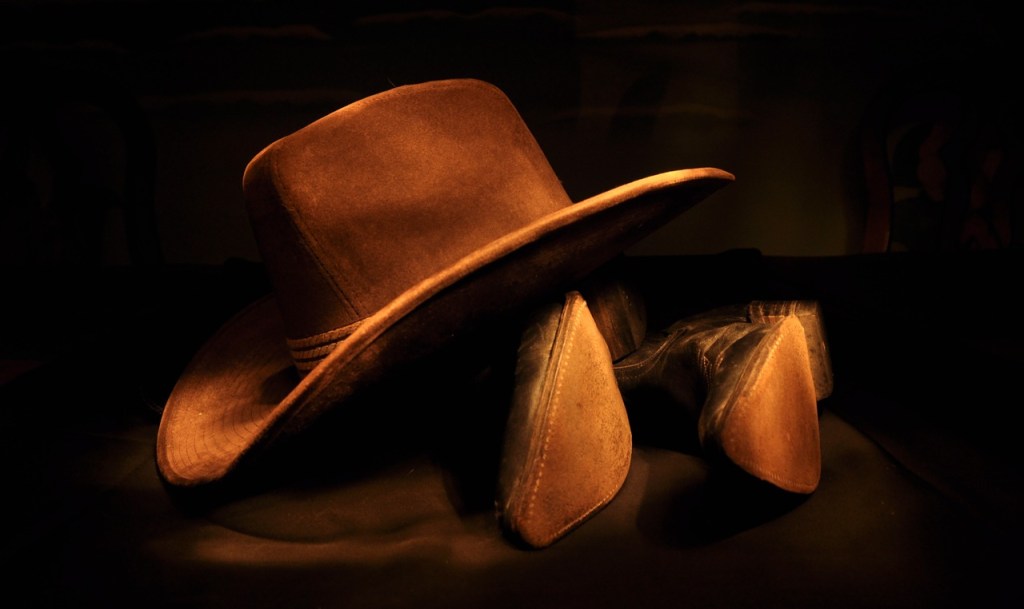
“Buffalo Bob” Poem by Jack D. Harvey

Buffalo Bob
is ding-dong dead

rode across plains,
chaps flapping
and banged the breeze

six-shooting.

He was purty
perfectly winsome

so he’s gone died
and Charon rows
him home. 

And how don’t Death
in Hades’ barbershop,
combing and combing,
calming and cajoling,
do up for the last roundup
his long blond hair?

Ride ‘em, cowboy, ride ‘em;
from here on out
in this red-hot realm 

you ride nowhere. 

Jack D. Harvey’s poetry has appeared in Scrivener, The Comstock Review, Valparaiso Poetry Review, The Chamber Magazine, Typishly Literary Magazine, The Antioch Review and elsewhere. The author has been a Pushcart nominee and over the years has been published in a few anthologies.

The author has been writing poetry since he was sixteen and lives in a small town near Albany, New York. He is retired from doing whatever he was doing before he retired.

His book, Mark the Dwarf is available on Kindle:  https://www.amazon.com/Mark-Dwarf-Jack-D-Harvey-ebook/dp/B019KGW0F2


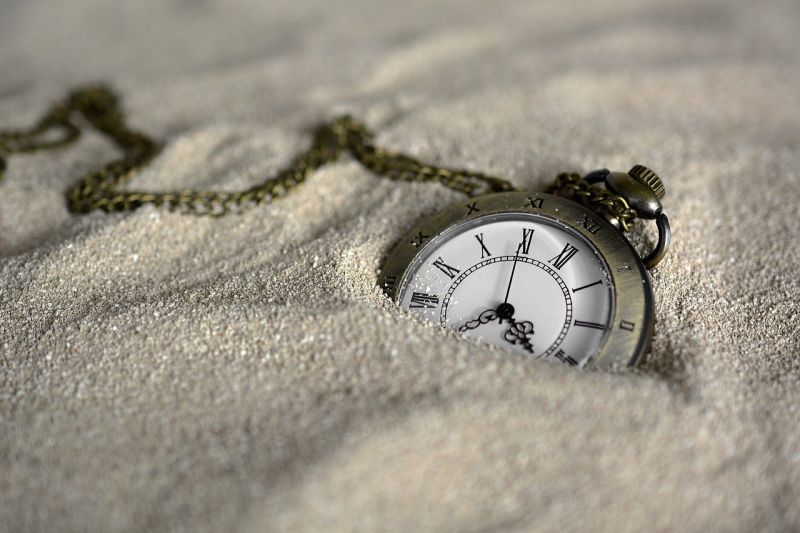
Where Does the Time Go? —

By Chris Hewitt “Sorry, I’m late. Where does the time go?” said Dr Ed, walking into the examination room. “I’m surprised to see you, Mrs. Walters. Is there a problem?” “Yes, Doctor,” said Susan, rubbing her side. “Since the operation, I get this terrible pain if I walk too far.” “Are you in pain now?” […]

Where Does the Time Go? —