There are strange visions in the
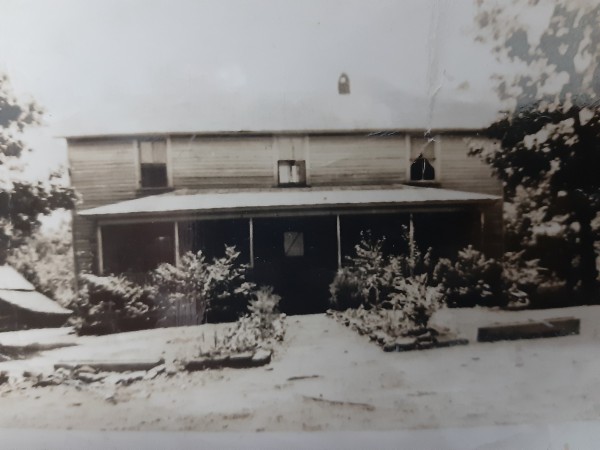
Bible Belt, where my grandmother
Witnessed Ezekiel's Wheel flaming
Over the north pasture, while a Fiery Cross
Awakened lonely sharecroppers from
Feverish and weary dreams. The Sunday
Morning Radio Gospel Hour would always
Explain everything to me while outside the whisper
Of a breeze was the Voice of God offering soft
Assurances to the Carolina pines. Truly, they
Were needed for as a youth I, too, expected
Ferocious miracles: maybe on a foggy night in
The bottom hollow there would appear a dark
Battalion of hooded horsemen bound for angry
Glory on some apocalyptic mission, chanting
War cries while their exhausted stallions seem to
Strangle in the haze of their own bloodstained breath.
I also thought I saw their quarry in retreat, a field
Of mist-shrouded tree stumps transformed by a
Night of shadows, smoke, and moonlight into a ghostly
Army of lost souls rendered immobile by the burning
Shields of the Heavenly Hosts; yet even these portents
Will yield to their own destiny for these nights, too,
Shall have their own death rattle where heavy morning
Showers will be a thousand silver coins sealing the
Eyes of darkness, the rain sounding like a falling of
Spikes, on the tin roof of my grandmother's house,
The last rites closing the coffins of the night.
Thomas White has a triple identity: speculative fiction writer, poet, and essayist. He blends horror, noir, gothic, satire and sci-fi with philosophical and theological themes. A Belgium-based magazine, the Sci-Phi Journal, honored by the European Science Fiction Society with its Hall of Fame Award for Best SF Magazine, published one of Mr. White’s stories.
His other poems, fiction, and essays have appeared in The Chamber Magazine, as well as in online and print literary journals and magazines in Australia, the United States, Canada, and the United Kingdom. He is also a Wiley-Blackwell Journal author who has contributed essays to various nonliterary journals on topics ranging from atheism, Artificial Intelligence, the meaning of evil, Plato, The Matrix, and reality as a computer simulation. In addition, he has presented his essays to the West Chester University Poetry Conference (West Chester, Pennsylvania), as well as read his poetry on Australian radio.
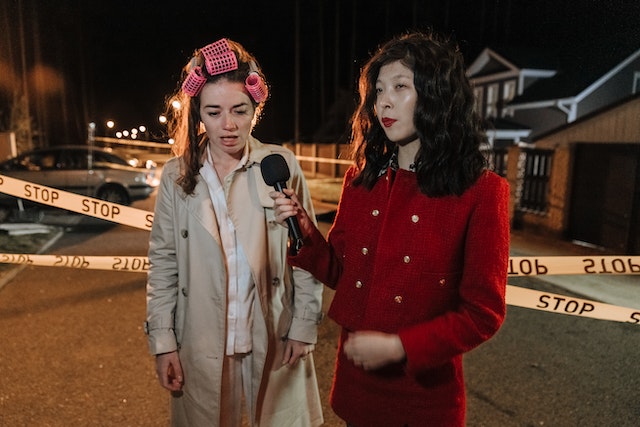
“I just feel for his folks, I do. Them good people. See them at church every Sunday. Well, at least did before it happened. Haven’t seen them since.
“But no, them just good solid townsfolk. Hope they get through this all right. Hope people don’t blame them for what David did.
“I’m sure they would have raised him right. I mean Culla, his older brother, he turned out fine. Granted, I ain’t had much to do with him now he’s moved out of town, though I ain’t never heard of anyone with an issue with him. But I guess sometimes good trees can bear bad fruit, right?
“That’s really the only way I can explain it. Now, was there anything I can get you while you in here? Tammy, my wife, she bakes the pies herself, best in the state I can tell you that much.”
Susan Knowles, former teacher at St Johns College (now retired)
“I’ve been thinking a lot about whether we should have seen it in him, about whether there was something we could have done to help him. I know not a lot of people will have any sympathy for him, but you don’t do something like that unless your seriously damaged.
“So, I suppose I’ve been trying to rack my mind to understand if that damage occurred when he was attending St Johns. If he was already on this path when he was with us, I didn’t notice, but maybe I should have. Maybe if I had noticed we could have gotten him the help he needed or done something. I don’t know. It’s hard to see a situation like this and not think someone could have intervened.
“But hard as I’ve been trying to remember, I don’t think David was too different to the other students I taught. I would have taught hundreds in my time at St Johns. Some of them you worry about. David wasn’t one of them, but he was… I don’t know.
“Maybe looking back with what I know now makes gives a sinister tone to my memories. He wasn’t a bad student, like I said, I’ve had far worse. But there were times when he seemed detached. Or maybe that’s not the right word. David was bright enough but sometimes he seemed apathetic. Not distracted, like a lot of kids are at that age, but just uncaring – not really concerned about anything academic or social, or anything really.
“Maybe that should have worried me more than it did. But he was never particularly difficult or disruptive or caused any trouble. Except, of course, for that one time with Dexter Martin.”
Walker Thomas, David’s friend
“Yeah, I never knew what Dexter did to piss David off so bad. David was always a target at school. The others knew I’d fight back, so when they said stuff about me, they did it behind my back. But with David they knew they could say and do just about anything to him and he wouldn’t retaliate. Course, they’re the same folk who are now saying David was always a bad kind. They’re full of it though, they were much worse – gave David all kind of grief.
“Dexter though, never saw him do anything towards David. He was a couple of years below us, and even though we were kind of the punching bags for a lot of the other kids, it tended to come from kids who were in our class or occasionally from the years above.
“Maybe Dexter said or did something fairly minor to David and that just happened to be the straw that broke the camel’s back. You can only keep absorbing that kind of crap for so long, sooner or later you’re going to snap. Maybe Dexter just happened to be there at the wrong time.
“I didn’t see it start, but I tell you what, it was no mean feat pulling David off Dexter. I was always a few inches taller than David, even back then, but he was surprisingly strong, at least, he was when he was angry, and when I hauled him off Dexter he was seething. It was lucky for Dexter I was there though, David seemed pretty keen on turning his face to jelly.
“He never told me what Dexter did to provoke him. I remember asking him point blank why he had been so hell bent on breaking his knuckles on Dexter’s face. He just told me to forget about it. I always wondered though if it was something to do with Maisie though. David always had a crush on her, and I think around then she and Dexter had a thing going. I remember David telling me he was planning to ask her out. I tried to talk him out of it without being as blunt as telling him she would laugh it his face then probably joke about it with all her friends. Pretty sure David never asked her, so I must’ve gotten the message across.
“We didn’t see each other much after school. I was working nights at the factory while he was working days at the abattoir, so we just kind of drifted apart a little. The odd time I did see him around town though he was still same old David. Still a friend. People might think I’m mad for saying that after all that’s happened, but screw them, they don’t know shit.”
Odette Wells, mother of Carson Wells (victim #1).
“Don’t listen to a word that Thomas boy said. He was always trouble. Once caught him slashing the tyres of a car near the corner store. Little devil didn’t even know whose car it was. That was just his idea of fun. I would have reported him to sheriff, but I didn’t out of sympathy to his mother. You know her husband died from an infection – was the result of some kind of accident he had in the factory. I didn’t want to create more trouble for her.
“That was some ten years ago now, but I sure don’t believe that Thomas boy has changed a jot, he’s just gotten bigger.
“What he said about David is a load of rubbish too. I always said he and David was trouble, didn’t I, Ron. Never liked Carson being round those boys, but in a small town like this you can’t really do much about that.
“You know, I wish David hadn’t killed himself before the police got there. Would have liked to see him cook on the electric chair. Don’t look at me like that, you heard what he did to my boy, the chair would have been the least he deserved, and you could have bet I would be there to see him fry.”
Earl Bailey, On the Road Automotive Repairs owner
“Yeah, David had been apprenticing here for a couple of months. Quick learner you know, would’ve been a solid mechanic.
“He told me he couldn’t stand the smell of the abattoir, said the stench of pig carcass lingered in his nose even after he got home. Guess after that, going home with the smell of oil in your nose ain’t too bad.
“I wasn’t sure of him when I first took him on. There was times when I would tell him something and I wasn’t really sure it was getting through to him. Had that kind of zoned out stare that some people have – usually older folk mind you. But after a couple of weeks, I realised that what I was telling him was getting through, so I started giving him a few more responsibilities, even let him lock up at the end of the day a couple of times that final week.
“What can I say? I just didn’t see it in him. Maybe I’m an old fool, but I… I don’t know. David could sometimes get peoples hackles up. He would sometimes say things that most normal folk would see but would have the good sense not to say anything about. I don’t think it was David was intentionally being impolite, but some people took it that way.
“Still, even if he was, it’s a hell of a long way to go from being impolite to skinning folk and whatever other heinous stuff he supposedly did. You know I heard he hung’em on meat hooks he stole from the abattoir. Hooked ‘em just below the collar bone and left them their hanging in that old barn whilst they was still alive.
“That’s what I heard anyway. Me, I’m not too sure of it. That just doesn’t line up with the David I knew. Given, there were folk who knew him better, but the last three months I would have seen him as much as anyone, and I’m meant to believe during that time he’s going off at the end of the day and cutting strips of skin off some poor innocent folks hangin’ in his uncle’s old barn.
“I should probably stop runnin’ my mouth before it gets me in any trouble. Wouldn’t be the first time that happened and it won’t be the last. I’m just saying, I didn’t see it in him.”
Kip Driscoll, Royal’s Service Station attendant
“I’m sorry sir, I don’t know if I got a lot to say. All I know I already told the sheriff. Helped him as much as I could, but I don’t think I that was all that much.
“Yeah, I guess I was the last one to see David alive. That’s what the sheriff said anyways. Kind of makes me feel a little uncomfortable if I’m honest with you sir.
“Can’t say I really knew him all that well, although my sister, Maisie, she was in the same class as him at school, maybe you should talk to her about him. Actually, she probably would rather you not. Forget I mentioned it.
“I could always tell when it was David drivin’ in to get some fuel though. His truck always made this coughing sound when it rumbled in. He said he was going to get Mr. Bailey to have a look at it now he was apprenticing for him. Said he reckoned it was something wrong with the exhaust. Guess he never got around to it though.
“Yeah, he came in here on Sunday. Didn’t have much to say. He almost always got some licorice with his fuel, but this time he just paid for the fuel. Paid over actually. Told me to keep the change for myself. Guess he knew what he was going to do, knew he didn’t need no money where he was going.
“The sheriff was saying that he probably used the truck to cart the victims off to the barn. They didn’t find any blood or nothin’ in the back, but they reckon he might have wrapped ‘em in a tarp and driven them off there while they were unconscious or bound. Gives me the creeps to think there could have been times when he came in and filled up here with someone lying in the back. Sheriff said I should try not to think about that, but it’s hard not to.
“One thing I have been wonderin’ is why I wasn’t one of them. The people he did all those things to, the sheriff was saying he seemed to just take people at random, that he just had passing connections to the victims and that they hadn’t actually wronged him in anyway.
“And that gets me thinking. There was nights when he came in here to fill up and it was just me manning the station. If he wanted to grab someone without being seen than I would have been the perfect target – late at night, on the edge of town, certainly wouldn’t have been any witnesses. But I guess there isn’t really anyway to know what someone who does something like that is thinking, is there?
“There isn’t really a lot more I can say though. I should probably get back to the counter sir.”
Lyall Beckett, Harris Meats Abattoir manager
“We get a lot of boys come through here. Most only last a few months, if that. This generation doesn’t really have the stomach for hard work. They think showing up is enough. They never had that work ethic knocked into them like we did.
“I didn’t have a whole heap to do with David, which probably means he was one of the better workers. Have you spoken to Earl? He could probably tell you more.
“You have? Well, I wouldn’t really have much to add.
“Only thing of note was one time we did think he was stealing from us. Yeah, we thought he had taken a bunch of the meat hooks. When I asked him about it, he looked guilty as hell. At first, he said he didn’t know anything about what happened to them. He wasn’t a good liar, but he was determined to avoid telling the truth until I let him know we’d have to fire him if he didn’t own up. That’s when he let it slip that Walker Thomas had stolen them. David didn’t want to tell me because Walker was his friend. I suggested he should find some better friends, but I don’t think he ever took my advice. “No, we never reported Walker for it. Pretty sure he just climbed in though one of the windows, it’s not exactly Fort Knox here. But I didn’t think reporting it would do much good, you know, not with Walker’s uncle being the sheriff and all.”
Klaus Nannestad is a media advisor living in Victoria, Australia. He has previously had short stories feature in Theme of Absence, Defenestration, Little Old Lady Comedy and Darkfire Magazine.
“I commend you, my dear Ida, to almighty God, and entrust you to your Creator. May you rest in the arms of the Lord who formed you from the dust of the Earth. May Holy Mary, the Angels and all the Saints welcome you now that you have gone forth from this life. Amen.”
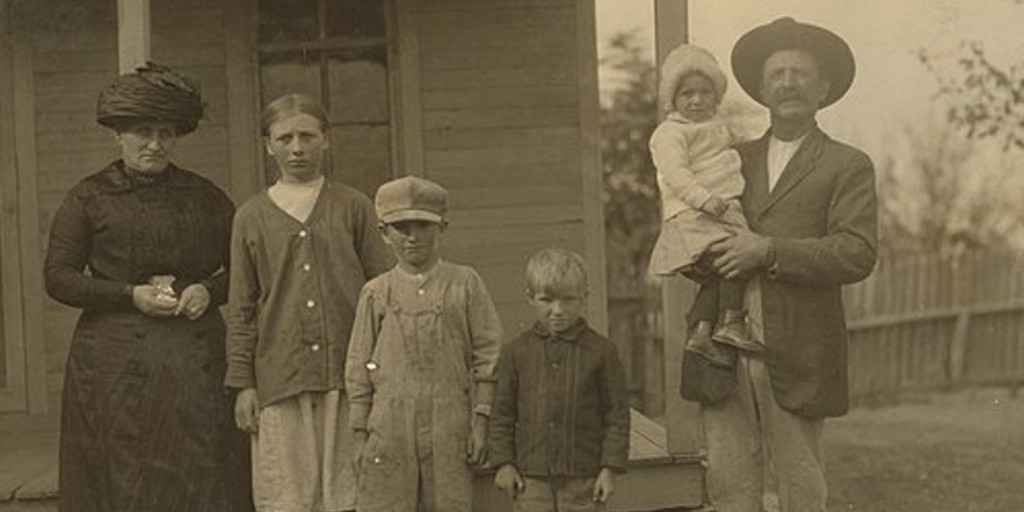
Clarence traced a cross in front of his chest with bony fingers marred by dirt. He stood. Silent. His youngest son Thomas broke the silence with his spade. It pierced the exposed earth, freshly removed from its resting spot. The shovel’s contents dropped onto the makeshift coffin tucked snugly in the shallow grave.
Once the grave had been filled, Anne positioned a wooden cross where the perturbed soil met snow which shielded the remaining desolate farmland from the harsh Dakota winds. Once satisfied with its placement, Anne firmly grasped at the base of where the planks intersected and nodded to Matthew. The eldest child gingerly tapped the underside of his spade atop the cross. His pace and power increased as the cross’s position stabilized. Suddenly, the upper portion of the cross creaked and splintered, shearing off a chunk of wood that tumbled carelessly through the air, landing at Clarence’s feet.
He glanced down at the fragmented wood, his faded blue eyes lingering on it with a look of longing, “We’ll make another tomorrow, the sun is setting.”
His three remaining children began trudging back towards the house. Clarence paused, brushing the hefty coating of snow off the two crosses atop the mounds neighboring his mother’s hastily formed grave.
Otto’s eyes narrowed at the page before him. Satisfied, he clasped the little black notebook closed and returned it to his coat’s inner pocket. He shuddered as his bare, wintry hand stung his stomach.
He glanced at the wagon, speckled with mud clinging desperately to the wood as it sought to unburden itself of the moisture that could prevent its escape from the bleak landscape it had called home for centuries.
Inside was the greatest haul he had seen to date.
Working for the old man who offered loans to those most in need had appealed to him after the war. An opportunity to mend his damaged standing with his Maker. However, collecting payment rarely went as seamlessly as Mr. Vonleigh had advertised.
Now, nearly nine years later, he was no longer concerned with self-preservation. The only thing he prayed for now was the absence of the God to which he directed the prayers. He knew it didn’t make sense. It doesn’t fucking matter, he thought.
He had barely slept since crossing into Dakota. Though whether that was due to his thoughts of escaping to a new life with Mr. Vonleigh’s money or the breath-taking brick wall of a cold front that he had slammed into four days ago, he was unsure.
His maps showed that the Reilly’s house wasn’t far from the Northwest Territories. He could also retrace his steps south to any of the train stations he had passed. East and west were options too, he supposed. For whatever reason, he couldn’t decide. But the money would be sufficient to get him far enough from Mr. Vonleigh to never again hear the name. No matter the direction.
His body convulsed in a shiver, dragging his mind from endless possibilities. He gazed at the vast, never-ending plains coated by a windswept snow shawl. The constant breeze whipped up a fierce, two-foot high drift that nipped between the seams of his too-thin, faded black corduroys. He had become accustomed to it.
After reattaching the horse-cart to Caesar, he stepped into the stirrups and took his position atop the saddle. Gently guiding his white mare, he scanned the plains for signs of the ever-elusive road forward.
Clarence pictured his mother’s body, dead well before its inhabitant. Frail and fragile, he remembered the chill of her touch. It was the same chill he had noticed from Grace as life fled her body. And Arthur. His newborn hands like the paws of a sled dog.
Grace died shortly after Arthur’s birth. Weak from hunger and cold, disease had coursed through her body in hours. Arthur wilted and faded shortly thereafter.
If they could make it to spring, he thought, he could sell everything and move west. He would accept any kind of work. Anything to get his family far from this godforsaken wasteland.
He heard footsteps shuffling towards him. Stopping on the other side of the door, he recognized Thomas’s voice. “Father, there’s a visitor outside.”
Otto approached the hitch out front of the weary house. It’s weathered brown shade looked out of place amidst the endless gray and white separated only where the land kissed the sky. He pressed his gloved hand beneath his ribs and felt the gun’s icy metal shell against his bare side. A reassuring discomfort.
“Clarence Reilly?” he inquired to the young man standing puzzled and beaten at the door.
“He’s coming,” the boy replied.
“Well, what do ya say we wait inside?”
Descending the stairs, Clarence could hear the kitchen floor groan under two sets of footsteps. A weathered man, one with the environment came into view. The skin on his face was raw and red from the prevailing winds. There wasn’t an inch of him left unscathed by the plains’ brutal winter.
“Mornin’,” said the man. He quickly pulled out a golden pocket watch lodged under his coat.
“Oh hell, doesn’t work anyhow,” he said with a chuckle and tossed it, still ajar, on the table beside him.
“Clarence, right? Otto,” he said.
He revealed from beneath his jacket the holstered revolver, stained auburn in places, and dropped it carelessly on the table alongside the watch. He dug deeper under his coat, now pulling out the little black notebook from what seemed to Clarence an abyss in which this gruff, gnarled man stored his life.
Otto opened the notebook, “Clarence, my good man, go ‘head and read those lines at the bottom of the page.”
He turned the book in his gloved hands and pushed it across the table.
“Clarence Reilly. 2 Sturbridge Road, Emerson.”
“Keep goin’.”
“Four thousand and five hundred dollars.”
Otto sat back satisfied, “Got it or no?”
Clarence shook his head no.
Otto screeched the legs of his chair back, ignoring the protesting wood floor, and rose. He wandered slowly around the kitchen like a zoo animal new to its cage.
“Children, go upstairs,” he heard Clarence say, “go on run along.” They left.
“Were you in the war Clarence?”
This time Clarence nodded his head in the affirmative.
“Me too. That fightin’ was bad business.”
Clarence repeated his previous response.
Otto pressed his rear end against the counter in front of the sink, “I’m here on account of Mr. Vonleigh. Your payment is overdue and I’m here to collect. Now, you got any money we can work with?”
“’Fraid not.”
“Says here you needed it to start a cattle farm,” Otto said, his tone sharp now. Having removed one glove, he pointed with his middle finger at the notebook, nubs where his index finger and thumb should have been.
He turned back and pointed out the small window above the sink, “I don’t see any goddamn—” his suddenly bellowing voice cut off. Otto’s head pointed in the direction of the three makeshift crosses stuck into slightly raised mounds. The snow there was not as plentiful, “—cattle,” he finished, in nearly a whisper.
Otto’s arm lingered outstretched, his remaining index finger pointing to the vast swathe of land, plain and uneventful, outside of the house. Clarence’s eyes darted to the gun. His right hand instinctively jumped off his knee and lunged forward. But he stopped. He gazed down, his own hand unrecognizable. He stood. Approaching Otto, he pretended not to realize what the man was looking at.
“There was cattle. See that splintered fence there?” now directing Otto’s gaze with his own finger, “that used to circle ‘round that tree and back to the barn.”
His hand pointed to a patch of emptiness, “Had to use the wood for fire.”
Clarence moved his finger to the right, “Over there was corn, then back behind that was barley and lentils. On this side of the house,” he continued, shifting his extended arm towards the wall further to his right “was sugar beets and peas.”
Finally his hand dropped down beside him, “and out front was a whole bunch of wheat,” he finished.
“Well what happened?” Otto asked, finally finding his voice.
“The goddamned bugs,” replied Clarence.
Otto had heard about them. Swarms of locusts had invaded towns in Minnesota, Nebraska, Kansas, and apparently, the Dakota Territory. A white blanket would descend suddenly, blackening the sunlight and destroying every crop in its path.
A man he had fought in the war beside once paid him to fetch ingredients to create a poison that would kill the bugs. So he said, at least. The man couldn’t do it himself on account of having both his legs blown off during the second battle of Bull Run, so Otto did it. The bugs never came.
Clarence went on, “It was only our second harvest year. They destroyed everything.”
The two men were back in their original positions at the table. Clarence seemed more animated now. Less pitiful, Otto thought.
“Soil’s completely ruined. We ate all the cattle already,” Clarence paused before adding “should’ve held off a bit longer.”
Again, they sat in silence. Eventually, Otto pointed to the window above the sink, “Wife and kids?” he asked.
“Wife and kid. Mother was just yesterday.”
“Shit.”
“Drink, Mr. Reilly?” Otto asked, pulling a beaming silver flask from his jacket. It was the only thing on him untouched by the elements.
Clarence shook his head no.
Otto shrugged and put it to his lips. He drank. When he had upended the flask he let out an audible exhale. Tucking it back into the jacket’s void he looked to Clarence, “Well, best be off,” he said simply.
Clarence watched in awe, as one by one the pocket watch, the notebook, and finally the revolver were returned beneath the coat.
Otto looked at him, “Take care of what’s left of ya’ll.”
Clarence could only nod.
Otto paused at the door, “Hey, which side you fight for?” he asked.
Clarence hesitated, “Ya know what? Don’t answer that,” Otto said suddenly, “doesn’t fucking matter.” He chuckled grimly and left.
Clarence ran to the stairs and called to the children. They scurried down anxiously, relieved that the intruder had gone.
“It’s alright. We’re lucky this time. First time in a while, eh?” he smiled. His children returned the grin. Clarence couldn’t remember the last time he had seen them smile. He instructed his eldest to gather wood from the front.
Suddenly he heard Anne’s voice coming from the window, “Father, the man left his wagon.”
Clarence and his children ran out the front door and down the sloppy path leading to the horse-cart that lay on the ground. Matthew threw open the cover, revealing bills stacked nearly to the top.
The children scrambled and gathered pile upon pile, but Clarence walked further down the path, as if uninterested in the bills in danger of being whisked away by the wind. He could make out the stranger as a fading spec atop his white mare. He watched for minutes until that spec became engulfed by the vast sea of nothing.
“Father,” Matthew’s touch startled Clarence. He wasn’t sure how long he had been standing there. Tears streamed down Matthew’s face, “It’s twenty thousand dollars.” His voice was quivering so severely that he could hardly get the words out.
Clarence looked back and watched the other children dance, waving their emaciated bodies rhythmically beside the carriage. Clarence felt a wave of emotion hit him. He closed his eyes. The three crosses atop the mounds out back seared his mind. Otto’s right, he thought, it doesn’t fucking matter.
Patrick Clancy-Geske is a writer for a market research firm based in Massachusetts, where he lives with his partner Emma, their dog Korra, and cat Miel. You can find other pieces of Patrick’s work here https://vocal.media/authors/patrick-clancy-geske.
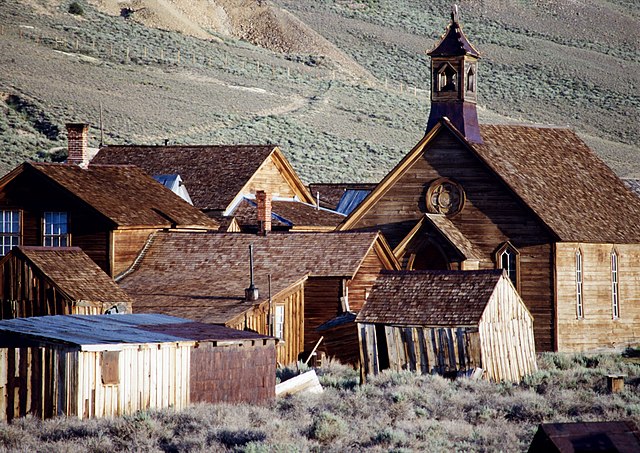
It was never more than a few dozen buildings around a crossroads, inhabited for only a half century. Eucalyptus. Scrub had tried to grow along the streets and walkways and, like the town, died.
I walked its three hundred acres for two hours, peering through busted window glass at the dirt-grit interiors of the homes, farms and mining shacks. The dusty heat accentuated the aromas of dry rot and animal scat. Stallion County, Wyoming had taken custody after the last resident passed leaving considerable unpaid fees and taxes. The whole thing, including the unsuccessful farms and mining claims, was for sale at a half million.
My vision for the site was modest. Rehab the few homes I could, tear down and replace the others, and create a feeder hamlet for the tech industries moving into the county. Enhanced electrification would be key. The county power lines were less than a quarter mile away from the abandoned village. An expensive quarter mile, but with full service I’d have a chance.
I doubled back to one of the buildings, long, narrow and high roofed, that had no cross atop it, but that I guessed had been the church. The door was ajar and I took a calculated risk and went in. If the flooring was sufficiently rotted, I’d end up in the cellar. The boards held. Anything portable had been stolen or trashed, but the pews, bolted through the flooring, were still in place. They’d tried to make it churchy, with cheap paneling lining the side walls in imitation of oak wainscotting. The hard afternoon sun flooded through glassless windows like searchlights, glaring onto the paneling. And revealing that one of the boards was discolored at the top edge.
“I wonder,” I said aloud to no one. I walked over and tapped the board. It felt a little loose. After some jiggering I realized that its tongue could be slipped out of the adjoining groove by pulling it upward. Which I did.
Inside the concealed cubby, preserved from the vandals, were two leather-bound books-a King James bible and a thick journal. The front of the bible listed births and deaths in Eucalyptus. Twelve births couldn’t compete against what looked like over two hundred deaths. The handwriting changed every so often, which made me think that as a congregant died another took his place as record keeper. The country records had James Farnsworth listed as the last resident, but his name wasn’t in the bible. No one left to write it. A riffle through the journal flashed a chronicle of events, mostly mundane.
The afternoon sun was setting behind bald stone hills. I took the books with me to my car and retraced fifteen miles to the Eureka motel, which could accurately be renamed Egad. The bed suffered from terminal sag, and the windows were loose enough in their frames to give conduct passes to desert insects.
I went on line and looked up James Farnsworth. His young son and wife had died before him. The funeral home notice had quoted him as being “the last, proud resident of Eucalyptus.” And probably the loneliest.
After a diner dinner (“Try the chicken fried steak”) I retreated to my room, turned on a wheezy air conditioner, flopped into a faux leather chair and opened the journal. The entries were weekly, a great many of which had almost nothing to report. The first and longest entry was the founding of the town, listing many names and the help they provided. Despite the dry tone of the entry a sense of pride had snuck in. They’d done it.
There were over two hundred pages of entries, some pages with ten or twelve “nothing to report” notations before recording a mining claim started, an arrival or a death.
I knew I should be evaluating the prospects for repurposing the village, costs, income stream, scheduling: finally put my MBA to good purpose. But I couldn’t put the journal down. There had been many more men than women in the village, but, in those times, the women were the vessels for the future, and received a disproportionate amount of ink.
I stopped flipping pages and began to read front to back like a novel. By the time I was finished it was 3:30am. Their efforts had been mighty and all consuming, but doomed. Over time no newcomers arrived, the mining claims and farms were abandoned, and the few children grew up and left. Those remaining, now in their high sixties and seventies, dropped onto the pages like rain. There was no doctor, and little money if there’d been one. Eucalyptus’ death had been painfully lingering.
I got a few hours’ sleep and returned to the diner that morning for reconstituted orange juice and grease. Perched on the plastic seating, I couldn’t focus on the numbers that might make Eucalyptus viable again. I gave up and drove back out to the village. Only my own tire tracks and footprints were evident.
I walked back into the church, sat in a pew, and took out a pen. I entered James Farnsworth into the bible and the journal, where I also wrote that he was the last, proud resident. Then I returned both books to their little shelf and slid the panel back into its slot.
After getting into my car, I pressed my lips together. Leave them in peace. There’d be another town.
Ed Ahern resumed writing after forty odd years in foreign intelligence and international sales. He’s had over four hundred fifty stories and poems published so far, and seven books. Ed works the other side of writing at Bewildering Stories, where he sits on the review board and manages a posse of eight review editors.
In the almost forgotten times that wrought the after-years, the world and its weather changed, bringing storm and famine, war and famine, drought and famine. Nations were riven and destroyed. Petty warlords fought for smaller and smaller fiefs until farm and town were made desolate and the people fled. The scattered survivors were oppressed by hunger and hardship, fire and want. The after-years created devastation and loosed upon the land the wanderers, the hunters, and the displaced soldiers of fortune.
So it chanced that one such soldier trudged the dog end of a long road at the gloaming of a day in spring. Behind him, the sun slipped to the rocky hills he had just descended. The dying rays illuminated skeletons of burned-out trees that lined the empty path. His elongated shadow stretched far ahead on the broken, grass-choked pavement.
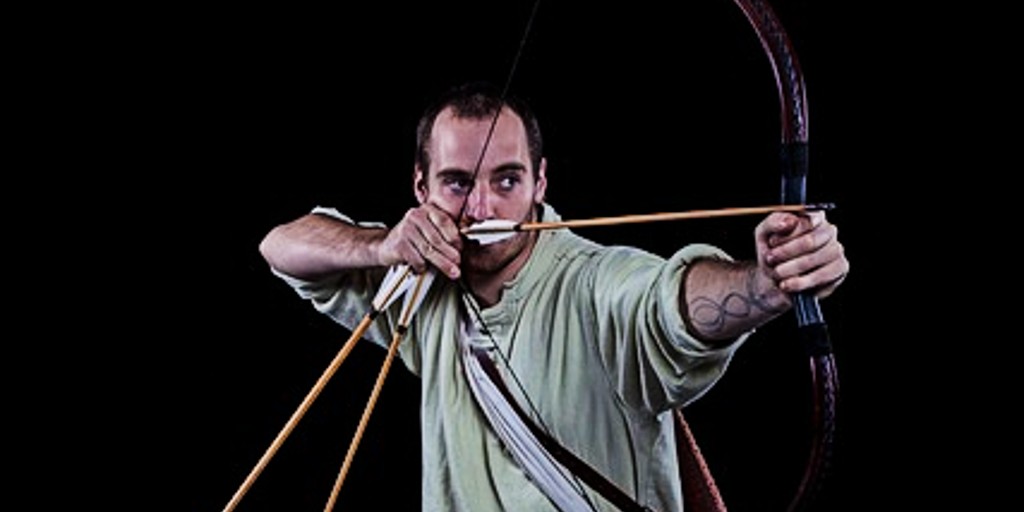
The lone man strode after his shadow with a loose gait. He stood tall, lean, and wolfish. He was not young. Four decades he bore, and his face was lined. A heavy rucksack and quiver hung from his shoulders, and he carried in his hand a longbow of yew.
His self-given name was Adam, from a book his aunt read to him as a child. Adam Damned, if any dared to ask his surname. Few did. Adam Damned was an archer, a marketable trade now that guns and the bullets that fed them had vanished into obscurity. His loyalties were for sale to any prince who could pay his wages and fill his belly.
The cracked roadway ran down to an open valley and the ruins of a town. It was once a thriving place astraddle the meeting of two highways. Now, the roads were empty ribbons, and the town inhabited by ghosts. A few scroungers lived amongst the ruins, trading worthless junk and bartering for a mean existence.
The name of the town was Consequences.
Adam Damned reached the edge of the town as night fell over it. Empty doors and windows gaped dark and blind from either side of the road. There were no human sounds, only the rustling and creeping of nocturnal creatures. He did not stop to hunt, for he already carried fresh meat to barter. A feeble light glimmered at the distant end of the street and a wheezing sort of music reached his ears.
Adam walked on. The light became a glow, and the stumbling pulse of the music grew louder. He stepped from the darkness into the circle of light. The music ceased as if cut from the air with a knife.
A woman sat upon the steps of a red brick hotel. Paired candle lanterns hung from the hotel doorway, dropping a flickering light over the seated woman.
She might have been forty or sixty. Impossible to tell in that light. Her bare arms were lean as twisted rope, and she held a battered concertina in her lap. The woman cocked her head and smiled. Her teeth were strong and white. Her hair was silvered, but by age or candlelight, Adam could not tell.
His hunter’s eyes searched the light and the blackness beyond, but no one did he see. He turned his eyes back to the woman.
“I wish you a good evening.”
She chuckled at his words.
“A fine wish, but empty of promise. Still, I thank you. Welcome to Consequences.”
Adam felt the weight of his rucksack and the hunger in his belly. He pointed to the sign illuminated by the candle lanterns.
“Is there room at the inn?”
The woman laughed and swept a hand through the air.
“This whole damn town is vacant, stranger. Empty rooms for the taking.”
“I’ve walked far. I prefer somewhere with a hot stove and a warm pallet.”
The woman rubbed her chin and held her hand out, palm up.
“You’ve goods to barter, then?”
“I have. Two fat snakes, fresh today, and a flask of grappa.”
She stood herself straight and tall. The concertina unfolded with a groan.
“Step inside, stranger. Let’s see to your belly and bed.”
* * *
The plates were polished clean and the table bare before Adam dug the flask from his rucksack. The woman who called herself Maude sat across the table, younger now in the soft light of tallow candles. A third figure sat on a stool beside the table, an idiot boy of twenty years or so. If he had a name, no one knew it. Maude called him Boy.
“Will the boy drink?”
“He will. A small one won’t hurt him.”
Adam nodded, uncorked the flask, and poured. Two full drams for himself and Maude, a short pour for the boy. Maude reached for her drink and raised it. The boy aped her, a lopsided grin on his face. Then Adam raised his own glass. They nodded, drank, and grimaced against the fiery liquor.
“Whew! That will liven a girl.”
“Another then?”
Maude nodded and Adam poured. He stoppered the flask and set it aside. He pushed his empty plate aside and leaned his elbows on the table.
“I thank you for the meal, Maude.”
The woman bowed her head in a mockery of courtesy.
“You did not lie, traveler. Those were fine, fat snakes. The deal is square. You’re a guest under my roof, at least for this night.”
“Then I must think of the morrow. What chance of employment in these parts?”
“None in this shithole of a town. You came out of the West. You saw how empty the land is. Two days’ walk to the North lies the territory of a warlord. Payton is his name. The same distance south will bring you to another band of thugs led by a man named Jackson. One as bad as the other, and both looking for men.”
“And this town stuck between the two?”
“They leave us alone. Everything there is to take has been taken. Consequences has no more to give.”
“Us? There are others?”
“Of course, there are others. They’re shy of fighters. You with your longbow, I expect you scared them off. You’ll see them tomorrow.”
The boy erupted in gurgling chuckles.
“What lies to the East?”
“A road you do not want to tread. It leads to an evil place ringed by a tangled hedge of briar. Thorns like claws and sharp as daggers. The hedge guards the past and kills every fool who tries to pierce it.”
Adam drank off half his grappa and winced.
“Another of the old tales. I have heard something like this before. Tell me the rest to pass the rest of the evening.”
Maude shook her head, and her smile disappeared from her face.
“Very well but mind your scorn. Old is not the same as false.”
Then she began to tell the tale.
* * *
It happened when my grandmother was just a small girl, before the great storms and fires. A band of strangers came to this town. It wasn’t called Consequences back then. The strangers seemed to be rich. They bought up the lands east of town and started building. They named their new settlement Paradise. Some of the townsfolk called it a cult, but they said it quiet. The newcomers spent hard cash for goods. Cult or not, folks were glad for the trade.
A young married couple led the pilgrims at Paradise, their king and queen in a way. By all accounts, they were beautiful and wise. The commune prospered under their rule. Homes were built, crops planted, and babies conceived. But not for the queen. She remained childless despite her hopes, the king’s desire, and the chanted dreams of all those in Paradise.
One still summer afternoon, the queen fell asleep on the banks of the stream that watered Paradise. A frog came to her in a dream and told her that her wish would come true. The talking frog promised that within the year, the queen would have a child.
The dream became reality. The queen gave birth to a beautiful baby girl. When their daughter was one year old, the king planned a great feast and festival to celebrate. There would be food and music and special rituals that brought visions of the future.
The feast ran long into the summer twilight. Special wines were passed amongst the elders of Paradise, and small trays of peyote buttons, bitter to the tongue. While the others sang and danced, the wise ones ate the peyote, drank the wine, and waited.
The moon rose in the night sky and the first elder with it. The music ceased and the dancers stilled. All listened as the wise ones bestowed their visions. One by one they stood, offering their gifts to the girl child of the king and queen. One spoke of beauty, another of riches to come, yet another of the virtues the child would inherit.
But all was not well. One of the wise ones fell upon his back, writhing and moaning. When the others tried to assist him, he leaped to his feet, eyes wide and staring. He cried out the words of his vision, and they were dire.
‘When the girl reaches fifteen years, she will feel the sting of life, and life will leave her and all those who dwell with her.’
Then the man fell on his face as if dead. Frightened hands carried his rigid body from the commons.
Under the canopy of the summer stars, the people stared in shocked silence. The king sprang to his feet in anger. The queen’s face blanched deathly pale. But one elder remained who had not yet spoken. She smiled at those assembled and spread her hands wide.
‘I cannot unsay this awful vision, but I can soften it, perhaps. Death shall not be the fate of this beautiful princess, but rather sleep, the sleep of a century. A brave kiss shall awaken her if such kiss can find its way to her sleeping lips.’
The years passed and the little princess grew into a lively, curious child. Her father did everything he could to protect his daughter from the sting of life. Sharp objects were removed from the household. The princess never heard any news of sadness or loss, for these things were banished.
All the good visions came to pass. The princess was a beautiful, virtuous, good-natured girl, so full of joy that all who knew her loved her.
Her fifteenth birthday drew near. Paradise had grown with the princess. The little commune was now a thriving community, and all the inhabitants busied themselves with preparations for the birthday of the princess.
At last, the special day arrived. The king and queen were busy with preparations for the birthday party. The princess was left alone to do as she pleased. She roamed around the compound, stopping to pet the sheep, or speak with the burly blacksmith.
Back in the very farthest corner of the compound, she came to a building she did not know. She slipped past double doors and stepped into a large workroom.
It was a magical place the likes of which the girl had never seen. A dozen young women sat at wheels and spindles, spinning flax into yarn. On the other side of the room, men and women worked at looms, weaving the flax yarn into linen cloth.
The princess was enchanted with the clatter and clack of the looms, and the delightful rattle of the wheel and spindle. She wished to learn everything about this magical process.
The women were delighted by the chance to teach the princess to spin flax. They sat the princess on a stool, but when the girl reached for the spindle, she pricked her finger and felt the sting.
In that moment, the princess fell into a swoon. The weavers carried the girl back to her chambers. Their steps were slow, for they felt a great weariness slipping over them.
They laid the girl on her maiden bower and pulled the coverlet to her chin. Then the grieving weavers and spinners went in search of the king and queen, but they never found the girl’s parents.
Before they could impart their dire news, weariness captured them. Their eyelids drooped and close. A deep sleep fell over the compound and all that dwelt there. The king and queen slept, as did every inhabitant of Paradise. The blacksmith at his forge and the shepherdess by her flock, each fell fast asleep. The horses slept in their stables, the sheep in their pens, the dogs in the yard, and the birds on the branches. All was silent. Not a leaf stirred.
As Paradise slept away the seasons, a thorny hedge of briar grew up all around the compound, surrounding it with a tangled wall. With each passing year, the hedge grew higher and the thorns longer, until it was a grasping, deadly peril, thrice the height of the tallest man.
The tale went far and wide of a beautiful princess trapped in a thorny prison. There were riches and glory for any brave lad who freed the poor girl from her enchantment. The spell could only be broken when a lone warrior breached the evil hedge and awakened the princess with a brave kiss.
And so it was that the brave sons of rich men and paupers, and not a few daughters as well, came to test their strength and skill against the thorny hedge that imprisoned the princess.
Many tried, and many failed. They were young and brave, but they were foolish. They hewed their way into the hedge and were swallowed by it. The hooked thorns of the hedge were sharp as an eagle’s talon, strong as the claws of a great bear.
The doomed young men and women were pinioned by the grasping vines, which moved as living serpents. Deadly thorns tore their young flesh. The malignant briar hedge captured each one of the brave fools, bound them with tendrils and vines, pierced their flesh with thorns, and bled the life from them. They died a miserable death.
* * *
Her tale told, Maude leaned back in her chair. The candles guttered in an unseen draught, and shadows wavered across the table.
Adam raised his glass and tossed off the last of the grappa. The empty glass rapped loud against the wooden table.
“Another wild tale about the sorrow of young fools. Bravery and foolishness are bound together. I’ve seen many dead fools after a battle, each of them stiff as boards and cloaked in their bravery.”
Maude leaned forward and stared into his eyes.
“You do not believe the tale?”
“My belief has nothing to do with it. It may be true. Perhaps one day I will go and see this damned briar hedge with my own eyes.”
“I would argue against you.”
Adam Damned smiled at this silver-haired woman.
“Would you indeed, Maude? Well, there is no need. Tomorrow I will go to the North. It is work I need, not foolish errands.”
He reached a strong hand to his rucksack and hoisted himself from his chair.
“Has my barter bought me breakfast?”
“It has. I will show you to your pallet.”
She rose and led him from the darkening kitchen. The man and woman retired, each to their own bed, leaving the idiot boy to sleep beside the dying warmth of the stove.
Adam Damned awakened to the crack of an ax and the thump of wood against earth. He threw off the quilts, stepped to the window, and peered into the dawn. In the yard below, the idiot boy was splitting kindling for the morning fire. The blade of his ax flashed in the rays of the rising sun.
Hunger gnawed at his belly, as it did every morning he had ever known. He splashed his face in a basin of cold water, dressed himself, and descended to the kitchen.
Maude knelt before the old iron stove, stoking a fire. She wished him a good morning without turning, intent on her task. Adam seated himself at the table and waited. Boy clumped into the kitchen with an armload of split firewood.
Breakfast was pungent sage tea and a bowl of porridge. As he took the first spoonful into his mouth, a warm sweetness danced over Adam’s tongue. Surprise raised his eyebrows and Maude caught the look.
“Agave honey. Boy gathers it. He’s a wonder with the bees. They’ll chase me half a mile, but he’s never stung.”
Boy grinned at Maude and shoveled mush into his mouth.
When he departed, Adam left all the food he could spare. He called it an advance on future lodging. Maude accepted the barter without comment. With the rucksack lighter on his shoulders, Adam marched away to the North, intent on selling his bow to the warlord named Payton.
* * *
Six weeks the bowman served Payton, fighting the marauding bands that dared to challenge the warlord’s territory. He fought well and earned his wages. When the fighting came to an end, Adam Damned took his leave, though his bloody employer entreated the bowman to stay.
Adam left the warlord’s service a richer man, with a promise of future wages in his ear, and booty slung upon the back of a mule. He led the stubborn animal south, a two-day march, until he reached Consequences. He slipped past the town by moonlight of the second night and made his camp to the south.
The warlord Jackson hired Adam on sight, just as Payton had. One long look at the bowman served to establish his credentials. Adam killed in Jackson’s service every day for a long month, his arrows felling all who dared to stand against him.
Adam gathered his blood wages and departed for the North. The mule bore a heavy load, packs lashed and bound with newly plaited chord. Coils of horsehair rope hung from the packs. The mule strained and balked under the weight of blood wages. Adam kept a tight grip on the animal’s lead rope.
Two days later, as night fell over the town, Adam Damned walked back into the ruined town. He paced up the empty street. The weary mule plodded behind, balking now and then in a half-hearted way.
Ahead, Adam saw the flickering candle lanterns hanging from the hotel doorway. Maude sat on the stairs, torturing her wheezing concertina. Boy sat beside her. The mule snorted and Maude looked toward the sound. He saw a smile crease her face. Boy pointed, gurgling his unintelligible talk.
He stepped into the circle of light. Maude squeezed the last jangled chords from the concertina and dropped her hands to her lap. Silence settled over the street. Then the mule snorted, and Boy resumed his quiet gibbering.
“I see you’re still living.”
“That I am, Maude.”
“And you’ve come back.”
Adam nodded and smiled at her banter.
“I have.”
She set the concertina aside and stood up.
“You’ll be wanting to eat, I suppose. Have you anything to barter, then?”
Adam laughed out loud, and the sound of his laughter filled the street. He pointed to the laden mule.
“I find myself in a good position to barter.”
Maude gave Boy a dig with the toes of her bare foot.
“See to the mule, Boy, and bring the packs into the kitchen. I believe we’re going to feast tonight.”
Boy leaped to his feet and scampered across the pool of light. He stopped in front of Adam and held out his hand. Adam handed Boy the lead rope, and the idiot chortled as he led the mule into the darkness.
Maude waved to the door and Adam stepped forward. He climbed the stairs to stand beside her, looking down into her grey eyes. She gave him a smile and a nod, then pushed the door open with her foot. Her hand snaked around to the small of his back and she gave him a shove.
“Get on with you, then.”
He stepped through the door. Maude snuffed the candle lanterns and followed. The heavy door closed behind her, shutting out the night.
The feast ran long around the kitchen table, and the drink longer. Maude and Adam sat in the over-warm kitchen, flushed and sweating from the rare indulgence of enough food and too much wine. Boy snored from his pallet beside the stove. Soiled dishes and crusted pans soaked in the wash barrel.
Maude swirled the dregs of her wine and raised the glass to Adam. Glass chimed glass in the quiet room. They tilted their heads and drank away the last.
Two empty wine glasses stood sentinel over the table. Maude laced her fingers through Adam’s, or perhaps Adam’s hand clasped Maude’s. Later, they would not remember. They took each other up the stairs to Maude’s bed, where Adam discovered that silver-haired or no, Maude was younger still than he’d imagined.
* * *
Adam did not depart the next morning or yet the next. As the days passed, he and Maude and Boy feasted on the perishable food before it spoiled. They hoarded the rest of the booty against future hunger.
Life in Consequences was lean but peaceful. The few wanderers who stopped at the hotel minded their manners. Maude’s stern grey eyes and Adam’s long shadow kept the peace. The furtive inhabitants grew accustomed to Adam, grateful for his longbow.
Adam and Boy roamed the valley and hills. The bowman hunted quail and hare, bringing them down with blunted arrows. Boy gathered honey and collected eggs from hidden nests.
In the evenings, they gathered under the candlelight. A few of the townsfolk grew brave enough to join the circle. Maude tortured her concertina while they clapped and laughed at the noise.
Through the long summer nights, Maude and Adam shared a bed and each other. As the season turned, and the nights grew longer, so too did Adam and Maude grow into something larger than the sum of woman and man alone.
This new existence stood outside anything Adam had ever known. There was love in his life. A strong woman cared for him, and he for her. No one was trying to kill him, and his bow was not for sale. The townsfolk treated him with respect instead of fear.
And yet for all of that, a restlessness nipped at his heels. Adam tried to ignore his nagging thoughts, but they would not be denied. Whispers tempted his ears as he prowled the hills.
You came from the West. You fought in the North and the South. What of the East? Have you forgotten the tale? Are you afraid?
Adam answered the call while pretending not to hear. He hunted further and further to the East, forbidding Boy to follow. Boy whimpered and cried, but Adam ignored him. Maude noted the change between the idiot boy and her hunter. She sensed Adam’s discontent, as one senses a storm building over the edge of the far hills.
When at last he spoke his declaration, his words held no surprise for Maude.
“I will go and see the briar hedge with my own eyes, to know if it is true or no. I am not afraid.”
Sitting across the table, Maude raised her eyes to his, careful with her words.
“And who here ever named you afraid?”
“No one, truly, but this thing gnaws at me. I must go or call myself a coward.”
Maude smashed her fist down and the dishes jumped. Boy whimpered and fled to his sanctuary beside the stove.
“I’d call you a fool, but the words would be wasted. I’m the fool for letting my mouth run away from me. If I’d never told you that stupid tale, you’d have no need of this folly.”
Maude did all she could to dissuade him, both in word and deed. Adam hesitated, his mind torn in a way he had never known. But his hesitation did not last.
Adam hunted still further into the East, for the game seemed more plentiful in that direction. One afternoon, he stood upon the crest of a small knoll. Behind him, the autumn sun slipped toward the horizon. The slanting light etched the land in sharp relief. And in that light, Adam caught his first glimpse of the briar hedge.
A green barrier stretched across the open land before the valley rose to the eastern hills beyond. From a distance, it took on the appearance of a wall fashioned by men, uniform in height. The green wall ran from north to south, then curved back upon itself to form a ring. From his vantage atop the knoll, Adam could not see the far side of the ring, but he did not doubt. This was the briar hedge told of in the legend, and the remains of Paradise lay within.
Adam turned away from the hunt and hurried toward the setting sun. As he walked, he plotted his return, laying plans for his assault on the wall of briar.
Adam Damned left Consequences at sunrise of the following day. He promised to return, but Maude did not hold with empty vows. She watched him go, her eyes dry and flashing with anger. Beside her, Boy blubbered and cried. When he and the mule vanished from sight, Maude turned away. She shoved the sobbing idiot to his chores and set herself to her own.
* * *
Adam marched the long day and the mule followed behind, glad for its lighter load. Coils of rope hung from its back, and Boy’s sharp ax lashed above. Man and mule reached the briar hedge as evening fell over the land. Adam made camp in a small grove within sight of the thorny wall.
The sun rose, and Adam set to work. He turned the hobbled mule out to graze and took up the ax. First, he felled two young, straight pines. He limbed the fallen trunks, shearing the trunks down to two stout poles, then lopping the tops. Each pole was thick as a man’s arm and longer than the height of the briar hedge.
Selecting such limbs as were straight and stout, Adam chopped them into rungs. Turning back to the poles, he cut shallow notches at intervals, laying a rung across the paired notches as he worked his way up the poles. The morning was running on to noon when he laid aside the ax.
Using lengths of the plaited rope, Adam lashed the rungs to the poles. With the ladder completed, he turned his attention to the menace of the briar hedge.
The green wall towered above him, adorned in glossy green leaves and armed with cruel thorns, long and sharp as curved daggers. As Adam paced along the thorny hedge, he discovered grim evidence of the legend’s truth.
Grey-white bones gleamed from within the tangled vines, full skeletons standing upright, frozen in a grotesque pantomime of hacking and chopping. Not a scrap of flesh remained. The sharp beaks of birds, wind and weather, and the passage of many years had stripped the bones clean. Hard thorns pierced fleshless ribcages and green tendrils grew through empty, gaping eye sockets.
Adam left the foolish dead to their green tomb and turned back to his work. He caught the mule and harnessed it to one end of the ladder. The stubborn animal shied at the awkward load, but Adam coaxed it to the very edge of the briar hedge. Hobbling the mule once more, he set about raising his ladder.
He lifted the near end of the ladder waist high, crouched, and raised himself to his full height. Bracing the ladder with a forked branch, he stepped from beneath it and shook out his limbs. Another forked branch pushed the ladder higher. Adam pushed and braced until the ladder teetered above the height of the hedge. He laid all his weight and strength into the last push, and the ladder toppled forward onto the hedge.
The moment the timber ladder touched the crown of the briar, a violent shudder passed through the green wall. Leaves quivered and thorns rattled as if swept by a sudden storm. Tendrils sprang from the briar hedge. Fast as serpents, thorny vines grew into groping fingers, snaring and binding the poles of the ladder.
Adam stood at the base of the ladder and waited. The briar hedge immobilized the invading ladder, anchoring it more securely than one man could have hoped to. Sensing no more danger, the briar hedge went still, malevolent in its silent brooding.
Nothing moved. Adam waited. There was no sound except the mule’s teeth cropping rough grass. Turning away from the hedge, he walked to his camp.
Adam returned to the ladder prepared for his assault on the briar hedge. In his right hand, he carried the ax. A coil of knotted rope was draped over his shoulder and across his chest. He stood at the base of the ladder, looked up, and began to climb.
He scaled the rungs swift as a hunting cat, his feet leaping from rung to rung. His left hand reached for the next rung while he held the ax ready in his right.
The briar hedge reacted with another angry shudder, but Adam had already gained the last rung. While angry tendrils groped in vain, he made the rope fast to the top of the ladder. He threw the knotted rope and it uncoiled to the ground inside the hedge.
With grasping vines reaching for his boots, Adam tucked the ax into his belt and leaped.
In the next heartbeat, he dangled from the swaying rope. The ladder remained locked tight in the briar’s wooden grip, a strong anchor for rope and man. Adam slid down the knotted line, just out of reach of the briar hedge and its thorny arms. Then he felt the hard ground beneath his boot soles. The hedge was breached. He stepped away from the hedge, pulling the ax free from his belt.
A wide flagstone path led to a patchwork wall made up of the backs of low buildings. A timbered archway guarded a wide opening in the wall. Strange symbols hung from hewn timber above Adam’s head, but there was no gate to bar the way. He did not pause to study the symbols.
Beyond the archway lay a wide common area and a deathly quiet. Adam stepped forward, his eyes alert and the ax ready at hand. He expected to find ruins, tumbled walls and piles of moldering bones. What he found instead was unlike anything he had ever known.
The first inhabitant he saw was the blacksmith. The big man stood at his forge, hands on the bellows. Adam froze where he was. He waited, but the big man did not move. Scooping a pebble from the ground, Adam tossed the stone onto the overhanging roof above the blacksmith’s head. The rattle and clatter sounded like an avalanche in the stillness. The blacksmith remained still as a statue.
Adam walked into the smithy and stood beside the man. Discarding the patience of the hunter, he poked the man’s thick arm. The flesh felt cool and waxen under his fingertip. Not living skin, and yet not rotting like a corpse. Not alive and not dead.
Shaking his head in wonder, Adam stepped out of the smithy.
As he circled the edge of the commons, Adam felt the pall of sleep that blanketed this place. No birds sang. No dogs barked. He passed a pen of statue sheep, their shepherdess asleep and leaning on her crook. The sleeping corpses were everywhere. They leaned out of windows or sat on stools outside workshops.
Adam moved on. He came to the large building on the far side of the commons, a place that looked like an assembly hall or a church. Inside the shadowed room, a man and woman sat upon a dais, hand in hand, their two carved chairs side by side. Many other statue bodies were scattered around the hall, some seated on cushions, some standing, but all facing the pair on the raised platform.
Leaving the somnambulists, Adam crossed the hall. A double doorway pierced the wall to the right of the platform, and the doors were flung wide. Adam entered, moving into deeper shadows.
Parting a hanging curtain, he stepped into what was obviously a bedchamber. A narrow window allowed a shaft of sunlight to pierce the room. Dust motes hung suspended in the light. In the center of the chamber stood a narrow bed, and on that bed lay a beautiful young woman covered to the throat and bedecked with unwithered flowers.
Even with all he had seen this day, Adam struggled to believe what he saw before his eyes. The princess of legend, the girl of Paradise. Was it all true then?
Adam Damned strode to the bower and leaned over the princess. She was very fair, and yet pale as parchment. No color touched her skin, and no smile creased her lips. Dead and not dead, a perilous beauty waiting for what? The kiss of her prince? He was no king’s son and yet he felt the pull of her cold lips. He stooped, bending his face to hers. One kiss would set this all to rights.
That thought stopped him dead. He stared at those pale eyelids only inches from his own, his warm mouth hovering over her cold lips. He pushed himself upright and took a step back.
There would be no paradise here, no legend sprung to life. The whole thing was a cruel prank, and these sleeping zombies were the butt of the joke. Wake them with a kiss? Wake them to what? They fell asleep thinking they had built their heaven. Would you wake them to face a miserable hell, the cracked and broken world outside the briar hedge? No, better to leave the poor fools to their dreams.
Adam turned away from the sleeping princess and left the bedchamber. He hurried past the royal parents frozen on their thrones, past the gathered court, and out into the still air.
Once outside the building, Adam gulped lungfuls of air. He alone lived and breathed, yet he knew he was the biggest fool in this sleeping paradise.
All his dreams lay one day’s march to the West. Maude, and Boy, shelter and peace. Love, a home, things he had never known. A place to belong to, even the broken town of Consequences.
Leave these poor souls to their dreams. He would go to his.
Adam paced across the wide courtyard, past the sleeping shepherdess and the statue of the blacksmith. He did not pause beneath the archway, did not puzzle over its symbols.
The knotted rope hung from the ladder. He slid the ax into his belt and climbed the rope, hand over hand, boot edges gripping the knots. He pulled himself onto the ladder and swept the ax to hand, ready to battle the briar hedge.
There was no need. The green wall remained as still as the sleepers inside its barrier. No leaf quivered, no tendrils grasped at his feet. He did not stop to wonder but scampered down the ladder and onto the firm earth beyond the briar hedge.
Adam gathered his meager supplies, packed the mule, and removed the animal’s hobbles. He took up the mule’s lead, then looked to the hedge. What of his ladder, a lure for other fools?
The hedge answered him. With a sudden rush, the briar came to life. Hoary branches engulfed the ladder, swallowing it into the green wall. Pole and rung splintered until nothing remained. Only a few raw splinters marked where the ladder had stood. The briar hedge fell silent and still.
Adam Damned turned toward the place he would forever after call home and began to march. The mule followed willingly, not needing to be pulled. Man and mule disappeared into the westering sun, leaving the briar hedge to brood in the solitude of dreams.
Marco Etheridge is a writer of prose, an occasional playwright, and a part-time poet. He lives and writes in Vienna, Austria. His work has been featured in more than eighty reviews and journals across Canada, Australia, the UK, and the USA.“U6 Stories: Vienna Underground Tales” is Marco’s latest collection of short fiction. When he isn’t crafting stories, Marco is a contributing editor and layout grunt for a new ‘Zine called Hotch Potch.