Tag Archives: Kentucky

“Nathan and Me” Short Story by Hugh Blanton

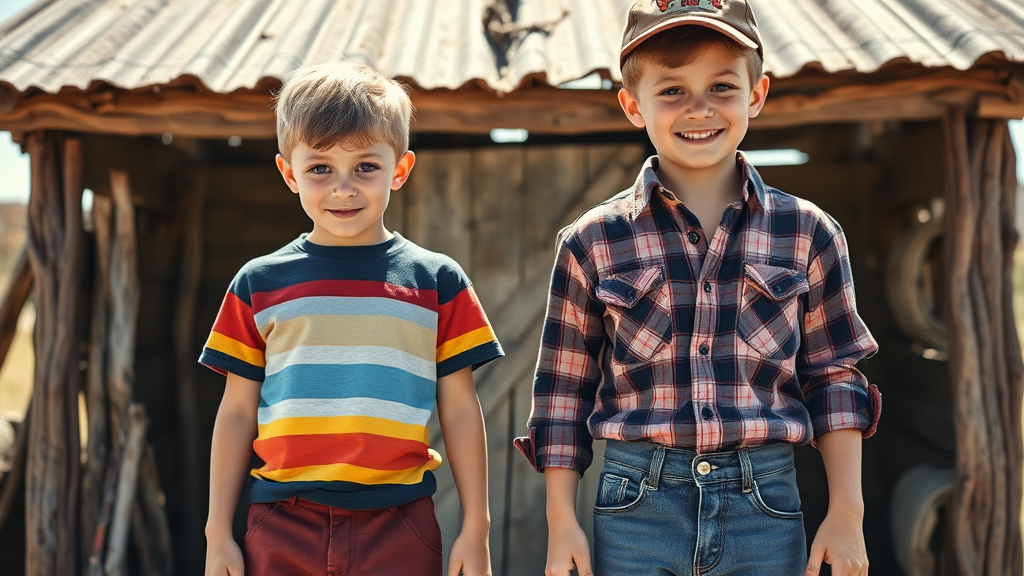
There is a Polaroid of my cousin Nathan and me standing in front of the coal shed. The coal shed is bare plank wood with a corrugated tin roof. Written on the back of the picture in blue ink is Philip and Nathan, 1972. I was 6, Nathan was 12. I’m wearing a four-color horizontally striped t-shirt and maroon pants; he’s wearing a plaid button-up collared shirt, denim bell bottoms and a Mid South Mack cap—the bulldog logo still discernible in the center of the crown. Our arms dangle at our sides after my mother, who took the photo, told us to uncross our arms. Both of us are squinting in the sun, making our smiles look forced. The photo is very faded after fifty years. I only know that my pants are maroon, not the pinkish color in the photo, because they were my favorite pants.

Nathan came to live with my family before I was born. His mother was unable to care for him because she was sick, but we were never told what her illness was. It’s not unusual to see extended families in Eastern Kentucky—cousins, aunts, uncles, grandparents all living under the same roof—but when Nathan’s mother recovered Nathan had already been with us for so long he stayed with us after she moved to Chattanooga, Tennessee.  When I was brought home after being born at the Pineville Community Hospital, Nathan kicked a hole in the living room wall and ran to his bedroom.

Nathan spent his allowance money on wrestling magazines and cut out the pictures of his favorite wrestlers to pin up on the bedroom wall. He had an autographed picture of his most favorite wrestler, Ric Flair, that he often stared at in bed before going to sleep. He told me many times I was never to touch it. When I was three, I was moved out of my parents’ bedroom and into Nathan’s. “I’m your big brother,” he told me. “I was sent here to take care of you.” He would tell me stories as we lay there in the dark; stories about monsters in the woods behind our house, stories about man-eating fish in the river that could jump out of the water and get you, venomous snakes hiding in the weeds. Those stories made me afraid, but they didn’t make me afraid of him. Until he told me the story that did make me afraid of him.

When Nathan was six years old he killed our grandmother. “One night I just did it.”

“Why?” I asked.

“I don’t remember,” he said. “I think I was really mad about something. Don’t tell anyone.”

“I won’t.”

“You better not.”

“I said I won’t.”

* * *

I never met my grandmother, I knew her only from the old black and white portrait in an oval frame that hung on the wall in the living room along with portraits of other family members. Her portrait, like many of them, looked like those old west photos of women with pulled-back hair and masculine facial features. The day after Nathan told me he killed our grandmother, I walked over to the Highway 119 General Store where my mother worked as a cashier and stocker. “What happened to mammaw?” I asked.

She put the last bottle of Nehi in the cooler and slid the glass lid shut. As she stacked the plastic bottle crates she said, “Philip, God called her home when it was time. She’s in heaven with Jesus now. It’s best forgotten. I don’t want you to talk about it no more.” She went to the front of the store to ring up the purchase of someone with a Moon Pie and an RC Cola. She came back to take the bottle crates to the rear of the store for the delivery driver to pick up the next day.

“I just want to know what happened,” I said, more quietly than the first time.

“It’s something that shouldn’t be thought about. Run along back home and play. I have to work now.”

* * *

For my eighth birthday I got a Rubik’s Cube and the next day I found it under my bed with five of the colored stickers peeled off. That Christmas I got a Shazam action figure and a few days later it was in pieces after the rubber bands inside had broken. When my bicycle seat had been slashed I showed it to my mother. “Think of all the poor children in the world who don’t even have a bicycle at all,” she said.

Nathan was quick to anger and I did my best not to provoke him. Whenever I did he would punch my shoulders or pinch my ears. My parents trusted Nathan enough to leave me in his care, even letting him take me fishing to the river a half mile from our home. If I caught the first fish I risked another one of his lashings, so I learned how to secretly remove the bait from my hook before my first cast. His anger never lasted very long, within a day or two he would go back to telling me stories and reassuring me that I really was his little brother and he was there to take care of me. “You know you don’t deserve it,” he said. “but I’ll still take care of you.”

When Nathan was fourteen his face broke out in huge red boils and white pustules. He would spend evenings after supper in front of the bathroom mirror popping them, leaving pus splatter on the glass. The white cream that a doctor had prescribed for him wasn’t working and it frustrated him. One Saturday afternoon after watching a TV science fiction show where one of the characters was a swordsman, he began leaping about and parrying with a leatherman’s awl that he had taken from my father’s steam trunk and yelling, “Look! I’m Lieutenant Sulu! Prepare to swordfight!” He was jabbing the thing close enough to frighten me, but he kept telling me he was just playing and wouldn’t hurt me. Then he jabbed the thing right through my left cheek.

I howled for hours as my mom tried to stop the bleeding both inside and out. The next day as she was driving me to the Daniel Boone Clinic I told her Nathan had done it on purpose, that he was mad because his face had broken out and he wanted to mess up my face, too. “No, he didn’t sweetheart, it was an accident. You have to play careful.”

Nights in our bedroom he would repeatedly apologize and ask to look at the stitch in my cheek. He would lift the gauze and pick at it with his fingernail even as I was telling him it hurt. It was a month before it healed enough for the doctor to remove the stitch. The scar was a pink elliptical.

* * *

My father was asked to pull the float for the 119 General Store in the upcoming Mountain Laurel Festival parade. Every year Mr. Ingalls, the owner of the store, pulled the float but he had passed away a few months ago and his widow asked if my father would like to do it. My father broke the news to us as we sat at the supper table. He told me I could ride on the Massey Ferguson tractor with him in the parade like he sometimes let me do as he plowed our field. However, the day before the parade my father told me he was going to let Nathan ride with him instead of me.

“But why? You said I could ride with you.”

“You can ride next year. Nathan’s going to be 17 next year, so let’s let him ride this year.”

My mother, sitting next to my father, rose from the sofa and went to the refrigerator for a bottle of Coke to mollify me. I had been telling everybody at school I was going to be in the parade. I refused to accept the pop. Nathan, seated in the wicker chair next to the coal stove, smirked and shrugged his shoulders at me.

The volcano of my rage erupted. “He’s a murderer!” I screamed, pointing at Nathan. “He killed mammaw! He told me all about it!”

Nobody said anything, nobody’s expressions changed. My mother returned the bottle of Coke to the refrigerator.

* * *

Things happened pretty fast after that. My mother packed an old Amelia Earhart suitcase with my things and I was sent to Aunt Dorothy’s to live. Aunt Dorothy was 65, widowed, and addicted to cooking sherry. “It won’t be long,” my mother said as we walked over. Aunt Dorothy’s home was just fifty yards away across a creek and up a small hill. “Nathan’s had a hard life, Philip. I hope you understand.” No, I did not understand. I was her son and she was abandoning me. And to Aunt Dorothy of all people! Her home was a moldy shack and she hadn’t bathed or changed her clothes in nobody knows how long.  She looked like a bowling ball with stick figure arms and legs.

My father had telephoned ahead, and as soon as my mother and I went in I was sent to the kitchen where a bag of Fritos and a bottle of Sprite awaited me on the round wooden table. They whispered in the front room for about five minutes or so and then came back to the kitchen. “It’ll be just for a little while,” my mother said, patting my wrist. “I’ll come by tomorrow morning to get you to go watch the parade.” I told her I didn’t want to go. “All right then.” She patted my wrist again and then walked back home.

I spent almost that entire summer at Aunt Dorothy’s. Sunday nights we had supper at my mother’s, and while Nathan and I both participated in the conversations, we never spoke to each other.

On the last Saturday night of August, Aunt Dorothy and I were watching Love Boat and Fantasy Island like we always did. She was reclining on the sagging sofa holding a plastic tumbler of sherry on her belly. “You and Nate will be friends again, Phil,” she said after a sip. “You’re like a little brother to him.”

“No we won’t,” I said without taking my eyes off the television. “And we aren’t brothers.”

“Of course you are. He loves you and you love him.”

I couldn’t take it anymore. “He killed mammaw! He’s the murderer and I’m the one that gets kicked out!”

She sat up on the sofa and set her tumbler on the cluttered coffee table after another sip. “Lord amercy, where do you young’uns come up with this nonsense,” she whispered, jiggling a cigarette out of its pack. “First of all Phil, you ain’t kicked out. We go over there once a week, sometimes more.” She paused to exhale and rub her weary eyes. “This was all so long ago. Nathan was only five or six years old at the time. Pappaw was drunker’n hell like he always was. Mammaw’d had enough and told him to get his drunk ass out of the house. He took the poker from the fireplace and commenced to beating the tar out of her. She was on the floor unconscious with blood coming out of her ears, nose, and mouth before he finally stopped. Pappaw knelt on the floor crying for her to wake up, wailing to high heaven that he was sorry and that he loved her. It wasn’t til Herschel came home that they was found. The whole kitchen floor was covered in mammaw’s blood. Nathan was hid behind the ice box, he saw the whole thing. Mammaw died the next day in the hospital.”

* * *

The weekend before the new school year started, Nathan moved to Chattanooga to be with his mother. I moved back home and had the bedroom all to myself. I wiped the booger smears off the wall next to Nathan’s former bed with a paper towel and Formula 409. Our family grew over the space that Nathan had left almost like he had never been there.

Almost five years to the day after Nathan left us, we attended his wedding in Chattanooga. During the long drive down, I wondered if he’d forgotten me, but upon our arrival I received the heartiest greeting of all when he stuck out his hand saying, “Phildo! How the hell are you little brother? Long time no see.” We stayed overnight at Nathan’s mother’s house, which he and his bride also lived in. My mother kept Nathan’s wedding portrait on her nightstand until the day she died. It scarcely resembled a wedding portrait, Nathan in a cheap Botany 500 suit, his bride Angelina in a Kmart casual skirt suit. Nathan is smiling with his lips closed, Angelina isn’t smiling at all and no matter how long I look at it I can not make out the expression on her face.

When I cleaned out my mother’s home in 1999 after she died, I found all of Nathan’s cut outs of pro wrestlers, including the autographed one of Ric Flair. I telephoned Nathan in Chattanooga to see if he’d like me to send it to him.

“I never had an autographed picture of Ric Flair,” he said.

“Sure you did. You always used to tell me not to touch it.” He insisted he’d never had an autographed picture of any pro wrestler and launched into a story about catching a 30 pound channel catfish in the Tennessee river over the summer. One fish tale led to another and as he talked, I listened for any evidence of what he’d seen as a child, listened for any trauma that might still be living within him. After his final fish tale I asked again if he wanted me to mail him the picture.

“Naw. Just do whatever you want with it.”

I fingered the small pit on my left cheek as we said our goodbyes and hung up.


Hugh Blanton’s latest book is Kentucky Outlaw. He can be reached on X @HughBlanton5.


If you would like to be part of the Rural Fiction Magazine family, follow this link to the submissions guidelines


Please share this story to give it maximum distribution. Exposure is our authors’ only pay. You can also help our contributors gain exposure by back linking to them and to RFM’s homepage.


Image generated by AI

“Breakdown” Short Story by Larry D. Thacker

"Breakdown" Fiction by Larry D. Thacker: Sunrise in KY mountains

The rut was too deep for Alder’s car. He knew it the instant he hit it, but he’d been too determined and stubborn, moving too fast to make careful adjustments. The car hit fast at the wrong angle, bounced the frontend, and slammed down, the feeling and sound of a hard cracking thump vibrating through the floor panel into his feet. It was over that quickly. 

Steaming antifreeze puffed and streamed out with a jet, up from the front grill, from underneath. It was like a smoke bomb, lifting and trailing in the wind down the thin road and curling off the cliff to his right. He knew what he’d done. Antifreeze has a distinct sickening scent. 

Ahead were higher hills. Nothing behind them but clean, cold sky. Kentucky sky. Behind him was nothing but Virginia. He’d gotten so close.  

The road had worsened the longer he’d tempted his luck after finding the mining gate wide open, after driving past the weekend’s inactive equipment and pallets of stacked material, into areas void of trees, the grounds along the roads barely organized into naked eroded soil. He’d taken one of four branching muddied graveled roads up into smaller treeless hollows. The road thinned, leaving no choice but to continue up, hoping for an eventual wider spot for switching back and getting out of the mess he knew was getting worse every hundred yards. But the higher and further he pushed the vehicle, the more distracting the surroundings became. And now he was stranded. He knew that before even checking.         

Keeping the car running just long enough, he pulled forward, scraping along the frozen rut, and parked on what little shoulder there was along the road’s narrowness and killed the engine before it could seize up. An earthen cliff, only a few inches from his tires, fell at least a hundred feet to another winding route in this web of road. 

No one was around. Why would there be? It was a Sunday. 

Stay calm, he ordered himself. Breathe. And think. He stared out over the hood of the car at the distant hills, smirking. So close.  

The door gave a cold, rusty squeak as he opened it. He swung his feet over and out. The ground was a cold hard, an ungiving stiffness that hurt his toes. The dread of that feeling was already creeping in, a memory of frostbite from years before. He’d neglected reacting to the numbness in his left foot for too long during one of several stints along the South Korean side of the DMZ. It was in mountains just like this, steep and treeless. It wasn’t until he got to a warm place and his feet started thawing and stinging and pulsing in a strange way, like they were on fire, that the medic declared how he’d be lucky to save the two darkening toes turning pretty shades of blue and black. Now those toes were always what got cold first on his body. A sign of things to come, like bones aching before bad weather.    

The walk out of here would do him good, even in the cold. Wake him up and teach him a lesson. He tapped a smoke out of his pack and fought the wind and lit it and leaned against the car feeling calmer than he probably should have, grinning at how the hood’s heat warmed his hand. The cigarette smoke took on a life of its own, joining the gray smoke now swirling up from his wheel wells and the vent between the hood at the windshield. A warm, sickening steam. Sweet. No wonder a dog would lap up anti-freeze. He stood there in it, letting its warmth coat him for a moment. He was already getting cold. He’d miss this little bit of heat down the road no matter how much it stunk.   

If there was a time he needed cell coverage it was now, but he knew better. He tried. No signal. Things were instantly more complicated. You’d think a more isolated spot would warrant more tower coverage. But then, who would he call? 

Hey there, mom? I’m broke down two hours from you, can you come get me? 

She would have tried, but he would never have asked. 

Hello, officer, yeah I know it’s Sunday afternoon, but do you know any tow companies working out in the middle of nowhere? Maybe the embarrassment of it all made him hesitant.

He’d canceled his roadside service months ago to save a few dollars. 

Thinking there might be someone around, he listened. Called out. Some four wheelers in the distance revved up, their noise faint through the radiator’s hiss. The wind sung in his ears and stung his skin. The sun was warm in places up here, warm enough to stave off the cold for part of the walk out. 

He took another drag off his cigarette and went to the front of the car, got on all fours, his hands sinking into the thawing muck, and eyed the area under the engine. The anti-freeze’s fog barreling out into his face made his stomach turn, tearing his eyes. He pulled his hands back, avoiding the steaming green river of fluid snaking its way across the icy mud. Most of the ground was solid, but wet enough to soak cold through the knees of his jeans, running cold up his legs. He went back and sat in his car with the door closed, trying to use up what little warmth was left. He stuffed a leftover granola bar in a pocket. He flipped the collar of his coat and got out and walked away from his smoldering car. 

He halted after a few steps. What was he noticing? Nothing. That’s what it was. There was no hint of life from where he stood. No sound but wind. No houses, no people, no animals. No animals. No movement. The destruction here had driven away anything resembling normalcy. It was disturbing, even more desolate than the cleared no-man’s land look in spots along the DMZ stretching between South and North Korea. He’d memorized that scene after so many days and nights patrolling in weather easily colder than this. At least you could see topsoil and a little movement along the zone, though it was the most armored and dangerous piece of real estate in the world. At least some trees and life lived there. 

Trees had lived here, once. He could feel what was left of them under his feet, buried root balls of monster trees, pushed around and covered, compacted by lesser minded animal machines. Yes, there were trees, and everything else, all the green replaced with wintered dirt and clay and rock. A complete vacuuming up of the earth, pushed around, away. Out of sight. For some unseen purpose.        

The cold snapped him from his daydream, and he stumbled down the way getting a feel for the road. It was crisp slush, frozen brown and black mixes of mud and gravel, fist-sized and smaller chunks of coal scattered about, driven over and stabbed into mud. Frozen dirt crunching underfoot. Gray snow patched spots along the road’s edges. He knew there was asphalt down the hill. Walking would be easier then. This was coal mine property, but where the hell were the mines? Far down these webs of tiny roads he reckoned. 

A stiffer wind whipped up and the sun was gone at the first turn off the hill as he stepped into the mountain’s shadow. It wasn’t quite freezing, but what’s the difference in twenty-five or thirty-five degrees. Miserable or very miserable. At some point it doesn’t matter. Numb is numb.     

He’d never been around this sort of mining and didn’t have a clue what he was seeing. The hill was steep and high to his right with a cliff dropping off his left like a sheer cut wall. It appeared to be more of a strip job operation than an underground mine, but his view was limited, even from here, and he couldn’t see any real work going on. No large spots of coal were evident around these dug up swaths of land. More like they were staging areas or routes out for something much more serious going on further out into the hills.  

Across the valley and up another mountain, behind another flattened hill, past a stripe of evergreens and leafless trees, was a ribbon of exposed earth, a bulldozer, mounds of dirt and tangled trees. The top of that hill was intact. A broad body with a head of trees with treeless vertical shoulders and a scarf of trees, green, gray, then brown-yellow, and green again. 

Below the drop off to his left was mostly flattened overturned earth with three roads headed up the hollow into thinner valleys. The top of one of the smaller hills was perfectly flat, a single tree clinging sideways from a bank by stubborn roots. 

There were splotches of missing foliage, both sides of the roads disturbed in one way or other a hundred feet out on each side. He wondered where the mining actually happened. Some heavy equipment sat idle in groups of twos and threes well up the roads. A crane strung a lynched generator thirty feet in the air. He wondered if they left the keys in these machines. Do they even use keys in these things? He looked into the crane’s massive control compartment. The cab, big as his car, full of levers and knobs and unlit controls.  

He’d walked long enough to feel the numbness creeping in. His steps crunched on the road, the scrapes and bumps painful through the sole of his boots as his toes and heels numbed, the cold ache working into the arch of the feet, then the ankles to his shins. Before he managed to walk very far, he regretted his ignorant try at the mountain even more. No chance at a story was worth this.  

His pant leg bottoms were caked and stiffening before long, his boots heavy in clumps. The gusts of air burnt his face, drying and tightening his skin. His eyes squinted with tears. 

He got back to the gate, the quiet equipment, the unmanned guard shack. He peered through one of its dust caked windows, sheltering behind the building and watching his breath jet away in foggy shots. It was tiny, with CB radios on the wall, a phone, windows on three sides and the door. A desk was layered in unorganized papers and clipboards. A small space heater sat on the floor, unplugged. The guard was either a slob or no one had worked there in a while. A manual rested on the desk by a telephone holding down a stack of newspapers. He thought about testing the door, turning on the heat and trying the phone, but thought better of it. The last thing he needed was someone accusing him of breaking and entering. 

It would have been nice if someone had been there before, halted him at the gate. 

Buddy, only a dumbass would take that car up in there, and besides, you’re not allowed. Turn around and have a nice Sunday afternoon. 

He’d have taken that advice, maybe gotten a lead, asked him about the mystery lights up on Black Mountain, why he was there in the first place, then went on about an uneventful day. Turned around and went back into town for some coffee after a friendly conversation with all the mysteries of the mountain lights laid out for him by a kind and bored guard. He’d have settled for that.  

The mud and gravel morphed back to cracked pavement, like fractured, cold desert floor. He walked on until there were trees finally overhead and sheltering the walk, spinning their leafless frames from one side to the other, joining and mingling hands, holding back the sun’s warmth. A quick running creek mirrored the road to the left, murmured at him as he walked. He tried staying along the left shoulder on the grass, but the thick black dust and frozen mud pushed him back onto the road. Eventually there was no evidence of the mine property behind him, and he didn’t look back. The scene was in his head enough, in the form of a new question. 

He finally noticed a house up ahead. He was relieved to see movement in the yard, a man in jeans and a denim work coat and cap walking out, checking something in the bed of a truck, rummaging around, turning, glancing in Alder’s direction and going back in. When he got there and started into the yard a black pit bull raised its head and stared from the porch. Alder hesitated in the street. I hope you’re tied up, he whispered. Just don’t chase me, he begged under his breath. I couldn’t run if I had to. 

Alder kept on, frustrated, turning his head from the animal’s eyes, feeling its stare through the back of his head, trying not to challenge the dog’s space. He tried walking like he lived around these parts, casual but determined on a cold day. With somewhere to be. Almost past the house, Alder sensed movement from the porch out of the corner of his eye. He angled his head slightly, catching a glimpse of a curtain peeking open. Someone was checking him out. 

The dog caught his slight glance and let out a startling drum of alarms. It jumped to all fours, cold slobber stringing from its ratcheting jaws. Alder picked up the pace. The barking set off two more dogs in the direction he was headed. At least there were more houses coming up. 

Seven houses in a row, two on the left, five on the right, were identical, except for one painted red and another with green siding. The only real differences were the plants on the porches and the landscaping. A concrete yard statue here and there. A frozen birdbath. Different cars and trucks in front along the road or in muddy driveways. What made them most similar was the hardened gray dust coating them. Blackish smoke seeped out from most of the chimneys, hovering near the roofs before the wind pushed it up the hollow or back into the woods. He could tell from the smell they were burning coal. The smell was unmistakable. Acrid, choking, the gritty taste coating his tongue. 

He was finally to a Y in the road with several houses. Now was the time to ask for help. Surely someone would be out. Hopefully they’d look approachable. Hopefully he’d look approachable, too. Rude or not, I want out of this jam before I freeze to death, he thought, putting on a smile and looking around, hoping he looked as lost as he felt.    

A screen door groaned and slammed. A comforting sound. An elderly lady in her long plaid housecoat, hunched, moved slowly and steady as she struggled a bag of trash out the front door of her doublewide. The heavy bag was about as big as her. She carefully took the steps, setting both feet on each level, the bag plopping down behind her near ready to burst. A little dog trotted along at her heals, yipping at the bag. Alder was standing in the road next to her mailbox, near her trashcans. She kept coming and didn’t see him. 

He cleared his throat. “Hello there?” 

The dog halted in its tracks, commenced barking and bolted away behind her, tangled in the lady’s feet and nearly tripped her, all the while the lady, also startled, let out a yelp louder than the dog’s, elevating her head from the hunched position, saw him and let go of the heavy bag of garbage she was dragging, almost dropping it on the retreating dog.      

“I’m so sorry I startled you, ma’am.”   

She seemed embarrassed for letting out her little scream, rubbing her chest. 

“Startled me?” she shouted in her little voice up to his face, “You scared hell outta me, young man! You a preacher or somethin?” 

He wasn’t expecting that reaction and he didn’t get her joke.

“I’m sorry? No, I’m not a preacher…” 

She rolled her eyes.

“I said,” she began slowly, “you scared the hell out of me. So you must be a preacher, right? It was a joke, young man.” She laughed in a pitying way and rolled her eyes again. “That used to be a common joke,” she smirked.     

“Oh. I’m sorry. Really. Here, let me help with your trash.” He picked up the bag and carried it the rest of the way and tossed it into one of her three 55-gallon drums.       

“It’s a mite cold for you to be out in the elements, ain’t it?” she asked, her hands on her hips in a friendly, but judgmental stance.  

“It’s pretty cold for you to be having to drag trash out, too,” he countered in a friendly way.   

She grinned, arching up to see him clearly.   

“Well, they come on Mondays early. The dogs get in it if I miss pickup day,” she said, still catching her breath.   

Alder took the chance. He was pretty cold and miserable by now. There was a little short bed truck beside the doublewide.   

“I broke down up on a mine road. My radiator’s busted up.”  

“It’s a cold day to be breakin down. Course breaking down ain’t no fun no matter when it happens. But I’d rather it in the spring at least, wouldn’t you?”  

“Yes, ma’am.” he agreed. “That would’ve suited me better.”   

She made a sucking sound on her teeth, obviously thinking on something, reaching her head up again and staring, like she was looking through him. Alder stood straight, giving her time to size him up as a stranger hinting politely for help.    

“Well, we can drive my truck into town. Ain’t you cold?” 

He thought she might invite him in, which would have been too awkward for him to accept.  

“Let’s get you into town then, young’un, so you can warm up.” 

No invite in. She was friendly but not stupid. They walked to the truck. She had the keys in her housecoat pocket.   

“Where exactly you wantin to go? I ain’t takin you to Hang Rock. I don’t drive that far.”  

“I don’t know this place. I’d just like a place to warm up that’s got a phone. Get my car looked at and get on home.”  

“Not much open on a Sunday. There’s a diner in town. They’ve got the best food. And they’ve got a phone, too, if Dillard’s paid the bill. And Lord, they keep it burnin hot,” she added. “You’ll warm up nicely in there.”   

“You get me to town and I’ll take it from there. I’m just glad for the offer.” He made for her side of the truck to get her door. She shooed him away.  

“Don’t you fret none,” she said, sizing him up some more as he climbed into the passenger seat. “It’s Sunday everywhere,” she said, “The Lord’s watches closer today.” She grinned a wide grin, her way of acknowledging she was taking a chance on a stranger, but under God’s watchful eye.   

The tiny dog ran up from hiding and leapt into her lap before she slammed the door, twice. It made a metal-on-metal sound each time, startling the dog once again. It gave Alder a narrow-eyed once over.  

“Hmph. Some watch dog. I’ll trade you for another mean cat,” she muttered. The inside of the truck was warmer already. She apologized for the heater not working too well.    

It was only two miles, but she was a slow driver, weaving out of her lane and straddling the middle of the road, swerving when cars approached. She threw up a hand and waved as they passed laying on their horns. He tried to distract himself from the possibility of them not making it to town. 

“I’m Alder,” he offered, keeping a nervous eye on the road. “Can I help you with some gas for your trouble?”   

“This thing won’t burn no gas between here and there. Don’t worry. But thank you, though.” She didn’t offer her name. “Nice to meet you, Alder.” 

“Let me ask you, why were you up there in all that anyways. That’s the mines. I don’t think you work up there.”  

“No, I don’t.” 

“Was it worth getting stuck?”

So far it wasn’t.   

“I’m here to write a story.”   

“For what?” 

“A newspaper back home. In Labortown.”  

“Never been there that I remember. Don’t read the papers much.”  

He didn’t push it. If she wanted to talk he reckoned she would. The dog just sat still on her lap the whole way, staring, panting, baring its teeth occasionally to remind him to stay where he was. Alder didn’t make any sudden moves. Little dogs were the meanest he’d ever seen. You could fight a big dog off, like a person. A tiny mutt with a Napoleon complex would eat you up and have you bleeding to death from scratches before you could find where it was on you.   

He figured she might eventually ask what he was writing about, curious why this stranger was getting stuck and bumming rides. 

“So you’re a newspaper man, huh?” she asked. 

Alder nodded a little proudly.  

“You up there nosin around about the water?” 

“No ma’am.” 

“Them explosions? The dang equipment runnin through all hours of the night?”

“Well, no, ma’am.” 

“Layoffs?”

“No.” 

“What then?” she wondered. 

“Lights,” Alder said. “Mysterious lights. Around Black Mountain.” 

“Lights?” she laughed. “You mean like aliens and silliness like that?” 

Alder was careful how he continued. 

“Not UFOs in that sense. No. Just reports of strange lights.”

The woman scoffed. “First, you weren’t even close to Black Mountain. Second, everybody around here’s heard about them lights. You ain’t the first to wonder on them, young man.” 

“You have an opinion of what the lights are?” 

“I do,” the woman said, “I reckon everybody’s got an opinion on what they are.” 

After that, nothing. She quit talking. She’d lean up and glance to the sky and shake her head. It was killing Alder, but he didn’t push it. 

Where she dropped him off was one of the only places with any sign of life. A diner on the main street that reminded him of the Waffle Hut back home, only homier. He hopped out. 

“I thank you,” he said, closing the truck door, twice.       

She studied him a second and spoke. “Well, I figured you’d need a ride when I saw you comin down the road. Jenkins up there called me and told me to watch for ya. He’d have offered you a ride but he was gettin ready for work.” 

She grinned an all-knowing grin and told him goodbye and to be careful. 

“Make sure you try some of Faith’s chocolate pie in there,” she advised as she pulled out into the road without looking. She was laughing. Alder stood there letting it settle in that he hadn’t, in fact, startled the lady at all back there in her yard. The little dog hopped up on its front paws behind the passenger seat window and let out a string of high-pitched yelps at him as she sped off toward the only other place with any sign of life, the Family Time Thrift Mart.


Larry D. Thacker is a Kentuckian writer, artist, educator, and reality actor, hailing from Johnson City, Tennessee. His poetry and fiction can be found in over 200 publications including SpillwayPoetry South, The American Journal of Poetry, Appalachian Heritage, and Still: The Journal.  His three fiction collections include Working it Off in Labor CountyLabor Days, Labor Nights: More Stories, and Everyday, Monsters (co-written with CM Chapman). His poetry includes four full poetry collections, Drifting in AweGrave Robber ConfessionalFeasts of Evasion, and Gateless Menagerie, two chapbooks, Voice Hunting and Memory Train. He is also the author of the non-fiction folk history, Mountain Mysteries: The Mystic Traditions of Appalachia. He is a cast member on the new Netflix original series, Swap Shop. His MFA in poetry and fiction is earned from West Virginia Wesleyan College. Visit his website at: www.larrydthacker.com


If you would like to be part of the Rural Fiction Magazine family, follow this link to the submissions guidelines. If you like contemporary dark fiction and poetry, you may also want to check out The Chamber Magazine.