Tag Archives: hunting

“Watching the Birds Rise” Short Story by Tom Riley

I was my paternal grandfather’s least favorite grandchild.  My father’s parents lived in Marshall, a small town to our west, and were farmers by experience and temperament, even though they lived in town and not at their farm, a quarter section of pastures and old growth woods on the chalky hills of the Missouri river valley.

My mother’s parents lived to our east in St. Louis.  As with all children who don’t yet recognize the differences in his family and others, I thought this symmetry was universal.  One had country grandparents and city grandparents.  We visited both for most holidays, and I was shipped off to both each summer, riding the greyhound bus for a week in the city or one in the country.

I find myself remembering these times more with each passing year, especially those with my Grampa and Gramma about Thanksgiving and Christmas.  As I’ve grown older, I’ve come to appreciate older things, and the rhythms and routines of rural life seemed rooted in more elemental times.  Those times feel largely lost now—life reduced to frenetic reactions to a torrent of forces we don’t control, not deep interactions with our own natural world, and I wonder if such a loss is so deep-seated that it may be recognized only in memory.   

One of my earliest memories was in Gramma’s and Grampa’s house, which sat on a street corner in downtown Marshall.  Headlights would shine into the tall windows of the bedroom where I slept and race around the top of the walls in different patterns as cars turned one way or another.   Our own house sat back from the road, so I wasn’t used to this, and I dimly recall staring at lights flickering above the bed, frightened by these apparitions, and ashamed when I eventually realized what they were.

Gramma and Grampa’s house was a Victorian filled with antiques, silver, hardwood, crystal, millwork, oil lamps, and innumerable fancy things I did not recognize but was afraid I’d break.  The house itself was so old it seemed alive, groaning with unfamiliar sounds and smells of yeast rising in the air even though Gramma’s kitchen was small, like an afterthought, next to the mudroom and backyard.  

Outside the kitchen, an apple tree, whose fruit was so tart there were always some for picking, covered the small yard next to a detached garage.  Underneath its branches was the dog pen, where Grampa’s dogs zoomed back and forth when I’d come for a visit, remembering my scent or knowing a trip to the farm would follow.  Grampa would let them out and Zero, the German shorthaired pointer, would almost knock me over with kisses, until Grampa would whistle, and she’d return to the kennel with a younger redbone coonhound in tow, whose name I don’t remember.

Then, Grampa would turn and carry my bag inside past a granite millstone and iron kettle and up the stoop to the kitchen, seemingly in just a step, while I raced to keep up. Grampa was a tall man for his age, stood bolt upright, and moved in a straight line no matter where he went.  Grampa seemed to walk not so much with determination, but with certainty of where he was headed; each step taken with the confidence of knowing where they would all end.  His long arms swung easily by his side like metronomes marking the constant rhythm of his pace.  I remember his hands the most.  Huge, with long fingers stretching from knuckles as big as peach pits, and skin course as sandpaper.  Grampa rarely looked at me, but he also rarely looked down, with all that knowledge of where he was going and how he’d get there I supposed.

When he would take me to the Homeplace, as he called the farm, which always confused me, we’d climb in his old beater Chevy truck with the dogs piled in back.  Grampa drove like he walked.  Always the same speed.  40 miles per hour on the highway out of town, as cars sped angrily past, and 40 miles per hour on the gravel road, as dust spewed violently behind us.  

Mister Porter, the farm’s caretaker, no longer lived in the small farmhouse, which sat empty next to the chicken coop and the barn with horses I’d feed apples I had picked and sometimes ride along the trails to the hills deep in country.

Grampa was not just a farmer, but also a hunter of some renown.  My dad had been too, and we would practice shooting, but I always wanted to hunt with Grampa.  It just was never the right time I guess.  So, we’d pull what was needed from their garden, or walk the back forty, or sometimes gather deadfall hardwoods after Grampa said they’d seasoned long enough.  Zero would perch proudly on top of the log pile we’d deliver to Gramma, who would light a fire and brag on what good wood I’d found.

The world was younger then, but seemed older, and as old things are ought to do, it shared its secrets most at the holidays, like the fancy dishes Gramma would haul from the musty basement once a year.  Moments of connection so powerful they sparkled above the monotone greyness of the dark seasons.

I rarely visited my grandparents over the holidays by myself, but I did one Thanksgiving.  I think someone was sick, and maybe that’s why Grampa said we could quail hunt.  I don’t remember exactly how old I was, but I know I was still the age when excitement always overpowered sleep, and I don’t think I slept a wink before Thanksgiving.  I watched the headlights circle the room until they went dark and listened to the branches of an old oak scraping the roof before the wind, too, went to sleep.

So, I was awake when I heard my grandparents moving and saw light under my bedroom door Thanksgiving morning.  I knew Grampa would never wake me, so I dressed quickly before heading down the back staircase to the kitchen.  I could smell ham cooking and hear Gramma humming softly above the popping grease; she smiled and told me to get my boots and coat so I’d be ready when Grampa was.  As I pulled on my muck boots, Gramma took the fried country ham, piled steaming slices in biscuits directly from the oven, and wrapped them in cloth napkins.  She poured a flask of coffee for Grampa and a thermos of hot chocolate for me.  When Grampa came down a few minutes later, Gramma handed each of us our sandwiches.  I was hungry, but I put the napkin in my coat pocket like Grampa did.  He grabbed his 12 gauge and my 410 and headed into the darkness and the cold.  

Zero and the redbone burst out of the pen when Grampa opened the gate.  For once, they didn’t jump on me but raced straight to the back of Grampa’s pick up and leaped into its bed.  I followed and slid stiffly onto the truck bench waiting for the heater to kick on.  The Chevy chortled to life, louder than usual, and we pulled onto the empty streets and headed toward the farm.  

I was nervous.  I liked practicing shooting clay pigeons with my dad. I knew to brace the stock against my shoulder, tracking the target through the sky, leading it slightly, and then pulling the trigger to vaporize it in orange dust.  More exciting than sitting waiting for a deer—I thought but didn’t know–because my mom wouldn’t let me shoot deer.  But, now, I would be hunting birds with Grampa.

It was still pitch black when we turned west off the highway onto gravel, our headlights bouncing furiously ahead, until swinging into the farm.  We stopped at the house for Grampa to start a fire in the franklin stove with all the kindling we could find to hand, before heading north into the land, Zero bounding ahead with us falling into a heel line behind.

I had always liked walks through the farm, where place is so deeply rooted time would bend and slow, or at least Grampa sometimes would.  But this morning seemed sharper, and I shivered in the bone cold as the hard frost cracked below our steps.

At first, we walked in emptiness, all crunching and breath, but after a while, climbing a barb wire fence and skirting cattails surrounding the far pond, the cold waned.  In the thinning blackness, fog rose from the pond like dog’s breath, and ground softened underfoot.  Feel soon gave way to sight, dimly revealing form and shape.  Twilight reflected below the eastern clouds onto the silver-tinged fields.  Most of the leaves were gone except for the oaks and sycamores.  Bare branches cleaved the dawning sky.

As we made our way to a coppice of ash, we could begin to see the colors left over from fall.  The brightness of sugar maples and sweetgums had long ago faded, and even the yellows of hickories and walnuts gathered round their trunks.  Only the rust of red oaks, burnt gold of sycamore leaves, and the ruddy green of scraggly cedars gave hue above the still dark earth.

When we descended into a hollow, a solitary cardinal song was joined by chirps of sparrows and trills of chickadees.  Further afield, we could hear the jays and crows cawing at one another —an argument that would go on until spring.

We followed a small stream winding lazily through underbrush of snakeroot below hawthorns crowded in a long draw.  Walking here was a chore, the cattle having grazed other fields, the switchgrass and bluestem, almost my height, bit as we walked, but, me and Grampa, we liked the gulleys, furrows, thickets, brakes, and untended edges of things.  They held warmth against the cold in winter like shade against the light.  So, it felt good beside the sheltered water before we pushed for high ground.  As we climbed, we chanced upon the scat of deer under a mulberry and followed their feetings in the vanishing frost over untouched hedge apples to the timber edge.

When we crested the hill, I was panting and even though Grampa was carrying my gun, I was slack tired.  But I didn’t say anything.  Grampa must have been tired too, though he didn’t look it, because he said we should sit on a downed pine log for breakfast.  With the pungent smell of pine needles rising around us and the dogs circling impatiently, we sat and ate.  I hurriedly downed the salt, buttery biscuits and ham and gulps of sweet chocolate as Grampa stared silently out across the fields where quail were roosting.  The faint daybreak shade retreated east.

Grampa loaded my 410 and handed it to me.  It felt surprisingly cold and heavy.  He said to walk ahead of him to his left with my gun facing out.  The dogs began close working a patch of vetch as we moved down from the hilltop.  

A redtail hawk screeched overhead but I couldn’t see it even in the dawnlight.  I held my gun awkwardly as Grampa whistled at Zero, who tracked toward an old fencerow below us with the coonhound holding hard behind.   I stared into the brambles piled around old posts looking for any movement.

As we closed to maybe 30 feet, Zero froze on point.  I looked back at Grampa who nodded toward the fencerow and I stepped closer, knowing he would give me first shot.  One more step.  A breath.  A snapped twig.  And the covey of quail shot from the brush, six birds erupting skyward.  

Startled, I lost my footing as I swung the 410 toward the quail now angling away.  When I regained my balance, pulled the gunstock into my shoulder, and fingered the trigger, I finally sited the quail, but they were already too far . . . sinking toward a stand of birch lining the creek in the valley floor. 

Then, I remember only my heart pounding in panic as I had not even taken a shot.  It seemed like an eternity before I could bring myself to look back at Grampa.  When I finally did, our eyes didn’t meet as he was staring ahead at the quail now far below, but he laid his hand on my shoulder.  His giant fingers now surprisingly light, and as I looked up again, I followed his gaze toward the creek where the quail were about to alight before whirring up and away again, drifting into the soft sunlight like sparks from a fire, below redtails now visibly circling overhead. Then Grampa smiled, and I knew everything was good.

I often remember that morning in that place with my Grampa.  And as my children have grown and I may have grandchildren of my own, I worry if I have such memories to give.  Maybe it’s just the years that have worn those moments smooth.  Or, maybe it is the wishful clarity afforded by distance.  Maybe, today requires more effort than I can muster to truly step outside.  Or maybe new traditions always replace old ones because nothing should stay the same.

Or maybe, there’s just nothing quite like standing chest high to your Grampa on an early winter morning watching the birds rise.


Tom is a lawyer in the small town of Fulton, Missouri.  He spends all the free time he can outside with his dogs, farming, gardening, and reading and writing about nature.


If you would like to be part of the Rural Fiction Magazine family, follow this link to the submissions guidelines

Please share this post to give it maximum distribution. Exposure is our contributors’ only compensation. Don’t forget to back link to this.

Financial donations through either our GoFundMe or Buy Me a Coffee accounts will help expand our global reach by paying for advertising, more advanced WordPress plans, and expansion into more extensive Content Delivery Networks.


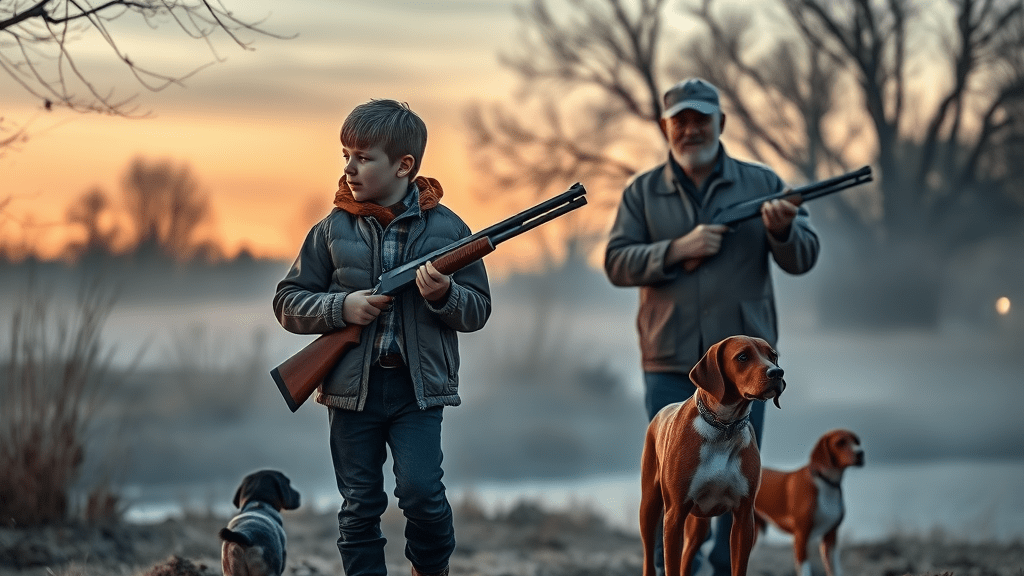
Image generated by AI

“Hell Hog” Fiction by J.D. Clapp

Henry looked at the dead puma. Jesus H. Christ…Never seen anything like this shit. He nudged the corpse with his boot. Two-year-old male. He bent down, pulled his Buck knife from its worn leather sheath, and used the fixed blade tip to raise the dead lion’s outer lip to examine its teeth
and gums. Full set of healthy teeth, including razor sharp fangs. Henry scraped a little bit of blood and flesh from the teeth. The puma had a tuft of bristly boar hair stuck in its lower lip. He bit that hell hog at least once.

Henry checked the claws next; they were also healthy. From the front left paw, he pulled another tuft of the boar’s coarse hair from between the toes. He pushed the pad just under one of the retractable claws, forcing it out. The claw also had dried blood on it. Raked him, too.

He rolled the corpse on its back. Damn, that hell hog splayed him open, mid-stomach to ball sack. Henry ran his hand over the rib cage; he felt at least three broken ribs. That bastard steamrolled him, just like the two cur dogs and pitbull he killed a couple weeks back. This bastard is big.

Henry dragged the cat off the single track by the tail, then used his knife to skillfully cut its head and paws off. He carried them over to his side-by-side and wrapped them in his camo jacket. As a professional hunter, Henry knew this was illegal as shit in California. Hell, I only seen one mountain lion in my life. I ain’t gonna get this chance again. I’ll make me a claw necklace and euro mount the head. He unsnapped the tie downs holding his shovel, then headed back to bury the remains.

#

From the top of the ridge at the edge of his ranch, Randall Miller waved for Henry to come up. Henry nodded and waved his cowboy hat, then jockeyed the ATV up the twisty dirt road. He stopped at the cattle gate leading into Randall’s ranch.

Randall greeted him, his old .44-70 with iron sites resting on his shoulder and his .44 magnum revolver strapped to his hip. Jesus, the old boy looks like he can barely carry his own weight let alone that old lever action and the hand cannon.

“Howdy, Randall. I found that dead lion you told me about down in the wash below west ridge.”

Randall blew snot cowboy-style from his nostril, then spat Redman juice into the dust. He looked at Henry with his good eye, his blind milk-white eye locked vacantly to the right.

“Ain’t never seen a damn thing like it,” Randall said.

“Amen to that. This is the nastiest boar I’ve ever heard of.”

“You gonna find and kill that sombitch before it kills another dog of mine?” Randall asked.

Henry smiled. Worry about yourself old man…that boar’ll kill you if he gets a chance.

“Yep. Randall, I’ll kill that boar for you. For now, you just keep your dogs in their pen for a few days. Tomorrow, I’ll bring out my ankle biters and scent hound and catch his ass.”

Randall spat chew juice again.

“You kill ‘em and bring me the skull and cape and I’ll pay you double. I want to mount that sombitch and hang him on the damn wall.”

Henry nodded, turned, gave a wave without looking back and headed to his side-by-side.

#

In the shade of the canyon, Henry drove down the dirt track just faster than he could walk, his body leaning out, his eyes scanning the dirt hoping to cut a fresh track. His scent hound, Clovis, sat next to him on the passenger side, his nose lifted into the breeze trying to catch the first pungent whiff of boar. Behind them, their leashes clipped to a D-ring bolted to the bed, his rat terrier, Mabel, and his jack russell, Gertie, laid on each other napping. Henry loved watching the little dogs fearlessly latching on to the ankles or ball sacks of pissed-off boars.

Henry spent the entire morning zig-zagging the network of ranch roads and trails that wound through the canyon. He knew the pigs would push up into the foothills soon; the days were getting hotter, and the creek was a trickle now. The mud would dry soon. I need to kill this bastard before he kills another dog or moves up into the hills for summer.

Around noon, Henry stopped atop a knob to glass. He hadn’t cut any fresh sign. He let the dogs loose. Mabel and Gertie stretched, sniffed, pissed, then began chasing each other in a big zig-zag.

“That’s it girls, get some exercise. We ain’t finding this bastard today.”

Clovis ambled a few yards out on the point and made a few circles with his nose held high. Smelling nothing, he laid in the dirt and promptly fell asleep. Henry pulled out his cooler and grabbed a cold Diet Coke and some jerky. He had two cold beers ready for after he killed the pig. Where the fuck did you go, you nasty fucker? Hell, I don’t even know what you look like…

#

Sometime around 1:00 a.m., Randall’s hounds began howling and yapping in their pen. Sombitches best not be yapping at a goddamn skunk again. The cacophony grew in volume, becoming frenzied after a minute or two.

Clad in long johns, Randall grabbed his .44 magnum, wrestled himself into his cowboy boots, and donned his cowboy hat. He’d almost tottered to the dog pen when he caught the rancid stench of wild boar. Goddamn he’s close.

Randall opened the pen and his four remaining cur hounds raced toward the small avocado orchard behind the ranch house. Randall gave chase in a slow, unsteady jog. He could hear the dog’s barks becoming more urgent. They’re on his ass now.

Randall became winded. I ain’t gonna catch ‘em on foot. He decided to get his ATV. I’m gonna kill that bastard myself!

He was halfway across his yard to his garage when the big boar charged. Half-deaf from age and gunshots, he heard a grunt right before impact.

As he laid in the dirt, blood trickling from his mouth and ears, and a warm torrent of blood running down his thigh, he realized the dog’s barks were moving further away. Then Randell realized the boar had returned. He reached for his pistol.

#

Just after sunup, Clovis picked up the scent. Henry clicked on the dog’s collar, made sure it was registering on the iPad display, then cut Clovis loose. As a scent dog, Henry had trained him to track and point when he was within a hundred yards.

“Once old Clovis finds that bastard, you girls are going to catch him and fuck his nuts up,” Henry said to his little terriers. Gertie pawed at the air, ready to work. Mabel yawned.

Henry watched the iPad icon of his hound move on the GPS grid. Clovis worked in a slow arc, first moving away from Henry, then looping back. That boar is moving slow.

Around 9:30 a.m., Clovis stopped moving. Henry checked the display. Shit, he’s only 200 yards north of me. Looking at the GPS topo map, Henry could see the boar had likely bedded increek bed below. He pushed back his cowboy hat and massaged his temples. He hit the recall button for Clovis.

“I ain’t losing old Clovis or you girls,” he said aloud.

#

Henry loaded his Remington .300 magnum with 180-grain solid bullets. He worked the bolt, put one in the pipe. He turned his scope down to its lowest power. He strapped his Ruger.44 loaded with bear rounds to his right hip, grabbed his shooting sticks and left the dogs leashed
to the side-by-side.

He walked up a steep fifty-yard rise in the road to the top of the ridgeline. On top, he angled toward the canyon edge running above the creek. Henry figured the boar was bedded in a small wallow he’d found a few days earlier. The morning was already pushing 70 degrees Fahrenheit. That old boy will be laid up in the shade near the mud and water.

Henry moved slowly watching the ground for loose scree and rattlers. Crouching, he made his way to a small series of boulders. Keeping low, he peeked around the boulder. It took a minute to see the boar with his naked eye. A seventy-yard chip-shot.

Partially obscured by brush, the boar laid in the shade of a young oak tree. Henry spied the hind quarters through the scope. He can’t see or smell me. No hurry. He set his rifle down, took off his flannel overshirt and laid it atop the flattest boulder he could find. He got set and began to examine the scrub brush obscuring the boar’s front half. Through the scope, Henry could just make out a section of the boar’s light-skinned belly and its front leg. There it is… Lung shot…

He mentally rehearsed his plan. Aim. Half-breath, squeeze on the exhale. Reload, anchor back hips with follow-up. He practiced moving the scope from his first planned shot to the hindquarters.

He steadied himself, breathed, and took his shot. He heard the tell-tale “thwack” of the heavy solid bullet hitting the boar. He was surprised the boar’s hindquarters were not flopping as he lined up and took the second shot. The second thwack echoed.

Henry chambered another round, but the big body laid motionless. Stoned his ass on the first shot. Goddamn.

Henry made his way down to the dead boar. I’ll cape him and pack the head out now…leave the meat for other pigs or coyotes.

When he approached the dead boar, the smell struck him like a fist. It was ranker than the typical boar musk. Henry could smell the putrid stench of festering wounds. Must be those puma bites turned green.

“Holy Christ,” he said aloud when he finally saw the full size of the boar.

He must go 475 lbs…those cutters are at least six inches showing. Fucker looks like a cross between a Russian boar and a warthog.

He wanted a couple kill photos and skin out the cape for a shoulder mount, and pushed the boar onto its belly, bent its hind legs, and pushed them under the boar to stabilize it. When he repeated the process up front. Henry stopped and shook his head. Son-of-a-bitch was probably
already dead when I shot him.
He crouched and pulled the boar’s tattered right ear back and examined the entrance wound. Then he ran his hand back to the exit wound. A chunk of skull was missing a couple inches behind where the bullet entered. Randall must have got him…then he slowly died down from a brain bleed here.

He took his photos and went to work.

#

In the early dusk, Henry sat on Randall’s front stoop bathed in red and blue flashing lights. He ran his hands through his graying hair, while giving the head game warden his statement. The deputy warden walked over to join them.

“Looks like the old guy got a round off and nicked the boar’s brain before it killed him,” the second warden reported.

“Did Randall die right away?” Henry asked.

The wardens exchanged looks.

“It took a while. That boar slashed him good in a few places…then still fed on him for a while before leaving.”

Henry almost vomited, composed himself, and asked, “what about Randall’s dogs?”

“They’re fine. We locked them back in their pen. We think they got on a smaller boar and chased it when the big boar ambushed the poor old guy.”

“Jesus,” Henry said.

“The dogs were laying next to the old guy’s body when the ranch hands found him this morning.”

Henry shook his head and sighed.

“Never seen anything like it,” the head warden said.

The deputy warden patted him on his shoulder and started to walk off.
“Can I take his dogs? He’s got nobody,” Henry asked.

“I don’t see why not. They’d be going to the shelter anyway. They look like good hog dogs,” the deputy warden said.

“Those dogs…my dogs…we’re all retired,” Henry said as he got up and headed for the pen.


JD Clapp is a writer based in SoCal. His creative work has appeared in over 50 different literary journals and magazines including Cowboy Jamboree, The Dead Mule, trampset, and Revolution John. He is a two- time Pushcart Prize nominee (non-fiction) and a three-time Best of the Net nominee (fiction and poetry). He has two forthcoming story collections (2024/2025): Poachers and Pills (Cowboy Jamboree Press) and A Good Man Goes South (Anxiety Press). He can be reached at www.jdclappwrites.com  X @jdclappwrites;  Bluesky@jdclappwrites.bsky.social; IG @jdclapp


If you would like to be part of the Rural Fiction Magazine family, follow this link to the submissions guidelines

Our contributors’ only payment is exposure. Please share this to give it the maximum exposure possible.


Photo courtesy of Pixabay

“The Spike Buck” Flash Memoir by Maxwell Adamowski

Now I had to learn to shoot. The sound of the rifle was tremendous echoing off the mountainsides. It was late summer and the fireweed was blooming and the huckleberries were ripe. The smell of the gunpowder lingered in my limbic nerves, triggering danger, danger, bravery. Then the summer turned to autumn, and now the hunt was on. The air turned crisp and the birch tree changed from green to golden. Nature was humming and bullets paraded on the flats. I would leave the matriarchal farmer with a glint in my eye knowing the game was waiting. She would always protest, but I had history behind me – when a man is off to hunt, you must leave him alone. She ran to me when I was leaving: don’t go, don’t go. I looked her coldly in the eyes and guided her back to the garden then laughed to myself, as I drove off down the road. I passed the bear then met the man who had dementia right beside his cherry tree. With time, I chose to do my hunt alone.

The witchy matriarch was six-foot tall with piercing, pagan eyes. She was an empath with a hardened character bred from decades of abuse and chronic pain. She spoke the language of the horses, the flowers and the bees, but she doubted me and this would leave me fuming, pacing, slamming doors and acting lawless. I ran power trips like an aristocrat so that I could gain respect and prove this woman wrong.

And so the game, I thought, would be way up high where mankind wouldn’t go. It was a steep hike, miles up the incline of a mountain to a clearcut on the peak. I would see a raven now and then, as I marched upwards, rifle strapped over my shoulder. I waited many days empty-handed, but then the first buck showed up with his proud antlers shining in the sun, trotting down the mountain meadow ready to make acquaintance. The adrenaline hit fast so I trailed him, rushing into the timber, before I reassessed my strategy and headed to my ambush spot. It wasn’t long before he came walking right up to me. Exhilarated, I kneeled into position, but he caught my scent, jumped, and bolted away hurriedly down the cuts back into the timber. I had lost him again. Seriously concerned that I had squandered my only chance, I walked back down the mountain to my car.

There comes those times in life, those certain times, when we must embrace a manic perseverance … a willpower so dedicated that it leads us to walk through harm’s way gladly and trudge forwards unscathed and still highly motivated. I woke up in the middle of the night and trekked back up the mountain to the peak. Bitterly cold, I tramped uphill through the snow determinedly, as a wolf howled and I grit my teeth. In the final stretch before the break of dawn, when there was light to see, I approached my ambush spot and much to my surprise, stumbled right into the buck. He was there feeding overnight. He stared straight at me, startled and curious, and froze into a shaky posture, so I tiptoed even closer, and my only shot was for its neck. Bang. The loud sound echoed through the mountains and he jolted up into the air like he had stepped on a landmine. He sprinted into the timber as fast as his legs would take him. I saw hair on the ground where he had been, but no blood trail. I knew I had missed the shot. I sat there in exhaustion and humiliation. I didn’t know what I would tell them.

I returned to the farmhouse that afternoon to see the married couple bickering away, clearly in a serious dispute. They were not surprised at all to see me empty-handed. I pulled up a chair in their rustic kitchen filled with plants and earthy paintings, just to be treated like the figurehead of irresponsibility. After I told my tale, the man reflected for a steady minute, then looked at me and said he thought I shot the buck. His wife then mimicked his remark, stating, “Always go look for the animal.

The farmer and I went to look but it had escaped without damage and this led to impatience to get another try due to the fact that the year was wrapping up.

But my optimism came flooding back when I saw fresh tracks in the fresh snow. They couldn’t have been more than a couple hours old. We were in the final days of the season now and I made my ambush by a tall evergreen making sure my wind was right. I waited about half an hour and then a deer walked into sight. He was about sixty yards down the mountain, slightly hidden by a patch of saplings and I looked with strained eyes to see if he had antlers. I was hit with a feeling of radiance. He had little horns on the top of his head. This was a spike buck. I walked slowly towards him, tense to the extreme, manoeuvring to the proper angle to align the perfect shot. I kneeled, took a breath and pulled the trigger. Boom. He sprinted forwards and there was a luminous feeling of an earthly animal member passing on. A flash of red illuminated after the clap of the shot, but when I got to where he was standing, there was no blood-trail. Following his tracks into the timber, I was convinced that I had missed again. Turning the bend and following the hoof tracks — suddenly, in front of me was the dead body of a spike buck slumped in this mountain forest. I had connected through the heart-lung cavity. It felt like I had been told I no longer had to hold up the weight of the sky on my shoulders. There was a profound sensation of deep relief.


Maxwell Adamowski is a Canadian survivalist and woodsman who lived alone for a year in the wilderness performing a series of rite of passage rituals. “The Spike Buck” is one of the first stories in his book, CarQuest.


Please share this to give it maximum distribution. 

If you would like to be part of the Rural Fiction Magazine family, follow this link to the submissions guidelines


Image generated by AI

Update: Even More Stories Coming

More wonderful stories are going up all the time.

January 25: “Put Him Down” Micro Fiction by J.D. Clapp. JD Clapp writes in San Diego, CA. His work has appeared in Wrong Turn Literary, The Milk House, The Whisky Blot, and several others. His story, One Last Drop, was a finalist in the 2023 Hemingway Shorts Literary Journal, Short Story Competition.

January 30: “The Shepherd’s Calendar” by Sarah Das Gupta. Sarah Das Gupta is a retired teacher from Cambridge, UK.Her work has been published in 12 countries: US, UK, Canada, Australia, India, Germany  and others

January 31: “Hell Hog” Hunting Fiction by J.D. Clapp. JD Clapp writes in San Diego, CA. His work has appeared in Wrong Turn Literary, The Milk House, The Whisky Blot, and several others. His story, One Last Drop, was a finalist in the 2023 Hemingway Shorts Literary Journal, Short Story Competition.

February 1: “Bids of a Feather” Poem by Sarah Das Gupta. Sarah Das Gupta is a retired teacher from Cambridge, UK.Her work has been published in 12 countries: US, UK, Canada, Australia, India, Germany  and others

Check back frequently to find out what’s happening, or, better yet, subscribe!


If you would like to be part of the Rural Fiction Magazine family, follow this link to the submissions guidelines


Image generated by AI

Update: More Stories Coming

More wonderful stories are going up all the time. Right now, four have been scheduled starting January 21st.

On January 21, “Rowan” a supernatural fantasy by Naomi Elster will appear. Naomi Elster’s writing has been published and performed almost 30 times, including in Imprint, Crannóg, and Meniscus, and at the Smock Alley Theatre. She has campaigned for reproductive justice and pay equality. She has a PhD in cancer and leads the research department of a medical charity. Originally from Laois, in the Irish midlands, she now lives in London. 

On January 22, the story will be “Water Pump” Fiction by Yuan Changming. Yuan Changming edits Poetry Pacific with Allen Yuan. Credits include 16 chapbooks, 12 Pushcart nominations for poetry and 2 for fiction besides appearances in Best of the Best Canadian Poetry (2008-17), BestNewPoemsOnline and 2109 other publications across 51 countries. Yuan began writing and publishing fiction in 2022, with his debut (hybrid) novel Detaching just released by Alien Buddha Press.

January 23 will feature “Flamenco” a fantasy love story by Mehreen Ahmed, Mehreen Ahmed is Bangladeshi-born Australian novelist. She has published ten books to date and works in Litro, BlazeVox, Chiron Review, Centaur Literature. While her novels have been acclaimed by Midwest Book Review, Drunken Druid Editor’s Choice, shorts have won contests, Pushcart, James Tait, and five botN nominations.

On January 24, you will find “The Spike Buck” a flash memoir by Maxwell Adamowski, Maxwell Adamowski is a Canadian survivalist and woodsman who lived alone for a year in the wilderness performing a series of rite of passage rituals. “The Spike Buck” is one of the first stories in his book, CarQuest.

Check back frequently to find out what’s happening, or, better yet, subscribe!


If you would like to be part of the Rural Fiction Magazine family, follow this link to the submissions guidelines