Tag Archives: horror

“The Tell-Tale Heart” Horror by Edgar Allan Poe (1843)

True!—nervous—very, very dreadfully nervous I had been and am; but why will you say that I am mad? The disease had sharpened my senses—not destroyed—not dulled them. Above all was the sense of hearing acute. I heard all things in the heaven and in the earth. I heard many things in hell. How, then, am I mad? Hearken! and observe how healthily—how calmly I can tell you the whole story.

It is impossible to say how first the idea entered my brain; but once conceived, it haunted me day and night. Object there was none. Passion there was none. I loved the old man. He had never wronged me. He had never given me insult. For his gold I had no desire. I think it was his eye! yes, it was this! He had the eye of a vulture—a pale blue eye, with a film over it. Whenever it fell upon me, my blood ran cold; and so by degrees—very gradually—I made up my mind to take the life of the old man, and thus rid myself of the eye forever.

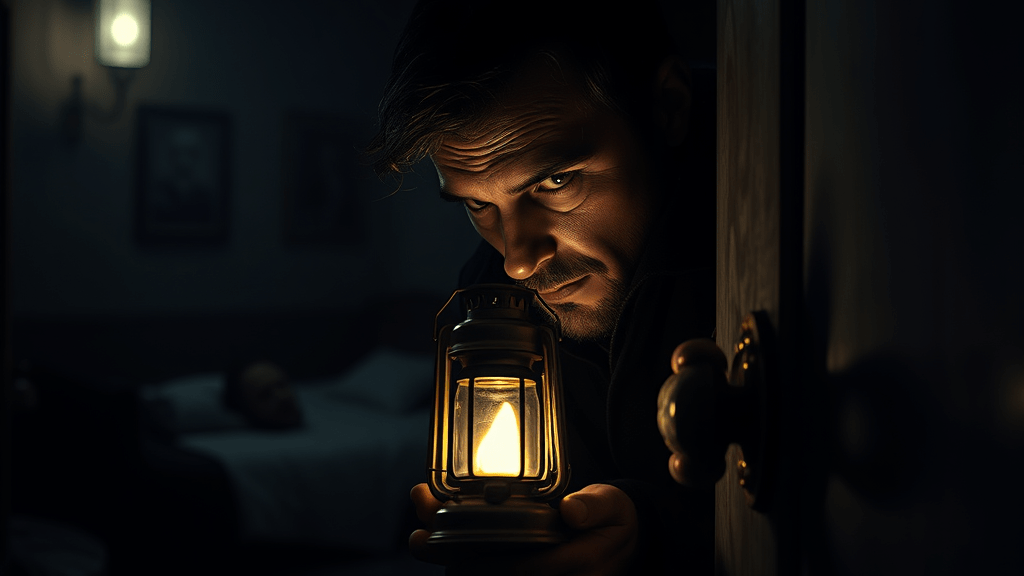
Now this is the point. You fancy me mad. Madmen know nothing. But you should have seen me. You should have seen how wisely I proceeded—with what caution—with what foresight—with what dissimulation I went to work! I was never kinder to the old man than during the whole week before I killed him. And every night, about midnight, I turned the latch of his door and opened it—oh, so gently! And then, when I had made an opening sufficient for my head, I put in a dark lantern, all closed, closed, that no light shone out, and then I thrust in my head. Oh, you would have laughed to see how cunningly I thrust it in! I moved it slowly—very, very slowly, so that I might not disturb the old man’s sleep. It took me an hour to place my whole head within the opening so far that I could see him as he lay upon his bed. Ha!—would a madman have been so wise as this? And then, when my head was well in the room, I undid the lantern cautiously—oh, so cautiously—cautiously (for the hinges creaked)—I undid it just so much that a single thin ray fell upon the vulture eye. And this I did for seven long nights—every night just at midnight—but I found the eye always closed; and so it was impossible to do the work; for it was not the old man who vexed me, but his Evil Eye. And every morning, when the day broke, I went boldly into the chamber, and spoke courageously to him, calling him by name in a hearty tone, and inquiring how he has passed the night. So you see he would have been a very profound old man, indeed, to suspect that every night, just at twelve, I looked in upon him while he slept.

Upon the eighth night I was more than usually cautious in opening the door. A watch’s minute hand moves more quickly than did mine. Never before that night had I felt the extent of my own powers—of my sagacity. I could scarcely contain my feelings of triumph. To think that there I was, opening the door, little by little, and he not even to dream of my secret deeds or thoughts. I fairly chuckled at the idea; and perhaps he heard me; for he moved on the bed suddenly, as if startled. Now you may think that I drew back—but no. His room was as black as pitch with the thick darkness, (for the shutters were close fastened, through fear of robbers,) and so I knew that he could not see the opening of the door, and I kept pushing it on steadily, steadily.

I had my head in, and was about to open the lantern, when my thumb slipped upon the tin fastening, and the old man sprang up in bed, crying out—“Who’s there?”

I kept quite still and said nothing. For a whole hour I did not move a muscle, and in the meantime I did not hear him lie down. He was still sitting up in the bed listening;—just as I have done, night after night, hearkening to the death watches in the wall.

Presently I heard a slight groan, and I knew it was the groan of mortal terror. It was not a groan of pain or of grief—oh, no!—it was the low stifled sound that arises from the bottom of the soul when overcharged with awe. I knew the sound well. Many a night, just at midnight, when all the world slept, it has welled up from my own bosom, deepening, with its dreadful echo, the terrors that distracted me. I say I knew it well. I knew what the old man felt, and pitied him, although I chuckled at heart. I knew that he had been lying awake ever since the first slight noise, when he had turned in the bed. His fears had been ever since growing upon him. He had been trying to fancy them causeless, but could not. He had been saying to himself—“It is nothing but the wind in the chimney—it is only a mouse crossing the floor,” or “It is merely a cricket which has made a single chirp.” Yes, he had been trying to comfort himself with these suppositions: but he had found all in vain. All in vain; because Death, in approaching him had stalked with his black shadow before him, and enveloped the victim. And it was the mournful influence of the unperceived shadow that caused him to feel—although he neither saw nor heard—to feel the presence of my head within the room.

When I had waited a long time, very patiently, without hearing him lie down, I resolved to open a little—a very, very little crevice in the lantern. So I opened it—you cannot imagine how stealthily, stealthily—until, at length a simple dim ray, like the thread of the spider, shot from out the crevice and fell full upon the vulture eye.

It was open—wide, wide open—and I grew furious as I gazed upon it. I saw it with perfect distinctness—all a dull blue, with a hideous veil over it that chilled the very marrow in my bones; but I could see nothing else of the old man’s face or person: for I had directed the ray as if by instinct, precisely upon the damned spot.

And have I not told you that what you mistake for madness is but over-acuteness of the sense?—now, I say, there came to my ears a low, dull, quick sound, such as a watch makes when enveloped in cotton. I knew that sound well, too. It was the beating of the old man’s heart. It increased my fury, as the beating of a drum stimulates the soldier into courage.

But even yet I refrained and kept still. I scarcely breathed. I held the lantern motionless. I tried how steadily I could maintain the ray upon the eye. Meantime the hellish tattoo of the heart increased. It grew quicker and quicker, and louder and louder every instant. The old man’s terror must have been extreme! It grew louder, I say, louder every moment!—do you mark me well? I have told you that I am nervous: so I am. And now at the dead hour of the night, amid the dreadful silence of that old house, so strange a noise as this excited me to uncontrollable terror. Yet, for some minutes longer I refrained and stood still. But the beating grew louder, louder! I thought the heart must burst. And now a new anxiety seized me—the sound would be heard by a neighbour! The old man’s hour had come! With a loud yell, I threw open the lantern and leaped into the room. He shrieked once—once only. In an instant I dragged him to the floor, and pulled the heavy bed over him. I then smiled gaily, to find the deed so far done. But, for many minutes, the heart beat on with a muffled sound. This, however, did not vex me; it would not be heard through the wall. At length it ceased. The old man was dead. I removed the bed and examined the corpse. Yes, he was stone, stone dead. I placed my hand upon the heart and held it there many minutes. There was no pulsation. He was stone dead. His eye would trouble me no more.

If still you think me mad, you will think so no longer when I describe the wise precautions I took for the concealment of the body. The night waned, and I worked hastily, but in silence. First of all I dismembered the corpse. I cut off the head and the arms and the legs.

I then took up three planks from the flooring of the chamber, and deposited all between the scantlings. I then replaced the boards so cleverly, so cunningly, that no human eye—not even his—could have detected any thing wrong. There was nothing to wash out—no stain of any kind—no blood-spot whatever. I had been too wary for that. A tub had caught all—ha! ha!

When I had made an end of these labors, it was four o’clock—still dark as midnight. As the bell sounded the hour, there came a knocking at the street door. I went down to open it with a light heart,—for what had I now to fear? There entered three men, who introduced themselves, with perfect suavity, as officers of the police. A shriek had been heard by a neighbour during the night; suspicion of foul play had been aroused; information had been lodged at the police office, and they (the officers) had been deputed to search the premises.

I smiled,—for what had I to fear? I bade the gentlemen welcome. The shriek, I said, was my own in a dream. The old man, I mentioned, was absent in the country. I took my visitors all over the house. I bade them search—search well. I led them, at length, to his chamber. I showed them his treasures, secure, undisturbed. In the enthusiasm of my confidence, I brought chairs into the room, and desired them here to rest from their fatigues, while I myself, in the wild audacity of my perfect triumph, placed my own seat upon the very spot beneath which reposed the corpse of the victim.

The officers were satisfied. My manner had convinced them. I was singularly at ease. They sat, and while I answered cheerily, they chatted of familiar things. But, ere long, I felt myself getting pale and wished them gone. My head ached, and I fancied a ringing in my ears: but still they sat and still chatted. The ringing became more distinct:—it continued and became more distinct: I talked more freely to get rid of the feeling: but it continued and gained definiteness—until, at length, I found that the noise was not within my ears.

No doubt I now grew very pale;—but I talked more fluently, and with a heightened voice. Yet the sound increased—and what could I do? It was a low, dull, quick sound—much such a sound as a watch makes when enveloped in cotton. I gasped for breath—and yet the officers heard it not. I talked more quickly—more vehemently; but the noise steadily increased. I arose and argued about trifles, in a high key and with violent gesticulations; but the noise steadily increased. Why would they not be gone? I paced the floor to and fro with heavy strides, as if excited to fury by the observations of the men—but the noise steadily increased. Oh God! what could I do? I foamed—I raved—I swore! I swung the chair upon which I had been sitting, and grated it upon the boards, but the noise arose over all and continually increased. It grew louder—louder—louder! And still the men chatted pleasantly, and smiled. Was it possible they heard not? Almighty God!—no, no! They heard!—they suspected!—they knew!—they were making a mockery of my horror!—this I thought, and this I think. But anything was better than this agony! Anything was more tolerable than this derision! I could bear those hypocritical smiles no longer! I felt that I must scream or die! and now—again!—hark! louder! louder! louder! louder!

“Villains!” I shrieked, “dissemble no more! I admit the deed!—tear up the planks!—here, here!—It is the beating of his hideous heart!”


Edgar Allan Poe (né Edgar Poe; January 19, 1809 – October 7, 1849) was an American writer, poet, editor, and literary critic who is best known for his poetry and short stories, particularly his tales involving mystery and the macabre. He is widely regarded as one of the central figures of Romanticism and Gothic fiction in the United States and of early American literature. Poe was one of the country’s first successful practitioners of the short story, and is generally considered to be the inventor of the detective fiction genre. In addition, he is credited with contributing significantly to the emergence of science fiction. He is the first well-known American writer to earn a living by writing alone, which resulted in a financially difficult life and career.


This ebook is for the use of anyone anywhere in the United States and most other parts of the world at no cost and with almost no restrictions whatsoever. You may copy it, give it away or re-use it under the terms of the Project Gutenberg License included with this ebook or online at www.gutenberg.org. If you are not located in the United States, you will have to check the laws of the country where you are located before using this eBook.


If you would like to be part of the Rural Fiction Magazine family, follow this link to the submissions guidelines.


Image generated by AI


“Old Garfield’s Heart” Horror by Robert E. Howard (1933)

I WAS SITTING on the porch when my grandfather hobbled out and sank down on his favorite chair with the cushioned seat, and began to stuff tobacco in his old corncob-pipe.

“I thought you’d be goin’ to the dance,” he said.

“I’m waiting for Doc Blaine,” I answered. “I’m going over to old man Garfield’s with him.”

My grandfather sucked at his pipe awhile before he spoke again.

“Old Jim purty bad off?”

“Doc says he hasn’t a chance.”

“Who’s takin’ care of him?”

“Joe Braxton—­against Garfield’s wishes. But somebody had to stay with him.”

My grandfather sucked his pipe noisily, and watched the heat lightning playing away off up in the hills; then he said: “You think old Jim’s the biggest liar in this county, don’t you?”

“He tells some pretty tall tales,” I admitted. “Some of the things he claimed he took part in, must have happened before he was born.”

“I came from Tennesee to Texas in 1870,” my grandfather said abruptly. “I saw this town of Lost Knob grow up from nothin’. There wasn’t even a log-hut store here when I came. But old Jim Garfield was here, livin’ in the same place he lives now, only then it was a log cabin. He don’t look a day older now than he did the first time I saw him.”

“You never mentioned that before,” I said in some surprise.

“I knew you’d put it down to an old man’s maunderin’s,” he answered. “Old Jim was the first white man to settle in this country. He built his cabin a good fifty miles west of the frontier. God knows how he done it, for these hills swarmed with Comanches then.

“I remember the first time I ever saw him. Even then everybody called him ‘old Jim.’

“I remember him tellin’ me the same tales he’s told you—­how he was at the battle of San Jacinto when he was a youngster, and how he’d rode with Ewen Cameron and Jack Hayes. Only I believe him, and you don’t.”

“That was so long ago—­” I protested.

“The last Indian raid through this country was in 1874,” said my grandfather, engrossed in his own reminiscences. “I was in on that fight, and so was old Jim. I saw him knock old Yellow Tail off his mustang at seven hundred yards with a buffalo rifle.

“But before that I was with him in a fight up near the head of Locust Creek. A band of Comanches came down Mesquital, lootin’ and burnin’, rode through the hills and started back up Locust Creek, and a scout of us were hot on their heels. We ran on to them just at sundown in a mesquite flat. We killed seven of them, and the rest skinned out through the brush on foot. But three of our boys were killed, and Jim Garfield got a thrust in the breast with a lance.

“It was an awful wound. He lay like a dead man, and it seemed sure nobody could live after a wound like that. But an old Indian came out of the brush, and when we aimed our guns at him, he made the peace sign and spoke to us in Spanish. I don’t know why the boys didn’t shoot him in his tracks, because our blood was heated with the fightin’ and killin’, but somethin’ about him made us hold our fire. He said he wasn’t a Comanche, but was an old friend of Garfield’s, and wanted to help him. He asked us to carry Jim into a clump of mesquite, and leave him alone with him, and to this day I don’t know why we did, but we did. It was an awful time—­the wounded moanin’ and callin’ for water, the starin’ corpses strewn about the camp, night comin’ on, and no way of knowin’ that the Indians wouldn’t return when dark fell.

“We made camp right there, because the horses were fagged out, and we watched all night, but the Comanches didn’t come back. I don’t know what went on out in the mesquite where Jim Garfield’s body lay, because I never saw that strange Indian again; but durin’ the night I kept hearin’ a weird moanin’ that wasn’t made by the dyin’ men, and an owl hooted from midnight till dawn.

“And at sunrise Jim Garfield came walkin’ out of the mesquite, pale and haggard, but alive, and already the wound in his breast had closed and begun to heal. And since then he’s never mentioned that wound, nor that fight, nor the strange Indian who came and went so mysteriously. And he hasn’t aged a bit; he looks now just like he did then—­a man of about fifty.”

In the silence that followed, a car began to purr down the road, and twin shafts of light cut through the dusk.

“That’s Doc Blaine,” I said. “When I come back I’ll tell you how Garfield is.”

Doc Blaine was prompt with his predictions as we drove the three miles of post-oak covered hills that lay between Lost Knob and the Garfield farm.

“I’ll be surprised to find him alive,” he said, “smashed up like he is. A man his age ought to have more sense than to try to break a young horse.”

“He doesn’t look so old,” I remarked.

“I’ll be fifty, my next birthday,” answered Doc Blaine. “I’ve known him all my life, and he must have been at least fifty the first time I ever saw him. His looks are deceiving.”

Old Garfield’s dwelling-place was reminiscent of the past. The boards of the low squat house had never known paint. Orchard fence and corrals were built of rails.

Old Jim lay on his rude bed, tended crudely but efficiently by the man Doc Blaine had hired over the old man’s protests. As I looked at him, I was impressed anew by his evident vitality. His frame was stooped but unwithered, his limbs rounded out with springy muscles. In his corded neck and in his face, drawn though it was with suffering, was apparent an innate virility. His eyes, though partly glazed with pain, burned with the same unquenchable element.

“He’s been ravin’,” said Joe Braxton stolidly.

“First white man in this country,” muttered old Jim, becoming intelligible. “Hills no white man ever set foot in before. Gettin’ too old. Have to settle down. Can’t move on like I used to. Settle down here. Good country before it filled up with cow-men and squatters. Wish Ewen Cameron could see this country. The Mexicans shot him. Damn ’em!”

Doc Blaine shook his head. “He’s all smashed up inside. He won’t live till daylight.”

Garfield unexpectedly lifted his head and looked at us with clear eyes.

“Wrong, Doc,” he wheezed, his breath whistling with pain. “I’ll live. What’s broken bones and twisted guts? Nothin’! It’s the heart that counts. Long as the heart keeps pumpin’, a man can’t die. My heart’s sound. Listen to it! Feel of it!”

He groped painfully for Doc Blaine’s wrist, dragged his hand to his bosom and held it there, staring up into the doctor’s face with avid intensity.

“Regular dynamo, ain’t it?” he gasped. “Stronger’n a gasoline engine!”

Blaine beckoned me. “Lay your hand here,” he said, placing my hand on the old man’s bare breast. “He does have a remarkable heart action.”

I noted, in the light of the coal-oil lamp, a great livid scar in the gaunt arching breast—­such a scar as might be made by a flint-headed spear. I laid my hand directly on this scar, and an exclamation escaped my lips.

Under my hand old Jim Garfield’s heart pulsed, but its throb was like no other heart action I have ever observed. Its power was astounding; his ribs vibrated to its steady throb. It felt more like the vibrating of a dynamo than the action of a human organ. I could feel its amazing vitality radiating from his breast, stealing up into my hand and up my arm, until my own heart seemed to speed up in response.

“I can’t die,” old Jim gasped. “Not so long as my heart’s in my breast. Only a bullet through the brain can kill me. And even then I wouldn’t be rightly dead, as long as my heart beats in my breast. Yet it ain’t rightly mine, either. It belongs to Ghost Man, the Lipan chief. It was the heart of a god the Lipans worshipped before the Comanches drove ’em out of their native hills.

“I knew Ghost Man down on the Rio Grande, when I was with Ewen Cameron. I saved his life from the Mexicans once. He tied the string of ghost wampum between him and me—­the wampum no man but me and him can see or feel. He came when he knowed I needed him, in that fight up on the headwaters of Locust Creek, when I got this scar.

“I was dead as a man can be. My heart was sliced in two, like the heart of a butchered beef steer.

“All night Ghost Man did magic, callin’ my ghost back from spirit-land. I remember that flight, a little. It was dark, and gray-like, and I drifted through gray mists and heard the dead wailin’ past me in the mist. But Ghost Man brought me back.

“He took out what was left of my mortal heart, and put the heart of the god in my bosom. But it’s his, and when I’m through with it, he’ll come for it. It’s kept me alive and strong for the lifetime of a man. Age can’t touch me. What do I care if these fools around here call me an old liar? What I know, I know. But hark’ee!”

His fingers became claws, clamping fiercely on Doc Blaine’s wrist. His old eyes, old yet strangely young, burned fierce as those of an eagle under his bushy brows.

“If by some mischance I should die, now or later, promise me this! Cut into my bosom and take out the heart Ghost Man lent me so long ago! It’s his. And as long as it beats in my body, my spirit’ll be tied to that body, though my head be crushed like an egg underfoot! A livin’ thing in a rottin’ body! Promise!”

“All right, I promise,” replied Doc Blaine, to humor him, and old Jim Garfield sank back with a whistling sigh of relief.

He did not die that night, nor the next, nor the next. I well remember the next day, because it was that day that I had the fight with Jack Kirby.

People will take a good deal from a bully, rather than to spill blood. Because nobody had gone to the trouble of killing him, Kirby thought the whole countryside was afraid of him.

He had bought a steer from my father, and when my father went to collect for it, Kirby told him that he had paid the money to me—­which was a lie. I went looking for Kirby, and came upon him in a bootleg joint, boasting of his toughness, and telling the crowd that he was going to beat me up and make me say that he had paid me the money, and that I had stuck it into my own pocket. When I heard him say that, I saw red, and ran in on him with a stockman’s knife, and cut him across the face, and in the neck, side, breast and belly, and the only thing that saved his life was the fact that the crowd pulled me off.

There was a preliminary hearing, and I was indicted on a charge of assault, and my trial was set for the following term of court. Kirby was as tough-fibered as a post-oak country bully ought to be, and he recovered, swearing vengeance, for he was vain of his looks, though God knows why, and I had permanently impaired them.

And while Jack Kirby was recovering, old man Garfield recovered too, to the amazement of everybody, especially Doc Blaine.

I well remember the night Doc Blaine took me again out to old Jim Garfield’s farm. I was in Shifty Corlan’s joint, trying to drink enough of the slop he called beer to get a kick out of it, when Doc Blaine came in and persuaded me to go with him.

As we drove along the winding old road in Doc’s car, I asked: “Why are you insistent that I go with you this particular night? This isn’t a professional call, is it?”

“No,” he said. “You couldn’t kill old Jim with a post-oak maul. He’s completely recovered from injuries that ought to have killed an ox. To tell the truth, Jack Kirby is in Lost Knob, swearing he’ll shoot you on sight.”

“Well, for God’s sake!” I exclaimed angrily. “Now everybody’ll think I left town because I was afraid of him. Turn around and take me back, damn it!”

“Be reasonable,” said Doc. “Everybody knows you’re not afraid of Kirby. Nobody’s afraid of him now. His bluff’s broken, and that’s why he’s so wild against you. But you can’t afford to have any more trouble with him now, and your trial only a short time off.”

I laughed and said: “Well, if he’s looking for me hard enough, he can find me as easily at old Garfield’s as in town, because Shifty Corlan heard you say where we were going. And Shifty’s hated me ever since I skinned him in that horse-swap last fall. He’ll tell Kirby where I went.”

“I never thought of that,” said Doc Blaine, worried.

“Hell, forget it,” I advised. “Kirby hasn’t got guts enough to do anything but blow.”

But I was mistaken. Puncture a bully’s vanity and you touch his one vital spot.

Old Jim had not gone to bed when we got there. He was sitting in the room opening on to his sagging porch, the room which was at once living-room and bedroom, smoking his old cob pipe and trying to read a newspaper by the light of his coal-oil lamp. All the windows and doors were wide open for the coolness, and the insects which swarmed in and fluttered around the lamp didn’t seem to bother him.

We sat down and discussed the weather—­which isn’t so inane as one might suppose, in a country where men’s livelihood depends on sun and rain, and is at the mercy of wind and drouth. The talk drifted into other kindred channels, and after some time, Doc Blaine bluntly spoke of something that hung in his mind.

“Jim,” he said, “that night I thought you were dying, you babbled a lot of stuff about your heart, and an Indian who lent you his. How much of that was delirium?”

“None, Doc,” said Garfield, pulling at his pipe. “It was gospel truth. Ghost Man, the Lipan priest of the Gods of Night, replaced my dead, torn heart with one from somethin’ he worshipped. I ain’t sure myself just what that somethin’ is—­somethin’ from away back and a long way off, he said. But bein’ a god, it can do without its heart for awhile. But when I die—­if I ever get my head smashed so my consciousness is destroyed—­the heart must be given back to Ghost Man.”

“You mean you were in earnest about cutting out your heart?” demanded Doc Blaine.

“It has to be,” answered old Garfield. “A livin’ thing in a dead thing is opposed to nat’er. That’s what Ghost Man said.”

“Who the devil was Ghost Man?”

“I told you. A witch-doctor of the Lipans, who dwelt in this country before the Comanches came down from the Staked Plains and drove ’em south across the Rio Grande. I was a friend to ’em. I reckon Ghost Man is the only one left alive.”

“Alive? Now?”

“I dunno,” confessed old Jim. “I dunno whether he’s alive or dead. I dunno whether he was alive when he came to me after the fight on Locust Creek, or even if he was alive when I knowed him in the southern country. Alive as we understand life, I mean.”

“What balderdash is this?” demanded Doc Blaine uneasily, and I felt a slight stirring in my hair. Outside was stillness, and the stars, and the black shadows of the post-oak woods. The lamp cast old Garfield’s shadow grotesquely on the wall, so that it did not at all resemble that of a human, and his words were strange as words heard in a nightmare.

“I knowed you wouldn’t understand,” said old Jim. “I don’t understand myself, and I ain’t got the words to explain them things I feel and know without understandin’. The Lipans were kin to the Apaches, and the Apaches learnt curious things from the Pueblos. Ghost Man was—­that’s all I can say—­alive or dead, I don’t know, but he was. What’s more, he is.”

“Is it you or me that’s crazy?” asked Doc Blaine.

“Well,” said old Jim, “I’ll tell you this much—­Ghost Man knew Coronado.”

“Crazy as a loon!” murmured Doc Blaine. Then he lifted his head. “What’s that?”

“Horse turning in from the road,” I said. “Sounds like it stopped.”

I stepped to the door, like a fool, and stood etched in the light behind me. I got a glimpse of a shadowy bulk I knew to be a man on a horse; then Doc Blaine yelled: “Look out!” and threw himself against me, knocking us both sprawling. At the same instant I heard the smashing report of a rifle, and old Garfield grunted and fell heavily.

“Jack Kirby!” screamed Doc Blaine. “He’s killed Jim!”

I scrambled up, hearing the clatter of retreating hoofs, snatched old Jim’s shotgun from the wall, rushed recklessly out on to the sagging porch and let go both barrels at the fleeing shape, dim in the starlight. The charge was too light to kill at that range, but the bird-shot stung the horse and maddened him. He swerved, crashed headlong through a rail fence and charged across the orchard, and a peach tree limb knocked his rider out of the saddle. He never moved after he hit the ground. I ran out there and looked down at him. It was Jack Kirby, right enough, and his neck was broken like a rotten branch.

I let him lie, and ran back to the house. Doc Blaine had stretched old Garfield out on a bench he’d dragged in from the porch, and Doc’s face was whiter than I’d ever seen it. Old Jim was a ghastly sight; he had been shot with an old-fashioned .45-70, and at that range the heavy ball had literally torn off the top of his head. His features were masked with blood and brains. He had been directly behind me, poor old devil, and he had stopped the slug meant for me.

Doc Blaine was trembling, though he was anything but a stranger to such sights.

“Would you pronounce him dead?” he asked.

“That’s for you to say.” I answered. “But even a fool could tell that he’s dead.

“He is dead,” said Doc Blaine in a strained unnatural voice. “Rigor mortis is already setting in. But feel his heart!”

I did, and cried out. The flesh was already cold and clammy; but beneath it that mysterious heart still hammered steadily away, like a dynamo in a deserted house. No blood coursed through those veins; yet the heart pounded, pounded, pounded, like the pulse of Eternity.

“A living thing in a dead thing,” whispered Doc Blaine, cold sweat on his face. “This is opposed to nature. I am going to keep the promise I made him. I’ll assume full responsibility. This is too monstrous to ignore.”

Our implements were a butcher-knife and a hack-saw. Outside only the still stars looked down on the black post-oak shadows and the dead man that lay in the orchard. Inside, the old lamp flickered, making strange shadows move and shiver and cringe in the corners, and glistened on the blood on the floor, and the red-dabbled figure on the bench. The only sound inside was the crunch of the saw-edge in bone; outside an owl began to hoot weirdly.

Doc Blaine thrust a red-stained hand into the aperture he had made, and drew out a red, pulsing object that caught the lamplight. With a choked cry he recoiled, and the thing slipped from his fingers and fell on the table. And I too cried out involuntarily. For it did not fall with a soft meaty thud, as a piece of flesh should fall. It thumped hard on the table.

Impelled by an irresistible urge, I bent and gingerly picked up old Garfield’s heart. The feel of it was brittle, unyielding, like steel or stone, but smoother than either. In size and shape it was the duplicate of a human heart, but it was slick and smooth, and its crimson surface reflected the lamplight like a jewel more lambent than any ruby; and in my hand it still throbbed mightily, sending vibratory radiations of energy up my arm until my own heart seemed swelling and bursting in response. It was cosmic power, beyond my comprehension, concentrated into the likeness of a human heart.

The thought came to me that here was a dynamo of life, the nearest approach to immortality that is possible for the destructible human body, the materialization of a cosmic secret more wonderful than the fabulous fountain sought for by Ponce de Leon. My soul was drawn into that unterrestrial gleam, and I suddenly wished passionately that it hammered and thundered in my own bosom in place of my paltry heart of tissue and muscle.

Doc Blaine ejaculated incoherently. I wheeled.

The noise of his coming had been no greater than the whispering of a night wind through the corn. There in the doorway he stood, tall, dark, inscrutable—­an Indian warrior, in the paint, war bonnet, breech-clout and moccasins of an elder age. His dark eyes burned like fires gleaming deep under fathomless black lakes. Silently he extended his hand, and I dropped Jim Garfield’s heart into it. Then without a word he turned and stalked into the night. But when Doc Blaine and I rushed out into the yard an instant later, there was no sign of any human being. He had vanished like a phantom of the night, and only something that looked like an owl was flying, dwindling from sight, into the rising moon.


Robert Ervin Howard (January 22, 1906 – June 11, 1936) was an American writer. He wrote pulp fiction in a diverse range of genres. He is well known for his character Conan the Barbarian and is regarded as the father of the sword and sorcery subgenre.

Howard was born and raised in Texas. He spent most of his life in the town of Cross Plains, with some time spent in nearby Brownwood. A bookish and intellectual child, he was also a fan of boxing and spent some time in his late teens bodybuilding, eventually taking up amateur boxing. From the age of nine he dreamed of becoming a writer of adventure fiction but did not have real success until he was 23. Thereafter, until his death by suicide at age 30, Howard’s writings were published in a wide selection of magazines, journals, and newspapers, and he became proficient in several subgenres. His greatest success occurred after his death…

from Wikipedia


“Old Garfield’s Heart” was first published in Weird Tales in December, 1933.

This eBook is made available at no cost and with almost no restrictions whatsoever. You may copy it, give it away or re-use it under the terms of the Project Gutenberg of Australia License which may be viewed online at http://gutenberg.net.au/licence.html.  To contact Project Gutenberg of Australia go to http://gutenberg.net.au


Image generated by AI

If you would like to be part of the Rural Fiction Magazine family, follow this link to the submissions guidelines


“Black Dog” Dark Short Story by Steven French

"Black Dog" Suspense by Steven French

Lucy Miller hurried along the lane, as darkness fell and the hedges on each side seemed to stretch and lean over. Cloud-rags were sweeping across the face of the moon, driven by the chill wind. She shuddered, not just from that wind but also at the thought of Lord Dacre coming up behind her while she helped the cook make gingerbread. With his foul insinuations and hands upon her body… she’d tried to squirm away as he grasped at her skirt and as a result had lost track of how much nutmeg she’d added to the mix. And Mrs Rusbridger always told her to be careful with that particular spice as too much could affect the heart. Still, if the cook hadn’t loudly bustled into the kitchen at that moment with the eggs, Lucy dreaded to think what might have happened. 

Her body shook again as she came to the crossroads and before turning for home she looked up at the night sky in despair. Before she had been taken on as kitchen help she had heard rumours, of course. Her own mother had warned her not to give Lord Dacre any reason to take an interest in her. Not that any ‘reason’ was needed, it seemed. But Lucy also knew full well that if she left she’d have a hard time finding another placement. And she and her mum had had hard times enough these past few years, that was for certain. She shook her head sadly. Her tears wet the dirt by the side of the lane.

As she wiped her face a gap appeared in the clouds and moonlight spilled across the fields and hedges. It washed across the crossroads, revealing a huge beast, so black it seemed to carry the shadows with it. As it came padding towards her Lucy could see that it was a dog with eyes bigger than those of any she’d ever seen and which glowed a fiery red. She took a step back, hoping the creature would pass by, but instead it came up to her and stopped as if waiting for some command. Tentatively, she held out her hand as if it were one of the village dogs she often met on her way home. Its great head nuzzled against her palm, before it gently licked her fingers. Without thinking she threw her arms around the animal’s massive neck and sobbed into its fur. When she’d finished and had wiped her face once more, the dog stepped away and looked at her before turning and walking back towards the mansion she had just left. As the clouds passed over the moon again, the beast was soon swallowed up in the darkness, but before it disappeared beyond the curve in the road, it turned its head. For a moment Lucy could see its red eyes looking back at her.

Bursting through the front door, Lucy could barely get the words out to tell her mother what had happened. 

“Sounds like you just met a barghest,” the older woman told her as she placed a bowl of stew on the table.

Lucy blanched and held onto a chair for support.

“Does that mean I’m to die soon, mum?” she whispered.

Her mother shook her head.

“It’s a harbinger of death, no doubt, but always of some local notable, not of the likes of you and me.”

The next day when Lucy arrived for work she found the other servants gathered outside and talking amongst themselves. 

“Oh Lucy!” Mrs Rusbridger ran to her. “Have you heard? Lord Dacre’s been found dead in his bed. One of the chambermaids hear him ranting in the night, but she was too scared to go and see what was happening. When she went in with his morning tea, well, there he was, as cold and white as the sheets themselves …”

Then she leant in and whispered, “Good riddance, I say.”

Lucy swallowed nervously, then asked, “Do they know what killed him?”

Mrs Rusbridger pointed over to a portly man with large sideburns carrying a leather bag and who was talking to a distinguished looking gentleman. “Dr Brooks there thinks it was some kind of heart spasm, no doubt brought on by overindulgence.”

“But what’s to become of the house? And us? Lord Dacre had no heirs …” Lucy went on.

The cook laid her hand on the young girl’s arm.

“Don’t worry my dear. The magistrate who’s talking with the doctor there has told us there’s a niece a few towns over who’s been sent for. From what I’ve heard say, she’s a fair employer and I’m sure she’ll see us right.”

As Lucy shook her head with worry her eye caught a shape over by the side of the house, half hidden by the shadows cast across the path. Mrs Rusbridger followed her gaze.

“Old Pete the gardener told me there was a large black dog hanging about last night. Fierce it looked, apparently. He went to chase it off, he said, but then it turned and looked at him with these glowing red eyes like it was a demon sent by the devil himself.”

“I don’t think that was the demon, Mrs Rusbridger”, Lucy replied as the magistrate began to address the small crowd.


Steven French is a retired academic who lives in Leeds, West Yorkshire, U.K. He has had a number of short stories and pieces of flash fiction published in venues such as 365Tomorrows, Bewildering Stories, Idle Ink, Liquid Imagination, Literally Stories and elsewhere.


If you would like to be part of the RFM family, follow this link to the submissions guidelines.

If you like dark fiction, you may also want to check out The Chamber Magazine.

Fiktion, fiksie,خيالي, измислицa, 小说, beletrie, fictie, fikcio, kathang-isip, fiktiota, fiction, μυθιστόρημα, fiksyon, almara, moʻolelo moʻolelo, ספרות בדיונית, उपन्यास, ntawv tseeb, kitaláció, skáldskapur, fiksi, ficsean, finzione, フィクション, 소설, ນິຍາຍ, fictio, daiļliteratūra, grožinė literatūra, Fiktioun, фикција, fiksyen, finzjoni, pakimaero, уран зохиол, कथा, skjønnlitteratur, افسانه, داستان, fikcja, ficção, ਗਲਪ, yanqalla, fictiune, вымысел, talafatu, कल्पना, ficsean, фикција, fikcia, khayaali, ficción, tamthiliya, fiktion, கற்பனை, уйдырма, นิยาย, kurgu, художня література, viễn tưởng, ffuglen, افسانہ, fiksje, intsomi, בעלעטריסטיק, arosọ, inganekwane,

Stories, Erzählungen, Geschichten, tregime, قصص, պատմություններ, গল্প, hekayələr, istorioak, гісторыі, priče, истории, ပုံပြင်များ, històries, mga istorya, 故事, 故事, storie, priče, příběhy, historier, ވާހަކަތަކެވެ, verhalen, rakontoj, lugusid, mga kwento, tarinoita, histoires, contos, მოთხრობები, ιστορίες, istwa, nā moʻolelo, סיפורים, कहानियों, dab neeg, történeteket, sögur, akụkọ, cerita, scéalta, 物語, crita, រឿង, 이야기, çîrokan, ເລື່ອງ, fabulas, stāsti, istorijos, приказни, stejjer, nga korero, түүхүүд, कथाहरू, historier, کیسې, داستان ها, historie, histórias, ਕਹਾਣੀਆਂ, willakuykunata, povestiri, истории, tala, कथाः, sgeulachdan, приче, príbehov, zgodbe, sheekooyin, cuentos, hadithi, berättelser, கதைகள், хикәяләр, కథలు, เรื่องราว, hikayeler, історії, những câu chuyện, straeon, ferhalen, amabali, מעשיות, awọn itan, izindaba, 

coffee, 咖啡, قهوة, コーヒー, café, 커피, кофе, caffè, καφές, café, Kaffee, 
Purchase, buy, ecommerce

Rural, ريفي, 田舎, 乡村的, 시골의, rurale, деревенский, αγροτικός,

“Passing Through Jenkins Thicket” Fiction by Edward N. McConnell

My named is Virgil Ackerman. I prefer “Ace” to Virgil, it has a better ring. People say I’m brave. I’m not afraid of man or beast. I don’t run from trouble and I’m not opposed to fighting but, as a general rule, I have to be certain I will win before I start one. When it comes to the supernatural; being brave doesn’t matter. Ghosts don’t treat you fairly.

Having unfinished business in Mowbrey, Alabama and needing to get there quickly, the most direct route was by passing through Jenkins Thicket. Normally, it’s a quick trip but someone stole my horse so I was on foot. I’m not welcome in Mowbrey. Two years ago I was tried for the murder of my wife, Christy Ackerman, daughter of the town’s mayor. My acquittal was not well received by the townsfolk; most of them think I did it.

On the way out of the courthouse I was accosted by the town spiritual medium. A small, heavy set woman in a babushka and a faded print dress, she pushed through the crowd and, getting closer to my face than I wanted, yelled. “The spirits are not done with you. Beware, killer. They await your day of true judgment.”

She surprised me. Not wanting those gathered to see that, I said, “Please would you get outta here.” I didn’t want to give the impression I was bothered by her outburst, but I was. After that, things were fairly uneventful over the following two years until my trip back to Mowbrey but the image of that woman haunted my memories.

My journey started late which meant nightfall crept up on me more quickly than I desired. Being nowhere near the town or an inn, the chance of finding lodging faded with the sunlight. Having no choice, I followed the path as the darkness surrounded me.

A full moon dipped in and out from behind the clouds. It cast a flickering light, moving shadows of tree limbs across the path, each like a bony hand reaching out to grab me. Despite my displays of bravado, I found passing through the dark spots a bit nerve racking, especially since I was alone. It was during a brief lighted interval when I noticed the Bald Knob Cemetery where my wife was buried. Being in jail at the time, I had not attended her funeral nor had I since visited her, so I walked in to see if I could find her grave.

The gravestones were not ornate. They were the limestone slab type, some topped with arches, others simple rectangles. The ground heaved over the years, tipping the markers forward and back. Some had fallen over, others knocked down. In the dim light I could tell most of the occupants of this resting place were of the long term variety. When the moonlight peaked through the clouds I could read some of the stones. The dates confirmed my initial observation. I was unable to find Christy’s grave, though.

“Boy, dead lasts a long time.” I thought.

Given the extent of my fatigue and the lateness of the hour, I had little choice but to stop.  While the cemetery was not the most welcoming of venues, it was the best available resting place. Luckily, the night temperatures were cool, not cold. It was dry. I spied a wooden bench which seemed like a good place to lie down.      

At first, I had no reason to think spirits were afoot but, at that moment, a wind arose. The rustling of the branches and the whirling eddys of dead leaves and dust stirred my fear that the noise would awaken the residents. I brushed off those feelings and closed my eyes. I was able to sleep for maybe an hour or two when a scuffling sound startled me from my slumber. It wasn’t the wind; it sounded different. Then, I realized, a disturbance was occurring.

I stood up quickly but slipped, landing on the ground facing some gravestones. To my shock, there stood a woman and, what looked like a man, tussling. The woman occupied a spot on a grave. These two were not a man and woman as you and I know them to be. They were vaporous apparitions floating above the ground. I could see through them. The women’s features were well defined. If she looked like that in life, she had a nice figure. The male ghost’s features were more nondescript but familiar, I knew him from somewhere. The woman appeared to be holding something, and then she dropped it. The man looked like he was striking her but I was unsure what was happening. The scene was confused but the scuffling noises grew louder. I hoped they hadn’t sensed my presence for my fear was increasing.

Then, I noticed a large group of revenants standing off to my right, not three feet from my bench. They were a motley assortment of spirits also vaguely familiar. In the middle of this scrum appeared someone I knew quite well, Judge, Tobias E. Crenshaw; or, as I knew him, “Terrible Toby”, my presiding judge. The trouble was Toby died right after my trial. I wondered, “Did these specters have business with me? Was that old woman in the babushka right?” I didn’t have to wait for an answer.

Stepping forward, Toby said, “Virgil Ackerman, you stand accused of the murder of your wife.”

I took exception and said, “Hold on there, Toby. First, call me Ace. Second, I beat that rap. I was acquitted, in your very courtroom, remember. I can’t be charged or tried again, double jeopardy and all that.”

I never liked him and wasn’t about to call him, “Judge” under these circumstances. I figured being dead must have caused him to lose a step. So I said, “You can leave now.” but Toby and the spirits just stood there. Leaving the cemetery seemed like a good idea. I tried to get up but I found myself sitting on the bench unable to move.

Toby said, “Well, Ace, things are a little different here and now. See, you did a right good job of making it look like your wife slipped on that soup and bashed her head. It wasn’t till after the trial, the sheriff found the bloody fireplace poker you buried under the woodpile.” He continued.

“Maybe you remember some of the gentlemen standing by you. A few served as jurors at your trial. They are willing to do so again. You see, here in Jenkins Thicket things are done a bit different. You came to us, we didn’t come to you. Our jurisdiction is over those buried in this little cemetery and those that should be. If you hadn’t stopped, we wouldn’t be talking now.”

“Hey, that’s great,” I said. “Sounds interesting but I didn’t kill her. She fell and hit her head. We’ve been through this already. Leave me alone.”

“Is that your defense? You want to go with, ‘she fell and hit her head’?”  

“I will swear to it. Case closed and then I’ll leave.”

“Not so fast. This time we have all the evidence and can have a proper trial but, first, let’s hear from her.” Toby smiled.

“Her? Who’s her?”    

“Why, our first witness, your late wife, Christy Ackerman.”

Dumbstruck, I said, “You can’t call a dead person.”

I was sweating now. Of course, during my first trial, Christy was unavailable because I’d killed her. Yet, here she was about to raise her hand and swear to tell the truth, a subject with which she has little familiarity, alive or dead.

She started her testimony. “I’m Christy McNerney Ackerman. Ace, well, Virgil Ackerman is my husband, or he was, until he kilt me.” Her voice start to climb the octaves from mezzo-soprano to soprano; her decibel level grew. Toby sought to keep control of the proceedings.

“Now, Mrs. Ackerman, please, no need to shout, we can all hear. On the day in question please tell the jury what you and your husband, Mr. Ackerman, were doing?”

Resuming her regular voice, she said, “Yes, your Honor. It was a normal day for us. We had been busy working around the house and the garden. We were quite happy. I asked Ace to perform a few chores both inside and out. Throughout the day I had some observations about the tasks I desired to have done. I did my best to help guide him on the way I hoped the projects would turn out.”

“What happened next? Toby asked.

“As it got closer to dinner time, I was in the kitchen, preparing a pot of soup, Ace’s favorite, beef with noodles. At the same time I was reviewing some of the chores he completed. I was making some comments on the quality of his work. Then, I attempted to bring the soup pot to the dinner table.”

“Then what happened?”  That gaggle of apparitions and phantoms calling itself ‘the jury’ leaned in so as not to miss anything.

“I dropped the pot from my hands because that big galoot had his mitts around my neck choking me, screaming, “Why can’t you shut the hell up, bitch?” He then grabbed a metal poker from the fireplace and started pounding my head. I felt very dizzy and uncomfortable, especially with his language. It was the most unpleasant dining experience I could remember.”

Continuing, she said, “I slipped, or maybe I was pushed, to the floor. The next thing I knew, I woke up here in the cemetery. Now I’m talking to you. One thing is for certain, I wouldn’t have dropped that pot of soup if he hadn’t been choking and hitting me.” I sensed a hint of hostility in her voice.

Toby then held up the fireplace poker she described. “Is this the object he beat you with?” he asked.

“Yes it is. Please take it away.” She said.

I thought, “This is the reason I hid that thing the first place so some grandstander, like him, wouldn’t pull this stunt.”

Then I heard Toby say, “Ace, did you want to see this?”

“No, I’ve seen it before and I never hit anybody with anything.” I said.

Toby said, “You’ll get your chance to speak.”

He continued asking my late wife questions.

“What do you remember about the chores your husband had been working on and your comments on the quality of his work?”

“I pointed out that he had not chopped enough firewood. A household needs firewood. I was surprised at the number of weeds in the garden after he had claimed to have removed them all. Next, some of the floor boards in the bedroom were loose. I thought them to be unsafe and reminded him that they needed to be tightened down. Oh, I don’t want to forget, the roof still leaked. I was unimpressed with his repair and mentioned it. One of the window panes was cracked and needed to be replaced. I’m sure there were others but I can’t remember them now.” She said, smiling at the Judge.

“How often did you serve Ace, his favorite meal of beef and noodles? He asked.

“Why, every night, your Honor, that’s how I know it’s his favorite. I even brought fresh flowers into the house to brighten up dinner time. Nothing says love and caring like flowers.”

She concluded her testimony in tears by saying, “I will never know why he acted in the rude and unkind manner he did. I always loved him.”

Before she stepped down, Toby asked me, “Do you want to ask any questions?” The jury was staring at me. “No.” I said.

It was time for me to clear the air. Toby swore me in. I went along with it because none of this mattered. After preliminary information was put on the record, he said “Was it your late wife’s cooking that attracted you in the first place.”

I thought it an odd thing to ask but I was sworn to tell the truth, so I started saying, “No, that wasn’t it. She had the nicest ti—. Before I could finish, he yelled, “Objection! The proprieties will be observed at all times during this proceeding.”

“For Christ sake, Toby, you’re the one who asked.” I said.

Sustaining his own objection he then said, “One more outburst like that and I will hold you in contempt.” After his ruling, Toby said, “Let’s move on, shall we?”

I think the jury wanted a little more information on the above objectionable topic. That’s just my feeling, though. Toby continued his questioning.

“Mr. Ackerman, in your own words, please tell us your side of this matter.”

I began. “I am a simple man, not too ambitious. I am handy with tools and I can follow instructions and requests but…… this woman is unequaled in complaining and nattering about anything and everything. She never shuts the hell up. I couldn’t stand the sound of her voice then and can’t now. Five minutes of listening to her made nails on a chalkboard sound like a light summer rain with chirping birds. She could only make one type of food, beef and noodles. Her ‘honey do list’ was a mile long every day. No matter what you did she had some nitpicky thing you didn’t do right. Not only did she ‘rule the roost’, she’s a tease.”

Realizing my testimony was not all that helpful; I regained my composure and adjusted my tone. I pressed on.

“On the day in question, after our chat, I thought about what I hadn’t done right. Maybe I needed to try harder. It was close to dinner time so I picked some Oleanders from the garden and took them inside, a peace offering.” I said.

“What happened next?” he said.

“I noticed she had also picked some Oleanders. Bits and pieces of them sat on the counter next to the pot with the beef and noodles. It was like she was cooking them in the soup. I ask her if she was.”

Her response, “They add flavor to the soup.”

At that moment, I thought, “Yeah, but what kind of flavor?” I knew Oleanders are poisonous. When she attempted to bring the soup to the table I jumped up. “What are you trying to do?” I said.

“Just eat your soup, dear. You can fix everything after dinner.”

“If I eat that soup, there will be no ‘after dinner’.” I said.

Toby interrupted me and asked, “Why not just leave if you thought you were in danger?”

Now, I was in a predicament. If I stayed with the story ‘she fell and hit her head’ all my complaints and suspicions about the poison flowers meant nothing. If I admitted I hit her because I thought the soup was poisoned, I would get more questions, none of which I wanted to answer. I had two choices, neither good, but I had to pick one.

“Maybe she was startled or something when I jumped up but that’s when she fell and hit her head. That’s right, before I could get out the door, she slipped, fell and hit her head. It was an accident.” I said.

With furrowed brow, Toby looked me in the eye and said, “Nobody found any Oleanders in the mess of soup on the floor but a bloody poker was found buried under the wood pile. You’re the only one who could have put it there.”

I shifted gears, some might say I cracked. “OK, she was trying to kill me. I had to defend myself.”

Pausing for what seemed like an eternity, Toby said, “It can’t be both, son. Either, ‘she fell and hit her head’ or you hit her in ‘self-defense.’” I concluded my testimony with silence. No one sought to cross examine me. There seemed little need.

Overall, compared to my first trial, this one was most unsatisfactory. The first time, they had no witness, no poker and no motive because I didn’t testify. Now, they had Christy’s testimony, the poker and motive from my own words. It’s unfair. How could I be expected to beat a rap the second time when they had evidence like that? I wasn’t worried though; all this had to be a bad dream. I would wake up soon and be on my way.

It was getting close to dawn. Toby turned to the jury, “We’ve heard everything we need.”  He sent them out to deliberate. They were back in fifteen minutes, the verdict was read, their decision rendered.

When the sun rose the next morning, all was in its place at the cemetery, save for one new addition, a body swinging from the tree over Christy Ackerman’s grave. The townsfolk figured, ‘Ol’ Ace must’ve missed his wife so much he walked into Jenkins Thicket and hung himself in the cemetery.’ A day later, they buried my body in the plot next to Christy; figuring a man should be with his wife, forever. They meant well.

If you happen to be an individual who still has business with spirits of any kind and ever are walking through Jenkins Thicket after dark, as you approach the cemetery, you might hear a tremendous row coming from within. It could be the wind but, if you see two gauzy figures having it out over a pot of soup, keep walking.


Edward N. McConnell is a happily retired trial lawyer, a former adjunct professor of trial advocacy and a former State Archivist of Iowa. He started writing flash fiction and short stories in 2020. He enjoys a good story with a twist and tries to write one every once in a while. His flash fiction and short stories have appeared in Literally Stories, Terror House Magazine, Refugeonlinejournal.org and, soon, in Rural Fiction Magazine, Drunk Monkeys, and Down in the Dirt. He lives in West Des Moines, Iowa with his wife.