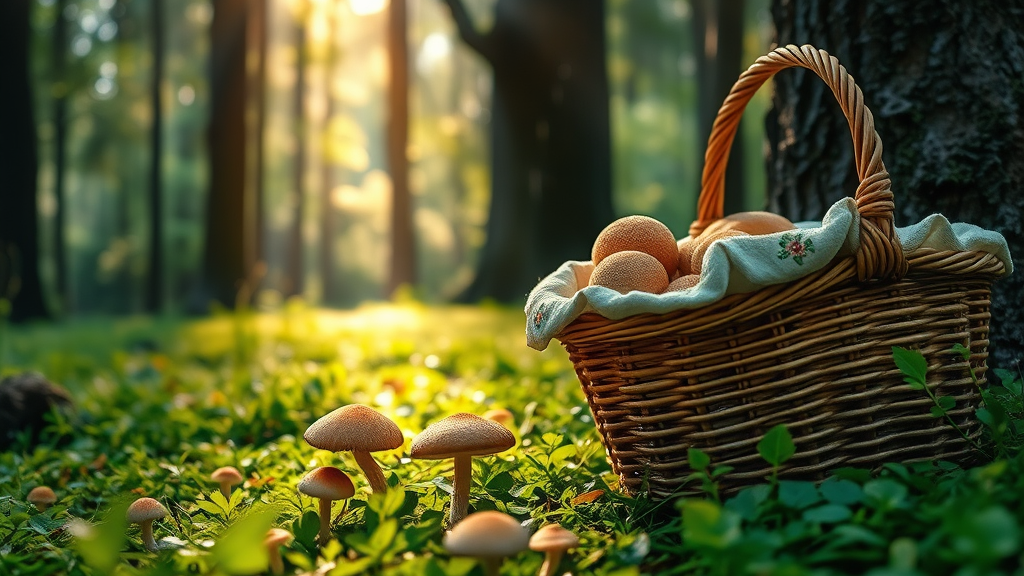
I was my paternal grandfather’s least favorite grandchild. My father’s parents lived in Marshall, a small town to our west, and were farmers by experience and temperament, even though they lived in town and not at their farm, a quarter section of pastures and old growth woods on the chalky hills of the Missouri river valley.
My mother’s parents lived to our east in St. Louis. As with all children who don’t yet recognize the differences in his family and others, I thought this symmetry was universal. One had country grandparents and city grandparents. We visited both for most holidays, and I was shipped off to both each summer, riding the greyhound bus for a week in the city or one in the country.
I find myself remembering these times more with each passing year, especially those with my Grampa and Gramma about Thanksgiving and Christmas. As I’ve grown older, I’ve come to appreciate older things, and the rhythms and routines of rural life seemed rooted in more elemental times. Those times feel largely lost now—life reduced to frenetic reactions to a torrent of forces we don’t control, not deep interactions with our own natural world, and I wonder if such a loss is so deep-seated that it may be recognized only in memory.
One of my earliest memories was in Gramma’s and Grampa’s house, which sat on a street corner in downtown Marshall. Headlights would shine into the tall windows of the bedroom where I slept and race around the top of the walls in different patterns as cars turned one way or another. Our own house sat back from the road, so I wasn’t used to this, and I dimly recall staring at lights flickering above the bed, frightened by these apparitions, and ashamed when I eventually realized what they were.
Gramma and Grampa’s house was a Victorian filled with antiques, silver, hardwood, crystal, millwork, oil lamps, and innumerable fancy things I did not recognize but was afraid I’d break. The house itself was so old it seemed alive, groaning with unfamiliar sounds and smells of yeast rising in the air even though Gramma’s kitchen was small, like an afterthought, next to the mudroom and backyard.
Outside the kitchen, an apple tree, whose fruit was so tart there were always some for picking, covered the small yard next to a detached garage. Underneath its branches was the dog pen, where Grampa’s dogs zoomed back and forth when I’d come for a visit, remembering my scent or knowing a trip to the farm would follow. Grampa would let them out and Zero, the German shorthaired pointer, would almost knock me over with kisses, until Grampa would whistle, and she’d return to the kennel with a younger redbone coonhound in tow, whose name I don’t remember.
Then, Grampa would turn and carry my bag inside past a granite millstone and iron kettle and up the stoop to the kitchen, seemingly in just a step, while I raced to keep up. Grampa was a tall man for his age, stood bolt upright, and moved in a straight line no matter where he went. Grampa seemed to walk not so much with determination, but with certainty of where he was headed; each step taken with the confidence of knowing where they would all end. His long arms swung easily by his side like metronomes marking the constant rhythm of his pace. I remember his hands the most. Huge, with long fingers stretching from knuckles as big as peach pits, and skin course as sandpaper. Grampa rarely looked at me, but he also rarely looked down, with all that knowledge of where he was going and how he’d get there I supposed.
When he would take me to the Homeplace, as he called the farm, which always confused me, we’d climb in his old beater Chevy truck with the dogs piled in back. Grampa drove like he walked. Always the same speed. 40 miles per hour on the highway out of town, as cars sped angrily past, and 40 miles per hour on the gravel road, as dust spewed violently behind us.
Mister Porter, the farm’s caretaker, no longer lived in the small farmhouse, which sat empty next to the chicken coop and the barn with horses I’d feed apples I had picked and sometimes ride along the trails to the hills deep in country.
Grampa was not just a farmer, but also a hunter of some renown. My dad had been too, and we would practice shooting, but I always wanted to hunt with Grampa. It just was never the right time I guess. So, we’d pull what was needed from their garden, or walk the back forty, or sometimes gather deadfall hardwoods after Grampa said they’d seasoned long enough. Zero would perch proudly on top of the log pile we’d deliver to Gramma, who would light a fire and brag on what good wood I’d found.
The world was younger then, but seemed older, and as old things are ought to do, it shared its secrets most at the holidays, like the fancy dishes Gramma would haul from the musty basement once a year. Moments of connection so powerful they sparkled above the monotone greyness of the dark seasons.
I rarely visited my grandparents over the holidays by myself, but I did one Thanksgiving. I think someone was sick, and maybe that’s why Grampa said we could quail hunt. I don’t remember exactly how old I was, but I know I was still the age when excitement always overpowered sleep, and I don’t think I slept a wink before Thanksgiving. I watched the headlights circle the room until they went dark and listened to the branches of an old oak scraping the roof before the wind, too, went to sleep.
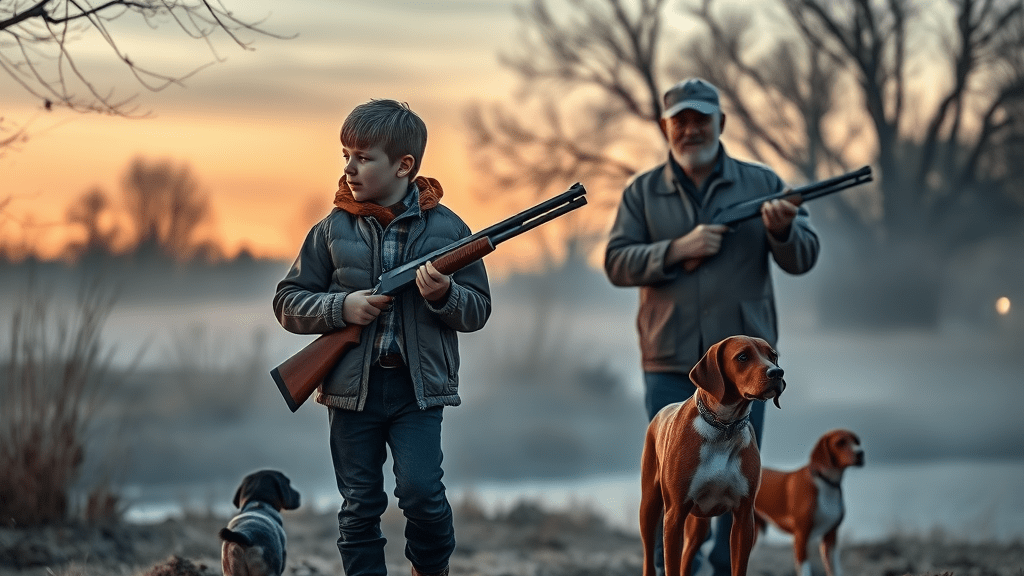
So, I was awake when I heard my grandparents moving and saw light under my bedroom door Thanksgiving morning. I knew Grampa would never wake me, so I dressed quickly before heading down the back staircase to the kitchen. I could smell ham cooking and hear Gramma humming softly above the popping grease; she smiled and told me to get my boots and coat so I’d be ready when Grampa was. As I pulled on my muck boots, Gramma took the fried country ham, piled steaming slices in biscuits directly from the oven, and wrapped them in cloth napkins. She poured a flask of coffee for Grampa and a thermos of hot chocolate for me. When Grampa came down a few minutes later, Gramma handed each of us our sandwiches. I was hungry, but I put the napkin in my coat pocket like Grampa did. He grabbed his 12 gauge and my 410 and headed into the darkness and the cold.
Zero and the redbone burst out of the pen when Grampa opened the gate. For once, they didn’t jump on me but raced straight to the back of Grampa’s pick up and leaped into its bed. I followed and slid stiffly onto the truck bench waiting for the heater to kick on. The Chevy chortled to life, louder than usual, and we pulled onto the empty streets and headed toward the farm.
I was nervous. I liked practicing shooting clay pigeons with my dad. I knew to brace the stock against my shoulder, tracking the target through the sky, leading it slightly, and then pulling the trigger to vaporize it in orange dust. More exciting than sitting waiting for a deer—I thought but didn’t know–because my mom wouldn’t let me shoot deer. But, now, I would be hunting birds with Grampa.
It was still pitch black when we turned west off the highway onto gravel, our headlights bouncing furiously ahead, until swinging into the farm. We stopped at the house for Grampa to start a fire in the franklin stove with all the kindling we could find to hand, before heading north into the land, Zero bounding ahead with us falling into a heel line behind.
I had always liked walks through the farm, where place is so deeply rooted time would bend and slow, or at least Grampa sometimes would. But this morning seemed sharper, and I shivered in the bone cold as the hard frost cracked below our steps.
At first, we walked in emptiness, all crunching and breath, but after a while, climbing a barb wire fence and skirting cattails surrounding the far pond, the cold waned. In the thinning blackness, fog rose from the pond like dog’s breath, and ground softened underfoot. Feel soon gave way to sight, dimly revealing form and shape. Twilight reflected below the eastern clouds onto the silver-tinged fields. Most of the leaves were gone except for the oaks and sycamores. Bare branches cleaved the dawning sky.
As we made our way to a coppice of ash, we could begin to see the colors left over from fall. The brightness of sugar maples and sweetgums had long ago faded, and even the yellows of hickories and walnuts gathered round their trunks. Only the rust of red oaks, burnt gold of sycamore leaves, and the ruddy green of scraggly cedars gave hue above the still dark earth.
When we descended into a hollow, a solitary cardinal song was joined by chirps of sparrows and trills of chickadees. Further afield, we could hear the jays and crows cawing at one another —an argument that would go on until spring.
We followed a small stream winding lazily through underbrush of snakeroot below hawthorns crowded in a long draw. Walking here was a chore, the cattle having grazed other fields, the switchgrass and bluestem, almost my height, bit as we walked, but, me and Grampa, we liked the gulleys, furrows, thickets, brakes, and untended edges of things. They held warmth against the cold in winter like shade against the light. So, it felt good beside the sheltered water before we pushed for high ground. As we climbed, we chanced upon the scat of deer under a mulberry and followed their feetings in the vanishing frost over untouched hedge apples to the timber edge.
When we crested the hill, I was panting and even though Grampa was carrying my gun, I was slack tired. But I didn’t say anything. Grampa must have been tired too, though he didn’t look it, because he said we should sit on a downed pine log for breakfast. With the pungent smell of pine needles rising around us and the dogs circling impatiently, we sat and ate. I hurriedly downed the salt, buttery biscuits and ham and gulps of sweet chocolate as Grampa stared silently out across the fields where quail were roosting. The faint daybreak shade retreated east.
Grampa loaded my 410 and handed it to me. It felt surprisingly cold and heavy. He said to walk ahead of him to his left with my gun facing out. The dogs began close working a patch of vetch as we moved down from the hilltop.
A redtail hawk screeched overhead but I couldn’t see it even in the dawnlight. I held my gun awkwardly as Grampa whistled at Zero, who tracked toward an old fencerow below us with the coonhound holding hard behind. I stared into the brambles piled around old posts looking for any movement.
As we closed to maybe 30 feet, Zero froze on point. I looked back at Grampa who nodded toward the fencerow and I stepped closer, knowing he would give me first shot. One more step. A breath. A snapped twig. And the covey of quail shot from the brush, six birds erupting skyward.
Startled, I lost my footing as I swung the 410 toward the quail now angling away. When I regained my balance, pulled the gunstock into my shoulder, and fingered the trigger, I finally sited the quail, but they were already too far . . . sinking toward a stand of birch lining the creek in the valley floor.
Then, I remember only my heart pounding in panic as I had not even taken a shot. It seemed like an eternity before I could bring myself to look back at Grampa. When I finally did, our eyes didn’t meet as he was staring ahead at the quail now far below, but he laid his hand on my shoulder. His giant fingers now surprisingly light, and as I looked up again, I followed his gaze toward the creek where the quail were about to alight before whirring up and away again, drifting into the soft sunlight like sparks from a fire, below redtails now visibly circling overhead. Then Grampa smiled, and I knew everything was good.
I often remember that morning in that place with my Grampa. And as my children have grown and I may have grandchildren of my own, I worry if I have such memories to give. Maybe it’s just the years that have worn those moments smooth. Or, maybe it is the wishful clarity afforded by distance. Maybe, today requires more effort than I can muster to truly step outside. Or maybe new traditions always replace old ones because nothing should stay the same.
Or maybe, there’s just nothing quite like standing chest high to your Grampa on an early winter morning watching the birds rise.
Tom is a lawyer in the small town of Fulton, Missouri. He spends all the free time he can outside with his dogs, farming, gardening, and reading and writing about nature.
If you would like to be part of the Rural Fiction Magazine family, follow this link to the submissions guidelines.
Please share this post to give it maximum distribution. Exposure is our contributors’ only compensation. Don’t forget to back link to this.
Financial donations through either our GoFundMe or Buy Me a Coffee accounts will help expand our global reach by paying for advertising, more advanced WordPress plans, and expansion into more extensive Content Delivery Networks.
Image generated by AI