Rural Fiction Magazine is on a mission to showcase the rich tapestry of rural experiences from around the globe. Whether you’re penning heartwarming tales, poignant poems, or insightful reviews on rural fiction books, we want your voice! Our open-minded approach means we welcome all genres—be it romance, horror, or magical realism—as long as it connects to rural life. Your story matters!
A Worldwide Platform for Diverse Voices
With contributors from 46 countries and counting, RFM celebrates the universal human experience. By submitting your work, you join a vibrant community that transcends borders. Share your unique perspective and connect with readers who appreciate the beauty and complexity of rural narratives.
Fast Publication for Your Creative Work
No waiting indefinitely to see your words in print! At RFM, we pride ourselves on our efficiency—most submissions are published within weeks of acceptance. Get ready to inspire others and gain well-deserved exposure in English-speaking markets including the USA, UK, Canada, Australia, New Zealand, and Ireland.
Your Voice Matters – Take Action Today!
Ready to share your story? Visit our submissions page for detailed guidelines and join us in celebrating rural fiction’s diverse tapestry. Remember: while there’s no monetary compensation beyond publication credit and exposure, your writing will resonate with an audience eager for authentic voices like yours.
Spread the Word!
Please share this announcement far and wide to help us discover exceptional talent from every corner of the world!
Rural Fiction Magazine is on a mission to showcase the rich tapestry of rural experiences from around the globe. Whether you’re penning heartwarming tales, poignant poems, or insightful reviews on rural fiction books, we want your voice! Our open-minded approach means we welcome all genres—be it romance, horror, or magical realism—as long as it connects to rural life. Your story matters!
A Worldwide Platform for Diverse Voices
With contributors from 46 countries and counting, RFM celebrates the universal human experience. By submitting your work, you join a vibrant community that transcends borders. Share your unique perspective and connect with readers who appreciate the beauty and complexity of rural narratives.
Fast Publication for Your Creative Work
No waiting indefinitely to see your words in print! At RFM, we pride ourselves on our efficiency—most submissions are published within weeks of acceptance. Get ready to inspire others and gain well-deserved exposure in English-speaking markets including the USA, UK, Canada, Australia, New Zealand, and Ireland.
Your Voice Matters – Take Action Today!
Ready to share your story? Visit our submissions page for detailed guidelines and join us in celebrating rural fiction’s diverse tapestry. Remember: while there’s no monetary compensation beyond publication credit and exposure, your writing will resonate with an audience eager for authentic voices like yours.
Spread the Word!
Please share this announcement far and wide to help us discover exceptional talent from every corner of the world!
Rural Fiction Magazine is on a mission to showcase the rich tapestry of rural experiences from around the globe. Whether you’re penning heartwarming tales, poignant poems, or insightful reviews on rural fiction books, we want your voice! Our open-minded approach means we welcome all genres—be it romance, horror, or magical realism—as long as it connects to rural life. Your story matters!
A Worldwide Platform for Diverse Voices
With contributors from 46 countries and counting, RFM celebrates the universal human experience. By submitting your work, you join a vibrant community that transcends borders. Share your unique perspective and connect with readers who appreciate the beauty and complexity of rural narratives.
Fast Publication for Your Creative Work
No waiting indefinitely to see your words in print! At RFM, we pride ourselves on our efficiency—most submissions are published within weeks of acceptance. Get ready to inspire others and gain well-deserved exposure in English-speaking markets including the USA, UK, Canada, Australia, New Zealand, and Ireland.
Your Voice Matters – Take Action Today!
Ready to share your story? Visit our submissions page for detailed guidelines and join us in celebrating rural fiction’s diverse tapestry. Remember: while there’s no monetary compensation beyond publication credit and exposure, your writing will resonate with an audience eager for authentic voices like yours.
Spread the Word!
Please share this announcement far and wide to help us discover exceptional talent from every corner of the world!
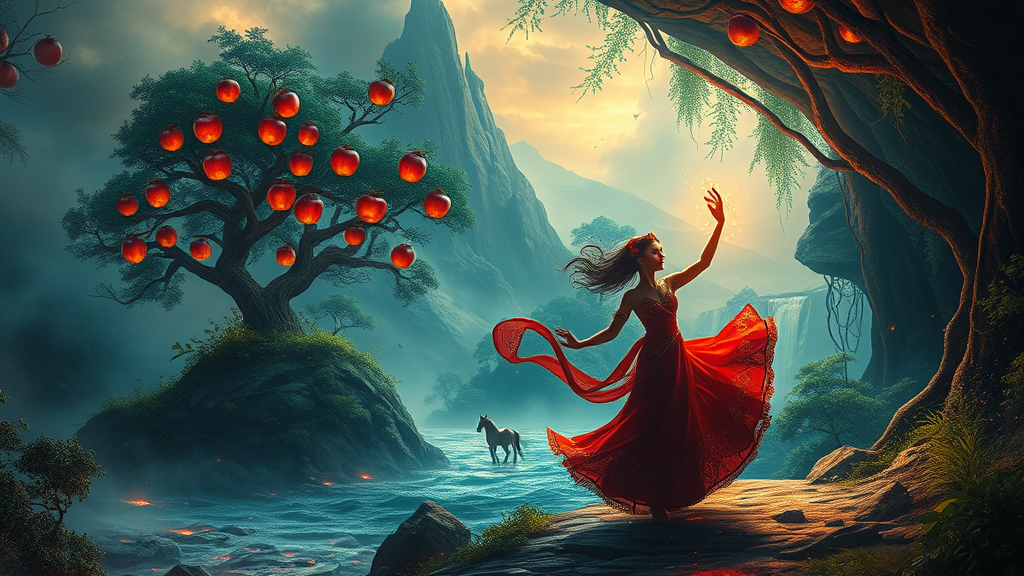
In the realm of the Djinn, warmth emanated from apples. Apples were big fireballs that grew on smoky trees whose size, shape, or color never changed. Djinns, who looked like glowing strings, treated these apples as a display in the magnificent orchard and never ate them because fire was the stuff of life in this realm. Wild stallions ran on open russet plains, where a river of lava flowed from charred mountains and formed a valley. Djinns called it the Valley of the Red. They ensconced in this valley to soak up the fire released from the lava.
Down by the Valley of the Red, another realm existed. This was a more verdant realm, unlike the red lands of the Djinn. Djinns frequented this realm out of curiosity, to learn more about the inhabitants. Djinns had an insatiable desire to learn and absorb. While Djinns lived for thousands of years, Mortals of the other realm were transitory. Djinns speculated whether or not Mortals metamorphosed in death and became Djinn at any point in time. Conversely, were the Djinns, Mortals at any point in time? Djinns knew about mortality; they were the fine infinite fire creatures, who were deemed to be superior to any other transients. Occasionally, they also burnt out, but that was when they bathed in the Valley of the Red to get regenerated.
One fine afternoon, Djinn Aggi sat steeped in the Valley of the Red when a firefly flew in from the realm of the Mortals. It whispered news that the Flamenco cave dance would be performed in the verdant mountains of Sacramento. The dancer was a young Romani girl called Drina. Aggi knew many tales about the persecution for hundreds of years. Romani men, women, and children being slaughtered, many fled to exile themselves as they moved from one place to another without ever settling anywhere, known as the nomads.
Aggi frequented the Flamenco dance. Although the Djinn saw it all on its timeline when the persecution happened thousands of years ago, viewing it in art form, gave a new perspective; it made the history of suffering even more poignant, and sublime. He asked the firefly to make a magic potion yet again and turn it into a Romani boy. The firefly had that power, but only to transform the Djinn for twenty-four hours. After that, it would revert into a fire creature that it originally was. In these twenty-four hours, it would have a Mortal heart, a nose, eyes, and an image in a male body with a full range of Mortal emotions, however, he would still, retain some Djinn powers. The Djinn boy would be able to fly across realms. The magic enabled it to become Mortal once every month in the Djinn calendar. The Djinn was accustomed to visiting ancient places, customs, and cultures thousands of years old. It had seen and known many kings, and events; he knew the underworld.
In the realm of the Mortals, a cave was replete yet again, with Flamenco musicians and dancers. A young Romani girl, Drina was on the floor. The dance ensued as her musicians clapped, and sang. Songs rose to a crescendo. Drina looked at her audience in the dimly lit cave fire. There was one that caught her attention. He was a redhead, wrapped up in a robe. Unlike the others, his eyes were red. Drina smiled at him and he smiled back. Aggi felt a strange passion rising. This particular transformation enlightened it of Mortal passion—to feel what they feel. Why and how did love feel? That mortal could even die for love. He never felt this previously when he visited the realm of the Mortals.
Imparting a Flamenco story was crucial for Drina—one of persecution. The fiery dance rekindled an age-old, story. The spirited dancer had been longing to tell her rendition to an audience. As the dance ensued, her eyes spoke, her bosom heaved, and her footsteps tapped the cave floor in a show of a feisty desire to erase this history; all that was too painful to endure.
She danced by a slow fire inside the cave with the accompaniment of musical instruments. A fire burned within her; since the inception of this race, this ancient dance was carried out through many generations of her tribe. This evening, she decided what instruments, she wanted to dance to, tambourines, bells, or castanets. She chose them all. Her red skirt swished and swirled wildly around. With every tap, thousands of defiant embers sparked off the floor.
Hands above her head, he parted her long dance fingers and pointed them toward the cave walls, lit up with etches of slaughter, of being devoured by mythical creatures on the wasteland who were her ancestors. Romantic Ronda—the Romani dancer carried the memory of this beautiful place in her heart, bore it all, and relived the story of the beheading of the Gitanos by the Rulers of the kingdom. Her dance revealed it through the whine of her waistline art, while she suppressed a cry when she thought of men and women thrown into the deep La Yecla gorge. Until she could not dance anymore; until the all-consuming fire, consumed her. The dancer fell on the floor. In the light of the fire, before everyone, Aggi felt a pain he never felt before, her pain was his pain as he saw this dance of Romani persecution.
Drina looked at him and she transmitted love to him; his red eye was captivating. The young, spirited Aggi, made up his mind that very moment to transport them both to the realm of the White where they could woo each other. The realm of the Djinn was too hot for Drina, she would melt in seconds. The Mortal world was beset with the dangers of persecution. The only one world open for them was to travel into the realm of White where both could be safe. He felt love in his heart for this woman, he wanted to take her away. He knew what he needed to know about Mortals, which was enough for him. He came forward to make her free and happy again.
Aggi lifted her body and shifted her into a realm of White. Light as a feather, she looked down and smiled upon those, still eyeing her; she burned in the enigma of this crowning point of love for the world to note, to remember all that was too painful for her to ignore. What she endured for thousands of years; in this dreadful paradox of art, fame was earned through the sadness of the esteemed Flamenco dance.
In the realm of White, the sphere was dominated by light. Aggi had entered this realm before when the firefly performed the magic on the Djinn land. He had traveled through a portal that had opened before his eyes. In this domain of the lights, and breathing the same air, the Mortals floated in the ether. Aggi felt ethereal, too since, the magic could not revert him into full-fire Djinn for twenty-four hours.
When both were traveling to this realm of White, Drina fell asleep. As she woke up, she found her hand, in hand, and entwined into Aggi’s like an ivy vine. He kissed her and they made love under a profusion of white flowers, Drina saw that these flowers secreted sweet nectar, and pollen grains, Drina touched the nectar mesmerized before Aggi could stop her. She was in his lap. Aggi was cognisant of the impact of the nectar on Mortals. Mortals were allowed to breathe in the realm of the White, but only if they didn’t touch anything was the only constraint. He stood up and before anything could happen to her, Aggi attempted to take Drina out of the realm of White.
“What is this?” Drina asked.
“What is what?” Aggi answered.
“Why do I fade?” Drina asked.
“Because, you aren’t allowed to touch any flowers, or the nectar, here.”
“But I breathed the pollen. Why have you brought me here? What is this place?”
“Without pollen, Mortals couldn’t breathe here, however, the nectar has ingredients to turn a Mortal into light in twenty-four hours.”
“How do you know so much?”
“Should I have told you?”
“Tell me what?”
“That I’m a Djinn turned Mortal?”
“What?”
Drina fainted after that.
Aggi realized that only a couple of hours were left until he too turned into full Djinn and Drina faded into full light. He ran to the brink of the realm of White and flew them back into the realm of Mortals. He lay her down in a forest and her form returned. She opened her eyes and smiled at Aggi. She caressed his face and kissed his forehead and his lips.
“I can be here for another half an hour.”
“Must you return?” she asked.
“Yes, I must but I can meet you once in Djinn calendar month.”
“Take me with you, Djinn Aggi, I do not wish to be without you.”
“I don’t know how.”
“Find a place where I shall not melt. You shall not be fire. We can be one entity.”
Aggi thought fast before his time ran out. His Mortal facade was coming off, the heat was rising from his body and was visible. Clouds gathered. The sky cracked up and the firefly came down towards them. It could have a solution, another magic potion to turn them both into one entity. And for eternity?
The firefly found them and flew around them. Drina and Aggi continued to look for a solution. In the realm of the Mortals, neither Aggi nor Drina knew how to live together in peace, nor communicate with her people about his magical existence. Drina had only to touch the nectar in the realm of White, not even taste it, she had begun to fade into light. Firefly whispered of a fourth realm, the realm of Time where they could both be the same entity, eternally.
Before firefly could tell them about the catch in the realm of Time, they became euphoric and, they were so engrossed in kissing each other that the catch eluded them until Aggi’s body heated up, his newfound skin pores began to emit puny balls of fire. ‘What’s this?’ Drina asked surprised. She was still in full Mortal form, but Aggi was changing and disintegrating. One whom she fell in love with, the redhead and the red-eyed boy, who brought her up into the realm of White and saved her from the sharp incisive lights cutting her up until she faded.
Beads of sweat appeared on Aggi’s body. He began to pulverize. His body was on fire and his skin was flaking off. Something to do with the transformation, Drina reasoned. What would she turn into? Where could she go? Aggi was becoming a Djinn again. The firefly turned back and forth until Aggi became full fire. But another transformation occurred. Aggi was now turning into ash. He lay before Drina in an inanimate heap of ash.
“What happened?” Drina began to cry. She didn’t care; she wanted Aggi to be Djinn again. Let him live. In the realm of Time, Aggi and Drina could be one entity but only as ash and dirt where each would absorb the other in time. That was the catch. Reverting to a Djinn, Aggi’s mortal body shed and became ash under the new magic potion for the Realm of Time.
Her thousand years of tears came undone. Tears of persecution, and love for Aggi the Djinn, flowed unhindered. She collected Aggi’s ash and placed it on her lap in the forest before the firefly. The firefly saw her pain, the depth of her love for the flame Aggi once was. The firefly cupped her tears in hollyhocks and poured it over the ash. The ash began to stir, and it started to rise like a fire twister. In the twister, Drina saw a flame, flying and breathing again. Djinn cooled down and found the strength to stand, bodily back; both breathed the same air on the realm of Mortals.
A metamorphosis had occurred here, in the realm of Mortals, a miracle allowed them to be together as they both desired. They took each other’s hand; hand in hand, Drina and Aggi walked abreast towards the edge of the realm of Mortals. Then they stopped. They stood spellbound as they watched the fretful firefly, turning into a gaseous mass, dissipating into a star.
Mehreen Ahmed is Bangladeshi-born Australian novelist. She has published ten books to date and works in Litro, BlazeVox, Chiron Review, Centaur Literature. While her novels have been acclaimed by Midwest Book Review, Drunken Druid Editor’s Choice, shorts have won contests, Pushcart, James Tait, and five botN nominations.
Please share this to give it maximum distribution.
The children met the stranger on the edge of town, at the edge of the day. The voice was a woman’s. She wore a long green dress, stained with patches of damp dirt, crisscross laced together at the front of her chest to cinch in the beige chemise below it. A full skirt, full sleeves and a dark drape over head concealed her features.
No one dressed like this anymore. But if her clothing gave the impression of a very old woman, the straightness of her posture did not.
“Come, children, come and sit beside me. I have a story to tell you.”
The children felt only curiosity. Strangers had never come here, not during their lifetime, so they had not been taught to fear them. They climbed up to where she stood, careful not to dislodge too much of the loose, dried out soil, trying to avoid the scratching scraping stones and the spiky splinters.
“Be careful not to cut your little feet. The ground was not always so withered. Once it was soft and spongy, all covered in soil, rich and dark and moist. And the birds – how can I describe their song? The wood pigeons coo, coo, the lilt of the blackbirds, the shriek of the swooping gull. Buzzards mewling over green fields and forest edges, and the swooshes and shadows of a dark wing in winter.”
The children’s eyes widened in their small faces. They had seen pictures of birds, but had not known they sang.
“This was where the Rowans were, on the threshold, keeping the boundary. At this time of year, they were at their most spectacular, crowned with great clusters of bright warm berries. Those berries fed many a desperate creature through the dark cold. We used to tie Rowan branches to our animals and hang them over our doors to protect us from bad luck, to keep the living alive and the dead at peaceful rest.”
The children looked at each other through the silty smog, trying to read their companions’ eyes. They had covered their mouths to protect their throats from burning, as they always did when they climbed a hill into the cloud. They felt their curiosity grow, but now it was streaked with something darker, something unquiet.
The bravest child, the child who would never fit in to this world, and already knew it, piped up.
“Do you know what trees looked like? I thought no one did,” they asked, cheeks hot and voice a rush with excitement. “I thought people could only guess, which is why every picture is different.”
The rasping sound was a little like laughter. Then again, these children had heard or made such little laughter in their lives, that they may have struggled to recognise it even were it not so distorted.
“Trees change, grow, cycle in and out with the seasons. Sometimes covered in bloom and blossom and sometimes bare, opening up to the sun or stripped right back against the cold. And they were all different. At the same time that Rowan was shaking out her crimson hair, Hawthorn was dancing out white flowers. Oak’s gnarled trunks were strong and solid, while willow’s soft branches gently flowed down to caress the earth.”
She had been gathering Rowan berries when they first rode in, on horses too exhausted to look anywhere but down. When the man on the chestnut mare dismounted, his horse slid forwards, first her knees, then her head, the white flash on her face slumped all the way to the ground. The man jerked the bridle, trying to get her to raise her head, the bit crashing against her teeth. Few saw it, but it was there, the moment and impulse of cruelty, right from the start.
“I’m Matthew Hopkins,” he announced, striding into the inn, though no one had yet asked. He held himself apart from the villagers, constantly shifting any time anyone stepped too close. But some did come near enough to smell the dried sweat and the damp off him. Not fresh, clean damp like a soft spring rain, but something mildewy and rotting. The kind of smell that didn’t fit with his fine clothes, or his grand talk.
The next time she saw him, they were at her namesake, not gathering berries, but plundering them.
“What are you doing, what madness is this?”
Hopkins did none of the work, but watched and controlled all of it. When he smiled, it was more chilling than when he did not.
“I am glad you are here, Rowan, on this very great day. After all, some of this victory belongs to you too. It was you who first made rowan jam.”
Sitting outside of the tale, the children stirred, but did not speak. Rowan jam? Was this woman, then, a poisoner? Would she poison them?
“If you want jam, I can give you some. If you want to learn to make it, I can teach you. But we only take what we need from the trees.”
When Hopkins laughed, he threw his head back. His neck rose from the high collar he always wore, and she had never seen a neck like it. Not so much one neck as tens of them, so many deep, thin folds stacked on top of each other. The oldest people in the village did not have necks so wrinkled, and Hopkins claimed to be a man of his thirties, dressed as such and carried himself with a young man’s swagger. The hands were always in gloves, and it was only now that he had removed one to inspect some berries before crushing them between his fingers that it was obvious, the hands were old.
“Women’s ambition is so small. We don’t need to learn. We have reinvented your methods. You’ll see, you’ll see how fast we have to run to win the race.”
“There is no race. The berries need time to stew, for the poison to leach away and the good to rise. What can heal can also harm, if you rush the craft, and destroy the balance.”
“No, no, woman, you don’t understand! Nothing is turned to gold at the speed of a snail.”
He stepped very close. Gone was the smell of the ditch and the unwashed body, but there was something else coming from him, a different kind of undefinable rot, there on his breath. There was a faint tinge of grey, like ash, to his skin, and up close, a twitch around the eye. He had his hair pulled back, as was the fashion, but tight, very tight, distorting the face from what it truly was, raising the cheekbones and narrowing the eyes.
“You’ve had such success in other villages,” she said, as he brought his hand, his unexpectedly mottled hand, close to her arm. “Why, then, do you receive no visitors? Why no letters?”
His first and second fingers thrust spitefully into her shoulder, their imprint lingering after he turned and walked away. When he threw a feast to celebrate the preparation of such an abundance of jam, and the putting of it into jars ready for the markets, she was not invited. Nor were any of the women who had seen the disastrous mishandling of the fruit, and had counselled the men to stop. For three days the town was laid low, every person who had attended the feast crippled with cramps, unable to keep even water inside their writhing bodies. It should have been their lesson. But they had become too feverish in their lust for speed, too weak in their souls to learn.
The children listened, a different thought in every young mind. They had all quietly sniggered at the statue in the town centre, and how the mayor went to admire his own likeness every single morning. But not all of their minds were ready to receive this new information, turn it over, examine it.
“Rowan is poison! We all know that. That’s why Mayor Hopkins led the purge, charging into the forest to fight the evil trees!”
“And bring the modern world to us.”
“And us to the top of the modern world.”
They learned this by rote and repeated it several times a day, starting as soon as they could talk. Rowan’s voice was weighted down by sadness, as slimy water pulls down a broken boat.
“Fight? There was no fight. Only those who can defend themselves can fight. They came at night, riled up like stampeding bulls, strange lights in their eyes, chanting strange things. They came for the Rowans first. Hopkins spoke, the others listened, repeating what he said over and over until the repetition drove all reason out. It was time for men to take control. We shouldn’t be content to live with the land as equals, because everything should belong to men. Tame it, control it, or burn it.
“Hopkins said that Rowan was dangerous, the poison tree, and that her berries were too bright, that the workers were distracted by the colour. They pulled them up, ripped the trees apart, and when they did, I felt it. I felt as though my limbs were being stretched, then ripped apart by men who would prefer to destroy me and anyone like me than accept a minor blow to their pride.
“He shouted that they had to take the willows too. That they needed space for metal, not for wood. The men slashed at her gentle limbs until there was nothing left. They would not even spare the stumps. they gouged out huge chunks of her chopped flesh, right in the very heartwood of her, and packed the wounds they created with salt, to burn the last of her away, from the inside. Can you imagine the pain?”
She was talking about non-human things as if they were alive. Was she crazy? Some people went crazy, just like some people went careless. The people who left and never came back, the people bad things happened to in the factories.
“We saw the regret on the men’s faces, when the dawn drove their madness away. We saw the shame. But it was too late. Without our guardian forest, the change came quickly.”
“The first Bleak Winter,” one of the children whispered.
“The days got darker, the air colder. There was a new ferocity to the storms, and strange beasts came down from where part of the forest used to be. Beasts with eyes like we had never seen, which would snatch people away, or kill and savage us for sport, before racing away and disappearing back over the hill.”
“The wolves of winter!” one child cried, and the rest shivered. They all knew about the wolves of winter. Their parents had dug their houses underground, to hide from them. They knew the names of the relatives they had never met, because the Wolves of Winter had snatched them.
“But the worst came from inside. Cattle and children alike took to the ground, exhausted. I had no jam to revive them, or even any willow to help with the pain, so the disease took root as it never had before. Instead of filling back with life, tired and aching limbs filled up with black poison blood, which rotted the legs away even while the heart still beat. Villagers walked the streets with mouths turned to sponge, putrid blood and splintered teeth dropping like hailstones onto the paths. Bodies bruised at the slightest touch. Nothing lived long after the loss of the teeth. And nothing grew here, ever again.”
“It was because of the witch! We all know that!”
The child with the laziest mind started the chant, and the others joined in.
“What can heal can also harm…and those that cure can kill.”
“That’s why they hang witches.”
“None of you have seen a hanging. Not even you.”
The face in shadow fixed the face of one of the boys, like a pin fixes a butterfly to a board. “She was so lonely. She would have liked to have seen you. One last time.”
“They…they wouldn’t let me…”
The others fidgeted. They had been told not to talk about that, not to even think about her.
“When they hang a human, it takes a very long time. The rope is thick and rough. It burns and scrapes and scratches the skin and it chokes so slowly. The body dangles and swings like a broken branch in the wind. The eyes pop the face swells the limbs jerk and twitch and sometimes even break themselves they jerk with such force! Everything comes out of the body, from the way it is flooded with fear and from the way it gives up. Piece by piece by piece they squeeze the life out of it and there is nothing gentle, nothing quick, nothing about it that is not completely barbaric. Wolves and snakes and bears and all the predators of deep dark that you have been thought to fear would not do it to their own kind, would not do it to any other creature. The blood and vomit comes from the mouth the eyes pop out the skirts are soaked there is nothing about the body nothing at all that is not completely ruined, mutilated, and bodies that were once in their own way perfect and touched with love are brought down, dishonoured like this. You must never, ever let them do it again. You must never do it.”
The whole time she had been telling the story, she was wrapped in her cloak, like a shroud. As she spoke her last, she moved, and the children screamed, because where they expected a hand there was only a shape, that was the ghost of how a hand should be shaped. It was neither fair nor dark, like any of theirs, but in between, a sickly grey, something dry and shrivelled and the skin, was it even skin? Something leathery pulled back and twisted over something more than bone, but not much more than bone.
“I am going to the place you have called home. But your home should be your roots, and that place is as uprooted as its trees.”
She tossed her hood back and the head, my god, the head! The hair was still there, straggled and tanned an unnatural colour by the peat which still clung in lumps to what had been the face, was still under the nails, long and curved as though they had never stopped growing even as the rest of it rotted and curdled. There were no eyes left, but they knew, she could see.
“Your parents and grandparents have burned this path to their own front door. What will happen tonight, children, however it may scar you, it is only justice. It was their cruelty which turned my heart black. And, with rowan gone, the dead can come back.”
Naomi Elster’s writing has been published and performed almost 30 times, including in Imprint, Crannóg, and Meniscus, and at the Smock Alley Theatre. She has campaigned for reproductive justice and pay equality. She has a PhD in cancer and leads the research department of a medical charity. Originally from Laois, in the Irish midlands, she now lives in London.
Please share this to give it maximum distribution.