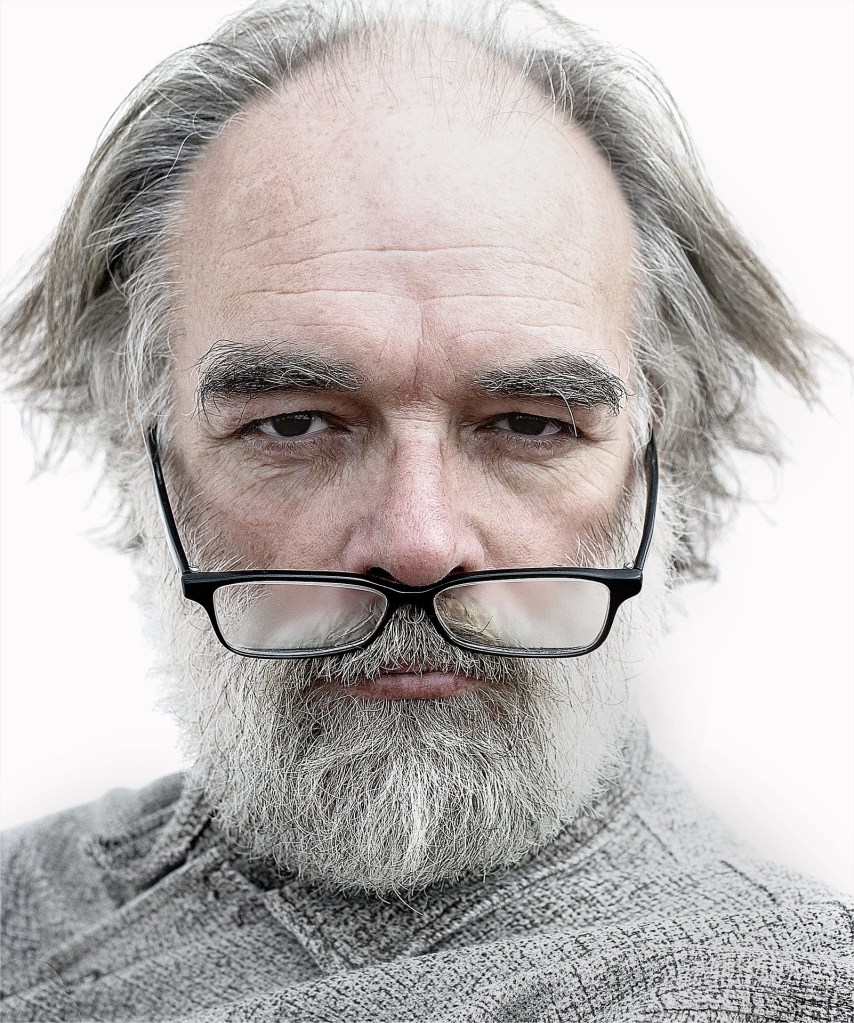
His sadness smells like the yellow fruit falling from the tree during summertime. I’d keep my distance, not coming closer, leaving him alone in his private space. He values silence, a quiet room, sunlight playing on surfaces like the Monet paintings he loves. I’m sad I can no longer lie down beside him on his bed – to look at him fall asleep.
His voice echoes like lost days. I’ve been staring at the mahogany door, deep brown as his grief, blocking my view of the blue sky. I don’t want to leave him. The pot with the glass lid holds smells of his care and love, wafts of chicken broth too real. My eyes would water.
Tiptoeing back to his room I’m shrouded with absence. I remember the time when my joints murmured, pain pulsing in my head, especially during stormy nights. I could no longer hold the nausea back, I vomited. He cleaned the floor the way he read books, peaceful, his face showing his distant mind. He’d cup my face and press his lips and nose on my forehead, my cheek. I could hear his inhalation, he loved my smells. His kiss was balm to my sufferings. The vomit became numerous as words he put on paper.
I was diagnosed with late-stage kidney failure. Back home, he closed his room’s windows and cried. We knew each other’s thoughts. I watched him fold the lab results into a brown envelop.
He drank, constantly inebriated with rum in my ordeal’s final two months. I smelled his daze as he brought water-blended moringa, chlorella and wheat grass, which he fed me using a spoon, or with a syringe if I was hardheaded and spat his kidney tonic. He no longer cooked chicken legs or wings, too busy writing as I slept on his bed. He’d wake me, in the middle of his writing frenzy. He’d pull me up and embrace me, smell of rum from his face like summertime’s fruit. He asked God aloud to give him kidney disease. He wanted to die like me.
Joyful moments walking with him outdoors became fewer and fewer. I missed the pleasantly intoxicating smells of grasses and wildflowers. He didn’t want to strain my weakening legs, so he limited our walks outdoors. I longed for those mornings and midafternoons when I ran beside him as he jogged, my happiest days, when I saw him happy, exercising daily and not drinking rum while writing.
He brought me to the hospital for my day-long fluid therapy. I shivered in his cavernous absence, hours dripping slowly like liquid through the plastic tube. Hearing loud voices and laughter of people, I remembered my partner, who was scared of firecrackers. I felt rejuvenated seeing his face. Our trip back home was heavenly. He embraced me a long time. His heartbeats warm as his bed. His mind had become the park of kindness and care I and my partner taught him, which took him years to master. I and my partner sensed his humility, always treating us as teachers.
On December 24th he brought me to the hospital for the last time. My time had arrived, and he knew it. The doctor said nothing could prolong my life. I heard them talk quietly. He said he’d do everything to make my departure comfortable. Back home, he spread his own blanket on his bed. With all my strength I tried prolonging my last moments with him. I smelled firecrackers like his refusal to eat. Early morning the following day I began to struggle, having a hard time breathing, my heartbeats like cats I loved chasing.
When the eighth hour blossomed he knew it was time to pick me up into his embrace. I began to shiver, cold claiming my body slowly and so full of love. I saw my partner passing by, taking short glances at us. His love tightened, and it my eyes watered. I saw him crying, his mouth moving and moving, as though he were saying final words for me to bring to the rainbow bridge. I no longer heard his words clearly, but twice I heard my name like dried summertime fruits from his tongue – Dexter, Dexter. Gentleness gripped my heart, and it felt iron, painful, and I knew it was the last thing my dying heart held.
Something hot spurted out my anus. I smelled blood no matter how faint. He pressed his lips and nose against my cheek, and I knew it was time. 8:10 in the morning when I soared out of my body. I willed myself to hover and take another look at him. I couldn’t hear anything but I saw him screaming. Soundlessness made his cry all the more painful.
I soared towards the light, heavenward pull like love leaving weight behind, gravity no longer holding me to my earthly desires. I remembered the time when I tested my footsteps as a weeks-old youngster, the first time we met when I inhaled his body’s smells that I’d always recognize. As I entered the space of stars, I felt like his baby again, running as fast as I could, exhilarated as I chased the rainbow bridge’s intoxicating smells, sniffing here and there. As I entered deep space I floated. I looked for Leo his constellation, eternity mine. Eternity will be ours together. A pack of happy souls welcomed me to their heavenly home. I was joy personified. I am joy. My brothers and sisters beyond the rainbow bridge are joy.
He spent the morning of Christmas day in the crematorium’s front office, his mind blank as bond paper as he waited for my ashes in a glass jar. He enshrined my enlarged photo framed in glass on his writing table. I’ve been listening to him pray for my guidance. I see his thoughts like kaleidoscopes, his his mind like mandala. His wonder makes me smell Bermuda grass. Quiet joy makes his mind fold like origami. I’m happy to have fulfilled my life’s purpose, having lifted him onto a spiritual place.
One recent evening I was surprised but delighted to see my partner, Nicola, love of my life, mother to my countless boys and girls living across the City with their humans in forever homes. We were reunited, but I felt sad and alarmed. I hadn’t been watching him for some time, so I rushed to his room. It’s been days that he’s stuck in motionless staring, picking himself up only to cook. I saw his lab results, sad his prayers to die like me seems to have been answered. I’m glad he’s stopped drinking. His mind’s sunflowers and lilies show his efforts to regain health, because he still has our younger siblings – Bowitch, Yves and Donna.
Yves and Donna are now parents to Daisy, whom he loves the way he loved me. Bowitch has joined us beyond the rainbow bridge.
He’s been sensing my presence, his turns to look at my favorite corners in the house coinciding with my presence there. I’m grateful he knows I’m alive, waiting for him at the edge of the rainbow bridge.
Jonel Abellanosa lives in Cebu City, The Philippines. His poetry and fiction have appeared in hundreds of magazines and anthologies. His poetry collections include, “Multiverse” (Clare Songbirds Publishing House, New York), “50 Acrostic Poems” (Cyberwit, India), and his speculative poetry collection, “Pan’s Saxophone” (Weasel Press, Texas).
I crash through the dry, thorny underbrush, despite my efforts to stay silent, all the while questioning why I’m here. The constant uncertainty of “why I’m here” keeps my mind distracted from the dark midnight wilderness around me, and gives me a purpose as I move forward. I’d be lying if I didn’t want to prove all the doubters wrong, but that isn’t the main thing pushing me forward. I have something to prove to myself, also.
I tear my thoughts away from the “why” and turn them to my surroundings, for they are dangerous. It is near midnight, and the dark woods around me hold many things that could be dangerous. Not that I am overly worried, because I am prepared, but I still must be careful. I’m high in the Cascade Mountains of the Pacific Northwest, home to the elusive sasquatch. One of the families of sasquatch, at least. Contrary to popular belief, the sasquatch species are spread throughout North America and even parts of Europe. To most people, Sasquatch is just a joke and the mascot of a beef jerky commercial. To me? Sasquatch is a rare, intelligent beast that needs to be…what does he need? Exposure? Help? Honestly, I don’t know what I would do even if I did find a sasquatch. I want to protect them of course, but I would also want to share my discovery. Would anyone even believe me?
As I hike up the loose gravelly hillside, I look for potential spots to place my game cameras. These motion activated cameras are a useful tool for a Squatcher, someone who actively searches for sasquatch, allowing us to have eyes in multiple locations at once. The only trees at this level are pines, and there are no defining features of the landscape other than the slanted-growing trees and the shale beneath my feet. I am far from any trail. Sasquatch wouldn’t have stayed hidden this long if they hadn’t been avoiding trails, so to find them I must avoid trails as well.
I wrap the strap of one camera around a tree, flicking the on switch and quickly moving on. Part of what sets me apart from other Squatchers is I don’t go looking for sasquatch; I let them come to me. I move a few more yards, then place another camera. I go on for a while placing cameras in a diagonal line across the Valley. Trudging through the underbrush, pine branches continuously scraping my shins and bashing my arms, I quickly grow tired. Traversing across the Valley along the base of the cliff, I place another diagonal line that eventually meets at a point with the first. These two lines, combined with the base of the cliff that serves as my vantage point above the Valley, form a triangle. This will allow me to see anything that passes into or out of the upper part of the Valley, either with my own eyes or through the cameras. I started using this method to simulate a visual trap, which allows me to know if anything breaks the barrier of cameras.
••••••••••
I hope my cameras are angled well. We don’t need any more Blob-Squatches. Blob-Squatch is the name given to photos of “Sasquatch” that are unidentifiable. They could be a tree stump, a shadow, or simply nothing. I setup my game cameras an hour ago, and I’m now waiting silently atop the bluff overlooking the valley. Same program as always: setup cameras, take position at the overlook, and wait for the valley to quiet itself. Obviously my crashing through the woods would scare away most animals, so I wait for the woods to come back to life.
As I wait for the resurrection of the valley, I get a chance to stargaze. This might actually be the best part of these trips. Could the magnificence of a sasquatch even compare to the majesty of the heavens? Obviously the answer is no. Sasquatch, despite his elusiveness and mystery, is still a mortal beast. The heavens, on the other hand, are infinite and eternal. Sometimes, the woods feel the same way.
The time for world-brain and philosophical inquiry is not now. Now, it is time for Squatching. I may differ from other Squatchers in how I look for a sasquatch, but I’m the same in how I call for them. Sasquatch vocalizations are very specific to their species but are also extremely simple. The main ones are tree knocks, whoops, and screams. They are pretty self-explanatory, aside from tree knocks. A tree knock is basically taking a very large branch and smacking a tree. Hard. Sasquatch do this a lot when they come upon campers, either to draw attention to themselves or scare away the intruders. A tree knock can draw other sasquatch in, as well, because it is somewhat of a distress signal. Most people don’t understand how curious sasquatch are, despite their elusive nature. Many times, you are being observed without even knowing it. Sasquatch have a natural ghillie suit, which most people don’t understand makes them effectively invisible unless you know they are there.
I grab the biggest branch I can firmly hold in my hands, a log about 5 feet long and 6 inches in diameter, and pick a tree. I want a tree that’s separated from the rest around me on the edge of the bluff, so the sound isn’t immediately deadened. There is a nice large pine, leaning out over the edge of the hillside, about 45 inches around. I ready myself for the abusive sound I’m about to create and swing the branch like I’m in the Homerun Derby.
The sound is heart stopping. It echoes through the valley like a blow to the heart of nature itself. I freeze immediately after the swing and listen for any sounds from the valley below. I never expect to hear anything after a tree knock because it isn’t necessarily a friendly call. There is a two-tone chirp from the East side of the valley, to the left from my viewpoint on the bluff, but I disregard it. Sure, the two-tone whistle is a common sasquatch vocalization. Everyone knows that. But any bird can make that noise as well. I need to not be so quick to jump to conclusions. At this point, it’s easy to shrug off certain sounds. After years of visiting these mountains, I’ve built a shield against hope. The skeptic in me comes out more and more, but my faith in the reality of sasquatch has never wavered.
I wait until the valley quiets again before moving on to more vocalizations. I start with the scream because it is much louder and travels further. Scream is somewhat of a misnomer; it is more of a bellow. This is another unusual call that is very specific to sasquatch. Puffing my chest out and steeling my nerves, I scream. I scream a scream so raw and primitive that I question whether it even came from me. My heart races as I listen for a response other than the echo of my own voice tearing itself apart through the valley.
Nothing. Nothing. Nothing. THERE!!! I hear a whoop, again to the East, and something crashing in the trees. I try to subdue my excitement, but the barrier I’ve built over the years is failing. Rarely have I ever heard two clear calls in one night, and there is definitely something moving down there.
What do I do?! Should I move? Should I stay? It is coming closer…I need to call again. That movement should be close enough to one of my cameras that I’ll know what it is when I retrieve them. I call again, this time switching to a whoop. It is a more tonal version of a scream, and is much quieter. I hear another whoop in response and can barely contain my excitement. I want to move, but the sasquatch is coming to me, just as I had always planned. If I move positions now, I might scare it off. The only option is to get as far out of the open as I can without making too much noise, but at this point it almost doesn’t matter. I can hear the beast crashing through the underbrush, storming up the valley towards the bluff. It is not trying to be stealthy.
I never thought I would be faced with an actual face-to-face encounter. I never really planned on what to do. Now realizing I about to meet this humongous beast, I realize that I am entirely incapable of defending myself if it feels threatened…there is no running, however. I can’t hide; it will find me for sure. Their sense of smell is much too strong. I can’t run; they can run much faster, up to 40 mph. There is only one choice. I must hope it perceives me as friendly. I stand in the clearing as the crashing grows closer. The first thing I see is a mass with no shape, lumbering through the brush and pushing branches out of the way. It quickly gains a humanoid shape, and just as more features start to come into focus it stops. It knows something is not right. I am not a sasquatch. It takes a few tentative steps towards me and its eyes become visible. They are a rich dark brown, more majestic than the heavens, and more divine than the forest. I ought to be entranced, but I only feel fear. This is not a friendly being. It only knows violence and pain, and I am an enemy in its territory.
Tyler is a Senior at Lindenwood University graduating December 2021 with a BA in English Lit with an emphasis in Creative Writing. He works full-time as a freelance Project Manager specializing in the nonprofit sector, and spends time volunteering in his church and for Alcoholics Anonymous.
The time was approaching and Rodolfo was preparing to start the session. Nervousness invaded his body and it was not for less, because it was the first time that he tried something similar. He prepared the table where he was going to arrange to place his board and the various artifacts that he had to use. Sweat was running down his forehead and he was trying to hide it quickly so as not to show signs of inexperience.
“Hello there? Do you hear me?” Rodolfo asked with a slight tremor in his voice.
He looked at his board uneasily, trying to remember every step he had to take. Regrets invaded his head and the desire to leave grew stronger, but he was not going to give up so easily.
“If you are listening to this, please give a signal.”
For long minutes not the slightest sound was emitted and Rodolfo crossed his fingers, clinging to the hope of being able to connect with someone. Silence roamed the room and tension was in the air. Rodolfo felt as if he were walking through a gloomy cemetery, alone and at night, looking for some merciful soul to help him find his way out. However, the pessimism increased with each movement of the clock’s hands.
“What are their names?” Rodolfo said, almost shouting “Is there someone? Please give a sign” despair showed in his actions. “Well, I think I’ll say goodbye.”
With a great sadness on top of him, Rodolfo was preparing to end the session that he had prepared with so much effort; until suddenly a slight murmur began to be heard from afar, which shook him considerably. His heart began to pound and his pupils dilated at the sudden manifestation.
“Hello, Professor Rodolfo,” says a student suddenly. “I’m George, I am a freshman student, nice to meet you”
“Hi, professor! Sorry, my microphone was not working. My name is Cristian.”
Rodolfo began to explode with joy at the presentations of his new students. His eyes narrowed and the daisies were easily seen by the huge smile that was drawn on his face. For an instant, he thought that all the lessons his eldest daughter had given him to learn how to use the computer had been in vain. Rodolfo gleefully picked up his notebooks to begin his class and put aside his trusty board that was full of instructions of how to turn on the camera and microphone, so that he could have a successful first online class.
Fernanda Poblete González is a chilean senior English Literature- Creative writing student with a minor in History and Religion at Lindenwood University. Some of her writing has been published in the Arrow Literary Journal and the Academic Heart and Mind.
It was late October; harvest season was winding down across Iowa. Mick Shelly, a laborer at the Cambridge grain elevator, was busy off-loading corn, working truck scales and shooting the breeze with local farmers. With the harvest almost complete, Mick’s time at the elevator was coming to an end.
Cambridge is one of about a thousand small towns in Iowa you’d miss if you weren’t paying attention. When he came to town, Mick’s intention was to work a little, then leave. He knew no one. After he landed a job, he found an apartment behind the local hardware store. It was a clean, one bed room place, rented on a weekly basis. His apartment was close to everything in town. Then again, in Cambridge, everything in town was close to every other thing in town.
It was Saturday night; at Godfrey’s, the only bar in town, it was “Stripper Night”. Mick figured to make one last visit before he hit the road. He showered to clean off the residue of his day’s work and shaved off a week’s worth of stubble. Putting on neat clothes, he got ready to walk to the bar. The word around the elevator was “that a real piece from Des Moines” was performing. Those who had seen her before said she “moved like a cat”. Expecting a crowd, Mick left early to get a good seat.
Godfrey’s was in a long, thin building. The bar stood to the left, running along the wall until it reached the kitchen door. In the back, next to the kitchen, was the “ballroom”. It was a large space that had the stage for shows and some tables and chairs. You had to pass through a beaded curtain from the barroom to get in. The cover charge, collected there, was split at the end of the night with the girls. The performances started at eight.
When Mick arrived, some of the guys pointed out the young lady who was the star attraction. To Mick, this girl seemed out of place. She didn’t mingle with the crowd or chat with the other dancers. With the performances about to begin, it was time to pony up the five buck cover and grab a seat.
After the other dancers got the hayseeds “in the mood”, the bar owner, acting as MC, introduced, “Shelly from Des Moines.” Mick’s ears perked up. “So her name is Shelly too,” he thought. Tonight would be as good a night as any to try out that hook to meet her.
When it was Shelly’s turn, he sat back and watched. Each of her movements was fluid and strong. She grabbed the pole, mounted it, using her leg to assume an upside down position. Then she twirled around and around, getting those too close to the stage dizzy. With Shelly, there was no inadvertent twitching, no flopping around, no phony bedroom moves. Her motions were economical, effortless. The other dancers didn’t compare. Shelly didn’t play to the crowd. She danced with a vacant, unfocused stare. Mick had seen that look so many times before. He was sure she was detaching herself from a trauma of some kind.
It was clear to him; Shelly had professional training involving complicated, rhythmic movements. “This girl is no weekend stripper. There’s more to her than that. How’d she end up here? I gotta find out,” he thought.
At the conclusion of her first set, she grabbed up the dollar bills on the stage floor. Mick noticed she never allowed anyone to get near enough to stick dollar bills in her G-string. If a guy got too close, she moved back and pointed to the floor as the place to put the money. At the end of her set, wrapping herself in a sheer robe, she came off the stage. Walking through the beaded curtain to the end of the bar, she was about to order a drink as Mick approached her.
“Hi, I’m Mick Shelly. I loved your performance. You’re much better than the other girls,” he said. As the words left his mouth, he thought, “That was weak”.
Shelly looked him in the eyes and said, “Beat it.” This happened to her too many times before. She was there to work, not get picked up. But there was something about Mick that made her reconsider. He wasn’t a “hick”, she knew “hick”. Mick wasn’t that. He was out of place. She sensed it because she was too. Curious, she reconsidered. As he was walking away, she said, “Hey was there something you wanted?”
“Yeah, how long before you have to go back on? You got time for a drink?”
“Yeah, I got some time,” she said. They grabbed an open table near the end of the bar and sat across from one another.
“Is beer OK?” She nodded. Mick ordered.
“Like I said, I’m Mick Shelly. I work at the grain elevator.
She laughed, “So your real last name is Shelly and my stage name is Shelly. What an interesting coincidence. You’re making that name up, aren’t you?”
“Nope, that’s my name. I’ve had it all my life. Wanna see my driver’s license?” Mick said.
She surprised him and said, “Yeah.” He took it out and handed it to her.
“It says here you’re from Chicago. What are you doing in this dump? Did you murder somebody and now you’re hiding out?” She smiled.
“No, nothing like that, but I guess you could say I’m hiding out, maybe, it’s more running than hiding.” He said nothing more.
“Oh no, you can’t leave it at that. Which is it?”
Mick thought he may have opened a door best left closed. If he shut it now, she’d leave. He didn’t want that so he started his story.
“I was a Captain in a medical unit in the Army, a doctor. I served in Afghanistan. I saw a lot of suffering.”
“You’re a real doctor? Not a medic?” She asked.
“Yeah, I was a surgeon.” She pulled back her chair a little and folded her arms. Mick thought something was off but he continued.
“When I got discharged I wanted to work in Chicago at the VA hospital to try to help the returning vets. A lot of them had PTSD, drug problems and trouble fitting back into civilian life.” Hearing that, she leaned back in to get closer.
“Did you get the job?
“I got it but pretty quick, but I found I couldn’t help the vets.”
“Why?”
“The VA drug rehab programs were crap. The wait times were long; there were few counselors, and no jobs programs. Most of the guys, hooked on heroin and other drugs, couldn’t get into the VA methadone program.”
“I’ve heard that. What’s the problem with VA anyway?”
“The excuse was, ‘we don’t have the budget and the staff’. In the meantime, the vets were on the streets; some killing themselves, others committing crimes, most were homeless.”
Shelly could see this memory was making Mick angry. “These soldiers, broken by their service, were now refused the help they earned.” As Mick continued, Shelly moved her chair around the table, a little closer to Mick.
He continued, “I met a guy who ran an “off the books” methadone clinic for vets. He moved the clinic site around a lot to avoid detection. What he was doing was illegal but he found doctors and counselors who were willing to volunteer time to help our guys.”
“How’d he get the drugs?” she asked.
“I was one of his sources. Since I had a DEA drug number, I could get methadone. I tried ordering as much as I could without drawing attention from the pharmacists at the VA. It was stupid but I had to do something. Anyway, long story short, I got caught, accused of stealing.”
“What did they do to you?”
“No charges were filed because I paid to get the drugs replaced but I got fired. They reported me to the state medical board. At my hearing, the Medical Discipline Board listened to the reasons for my actions. In the end, I lost my license to practice and had to get out of Chicago. The wind blew me here. When the harvest is over, I’ll be leaving.”
Shelly stared at Mick for what seemed a long time, then said, “Do you have family and friends in Chicago?” She said.
“Yeah, I did. This whole thing was tough on them too. They wanted me gone. My so-called friends ran for the hills. Now, I move from place to place, taking whatever jobs I can get.”
Mick looked away from her, then into his beer glass. Shelly’s eyes locked onto him. Then he smiled and said, “Hey, enough about me. I have a few questions, if you don’t mind.”
Shelly said, “Shoot.”
“You move like a well-trained athlete, not some wannabe, weekend stripper, how come?”
“Wow, somebody who pays attention. These other idiots just stare at my body.”
Before she said anything else, she thought, “Do I want to tell this guy?” It was a risk but he seemed genuine. She decided, “I’ll do it.”
“Since I was a little girl, I trained to be a dancer. I got better as I got older. So good, in fact, I ended up on the US Gymnastic Team as a rhythmic dancer.
“I knew it,” Mick said. “Now it all makes sense.” Before he could say anything more, she held up her hand as if to get him to stop. It was important for her to keep talking or she’d lose her nerve. Mick got the message and shut up.
“I had to be examined regularly by the team doctors. The doctors told me it was for ‘my own good’. The exams were nothing more than the doctors feeling me up. They did other things. I didn’t want this but there was no one to tell, no way to stop it. If you wanted to be on the team you had to go through the exams. I was just a kid so I went along.”
Mick thought, “Jesus, she’s been abused by doctors and I tell her I’m a doctor. Nice move.”
Shelly then said, “I’m sure you heard about all this. I was one of the many girls molested and abused by the team doctors. I told the coaches. I told my parents but nobody believed me. I got thrown off the team for being a troublemaker, a liar.”
“My God, I’m so sorry.” Mick could see it was hard for her to admit.
“I found out me being on the gymnastics team was more important for my parents than it was for me. After this, I had to get away. It took some time but I left home as soon as I could. I haven’t talked to my folks or family since. My only friends were teammates. I lost them too.”
Mick saw tears in her eyes. He said, “You did nothing wrong.”
“Does it matter? It feels like I did. I wonder over and over what I could have done differently. I guess it doesn’t matter. I’m alone, a stripper working for tips and part of the cover fees in dumps like this instead of competing to be a world class athlete.”
“We trusted the wrong people,” Mick said. “I guess we’re both running and hiding.”
Before he could say anything else, a loud voice came from behind the bar, “Shelly you’re up again.” She waved to let him know she heard him.
As she got up, she said, “Mick, you’re sweet. See ya.” He took it as a goodbye.
She headed back to the “ballroom”. He followed. As she walked up the stairs and onto the stage, she looked back at him, flashed him a sly smile and then grabbed the pole. As the performance began, her stare returned.
Mick was angry, “The people and systems that did this to us should be suffering the consequences, and instead, we are.”
He watched her dance a while longer then figured it was time to leave. He stood up, looked at the stage and managed to catch her eye. He gave her a small wave goodbye, went through the beaded curtain, walked past the bar and went out the door.
He wasn’t very far down the street when he heard a voice. “Mick, wait up.” It was Shelly.
Turning to look, he said, “What the hell Shelly, where’s your clothes?” She was wearing only her red pumps, a G-string, and a shear robe. It was cold. She shivered in the crisp night air.
“I didn’t want you to get away. My shift was nearly over anyway. Can I come with you? “
“Sure. You’re freezing.” He slid his arm around her. She leaned into him. Mick said, “Let’s go get your clothes and your money.”
They walked back to the bar together. Mick waited by the front door. After a few minutes, carrying her coat and dressed in blue jeans and a sweater, she walked from the dressing room to the front door. Mick watched her the whole way. “She has a fluid walk too and she looks great in clothes; as good as she did with practically nothing on,” he thought.
As they left the bar, Shelly locked her arm around his. She leaned into him as they walked toward his apartment. A chilly October wind swirled around them, neither noticed. They both wanted the same thing, to feel good again about something . . . anything.
Edward N. McConnell started writing flash fiction and short stories in 2020. His flash fiction and short stories have appeared in Literally Stories,Terror House Magazine, Mad Swirl, Down in the Dirt, Rural Fiction Magazine, among others. He lives in West Des Moines, Iowa with his wife.
I’d heard that on your wedding day, the mind of the groom is simultaneously a thousand places and nowhere at once. That always made sense to me—I’d seen most of my friends crack from cold feet. Toby, one of my old co-workers, had three shots of tequila before his wedding started, and kept a flask on tap just in case. At his wedding, my old roommate Nick wore a smile so plastered and fake he looked like he was auditioning for the Joker in the next Batman flick. A sizable mound of sweat formed on his forehead before his longtime girlfriend Nancy appeared down the aisle and he brushed it off any time he could.
My turn was today.
There were a few relatives I recognized here and there in the sanctuary, some I hadn’t seen since I was a teenager. Aunt Sharon, Cousin Joe, and…
“Oh no,” I said to Seth, my lanky best man and one of my oldest friends.
Sitting in the last row by himself, wearing a faded polo shirt and sporting his latest arm cast, torn jeans, misshapen crutches—it was Uncle Alan.
I walked up the aisle, past all the beaming faces watching me, and gazed toward the narthex and the wedding gifts piling up. Standing apart from the rest of the gifts, I could see the ugly face and hollowed out-eyes…
Uncle Alan had brought The Devil Chair to my wedding.
I reversed course and went through one of the high doors near the baptismal font, back to the men’s changing room and took a swig of the bourbon from Seth’s flask, followed by another.
“Whoa, slow down there, chief!” Seth said. “I know you’re a light weight!” I shook my head in concert with the spinning of the room.
“No, you don’t get it,” I said. “My Uncle Alan is here.”
“Is that the crazy-looking guy who looks like he staggered in from the bar?” Seth asked. I nodded.
“Is he gonna cause a scene or something? Because we can toss him out quietly, Ben. Just give us the word; it’s your day,” Seth said.
“No, it’s okay,” I said, grabbing a water bottle off the table behind me and drinking a few gulps. I sighed a deep breath, thinking of Abby—her wavy strawberry blonde hair and her usual, ever-present smile. I hadn’t seen the latter for a while.
“Will Abby be cool with him being here? You guys are good, right?” Seth asked, and I paused for a moment, but knew I couldn’t lie to Seth if I tried. I’d known him too long.
“It’s been tense the last few days, just with her family in town and getting everything right,” I said. Abby had been a champ, but things were getting a little awkward between us. It had started when her little cousin Frankie had peed all over her dress, which had to be cleaned in an instant. The ruckus that ensued was considerable. Then her grandparents were unable to catch their flight, and Seth taught them how to use Zoom to watch the ceremony from home.
I knew well enough to roll with the punches, but the stress was getting to me as well. Abby wanted to change the rice to bubbles—voila, we had bubbles. She wanted to change the table setting from elegant to floral—the fellas and I went to a number of florists to ensure we had enough roses and white lilies to fill up the reception hall. Every day that went by Abby seemed more distant. My only hope was that nothing else would go wrong and piss her off even more.
“It’s okay, man, we’re almost there,” Seth said. “But what’s with your uncle?” We sat down on the sofa they had placed near the mirrors.
“How much time do we have?” I asked. Seth checked his watch.
“About a half hour. No rush man, whatever you want to do,” Seth said. I nodded.
“Okay, fair enough. I’ll try and make this quick,” I replied.
***
Uncle Alan lived in the Grotto, in a small alcove of a suburb with his wife, my Aunt Cindy, and their plump orange tabby cat, Mayhew. Uncle Alan was still hearty and hale back then, 6’1, and still had his college linebacker frame intact. As an adult I was finding the thin line of connection with my relatives reaching its breaking point, but Uncle Alan was still welcome. I’d see him a couple times a year and I had brought Abby the last few times. By then he was living out of a much smaller house, and Cindy was not around anymore.
I’ll back up further.
Uncle Alan owned a small grocery store, you know the one on 7th, Alan’s Eateries? It was doing just fine financially until about 2011, when the loans he took from the bank dried up and the loyalty from his true-blue customers wavered. When he called me over and pleaded with me to float him a few grand, I was happy to help.
“Ben, you’re a better nephew than I deserve, thank you so much!” he said over the phone.
That evening, Uncle Alan and Aunt Cindy led Abby and I outside from their modest brick-and-mortar house to the back yard and proceeded to start a bonfire. We were a few beers deep when Uncle Alan brought up the Chair.
“Ben, you need to know, and it’s way overdue I told you about this…well, this Chair in the family. It’s dangerous.”
“Why, because the seat is broken?” I asked, laughing, and faced my uncle, who was not. He looked dead serious.
“No one’s sat in it before, actually,” he said. “It’s…”
“Honey, don’t you dare!” Aunt Cindy said, and shot a look at him that would quiet another man, but Uncle Alan kept going.
“If it was anyone else, I’d just laugh it off, but Ben and Abby deserve to know,” he said. “There’s…”
“It’s okay, I don’t need to know whatever you guys are talking about,” I said, just to keep the peace. Abby gave a polite giggle, as if to change the subject.
“See? Just let it go,” Aunt Cindy said, and Uncle Alan did. However, the remainder of the evening carried an awkward weight to every exchange and conversation. It seemed we were all thinking about this chair. I know I was.
As soon as we started the drive home, Abby and I looked at each other for a moment, smiling.
“Out with it,” I said.
“Do you think your uncle is okay? I mean, why would he get all serious about a chair, Ben? I mean, it’s a chair! You know, like…a chair!” Abby said. I joined her contagious laughter, and that was that. I didn’t think about it again for almost a year.
Then, the following November, Mayhew was found dead in the driveway from a fight with a raccoon. Aunt Cindy was inconsolable for weeks.
The loans dried up again the next fall season; Alan’s Eateries went under right during the holiday rush. In response, Uncle Alan went on an epic bender and spent the remaining funds on whiskey and beer until Aunt Cindy filed for divorce.
Abby and I helped the closing process on New Year’s Eve; Aunt Cindy had left for Miami only the day before.
“She knew this was coming, but tried to ignore it,” Uncle Alan told me the next day in the backyard. “Whatever. She ain’t gonna stop me now, so might as well show you the damned thing.” He fumbled around in the garage for a few minutes, and after a few moments, I heard a loud scream. Uncle Alan had tripped over a patch of black ice and wound up on his cutter board, slicing a considerable hunk of flesh off his arm.
The doctors convened a day later and announced to me that some of the nerves in Alan’s left arm were shot. I found him in the hospital, laughing like an exhausted maniac in his bed.
“Uncle Alan, please stop,” I said. “We’ll get you through this.”
Uncle Alan nodded then shrugged his shoulders.
“Okay,” he sighed. “Well, since I can’t show it to you right now, I’ll tell you about the damned Chair. Just hear me out,” he said. I saw a few nurses outside, and was half-tempted to go get them right then—but instead, I listened.
***
“As you know, Aunt Ellie is tough-as-nails, and she had a solid relationship with your great-grandfather, Irving. I know you never met him, but he was a reserved man and raised his kids the best he knew how. He only had two kids—Ellie, and of course my mom Sharon. But Ellie’s the tougher of the two,” Uncle Alan said.
“At this time Ellie was sharing an apartment with her old high school friend Debra, and after about a year of living together, Ellie was nearly up on the lease with Debra, and good riddance, she’d keep on saying.
“She inherited the Chair that spring from Grandpa Irving when she was named in his Will. The Will read that of all his offspring and blood relatives, there was something special about her. Ellie had enough goodness in her to spout out the demons in the Chair, was how he put it.” Uncle Alan paused and took a deep breath.
“It must be destroyed Ben,” he said. A few moments of silence passed, then he kept going.
“It’s an ugly Chair, always has been. You need to see it. I have it on my phone,” Uncle Alan said, handed it to me and I saw. The Chair looked tall and sturdy, black lacquer fading, the legs spindled out like spider legs, the worn seat threatening to cave in. The back support only featured a rectangular block at the top and in the middle, a carved-out etching. I zoomed in on the photo. There were four curvy swoops that resembled hair, and what was undoubtedly a face in the center. Three teeth (two sharp, the middle dull) and then, in the dead center sat what looked like hollowed-out eyes.
It seemed impossible, but they looked angry.
I took this in for a moment and handed Uncle Alan’s phone back to him. He tossed it on his bedside table and continued.
“Out of respect, Ellie decided to place the Chair in her room, near the door. Less than a week later, Debra and her current boyfriend, Phil, mechanic assistant at Albert’s Auto up the road, went straight to Ellie’s room, because, as Debra had told Ellie, she preferred her bed. Phil was walking to Debra on the bed, removing his shirt, and didn’t notice the one of spindly legs of the Chair until his own leg connected with it.
“Ellie doesn’t know how this happened, or maybe she didn’t want to say it out loud, but one of the metal beams from her bed frame was jutting out like a lance, and Phil’s head connected right with it. Ellie said she was real glad she didn’t hear the clang. Phil didn’t die, though.
“No, he wound up with a month-long coma, waking up with permanent brain damage, and died five years later in a car accident. You know, ice in the road. By that time, Debra had settled down with him.
“Anyway, Ellie returned home from work in time to see the ambulance leave, but didn’t know Phil and Debra were in it. She went to her room and screamed when she saw the mess–the spattering of blood on the bed and the metal bar, but not on the Chair. It stood by itself, looking innocent in all this somehow. She didn’t believe Irving’s letter and warnings to her, not really, but she grabbed the Chair, dragging it on the floor, where it bumped against Ellie’s Bible. The Chair moved a bit, like it was avoiding it.
“Curious, Ellie picked up her Bible, and placed it on the Chair. A short wailing noise loud enough to carry across the neighborhood emerged from the Chair, but otherwise nothing happened. Ellie brought it outside to her back yard.
“She went into the shed and pulled out a hack saw, something she’d never used, but had seen Phil use a hundred times. She made quick work of it, tipping the Chair on its side like an injured animal and began sawing one of the legs, back and forth, back and forth.
“Minutes went by, and she checked the saw’s teeth, which were razor-sharp. Nonetheless, Ellie kept sawing. Sawing through the tears that came, sawing until her hands bled. The metal teeth were leveled off and flattened out by the wood—the saw didn’t make a lick of difference. The Chair remained intact, like it was brand new, not a dent or a scratch on it.
“The next day, Ellie took the Chair to the local dump, and had the manager, an old family friend named Roy, see to it that the chair was placed into the crusher machine. She persuaded him to include the Chair in the next crush.
“Ellie placed the Chair into a hollowed-out pickup truck. Roy operated a large magnet, which hovered over the truck like a small UFO. It latched onto the roof, and carried it to a small rectangular area as big as a parking spot, where it dropped the truck from about ten feet.
“The damned Chair remained on its side. There was no bounce.
“The large metal walls on each side of the cabin slowly moved their way in, and Ellie stood on a stray tire to get a better view of the wreckage. Every inch of the metal folded under the pressure of the walls. Just a little bit more…
“Roy began fumbling with the switch. Ellie heard the motors whir to life on and off again, and again—then nothing as the power seemed to cry out as it died.
“Ellie jumped down from the tire and ran to the flatbed.
“Stuck perfectly in place between the crusher’s walls was the Chair, of course. Roy blamed the controls for being wonky, and Ellie didn’t contradict him as she grabbed the Chair and left before it could do any further damage.
“Over the years, Ellie tried to destroy it a few other times with the same result, but at some point, she just gave up and kept it in her garage, where it could do the least damage. That was, until it was passed to me,” Uncle Alan finished.
***
He turned to face me.
“Everyone in this family, Ben, has had it. It’s our curse, and continues to be,” he said.
I stayed silent.
“Here—let me show you this,” Uncle Alan said. He passed me a brittle slip of browned paper with faded ink.
“This is how the Chair actually came to be,” he said. “It’s a letter written by your great-grandpa Irving. He was only nine years old when he first saw it—and what happened is in there—please just read it, Ben. As soon as you can.” I looked over the paper once I arrived home and didn’t stop reading it until I was finished.
***
Dear Eleanor,
I hope to clear up what I’ve tried to explain for years to you. Please read what I’ve been through.
When I was all of nine, I was walking home from school one day and the wind was like knives in the air, stabbing me with ice!
The walk home from school was miles long, and my knapsack felt like bricks on my back. I saw the house that was easiest to notice, the one back a ways through a cluster of woods. A long driveway stuck out that hid the home from the rest of the world.
My toes had become numb, and I knew my face would look red and puffy.
I walked up to the door and rapped on it a few times. There was a pounding sound from inside that grew louder with every step, until the door swung open, and there stood a woman I didn’t wish to see. Her hair looked to be dried out with bark and mud, and her doughy skin reeked of rotting fish.
“Yes?” she asked, and her voice was surprisingly sweet.
“I’m sorry, ma’am,” I said. “My name is Irving and I just need a moment of warmth, I’m freezing. It’s cold as the North Pole out here!” I wanted to say more, but didn’t get a chance; she plucked me out of the air and tossed me inside before slamming the door shut.
I took in my surroundings for a moment. All I could see were dim shades of brown and red; the walls were draped with those colors. I could hear young children laughing, probably five or so years old by the sound.
“Did you want to join the children? I’m sure they’d love to have some guests,” the woman said. I considered this, but only for a moment.
“No thank you,” I said, hiding my growing fear with the polite manners I knew from home.
Home seemed far away.
“Are you sure? I could bring you some hot cocoa! The kiddies love that stuff!” she said.
Though my fingers and toes were still numb, I wanted nothing more than to leave. The open space had shrunk in an instant, and I ran down the narrow main hallway. The woman didn’t give chase or say anything, didn’t react in any way.
The hallway seemed to go on forever, but I ran down it, through the kitchen, and burst out into the backyard, or something like it.
It was a small clearing surrounded by giant trees; little crosses that I figured were graves stood in the center.
Then I saw the garage.
There was a weathered garage door in front, one without a lock. I turned the nearly-frozen knob and was glad to find the inside a bit warmer, and empty.
There was another door in the back which was some kind of extra storage shed, bare empty, save one item, smack dab in the center; a small wooden chair that clashed with everything else.
Through the garage and kitchen window, I could see the woman, and she saw me.
“NO! Don’t you dare move that chair! Stay away from it!” the woman yelled, but there was no sweetness in her voice anymore. She sounded terrified. I still kept my wits as much as I could.
“Just let me go!” I yelled. “I wanna go home!”
“We was trying to get you safe! No matter! Just stay away from that chair, don’t tell me you sat on it now!” she said.
“So what if I did!” I said, and kicked it. What good was worrying about an ugly little chair? To my surprise, the leg, ready to crumble, was stronger than steel, and stood firm from my foot. I stubbed my toe, hard!
“NO!” she yelled. Her scream startled me, and I fell off balance at once, tripping and kicking my legs to keep upright. “You touched that thing! You take it with you, and you gotta leave now!” she cried. The children, still hidden, had resumed their giggling.
Though the Chair was light as a feather. I took and went down the driveway to the road, where I tossed it into a small snowbank. The chair toppled back down to the road, but I didn’t care, I was walking away.
All at once the world shook in a sonic boom.
I nearly jumped out of my freezing skin and turned around. In front of me on the road sat a Chevy pickup truck, at least a year old, maybe a ’27, and it laid on its side. The engine, what was left of it, looked like a glob of some kind, a mass of smoke pouring from the exhaust. My eyes were too busy looking at all the blood. The front glass window, dusty with snow, now appeared black cherry. A long smear that began in the driver seat slid to the left, the head a paint brush, growing darker with every inch, until the crimson smear was as dark as the night sky. That’s where I saw the man’s head. It didn’t move.
The whole front end was misshapen by what looked like a cluster of anvils. Despite the fog of my nervous memory, I saw what caused the accident, clear as day; I just didn’t believe it.
The police arrived a while later. Their questioning took a while, but my mind was only busy with one thing, anyways.
When school was released for the holidays, I snuck down the road to the house that I remembered.
The Chair remained as it was, like some invisible fortress had protected it this whole time, and I grabbed it and huffed it back toward the house.
I didn’t bother knocking that time, and tossed the Chair to the side of the porch, next to a wooden rocking swing, and left in a hurry. That was all I needed to do. It wasn’t until the New Year that I received the news, after father picked up the local paper and glanced upon the headline, repeating it to us.
There was an enormous fire on New Year’s, one that claimed the lives of everyone inside the mystery house. The woman, whose name I never read, her five children, and husband, sick from polio—all of them died. I was to learn later that the entire property was engulfed in flame, and not many items survived; in fact, only one. I didn’t have to guess at what it was.
The Chair was gone from my memory until June, when the sun’s rise meant warm weather and chores that built up a heavy sweat.
I was tending to the garden out back when I saw Pa with it. He was talking to Fire Chief Williams, half of his face disfigured from something I hadn’t heard about, but then, didn’t need to (though I learned later it was from an explosion uptown). The Chair sat in his pickup still as brand-new looking as ever.
About a mile back from the property was an old well, boxed off from the public due to Mrs. Heckam’s tumble last winter that wound up bringing her round to the wheelchair. Using Pa’s toolbox, I snuck out into the shed and grabbed a few things—crowbars, screws, and whatnot—plus the Chair, which had been sitting near the back porch.
The Chair was even lighter than I remembered it. I ran with it to the well, and jimmied the latch with ease, thinking I was not the only one who had done this. With almost no effort, I threw the cursed thing down, hearing it splash, then silence. I waited a moment, expecting something terrible to happen, but nothing did. I locked the cover back up, and ran back home.
Pa was furious. He asked where the Chair was, and I lied and said I burned it, and he didn’t believe me. I wound up bruised and purple—but the Chair was gone, which was a fine trade-off to me.
It thought it’d come back anyways. This time it didn’t. Pa wound up catching a bout of pneumonia and passed before I was done with high school. Ma went off to live in warmer climates by then, down to the Florida Keys. I went to school up in Boston and found your beautiful mother Renee there along with my degree. I was probably as old as my father was, 38, when I saw it again.
We were selling the old homestead off, and your grandmother wanted nothing to do with it. What was left of the rickety foundation was little more than rubble, but your mother and I cleaned it up anyways. While we were finishing up, I heard a bulldozer from Mrs. Heckam’s old property. Your mother and I walked through the woods to the clearing, and turns out we were right. Seeing the dozer heading toward the well, I tried to warn the operator, but was too late. The dozer broke through the rotted brick and hit something hard with a deafening clang.
I tried to convince myself it was anything other than the Chair, but knew better. The dozer toppled over in on itself like a bagpipe and your mother screamed. The man operating the dozer was able to jump out in time, before the metal collapsed and the dozer imploded.
The next day, after the debris was cleared, I saw it again. The Chair sat perfectly intact at the bottom of the well’s ruins, mint condition as always.
That night, not being able to sleep, I told your mother the truth.
“I swear, that’s the damnedest thing I ever heard! Evil chair. And what are its powers?” she asked, annoyed. I stayed silent.
“Exactly. Did you ever think that this was all coincidence?” she asked. I told her everything—the flattened truck, the explosion, the house where I found it, and as I went on I could see in her eyes she knew I wasn’t lying. After I was done she helped me down into the well and grab the damned thing. I heaved it back into the pickup and brought it home with us, sight unseen.
“Why don’t you just set it ablaze?” she asked me as we arrived home.
“Fire won’t do it. It probably likes the flames,” I responded.
As far as I could tell, the Chair was always safe and secure when it was under my provision, even if that meant being down in the well. I couldn’t trust anyone with it, until I came across a relative who I knew could handle it.
We kept it in our crawl space in the basement for years. Your mother said that one year she placed her box with her Christmas village of Bethlehem next to it, and the next day saw that the Chair had moved to the other side of the basement. Other than that, nothing much happened, for which I was thankful.
After your mother passed from a heart attack last February, I began to worry again, thinking of the Chair the whole time. I began to worry daily about what to do with it, who to give it to, and it hurt that I always knew it would have to be you, Eleanor. You’re one of the best, most decent souls I know, and this will be a heavy burden, but please. Please try and destroy it.
In my Will I bequeathed the house and everything in it. The crawl space houses the recliner of Satan himself, unbreakable and capable of destroying everything it touches. If you do not believe me, throw the cursed thing into a fire, it’s the safest way to prove I’m right. I pray someday you will destroy it and return it to Hell.
Yours,
Irving/dad
***
I saw Uncle Alan the next day.
“How did Great-grandpa Irving die?” I asked.
“Heart attack, not long after he updated his Will with the Chair. He passed at 44, and the Chair went to Ellie. A few years ago, she passed it to me,” Uncle Alan said. “She’s still kicking, though.”
“Wait—has anyone actually ever sat in the Chair?” I asked, and Uncle Alan shook his head.
“Not that I know of. Would you ever want to? I’d do a lot of terrible things to myself before I did that.” He leaned forward to me. “Listen, Ben—it has to be you, and it has to be soon, before it hurts someone else,” Uncle Alan said.
I left the hospital without another word, more determined than ever to marry Abby, damn the consequences.
***
“Which brings us to today,” I told Seth, who nodded, his eyes wide. I checked my watch. Twelve minutes left. I sighed a deep breath and headed out the back door of the changing room.
A small dirt trail had been strewn together out of nature and through well-trodden tracks to the small lake behind the church, calming and peaceful. I saw a number of fisherman out there, enjoying the late summer sun, casting their lines, sipping their beers. There were grunts to match the cicadas’ volume, but otherwise not a sound. That serenity got me thinking.
There were ten minutes left until the ceremony.
I ran back inside sanctuary, cutting through the masses to the narthex and the table filled with wedding gifts—all were wrapped, save one. I grabbed it and went toward the door.
Great-grandpa Irving was right; this awful thing was light as a feather.
“So… having a sit? Gonna go fishing? Ok, look, I know we were all joking about the booze and stuff, but have another sip or something before Abby kills you!” Seth said. We’d reached the lake and were walking on the dock now. I wished I knew how deep the water was.
“Are you listening, Ben? Snap out of it!” Seth said, worried as I’d ever seen him. It made me realize how ridiculous I looked, and how close I was to ruining my tux. Sighing, I placed the Chair down and sat on it. It was more comfortable than I expected, like sitting on plush velvet.
Immediately an uncomfortable heat rose up inside me—and I saw things clear in my mind. There was blood—buckets of it, spilled out over a living room floor—the floor of the new house that Abby and I had just moved into a few months ago. The wooden panels were drenched in it. I couldn’t see whose blood it was.
A flash, and I now saw a gravestone under a cloudy sky. It was Uncle Alan’s grave, next to Aunt Eloise. Next to Great-grandpa Irving. The space next to Uncle Alan’s…
There was no time to think. Now I saw Abby, sleepy-eyed and beautiful in our bed, waking up next to—Seth. They seemed content there, not a care in the world.
That did it.
I screamed until my throat burned raw and pulled myself from the Chair. The visions stopped. I’d never been so exhausted; my whole body was covered in sweat.
“Dude! Come on, man! You look…” Seth said, and all I saw was fear and a mild panic, no evidence of anything approaching what I just saw.
The bourbon flask was still in my breast pocket. I opened it, took another swig, and poured what was left of it all over the Chair.
“Seriously? That was pricey! What’s gotten into you?” Seth asked. I stayed silent as I grabbed my lucky lighter and set a nearby tree branch alight.
“Are you doing what I think you’re doing? Have you lost your mind?” Seth asked. I didn’t answer, and tossed the lit branch on the Chair without another thought.
As if the branch had been doused with liquid hydrogen, the embers died off in a flash. Seth didn’t notice this; he’d devolved into panic mode.
“Think about how crazy you look!” Seth said. “Just what…” he looked at his watch.
“Holy crap, Ben!” he cried. “You have like a minute!”
“Wait,” I said. “What’d you just say?”
“You’re officially late, that’s what! This is not gonna be on me!” Seth said. He grabbed my arm and yanked me with him, but I pulled back.
“WAIT!” I yelled. “You said ‘holy crap’.”
“Yeah, so?” Seth asked.
Holy.
I grabbed the Chair again and, reeking of sweat and expensive bourbon, we made our way into the sanctuary. Mrs. Hale, the organist near the back door, gave me the stink eye upon our entrance, but I didn’t care.
I looked past all the other faces, most confused at my disheveled appearance, to Abby, who wore a polite smile on her face.
My head was still spinning, but I was going to marry Abby today.
I took a deep breath, closed my eyes for a moment, and looked beyond Pastor Carl, who seemed as confused as anyone, toward the altar right behind him.
“Dude, keep it together…” Seth began, but I cut him off by swinging the Chair around, all of it. By itself, the Chair moved. It shot out of my hands like a polarized magnet away from the altar, and sped through the air toward the back door, which was hit with a loud clang that reverberated throughout the sanctuary.
“COME ON!” I yelled to Seth, and he joined me as we both grabbed the legs of the Chair, burning hot, but the two of us pulled it from the door.
Maybe it was getting weaker, I don’t know.
At this point half of those in attendance had pulled out their phones to video this, while others were running away. Abby stayed where she was, an eyebrow raised in confusion.
I pulled The Chair harder, heaving all my weight, and the resistance grew stronger with every foot. Seth was losing his grip, and so was I. Our hands might as well have been burning; the Chair was piping hot.
A jolt, and my arms flung forward, nearly popping out of their sockets.
“SORRY!” Seth yelled from behind me. The Chair moved like a shot back to the door, and my whole body ached from the struggle. I felt if I held on, I’d crash right into the door at fifty miles an hour. Most of the witnesses were running out of the sanctuary by now, another victory for the Chair.
My fingers loosened and I felt another jolt, this one toward me. I turned my head and saw Abby, red-faced and beautiful, both hands tight around the leg Seth had been grabbing. She was more determined than shocked by what was happening.
“Where to?” she asked.
“Up to the altar!” I said, surprised at how weak my voice had become. We pulled and pulled. Abby had kicked off her shoes and was digging into the carpet as I was. It appeared to be working. We made our way toward the altar.
Just a few feet shy of it, the Chair pulled away again with another jolt of energy.
“NO!” I yelled, and trudged all my body weight toward the center of the altar, Abby right in line with me.
The legs made contact with the wooden floor of the altar and fell off first, knocking the floor with loud thunks. They sounded like bowling balls dropped from ten feet.
The seat came next, with a thunderous thud that shook the stained glass windows around us, followed by the back seat and that ugly face with the hollowed eyes. They fell at once, nearly in unison.
I looked at Abby, and down at our hands, still throbbing red from the heat.
I wrapped my right hand with my tie and grabbed the seat of the Chair but screamed, dropping it again—only this time it landed right on the altar steps.
The parts all began to disintegrate, and fast too, a time lapse of decay in seconds, until the Chair was nothing but an ashy pile of wood— and even that decomposed with startling speed. Within seconds, nothing was left.
There was a moment of silence, and then we were both laughing. Abby’s ever-present smile was back.
“All good now?” she asked. I nodded.
Uncle Alan was the only witness left in the pews. He stood up and hobbled to the altar where the Chair had been moments before, then moved the toe of his sneaker around the carpet, like he was testing the water temperature at a pool—but not a trace of it remained, not a particle. He looked up at the wide ceiling, and back down at us in the aisle. Up again to the heavens, and back down to us.
“Well, what do ya know?” he said, laughing. “Why didn’t I think of that?”
Sean Gallagher received a BA in English from Hope College in 2004. He has self-published two books on Amazon, and has had works published by Adelaide Literary Magazine and CafeLit Magazine. He lives in Mesa, Arizona.