Tag Archives: family

“Put the Pig Back in the Barn!” Flash Fiction by Dan Fraleigh

As children we can often recall that pinnacle moment when the power between the child and the parent shifted. For some of us, it has never happened, but for those who can recall that place and time it is often revered as life changing. 

My mother’s father, Lorne Brennan, was a tortured man. He decided to trade in his lucrative career on the CP railway to acquire a small gentleman’s farm in Caradoc Township. The end result was questionable at best. What the hell was he thinking?! 

Fast forward… My mom, Mary Jo, was the 12th and last child…her mother, Ethel, was a stoic farmer’s wife…there was never a lack of food or love ..perhaps more for some than others; but every family has it’s unique dynamics.

Mary Jo was brought into the world on February 12th, 1934…it was a bitter cold morning with snow dusting the inside of the master bedroom window sills where her elder sister, Loretta, was the acting mid wife. Ethel was 42 years old and this birthing experience was not new to her, but in fairness..thankfully, it was her last. The delivery was unremarkable and Mary Jo, nicknamed MJ, was wrapped in a blanket and trotted down to the kitchen and tucked neatly into the warming oven. Ethel informed her second oldest daughter, Loretta, (already a mother herself) that she would tidy herself up and be down shortly to nurse the newborn. My mom would recall years later that her mother’s philosophy was that if MJ didn’t survive and had passed on in the warming oven Ethel would have been sad but in her next breath would have said: “we will bury her later, there are chores to be done.”

MJ’s  life was fair but difficult. She felt her mother loved her but her memory of her father is conflicted. “I was one more mouth to feed and girls were helpful, but in his mind, boys were the true asset of a troubled and aging farmer who required their manly toil on the land.”

At the tender age of nine MJ was seasoned to her father’s hot Irish temper. She recalled her dining room error when she inadvertently reached for a piece of pie before her elder brothers had had an opportunity to have a second piece…a house rule. In a split second Lorne pushed back from the table and grabbed MJ by the shoulder. On the wall in a very conspicuous location he reached for the family hickory switch. With the skill of Zorro, Lorne switched my mother’s legs until blood filled her shoes. Everyone was frozen in fear. Even her elder brothers, who were larger than life, remained firm in their chairs. A memory MJ remembers with puzzlement.

The next day her older sister (by 4 years) Elyse lent her younger sister her treasured nylons to wear to school so the evidence of her whipping would be hidden from her fellow classmates. It took weeks for the scars to mend but the emotional wound would never heal. MJ was determined that her father would never bring physical harm to her again. She was prepared to take an “eye for an eye” and she felt Lorne knew his rage was unjustified and reprehensible….but the reoccurring question was…where was her mother in all this chaos? A question that has never been answered…MJ does recall that her father never raised a hand to her mother and that her father’s rage was channeled for the most part at her and her elder sister Jean who she recalls Lorne saying: “She is not welcome here anymore.”

It was mid afternoon in late August of 1945 and MJ was home alone with her father. He was busy in the barn while she was tidying up the kitchen and washing garden vegetables for her mother who was away that sunny summer day visiting neighbours with sister Elyse. 

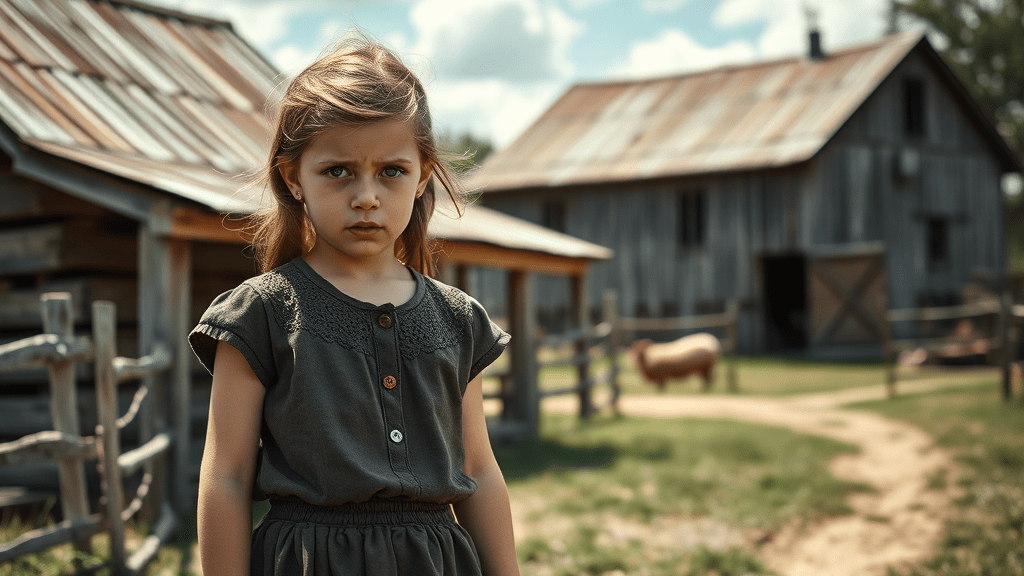
MJ could hear a loud commotion from the barnyard and raced out to see what was going on…to her dismay, her father was wielding a large mallet and threatening a stubborn hog that was being difficult to load on the trailer. Maybe the pig new that it was a fateful trip…Mary Jo ran between the frightened animal and Lorne..eyes locked, she firmly told him to put the pig back in the barn and if he bludgeoned the helpless creature it would be his last act of rage…MJ gave him the ultimatum..”put the hammer down, put the pig back in the barn, take it to the butcher another day!” Lorne complied without speaking a word – the sword had been drawn and for the very first time she saw fear in her father’s eyes.

Mary Jo recalls that in her heart she was prepared to kill her father that afternoon rather than see him torture the stubborn pig. And from the tender age of eleven the scales of power had shifted and their relationship would change forever. Lorne had met his match in this feisty young girl…..and her life as she knew it would never be the same. 


Dan Fraleigh resides in London, Ontario Canada. He is a real estate agent by day and at night and enjoys writing poems and stories. His writing has appeared in Literary Yard as well as Istanbul Masticadores.


If you would like to be part of the Rural Fiction Magazine family, follow this link to the submissions guidelines

Please share this post to give it maximum distribution. Exposure is our contributors’ only compensation. Don’t forget to back link to this.

Financial donations through either our GoFundMe or Buy Me a Coffee accounts will help expand our global reach by paying for advertising, more advanced WordPress plans, and expansion into more extensive Content Delivery Networks.


Image generated by AI

“The Last Thing I Said” Flash Fiction by Niles Reddick

My sister told me my mother had been crying off and on all day. Her ex-aunt-in-law hit a deer about six in the morning and was killed. She probably hadn’t seen the deer until it was too late because of the thick fog like pea soup. There were no skid marks, only tire tracks off the road, through the shallow ditch, up the embankment, and into a stand of pines. 

Aunt Gracie (we still referred to ex’s as aunts and uncles) was on her way to the bread factory, a place that emanated a yeast smell throughout the region, and where she’d worked for thirty-five years, not because of the pay, but because of the health care. The large doe had destroyed the front end of her Impala, was thrown up on the hood and went through the windshield, and poor Aunt Gracie never stood a chance. 

All that detail had been shared with mother, along with the fact that Gracie was at the funeral home waiting on her only adopted daughter to drive in to confirm arrangements. Fortunately, Gracie had a funeral policy that covered everything, or she wouldn’t have had a casket, funeral, or an eternal resting place at the cemetery. In fact, it wasn’t clear what would have happened had she not had the insurance because her daughter couldn’t afford to pay it being a single mother, her working and trying to make ends meet as best she could. Perhaps, they would have simply cremated her, tossed her ashes out behind the funeral home by the swelling mound of soil from dug graves.

“Mother, why are you so upset? She divorced your uncle thirty years ago and moved off. He remarried and had children by his second wife”.

“Because the last thing I said was ‘Get the hell out of my house, you crazy bitch.’”

“Why in the world would you have said that?”

“Because your brother was a toddler and bit her daughter. Then, that crazy woman bit your brother. A grown woman reacting like that. She should have known better. I would have popped him for biting her daughter, but I didn’t even have time.  Then she said to your brother, ‘Well, how do you like that? That’ll teach not to bite somebody.’ He was a toddler for Pete’s sake.”

“Well, I’ll admit that’s a little off, but why are you feeling guilty about it when it was forty years ago?”

“I don’t know. I’m sorry for my behavior, but a mother is going to look after her child, no matter what.”

“I’m sure she moved on and forgave you.”

“Well, knowing Gracie, she forgave me, but she never forgot it.”

“You going to the funeral?”

“I doubt it. I’d have to rearrange my teeth cleaning and my hair appointment. You just about can’t rearrange because they are so busy.”

“I know.”


Niles Reddick is author of a novel, four short fiction collections, and two novellas. His work has appeared in over five hundred  publications including The Saturday Evening Post, New Reader Magazine, Cheap Pop, Flash Fiction Magazine, Citron Review, Hong Kong Review, and Vestal Review. He is an eight-time Pushcart nominee and three-time Best Micro nominee . His website: http://nilesreddick.com/

Connect with him on social media: 

Facebook: https://www.facebook.com/niles.reddick.9

Instagram: nilesreddick@memphisedu

Twitter: @niles_reddick

Linkedin: https://www.linkedin.com/in/niles-reddick-0759b09b/


If you would like to be part of the Rural Fiction Magazine family, follow this link to the submissions guidelines

Please share this post to give it maximum distribution. Exposure is our contributors’ only compensation. Don’t forget to back link to this.

Financial donations through either our GoFundMe or Buy Me a Coffee accounts will help expand our global reach by paying for advertising, more advanced WordPress plans, and expansion into more extensive Content Delivery Networks.


Image generated by AI

“When The Farmerettes Met The Clanging Pistons”  Slice of Life by John RC Potter

Every family has a history filled with stories, recollections, and memories. Over time, these reminisces take on a life of their own, but a note of caution: they will only remain alive as long as someone in the family remembers and shares. Over the course of decades, leaves begin to fall from every family tree, and eventually, only bare branches remain. My parents passed away over 25 years ago, and in the intervening years, three of my sisters departed Dodge too soon and are with them. As the writer and historian in the family, I am putting the proverbial pen to paper to bring back to life one of the central stories my siblings and I were raised with. In fact, it is the genesis of our familial history, when two saplings met and created a new family tree. 

Our parents were indeed an attractive couple. As a young man, Dad was one handsome dude, and Mom was beautiful, with high cheekbones. My sisters, brother, and I learned from our parents that Dad had a motorcycle as a young man and that our mother had met him in Vineland, in the Niagara area, when she worked there as a young Farmerette. This was after WWII when there was a need for produce, but in a world where many young men, formerly farmers, had given up their lives. Thus, the Farmerettes came into being, and many young women from the countryside joined to do their part at the Vineland Farmerette Camp and other places in the province. Mom was only 16 that summer, and it was her first time away from home for such a long duration. Dad was six years older than our mother and undoubtedly cut a dashing figure on his Harley-Davidson motorcycle that summer day. As children, we knew the bare bones of this seminal family history, but I now wish we had fleshed out more details and asked more questions. 

When did Dad buy his motorcycle? When did he get rid of it, and why? Did Mom want to work as a Farmerette, or had her parents convinced her to go? Was it love at first sight when Dad and Mom met in Vineland? Did they date for the next four years until they married, or did it take time for our parents to fall in love? Were our maternal grandparents concerned that their daughter was interested in a man six years older than her? Why did our father ask our mother to 

go on the motorcycle that fateful day in Vineland?; why not one of the other girls? Was it just for a spin around Vineland or a ride of a longer duration? How did The Clanging Pistons originate? 

Yes, that was the name of the group of young men and their motorcycles: The Clanging Pistons. Dad would smile when telling us about the group’s name and fondly recall memories of how he and his friends would drive around the countryside on their motorcycles. Of course, the culminating story would be about the group travelling to Vineland to see some local girls from the Clinton area who were working at the Vineland Farmerette Camp. A few of the girls were either sisters or sweethearts of these dashing young, motorcycle-riding men. 

Even as a child, when I heard about The Clanging Pistons and the Vineland Farmerette Camp, it seemed to me to belong to a gentler, kinder, and more romantic time. That story, the genesis of our family, took on a rather fabled and folkloric aspect over the years, particularly when, over time, it was apparent that our parents did not have a fairy-tale marriage. It was a 

typical marriage of the era: hardworking parents, a large family, and children who grew up during radical societal change. Our parents loved each other but did not have much in common and were sometimes at odds. However, they stayed together for their children; that is the greatest gift they could give us. As our parents aged, they became closer, and due to my mother’s ill health, Dad became her caregiver. 

For a long time, I had not thought about Dad being part of The Clanging Pistons and that Mom had been a Farmerette after the war. Then my sister sent an email to me with a link to an article in the local news about the Farmerettes and their central role during and post-WWII in tending and harvesting vegetables and fruit in the Niagara region. A new Canada Post stamp would be issued to recognize their services. The article highlighted the contributions of local girls who became Farmerettes from the early ‘40s to the early ‘50s, mostly in Ontario’s Niagara and Windsor regions. A few months earlier, the Blyth Festival had also staged a play about the Farmerettes.  They were getting their long-deserved recognition. 

Some of the women who were formerly Farmerettes are still alive, in their 90s, and have been interviewed. When my mother passed away in 1996, I was asked to give her eulogy. In one part of the eulogy, I referred to how our parents had met on a fateful, fairy-tale day in Vineland in the late ‘40s. I mentioned that our father had taken my mother on a motorcycle ride that lasted for almost 50 years. I said that I could imagine the two of them on our father’s motorcycle that day in Vineland: Dad, cutting a handsome and dashing figure on his beloved Harley-Davidson, and our youthful, beautiful mother sitting behind him, hanging on for dear life. I described how I pictured them that day: Mom’s glossy hair blowing back in the breeze, and I quipped that Dad’s hair was probably blowing in the wind, too, because he still had a good head of hair back then. 

Due to the renewed interest in the Farmerettes recently, my brother sent a photo to my sisters and me that had been posted on Facebook years before. It is one that I remember from our youth; it had probably been in our mother’s photo album for years. It was in the local paper in 1948 and depicted five young men who had gone to the Vineland Farmerette Camp to visit local girls working there. The Clanging Pistons is not mentioned, but Dad and his four motorcycle buddies are in the photo, proudly sitting astride their Harley-Davidsons and presenting a dashing group. This may have been after their triumphant return to Clinton from Vineland; these vibrant young men had their whole lives ahead of them, and there was the promise of other anticipated adventures along the way.  


John RC Potter is an international educator from Canada who lives in Istanbul. The author’s poems, stories, essays, articles, and reviews have been published in various magazines and journals. His story, ‘Ruth’s World’ was a Pushcart Prize nominee, and his poem, ‘Tomato Heart’ was nominated for the Best of the Net Award. The author’s gay-themed children’s picture book, The First Adventures of Walli and Magoo, is scheduled for publication.


Please share this story to give it maximum distribution. Exposure is our authors’ only pay. You can also help our contributors gain exposure by back linking to them and to RFM’s homepage.


If you would like to be part of the Rural Fiction Magazine family, follow this link to the submissions guidelines.


Image generated by AI


“Thy Kingdom Come” Short Story by B. Craig Grafton

"Thy Kingdom Come" Fiction by B. Craig Grafton

“How much farther Grandpa?”

“It should be up ahead just a little ways. Not too much farther.”

He wondered if his grandfather could remember. If they were even on the right road at all. After all, his grandfather was eighty eight and getting forgetful at times.

He had the job now of looking after his grandfather since his father had passed away last month.  He had driven all the way down here from Hoffman Estates to this god forsaken rural community in west central Illinois that mockingly called itself Forgottonia, nothing but dried up little towns and field after field of corn and beans. He had  gotten his grandfather from the Happy Endings Nursing home, and now was taking him out, per his request, for a nostalgic trip down memory lane, a ride in the country to see the old family farm where he had grown up. He had never been there so he was relying on his grandfather to show him the way.

They had driven for quite some distance in silence when his grandfather suddenly spoke up and said,  “Stop. Stop here please.”

He brought the car to a stop in the middle of nowhere on a dusty gravel road.

“Grandpa there’s nothing but that old abandoned building over there. That can’t be where you grew up. That doesn’t even look like a farm to me.”

“It’s not. That’s where I went to school.”

“In that little dilapidated old falling down building? You’re kidding me.”

“Graduated eighth grade there.”

He knew his grandfather had never graduated high school. There was no need to then if one was going to be a farmer and his grandfather had been one all his life. When he got too old to farm his father had tried to get him to come live with him in Barrington. But Grandpa refused. Consequently his father trekked down here to  ‘Forgottonia’ once a month to visit him and now that responsibility fell on him.

Do you want to get out and go take a look Grandpa.”  He asked more out of politeness than practicality for he knew his grandfather would say no since he was semi mobile and they hadn’t brought his wheelchair.

No, that’s okay.”

Well tell me about it then Grandpa.” He knew his grandfather was dying to tell him. After all that was the whole purpose of this trip to begin with, to harken back. 

Okay, I will,” he said with a smile upon his face. “See how the school is oblong shaped. See the  windows there only being on the east side, the whole east side. There’s no windows on the west. That’s to avoid the afternoon sun making the place too hot. Morning sun on the east side wasn’t so intense and let in enough light so we could do our lessons.”

Well that makes sense,” he commented, beginning to take an interest in this now.  “How many kids went there Grandpa?”

“Forty give or take a few.  First through eighth grades.”

What’s that metal thing sticking up out of the ground there?”  he asked, pointing to it.

“Oh that’s the pump. That’s where we got our water. Drank it straight out of the ground. Had a long wooden trough in front of it to prevent a mud puddle from forming under the spout.”

“You mean you didn’t have running water inside back then?”

“Yep. That’s exactly what I mean.  Didn’t have flush toilets either. Just kind of had outhouses inside the schoolhouse.”

“You’re putting me on Grandpa.”

“No I’m not. When you came in the front door you entered the cloak room where we hung our coats and left our muddy boots but off to the right was the boys room and off to the left the girls. No flush toilet. No wash sink either. Just had a stool over a hole in the ground. Teacher used to dump chemicals down it every so often to keep the stink down.”

“Suppose you didn’t have electricity back then either huh Grandpa.”

“Yep. Didn’t have central heat back then either. Had a wood burning stove. The back room of the school was the woodshed. Kind of got a little cold in the winter at times. Had to keep your coat on all day.”

His curiosity was definitely aroused now. He wanted to see for himself so he said, “Mind if I get out and go  take a look around and in the window Grandpa.”

“Don’t believe me do ya?”

“I do. I just want to see that’s all.”

“Okay go ahead then.”

He got out of the car and entered the school yard.

“There used to be a couple of swing sets and a slide over there,” his grandfather hollered  pointing to the east side of the school.

“Where there’s none here now,” he hollered back.

“You’ll see the old footings where they used to be. Take a look.”

He went to the old well first and tried the pump handle. It was frozen in time and didn’t move. The ten foot long or so wooden trough was there just like his grandfather said, rotting away. It was hard for him to believe they drank unfiltered water straight from the ground. No government regulations back then evidently.

He saw the concrete footings that once had anchored the swings and slide in place. Someone must have stolen them for scrap metal, he thought.

He went up to the window and pressed his nose against it.  There was nothing in there. Whatever had been there was long gone. Probably someone had stolen all the old desks too, he thought and sold them as antiques. He could see a hole in the wall  where the smoke stack used to be. To the front he could see the open door that led to the cloak room but he couldn’t see the doors to the inside outhouses. He wanted to see them.

He went around to the back of the building first though to the door to the back room. It was falling off its hinges and as he swung it open it fell completely off. There in the back were some old broken damaged desks that evidently no one thought worth stealing. The kind that had an inkwell in them, no ball point pens back then. The kind where one was attached to the one in front of it so that the boy behind the girl could stick her pigtails in his inkwell.  There was also a pile of cut wood. He could tell varmints had been living in it; their dried droppings were everywhere. He went around to the front door, tried it, but it didn’t budge. Oh well forget it. He’d seen enough. He better get going and take Grandpa to his old farm house.

“Well it was just like you said Grandpa,” he informed him as he got in the car and started off down the road to yesteryear.

“It was called Kingdom School,” his grandfather announced.

“Kingdom? Why that Grandpa?” He knew his grandfather was having a good time and so was he now.

“The original man that owned the land here back in the 1830’s was a some kind of disposed or deposed royalty from England. So he came to this country to establish his own little kingdom right here in Illinois.  Story is that he actually called his farm his ‘Kingdom.’ Back in those days there were no public school systems but everyone wanted a school and since he owned most of the land in the center of the township he agreed to give up that little tract there for a schoolhouse since it was centrally located. It pained him though to part with part of his ‘Kingdom.’ So he put a clause in the deed that if the ground wasn’t used as school, it would revert back to him, or his heirs, if he was dead.  The locals jokingly named the school  Kingdom since it was located in his ‘Kingdom’. The school was closed back in the fifties when they started busing the kids to school in town here. Anyway the school was supposed to go back to this supposed land baron. Course he had been dead some seventy years by then and nobody knew who his heirs were. That’s why the school’s just sat there and fallen apart. Nobody’s ever come forth claiming to be an heir.”

They rode in silence for a while.

“How much further Grandpa?’

“Not much.  I used to walk to school everyday. There was no bus service back then you know.”

He drove on a ways then,  “Slow down, it’s just up ahead.”

“I don’t see anything Grandpa. You sure?”

“Slow down. Stop right here at the intersection.’  

He did as ordered. Again they were all alone out there in the middle of nowhere by themselves.

“There’s just a cornfield here Grandpa.”

“Well it was here. Right on the southeast corner here. That big corporate farm I sold out to must have torn everything down. Aren’t many family farms left any more.”

The grandfather wiped his eyes, took in and blew out a deep breath, straightened himself upright. “Well we might as well go back now.”

They got back to the nursing home. He helped his grandfather inside.

“Grandpa, I had a good time today but I better get going now. I got a long drive ahead of me. I’ll try to get back sooner next time.”

“Your father came once a month you know.”

“Yah I know but he never took you out to see the old place did he?”

“No, he thought it would be too hard on me. Thank you. I really do appreciate you doing that for me.”

”Oh you’re more than welcome Grandpa.”

“You know next time I think I’ll have you wheel me up to the window there and help me stand up so I can take a look inside. Okay?”

“Okay Grandpa we’ll do that,” He went up to his grandfather and gave him a big hug, fighting back the  tears welling up inside him.

The next time came one month to the day. They went to the school again and his grandfather got his look inside. He died the next

He cremated his grandfather per his prearranged instructions and buried his ashes next to those of his grandmother in the little burg there. Didn’t bury all of them though. No he held some back and scattered them at  Kingdom School. Did that just by himself as he said goodbye to his Grandfather.


Mr. Grafton is a retired attorney. His books have been published by Two Guns Publishing.


“Father’s Day” Short Story by B. Craig Grafton

"Father's Day" Fiction by B. Craig Grafton

Not a call. Not from either of them. Too busy to call their father this Father’s Day. Well, that’s the way kids were today. Actually, they weren’t really kids anymore. They were both grown with families of their own and way too busy with themselves and their kids to have time for anyone else. But still maybe they would call. After all, there was a two-hour time zone difference.

Ward R. McGuinty, sixty-eight, looked out the window of his inherited hundred plus year old farmhouse, the house he grew up in, raised his family in, and stared into the cloudless heavens  waiting for a call and trying to remember if he called his father on Father’s Day each year. But he couldn’t remember. His mind was as blank as the sky, and this frightened him.

But he did remember certain things about his father though, dumb things, funny things, meaningful things, happy things, good times things. Things that no one else in the whole world would ever know but him and he thought that maybe he should tell his kids about them now before his mind goes or he dies, and they are lost forever.

His father had been a farmer, a second-generation farmer. Ward was the third generation on this farm. His grandparents settled and died here and were buried in the cemetery down the road. Their gravestones proudly proclaimed their heritage.  “Born in County Down Ireland. Died in Western Illinois.” His parents were buried there too but with just their names and dates, no mention of their place of birth or death. Ward knew that his time too soon would be coming and that he too would be buried there, the last McGuinty to be buried there. No telling where his children would be buried. They hadn’t lived here for years. The farm wasn’t their home anymore. They had no ties to the land.

So realizing his days were numbered, Ward tried to recall all he could about his father to tell to his kids when they called. If they called. He first remembered back to when he was just a little boy and had called his father Daddy, then Dad when he was a teenager, but now as an adult he simply thought of his father by his name, Bob, and it was Bob now that jogged his memory.

Bob was loquacious. Loved to talk. Chatty was the word for him. His mother called their  barnyard Grand Central Station as all the local farmers would gather there to talk to Bob. Leaning against their pickup trucks, they would talk for the longest time about things like the price of beans and corn, what hogs and cattle were going for, politics, and the weather of course. Farmers always talked about the weather. Back then the weather was just that, weather. It wasn’t climate change or global warming yet. It wasn’t political. Thank God for that thought Ward since ‘political correctness’ would surely have driven Bob up the wall. Actually, anything political got him worked up.

Ward remembered Bill Bowen, one of their old neighbors, who liked to get Bob going on politics. The two of them had this little routine that they would always go through whenever discussing the same. Bill would always start it with, “Well you know. That’s what they say,” and then wait for Bob to bite. Which he always did of course.

 “No Bill I don’t know what ‘they’ say. What do ‘they’ say?”

“Well, you know. They say,” answered Bill shrugging his shoulders.

 “No, I don’t know Bill. Who are these ‘they’ that you’re talking about? ‘They’ got any names. ‘They’ got any phone numbers that I can call and find out what ‘they’ say?”

BIll would just chuckle in response, shrug his shoulders a second time and run his fingers through his mop of long black thick hair. That was the signal that the Bill and Bob comedy routine was over for now, but it would be repeated the next time these two talked politics.

Funny how one thinks about nonsensical things like this about one’s father on Father’s Day when one should be thinking of the good times with him instead, reflected Ward. So, he shifted his mind to the good times, the county fair times.

Months before the fair each year his father would buy him a 4-H club calf to raise and show. He would feed and take care of it and his father would help him train it to be led around the show ring come fair time. He never won anything, none of his calves were ever in contention, his father stunk at buying winning show calves. But nevertheless, the fair times were happy times for the both of them, preparing the animal,  getting their hopes up and the excitement of the fair each year. But it was his father more than him that enjoyed it all. His father would spend the whole day, every day, at the fair during fair week, and did so for a number of years even after Ward had  outgrown 4-H.

This was because his father had the contract to dispose of all the cattle, hog, sheep and other farm animal manure at the fair each year. The exhibitors would clean their stalls and pile it up outside each building and his father would scoop it up on the end loader, load it into the manure spreader, then drive it down the road and spread it over a field of some farmer who wanted free fertilizer. Every morning he would leave for the fair in the dark and come home in the dark each night. But it wasn’t an all-day job. He could have gotten it done in either the morning or afternoon if he had wanted to. Rather it was an excuse for him to spend all week at the fair talking to everybody and their brother, about any and everything, having a high old time.

Just then Ward thought he heard the phone ring. It didn’t. It was only his imagination, wishful thinking. But the phone prompted Ward to think of something else about his father. How much he loved to talk on the phone. How he would make or take all his calls at mealtimes. Cell phones didn’t exist back then. Sitting there eating his father would yammer away, business calls at noon, personal calls at supper time.

One time at supper when his father answered the phone it was a wrong number. Rather than tell the guy and politely hang up, his father pleaded with the caller to stay on the line and talk to him. His father even told him his name hoping to start a conversation. Yet no matter how hard he tried to coax the caller to reveal his name and talk, the caller refused to do so. “You got a name, don’t you? Well, what is it? I told you mine,” his father pleaded to no avail. Finally the caller got tired of all that nonsense and hung up on him. His father was offended.

Another stupid story thought Ward that he should tell his kids about. Oh well, he knew that it was silly and that his father hadn’t  accomplished anything great in his life to brag about, but so what. Silly things still counted for something too and his kids never really knew their grandfather as they were quite young when he died.

So right then and there, Ward resolved to write down everything that he could think of about his father to pass on to his children. Like the time his father tipped over the combine on a hillside, rode it down, and jumped off at the last moment unhurt. Like the time his father gave away some of his mother’s chickens to a neighbor without her permission. He caught hell and she made him go get them and bring them back. Like the goldfish he kept in the cattle watering tank. Like the way he always said ‘ponsetty’ for poinsettia at Christmas time each year. Things like these.

Just then his thoughts were interrupted. The phone rang and this time he heard it for sure. His wife came in and handed it to him. “It’s our daughter,” she mouthed. Father and daughter talked for over half an hour. The daughter hogged the conversation the whole time talking about how wonderful they all were doing now that they had relocated to California. Occasionally Ward would get in an “Oh I see,” or “Oh that’s nice” or “Uh-huh,” but hardly ever more than a sentence or two. Finally, she announced that she had to run and ended with “Happy Father’s Day. Love Ya Dad.”  To which he replied, “Love you too Sweetie.”

 “Well, what’s the news?” asked his wife, desperate to know what they talked about for over half an hour.

“Oh nothing,” he replied.

She gave him a dirty look but thankfully before she could verbalize her discontent, the phone rang a second time. This time it was their son. And again, Ward sat there and mostly listened. Listened to everything about his son’s family, the boys and all their ball games, and school and church, and their neighbors, as if he cared about people he didn’t even know, and etc. etc. etc. Much the same palavering as his daughter’s call had been and again, he never contributed a full paragraph to the conversation.

“Just called to wish you a happy Father’s Day Dad,” said his son. “Love ya man.”

 “Love you too Son,” he said as he hung up.

Ward chuckled to himself realizing that the loquacious gene had skipped a generation. He didn’t have it but his kids sure did. That’s for sure.

“Well, what’s the news from our son?” his wife asked impatiently.

 “Oh nothing,” came back the same answer again.

His wife shook her head in disgust and growled at him.

He paid her no attention as he sat there wondering what his kids would remember about him when they were old, and he was gone. What stupid or clever or loving things that he had done would they recall. Probably dumb things like he had done just now. He closed his eyes to hide the tears forming therein. Then he shook his head side to side as if to shake away his thoughts. His whole body shuddered and trembled all over.

 “What’s that all about?” asked his wife observing this strange behavior.

“Oh, nothing dear. Nothing at all.”


Retired attorney. His books have been published by Two Guns Publishing.