I was my paternal grandfather’s least favorite grandchild. My father’s parents lived in Marshall, a small town to our west, and were farmers by experience and temperament, even though they lived in town and not at their farm, a quarter section of pastures and old growth woods on the chalky hills of the Missouri river valley.
My mother’s parents lived to our east in St. Louis. As with all children who don’t yet recognize the differences in his family and others, I thought this symmetry was universal. One had country grandparents and city grandparents. We visited both for most holidays, and I was shipped off to both each summer, riding the greyhound bus for a week in the city or one in the country.
I find myself remembering these times more with each passing year, especially those with my Grampa and Gramma about Thanksgiving and Christmas. As I’ve grown older, I’ve come to appreciate older things, and the rhythms and routines of rural life seemed rooted in more elemental times. Those times feel largely lost now—life reduced to frenetic reactions to a torrent of forces we don’t control, not deep interactions with our own natural world, and I wonder if such a loss is so deep-seated that it may be recognized only in memory.
One of my earliest memories was in Gramma’s and Grampa’s house, which sat on a street corner in downtown Marshall. Headlights would shine into the tall windows of the bedroom where I slept and race around the top of the walls in different patterns as cars turned one way or another. Our own house sat back from the road, so I wasn’t used to this, and I dimly recall staring at lights flickering above the bed, frightened by these apparitions, and ashamed when I eventually realized what they were.
Gramma and Grampa’s house was a Victorian filled with antiques, silver, hardwood, crystal, millwork, oil lamps, and innumerable fancy things I did not recognize but was afraid I’d break. The house itself was so old it seemed alive, groaning with unfamiliar sounds and smells of yeast rising in the air even though Gramma’s kitchen was small, like an afterthought, next to the mudroom and backyard.
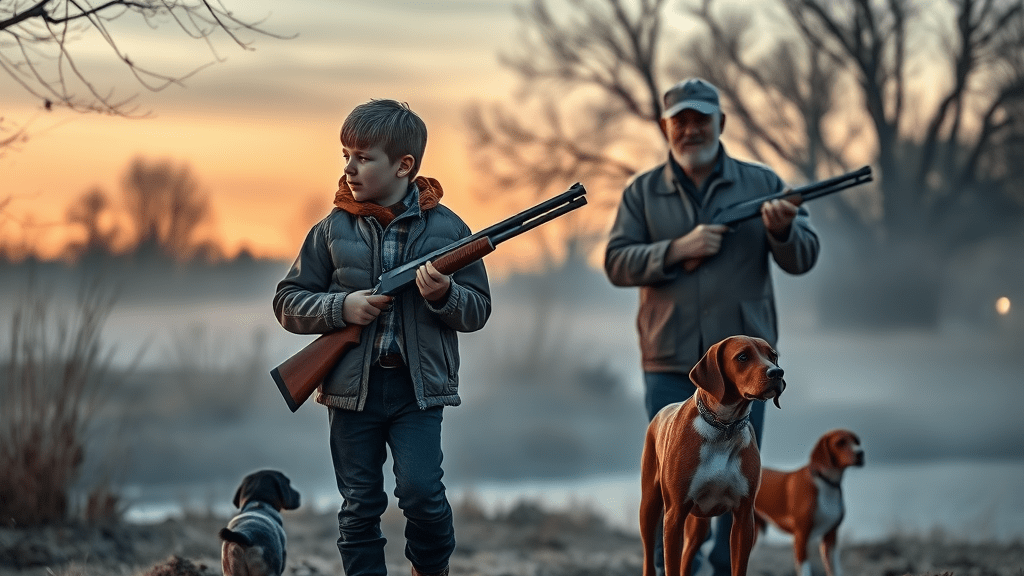
Outside the kitchen, an apple tree, whose fruit was so tart there were always some for picking, covered the small yard next to a detached garage. Underneath its branches was the dog pen, where Grampa’s dogs zoomed back and forth when I’d come for a visit, remembering my scent or knowing a trip to the farm would follow. Grampa would let them out and Zero, the German shorthaired pointer, would almost knock me over with kisses, until Grampa would whistle, and she’d return to the kennel with a younger redbone coonhound in tow, whose name I don’t remember.
Then, Grampa would turn and carry my bag inside past a granite millstone and iron kettle and up the stoop to the kitchen, seemingly in just a step, while I raced to keep up. Grampa was a tall man for his age, stood bolt upright, and moved in a straight line no matter where he went. Grampa seemed to walk not so much with determination, but with certainty of where he was headed; each step taken with the confidence of knowing where they would all end. His long arms swung easily by his side like metronomes marking the constant rhythm of his pace. I remember his hands the most. Huge, with long fingers stretching from knuckles as big as peach pits, and skin course as sandpaper. Grampa rarely looked at me, but he also rarely looked down, with all that knowledge of where he was going and how he’d get there I supposed.
When he would take me to the Homeplace, as he called the farm, which always confused me, we’d climb in his old beater Chevy truck with the dogs piled in back. Grampa drove like he walked. Always the same speed. 40 miles per hour on the highway out of town, as cars sped angrily past, and 40 miles per hour on the gravel road, as dust spewed violently behind us.
Mister Porter, the farm’s caretaker, no longer lived in the small farmhouse, which sat empty next to the chicken coop and the barn with horses I’d feed apples I had picked and sometimes ride along the trails to the hills deep in country.
Grampa was not just a farmer, but also a hunter of some renown. My dad had been too, and we would practice shooting, but I always wanted to hunt with Grampa. It just was never the right time I guess. So, we’d pull what was needed from their garden, or walk the back forty, or sometimes gather deadfall hardwoods after Grampa said they’d seasoned long enough. Zero would perch proudly on top of the log pile we’d deliver to Gramma, who would light a fire and brag on what good wood I’d found.
The world was younger then, but seemed older, and as old things are ought to do, it shared its secrets most at the holidays, like the fancy dishes Gramma would haul from the musty basement once a year. Moments of connection so powerful they sparkled above the monotone greyness of the dark seasons.
I rarely visited my grandparents over the holidays by myself, but I did one Thanksgiving. I think someone was sick, and maybe that’s why Grampa said we could quail hunt. I don’t remember exactly how old I was, but I know I was still the age when excitement always overpowered sleep, and I don’t think I slept a wink before Thanksgiving. I watched the headlights circle the room until they went dark and listened to the branches of an old oak scraping the roof before the wind, too, went to sleep.
So, I was awake when I heard my grandparents moving and saw light under my bedroom door Thanksgiving morning. I knew Grampa would never wake me, so I dressed quickly before heading down the back staircase to the kitchen. I could smell ham cooking and hear Gramma humming softly above the popping grease; she smiled and told me to get my boots and coat so I’d be ready when Grampa was. As I pulled on my muck boots, Gramma took the fried country ham, piled steaming slices in biscuits directly from the oven, and wrapped them in cloth napkins. She poured a flask of coffee for Grampa and a thermos of hot chocolate for me. When Grampa came down a few minutes later, Gramma handed each of us our sandwiches. I was hungry, but I put the napkin in my coat pocket like Grampa did. He grabbed his 12 gauge and my 410 and headed into the darkness and the cold.
Zero and the redbone burst out of the pen when Grampa opened the gate. For once, they didn’t jump on me but raced straight to the back of Grampa’s pick up and leaped into its bed. I followed and slid stiffly onto the truck bench waiting for the heater to kick on. The Chevy chortled to life, louder than usual, and we pulled onto the empty streets and headed toward the farm.
I was nervous. I liked practicing shooting clay pigeons with my dad. I knew to brace the stock against my shoulder, tracking the target through the sky, leading it slightly, and then pulling the trigger to vaporize it in orange dust. More exciting than sitting waiting for a deer—I thought but didn’t know–because my mom wouldn’t let me shoot deer. But, now, I would be hunting birds with Grampa.
It was still pitch black when we turned west off the highway onto gravel, our headlights bouncing furiously ahead, until swinging into the farm. We stopped at the house for Grampa to start a fire in the franklin stove with all the kindling we could find to hand, before heading north into the land, Zero bounding ahead with us falling into a heel line behind.
I had always liked walks through the farm, where place is so deeply rooted time would bend and slow, or at least Grampa sometimes would. But this morning seemed sharper, and I shivered in the bone cold as the hard frost cracked below our steps.
At first, we walked in emptiness, all crunching and breath, but after a while, climbing a barb wire fence and skirting cattails surrounding the far pond, the cold waned. In the thinning blackness, fog rose from the pond like dog’s breath, and ground softened underfoot. Feel soon gave way to sight, dimly revealing form and shape. Twilight reflected below the eastern clouds onto the silver-tinged fields. Most of the leaves were gone except for the oaks and sycamores. Bare branches cleaved the dawning sky.
As we made our way to a coppice of ash, we could begin to see the colors left over from fall. The brightness of sugar maples and sweetgums had long ago faded, and even the yellows of hickories and walnuts gathered round their trunks. Only the rust of red oaks, burnt gold of sycamore leaves, and the ruddy green of scraggly cedars gave hue above the still dark earth.
When we descended into a hollow, a solitary cardinal song was joined by chirps of sparrows and trills of chickadees. Further afield, we could hear the jays and crows cawing at one another —an argument that would go on until spring.
We followed a small stream winding lazily through underbrush of snakeroot below hawthorns crowded in a long draw. Walking here was a chore, the cattle having grazed other fields, the switchgrass and bluestem, almost my height, bit as we walked, but, me and Grampa, we liked the gulleys, furrows, thickets, brakes, and untended edges of things. They held warmth against the cold in winter like shade against the light. So, it felt good beside the sheltered water before we pushed for high ground. As we climbed, we chanced upon the scat of deer under a mulberry and followed their feetings in the vanishing frost over untouched hedge apples to the timber edge.
When we crested the hill, I was panting and even though Grampa was carrying my gun, I was slack tired. But I didn’t say anything. Grampa must have been tired too, though he didn’t look it, because he said we should sit on a downed pine log for breakfast. With the pungent smell of pine needles rising around us and the dogs circling impatiently, we sat and ate. I hurriedly downed the salt, buttery biscuits and ham and gulps of sweet chocolate as Grampa stared silently out across the fields where quail were roosting. The faint daybreak shade retreated east.
Grampa loaded my 410 and handed it to me. It felt surprisingly cold and heavy. He said to walk ahead of him to his left with my gun facing out. The dogs began close working a patch of vetch as we moved down from the hilltop.
A redtail hawk screeched overhead but I couldn’t see it even in the dawnlight. I held my gun awkwardly as Grampa whistled at Zero, who tracked toward an old fencerow below us with the coonhound holding hard behind. I stared into the brambles piled around old posts looking for any movement.
As we closed to maybe 30 feet, Zero froze on point. I looked back at Grampa who nodded toward the fencerow and I stepped closer, knowing he would give me first shot. One more step. A breath. A snapped twig. And the covey of quail shot from the brush, six birds erupting skyward.
Startled, I lost my footing as I swung the 410 toward the quail now angling away. When I regained my balance, pulled the gunstock into my shoulder, and fingered the trigger, I finally sited the quail, but they were already too far . . . sinking toward a stand of birch lining the creek in the valley floor.
Then, I remember only my heart pounding in panic as I had not even taken a shot. It seemed like an eternity before I could bring myself to look back at Grampa. When I finally did, our eyes didn’t meet as he was staring ahead at the quail now far below, but he laid his hand on my shoulder. His giant fingers now surprisingly light, and as I looked up again, I followed his gaze toward the creek where the quail were about to alight before whirring up and away again, drifting into the soft sunlight like sparks from a fire, below redtails now visibly circling overhead. Then Grampa smiled, and I knew everything was good.
I often remember that morning in that place with my Grampa. And as my children have grown and I may have grandchildren of my own, I worry if I have such memories to give. Maybe it’s just the years that have worn those moments smooth. Or, maybe it is the wishful clarity afforded by distance. Maybe, today requires more effort than I can muster to truly step outside. Or maybe new traditions always replace old ones because nothing should stay the same.
Or maybe, there’s just nothing quite like standing chest high to your Grampa on an early winter morning watching the birds rise.
Tom is a lawyer in the small town of Fulton, Missouri. He spends all the free time he can outside with his dogs, farming, gardening, and reading and writing about nature.
Please share this post to give it maximum distribution. Exposure is our contributors’ only compensation. Don’t forget to back link to this.
Financial donations through either our GoFundMe or Buy Me a Coffee accounts will help expand our global reach by paying for advertising, more advanced WordPress plans, and expansion into more extensive Content Delivery Networks.
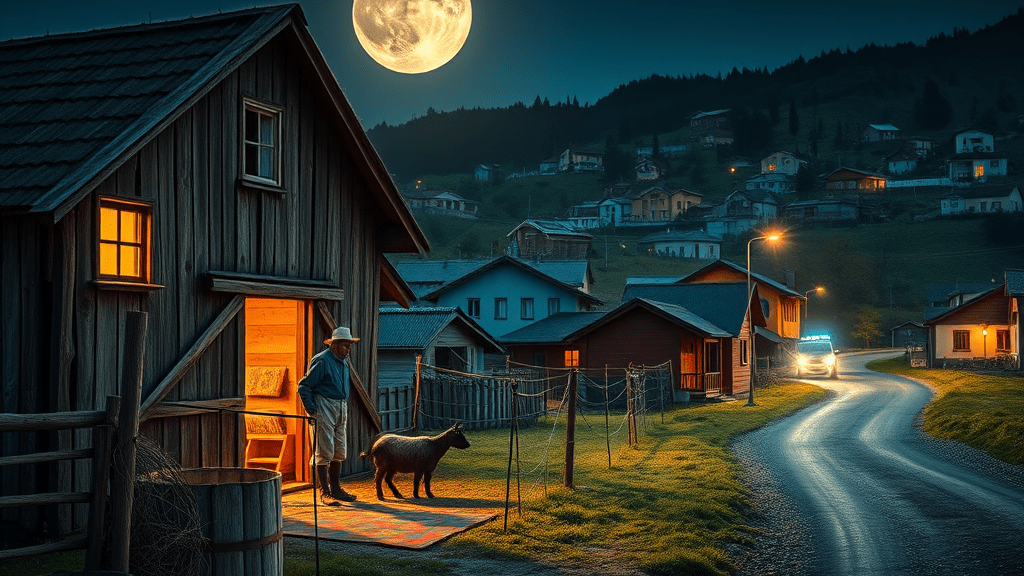
The brightly colored homes, the royal blues and turquoises, the sandy oranges and vermilions, which dotted the village in random patterns here, orderly lines there, the little houses which were invariably described as “storybook” by the tourists, the Germans and Americans and Ukrainians, all of these were gone at night. Instead, a dozen tiny windows shone dim yellow from reading lamps or dimmer blue from televisions. Headlights crawled down and up the dirt road from time to time, a faint gravelly song ascending from beneath the tires and up the hillside to where the goatherd stood outside his barn. A street lamp hung outside the little roadside clinic where the doctor and his daughter stood watch, day and night, to aid villagers or travelers in pain.
It wasn’t just the village. Even the enormous hills were invisible, especially on a moonless night like this one. They weren’t to be called mountains in this part of Bukovina for they were mere foothills of the Carpathians, which swept the land of Transylvania up toward the sky many miles away. These hills were mighty though, forming great streams which efficiently watered the goats, who traversed the hillsides every morning after feeding and then again every evening before sleep. The goatherd, whose father had died three months earlier and whose wife had left not long after that, now had to tend not only to the goats but to the business, the selling, the auction, the distributor in Suceava, a craft for which he’d felt ill-equipped since his youth. His preference had always been to collaborate with the dogs, the collies and Canaan dogs, to lead the goats, organize them, contain them on their grazes, or to feed them, milk them, birth them, wean them, vaccinate them or slaughter them when the time came. He tended to the goats and his father had tended to the business: that was the way it had been until recently. His wife had tended to the home, a two-room concrete structure set on the south side of the pasture, near the makeshift dog pens and hidden from the village and the tourists who came through to snap photographs of the painted monasteries. The barn on the pasture’s north side kept the goats at night. On one end were the milking stalls and on the other were the haylofts and stacked bales; the goats slept in the middle. A special stable housed Jet and Roma, the donkeys, whom the goatherd’s wife had humorously referred to as conducators, or the “drivers.” Jet and Roma pulled the cart into town, and to Iasi or Suceava several times a year, and the goatherd’s wife had felt a particular affection for them. The goatherd, on the other hand, preferred the dogs, of which he had more than necessary. They were full of energy, unlike the donkeys, and full of pride, unlike the goats. He had once thought about naming them, but couldn’t think of any names, so instead began identifying them with sounds. He hissed at the white-and-brown collie. He clucked at the one with black on its ears. He made kissing sounds at the littlest one. There were two Canaan hounds too, one called with a sort of bark, the other with a whistle. The whistle dog, however, hadn’t come when called for several weeks now. She pleased herself instead by lying in the pasture and watching the others, her mouth open with a kind of panting smile, her ears usually perked, her youth and mobility mere recollections in the goatherd’s mind. Ever since his wife left, the whistle dog had slept in the goatherd’s bed, her fragile frame raised to the mattress by the master’s arms, her warm-blooded mass a luxury on these cold winter’s nights. The other dogs slept outside in the pen, as they were doing now, quietly, while the goatherd raked manure by lantern light.
“Good dog,” the goatherd said during a moment of rest.
The whistle dog’s ears perked slightly, but she didn’t raise her chin from the ground. She was comfortable.
When the goatherd was done for the night, he tossed the rake against the barn door and dimmed the lantern. He sat on the ground and stretched his long legs out straight in front of him. He tossed a few scraps of bread to his companion.
“Good dog,” he said again. The dog let out a light groan of relief, like a hum. She tended to stick by the goatherd at night after the other dogs fell asleep in their pens by the house. During the day, she continued to make eye contact with the goats from afar, which the goatherd surmised preserved the dog’s sense of occupational purpose. But she couldn’t be a runner anymore. And she hadn’t chased a goat off a rock or ledge for months.
A rumble from the sky perked up the dog’s ears again and opened wide her eyes, which caught a gold twinkle just as a lightning streak flashed above. The goatherd looked skyward to find stars, and he found some, but they were faint and sparse. Storm clouds had moved in.
After a few more rumbles and their accompanying flashes, the goatherd rose to his feet.
“Come on, girl, it’s time,” he said, even though no drops had fallen. The dog rose reluctantly and stood in place, making sure the goatherd was heading home before commencing the walk herself. The man had only traveled a few paces when another streak of lightning slashed the sky just overhead, this one neither preceding nor following a rumble. Both man and dog looked up instantly, not wanting to miss such a sight. In fact, they couldn’t possibly have missed it. The jagged vein of white remained overhead, locked in its position, locked in time, the violence of its energy pulsating barely a half-mile up, its top end fading into invisible clouds, its bottom end thinning as it approached the earth somewhere far to the east, as if on its way to Moldova.
The dog seemed to lose interest after a few moments, so she lowered herself back to the ground and stared off toward the village, which still teemed with silent life.
The goatherd, on the other hand, couldn’t cease his skyward gaze as the streak was brightest just overhead. In fact, his neck soon became tight. Ideas grew quickly in his mind. It was something, or someone, extra-terrestrial paying a visit to Bukovina or Moldova. It was a glitch, a freeze in time, which would end shortly so the lightening could continue on its course. It was a military maneuver of some sort, or an attack by the Ukrainians or Russians. It was an optical illusion, his eyes tricked by physics. None of these ideas stuck, however, so he was forced to ponder some more, but no explanations came forth. He closed his eyes for fifteen seconds, then looked again to spy any movements or vibrations coming from the streak, but none were detectable. He turned his glance down toward the village to see if lights had turned on, if residents had come outside to look, but it appeared just the same as before. When the dog moaned in comfort again, the sound broke the silence that had been sustained for several minutes. It dawned on the goatherd that the thunder had stopped. No more thunder. There had been no rain. No more lightening. It was as if the storm had aborted its mission in mid-strike. It was as if nature had suddenly paused.
The goatherd’s wife was Crina, named for the lily, and the only moments when he didn’t behold her to be as beautiful as the flower were right before she walked out on him.
“Roxana’s desperate,” she’d said, bag around her shoulder. “She needs her big sister.”
Roxana was Crina’s younger sister who had recently given birth to her dead husband’s twins and with whom Crina had just decided to live back in Brasov twelve hours away. Roxana needed assistance caring for the babies, according to Crina, but Roxana had five other sisters who lived in neighboring villages. This was just Crina’s latest ploy to leave this place.
“You’ve wanted to leave since the day he died,” said the goatherd. His father’s death had created a hole in their marriage three months earlier, one that let in a frightening coldness the goatherd had never experienced. They had been forced together, but it hadn’t felt like force at the time. In fact, he’d long appreciated Crina’s respect and affection for his father as a fortuitous underpinning of their marriage. What he hadn’t suspected was that the old man’s absence would drain the marriage of purpose.
Crina shook her head, mostly to avoid her own tears. She felt abandoned and insecure and wouldn’t bother denying it. It was true, the father had been her strength. In fact, it was the father, a widower for nearly ten years at the time, who had introduced her to the son. She’d been half-drunk as usual in a Iasi bar on a Friday afternoon when the old man walked up to her and gazed at her peacefully, as if willing her to put her glass down and calm herself, which she did. He lit a cigarette and offered her one. Then they talked and drank coffee. As she sobered up, he asked about her life, her family, her drunkenness. At no point did she feel threatened by him even though he was twice her age and even though he once said she resembled his dead wife. They sat on stools and stared ahead at the bar owner as she performed quotidian tasks like drying glasses and stacking six-packs of Coke. Crina told him about her large family back in Brasov, how she had followed a boy here to Suceava, how that hadn’t worked out, how she now worked as a maid for a monastery, where she slept in a dark room and occasionally stole wine. She was too ashamed to return to her family, even though she knew they would accept her with open arms. He told her he had a son just about her age.
Once it became dark, he excused himself to water his donkeys outside, which made her chuckle.
“They have a long journey ahead,” he said when back inside. He told her he’d be coming back to Iasi the following Friday — it was the busy season — and wanted to see her again but only if she wasn’t drinking. She agreed, and when they met again the next Friday, she told him she had only drunk a few days that week. Then, the next Friday, she smiled brightly when announcing that she hadn’t drunk at all that week, and had stolen no more wine. He nodded as if that was good.
The old man made her laugh without knowing it. When he talked about his donkeys, his goats, even when he told stories about his dead wife and how she had often berated him for waking up too early or overcooking the rice. He was very fond of his son, who had to stay home to tend the flock when the old man came here to the market, and told Crina he hoped she would meet him sometime. And so it was arranged.
The following Friday, she rode back to the village with him. While cars zipped past the carriage, the donkeys walked ahead unfazed. Several times, she laughed at the sky, wondering what on earth her family would think of this strange adventure she was taking. When they arrived at the village, it was eight o’clock at night. He pointed to the top of an enormous hill, where she spied an orange speck like a hovering star. His son had lit a fire. The donkeys pulled the wagon and its passengers up the hill very slowly, languidly, their back muscles straining and losing their fight. At the top, the old man watered the donkeys some more and then escorted Crina toward the blaze, where his son’s figure became visible. He introduced Crina to him, saying, “She’s gonna help us around the house.”
Crina and the old man had not talked about that. She was just visiting. Instead of correcting him, she shook the son’s hand, which, along with his nervous, smiling face, glowed in the firelight. She saw that he was a tall boy, much taller than his father, and was holding a walking stick as tall as Crina. He had wavy, black hair and a strong Romanian nose. As for the goatherd, he had seen prettier girls in the village, but none who shone with the confidence of this Crina. She didn’t pretend to be demure. She had short-cut hair and a chin raised with pride. Her brown eyes didn’t appear to conceal much. He could tell her breasts were full even beneath her coat. Her brow crinkled as if awaiting his decision.
Crina never returned to the monastery again.
When the old man died the following year, Crina wanted to shut down the farm and return to Brasov with her husband, who opposed the idea out of respect for his father and the family name. He wanted to make his father proud by running the business, not just tending to the animals, but Crina reminded him that that wasn’t his strength and that there were plentiful farms in the Carpathians where he could be free to work in the pastures without the worries of industry. He could birth, rear, feed, milk and slaughter the goats for someone else. And sheep too! Farms were larger in the mountains. He could earn a solid wage.
The conflict worsened every day and a gulf of silence formed between them. They performed their allotted chores and ate meals together, but little else.
One day, Crina brought him a glass of juice outside, which he drank without pausing. When he returned the empty glass to her, she told him she was leaving.
“You have no faith in me,” the goatherd said.
Crina stared off toward the barn, feeling the stare of the whistle dog nearby but instinctively avoiding eye contact with the animal. A tear bloomed in her eye.
“I had faith in him.”
The whistle dog’s muzzle pointed toward the goatherd, whose attention was fixed on the white streak in the sky. It wasn’t yellow or gold as he had always envisioned a lightning flash to be, but now that it was cemented in the sky, he could see it was bright white, like it was made of pure light, devoid of any color or hue, as if comprised not of a color, but of the source of all color.
He turned away from the heavens only when she barked. One quick bark. Another when they made eye contact along with a timid wag of the tail, signaling something between fear and joy. Then a series of barks, like gentle gunfire, which rolled along as she raised her head and craned her neck with curiosity until the barks came faster, staccato, then faster into a continuous stream of sound, like a soprano howl, baying at the night. The goatherd had to chuckle. Not too far away, the other dogs had awoken from their slumber and, one by one, joined in. Soon a chorus of howls, in verse and refrain, called out to the hills, called out for any man or woman who could hear, anyone east or west, anyone in Moldova or Transylvania, in the valley or on the highest Carpathian peak, either as warning or consolation, and this chorus would attract other creatures in the vicinity and beyond; it was a song not meant for dogs and humans alone, but for beasts by the thousands, for either consciousness or instinct, for all the living to respond to a wonder in the sky.
Occasionally, there was a pause, and during one such pause a new type of howl called from the darkness. This call was extremely dim and from the opposite direction, from the bottom of the hillside by the road, and this was a howl of anguish. It was coming from a human, and it was coming from the clinic, whose lights were glowing alive now. Activity inside. A most dreaded activity. The dogs continued to howl from the kennel, but the whistle dog was silent now. After nearly two minutes of song, she had withdrawn from the chorus, as if out of respect for the suffering.
Almost instinctively, the goatherd wrapped his scarf tighter around his neck and threw bread to the dog.
“Eat this, and I’ll be back.”
The goatherd walked to the edge and began stepping down the hillside, which was extremely steep for a human if not for a goat. Stones and gravel slid in front and behind and his boots twisted with every step, but he sought human companionship. He sought affirmation that time had stopped and that dogs were singing.
When he arrived at the roadside, the woman’s cry had displaced entirely the distant howling. A cry with a groan, punctuated by deep breathing and authoritative words from two other voices, one male and one female. The goatherd tapped his boots onto the gravel driveway that vaguely welcomed visitors to the little house with a “Medicul” sign in front. Here’s where he saw the donkeys, their eyes closed in standing sleep as they waited, yoked to the wooden cart stuffed with hay at their backs. He patted one of the donkeys as he approached the clinic’s front door, which jingled softly as he opened it. Inside, the overhead fluorescent light offended him, so he winced. He heard the voices speaking Romanian in the backroom — the doctor and his daughter, whose name he recalled was Maria — but also a louder voice, a booming male voice, speaking an unrecognizable language. This voice sounded frightened.
Maria peeked from the back room to spy the goatherd in the waiting area, vaguely recognizing him as the neighbor on the hill.
“Have you seen the sky?” he asked her, then felt stupid about it. She cocked her head and stared at him with bewilderment. That’s when he noticed the blood on her plastic gloves.
“We’re closed,” she said, then returned to the back room. “Except for emergencies,” she shouted as clarification.
He considered going home or standing with the donkeys, but instead he took a seat on a tattered green cushion with an uncomfortable metal frame. It wasn’t long before the cries and shouts had faded and the spirit of the clinic had calmed. A tall, Middle Eastern man appeared from the back, his face red and his eyes avoiding contact with the goatherd. He exited the clinic right away. Through a small side window, the goatherd could see his forehead touch the forehead of one of the donkeys. It was like they were sharing a secret.
Maria re-appeared now. Her apron and gloves had been removed. Her father came behind her, nodded at the goatherd and exited to a side door which led to the residence. (He and Maria lived upstairs). Maria began making notes in a folder behind the reception desk. As she wrote, she automatically raised a hand and released her hair from its large plastic clip. Long hair was frowned upon during an emergency.
“You tend the goats,” she finally said, not looking up from her notes.
The goatherd said he did.
“Are you ill?”
He said he was not.
“My father’s not a veterinarian.”
“I’m not here because of the goats,” he said. He was about to tell her about the sky, to ask if she’d seen it or if she’d heard the dogs singing and what conclusions had she drawn about these things, but he didn’t want to feel dumb, so instead he asked her what had happened in the back room. Not for a moment did he wonder if such a question might be an invasion of privacy.
“She’s resting,” Maria said, her green eyes now acknowledging his presence. “It’s very sad.”
With minimal prompting from the goatherd, Maria volunteered the patient’s story. She had arrived with her husband Youssef, who just went outside. They were from a city called Daraa in the southern part of Syria. The Syrian government had forced them and their neighbors to scatter. They’d been traveling off and on for fourteen months already, making stops to camp, to work odd jobs, to accept the generosity of strangers, to purchase the donkeys, which were too old and too slow. They’d hoped to arrive in Suceava to meet up with distant cousins before the baby came, but it came very, very early. Too early. And now it was back there dead.
Maria showed little emotion. The goatherd knew that emotion and medicine didn’t go well together. That’s why she’d better not show it. She wasn’t cold though, just matter-of-fact. She rose and returned to the backroom matter-of-factly. What was there left for her to do, the goatherd wondered. What was it like for a woman to feel finally empty in her womb but have no baby? He rose and gently walked, almost tiptoed, to the door that swung open to the backroom. He pushed on it softly. It opened onto a hallway, so he entered. He smelled a chemical and heard Maria’s voice speaking. In a room on the right, she was standing next to a cot where another young woman lay with her eyes closed. Maria must have known the woman couldn’t understand her, but spoke anyway. She had a comforting tone of voice, so maybe the woman appreciated that. A glass of water stood on the table beside the woman’s cot, and a tube fed her nutrients through a needle in her arm. She may be empty, but she looked at peace, the goatherd thought. She wasn’t out of breath. She wasn’t weeping. She even moved her body a little to get more comfortable so that Maria could check her blood pressure.
The goatherd turned, unsure if he was satisfied, unsure what he had hoped to see, and retreated toward the door that would swing him back into the reception area. That’s when he glimpsed it. There was a room across the hall from where the patient rested. The door was open and it was dark inside, but rays of white light entered through a long, flat window up high near the ceiling. The rays were brighter than moonlight because they were made of lightning light, the source of all light, and they led the goatherd’s eyes to settle on the little body that lay on a metal table. It was laid on its stomach, its big dead head with its cheek to the metal, its eyes closed (had they ever opened, even for a second?) and its little torso wearing a few splotches of blood. The goatherd entered the room and felt his heart sinking. He touched the baby’s little toes, stroked the cheek of his little bum. Then he worried that maybe he should be wearing gloves, even though it was dead, so he reached for one on a shelf but yanked his hand back when he felt a sting. A surgical knife had cut him. The lightning shone brightly. The blood on his finger glistened and the table’s surface reflected on all sides of the body. Once gloves were on, the goatherd lifted the baby with both hands and held it against his chest. He tried to open one of its eyes. He tried to wrap its tiny fingers around one of his own. He thought about the lightning outside and how much longer it would be there. He thought about the tricks nature was capable of playing, and he wondered if this bundle of stillness in his arms could be a trick too. The room where he stood had an exit outside to the rear of the clinic, so he used it to return to the cool night, babe in arms.
“Can you see that?” he asked the little body while nudging its skull to give it a view of the lightning in the sky. If the baby could open its eyes, if it could live just for a moment, it could see the miracle.
“Can you hear that?” he asked. The dogs were still howling up the hill. This too was unnatural. A nearby brook was babbling. He reflected on his losses: his father and his wife, and soon his dog. But instead of mourning, instead of bowing his head in despair and disappointment, he studied the baby’s form in his arms and thought to himself how unfair not to be alive on a night like this. He rocked the baby in his arms, walking in slow circles, wishing it might open its eyes or its heart might take a beat, wishing and waiting for its arrival.
The whistle dog had never been down the hill, not even when she was young and agile. She had gazed at the hills and the houses her whole life, but never had the instinct to chase after them, to spring into the world below and beyond. She’d always had what she needed here with her master and the goats. This night was different. The master had gone down. He had encountered something.
While the other dogs continued their song, she took slow, difficult steps down the hill. Her hind legs were shaking and convulsing without pause. She fell on her side and had to steady herself on all four paws. She had to do this regularly. On the rocky section she stumbled and landed on her hind knee joints, which began to bleed. She would use her front paws to drag herself if necessary. The master was in view. His shape, his silhouette, stood outside, behind the little house, and he was holding something. She panted heavily and stumbled onto her side again. She felt no pain — she had felt nothing at all back there for many days — but she yelped a few times anyway, maybe out of fear. Or maybe because she missed him so much. She could call out for his attention, but he was having an experience and she needn’t disturb him. How she wished to be with him though.
The farther down she crawled, the other dogs sang more softly, more distantly. She could roll the rest of the way if she knew how to roll. She could fly if she knew how to fly. But she was trapped on these four legs, two that barely worked and two that were aching with exhaustion. Her insides felt funny now too. Like she was boiling up. She had to pause her trek to lean over and lick her side. Licking sometimes brought relief.
She kept going, inch by inch, one of her rear legs now just hanging, doing no work at all, the other making paw contact with the ground, but each step was a sharp heave and rarely did the paw make it to its next step without the need to adjust and stabilize and rest before the next. But, she was getting closer now. She could make out his nose. She always noticed his nose first because it was big and wide. He was bobbing softly on his knees and swaying a bundle in his arms gently. How she wished that bundle could be her.
She made it to about thirty feet away from him before settling to rest and gaze at her master as his smile caught the shine of the lightning streak. She had seen him smile many times, but not as big and happily as this. She forgot all about her legs to see him so happy. The gurgling of nearby water calmed her too. Was it water? A little twig was moving in his arms. Maybe a twig, but it had tiny leaves at the end of it and they wiggled too. Were they leaves? Maybe it wasn’t a twig at all but something more alive than that. Something reaching out. The master smiled and smiled and then he gasped extremely loud when the bundle’s mouth opened because a moment later a shrieking sound came out of it. A high-pitched, violent shrieking like she had never heard before, but this terrible, terrible noise only made her master laugh up at the sky and laugh some more. She knew he was rejoicing.
A minute later, shouts erupted throughout the clinic. The doctor raced downstairs upon hearing the baby’s cry. Maria screamed in shock, but couldn’t tell where the cry came from, or which way to run. Even the patient sat up on the cot and called out. The goatherd had raced to the front of the clinic, where the father named Youssef grabbed him by the shoulder, turned him around and studied the contents of his arms. It was the same. The same body they had removed from the room when all hope had been lost. “No!” he shouted nonsensically, then fell to his knees in front of the goatherd, who crouched to show him the child and its curious fingers and its cheeks already tired from wailing. Youssef took the child and held it, tears jumping from his eyes. The doctor arrived, aghast and pressing his hand against his chest. Maria arrived shortly, supporting the patient, who inched toward the child with an expression of grave bewilderment and doubt. Her husband turned to show her the infant. She touched its sobbing head and studied its form, still perhaps suspecting a trick. The father handed her the baby, which she enfolded into her bosom. Maria led her to sit down on the back of the cart, which was soft with hay. The donkeys were wide awake now, seemingly curious about this new revelation. The mother cried, holding the child as if it would never leave her again, not for all eternity.
As Youssef cradled his wife, who cradled their son, nobody asked the goatherd what exactly had happened, what led him to the backroom. Nobody asked for details. Nobody cared about that.
The baby finally ceased its wailing, allowing the silence of the night to soothe their spirits. Maria couldn’t stop grinning. The doctor looked extremely satisfied, but shivered in the brisk mountain air. From behind them all came a little yelp. The goatherd turned to spy the whistle dog lying in the gravel a few feet away. He gulped a sudden breath and scrambled to it.
“What?” he exclaimed. “How?”
The dog’s body was posed unnaturally, its four legs twisted in four directions. It was bleeding and panting and making no attempt to stand or sit or even move. The goatherd sat down next to the animal and removed his rubber gloves. He rested his palm on the animal’s side, stroking slowly and gently.
“Good dog,” he said. That’s all there was to be said.
The doctor studied the animal from his position beside the cart, his attention diverted from the living baby, his expression distracted from its uncontrollable glee. He was concerned by what he saw. The ravaged body. The lowered head. He excused himself as if the sight was objectionable.
The dog’s eyes closed as the goatherd stroked its back. Her panting was steadier, more regulated, than during her journey. She held her head up, welcoming her master’s affection.
The goatherd recalled the morning of the dog’s birth. He’d been sitting on the ground next to its mother just as he was sitting now. He recalled the squeaks she had made as she hunted for the mother’s teat, her eyes not yet opened, just like the baby’s now. The goatherd’s father had stayed in the barn working; birthing dogs held no interest for him. In fact, puppies in general were uninteresting to him. A dog was valuable only when it possessed active herding skills, he’d said.
The goatherd thought of Crina too. The dog was born many years before she came into their lives. And the dog was still here now that she’s gone. She had rarely interacted with the dogs. She fed them scraps after dinner and gave water occasionally on the hottest days, but otherwise she hadn’t been dedicated to the dogs. They’d had little to offer her besides companionship, but companionship was abstract and insufficient.
As the goatherd pet her muzzle, he noticed the blood on his finger, and so did the dog, which wrapped its old pink tongue around the wound, as if tasting a treat.
“You and your tiny mind,” the goatherd whispered. “You believe in me.”
The doctor reappeared and sat on the dog’s other side, holding a syringe in his hand. The goatherd was unsurprised by this and gave no resistance. The doctor only said three words to the goatherd. Three gentle words.
“She’s ready now.”
While the doctor fidgeted with his syringe by the dog’s rear end, the goatherd placed his forehead against the dog’s. She had stopped panting. Her eyes stared at him brightly — this was the closest their faces had ever been. And it was all she could have ever wanted. This was her destination. A moment later, her eyelids sank, so he released her chin, letting it fall gently to the gravel.
After a few quiet moments had passed, the goatherd pulled the whistle dog partly onto this lap. She was still fairly warm, but her heart had stopped. Like the baby only a few minutes ago, she was just an object in his arms. He stroked her fur and looked up at the sky. The lightning was fading quickly. Look at the light before it’s all gone, he thought, before nature resumes its course and time again moves towards tomorrow.
When the lightning had disappeared entirely, the night became cooler, but nobody moved. The family rocked together in the hay. The doctor had dropped the syringe in his lap and closed his eyes. Maria leaned against the cart as if mesmerized by everything that had happened. The goatherd ruminated. Nobody knows when life begins or ends, not really, he thought. Nobody knows when time ceases and light prevails. Where does this child exist? And this dog? Where is Crina, if not right here? These are the kinds of questions that grazed the goatherd’s soul in these silent moments on this remarkable night in the hills of Bukovina.
Leon says of his background: “By way of background, I hold an MFA in Creative Writing and currently teach graduate-level writing and communications at City University of New York and Johns Hopkins University. Twice nominated for the Pushcart Prize, my fiction has been published in The New Haven Review, The Westchester Review, The Stockholm Review of Literature, Thug Lit, Pulp Modern, and Union Station Magazine, among others. I served as editor for Now What? The Creative Writer’s Guide to Success after the MFA (Fairfield University Press, 2014), an anthology of essays and articles about the writing life. A lifelong fan of psychological crime fiction, I am also founding editor and publisher of Heart of Noir (https://heartofnoir.com), a comprehensive website showcasing the classic film noir cycle and its literary influences.”
Please share this to give it maximum distribution.
Mam’s reminders that either yourself or your sister were always sick on Christmas nick sharply at your patience as you tuck in your eldest, assuring him that you won’t forget to put out Santa’s milk and cookies. “I’ve got to go, Mam. Need to finish tucking Padraig and Sheila in.” The Merry Christmas is rushed, you can feel in your chest it’s rushed, but you assuage the guilt with a promise to call again tomorrow. You hang up, repeat your promise to Padraig that the tree will remain lit overnight so Santa knows someone’s home. That the food and drink will be out to sustain the jolly old bastard for his trek to grant every childhood wish. You just need to get the milk, you think, a whispered goodnight heralding the inching shut of the door as Padraig whispers a goodnight to Misty shifting at his feet. “We shouldn’t let the dog sleep on the bed,” Jeff’s said often enough. Well, Jeff’s not the one expected to police such rules, be the bad guy or Christmas Grinch when a boy’s sick.
Jeff’s fitful snores rise and fall from behind your bedroom door, the paracetamol weaving its magic. He should have worn his mask at work, you chide, self-congratulation evident in that puffed-up surety of tone. To have one under the weather at this holiday season might be considered unfortunate, but a whole household – and you don’t feel so hot yourself – must surely somehow be considered careless. At least the chicken’s prepped, the veg and spuds already chopped, almost all the presents wrapped.
Milk. That remembered conversation by the freezer cabinets with Pauline Wren, who’s had the dose and labels it’s ‘no big deal’ sets your teeth grinding. You shuffled off, eager to get the rest of the trolley filled and be home. And you didn’t return to pick up the extra milk needed for your Christmas Eve visitor. Hence the need to just pop over to the neighbours.
“Don’t bother with it,” Jeff would’ve said. Well, that Christmas magic drains away soon enough as kids age, leaving only chores, utilitarian or half-considered presents, and face-time chats with different time-zones. Your hands are already chafed with the cold as your coat stretches tight over the second sweater. You promise yourself an hour in front of the convection heater with a Bailey’s when you get back; it won’t take that long, those barely five hundred yards. No need for the car. It takes an age to heat up the engine anyways. Make sure you’ve got house keys. And some pies for Dawn’s kids. The phone snuggles against your left breast, imagined heat from a round of texts that should make you feel guilty but would Jeff really care? The door shuts with a morose thump as that first gust of wind catches you, its chill tingling at your fingertips despite last Christmas’ knitted gloves. The ‘Fuck’ that escapes your trembling lips is directed as much to Jeff’s wheedling for hot milk so he could sleep as it is the cold. Not even a hint of moonlight to guide you on your way.
The crunch of feet on gravel gives way to the scrap of sole leather on tarmac as your flashlight bobs ahead. More gritting of teeth, your head bowed as you walk into the wind. Your eyes sting, tears trailing down and into your mask – at least it protects below your nose, keeps the chilled wind from chapping your lips and freezing your jaw. You have the lines with Dawn rehearsed; ‘Thanks so much. So silly of me to forget. I brought some mince pies for the kids. No, I insist.’ You catch a trinkle of something in the flashlight’s glare – a fox, maybe? A rabbit? Surely forest animals have somewhere better to be? The light catches a twitch of tail as something flees into the ditch. Of course you shouldn’t be out at night either.
Deep murmurs of warning ride on the wind. Why won’t you go home? A howl wells up out of the dark. You tramp your feet harder to keep some circulation in them, grumbling at the pins and needles already at your toes. The thought of those texts keeps you warm. He lives back in Dublin, an accountant. Still not married. Looking for the right girl. Well, he’ll never know. You’ll never meet. A little flirtation before a ‘Thanks, but no thanks.’ Which will only hurt you.
You tramp past the driveway of Michael McGurk who’s taken the whole family – even the in-laws – off to Tenerife for some winter sun. Prick. One class ahead of you at school, always trying to coax girls behind the bike sheds. No college, stuck on the land his father wanted him to farm like past generations of McGurks had before. And the smirk the first time he saw you back from the Big Smoke, with a husband and two kids in tow, with part-time work once the latest bubble burst.
Is that a spatter of rain? You’ll be damn lucky to be back indoors before that kicks in proper. Another howl tappers off into a series of barks. Screeching yaps answer it. You swing the light up and down the left ditch and wonder if you catch a glint of an eye watching you through the briars. “Piss off,” you shout, jerking the flash forward and back like you were tossing out chicken feed.
Your strides aren’t bringing Dawn’s place any closer. The rain’s closer to sleet now, stinging your eyes. Lean into it, stride onwards. Nobody’s out at this time. No need to worry about a car flashing round the corner, a kid on a bicycle smashing into you. Another three hundred yards or so to the driveway, then careful across the cattle grid and up the drive. The paper bag with the pies for Dawn’s kids is already sodden. Ho, Ho, Ho! Kids. Santa’s not here yet but look what this second-rate, rain-battered elf’s brought you. A gust flings the bag upwards and one of the pies rolls out, splatting onto the trail of grass running up the center of the road. “Ah…”
You consider removing the few strands of grass and returning it to the bag. Then toss it into the ditch. Let the foxes, rabbits or whatever else eat it. Here’s really that final chance to pay attention to yourself saying ‘hang it, just go home’.
It’s probably about half-way between houses now. Your boot soles scrap against the road’s surface, giving your brewing anger some modicum of release. The bobbing flashlight the only guide along the road, no moon or stars above, no sight of pinprick of light from a kitchen or sitting room window ahead here. Your mask’s a sagging rag by now, useless against this wind that numbs your jaw. You want to fling it to the same place you threw that pie, but can imagine Dawn’s reticence once you show up at her door from a Covid-struck household without even the most basic modicum of thought for others. You should have just said to leave the carton on the front step. You could phone ahead yet and tell her that if you weren’t so cautious about dropping your phone. A half-dozen or so more steps and there’s that howl again. It’s closer, you’re sure of it, though the flashlight’s glare spots nothing. Faster, Maggie, faster. Get there and get home. Set out Santa’s snack, screw the fire and the Bailey’s. Turn off the phone and snuggle under the covers with a hot water bottle for at least a few hours rest before Santa’s 3am visit. Something else Jeff won’t feel up to doing.
If you think of the hot water bottle hard enough, maybe it’ll help stem some of the chill shivering your bones. The rain’s coming like sheets, slashing across your face, soaking your legs. A Nobel Prize should be given to the inventor of the wax jacket. Blackthorn and hazel thrash against the brambles and briars, like an old biddy shaking the dust from stored blankets before the coming winter chills. Something flies across your path, wings slashing at your face, and you jerk backwards momentarily, gripping the flashlight, a yelp rising from your cold-chapped lips. Enough now; turn back, say Santa loved the milk, lie to the child.
Its eyes glint unblinking in the shine of the torch. Back haunches set to spring, jagged vertebrae rising out of tautly pulled skin along the curve of its back. Each backward foot slide of yours is matched by its forward treads: snarling, teeth bared, saliva dripping too. It came out too on this Christmas Eve night, certainly not to cadge a pint of milk, but what has serendipity set before it. You take another step back and it, more emboldened before your growing fear, moves closer. It is hungry.
Keep your eyes on it. At what point does a hungry animal decide to strike? A car crawling homewards would be so welcome now. Will Dawn wonder why you haven’t arrived yet? Will she think you’ve given up and stayed home? Will she phone, the landline ringing on and on with no one shifting to answer it.
‘Maggie, Phone!’
‘Mom, the phone’s ringing!’
They won’t come out to see what’s keeping you yet. You’re at the bend, Dawn’s porchlight like a lighthouse beacon if you could risk a glance. The wind and rain are jostling against your backwards progress.
The pie. Fling it over the animal’s head and run? You can already imagine the thing slamming into your back, your face shoved into the ground. And then? It’ll find the wax jacket something of a negotiation unless it goes straight for your face. Tear at your ears. Burrow into your neck. What will it care? It’s only hungry after all. And you are only food.
“Here boy.” You raise the bag, shake it slightly. Taking your time with removing the pie, you can’t even be wholly sure the food’s taken the slightest scrap of its attention. Would it be satisfied with a smaller offering for little to no effort? Would some natural inclination to hunt see it chase the bigger prize? It takes a step closer. Be sure to put the right strength into your throw, make sure it passes over the creature’s head. And hide your fear. That’ll get you killed.
It tenses as you wind into the underarm throw, ready to react. “Go fetch,” you yell, flinging the food upwards and away. Its trajectory is lost in the dark and you’re back-pedalling as its eyes search out what you’ve thrown. It actually takes a few steps back. Can it see in the dark? Those two pin-pricks like search-lights scanning the dark for prey?
And you’re running, arms pumping, the flashlight’s beam jerking up and down. And there’s that same howl. You let out a scream as your feet pound the asphalt; a slip and you’re fucked, some inner demon snipes. But then, aren’t you fucked anyway? You could burrow inside your coat for the phone but who’d answer your call and save you in the next thirty seconds? Surely a hundred yards from the driveway. Will they have opened the gate for you? Surely they aren’t expecting you to use the intercom. And then there’s the cattle grid that you’ll somehow tip-toe across with fucking Cerberus barrelling after you.
Its barks sound far too close. Your wheezing breaths flame your lungs and scald your throat as your heart thumps against your sternum. Or are those heart beats the sound of your pursuer gaining on you? You feel its heft upon you three, two, one second before that happens, you hitting the rain-soaked road with a thump before you roll, the nails of the dog’s front paws scratching across your face. Its breath is hot, rank with an underlying putridity borne of scavenging and vermin. Those teeth will be sharp. You manage an arm between you and it; bawl out another shriek as its teeth clamp down, as its mouth shakes your arm back and forth, shredding through the wax sleeve and layers of winter sweaters, sinking into your flesh. The flashlight crunches and dies. No light now bar that ravenous glint in its eye. You drag the glove from your left hand with your teeth, snake it upwards and gouge into that glint, kneading at the pulp of its eyeball. You hear the pop, the yelp as it jerks backwards, briefly surrendering its grip.
The soles of your feet pedal you backwards, pebbles shove like pins into your palms. There’s no pain from the bites yet. It’ll be back, just as determined and probably even angrier. You roll and stumble as you gain your feet, manage a half-dozen strides. Here it comes again, hitting you full pelt. Your arms fly outwards to cushion your landing and you’re grasping at metal bars. Dawn’s driveway, somehow. You feel its breath below your left ear and squirm right. Its jaws catch on the coat’s neck, tearing at the fabric, and you grasp at the bars, pulling yourself away. More growls. Vented frustrations. Half your coat’s ripped away, all protection against its teeth and the elements almost gone. You roll as it lets out a volley of barks; a dart of hope hits you as you wonder whether it will stumble on the cattle grill. You drag yourself along, pulling your feet upwards as you feel a snapping at your ankles. “Go fuck yourself!” you shout back, kicking outwards.
More barking, more growls. How can Dawn have an intercom on the gate but not motion sensored lighting? Your roars won’t make it near the house in this wind and rain. You try anyway. The scrambling sound of claws scrabbling on the edge of the garden wall shows it’s far from giving up. You grit your teeth, your arm’s aching, a damp patch you fear is not from the rain forming just above the knee. It’ll circle you, waiting you out, hoping you’ll lie here bleeding, marooned on the iron grill, as the rain chucks down, the freezing wind slaps, as the light above’s switched off. Dawn will have decided that unanswered phone calls are a sign you’ve gone to bed. ‘But I’d take the phone off the hook, wouldn’t I, Dawn?!’
You unzip the top of your coat and fumble inside. A growl undulates in its throat. It’s on the wall now, getting ready to leap. “Call Dawn!” You listen to the ring’s trill and it’s now the only sound in the world. Answer. Answer. Answer! The rest of your life stretches out, soundtracked by that ring: you’ll ‘fess up to the accountant about the marriage and the kids; you’ll tell Jeff what you really think of the Pandora bracelet he’s got you, ask how he knew you were building a collection year on yea…
“Maggie?!”
It lands on you and you scream, the phone tumbling from your grasp and clanging against one of the grid’s bars and down into the bed of gravel beneath. You can still hear Dawn’s voice and you bawl for her, hands flailing in front of you as the dog sinks its teeth into your left hand. You twist, shrieking as the flesh around your ring finger rips within its teeth, its mouth shakes your hand left and right. It splutters, wool, fingernail, skin, and ligaments swallowed, but at least one of the wedding and engagement rings has been swallowed too, the other making a hollow pinging sound as it drops from its jaws. Its paws scrabble as its pads, no comparison to the soles of your sturdy Timberlands, slip on the steel. You grasp at two bars, a lone shipwreck survivor scrambling over jagged rocks towards that lighthouse beacon. Is there someone at the door peering out? Lights switch on from two points either side of the front gate and the thing above you pauses, transfixed by the glare, caught between fight and flight. You yell Dawn’s name. Are there returning shouts coming from the house?
It emits another growl, weighing up this new layer of risk. One isolated creature is not like facing an entire rival pack. It scrambles backwards, lets out a yelp as it slips, its leg sliding between two bars. Dawn’s husband Tom’s yelling for her to grab his shotgun, summoning a long-forgotten memory of your own Dad hefting his while pointing out possible fox trails. Off the grid at last, it turns and barks twice, one eye glinting in the halogen lights. Not so big after all; what blocked your path on the road – a black beast reminiscent of Conan Doyle’s Hound – in these halogens actually looks half-starved from the ribs jutting through its emaciated shanks. Blood and saliva drips from its mouth, pus dribbles from its popped left eye, and in this light you see how pathetic something creeping out of the dark might be. A final cursed warning from Tom and it turns tail, bounding off into the dark.
Tom darts through the gap in the whining gates and lifts you up. You let out a gasp of pain, hear Dawn warn him to carry you carefully. Instead, you find your feet and limp between them as they half-cradle you up the driveway. Adrenaline still resonates through you, your thoughts, desires, and dreams in tumult as you greet light, warmth, and safety. Shorn of monotony and fatigue, but also of pain and terror, everything about life appears suddenly so crystal clear.
L.P. Ring is an Irish-born writer and teacher based in Ibaraki, Japan. He writes crime, horror, and weird and has been published with Bag of Bones, Kaidankai, and The Bombay Literary Magazine. He has upcoming fiction with Mythaxis, Black Beacon,FOTD, and Shotgun Honey. He tweets at @L_P_Ring .
I found her, an older beagle mix, but more white than brown or black, lying in the ditch next to the dirt road. I was about ten at the time, so almost half a century ago. I don’t know the road’s name, but I do know it turned North off Stripling Chapel Road and ran for about a quarter of a mile before ending in a thick copse of red oaks. My Aunt Eunice and Uncle Benjamin lived down a rough dirt and rock driveway in a rough and sagging house in those oaks.
I knew the beagle was a female because her teats were long and dark from being suckled by many litters. I had seen her before in the road and in the red and washed-out yards of the poor black families that lived on that nameless path. All their dogs and the children were gaunt, almost equally so. The children stared at me when I walked by, but they never said anything. Well, one little boy, maybe four or five, did call me a “cracka,” and throw a handful of pea gravel at me one time. His throw came up a bit short, and he turned and ran away and joined the other older kids who laughed at his effort.
I was clear on what had happened. The beagle had gone to the blacktop, maybe looking for something to eat, and had been struck by a passing car. The exposed roots and washed-out ruts made the nameless road a slow medium for travel and thus safe for both animals and children. In contrast, the cars on Stripling Chapel were a menace.
A small stream of blood ran from her nostril, and though the November climate was crisp and breezy, she panted as if burning up in the August sun. I reached to stroke the small heart-shaped patch of dark fur on her head, and she snapped at me, not particularly viciously but sufficiently to make me withdraw my hand and take a step back. I reached towards her again. She growled. I could hear a wet gurgle in the raspy snarl. I recalled my grandfather making a similarly wet gurgle not long before the adults made the children leave the room.
I decided to leave her in the ditch.
I walked back to my uncle’s house. I told him about the beagle. He informed me that even sweet dogs will bite you if they are hurt badly enough. Uncle Benjamin was old, very old. He leaned far forward when he walked, his legs as stiff and straight as planed lumber. Rheums and agues plagued his dotage. His hands shook so badly that very little of Eunice’s tomato soup made the journey from his bowl to his mouth.
He agreed to walk with me to see the dog. Before we left, he reached under his sagging living room chair and produced a small black Iver Johnson revolver with ivory grips. Eunice brought a ragged string quilt and handed it to me. I don’t think either item made sense to me at the time. I understood that Uncle Benjamin usually concealed the revolver somewhere in his faded Duck-Head overalls. The purpose of the quilt was less clear.
Uncle Benjamin walked so slowly that it must have taken us twenty minutes to make it up the driveway and the road to the broken beagle. I’m not sure what I expected my uncle to do. I knew that a dog that seemed unable to move most of its body was pretty badly hurt.
Uncle Benjamin reached down and stroked her head. She didn’t offer to bite him. She didn’t even growl. I guess she had lost the strength or the will. As a general rule, I hate personification, but the dog’s eyes seemed to be pleading for help. Benjamin told her, “girl, yo back’s broke, ain’t nothing I can do for ya.”
He then pulled the Iver Johnson from his pocket and aimed carefully. His hands, for once, were completely steady. I turned my head when the shot rang out. I waited for a few seconds before I looked back. When I did, she was still, no more ragged breaths.
I took the string quilt and wrapped her in it. I picked her up and we took her to one of the houses where the black kids played in the yard. They watched in silence. I laid her on the sagging wood porch. The oldest of the boys, maybe thirteen or fourteen, walked up, opened the quilt, and looked at her. I said, “we didn’t have no choice; her back’s broke.”
By now the other kids had circled us. The bigger boy’s eyes welled up with tears. Some of the others cried openly. He said, “thank y’all for taking care of her.”
My uncle and I walked back to the road. I stopped and looked back. The bigger boy was carrying the dog away, toward the woods. The smaller children followed behind. One was dragging a shovel.
Alan Caldwell has been teaching since 1994 but only began submitting writing in May. He has since been published in Southern Gothic Creations, Level: Deepsouth, oc87 Recovery Diaries, Black Poppy Review, The Backwoodsman, You Might Need To Hear This, The Chamber, Biostories, Heartwood Literary Journal, and American Diversity Report.
I found her, an older beagle mix, but more white than brown or black, lying in the ditch next to the dirt road. I was about ten at the time, so almost half a century ago. I don’t know the road’s name, but I do know it turned North off Stripling Chapel Road and ran for about a quarter of a mile before ending in a thick copse of red oaks. My Aunt Eunice and Uncle Benjamin lived down a rough dirt and rock driveway in a rough and sagging house in those oaks.
I knew the beagle was a female because her teats were long and dark from being suckled by many litters. I had seen her before in the road and in the red and washed-out yards of the poor black families that lived on that nameless path. All their dogs and the children were gaunt, almost equally so. The children stared at me when I walked by, but they never said anything. Well, one little boy, maybe four or five, did call me a “cracka,” and throw a handful of pea gravel at me one time. His throw came up a bit short, and he turned and ran away and joined the other older kids who laughed at his effort.
I was clear on what had happened. The beagle had gone to the blacktop, maybe looking for something to eat, and had been struck by a passing car. The exposed roots and washed-out ruts made the nameless road a slow medium for travel and thus safe for both animals and children. In contrast, the cars on Stripling Chapel were a menace.
A small stream of blood ran from her nostril, and though the November climate was crisp and breezy, she panted as if burning up in the August sun. I reached to stroke the small heart-shaped patch of dark fur on her head, and she snapped at me, not particularly viciously but sufficiently to make me withdraw my hand and take a step back. I reached towards her again. She growled. I could hear a wet gurgle in the raspy snarl. I recalled my grandfather making a similarly wet gurgle not long before the adults made the children leave the room.
I decided to leave her in the ditch.
I walked back to my uncle’s house. I told him about the beagle. He informed me that even sweet dogs will bite you if they are hurt badly enough. Uncle Benjamin was old, very old. He leaned far forward when he walked, his legs as stiff and straight as planed lumber. Rheums and agues plagued his dotage. His hands shook so badly that very little of Eunice’s tomato soup made the journey from his bowl to his mouth.
He agreed to walk with me to see the dog. Before we left, he reached under his sagging living room chair and produced a small black Iver Johnson revolver with ivory grips. Eunice brought a ragged string quilt and handed it to me. I don’t think either item made sense to me at the time. I understood that Uncle Benjamin usually concealed the revolver somewhere in his faded Duck-Head overalls. The purpose of the quilt was less clear.
Uncle Benjamin walked so slowly that it must have taken us twenty minutes to make it up the driveway and the road to the broken beagle. I’m not sure what I expected my uncle to do. I knew that a dog that seemed unable to move most of its body was pretty badly hurt.
Uncle Benjamin reached down and stroked her head. She didn’t offer to bite him. She didn’t even growl. I guess she had lost the strength or the will. As a general rule, I hate personification, but the dog’s eyes seemed to be pleading for help. Benjamin told her, “girl, yo back’s broke, ain’t nothing I can do for ya.”
He then pulled the Iver Johnson from his pocket and aimed carefully. His hands, for once, were completely steady. I turned my head when the shot rang out. I waited for a few seconds before I looked back. When I did, she was still, no more ragged breaths.
I took the string quilt and wrapped her in it. I picked her up and we took her to one of the houses where the black kids played in the yard. They watched in silence. I laid her on the sagging wood porch. The oldest of the boys, maybe thirteen or fourteen, walked up, opened the quilt, and looked at her. I said, “we didn’t have no choice; her back’s broke.”
By now the other kids had circled us. The bigger boy’s eyes welled up with tears. Some of the others cried openly. He said, “thank y’all for taking care of her.”
My uncle and I walked back to the road. I stopped and looked back. The bigger boy was carrying the dog away, toward the woods. The smaller children followed behind. One was dragging a shovel.
Alan Caldwell has been teaching since 1994 but only began submitting writing in May. He has since been published in Southern Gothic Creations, Level: Deepsouth, oc87 Recovery Diaries, Black Poppy Review, The Backwoodsman, You Might Need To Hear This, The Chamber, Biostories, Heartwood Literary Journal, and American Diversity Report.