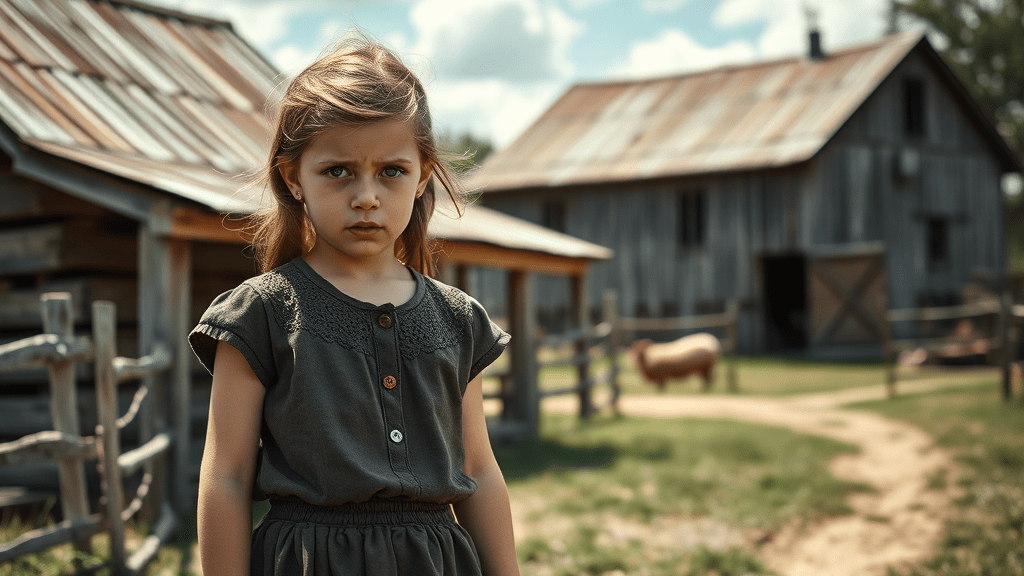
As children we can often recall that pinnacle moment when the power between the child and the parent shifted. For some of us, it has never happened, but for those who can recall that place and time it is often revered as life changing.
My mother’s father, Lorne Brennan, was a tortured man. He decided to trade in his lucrative career on the CP railway to acquire a small gentleman’s farm in Caradoc Township. The end result was questionable at best. What the hell was he thinking?!
Fast forward… My mom, Mary Jo, was the 12th and last child…her mother, Ethel, was a stoic farmer’s wife…there was never a lack of food or love ..perhaps more for some than others; but every family has it’s unique dynamics.
Mary Jo was brought into the world on February 12th, 1934…it was a bitter cold morning with snow dusting the inside of the master bedroom window sills where her elder sister, Loretta, was the acting mid wife. Ethel was 42 years old and this birthing experience was not new to her, but in fairness..thankfully, it was her last. The delivery was unremarkable and Mary Jo, nicknamed MJ, was wrapped in a blanket and trotted down to the kitchen and tucked neatly into the warming oven. Ethel informed her second oldest daughter, Loretta, (already a mother herself) that she would tidy herself up and be down shortly to nurse the newborn. My mom would recall years later that her mother’s philosophy was that if MJ didn’t survive and had passed on in the warming oven Ethel would have been sad but in her next breath would have said: “we will bury her later, there are chores to be done.”
MJ’s life was fair but difficult. She felt her mother loved her but her memory of her father is conflicted. “I was one more mouth to feed and girls were helpful, but in his mind, boys were the true asset of a troubled and aging farmer who required their manly toil on the land.”
At the tender age of nine MJ was seasoned to her father’s hot Irish temper. She recalled her dining room error when she inadvertently reached for a piece of pie before her elder brothers had had an opportunity to have a second piece…a house rule. In a split second Lorne pushed back from the table and grabbed MJ by the shoulder. On the wall in a very conspicuous location he reached for the family hickory switch. With the skill of Zorro, Lorne switched my mother’s legs until blood filled her shoes. Everyone was frozen in fear. Even her elder brothers, who were larger than life, remained firm in their chairs. A memory MJ remembers with puzzlement.
The next day her older sister (by 4 years) Elyse lent her younger sister her treasured nylons to wear to school so the evidence of her whipping would be hidden from her fellow classmates. It took weeks for the scars to mend but the emotional wound would never heal. MJ was determined that her father would never bring physical harm to her again. She was prepared to take an “eye for an eye” and she felt Lorne knew his rage was unjustified and reprehensible….but the reoccurring question was…where was her mother in all this chaos? A question that has never been answered…MJ does recall that her father never raised a hand to her mother and that her father’s rage was channeled for the most part at her and her elder sister Jean who she recalls Lorne saying: “She is not welcome here anymore.”
It was mid afternoon in late August of 1945 and MJ was home alone with her father. He was busy in the barn while she was tidying up the kitchen and washing garden vegetables for her mother who was away that sunny summer day visiting neighbours with sister Elyse.
MJ could hear a loud commotion from the barnyard and raced out to see what was going on…to her dismay, her father was wielding a large mallet and threatening a stubborn hog that was being difficult to load on the trailer. Maybe the pig new that it was a fateful trip…Mary Jo ran between the frightened animal and Lorne..eyes locked, she firmly told him to put the pig back in the barn and if he bludgeoned the helpless creature it would be his last act of rage…MJ gave him the ultimatum..”put the hammer down, put the pig back in the barn, take it to the butcher another day!” Lorne complied without speaking a word – the sword had been drawn and for the very first time she saw fear in her father’s eyes.
Mary Jo recalls that in her heart she was prepared to kill her father that afternoon rather than see him torture the stubborn pig. And from the tender age of eleven the scales of power had shifted and their relationship would change forever. Lorne had met his match in this feisty young girl…..and her life as she knew it would never be the same.
Dan Fraleigh resides in London, Ontario Canada. He is a real estate agent by day and at night and enjoys writing poems and stories. His writing has appeared in Literary Yard as well as Istanbul Masticadores.
Please share this post to give it maximum distribution. Exposure is our contributors’ only compensation. Don’t forget to back link to this.
Financial donations through either our GoFundMe or Buy Me a Coffee accounts will help expand our global reach by paying for advertising, more advanced WordPress plans, and expansion into more extensive Content Delivery Networks.
Every family has a history filled with stories, recollections, and memories. Over time, these reminisces take on a life of their own, but a note of caution: they will only remain alive as long as someone in the family remembers and shares. Over the course of decades, leaves begin to fall from every family tree, and eventually, only bare branches remain. My parents passed away over 25 years ago, and in the intervening years, three of my sisters departed Dodge too soon and are with them. As the writer and historian in the family, I am putting the proverbial pen to paper to bring back to life one of the central stories my siblings and I were raised with. In fact, it is the genesis of our familial history, when two saplings met and created a new family tree.
Our parents were indeed an attractive couple. As a young man, Dad was one handsome dude, and Mom was beautiful, with high cheekbones. My sisters, brother, and I learned from our parents that Dad had a motorcycle as a young man and that our mother had met him in Vineland, in the Niagara area, when she worked there as a young Farmerette. This was after WWII when there was a need for produce, but in a world where many young men, formerly farmers, had given up their lives. Thus, the Farmerettes came into being, and many young women from the countryside joined to do their part at the Vineland Farmerette Camp and other places in the province. Mom was only 16 that summer, and it was her first time away from home for such a long duration. Dad was six years older than our mother and undoubtedly cut a dashing figure on his Harley-Davidson motorcycle that summer day. As children, we knew the bare bones of this seminal family history, but I now wish we had fleshed out more details and asked more questions.
When did Dad buy his motorcycle? When did he get rid of it, and why? Did Mom want to work as a Farmerette, or had her parents convinced her to go? Was it love at first sight when Dad and Mom met in Vineland? Did they date for the next four years until they married, or did it take time for our parents to fall in love? Were our maternal grandparents concerned that their daughter was interested in a man six years older than her? Why did our father ask our mother to
go on the motorcycle that fateful day in Vineland?; why not one of the other girls? Was it just for a spin around Vineland or a ride of a longer duration? How did The Clanging Pistons originate?
Yes, that was the name of the group of young men and their motorcycles: The Clanging Pistons. Dad would smile when telling us about the group’s name and fondly recall memories of how he and his friends would drive around the countryside on their motorcycles. Of course, the culminating story would be about the group travelling to Vineland to see some local girls from the Clinton area who were working at the Vineland Farmerette Camp. A few of the girls were either sisters or sweethearts of these dashing young, motorcycle-riding men.
Even as a child, when I heard about The Clanging Pistons and the Vineland Farmerette Camp, it seemed to me to belong to a gentler, kinder, and more romantic time. That story, the genesis of our family, took on a rather fabled and folkloric aspect over the years, particularly when, over time, it was apparent that our parents did not have a fairy-tale marriage. It was a
typical marriage of the era: hardworking parents, a large family, and children who grew up during radical societal change. Our parents loved each other but did not have much in common and were sometimes at odds. However, they stayed together for their children; that is the greatest gift they could give us. As our parents aged, they became closer, and due to my mother’s ill health, Dad became her caregiver.
For a long time, I had not thought about Dad being part of The Clanging Pistons and that Mom had been a Farmerette after the war. Then my sister sent an email to me with a link to an article in the local news about the Farmerettes and their central role during and post-WWII in tending and harvesting vegetables and fruit in the Niagara region. A new Canada Post stamp would be issued to recognize their services. The article highlighted the contributions of local girls who became Farmerettes from the early ‘40s to the early ‘50s, mostly in Ontario’s Niagara and Windsor regions. A few months earlier, the Blyth Festival had also staged a play about the Farmerettes. They were getting their long-deserved recognition.
Some of the women who were formerly Farmerettes are still alive, in their 90s, and have been interviewed. When my mother passed away in 1996, I was asked to give her eulogy. In one part of the eulogy, I referred to how our parents had met on a fateful, fairy-tale day in Vineland in the late ‘40s. I mentioned that our father had taken my mother on a motorcycle ride that lasted for almost 50 years. I said that I could imagine the two of them on our father’s motorcycle that day in Vineland: Dad, cutting a handsome and dashing figure on his beloved Harley-Davidson, and our youthful, beautiful mother sitting behind him, hanging on for dear life. I described how I pictured them that day: Mom’s glossy hair blowing back in the breeze, and I quipped that Dad’s hair was probably blowing in the wind, too, because he still had a good head of hair back then.
Due to the renewed interest in the Farmerettes recently, my brother sent a photo to my sisters and me that had been posted on Facebook years before. It is one that I remember from our youth; it had probably been in our mother’s photo album for years. It was in the local paper in 1948 and depicted five young men who had gone to the Vineland Farmerette Camp to visit local girls working there. The Clanging Pistons is not mentioned, but Dad and his four motorcycle buddies are in the photo, proudly sitting astride their Harley-Davidsons and presenting a dashing group. This may have been after their triumphant return to Clinton from Vineland; these vibrant young men had their whole lives ahead of them, and there was the promise of other anticipated adventures along the way.
John RC Potter is an international educator from Canada who lives in Istanbul. The author’s poems, stories, essays, articles, and reviews have been published in various magazines and journals. His story, ‘Ruth’s World’ was a Pushcart Prize nominee, and his poem, ‘Tomato Heart’ was nominated for the Best of the Net Award. The author’s gay-themed children’s picture book, The First Adventures of Walli and Magoo, is scheduled for publication.
Please share this story to give it maximum distribution. Exposure is our authors’ only pay. You can also help our contributors gain exposure by back linking to them and to RFM’s homepage.
Now I had to learn to shoot. The sound of the rifle was tremendous echoing off the mountainsides. It was late summer and the fireweed was blooming and the huckleberries were ripe. The smell of the gunpowder lingered in my limbic nerves, triggering danger, danger, bravery. Then the summer turned to autumn, and now the hunt was on. The air turned crisp and the birch tree changed from green to golden. Nature was humming and bullets paraded on the flats. I would leave the matriarchal farmer with a glint in my eye knowing the game was waiting. She would always protest, but I had history behind me – when a man is off to hunt, you must leave him alone. She ran to me when I was leaving: don’t go, don’t go. I looked her coldly in the eyes and guided her back to the garden then laughed to myself, as I drove off down the road. I passed the bear then met the man who had dementia right beside his cherry tree. With time, I chose to do my hunt alone.
The witchy matriarch was six-foot tall with piercing, pagan eyes. She was an empath with a hardened character bred from decades of abuse and chronic pain. She spoke the language of the horses, the flowers and the bees, but she doubted me and this would leave me fuming, pacing, slamming doors and acting lawless. I ran power trips like an aristocrat so that I could gain respect and prove this woman wrong.
And so the game, I thought, would be way up high where mankind wouldn’t go. It was a steep hike, miles up the incline of a mountain to a clearcut on the peak. I would see a raven now and then, as I marched upwards, rifle strapped over my shoulder. I waited many days empty-handed, but then the first buck showed up with his proud antlers shining in the sun, trotting down the mountain meadow ready to make acquaintance. The adrenaline hit fast so I trailed him, rushing into the timber, before I reassessed my strategy and headed to my ambush spot. It wasn’t long before he came walking right up to me. Exhilarated, I kneeled into position, but he caught my scent, jumped, and bolted away hurriedly down the cuts back into the timber. I had lost him again. Seriously concerned that I had squandered my only chance, I walked back down the mountain to my car.
There comes those times in life, those certain times, when we must embrace a manic perseverance … a willpower so dedicated that it leads us to walk through harm’s way gladly and trudge forwards unscathed and still highly motivated. I woke up in the middle of the night and trekked back up the mountain to the peak. Bitterly cold, I tramped uphill through the snow determinedly, as a wolf howled and I grit my teeth. In the final stretch before the break of dawn, when there was light to see, I approached my ambush spot and much to my surprise, stumbled right into the buck. He was there feeding overnight. He stared straight at me, startled and curious, and froze into a shaky posture, so I tiptoed even closer, and my only shot was for its neck. Bang. The loud sound echoed through the mountains and he jolted up into the air like he had stepped on a landmine. He sprinted into the timber as fast as his legs would take him. I saw hair on the ground where he had been, but no blood trail. I knew I had missed the shot. I sat there in exhaustion and humiliation. I didn’t know what I would tell them.
I returned to the farmhouse that afternoon to see the married couple bickering away, clearly in a serious dispute. They were not surprised at all to see me empty-handed. I pulled up a chair in their rustic kitchen filled with plants and earthy paintings, just to be treated like the figurehead of irresponsibility. After I told my tale, the man reflected for a steady minute, then looked at me and said he thought I shot the buck. His wife then mimicked his remark, stating, “Always go look for the animal.”
The farmer and I went to look but it had escaped without damage and this led to impatience to get another try due to the fact that the year was wrapping up.
But my optimism came flooding back when I saw fresh tracks in the fresh snow. They couldn’t have been more than a couple hours old. We were in the final days of the season now and I made my ambush by a tall evergreen making sure my wind was right. I waited about half an hour and then a deer walked into sight. He was about sixty yards down the mountain, slightly hidden by a patch of saplings and I looked with strained eyes to see if he had antlers. I was hit with a feeling of radiance. He had little horns on the top of his head. This was a spike buck. I walked slowly towards him, tense to the extreme, manoeuvring to the proper angle to align the perfect shot. I kneeled, took a breath and pulled the trigger. Boom. He sprinted forwards and there was a luminous feeling of an earthly animal member passing on. A flash of red illuminated after the clap of the shot, but when I got to where he was standing, there was no blood-trail. Following his tracks into the timber, I was convinced that I had missed again. Turning the bend and following the hoof tracks — suddenly, in front of me was the dead body of a spike buck slumped in this mountain forest. I had connected through the heart-lung cavity. It felt like I had been told I no longer had to hold up the weight of the sky on my shoulders. There was a profound sensation of deep relief.
Maxwell Adamowski is a Canadian survivalist and woodsman who lived alone for a year in the wilderness performing a series of rite of passage rituals. “The Spike Buck” is one of the first stories in his book, CarQuest.
Please share this to give it maximum distribution.
More wonderful stories are going up all the time. Right now, four have been scheduled starting January 21st.
On January 21, “Rowan” a supernatural fantasy by Naomi Elster will appear. Naomi Elster’s writing has been published and performed almost 30 times, including in Imprint, Crannóg, and Meniscus, and at the Smock Alley Theatre. She has campaigned for reproductive justice and pay equality. She has a PhD in cancer and leads the research department of a medical charity. Originally from Laois, in the Irish midlands, she now lives in London.
On January 22, the story will be “Water Pump” Fiction by Yuan Changming. Yuan Changming edits Poetry Pacific with Allen Yuan. Credits include 16 chapbooks, 12 Pushcart nominations for poetry and 2 for fiction besides appearances in Best of the Best Canadian Poetry (2008-17), BestNewPoemsOnline and 2109 other publications across 51 countries. Yuan began writing and publishing fiction in 2022, with his debut (hybrid) novel Detaching just released by Alien Buddha Press.
January 23 will feature “Flamenco” a fantasy love story by Mehreen Ahmed, Mehreen Ahmed is Bangladeshi-born Australian novelist. She has published ten books to date and works in Litro, BlazeVox, Chiron Review, Centaur Literature. While her novels have been acclaimed by Midwest Book Review, Drunken Druid Editor’s Choice, shorts have won contests, Pushcart, James Tait, and five botN nominations.
On January 24, you will find “The Spike Buck” a flash memoir by Maxwell Adamowski, Maxwell Adamowski is a Canadian survivalist and woodsman who lived alone for a year in the wilderness performing a series of rite of passage rituals. “The Spike Buck” is one of the first stories in his book, CarQuest.
Check back frequently to find out what’s happening, or, better yet, subscribe!
The party would have been over, if someone hadn’t brought along marshmallows as a party food, which in turn, brought up the suggestion that when the sun would set, and it would start getting dark, we would build a fire, and roast the marshmallows above the open flame. It was in town, this party to which I had been invited for some reason (as it was not customary for me to be invited to any shindigs, and so, was not in my habit to attend), and most of the attendees were military brats.
And a good deal of them were army air cadets – a sinister organization into which I once had been drawn. Being a metalhead I fit in very little with their spit-and-polish types. The type of people who pretend to be cleaner than their neighbours, and who judge you on sight. Who think that shaving means that you are respectful, and who see disagreeing as a criminal offense (as, in the military, it often tends to be).
(When I say I had been drawn into it, it was for a rather short period, as when looking at my shaggy black hair they said “above the ear”, and when I had it cut to “above the ear”, it still was not short enough to their liking; they postponed giving me my uniform leaving me singled out, most purposefully – noticeable, that one who doesn’t have a uniform, doesn’t have a buzz cut, and wears metal band Ts – and that day they wanted us to parade around for some officer, behind the Foodland by minus forty, I said “no sir, enough of that!”, and never went back. I had been lured in by the prospects of a free piloting license – because the government is willing to spend money on youths to have a free piloting license if they spend hours every week drilling, but it wouldn’t do the same for youths who spend their time reading, or studying. But a free piloting license wasn’t worth the wasted hours. One of the last times I had gone to cadets, was one time we could finally do some shooting. They handed me an air riffle and a pair of protective glasses, to shoot targets at the end of a range, while lying flat on our fronts. Some pipsqueak leading air cadet half my size was assigned to supervise me (to be a Leading air cadet, one needed no qualifications, one needed only to be with the organization for at least six months). I was laughing. “What’s funny?” he asked. “What the hell is this?” I replied, “I’m from the countryside, I’ve been shooting with live ammunition since I’ve been ten. What’s the deal with these glasses when we’re gonna shoot pellets at the end of a range?”. “They can bounce back and hurt you” he said. “How do you suppose it could bounce back from the end of that range?” I insisted. Smart mouth, the L.A.C. said “Either you comply or you don’t shoot”. Fun stuff – so I was lying down with my glasses becoming foggy from my body heat, and I was trying to aim properly. After a first shot that hit somewhere along the blue line, I took off my glasses to wipe them. “Put those back on! You need to have your glasses on at all times when on the range!” he yelled. “I’m just wiping them clean – they’re foggy; I can’t see shit!” I said, showing him the goggles. “Okay, but do it fast” he whispered. As soon as I had put them back on, it started all over again – it was damn hot, how they were heating that building in mid-November! Another half-miss. I had enough of that – I reloaded, stood up, took off my glasses, and shot. Dead center! That’s how hillbillies do it! I went back and turned in the “weapon”. That was it for me and the “air cadets”).
And here was I, outside a house in the town suburbs, with a bunch of those fanatics, and we were going to start a fire. They – the owners of the house – had a fire pit all ready, arranged, prepared. “Perfect!” I though, until the cadets went in, to try to apply what they had learned in “survival training”.
During the first ten-or-so minutes, they argued about how to set up the wood. “We have to put all the branches in one direction, so the wind gets through! The flame needs air!” said the first. “No! We have to Cross them in different directions, so that it leaves room in between! Air pockets!” Said the second. “No, the branches should be standing, I mean, they should be like a cone, like a teepee. That way there’s room underneath, and the flames are high” said the third. Impressed by this elaborate design, they got to work. Standing there, I remarked “It all depends on the weather you have, but none of it really matters as long as you get it started right”. “Shut up” they said “we got this. We passed our survival training. This is easy”.
And so, I sat at the table where the ladies were steering clear from the macho quarrels, or admiring them. Another excluded male, whose name was Gabriel, honestly stated “My grandad always got his fires started with a gasoline mix. That’s how he showed me. Said it helped, like with barbecue fluid. So don’t ask me nothin’ about building a fire other ways!”. Clean, unassuming, honest. He stayed seated and chatted with the ladies.
It was a hilarious scene where the distinctions between the expected typical males and the expected typical females were put into stark contrast. These scenes, we’ve all had them. I recall a story from my school music teacher with whom I got along, because neither he nor I fit into an “expected typical” category. Once after class once, he reminisced about a soiree he had been at, while explaining to me how Schoenberg’s 12 tone method worked. “All the men were in the living room, talking about cars, hockey, and boobs, so I went into the kitchen where the women were, who were talking about gossip, tv. series and books, which in comparison was vastly more interesting, but they shooed me out because they didn’t want any guys there, so I had to stay and be bored, listening about cars, hockey and boobs”.
In the backyard, where I was, the girls, who were all of military upbringing, were fundamentally different. Maybe because of the branches in the military. With only one of them, Sophie, was I acquainted – we had been in after-school clubs, and I suspected it was through her that I had been invited. Her family was military, but worked in Search and Rescue – so, not cannon fodder. Actually, I had a huge crush on her, and not only because she was one of the rare girls who talked to me. I wouldn’t have asked her out because I valued her friendship too much, and I feared the same thing would happen as with this other girl called Jenny. She and her best friend Marie had started hanging out with me and my friend Peter, who was nicknamed Peter built because we both expected to become truckers, and he was so large that he had something of a peterbilt. They had hung out with us some, and we had enjoyed their company, until Peter, who had more guts and more self confidence than I, asked Marie if she would like to go on a date with him, maybe even, if Jenny wanted to, a double date, the four of us. She politely declined, and they ignored us for the rest of the school year.
And so I valued Sophie’s friendship too much to ask her out, which is ridiculous since she stopped talking to me anyways. She stopped talking to me largely due to another girl who was there – named Daphne – who was as superficial as they can come, all the opposite of Sophie. As that evening was one of the only pleasant encounters I had with Daphne, I would have never suspected her – the low-witted make-up covered gossip queen – to become friends with the socially engaged and very literate Sophie. Nonetheless, the worst is often to happen. I’d never know why Sophie preferred Daphne’s company. Maybe they went to some same church or something – I wouldn’t know about any of that.
Two girls remained, and they were Angel – a tall black girl, who was an air cadet, yet instead of the air of superiority most of them hailed, was a shy and polite girl, who liked to take pictures, and who envisioned becoming air reconnaissance photographer (or something along those lines) –, and Jane, a short baptist who was very nice as long as no one mentioned any religious subject (I learned that surprisingly enough, she would later convert to Catholicism and become a nun). We sat there, and joked for a while, about trying out Gabriel’s technique, about driving a car around for a few blocks and roasting the marshmallows under the hood, or about going to the beach to roast the marshmallows, as it would take less time than waiting for the dudebros to succeed in building a lasting fire.
The three dudebros huddled around the fire pit had abandoned the idea of arranging the sticks like a cone. In fact, they had found other ways to rearrange the wood, so that it would supposedly burn better. They had debated matches; safety matches (or Swedish matches as they’re sometimes called), vs. other matches, or a lighter.
“Does anyone have a lighter?” asked the main alphaalpha – the kind of guy who you knew would peak around our age – “I forgot mine. I didn’t think I would need it”.
“I can just get the fire started,” said I.
“No, screw you, we’re doing it,” he affirmed.
“Okay,” I backed down, relaxed, largely also because I thought it was funny to watch them try, and put so much effort into it.
“Just let him do it,” sighed Sophie.
“No, Sophie, we’re gonna have it lit soon,” said the second one.
So we sat pretty while they used up a pack of matches, and we talked about projects, about activities, about cooking, about food, about the fact we were hungry, about night that was getting dark, about mosquitoes… And the dudebros talked about how they could place the sticks they had gathered as firewood, and I was asking them if I could do it, and they gave me the same response “No, screw you, we know how to do it”, and I tried to give them tips “Place some of those dry leaves at the bottom, get some more fire starting material”, and they would tell me to shut up, and Gabriel would make jokes about getting some gasoline, and I would say that build small fires it all the time on the north mountain, and they would ignore me. Daphne wanted to go in to sing some Karaoke, and Sophie wanted to go to the beach; Angel and Jane wanted to go home, but they didn’t have a ride. “I can give you a ride” I told them. “How do you know where I live?” asked Angel not shocked, but amused. “Don’t you remember? You saw me coming out of Nanette’s place – she’s my band’s drummer, that’s where we practice”. “Right!” she said, before Daphne asked “You’re in a band?”. “Yes” I answered. “Oh”.
And as we were about to leave I asked for the last time “You sure you don’t want I should do it?”, about the fire, to which the dudebro who had non-verbally established himself as the leader of the pack, burst out “Fine, you think you can do it, go ahead!”, and the third one warned me “It’s these matches, the problem”, though they were using up a second pack, as the first one had been used up.
Not changing how they had placed their wood, I stuffed dry leaves wherever I could – as dry leaves were all over the ground, no more fire-starter needed to be found ; I lit a match and put it to the middle of the base I had established. Within a minute a fire was roaring, and I handed them their matches, of which one single I had used. Frustrated but glad to have a fire, and for the party to have come back to life, the others gathered around the flames, sticking the marshmallows on sharpened sticks. One of the guys only muttered to me “You redneck bastard”, to which I didn’t care. Having a sun-burnt neck means that you work hard under a harsh beating sun. You work hard, you also know your stuff. And you need neither to show off, to be called leading cadet, or to wear a uniform. All I had needed was time in the country to try things out for myself, and if I didn’t manage myself, to ask from people who knew. If the government wanted to invest into these military brats, who went from town to city to town, and give them free piloting licenses in exchange for standing straight in lines, and getting haircuts, then my behind would stay in the country without any of their privileges. At least I knew how to build a fire.
Born in Nova Scotia, Canada, in 1993, Thibault Jacquot-Paratte writes in both English and French. Recently he has served as literary editor to the anthology Il y a des bombes qui tombent sur Kyiv. His novel A dream is a notion of and his short work collection Souvenirs et Fragments were published in May 2022. Previous publications include his poetry collection Cries of somewhere’s soil, and three of his plays. More of his work has been featured in reviews and anthologies. He enjoys spending time with his wife and their daughter, and finding new creative projects. He is a regular contributing journalist to Le Courrier de la Nouvelle-Écosse, his play Il y avait des murmures sous le sol will premier in February 2023. He is currently employed as Script writer at Bored Panda Studios.