As of October 1, 2023, RFM is now publishing its stories and poems to its Facebook/Meta account at the same time the story/poem is published on the website. We are already publishing simultaneously to Mastodon and Tumblr. Follow us on any of these accounts to receive our moving and beautiful stores as soon as they appear on the main website.
Also, don’t forget that RFM is open to submissions of stories and poems about rural life in the US or around the world 24/7/365. Visit our submissions page for more information. There is no pay other than the publication credit and exposure, but we strive to reach a worldwide audience and to give our contributors as much exposure as possible.
“Where are the bears?” David, José’s 5-year-old nephew, cried the moment he arrived with his parents—José’s brother Jorgé, and José’s sister-in-law Mariela. “I want to see the bears, tio,” he said, almost falling out of the taxi that brought him with his parents from the airport to the home of his uncle José and José’s partner Aaron in northern Vermont. “You promised.”
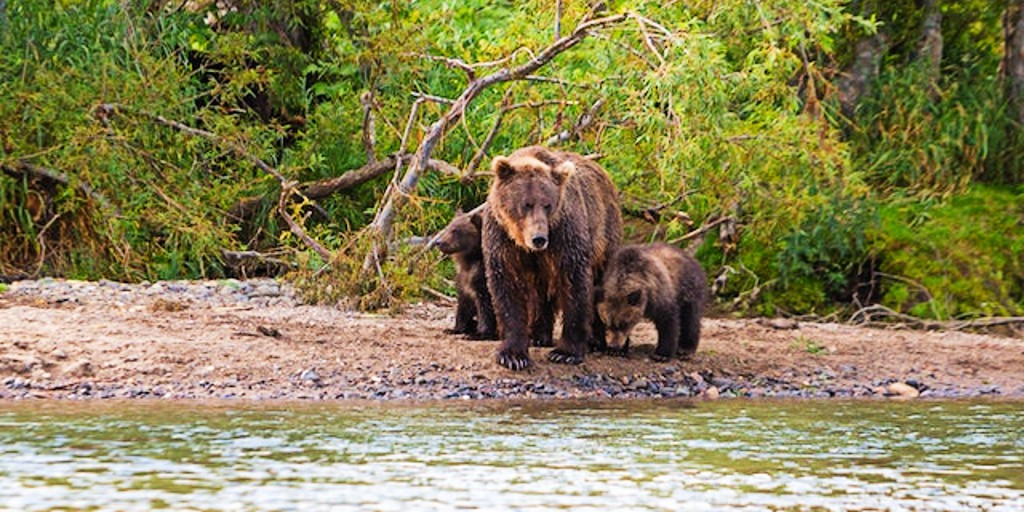
José had told his brother that almost every night a mama bear would visit, accompanied by her two recently born cubs, and when Jorgé planned their visit to Vermont, seeing the three bears was, for David, going to be the highlight.
“You don’t understand kids,” Jorgé told José when they discussed the visit. “Ever since you told David about the bears, he’s had me read the story, The Three Bears, aloud to him every night when I put him to bed, otherwise he won’t sleep. He’s obsessed.”
The first evening, while his parents and uncles ate their dinners, David watch—and rewatched—the Disney cartoon The Three Bears, his eyes glued to the television.
“You say they usually come in the early evening?” Jorgé asked, looking at the time on his iPhone. “By the way Aaron, this is the best roast chicken. Before we leave, will you let me have the recipe?”
“Generally, they show up any time until 9:00, while it’s still light out,” José told his brother. “But there’s no guarantee that they’ll show up at all.”
“I hope they do—for David,” Jorgé said. “I’ve read the story to him so many times that I feel I know it by heart. If they don’t show, he’ll be so disappointed.”
That evening the bears were no-shows. José listened to his brother read the story of The Three Bears—twice—before David calmed down sufficiently for the lights in his room to be switched off.
This pattern was repeated the next three evenings. No bears appeared.
“José, isn’t there something we can do to entice the bears to visit?” his brother asked. “I don’t want David to go home without seeing the bears. Perhaps we could leave them food; that might encourage them,” he added, hopefully.
For the last night of their visit, José promised his nephew they would have a marshmallow roast outside. That afternoon, Jorgé built a fire pit in the driveway near to where José told him the mama bear would bring her two cubs.
“Do bears like marshmallows, tio?” David asked José as they prepared for the roast.
“Bears eat berries and herbs, so I’m sure they like to eat marshmallows,” José told his nephew.
They decided to start the marshmallow roast around 8:00 while there still light, hoping the fire might attract the mama and her cubs. David sat between his father and his uncle, while Mariela brought out the tray with the marshmallows, the Hershey chocolate bars, and the sliced bread.
“This should be a real s’mores roast,” José explained. “Something of middle-America,” he explained to his brother and sister-in-law.
“I want to put the ‘mallows on the sticks,” David said, taking the branches his father had prepared that afternoon. While he began squeezing the marshmallows onto the sticks, his father lit the fire and his mother put pieces of the Hershey bars on slices of bread which she placed near the fire, to melt.
After a few minutes, José excused himself. “I should put the dogs in the house; I’ll be right back,” he told them. José left and called Lily and Mandela to follow him, while Jorgé repeated the story, The Three Bears, to David and Mariela.
Suddenly, above the crackle of the fire in the fire pit, there was a noise coming from the nearby woods.
Growl…growl…GROWL….
“It’s the bears,” David screamed and ran to his mother. “Mama, the mother bear is bringing her cubs,” he told her as he climbed onto his mother’s lap for protection.
Growl…Growl….Growl….
“Jorgé, do something,” his wife screamed. “They’re coming closer.”
Jorgé turned on the flashlight in his iPhone and shined it in the direction of the growling.
GROWL…GROWL…GROWL….
“Take David and go inside,” Jorgé told his wife. She lifted their son in her arms and ran onto the porch and into the house, returning in case her husband needed her.
“Do you see anything?” she asked, but when she saw Jorgé on the ground, his hands on his heart, she rushed to him.
“I think it’s my heart,” he said softly. At that moment, José appeared.
“What happened? Why is Jorgé lying on the ground?” he asked.
“When the bears came, I think he had a heart attack,” Mariela said. “Where’s the nearest hospital? We shouldn’t wait for an ambulance. Can you drive him there, Aaron?”
“José, help me lift Jorgé into the car. Mariela, go back in the house and wait there with David,” Aaron told her. “I’ll call you as soon as I get to the ER.”
When the truck was a distance from the house, Jorgé opened his eyes.
“I think it worked,” he said.
“You looked like you really did have a heart attack,” José told his brother.
“And the growls you made, Aaron, sounded real,” Jorgé laughed.
“They were real,” Aaron told him. “I googled sounds that black bear mothers make when they’re calling their cubs, and played the tape. Do you think David believed he actually saw the mama bear and her cubs?”
“You don’t know kids, as you and José don’t have any, but kids—especially young ones, like David—are very inventive. All you have to do is plant the seed and their creative imagination takes over.” Jorgé sat up in his seat. “David was all set on seeing the mama bear and her cubs, so by creating a scene like we did—and the growling sounded so real that I forgot for a moment that we had planned it all—David believes he actually saw the bears.”
Twenty minutes passed. Aaron turned the truck and headed back to the house.
“I think we should return now,” he said. “Mariela might be worried.”
“Call her and tell her I’m okay, that I didn’t have a heart attack but just a fright that caused my heart to beat faster.”
As they parked the truck, Mariela came running out of the house.
“You’ll never guess what happened,” she said, hugging Jorgé. “I’m so happy it was nothing serious, —but guess what happened after you left?” Without waiting she said, “The mama bear returned with her two cubs.”
“What?” Jorgé shouted.
“After you left and David and I were in the house, we heard a growling. David ran to the window. ‘Mama, come here,’ and I joined him at the window. ‘The bears are here; they came back.’ And sure enough, the mama bear was there with her two cubs, just like you told us they would be, José.”
“I can’t breathe…I need a glass of water” Jorgé whispered, falling to the floor.
“Jorgé, what’s wrong?” his wife asked as she bent over his prone body.
“I think…I think it’s a heart attack,” Jorgé told her.
“That’s not possible, Jorgé. You just came back from the hospital,” Mariela said as she caressed her husband who was gasping for breath and clutching his chest. “José, I think something is wrong; I’ve never seen your brother like this,” Mariela said, stroking her husband’s face.
“Mariela, José will help me put Jorgé back in my truck. José, you stay here with David. Mariela and I will drive Jorgé back to the hospital,” Aaron said.
When they arrived at the hospital, the attendants at the ER put Jorgé on a stretcher and wheeled him into the operating room for the doctor on duty to examine him, while Aaron took Mariela to the waiting room.
“I just don’t understand how Jorgé could have two attacks so quickly,” Mariela said, accepting the coffee Aaron offered her.
“I have to confess, Mariela, that the first wasn’t an attack….”
“What do you mean?” she asked, a worried expression on her face.
“The three of us—José, Jorgé, and me—planned it. Since we couldn’t be sure the mama would show up with her two cubs, Jorgé suggested that I go into the woods and make mama bear sounds, to scare David who would believe that she was really coming out of the woods with her two cubs. By faking a heart attack, Jorgé thought David’s 5-year-old imagination would cause him to really believe that she had come with her cubs,” Aaron explained.
“But she did come, just not when the three of you were there,” Mariela said.
“What I don’t understand is why Jorgé had a heart attack when you told him that the bears had actually been at the home,” Aaron wondered.
“You don’t understand José’s brother, Aaron. He was the one who was all excited about the possibility of seeing the mama bear and her two cubs. David was too, but it was Jorgé who got the boy all worked up, reading him the story at bedtime and watching the Disney cartoon with David. All Jorgé could do for weeks before our visit was talk about seeing the bears. He’s like a kid, really. There are times when Jorgé acts like a 5-year-old. I think when we told him that the mama bear had really come with her cubs, the disappointment of not being there and seeing them was such a shock that it caused him to have a real heart attack.”
Mr. Lande notes: “I was born in Montreal, but have lived most of my life in the south of France and in Vermont, where I now live with my partner on a 500-acre farm, writing and caring for more than 100 animals, many of which are rescues. Previously, I taught at l’Université d’Ottawa where I served as Vice-Dean of my faculty, and I have owned and managed country inns and free-standing restaurants. Recently my stories have been accepted by more than a dozen journals including Bewildering Stories, Archtype and Literally Stories.
“I live in the country where wildlife is a part of life. Every day, I am visited by hundreds of wild ducks and Canadian geese, and bears come by often. “The 3 Bears” is simply a story about everyday life around here.”
Please share this to give it maximum distribution. Our contributors’ only pay is exposure.
I cupped my hands around my eyes and peered into the scummy glass. Dan hadn’t cleaned an inch of grime off those panes, so it was like staring into pond water. There wasn’t any movement, which was enough to tell me that dog wouldn’t hunt. Wherever that jerk Dan Arnold was, it wasn’t here.
Roscoe wedged her nose out the crack in the window on the passenger side and sniffed around. Her thick golden coat remained the only bright thing in my life. “He ain’t here, Ros,” I said. “Maybe somebody got to him before we did.” I walked to the side of the trailer and stared into the thick stand of pine that seemed to stretch on for miles. The sweet syrupy smell of the forest air tickled my nose in all the worst ways—the scent guiding me back to a dark, unmentionable evening spent in that thicket. I shook it off and turned back to my truck.
I cranked the engine; the hood vibrating like always, and let my tires chuck gravel at the siding of Dan’s house as I rolled out. That mean old son of a bitch had something coming, but a lot of like the rest of life, that didn’t mean it was coming anytime soon. Hell, if Dan had answered the door, it was a longshot that I’d actually bark out the monologue I rehearsed with Roscoe on the drive over. She’d thought it was great—but I knew it needed work.
Dan’s mailbox lay on the ground at the end of the long, weedy driveway, the number eighteen barely visible beneath an army of fire ants that made camp of the abandoned structure. I saw a spot of white through the worn metal and something gnawed at me. Who the hell was writing to Dan Arnold?
I snaked my fingers into the only access point and snatched the envelope. As I drew it in, I figured it’d be a bill. Probably overdue. Hell, Dan Arnold was so broke he couldn’t pay attention. An old holler trick was to leave the bill in the box so that if the debtor ever came knocking, a man could just plead ignorance. Although with Dan it wasn’t much about pleading. Ignorance pumped through his veins beside blood, coke, and whatever prescription pills he could farm from the little league bleachers at Jaycee Park.
The exterior of the envelope appeared faded and soggy from last night’s rain, but before I could hold it up to the sun, a bright red car curved around the bend and slowed to a halt. The vehicle was spotless, one of those kinds of things you see walk off the lot in Maynard and head north towards the city. Nice things like that didn’t much belong in Bamber Lake, so when the window drew down to reveal Sara Tucker, I laughed.
“Something funny, Vic?” she said, red hair held tucked behind her ear.
“Who’d you borrow this boat from?”
She popped her gum. “A gentleman might think twice before insinuating like you are. Why can’t this be my boat?”
“Cause this is worth more than your double-wide.”
“I sold it all,” she said. “Antero Energy came knocking with a check in hand. They found what they need somewhere miles beneath my trailer. I’m flush, Vic.”
“Sure you are, Sara. And I’m the owner of Boardwalk and Park Place.”
“Oughta send your ass to jail then. I’ll call the Sheriff. Ya know, it’s criminal to look through somebody’s mail, even if it’s just Dan.”
I figured I shouldn’t admit much of anything. “You seen him?”
“Dan? Or the Sheriff?”
“Dan. We were supposed to hike into the bush today and—”
“Nah, he wasn’t down at Hoovers last night neither.”
I crossed my arms. “Don’t tell me you drove this behemoth down to Hoovers.”
“I did. I ain’t lying about Antero. I’ve got cash to burn.”
“And parked it in the lot? You’re asking for trouble, Sara Tucker.”
“I don’t have to ask for nothing, Victor Redding. I’m trouble through and through.” She glanced down at her lap, then whispered something foul. That was the girl I knew. “I’ve gotta run. Don’t worry, I won’t tell Dan you were sifting through his mail. Come by the house sometime if you want a drink. Might as well say goodbye to the place.”
“More like good riddance.”
“Don’t be sour you didn’t have the good fortune of a real estate boom when you owned the lot. Ain’t no use in blaming a friend when it was fate.”
I cocked out my middle finger and waved it. “Adios, Sara.”
As she left, I stood in her dust cloud and spit onto the ground. With my cell phone flashlight, I held the envelope over the bulb and squinted at the outline of a logo. When I recognized it, I dropped the paper to the ground and cursed. Antero. They’d bought half the holler and hadn’t quit. I didn’t own anything worth a lick, but I’d lost half my friends to the damn company, and now I was sure to lose a hell of a lot more.
I pocketed the envelope, nudged Roscoe back onto the passenger side of the cab, and sped towards home and rang John Boeringer.
An hour later, I met John at the junkyard and explained the plan I didn’t want to mention over the phone. He didn’t flinch, didn’t try to talk me down from it—just asked for the cash up front and that we keep things discrete. I knew John and Dan had bad blood from an old scrap over doe-eyed Penny Sewell, but expected more hesitation. I guess when you spend twenty years of your life killing men, it doesn’t much matter whether you’re in uniform or not. Although, I wondered how Penny would look at the whole mess down the road.
After a few minutes, John gave me the list. It was short and simple, a lot like John. He gave me an hour to get the ingredients, and I drove off into the junkyard like a kid on a scavenger hunt. By the time I’d finished, I had most of everything. The rusted propane tank rolled around my truck bed as I slowed to a halt beside John’s shack of an office.
John Boeringer looked around, hummed a bit, and then slapped the side of the truck and nodded. “That’ll do.” He flipped around the OPEN sign to CLOSED. “I’ll follow you over. Get you squared away. Then you’re on your own and we never spoke.”
“Understood.”
I swallowed hard. John paused for a second and kept his eyes on me. “There’s usually simpler ways than this, you know. You two could talk it out. This about a girl?’
“Maybe,” I said.
“I heard he went home with Sara few nights back. Knew she rents your old property but didn’t know you two had history. But I guess it’s a small town.”
“He went home with Sara Tucker?”
“Yeah—think that’s her family name at least. Reddish hair. Voice like thunder.”
“That’s Sara Tucker.”
“Look, I don’t know—maybe she was just catching a ride home with him. Not my place to ask.”
“It’s not about her. She’s good people. It’s an old matter.” “Right,” John said. “Let’s get moving.”
John called out orders like he was a chargehand, but I did what he asked and proceeded without question. My eyes drifted into the forest from time to time, but that was pure instinct. Something in my gut told me I shouldn’t stop and think, just act. That’s the horror of a secret that only two men keep—the only way out was if that number dropped to one. I didn’t hate Dan. I didn’t hate Antero Energy or their damn payments. Hell, I didn’t hate anybody or anything but myself. But a cornered cat will fight.
John knelt from the front porch and slowly laid the doormat back over his contraption. “That’ll do the trick.”
“Alright,” I said.
“No going back now, Vic.”
“Understood.”
He wiped his hands on his jeans and held one out to me. “I know you’re good for the back half of the payment. Get it to me by the end of the month. I’m not going to come break kneecaps when I’ve got this much skin in the game.”
“I’ll pay every penny.”
John walked back towards his junker of a car, and I followed. Worst-case scenarios raced through my mind. “What if he comes through the back?” I asked.
“Huh?”
“You said the rig is under the front door mat. Once he steps on that—well, what if he takes another path?”
“Eventually, the man’s going to step out the front door. Stay patient. And stay far away.”
“Right.”
“Keep your ear to the ground—this type of blast, it’ll sound like thunder in the distance from your house. Anybody else live within earshot of here?”
“My old place is about a mile down the road, but I couldn’t hear shit back there. Trees were too thick. Only sounds that made it through were the howls of coyotes. Plus, Sara drove off a while back, so we’re clear.” “Right.”
“Thanks John,” I said. “I owe you one.”
“Nah, you owe me ten grand. But I’ll be seeing you.”
John’s car sputtered down the road, and the forest went silent. I stood beside my truck and traced through every next step. Dan would be dead. The small world he kept would be sad, if only for a little while, then life would move on. Somebody, maybe his step-brother in Tulsa, would get a letter from Antero Energy and they’d stumble into a windfall. The land would be theirs and, depending on how quickly they dig, somebody would find the body of Reece Thompkins. The half-wit sheriff would look for the simplest math possible and quickly tie Dan to the murder. My hands would emerge clean and I could finally get some damn sleep.
I took one last look back at the house and then made my way down the long driveway. The mailbox was still on the ground. I cranked the radio loud, thinking maybe a little slide guitar would drown out the worry in my mind. I turned left and made it two hundred feet before sweat dripped down my forehead.
A half mile later, I passed a red car as I left the gravel roads and lurched onto the pavement. As my tires hit the concrete, I jumped on the brake. I knew that damn car. Sara.
I cranked the wheel, my front tire falling into the shoulder and then back onto the gravel. I drove faster than ever before, although I already knew what was waiting for me at the end.
John was right. The boom did sound a lot like thunder.
Benjamin Bradley is an active member of the Mystery Writers of America as well as a graduate of the Gotham Writers Workshop and the Red Bud Writing Project. He’s the author of the Shepard & Kelly Mystery series through Indies United Publishing House. By day, Benjamin supports homelessness organizations nationally on embedding healthcare for our country’s most vulnerable populations from his home in Raleigh, North Carolina. Learn more on his website: Benjaminbradleywrites.com
Please share this to give it maximum distribution. Our contributors’ only pay is exposure.
If you enjoy Rural Fiction Magazine, please do us a small favor and link to us. Back links are important to any website and especially for one that is growing. If you have a story or poem published here, please link to it. If not, please link to any story, poem, or page that you like. Your assistance is greatly appreciated.
Follow our blog to have our stories, poems, and other works and articles sent directly to you as they are published.
As of October 1, 2023, RFM is now publishing its stories and poems to its Facebook/Meta account at the same time the story/poem is published on the website. We are already publishing simultaneously to Mastodon and Tumblr. Follow us on any of these accounts to receive our moving and beautiful stores as soon as they appear on the main website.
Also, don’t forget that RFM is open to submissions of stories and poems about rural life in the US or around the world 24/7/365. Visit our submissions page for more information. There is no pay other than the publication credit and exposure, but we strive to reach a worldwide audience and to give our contributors as much exposure as possible.