“Love Tokens in the Sunflower Field” Short Story by Billy Stanton

"Love Tokens in the Sunflower Field" Fiction by Billy Stanton

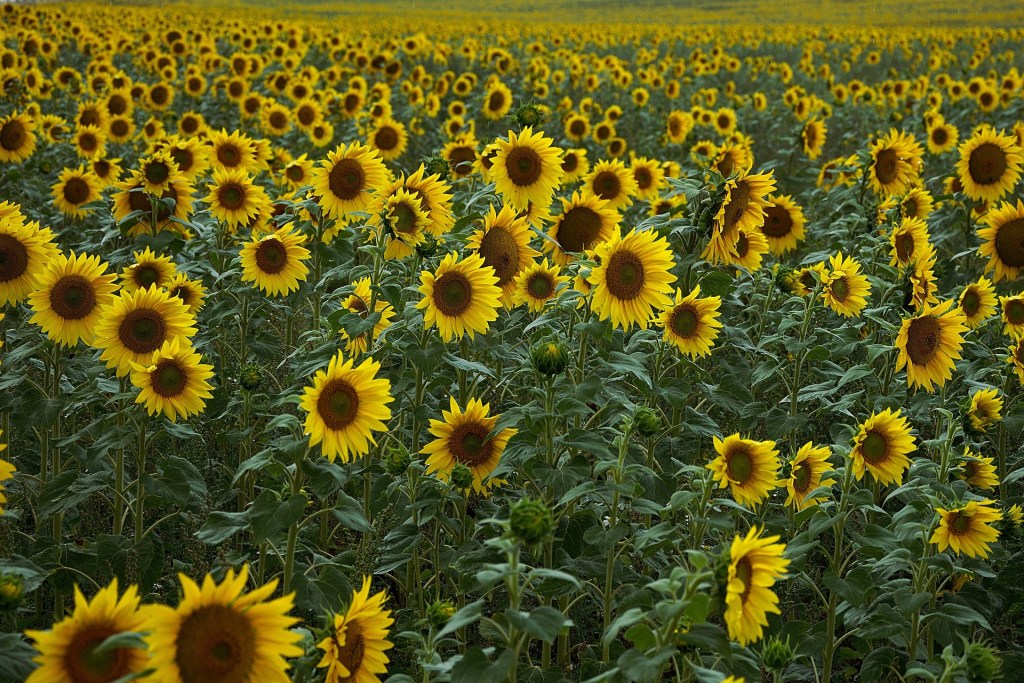
What, in the end, is the difference between a field of sunflowers and a field of brick-built houses? Both live for a while, both eventually die, it’s just a matter of time doling out unequally heaped bowls of itself one to the other to push the whole thing along. The rot’s different with both, sure, but nothing lasts forever. One grows by itself once the seeds have been sown and the other takes a man’s hands a lot of labour to stand tall for its allotted period. Labour and time, those are the things that count.
            Luke Johnson has taken eight pay-packets and two broken love tokens from the field. One is for labour, the other is from time.
            There’s been a lot of anger since it was announced that Wimpey had bought up the field. Some said it was the last beauty spot on the face of the county being levelled; a final dereliction of duty by the local wardens of the greenbelt. But there had been a rickety garage jutting out into the field as long as Jack could remember: two long and low concrete buildings with rusting doors, a swamp of a forecourt and the obliterated chassis of trucks and hatchbacks and the tops of Range Rovers. People are able to overlook ugliness when it suits them. Thirty homes won’t make for a lot more people around. The quiet won’t be too badly broken. The new commuters might even save the train station, a forlorn branch-line stop threatened with closure that the current station master has given up on. The lilacs he planted long ago in the soil boxes have rotted. They stink. A dirty protest against GWR.
            It is only Luke’s second big job on a building site. Times are different now; it used to be that smart lads in the village could become models of social mobility, heading away from the farms for offices in the capitol or the county seat. Parents swore against their offspring having to sweat and suffer like them; but this western Akenfield no longer offers cannon fodder for the plush new industries because there are no plush new industries. No more silver-lit plexiglass lives. Everywhere in the county seems to be on its knees. Luke tried for a job where the last bit of money was flowing. However, he noticed the head of the local branch of the prestigious estate agents wore a signet ring on his little finger and Luke thought that a bad sign. He saw the landowners themselves wearing those sometimes, like they were all in a little cult. Luke supposed they were. The interview was over quickly. The estate agent’s brochures showed in their advertising blather the names of the schools that would have gotten Luke a job if only he could have put them on his CV. Some things have a steel ring around them, just like the city of London.
            Luke counts out time via his labour. Each round of cement mixing, each new foot of stacked bricks or deepness in the foundation holes, has a portion of more-or-less precise minutes or hours fixed to it. When Luke is with the strict workers he doesn’t ever need to look at his watch. When he is with the bad it’s more tricky, but he’s managed to find the rhythms even in their chaos.
            Most the rest of the men roll in in Mercedes and Ford transit vans at around five or six each morning. They come from the cheap hotels in town. Adrift and alone apart from each other, divested of an individual life for long, long stretches and underpaid, they drink and drink all night. They stagger and stumble over the site when they come in. The site managers take lines of cocaine in their jerry-built office to make sure they have the energy to carry on controlling the doing. Sometimes they share.

            But Luke is okay. Okay for now. He has the money and he has the love tokens. He supposed the sunflower field hadn’t always been a sunflower field; long before it had been enclosed, he imagined, it might have been some lover’s glen or meadows, a meeting point for sweethearts just outside the confines of the village proper and on the far side from the old church. It was all fumbling in the long grass back then. Luke had heard old songs on the pubs’ Trad Nights (the area had a history for it; scholars still turned up occasionally); half of them seemed to be about men back from wars at sea or on the land, testing their betrothed’s loyalty in their absence by wearing disguises and making clumsy passes, before revealing their identity by the brandishing of half a broken token of devotion when the woman acquiesced or demurred. One of Luke’s tokens was broken in half in this manner; it was an unimpressive old copper ring, definitely worn not for show but simply for symbolism. It had a simple engraving that ran along and over the split: “When I’m gone from you”. Luke had found both halves buried together when he’d been digging; he assumed the couple had left it in the ground when their had separation ended. He liked that. It was like planting a sunflower seed.
            The other token was a coin, bent inwards on the edge of each side. It had two sets of initials, overlapping in the centre of a love-heart with an arrow shot through it: A.J. and S.H. Luke had seen one like this once in the county museum on a school trip. It had fascinated him because there was nothing on it then but an engraving of a stick figure hanging from a noose, with the label ‘1814’ beneath. He’d never been able to decide on who that souvenir was for.

            Luke treasured these droppings more than the real money he was collecting. He figured that would be the way for most when they dug up something deep and forgotten from the ground of their homestead. Besides, time mattered more to him than labour. He’d be labouring his whole life, no doubt, except for when things were really rough. But the labour would never be for him. He helped build nice houses for other people; nice even though they didn’t have a proper garden in order to make room for more plots on the development. Someone would build him a home or had already built it, but it would be smaller and cheaper and nastier than these. That was the way it went. But no-one ever had enough time, right at the final point, when all that labouring for others had been got through.
            The love tokens were a sign that this village, maybe itself on its own long and slow deathbed with its family nowhere to be found to help support it, had held glorious life in its allotted period. Once, Luke had read that God was spread in all things; that he was in man, earth, bud, branch, cattle, beam and bell. Most people would agree that God is in a sunflower, but not in a Wimpey home. Luke wasn’t so sure of that. It all seemed much of a same to him. Men might hide that truth sometimes, but the love tokens were a reminder. There were currents of life and light beneath everything. That was pure religion; a godless God or millions, billions of Gods. Older than Christianity, that way of seeing things. On an evening a few years ago, he’d been watching a documentary on television and when the presenter started talking about “history buried in the ground”, the light that always turned itself on banged itself instead hard three times against the side of his parent’s bookcase. Knock, knock, knock. Luke thought maybe he’d find a third token, too. Things move in synchronicity in that way. They have their own strange rhythms.
            Dig for Victory. That was a war slogan, emblazoned across different posters. There was a stark sepia-toned one with a boot digging a spade into a mound of earth, a spade that stood true and straight and proud to suggest to the pliant observer a nation remaining resilient; there was one with a beaming healthy farm worker in white shirt-sleeves puffing on a pipe and carrying a laden bucket of vegetables; there was another showing the back of a small child in sunhat and short trousers carrying a spade and redolent more of train company adverts for the seaside than the struggles of wartime. Luke didn’t like any of them much. The first seemed almost fascistic; the red background and the earth made him think of that ‘blood and soil’ Nazi line, which wasn’t helped by the man’s footwear being reminiscent of a jackboot. The second’s farmhand didn’t look like any that Luke had ever seen; he was a pink-cheeked gentleman in dress-up, keeping the best produce for himself. The third seemed to suggest the imminent re-introduction of child labour and the final puncturing of all daydreaming. But he liked the slogan- or, at least, he had come to, once he’d managed to shorn it of its propaganda and put it in a new place.
            Dig for Victory. Aye, he could do that. He could keep on doing that. He could go on finding things. He had to. As long as he could work out what victory actually meant in the final reckoning. That was the hard part. Harder than it had been for decades, probably. That would take real time and real labour and that pure religion.


Billy Stanton is a young working-class writer and filmmaker based in London, and originally from Portsmouth. His story ‘Screwfix’ was recently published in ‘New Towns’ (Wild Pressed Books). His short fiction has also appeared in Horla, The Chamber, Tigershark and (soon) Wyldblood magazines. His latest short film ‘Noli is currently in post-production. His blog can be found at: steelcathedrals.wordpress.com


If you would like to be part of the RFM family, follow this link to the submissions guidelines.

If you like dark fiction, you may also want to check out The Chamber Magazine.

Six Poems by Alan Catlin

Alan Catlin is primarily known for poetry but that doesn’t prevent him for mixing and matching prose and poetry as the subject allows.  He has published dozens of full-length book and chapbooks, mostly poetry, over the years. Although he is not a genre writer, he has somehow managed three Rhysling Prize nominations and a Bram Stoker Award nomination He didn’t win either award.

Climbing

I said we were
going to climb
that mountain

all the way
to the top
some day

Show
him what it
feels like to
touch the sky

Heart

In the courtyard
I read aloud
the inscriptions
on the tombstones:

"Tobias Hart
Born 1801 Died 1874
 
Never too old
to die of a broken
heart"
 
 "Dad, isn't
 that kind of funny,
 died of a broken heart?"

 Yeah
 kind of

Waterville N.Y. 1968

Late April, the earth
reveals furrowed rows, 

seedling corn stalks,
barren trees sprouting

leaves, flocking black
birds that eat the coming

water colored Spring.

Covered Bridge

Hiking Adirondack trails
we paused, resting between

pine trees, down below,
a ruined covered bridge

overgrown with vines and
brush, loose hanging rotten

boards, sunlight spearing
worn, sagging wood, a pulsing

rain swollen river pressing
through jutting, fallen

cliff rock, washing out links,
networks of roads that lead nowhere

Deserted Homestead Still Life, Remsen, N.Y. 1970

Rising smoke layers endless
fields of long thin weeds,
blown close to the earth,
once rich furrowed fields,
rows of cultivated crops
a farmer watched turning grey
at dusk: "Down there," he would
say to his family, "Is something
solid. Life."  Overturned,
dispatched by world wars,
bad years without rain, years
beating back governments,
bank foreclosure notices
with shots of whiskey 
and beer.  All land becomes
a yard that leads nowhere
between weathered split rails.
From the collapsed, unpainted
porch, looking down through
the broken windows, fallow
fields are full of fire,
a dead man's hands turns
the earth with a horse drawn
plow, one lost soul among many,
at home, at last, feeling
the land fill his fallow
bones with heat.

Deserted Barn at Night

Dried, split bales of hay
spill out from the barn

wrecked by years of bad
weather and neglect, 

sinking into the earth,
awaiting more wet rotting

rain or drought, awaiting
the black bats that color

the sky, that fill sagging
rafters, hanging down,

a dark eye, skin
of the night.

Alan Catlin is primarily known for poetry but that doesn’t prevent him for mixing and matching prose and poetry as the subject allows.  He has published dozens of full-length book and chapbooks, mostly poetry, over the years. Although he is not a genre writer, he has somehow managed three Rhysling Prize nominations and a Bram Stoker Award nomination He didn’t win either award.


“On A Quiet Road One Winter’s Night” Short Story by L.P. Ring

"On A Quiet Road One Winter’s Night" Dark Fiction by L.P. Ring

Mam’s reminders that either yourself or your sister were always sick on Christmas nick sharply at your patience as you tuck in your eldest, assuring him that you won’t forget to put out Santa’s milk and cookies. “I’ve got to go, Mam. Need to finish tucking Padraig and Sheila in.” The Merry Christmas is rushed, you can feel in your chest it’s rushed, but you assuage the guilt with a promise to call again tomorrow. You hang up, repeat your promise to Padraig that the tree will remain lit overnight so Santa knows someone’s home. That the food and drink will be out to sustain the jolly old bastard for his trek to grant every childhood wish. You just need to get the milk, you think, a whispered goodnight heralding the inching shut of the door as Padraig whispers a goodnight to Misty shifting at his feet. “We shouldn’t let the dog sleep on the bed,” Jeff’s said often enough. Well, Jeff’s not the one expected to police such rules, be the bad guy or Christmas Grinch when a boy’s sick.

Jeff’s fitful snores rise and fall from behind your bedroom door, the paracetamol weaving its magic. He should have worn his mask at work, you chide, self-congratulation evident in that puffed-up surety of tone. To have one under the weather at this holiday season might be considered unfortunate, but a whole household – and you don’t feel so hot yourself – must surely somehow be considered careless. At least the chicken’s prepped, the veg and spuds already chopped, almost all the presents wrapped. 

Milk. That remembered conversation by the freezer cabinets with Pauline Wren, who’s had the dose and labels it’s ‘no big deal’ sets your teeth grinding. You shuffled off, eager to get the rest of the trolley filled and be home. And you didn’t return to pick up the extra milk needed for your Christmas Eve visitor. Hence the need to just pop over to the neighbours.

“Don’t bother with it,” Jeff would’ve said. Well, that Christmas magic drains away soon enough as kids age, leaving only chores, utilitarian or half-considered presents, and face-time chats with different time-zones. Your hands are already chafed with the cold as your coat stretches tight over the second sweater. You promise yourself an hour in front of the convection heater with a Bailey’s when you get back; it won’t take that long, those barely five hundred yards. No need for the car. It takes an age to heat up the engine anyways. Make sure you’ve got house keys. And some pies for Dawn’s kids. The phone snuggles against your left breast, imagined heat from a round of texts that should make you feel guilty but would Jeff really care? The door shuts with a morose thump as that first gust of wind catches you, its chill tingling at your fingertips despite last Christmas’ knitted gloves. The ‘Fuck’ that escapes your trembling lips is directed as much to Jeff’s wheedling for hot milk so he could sleep as it is the cold. Not even a hint of moonlight to guide you on your way.  

The crunch of feet on gravel gives way to the scrap of sole leather on tarmac as your flashlight bobs ahead. More gritting of teeth, your head bowed as you walk into the wind. Your eyes sting, tears trailing down and into your mask – at least it protects below your nose, keeps the chilled wind from chapping your lips and freezing your jaw. You have the lines with Dawn rehearsed; ‘Thanks so much. So silly of me to forget. I brought some mince pies for the kids. No, I insist.’ You catch a trinkle of something in the flashlight’s glare – a fox, maybe? A rabbit? Surely forest animals have somewhere better to be? The light catches a twitch of tail as something flees into the ditch. Of course you shouldn’t be out at night either. 

Deep murmurs of warning ride on the wind. Why won’t you go home? A howl wells up out of the dark. You tramp your feet harder to keep some circulation in them, grumbling at the pins and needles already at your toes. The thought of those texts keeps you warm. He lives back in Dublin, an accountant. Still not married. Looking for the right girl. Well, he’ll never know. You’ll never meet. A little flirtation before a ‘Thanks, but no thanks.’ Which will only hurt you. 

You tramp past the driveway of Michael McGurk who’s taken the whole family – even the in-laws – off to Tenerife for some winter sun. Prick. One class ahead of you at school, always trying to coax girls behind the bike sheds. No college, stuck on the land his father wanted him to farm like past generations of McGurks had before. And the smirk the first time he saw you back from the Big Smoke, with a husband and two kids in tow, with part-time work once the latest bubble burst.

Is that a spatter of rain? You’ll be damn lucky to be back indoors before that kicks in proper. Another howl tappers off into a series of barks. Screeching yaps answer it. You swing the light up and down the left ditch and wonder if you catch a glint of an eye watching you through the briars. “Piss off,” you shout, jerking the flash forward and back like you were tossing out chicken feed.  

Your strides aren’t bringing Dawn’s place any closer. The rain’s closer to sleet now, stinging your eyes. Lean into it, stride onwards. Nobody’s out at this time. No need to worry about a car flashing round the corner, a kid on a bicycle smashing into you. Another three hundred yards or so to the driveway, then careful across the cattle grid and up the drive. The paper bag with the pies for Dawn’s kids is already sodden. Ho, Ho, Ho! Kids. Santa’s not here yet but look what this second-rate, rain-battered elf’s brought you. A gust flings the bag upwards and one of the pies rolls out, splatting onto the trail of grass running up the center of the road. “Ah…” 

You consider removing the few strands of grass and returning it to the bag. Then toss it into the ditch. Let the foxes, rabbits or whatever else eat it. Here’s really that final chance to pay attention to yourself saying ‘hang it, just go home’. 

It’s probably about half-way between houses now. Your boot soles scrap against the road’s surface, giving your brewing anger some modicum of release. The bobbing flashlight the only guide along the road, no moon or stars above, no sight of pinprick of light from a kitchen or sitting room window ahead here. Your mask’s a sagging rag by now, useless against this wind that numbs your jaw. You want to fling it to the same place you threw that pie, but can imagine Dawn’s reticence once you show up at her door from a Covid-struck household without even the most basic modicum of thought for others. You should have just said to leave the carton on the front step. You could phone ahead yet and tell her that if you weren’t so cautious about dropping your phone. A half-dozen or so more steps and there’s that howl again. It’s closer, you’re sure of it, though the flashlight’s glare spots nothing. Faster, Maggie, faster. Get there and get home. Set out Santa’s snack, screw the fire and the Bailey’s. Turn off the phone and snuggle under the covers with a hot water bottle for at least a few hours rest before Santa’s 3am visit. Something else Jeff won’t feel up to doing. 

If you think of the hot water bottle hard enough, maybe it’ll help stem some of the chill shivering your bones. The rain’s coming like sheets, slashing across your face, soaking your legs. A Nobel Prize should be given to the inventor of the wax jacket. Blackthorn and hazel thrash against the brambles and briars, like an old biddy shaking the dust from stored blankets before the coming winter chills. Something flies across your path, wings slashing at your face, and you jerk backwards momentarily, gripping the flashlight, a yelp rising from your cold-chapped lips. Enough now; turn back, say Santa loved the milk, lie to the child. 

Its eyes glint unblinking in the shine of the torch. Back haunches set to spring, jagged vertebrae rising out of tautly pulled skin along the curve of its back. Each backward foot slide of yours is matched by its forward treads: snarling, teeth bared, saliva dripping too. It came out too on this Christmas Eve night, certainly not to cadge a pint of milk, but what has serendipity set before it. You take another step back and it, more emboldened before your growing fear, moves closer. It is hungry.  

Keep your eyes on it. At what point does a hungry animal decide to strike? A car crawling homewards would be so welcome now. Will Dawn wonder why you haven’t arrived yet? Will she think you’ve given up and stayed home? Will she phone, the landline ringing on and on with no one shifting to answer it. 

‘Maggie, Phone!’ 

‘Mom, the phone’s ringing!’ 

They won’t come out to see what’s keeping you yet. You’re at the bend, Dawn’s porchlight like a lighthouse beacon if you could risk a glance. The wind and rain are jostling against your backwards progress. 

The pie. Fling it over the animal’s head and run? You can already imagine the thing slamming into your back, your face shoved into the ground. And then? It’ll find the wax jacket something of a negotiation unless it goes straight for your face. Tear at your ears. Burrow into your neck. What will it care? It’s only hungry after all. And you are only food. 

“Here boy.” You raise the bag, shake it slightly. Taking your time with removing the pie, you can’t even be wholly sure the food’s taken the slightest scrap of its attention. Would it be satisfied with a smaller offering for little to no effort? Would some natural inclination to hunt see it chase the bigger prize? It takes a step closer. Be sure to put the right strength into your throw, make sure it passes over the creature’s head. And hide your fear. That’ll get you killed.

It tenses as you wind into the underarm throw, ready to react. “Go fetch,” you yell, flinging the food upwards and away. Its trajectory is lost in the dark and you’re back-pedalling as its eyes search out what you’ve thrown. It actually takes a few steps back. Can it see in the dark? Those two pin-pricks like search-lights scanning the dark for prey?

And you’re running, arms pumping, the flashlight’s beam jerking up and down. And there’s that same howl. You let out a scream as your feet pound the asphalt; a slip and you’re fucked, some inner demon snipes. But then, aren’t you fucked anyway? You could burrow inside your coat for the phone but who’d answer your call and save you in the next thirty seconds? Surely a hundred yards from the driveway. Will they have opened the gate for you? Surely they aren’t expecting you to use the intercom. And then there’s the cattle grid that you’ll somehow tip-toe across with fucking Cerberus barrelling after you.

Its barks sound far too close. Your wheezing breaths flame your lungs and scald your throat as your heart thumps against your sternum. Or are those heart beats the sound of your pursuer gaining on you? You feel its heft upon you three, two, one second before that happens, you hitting the rain-soaked road with a thump before you roll, the nails of the dog’s front paws scratching across your face. Its breath is hot, rank with an underlying putridity borne of scavenging and vermin. Those teeth will be sharp. You manage an arm between you and it; bawl out another shriek as its teeth clamp down, as its mouth shakes your arm back and forth, shredding through the wax sleeve and layers of winter sweaters, sinking into your flesh. The flashlight crunches and dies. No light now bar that ravenous glint in its eye. You drag the glove from your left hand with your teeth, snake it upwards and gouge into that glint, kneading at the pulp of its eyeball. You hear the pop, the yelp as it jerks backwards, briefly surrendering its grip. 

The soles of your feet pedal you backwards, pebbles shove like pins into your palms. There’s no pain from the bites yet. It’ll be back, just as determined and probably even angrier. You roll and stumble as you gain your feet, manage a half-dozen strides. Here it comes again, hitting you full pelt. Your arms fly outwards to cushion your landing and you’re grasping at metal bars. Dawn’s driveway, somehow. You feel its breath below your left ear and squirm right. Its jaws catch on the coat’s neck, tearing at the fabric, and you grasp at the bars, pulling yourself away. More growls. Vented frustrations. Half your coat’s ripped away, all protection against its teeth and the elements almost gone. You roll as it lets out a volley of barks; a dart of hope hits you as you wonder whether it will stumble on the cattle grill. You drag yourself along, pulling your feet upwards as you feel a snapping at your ankles. “Go fuck yourself!” you shout back, kicking outwards. 

More barking, more growls. How can Dawn have an intercom on the gate but not motion sensored lighting? Your roars won’t make it near the house in this wind and rain. You try anyway. The scrambling sound of claws scrabbling on the edge of the garden wall shows it’s far from giving up. You grit your teeth, your arm’s aching, a damp patch you fear is not from the rain forming just above the knee. It’ll circle you, waiting you out, hoping you’ll lie here bleeding, marooned on the iron grill, as the rain chucks down, the freezing wind slaps, as the light above’s switched off. Dawn will have decided that unanswered phone calls are a sign you’ve gone to bed. ‘But I’d take the phone off the hook, wouldn’t I, Dawn?!’  

You unzip the top of your coat and fumble inside. A growl undulates in its throat. It’s on the wall now, getting ready to leap. “Call Dawn!” You listen to the ring’s trill and it’s now the only sound in the world. Answer. Answer. Answer! The rest of your life stretches out, soundtracked by that ring: you’ll ‘fess up to the accountant about the marriage and the kids; you’ll tell Jeff what you really think of the Pandora bracelet he’s got you, ask how he knew you were building a collection year on yea…

“Maggie?!”

It lands on you and you scream, the phone tumbling from your grasp and clanging against one of the grid’s bars and down into the bed of gravel beneath. You can still hear Dawn’s voice and you bawl for her, hands flailing in front of you as the dog sinks its teeth into your left hand. You twist, shrieking as the flesh around your ring finger rips within its teeth, its mouth shakes your hand left and right. It splutters, wool, fingernail, skin, and ligaments swallowed, but at least one of the wedding and engagement rings has been swallowed too, the other making a hollow pinging sound as it drops from its jaws. Its paws scrabble as its pads, no comparison to the soles of your sturdy Timberlands, slip on the steel. You grasp at two bars, a lone shipwreck survivor scrambling over jagged rocks towards that lighthouse beacon. Is there someone at the door peering out? Lights switch on from two points either side of the front gate and the thing above you pauses, transfixed by the glare, caught between fight and flight. You yell Dawn’s name. Are there returning shouts coming from the house?

It emits another growl, weighing up this new layer of risk. One isolated creature is not like facing an entire rival pack. It scrambles backwards, lets out a yelp as it slips, its leg sliding between two bars. Dawn’s husband Tom’s yelling for her to grab his shotgun, summoning a long-forgotten memory of your own Dad hefting his while pointing out possible fox trails. Off the grid at last, it turns and barks twice, one eye glinting in the halogen lights. Not so big after all; what blocked your path on the road – a black beast reminiscent of Conan Doyle’s Hound – in these halogens actually looks half-starved from the ribs jutting through its emaciated shanks. Blood and saliva drips from its mouth, pus dribbles from its popped left eye, and in this light you see how pathetic something creeping out of the dark might be. A final cursed warning from Tom and it turns tail, bounding off into the dark. 

Tom darts through the gap in the whining gates and lifts you up. You let out a gasp of pain, hear Dawn warn him to carry you carefully. Instead, you find your feet and limp between them as they half-cradle you up the driveway. Adrenaline still resonates through you, your thoughts, desires, and dreams in tumult as you greet light, warmth, and safety. Shorn of monotony and fatigue, but also of pain and terror, everything about life appears suddenly so crystal clear.    


L.P. Ring is an Irish-born writer and teacher based in Ibaraki, Japan. He writes crime, horror, and weird and has been published with Bag of BonesKaidankai, and The Bombay Literary Magazine. He has upcoming fiction with Mythaxis, Black Beacon, FOTD, and Shotgun Honey. He tweets at @L_P_Ring . 


“Cane Pole” Short Story by Alan Caldwell

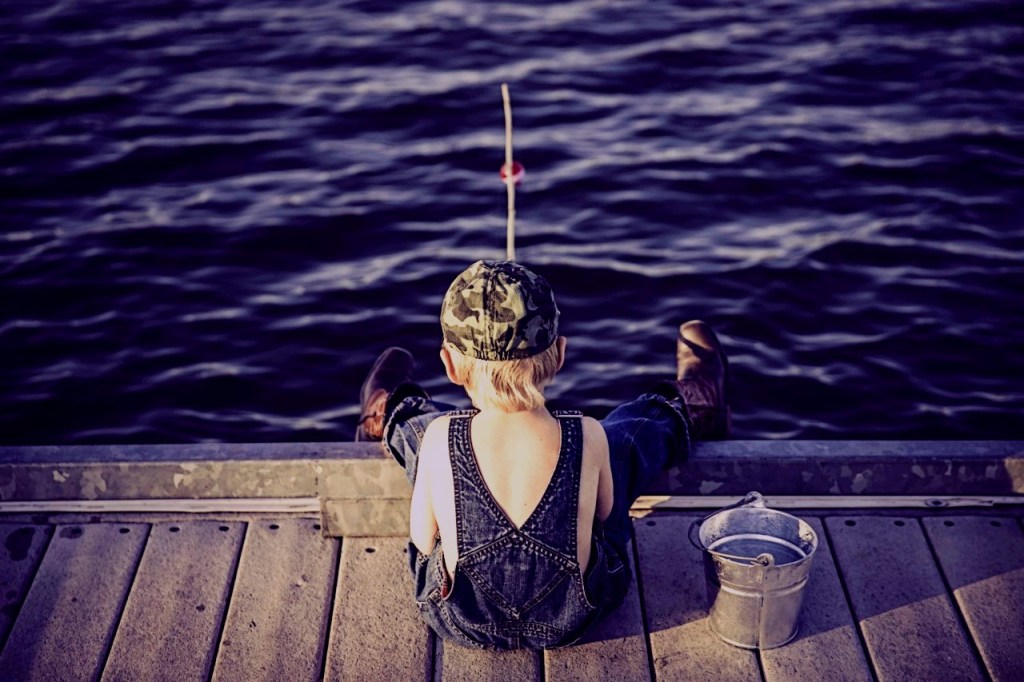
It was the first real warm Sunday in April. The Boy thought fish might rise and bite today. The crick was cold and the fish would never bite till the first warm day in April. The preacher had warned about fishing on the Sabbath, but the Boy couldn’t get away from his chores any other day. He sometimes couldn’t even make time on a Sunday. He chuckled about the preacher, and about the image of an ox in a ditch. He wondered if an ox could pull a plow like a mule did.

He went to the barn to retrieve his pole and tackle, and the Hills Brothers coffee can filled with black worms, brown leaves, and black dirt.. The boy wished he had sifted the rafts of the branches for pennywinkles but he hadn’t had time. He also wished he had some catalpa worms or drone bee larvae, but he supposed he would have to make do with what he had.

The cane rested on the seal over the barn door. Some kept their cane pole leaning in a corner, but the Boy knew better. They were best lain flat so as not to warp. He had put up a strong and supple one last summer to cure, and it was ready now, the color of clover honey and almost 10 feet long.

The boy crossed the terraced field and made his way down to the waters.

The boy knew that the crick widened as it flowed, and the eddied pools that waited half a mile away held bream (brim,) blue on the back and red on the belly. He could taste them as surely as he thought of them. He could taste the flour, and the pepper, and the lard, and the corn dodgers the Mother spooned into the crackling grease.

The maternal Uncle taught the boy where and how to fish. And although he didn’t mind fishing alone, he missed the Uncle. The Uncle passed last spring. The Boy could still hear the Uncle cough and still see the bloody sputum on the white handkerchief he kept in the bib of his Duck Head overalls. The Boy didn’t mind fishing alone, but he missed the Uncle, even though he was glad he had finally stopped coughing.

The Boy’s Father didn’t fish and he didn’t cough, but he had died anyway,  just 3 months ago. He didn’t suffer like the Uncle. “Time and chance,” the Boy thought.  He was eating his tomato soup and cornbread and just fell from his chair, dead before he hit the plank floor.  The doctor called it a widow maker, a heart failure, the same doctor who couldn’t even stop a cough. Sometimes the boy thought physicians and preachers were just guessing.

But the Uncle had taught the Boy to fish and the Father had taught the boy to be small, silent … invisible, cause you he was less likely to beat what he didn’t notice.  And now they both were gone and the Boy had learned all his lessons well.

The Boy extended the cane and dipped the struggling worm in the eddy. He employed neither bobber nor weight, but used the cane’s tip to move the bait up and down and ease it closer to the opposing bank.  The line swirled and then went taut. The Boy set the hook and eased the struggling fish out of the water and worked the cane under his right arm and slid his catch back to his waiting hands.

The Boy gently removed the barbed hook and marveled at the colors he saw, every slant of light a revelation. Then he slid the now-subdued fish back into the stream.  Though he didn’t know why, the Uncle had always freed the first, and the Boy knew he would always do the same. Then the boy began to cry as he had not done since he learned to be small, silent, and invisible, and the tears flowed like the waters of that mountain stream.


Alan Caldwell is a veteran teacher and a new author. He has recently been published in Southern Gothic Creations, Deepsouth Magazine, The Backwoodsman Magazine, and oc87 Recovery Diaries.


“Thy Kingdom Come” Short Story by B. Craig Grafton

"Thy Kingdom Come" Fiction by B. Craig Grafton

“How much farther Grandpa?”

“It should be up ahead just a little ways. Not too much farther.”

He wondered if his grandfather could remember. If they were even on the right road at all. After all, his grandfather was eighty eight and getting forgetful at times.

He had the job now of looking after his grandfather since his father had passed away last month.  He had driven all the way down here from Hoffman Estates to this god forsaken rural community in west central Illinois that mockingly called itself Forgottonia, nothing but dried up little towns and field after field of corn and beans. He had  gotten his grandfather from the Happy Endings Nursing home, and now was taking him out, per his request, for a nostalgic trip down memory lane, a ride in the country to see the old family farm where he had grown up. He had never been there so he was relying on his grandfather to show him the way.

They had driven for quite some distance in silence when his grandfather suddenly spoke up and said,  “Stop. Stop here please.”

He brought the car to a stop in the middle of nowhere on a dusty gravel road.

“Grandpa there’s nothing but that old abandoned building over there. That can’t be where you grew up. That doesn’t even look like a farm to me.”

“It’s not. That’s where I went to school.”

“In that little dilapidated old falling down building? You’re kidding me.”

“Graduated eighth grade there.”

He knew his grandfather had never graduated high school. There was no need to then if one was going to be a farmer and his grandfather had been one all his life. When he got too old to farm his father had tried to get him to come live with him in Barrington. But Grandpa refused. Consequently his father trekked down here to  ‘Forgottonia’ once a month to visit him and now that responsibility fell on him.

Do you want to get out and go take a look Grandpa.”  He asked more out of politeness than practicality for he knew his grandfather would say no since he was semi mobile and they hadn’t brought his wheelchair.

No, that’s okay.”

Well tell me about it then Grandpa.” He knew his grandfather was dying to tell him. After all that was the whole purpose of this trip to begin with, to harken back. 

Okay, I will,” he said with a smile upon his face. “See how the school is oblong shaped. See the  windows there only being on the east side, the whole east side. There’s no windows on the west. That’s to avoid the afternoon sun making the place too hot. Morning sun on the east side wasn’t so intense and let in enough light so we could do our lessons.”

Well that makes sense,” he commented, beginning to take an interest in this now.  “How many kids went there Grandpa?”

“Forty give or take a few.  First through eighth grades.”

What’s that metal thing sticking up out of the ground there?”  he asked, pointing to it.

“Oh that’s the pump. That’s where we got our water. Drank it straight out of the ground. Had a long wooden trough in front of it to prevent a mud puddle from forming under the spout.”

“You mean you didn’t have running water inside back then?”

“Yep. That’s exactly what I mean.  Didn’t have flush toilets either. Just kind of had outhouses inside the schoolhouse.”

“You’re putting me on Grandpa.”

“No I’m not. When you came in the front door you entered the cloak room where we hung our coats and left our muddy boots but off to the right was the boys room and off to the left the girls. No flush toilet. No wash sink either. Just had a stool over a hole in the ground. Teacher used to dump chemicals down it every so often to keep the stink down.”

“Suppose you didn’t have electricity back then either huh Grandpa.”

“Yep. Didn’t have central heat back then either. Had a wood burning stove. The back room of the school was the woodshed. Kind of got a little cold in the winter at times. Had to keep your coat on all day.”

His curiosity was definitely aroused now. He wanted to see for himself so he said, “Mind if I get out and go  take a look around and in the window Grandpa.”

“Don’t believe me do ya?”

“I do. I just want to see that’s all.”

“Okay go ahead then.”

He got out of the car and entered the school yard.

“There used to be a couple of swing sets and a slide over there,” his grandfather hollered  pointing to the east side of the school.

“Where there’s none here now,” he hollered back.

“You’ll see the old footings where they used to be. Take a look.”

He went to the old well first and tried the pump handle. It was frozen in time and didn’t move. The ten foot long or so wooden trough was there just like his grandfather said, rotting away. It was hard for him to believe they drank unfiltered water straight from the ground. No government regulations back then evidently.

He saw the concrete footings that once had anchored the swings and slide in place. Someone must have stolen them for scrap metal, he thought.

He went up to the window and pressed his nose against it.  There was nothing in there. Whatever had been there was long gone. Probably someone had stolen all the old desks too, he thought and sold them as antiques. He could see a hole in the wall  where the smoke stack used to be. To the front he could see the open door that led to the cloak room but he couldn’t see the doors to the inside outhouses. He wanted to see them.

He went around to the back of the building first though to the door to the back room. It was falling off its hinges and as he swung it open it fell completely off. There in the back were some old broken damaged desks that evidently no one thought worth stealing. The kind that had an inkwell in them, no ball point pens back then. The kind where one was attached to the one in front of it so that the boy behind the girl could stick her pigtails in his inkwell.  There was also a pile of cut wood. He could tell varmints had been living in it; their dried droppings were everywhere. He went around to the front door, tried it, but it didn’t budge. Oh well forget it. He’d seen enough. He better get going and take Grandpa to his old farm house.

“Well it was just like you said Grandpa,” he informed him as he got in the car and started off down the road to yesteryear.

“It was called Kingdom School,” his grandfather announced.

“Kingdom? Why that Grandpa?” He knew his grandfather was having a good time and so was he now.

“The original man that owned the land here back in the 1830’s was a some kind of disposed or deposed royalty from England. So he came to this country to establish his own little kingdom right here in Illinois.  Story is that he actually called his farm his ‘Kingdom.’ Back in those days there were no public school systems but everyone wanted a school and since he owned most of the land in the center of the township he agreed to give up that little tract there for a schoolhouse since it was centrally located. It pained him though to part with part of his ‘Kingdom.’ So he put a clause in the deed that if the ground wasn’t used as school, it would revert back to him, or his heirs, if he was dead.  The locals jokingly named the school  Kingdom since it was located in his ‘Kingdom’. The school was closed back in the fifties when they started busing the kids to school in town here. Anyway the school was supposed to go back to this supposed land baron. Course he had been dead some seventy years by then and nobody knew who his heirs were. That’s why the school’s just sat there and fallen apart. Nobody’s ever come forth claiming to be an heir.”

They rode in silence for a while.

“How much further Grandpa?’

“Not much.  I used to walk to school everyday. There was no bus service back then you know.”

He drove on a ways then,  “Slow down, it’s just up ahead.”

“I don’t see anything Grandpa. You sure?”

“Slow down. Stop right here at the intersection.’  

He did as ordered. Again they were all alone out there in the middle of nowhere by themselves.

“There’s just a cornfield here Grandpa.”

“Well it was here. Right on the southeast corner here. That big corporate farm I sold out to must have torn everything down. Aren’t many family farms left any more.”

The grandfather wiped his eyes, took in and blew out a deep breath, straightened himself upright. “Well we might as well go back now.”

They got back to the nursing home. He helped his grandfather inside.

“Grandpa, I had a good time today but I better get going now. I got a long drive ahead of me. I’ll try to get back sooner next time.”

“Your father came once a month you know.”

“Yah I know but he never took you out to see the old place did he?”

“No, he thought it would be too hard on me. Thank you. I really do appreciate you doing that for me.”

”Oh you’re more than welcome Grandpa.”

“You know next time I think I’ll have you wheel me up to the window there and help me stand up so I can take a look inside. Okay?”

“Okay Grandpa we’ll do that,” He went up to his grandfather and gave him a big hug, fighting back the  tears welling up inside him.

The next time came one month to the day. They went to the school again and his grandfather got his look inside. He died the next

He cremated his grandfather per his prearranged instructions and buried his ashes next to those of his grandmother in the little burg there. Didn’t bury all of them though. No he held some back and scattered them at  Kingdom School. Did that just by himself as he said goodbye to his Grandfather.


Mr. Grafton is a retired attorney. His books have been published by Two Guns Publishing.