As of October 1, 2023, RFM is now publishing its stories and poems to its Facebook/Meta account at the same time the story/poem is published on the website. We are already publishing simultaneously to Mastodon and Tumblr. Follow us on any of these accounts to receive our moving and beautiful stores as soon as they appear on the main website.
Also, don’t forget that RFM is open to submissions of stories and poems about rural life in the US or around the world 24/7/365. Visit our submissions page for more information. There is no pay other than the publication credit and exposure, but we strive to reach a worldwide audience and to give our contributors as much exposure as possible.
—remembering ¬¬a farm foreclosure.
For Darrell Ringer, 1953-93
“Thank you,” he said, while the black eyes
drilled from the shadow of his ballcap
as we stood in the sunbaked square
of a Kansas town where we’d just rallied
against such business as no one with honor
should dare to defend—then drove
over pocked macadam, between shoulders
cascading with purple wildflowers, wheat
turning green to gold—the field after field,
the rich carpet called forth, turned over,
culled with such care that I, for one,
don’t have blisters enough to imagine—
and beneath it the black earth seethes
with world-feeding life. Then we arrived
at his farm. Beautiful, I’d often thought,
this life, how the green soybean hug
at the earth and alfalfa explodes into pink
and animals trudge toward us in the slow-
motion rhythm of paddock-bound shadows
until their heads hike up with quick interest
when haybales are pitched with a thud
between the tarnished steel rails of the crib.
But the earth and its moods are uncertain,
despite the disconsolate pleading it gets
when sleep doesn’t come, that a storm
please pass by without flooding at harvest;
that a drought not set in, the wind not whisk
topsoil to a powder-dry ash floating off
in a glitter-filled cloud to the red
of a summer-long sun. And of course
words are addressed to the Notice of Debt
that’s attached like a leech to the title,
which is after all a mere sheet of paper
approved by the courts but without
the least smell of wet dirt to grace it.
And of all he foresaw or was faced with,
what he couldn’t agree to was losing this land
without even a fight. They might take it all,
but the fight, at least—they couldn’t take that.
Of David Salner’s sixth poetry collection, John Skoyles, Ploughshares poetry editor, said: “The Green Vault Heist is not only a beautiful book, it is great company.” Salner’s debut novel, A Place to Hide, won first place for 1900s historical fiction from Next Generation Indie Book Awards. This poem is reprinted from The Green Vault Heist. Both books are available on amazon or from the author dsalner@hotmail.com
Please share this to give it maximum distribution.
Rural Fiction Magazine (RFM) would like to publish more writers from around the world, regardless of your country of origin.
I am seeking short fiction and poetry and non-fiction articles on topics of interest to a rural audience in any nation, but I am open to more than just fiction and poetry. I am also open to short plays, folklore, legends, tall tales, essays, etc. I am open to almost all genres such as fantasy, science-fiction, horror, mainstream, literary, romance, etc, so long as they are connected to rural life and/or have a rural setting.
Your work must be in English. It can a translation from your native language, but it must be in English, which is spoken around the globe and gives the work and author substantial worldwide exposure.
Please note that there is no pay for this other than a publication credit and exposure to the American and English markets. However, all rights remain with the author.
Currently, RFM is publishing material within a few weeks of acceptance, though this may vary depending on the number of submissions.
Please re-post or share this announcement to give it maximum exposure.
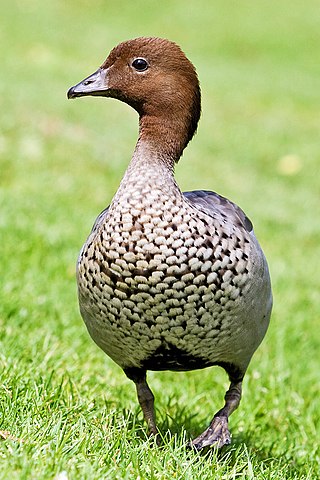
Australian Wood Duck. Photo by Fir0002/Flagstaffotos
Strathfieldsaye, Dja Dja Wurrung Country
i.
creekside—
river red gums
creak

ii.
perched
on a river red gum branch—
an Aussie wood duck
goes gnaarrk…

iii.
amidst birdsongs—
Eastern banjo frogs
resonate

iv.
I walk along this creek—
all fellow walkers
say hi
Ginko is the Japanese term for a haiku walk, which involves going on a walk to find inspiration for haiku writing.
Michael Leach is an award-winning Australian poet and academic at Monash University School of Rural Health. Michael’s poems reside in various outlets and his two books: Chronicity (MPU, 2020) and Natural Philosophies (RWP, 2022). Michael lives on unceded Dja Dja Wurrung Country and acknowledges the traditional custodians of the land.
Please share this to give it maximum distribution. Our contributors’ only pay is exposure.
At the Opera House, the spectral shadows march
militantly through the sunken Sokal gymnasium,
chanting “a strong mind in a strong body”,
while dining in smoky air, from a ghostly kitchen.

Above the basement, on the second floor,
Blind Boone tickles the mystic ivories,
summoning the eldritch  tornado,
while the shadowy dancers on the third floor
ballroom flit and skim across the hardwood floors,
a chilling inch above the sawdust.
They are wraiths to a worldly audience,
ephemeral in history, transparently
strolling through the burnt-out shell of the Opera house;

At night sleeping with the ghosts at the Midland Railroad Hotel,
I  hear echoes of whispery voices in the carriage
of the Butterfield Overland Express,
the tinny reverberations of the player piano,
and the phantasmal banjo of the medicine show.

But I awake to the whistle and grumbles
of the Union Pacific Railroad outside my window.
The train no longer stops for anyone,
not even me, a sojourner amidst
the phantoms, manes and lemures,
crowding the train tracks and the sidewalks
in front of the Wilson Czech Opera House.
The Saline River
Graphite nails scratch the blue slate skies  - the wild cedar grows.
Limestone posts ghost the Smoky Hills- burnt  white by sun.
The river brown, sluggish- like mud swallows nesting.
In sunburnt bison pastures - herefords dot the smoky hills.
Dead cottonwoods choke the dirty brown of the Saline River.
The creeks are dry twigs - spilling drought into the land.
Baseball in Thunderstorm
Sun setting to the west where dark blankets lie upon the land.
Wind turbines reflecting like white spotlights, bubbling up,
then flattening out in the darkling sky
like a white ball slamming into brown leather.
The American flag stiff and straight
as the front moves through the baseball field.
Wind gusts throws red dirt into our eyes, coats our throats,
and explodes the stadium lights in left field.
The ball gets lost in a scramble of dirt, players,
and umpires, between shortstop and second base.
When it settles with a fist thrown down, and a slam of rain,
Players run for yellow buses, and parents to dusty pickup trucks.
God’s Handmaiden
The hand, warm and calloused
gently grasped my small fingers,
stroking them in a gentle beat
to the sounds of the pastor's voice
sending love
coursing through my body.

Those hands could dig a hole
in the garden, pick the mulberries
and pears, take the apricots
and make jam.
Sitting with her snapping beans
looking out the picture window
at the trumpet vine blooming orange
along the porch posts.

Later I’d eat the green beans with bacon
and have a dish of ice cream with strawberries.
Her still voice whispers prayers
between the line dried sheets
and the basket quilt, snuggling me asleep.
A Baseball Lunch
Thursday,
5:30pm,
meeting daddy for lunch,
where I’ll tell him about the baseball game in Lucas.

I’ll ask,

“Did you play on that field?”

I’ll explain my confusion about errors
and did they have a 10 run rule?

“Tell me again about the time Satchel Page played in Sylvan Grove.

 Did you get to see him play?”

I brought you my flowers to show from my work.
The ham and cheese sandwich,
bought at the home convenience store is soggy.

“I don’t think you would like it”.

“ I’d leave the flowers for you
 but I’m afraid the wind would blow them away.”

Plastic fields of flowers.
Polished granite stones stand strong.
Spring wheat sways in wind.
Barbara A Meier( Pseudonym) is a writer living in Lincoln, KS. She has been published in The Poeming Pigeon, Pure Slush, Metonym, Young Ravens Literary Review, and The Bangor Literary Journal.
She has three chapbooks published: “Wildfire LAL 6”, from Ghost City Press, “Getting Through Gold Beach”, from Writing Knights Press, and “Sylvan Grove”, from The Poetry Box. She loves all things ancient. She works in a second-grade classroom and in her free time she likes to drive the dirt roads around Lincoln.
Please share this to give it maximum distribution. Our contributors’ only pay is exposure.