
Category Archives: Stories

“The Fish” Short Story by R. Wayne Gray

R. Wayne Gray is a Vermont-based writer who has published in a wide range of genres and formats. His short fiction has recently appeared in Cosmic Horror Monthly, Trembling With Fear, and the anthologies 666 Dark Drabbles and Bloody Good Horror.

As he glided around the river bend, Scott’s eyes widened in surprise. It wasn’t the swamp stretching out before him, rotting wooden sentinels standing guard over brackish water, a glut of sticks marking a distant beaver dam. The still lake was certainly impressive in a decaying sort of way, and Scott was already calculating the spots where large fish were laying wait for him.

It was the lone structure clinging to the shore along the left side of the expanse that was the most surprising: a barely-recognizable cabin. While it had not sheltered man, nor probably beast, for decades, it was still the first hint of humanity that Scott in his kayak had seen for the past hour or more. Like the swamp, its fallen-in roof and ragged exterior suggested that it had been left on its own, abandoned, for a long, long time.

Scott paddled up to a pair of stumps hunkering in the water about 20 yards off-shore from the cabin. Just beyond, the water of the swamp turned starkly darker, a sure sign of depth and, Scott hoped, large catfish or some other scaly monster. As he flipped open the kayak’s forward hatch and started baiting up his pole, a familiar shape drew his eye to the nearest stump.

It rested amid the sticks and other debris that had been building against the stump for years, and at first Scott thought it was just another stick and his eyes playing tricks on him. He paddled over for a closer look. What he had seen had not been an illusion, but the outline of a small fishing rod and reel, its thin pole nearly indistinguishable amongst the driftwood ensnarled it.

Scott inched closer to the pile. He leaned out over the brackish water, the kayak tilting precariously, one edge sinking lower and lower in the water as Scott shifted his weight towards the prize. As his face got closer to the blackness, Scott could smell decay, decades of rot and stagnation. The point between upright and overturned was reached, surpassed, and Scott was going over into the black water. Flailing in panic, his fingers hooked onto a bit of driftwood, and he pulled himself closer to the stump, the kayak once again upright and buoyant.

It took a few minutes of untangling, but he finally managed to free the pole from the knot of bleached wood. It wasn’t much of a prize. For one thing, it was a kid’s pole, barely larger than a toy. The rod itself was missing an eye and was bent slightly at the tip. The reel was mostly rust, traces of red paint and a name, Fishin’ Pal, barely legible on it. Scott tried to turn the handle on it. It did give, grudgingly, with an unhealthy rasping shriek. The line was still intact though, running from the reel, up the rod, and into the dark depths beyond the stump.

Scott tugged on the pole, but the line still held fast to whatever it had latched onto years before. The kayak slid slowly away from the stump and towards the dark water as Scott tried to free the line, but it held firm.

“Junk,” Scott said, his voice foreign in the dead stillness of the swamp. He tossed the pole towards the dark waters. It arced, turning end over end, before slicing the surface and sinking. And scaring any fish that might have been waiting, Scott thought with a sigh. He grabbed his paddle and started out across the swamp to find another spot to try his luck.

He didn’t get very far. Two, three kayak lengths, and all of a sudden Scott felt drag on the boat. His forward momentum slowed, slowed, and then stopped completely.

Scott turned in the kayak. Perhaps one of the dead branches had grabbed him? But it wasn’t a branch. The line from the old fishing pole had caught on the stern of the kayak when Scott had tossed the pole away. He paddled a few strokes. The line grew taut, but did not give. Scott paddled a little harder. Still the line held, like an invisible hand clutching the end of the boat, holding it fast to one spot.

Scott turned and snapped the paddle into place on the side of the kayak. He drew his knife from its belt sheath and, turning to the back of the boat, began carefully edging out along it towards the tangled line.

The boat rocked in protest, but held fairly steady as Scott inched towards the fishing line. Kneeling in the cockpit, then one knee out, he adjusted his balance as the kayak rolled from side to side. Stretching, Scott grabbed the line with one hand, triumphantly, and was reaching out the other, knife grasped, when the line gave three quick tugs.

Scott froze in disbelief, waiting. The line lightly slackened, then slowly grew tauter, twice. Tug. Tug. Scott laughed, still not quite believing what he was seeing. Somehow, some way, after sitting idle and waiting for decades, the Fishin’ Pal had managed to catch itself a fish.

Scott imagined the scene as it had unfolded in the water. The line, hook intact, tangled in a glut of wooden debris and mud on the bottom. He on the surface, freeing the pole, moving it just enough to wiggle the hook, a dancing enticement to some monster slowly swimming by…

Tug.

Tug.

Still grasping the line with one hand, Scott pulled on it. It cut slightly into his palm, but the kayak started to pivot towards where the line sliced into the water. Scott slid back into the cockpit of the kayak where he was better able to work the fish. All the while he could feel the line lazily tugging back, as if it was testing him.

He set the knife on the floor of the cockpit. Grabbing the line with both hands, Scott slowly pulled on it. Whatever it was, it was heavy, and for a second Scott thought that he had only managed to free the same log that some kid fishing two decades earlier had snagged.

Hand over hand the mass slid through the water towards the kayak. As line started pooling in the cockpit, Scot’s heart sank. No resistance at all. It had to be a log, a large branch, a…

As if awakened, the fish suddenly surged away from the kayak, the line burning into Scott’s hands as it slid through them. Reflexively, he closed his grip on the line, wincing as the line sliced deeper into his skin and drew blood. It worked though. For a few seconds, Scott and the fish had themselves a stalemate, each on the end of a taut, unyielding length of line.

The fish started to weave through the water, first to the left, then the right, the line making a ssssst, ssssst sound as it cut the surface. The kayak bobbed and spun. Ignoring the pain in his palms, Scott braced himself in the kayak’s cockpit and started once again to drag the fish in.

Visibility in the swamp was terrible to begin with, and Scott and the fish weren’t helping it with their battle. Still, Scott kept his eyes on the spot where the line entered the water, eager for a first glimpse of his prey.

When the glimpse finally came, Scott still wasn’t sure what he was looking at. He expected the flattened head and antennae of a catfish, or the familiar muscular markings of a large-mouth bass. Instead he got… flashes of color? Whites and reds, a touch of blue or two. It was hard to make out in the murk. The fish fought mightily, twisting and turning, colors flashing frantically. Scott saw eyes, eagerly seeking their first glimpse of him.

And then it was under the boat, so fast that Scott didn’t have time to adjust to it. The line went tight against the edge of the cockpit, pulling hard as Scott’s hands kept a tight grip on it. With a final wrenching jerk of the line, the kayak rolled over into the water, scattering Scott and his tackle over the dark surface of the swamp. Scott was under, flailing at the water, seeking the surface. He finally saw sky and swam towards it, the fishing line tangling itself around his legs and torso.

Scott broke the surface and breathed deeply. The kayak lay on its side a few feet away, partially submerged. Yellow bobbers danced in the rippled water all around Scott and the swamped boat. Scott swore to himself. All that tackle, gone. Big fish, gone. Himself, wet and more than a little pissed.

He started swimming towards the kayak, his arms struggling with the motion. The fishing line. He was completely tangled in it. Scott grabbed for the knife on his belt, but the sheath was empty. The knife had been on the floor of the kayak’s cockpit. He mentally added it to the list of items that were now slowly sinking into the mud an unknown number of feet below him.

Splashing around like a wounded duck, Scott finally made it to the kayak and reached out his hand for it… and stopped. The line held him secure, a good foot from the boat. He tried paddling harder, but this only tightened the line wrapped around him.

And then the boat started to recede, as Scott was slowly, steadily pulled backwards.

Scott laughed. Well, this would make for an interesting story when he got back home. He swam against the pull of the line, but still he was dragged backwards. He felt the first twinge of fear and swam harder, but the line continued its casual drag. Only the angle had changed, sharper, deeper.

“Help!” Scott yelled, but his cry only echoed off the dilapidated structure, the far edges of the swamp. The line was straight down, and Scott was no longer trying for the kayak, he was trying to stay on the surface. Inch by inch, his shoulders, neck, and head were dragged down into the water. He drew a last breath and blinked as water overtook the sky.

Underwater. He struggled with the line, desperately trying to free himself. He was dragged deeper, deeper, his lungs clutching their last breath tightly. Out of the murky depths, Scott’s adversary came into focus.

It had once been a boy, red and white striped shirt, little blue shoes. It gripped the pole, his pole, with a joyful determination known to anyone on the verge of landing their first big catch. Scott heard the rasp of the reel echo in the dark waters around him. Scott had never been one for catch and release. As unconsciousness took him, his last glimpse of the ruined, rotting smile told him that neither was the child.


R. Wayne Gray is a Vermont-based writer who has published in a wide range of genres and formats. His short fiction has recently appeared in Cosmic Horror Monthly, Trembling With Fear, and the anthologies 666 Dark Drabbles and Bloody Good Horror.


If you would like to be part of the Rural Fiction Magazine family, follow this link to the submissions guidelines. If you like contemporary dark fiction and poetry, you may also want to check out The Chamber Magazine.

Please repost this to give it maximum distribution. 

“Blame” Short Story by Klaus Nannestad

"Blame" Short Story by Klaus Nannestad: Klaus Nannestad is a media advisor living in Victoria, Australia. He has previously had short stories feature in Theme of Absence, Defenestration, Little Old Lady Comedy and Darkfire Magazine.

Ron Wesselmann, Wesselmann’s Corner Store owner

“I just feel for his folks, I do. Them good people. See them at church every Sunday. Well, at least did before it happened. Haven’t seen them since.

“But no, them just good solid townsfolk. Hope they get through this all right. Hope people don’t blame them for what David did.

“I’m sure they would have raised him right. I mean Culla, his older brother, he turned out fine. Granted, I ain’t had much to do with him now he’s moved out of town, though I ain’t never heard of anyone with an issue with him. But I guess sometimes good trees can bear bad fruit, right?

“That’s really the only way I can explain it. Now, was there anything I can get you while you in here? Tammy, my wife, she bakes the pies herself, best in the state I can tell you that much.”

Susan Knowles, former teacher at St Johns College (now retired)

“I’ve been thinking a lot about whether we should have seen it in him, about whether there was something we could have done to help him. I know not a lot of people will have any sympathy for him, but you don’t do something like that unless your seriously damaged.

“So, I suppose I’ve been trying to rack my mind to understand if that damage occurred when he was attending St Johns. If he was already on this path when he was with us, I didn’t notice, but maybe I should have. Maybe if I had noticed we could have gotten him the help he needed or done something. I don’t know. It’s hard to see a situation like this and not think someone could have intervened.

“But hard as I’ve been trying to remember, I don’t think David was too different to the other students I taught. I would have taught hundreds in my time at St Johns. Some of them you worry about. David wasn’t one of them, but he was… I don’t know.

“Maybe looking back with what I know now makes gives a sinister tone to my memories. He wasn’t a bad student, like I said, I’ve had far worse. But there were times when he seemed detached. Or maybe that’s not the right word. David was bright enough but sometimes he seemed apathetic. Not distracted, like a lot of kids are at that age, but just uncaring – not really concerned about anything academic or social, or anything really.

“Maybe that should have worried me more than it did. But he was never particularly difficult or disruptive or caused any trouble. Except, of course, for that one time with Dexter Martin.”

Walker Thomas, David’s friend

“Yeah, I never knew what Dexter did to piss David off so bad. David was always a target at school. The others knew I’d fight back, so when they said stuff about me, they did it behind my back. But with David they knew they could say and do just about anything to him and he wouldn’t retaliate. Course, they’re the same folk who are now saying David was always a bad kind. They’re full of it though, they were much worse – gave David all kind of grief.

“Dexter though, never saw him do anything towards David. He was a couple of years below us, and even though we were kind of the punching bags for a lot of the other kids, it tended to come from kids who were in our class or occasionally from the years above.

“Maybe Dexter said or did something fairly minor to David and that just happened to be the straw that broke the camel’s back. You can only keep absorbing that kind of crap for so long, sooner or later you’re going to snap. Maybe Dexter just happened to be there at the wrong time.

“I didn’t see it start, but I tell you what, it was no mean feat pulling David off Dexter. I was always a few inches taller than David, even back then, but he was surprisingly strong, at least, he was when he was angry, and when I hauled him off Dexter he was seething. It was lucky for Dexter I was there though, David seemed pretty keen on turning his face to jelly.

“He never told me what Dexter did to provoke him. I remember asking him point blank why he had been so hell bent on breaking his knuckles on Dexter’s face. He just told me to forget about it. I always wondered though if it was something to do with Maisie though. David always had a crush on her, and I think around then she and Dexter had a thing going. I remember David telling me he was planning to ask her out. I tried to talk him out of it without being as blunt as telling him she would laugh it his face then probably joke about it with all her friends. Pretty sure David never asked her, so I must’ve gotten the message across.

“We didn’t see each other much after school. I was working nights at the factory while he was working days at the abattoir, so we just kind of drifted apart a little. The odd time I did see him around town though he was still same old David. Still a friend. People might think I’m mad for saying that after all that’s happened, but screw them, they don’t know shit.”

Odette Wells, mother of Carson Wells (victim #1).

“Don’t listen to a word that Thomas boy said. He was always trouble. Once caught him slashing the tyres of a car near the corner store. Little devil didn’t even know whose car it was. That was just his idea of fun. I would have reported him to sheriff, but I didn’t out of sympathy to his mother. You know her husband died from an infection – was the result of some kind of accident he had in the factory. I didn’t want to create more trouble for her.

“That was some ten years ago now, but I sure don’t believe that Thomas boy has changed a jot, he’s just gotten bigger.

“What he said about David is a load of rubbish too. I always said he and David was trouble, didn’t I, Ron. Never liked Carson being round those boys, but in a small town like this you can’t really do much about that.

“You know, I wish David hadn’t killed himself before the police got there. Would have liked to see him cook on the electric chair. Don’t look at me like that, you heard what he did to my boy, the chair would have been the least he deserved, and you could have bet I would be there to see him fry.”

Earl Bailey, On the Road Automotive Repairs owner

“Yeah, David had been apprenticing here for a couple of months. Quick learner you know, would’ve been a solid mechanic.

“He told me he couldn’t stand the smell of the abattoir, said the stench of pig carcass lingered in his nose even after he got home. Guess after that, going home with the smell of oil in your nose ain’t too bad.

“I wasn’t sure of him when I first took him on. There was times when I would tell him something and I wasn’t really sure it was getting through to him. Had that kind of zoned out stare that some people have – usually older folk mind you. But after a couple of weeks, I realised that what I was telling him was getting through, so I started giving him a few more responsibilities, even let him lock up at the end of the day a couple of times that final week.

“What can I say? I just didn’t see it in him. Maybe I’m an old fool, but I… I don’t know. David could sometimes get peoples hackles up. He would sometimes say things that most normal folk would see but would have the good sense not to say anything about. I don’t think it was David was intentionally being impolite, but some people took it that way.

“Still, even if he was, it’s a hell of a long way to go from being impolite to skinning folk and whatever other heinous stuff he supposedly did. You know I heard he hung’em on meat hooks he stole from the abattoir. Hooked ‘em just below the collar bone and left them their hanging in that old barn whilst they was still alive.

“That’s what I heard anyway. Me, I’m not too sure of it. That just doesn’t line up with the David I knew. Given, there were folk who knew him better, but the last three months I would have seen him as much as anyone, and I’m meant to believe during that time he’s going off at the end of the day and cutting strips of skin off some poor innocent folks hangin’ in his uncle’s old barn.

“I should probably stop runnin’ my mouth before it gets me in any trouble. Wouldn’t be the first time that happened and it won’t be the last. I’m just saying, I didn’t see it in him.”

Kip Driscoll, Royal’s Service Station attendant

“I’m sorry sir, I don’t know if I got a lot to say. All I know I already told the sheriff. Helped him as much as I could, but I don’t think I that was all that much.

“Yeah, I guess I was the last one to see David alive. That’s what the sheriff said anyways. Kind of makes me feel a little uncomfortable if I’m honest with you sir.

“Can’t say I really knew him all that well, although my sister, Maisie, she was in the same class as him at school, maybe you should talk to her about him. Actually, she probably would rather you not. Forget I mentioned it.

“I could always tell when it was David drivin’ in to get some fuel though. His truck always made this coughing sound when it rumbled in. He said he was going to get Mr. Bailey to have a look at it now he was apprenticing for him. Said he reckoned it was something wrong with the exhaust. Guess he never got around to it though.

“Yeah, he came in here on Sunday. Didn’t have much to say. He almost always got some licorice with his fuel, but this time he just paid for the fuel. Paid over actually. Told me to keep the change for myself. Guess he knew what he was going to do, knew he didn’t need no money where he was going.

“The sheriff was saying that he probably used the truck to cart the victims off to the barn. They didn’t find any blood or nothin’ in the back, but they reckon he might have wrapped ‘em in a tarp and driven them off there while they were unconscious or bound. Gives me the creeps to think there could have been times when he came in and filled up here with someone lying in the back. Sheriff said I should try not to think about that, but it’s hard not to.

“One thing I have been wonderin’ is why I wasn’t one of them. The people he did all those things to, the sheriff was saying he seemed to just take people at random, that he just had passing connections to the victims and that they hadn’t actually wronged him in anyway.

“And that gets me thinking. There was nights when he came in here to fill up and it was just me manning the station. If he wanted to grab someone without being seen than I would have been the perfect target – late at night, on the edge of town, certainly wouldn’t have been any witnesses. But I guess there isn’t really anyway to know what someone who does something like that is thinking, is there?

“There isn’t really a lot more I can say though. I should probably get back to the counter sir.”

Lyall Beckett, Harris Meats Abattoir manager

“We get a lot of boys come through here. Most only last a few months, if that. This generation doesn’t really have the stomach for hard work. They think showing up is enough. They never had that work ethic knocked into them like we did.

“I didn’t have a whole heap to do with David, which probably means he was one of the better workers. Have you spoken to Earl? He could probably tell you more.

“You have? Well, I wouldn’t really have much to add.

“Only thing of note was one time we did think he was stealing from us. Yeah, we thought he had taken a bunch of the meat hooks. When I asked him about it, he looked guilty as hell. At first, he said he didn’t know anything about what happened to them. He wasn’t a good liar, but he was determined to avoid telling the truth until I let him know we’d have to fire him if he didn’t own up. That’s when he let it slip that Walker Thomas had stolen them. David didn’t want to tell me because Walker was his friend. I suggested he should find some better friends, but I don’t think he ever took my advice. “No, we never reported Walker for it. Pretty sure he just climbed in though one of the windows, it’s not exactly Fort Knox here. But I didn’t think reporting it would do much good, you know, not with Walker’s uncle being the sheriff and all.”


Klaus Nannestad is a media advisor living in Victoria, Australia. He has previously had short stories feature in Theme of Absence, Defenestration, Little Old Lady Comedy and Darkfire Magazine.


If you would like to be part of the Rural Fiction Magazine family, follow this link to the submissions guidelines. If you like contemporary dark fiction and poetry, you may also want to check out The Chamber Magazine.

Please repost this to give it maximum distribution. 
“Southern Visions” Poem by Thomas White

Thomas White has a triple identity: speculative fiction writer, poet, and essayist. He blends horror, noir, gothic, satire and sci-fi with philosophical and theological themes. A Belgium-based magazine, the Sci-Phi Journal, honored by the European Science Fiction Society with its Hall of Fame Award for Best SF Magazine, published one of Mr. White's stories.
His other poems, fiction, and essays have appeared in The Chamber Magazine, as well as in online and print literary journals and magazines in Australia, the United States, Canada, and the United Kingdom. He is also a Wiley-Blackwell Journal author who has contributed essays to various nonliterary journals on topics ranging from atheism, Artificial Intelligence, the meaning of evil, Plato, The Matrix, and reality as a computer simulation. In addition, he has presented his essays to the West Chester University Poetry Conference (West Chester, Pennsylvania), as well as read his poetry on Australian radio.
There are strange visions in the
Bible Belt, where my grandmother
Witnessed Ezekiel's Wheel flaming
Over the north pasture, while a Fiery Cross
Awakened lonely sharecroppers from
Feverish and weary dreams. The Sunday
Morning Radio Gospel Hour would always
Explain everything to me while outside the whisper
Of a breeze was the Voice of God offering soft
Assurances to the Carolina pines. Truly, they
Were needed for as a youth I, too, expected
Ferocious miracles: maybe on a foggy night in
The bottom hollow there would appear a dark
Battalion of hooded horsemen bound for angry
Glory on some apocalyptic mission, chanting
War cries while their exhausted stallions seem to
Strangle in the haze of their own bloodstained breath.
I also thought I saw their quarry in retreat, a field
Of mist-shrouded tree stumps transformed by a
Night of shadows, smoke, and moonlight into a ghostly
Army of lost souls rendered immobile by the burning
Shields of the Heavenly Hosts; yet even these portents
Will yield to their own destiny for these nights, too,
Shall have their own death rattle where heavy morning
Showers will be a thousand silver coins sealing the
Eyes of darkness, the rain sounding like a falling of
Spikes, on the tin roof of my grandmother's house,
The last rites closing the coffins of the night.

Thomas White has a triple identity: speculative fiction writer, poet, and essayist. He blends horror, noir, gothic, satire and sci-fi with philosophical and theological themes. A Belgium-based magazine, the Sci-Phi Journal, honored by the European Science Fiction Society with its Hall of Fame Award for Best SF Magazine, published one of Mr. White’s stories.

His other poems, fiction, and essays have appeared in The Chamber Magazine, as well as in online and print literary journals and magazines in Australia, the United States, Canada, and the United Kingdom. He is also a Wiley-Blackwell Journal author who has contributed essays to various nonliterary journals on topics ranging from atheism, Artificial Intelligence, the meaning of evil, Plato, The Matrix, and reality as a computer simulation. In addition, he has presented his essays to the West Chester University Poetry Conference (West Chester, Pennsylvania), as well as read his poetry on Australian radio.


If you would like to be part of the Rural Fiction Magazine family, follow this link to the submissions guidelines. If you like contemporary dark fiction and poetry, you may also want to check out The Chamber Magazine.

Please repost this story to give it maximum distribution. 

“Rocky Mountain Locusts” Short Story by Patrick Clancy-Geske

"Rocky Mountain Locusts" Short Story by Patrick Clancy-Geske:  Patrick Clancy-Geske is a writer for a market research firm based in Massachusetts, where he lives with his partner Emma, their dog Korra, and cat Miel. You can find other pieces of Patrick's work here https://vocal.media/authors/patrick-clancy-geske.

“I commend you, my dear Ida, to almighty God, and entrust you to your Creator. May you rest in the arms of the Lord who formed you from the dust of the Earth. May Holy Mary, the Angels and all the Saints welcome you now that you have gone forth from this life. Amen.”

Clarence traced a cross in front of his chest with bony fingers marred by dirt. He stood. Silent. His youngest son Thomas broke the silence with his spade. It pierced the exposed earth, freshly removed from its resting spot. The shovel’s contents dropped onto the makeshift coffin tucked snugly in the shallow grave.

Once the grave had been filled, Anne positioned a wooden cross where the perturbed soil met snow which shielded the remaining desolate farmland from the harsh Dakota winds. Once satisfied with its placement, Anne firmly grasped at the base of where the planks intersected and nodded to Matthew. The eldest child gingerly tapped the underside of his spade atop the cross. His pace and power increased as the cross’s position stabilized. Suddenly, the upper portion of the cross creaked and splintered, shearing off a chunk of wood that tumbled carelessly through the air, landing at Clarence’s feet.

He glanced down at the fragmented wood, his faded blue eyes lingering on it with a look of longing, “We’ll make another tomorrow, the sun is setting.”

His three remaining children began trudging back towards the house. Clarence paused, brushing the hefty coating of snow off the two crosses atop the mounds neighboring his mother’s hastily formed grave.


Otto’s eyes narrowed at the page before him. Satisfied, he clasped the little black notebook closed and returned it to his coat’s inner pocket. He shuddered as his bare, wintry hand stung his stomach.

He glanced at the wagon, speckled with mud clinging desperately to the wood as it sought to unburden itself of the moisture that could prevent its escape from the bleak landscape it had called home for centuries.

Inside was the greatest haul he had seen to date.

Working for the old man who offered loans to those most in need had appealed to him after the war. An opportunity to mend his damaged standing with his Maker. However, collecting payment rarely went as seamlessly as Mr. Vonleigh had advertised.

Now, nearly nine years later, he was no longer concerned with self-preservation. The only thing he prayed for now was the absence of the God to which he directed the prayers. He knew it didn’t make sense. It doesn’t fucking matter, he thought.

He had barely slept since crossing into Dakota. Though whether that was due to his thoughts of escaping to a new life with Mr. Vonleigh’s money or the breath-taking brick wall of a cold front that he had slammed into four days ago, he was unsure.

His maps showed that the Reilly’s house wasn’t far from the Northwest Territories. He could also retrace his steps south to any of the train stations he had passed. East and west were options too, he supposed. For whatever reason, he couldn’t decide. But the money would be sufficient to get him far enough from Mr. Vonleigh to never again hear the name. No matter the direction.

His body convulsed in a shiver, dragging his mind from endless possibilities. He gazed at the vast, never-ending plains coated by a windswept snow shawl. The constant breeze whipped up a fierce, two-foot high drift that nipped between the seams of his too-thin, faded black corduroys. He had become accustomed to it.

After reattaching the horse-cart to Caesar, he stepped into the stirrups and took his position atop the saddle. Gently guiding his white mare, he scanned the plains for signs of the ever-elusive road forward.


Clarence pictured his mother’s body, dead well before its inhabitant. Frail and fragile, he remembered the chill of her touch. It was the same chill he had noticed from Grace as life fled her body. And Arthur. His newborn hands like the paws of a sled dog.

Grace died shortly after Arthur’s birth. Weak from hunger and cold, disease had coursed through her body in hours. Arthur wilted and faded shortly thereafter.

If they could make it to spring, he thought, he could sell everything and move west. He would accept any kind of work. Anything to get his family far from this godforsaken wasteland.

He heard footsteps shuffling towards him. Stopping on the other side of the door, he recognized Thomas’s voice. “Father, there’s a visitor outside.”


Otto approached the hitch out front of the weary house. It’s weathered brown shade looked out of place amidst the endless gray and white separated only where the land kissed the sky. He pressed his gloved hand beneath his ribs and felt the gun’s icy metal shell against his bare side. A reassuring discomfort.

“Clarence Reilly?” he inquired to the young man standing puzzled and beaten at the door.

“He’s coming,” the boy replied.

“Well, what do ya say we wait inside?”


Descending the stairs, Clarence could hear the kitchen floor groan under two sets of footsteps. A weathered man, one with the environment came into view. The skin on his face was raw and red from the prevailing winds. There wasn’t an inch of him left unscathed by the plains’ brutal winter.

“Mornin’,” said the man. He quickly pulled out a golden pocket watch lodged under his coat.

“Oh hell, doesn’t work anyhow,” he said with a chuckle and tossed it, still ajar, on the table beside him.

“Clarence, right? Otto,” he said.

He revealed from beneath his jacket the holstered revolver, stained auburn in places, and dropped it carelessly on the table alongside the watch. He dug deeper under his coat, now pulling out the little black notebook from what seemed to Clarence an abyss in which this gruff, gnarled man stored his life.


Otto opened the notebook, “Clarence, my good man, go ‘head and read those lines at the bottom of the page.”

He turned the book in his gloved hands and pushed it across the table.

“Clarence Reilly. 2 Sturbridge Road, Emerson.”

“Keep goin’.”

“Four thousand and five hundred dollars.”

Otto sat back satisfied, “Got it or no?”

Clarence shook his head no.

Otto screeched the legs of his chair back, ignoring the protesting wood floor, and rose. He wandered slowly around the kitchen like a zoo animal new to its cage.

“Children, go upstairs,” he heard Clarence say, “go on run along.” They left.

“Were you in the war Clarence?”

This time Clarence nodded his head in the affirmative.

“Me too. That fightin’ was bad business.”

Clarence repeated his previous response.

Otto pressed his rear end against the counter in front of the sink, “I’m here on account of Mr. Vonleigh. Your payment is overdue and I’m here to collect. Now, you got any money we can work with?”

“’Fraid not.”

“Says here you needed it to start a cattle farm,” Otto said, his tone sharp now. Having removed one glove, he pointed with his middle finger at the notebook, nubs where his index finger and thumb should have been.

He turned back and pointed out the small window above the sink, “I don’t see any goddamn—” his suddenly bellowing voice cut off. Otto’s head pointed in the direction of the three makeshift crosses stuck into slightly raised mounds. The snow there was not as plentiful, “—cattle,” he finished, in nearly a whisper.


Otto’s arm lingered outstretched, his remaining index finger pointing to the vast swathe of land, plain and uneventful, outside of the house. Clarence’s eyes darted to the gun. His right hand instinctively jumped off his knee and lunged forward. But he stopped. He gazed down, his own hand unrecognizable. He stood. Approaching Otto, he pretended not to realize what the man was looking at.

“There was cattle. See that splintered fence there?” now directing Otto’s gaze with his own finger, “that used to circle ‘round that tree and back to the barn.”

His hand pointed to a patch of emptiness, “Had to use the wood for fire.”

Clarence moved his finger to the right, “Over there was corn, then back behind that was barley and lentils. On this side of the house,” he continued, shifting his extended arm towards the wall further to his right “was sugar beets and peas.”

Finally his hand dropped down beside him, “and out front was a whole bunch of wheat,” he finished.

 “Well what happened?” Otto asked, finally finding his voice.

“The goddamned bugs,” replied Clarence.


Otto had heard about them. Swarms of locusts had invaded towns in Minnesota, Nebraska, Kansas, and apparently, the Dakota Territory. A white blanket would descend suddenly, blackening the sunlight and destroying every crop in its path.

A man he had fought in the war beside once paid him to fetch ingredients to create a poison that would kill the bugs. So he said, at least. The man couldn’t do it himself on account of having both his legs blown off during the second battle of Bull Run, so Otto did it. The bugs never came.

Clarence went on, “It was only our second harvest year. They destroyed everything.”

The two men were back in their original positions at the table. Clarence seemed more animated now. Less pitiful, Otto thought.

“Soil’s completely ruined. We ate all the cattle already,” Clarence paused before adding “should’ve held off a bit longer.”

Again, they sat in silence. Eventually, Otto pointed to the window above the sink, “Wife and kids?” he asked.

“Wife and kid. Mother was just yesterday.”

“Shit.”


“Drink, Mr. Reilly?” Otto asked, pulling a beaming silver flask from his jacket. It was the only thing on him untouched by the elements.

Clarence shook his head no.

Otto shrugged and put it to his lips. He drank. When he had upended the flask he let out an audible exhale. Tucking it back into the jacket’s void he looked to Clarence, “Well, best be off,” he said simply.

Clarence watched in awe, as one by one the pocket watch, the notebook, and finally the revolver were returned beneath the coat.

Otto looked at him, “Take care of what’s left of ya’ll.”

Clarence could only nod.

Otto paused at the door, “Hey, which side you fight for?” he asked.

Clarence hesitated, “Ya know what? Don’t answer that,” Otto said suddenly, “doesn’t fucking matter.” He chuckled grimly and left.

Clarence ran to the stairs and called to the children. They scurried down anxiously, relieved that the intruder had gone.

“It’s alright. We’re lucky this time. First time in a while, eh?” he smiled. His children returned the grin. Clarence couldn’t remember the last time he had seen them smile. He instructed his eldest to gather wood from the front.

Suddenly he heard Anne’s voice coming from the window, “Father, the man left his wagon.”

Clarence and his children ran out the front door and down the sloppy path leading to the horse-cart that lay on the ground. Matthew threw open the cover, revealing bills stacked nearly to the top.

The children scrambled and gathered pile upon pile, but Clarence walked further down the path, as if uninterested in the bills in danger of being whisked away by the wind. He could make out the stranger as a fading spec atop his white mare. He watched for minutes until that spec became engulfed by the vast sea of nothing.

“Father,” Matthew’s touch startled Clarence. He wasn’t sure how long he had been standing there. Tears streamed down Matthew’s face, “It’s twenty thousand dollars.” His voice was quivering so severely that he could hardly get the words out.

Clarence looked back and watched the other children dance, waving their emaciated bodies rhythmically beside the carriage. Clarence felt a wave of emotion hit him. He closed his eyes. The three crosses atop the mounds out back seared his mind. Otto’s right, he thought, it doesn’t fucking matter.


Patrick Clancy-Geske is a writer for a market research firm based in Massachusetts, where he lives with his partner Emma, their dog Korra, and cat Miel. You can find other pieces of Patrick’s work here https://vocal.media/authors/patrick-clancy-geske.


If you would like to be part of the Rural Fiction Magazine family, follow this link to the submissions guidelines. If you like contemporary dark fiction and poetry, you may also want to check out The Chamber Magazine.

Please repost this to give it maximum distribution. 
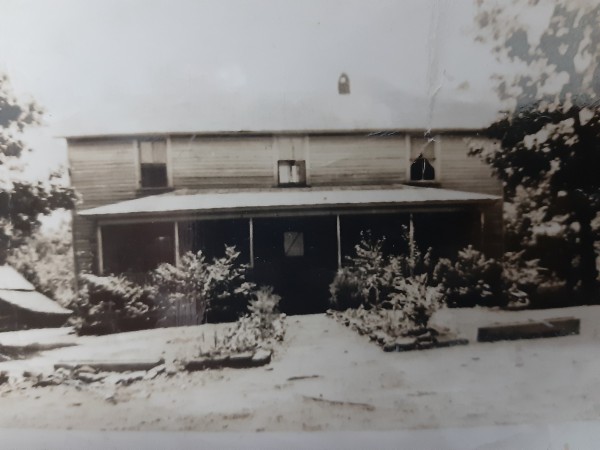
“Eucalyptus” Short Story by Edward Ahern

Photo by Marc-Lautenbacher. This photo has not been altered. Distributed under https://creativecommons.org/licenses/by-sa/4.0

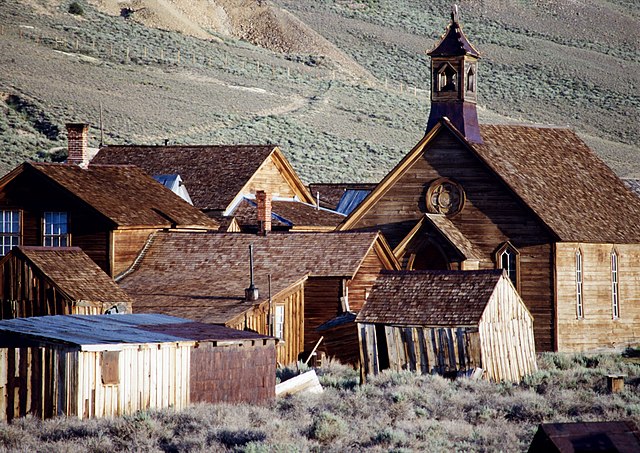
It was never more than a few dozen buildings around a crossroads, inhabited for only a half century. Eucalyptus. Scrub had tried to grow along the streets and walkways and, like the town, died.

I walked its three hundred acres for two hours, peering through busted window glass at the dirt-grit interiors of the homes, farms and mining shacks. The dusty heat accentuated the aromas of dry rot and animal scat. Stallion County, Wyoming had taken custody after the last resident passed leaving considerable unpaid fees and taxes. The whole thing, including the unsuccessful farms and mining claims, was for sale at a half million.

My vision for the site was modest. Rehab the few homes I could, tear down and replace the others, and create a feeder hamlet for the tech industries moving into the county. Enhanced electrification would be key. The county power lines were less than a quarter mile away from the abandoned village. An expensive quarter mile, but with full service I’d have a chance.

I doubled back to one of the buildings, long, narrow and high roofed, that had no cross atop it, but that I guessed had been the church. The door was ajar and I took a calculated risk and went in. If the flooring was sufficiently rotted, I’d end up in the cellar. The boards held. Anything portable had been stolen or trashed, but the pews, bolted through the flooring, were still in place. They’d tried to make it churchy, with cheap paneling lining the side walls in imitation of oak wainscotting. The hard afternoon sun flooded through glassless windows like searchlights, glaring onto the paneling. And revealing that one of the boards was discolored at the top edge.

“I wonder,” I said aloud to no one. I walked over and tapped the board. It felt a little loose. After some jiggering I realized that its tongue could be slipped out of the adjoining groove by pulling it upward. Which I did.

Inside the concealed cubby, preserved from the vandals, were two leather-bound books-a King James bible and a thick journal. The front of the bible listed births and deaths in Eucalyptus. Twelve births couldn’t compete against what looked like over two hundred deaths. The handwriting changed every so often, which made me think that as a congregant died another took his place as record keeper. The country records had James Farnsworth listed as the last resident, but his name wasn’t in the bible.  No one left to write it.  A riffle through the journal flashed a chronicle of events, mostly mundane.

The afternoon sun was setting behind bald stone hills. I took the books with me to my car and retraced fifteen miles to the Eureka motel, which could accurately be renamed Egad. The bed suffered from terminal sag, and the windows were loose enough in their frames to give conduct passes to desert insects.

I went on line and looked up James Farnsworth. His young son and wife had died before him. The funeral home notice had quoted him as being “the last, proud resident of Eucalyptus.” And probably the loneliest.

After a diner dinner (“Try the chicken fried steak”) I retreated to my room, turned on a wheezy air conditioner, flopped into a faux leather chair and opened the journal. The entries were weekly, a great many of which had almost nothing to report. The first and longest entry was the founding of the town, listing many names and the help they provided. Despite the dry tone of the entry a sense of pride had snuck in. They’d done it.

There were over two hundred pages of entries, some pages with ten or twelve “nothing to report” notations before recording a mining claim started, an arrival or a death.

I knew I should be evaluating the prospects for repurposing the village, costs, income stream, scheduling: finally put my MBA to good purpose. But I couldn’t put the journal down. There had been many more men than women in the village, but, in those times, the women were the vessels for the future, and received a disproportionate amount of ink.

I stopped flipping pages and began to read front to back like a novel. By the time I was finished it was 3:30am. Their efforts had been mighty and all consuming, but doomed. Over time no newcomers arrived, the mining claims and farms were abandoned, and the few children grew up and left. Those remaining, now in their high sixties and seventies, dropped onto the pages like rain. There was no doctor, and little money if there’d been one. Eucalyptus’ death had been painfully lingering.

I got a few hours’ sleep and returned to the diner that morning for reconstituted orange juice and grease. Perched on the plastic seating, I couldn’t focus on the numbers that might make Eucalyptus viable again. I gave up and drove back out to the village. Only my own tire tracks and footprints were evident.

I walked back into the church, sat in a pew, and took out a pen. I entered James Farnsworth into the bible and the journal, where I also wrote that he was the last, proud resident. Then I returned both books to their little shelf and slid the panel back into its slot.

After getting into my car, I pressed my lips together. Leave them in peace. There’d be another town.


Ed Ahern resumed writing after forty odd years in foreign intelligence and international sales. He’s had over four hundred fifty stories and poems published so far, and seven books. Ed works the other side of writing at Bewildering Stories, where he sits on the review board and manages a posse of eight review editors.

https://www.facebook.com/EdAhern73/?ref=bookmarkshttps://www.instagram.com/edwardahern1860/


If you would like to be part of the Rural Fiction Magazine family, follow this link to the submissions guidelines. If you like contemporary dark fiction and poetry, you may also want to check out The Chamber Magazine.

Please repost this story to give it maximum distribution.