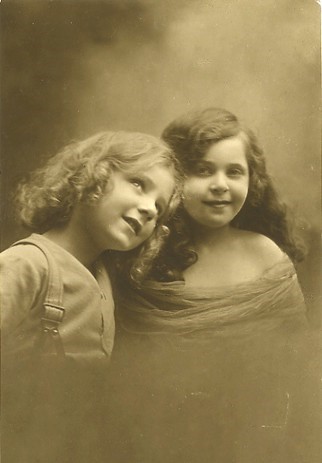
“If I don’t get around to it, I hope one day you will write my life’s story.”
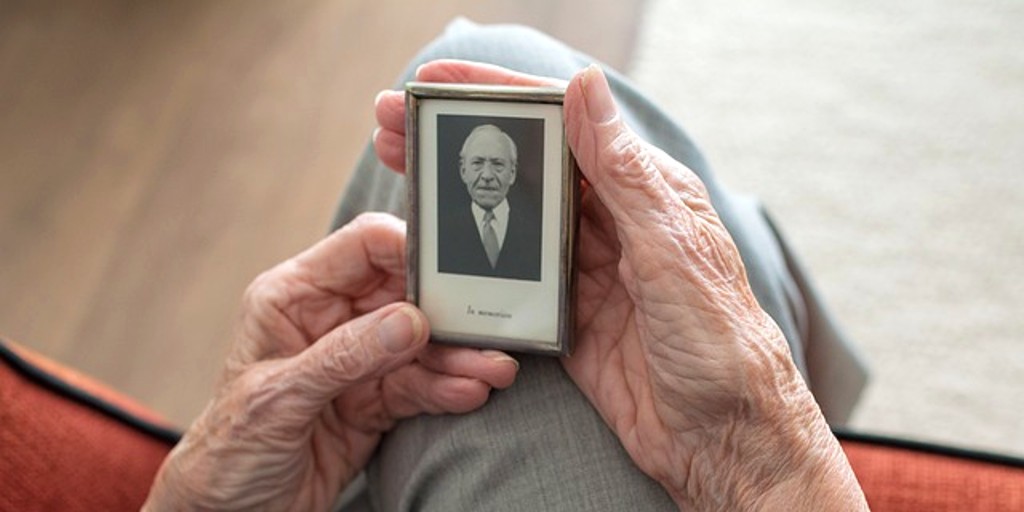
Years ago, my maternal grandmother told me stories about her life, reminiscences, and recollections. She told them to me for a reason. My grandmother wanted me to tell her story. She had always wanted to write a book about her life, but had never found the time nor, perhaps, the inclination. This is one of the memories from her life that most captured my imagination. My grandmother was at all times a practical and seemingly unsentimental person. She was a hardworking, ‘roll-up-the sleeves’ farm housewife who gave birth to 11 children, three who had predeceased her over the course of several decades. However, I believe what happened to her younger sister must have had a lasting impact on my grandmother throughout her lifetime. By putting pen to paper, so to speak, I want to bring that story to life, in tribute to my grandmother and to fulfil a promise that I made to her when I was a teenager, several decades ago. That is the least that I can do, to honour a promise.
********************
It was a Saturday morning in late spring in Tuckersmith Township. The air was moist and fresh with the promise of a renewed world. It seemed to Ruth that God had taken a paintbrush and with two broad strokes – one of deep green, the other of cool blue – had created the earth and the sky. To Ruth, it was a world that seemed without end. The dirt lane ran in a straight line between the house and the barn, disappearing on the horizon where it met up with the side road, that led to the highway to the south. At that junction, the highway to the west meandered until finally reaching the village of Bayfield, on the shores of Lake Huron, whilst to the east, and much closer at hand, was the hamlet of Brucefield. Ruth was most familiar with Brucefield because she was sometimes fortunate enough to go there with her parents when they went to the combined general store and post office located on the main highway of the hamlet. Ruth’s mother and father had been to other parts of Huron County. On occasion, her mother had been as far south as Exeter, and as far north as Clinton, neither more than ten miles away. Of more interest to Ruth, her father had been as far south as the city of London, and as far north as the town of Wingham; both were quite significant journeys in a horse and buggy. Ruth hoped to one day be as well travelled as her parents.
Ruth fell on her back in the long, sweet grass that grew beside the shed. She began to make an angel in the tangled grass by slowly moving her arms and legs back and forth, in an act reminiscent of what she and her sister had done only the winter before in the snow. Ruth lay still, then, her eyes open and her heart beating as the tallest shafts of grass wafted in the breeze above her line of vision. She could see white cotton clouds slowly but deliberately moving across the window of the sky above her. At times, the clouds seemed so close to her that Ruth thought she could reach out and gather them up in the folds of her chubby hands.
Ruth relished this moment alone. Sometimes it seemed to her that she was always at the beck and call of her mother. It seemed as if God had placed her on earth to be her mother’s helper. “Your mother’s not a well woman,” Ruth’s father often reminded her. “You’ll have to be a big girl and help her out.” Ruth had never said so, of course, but it seemed that her mother was healthy enough. Ruth’s mother certainly seemed full of life when the prospect of company loomed on the horizon. In next to no time Ruth’s mother would have her treasured china set out on the table just so-so, the coffee already starting to hiss and perk in the heavy coffeepot on the huge wood-burning stove which sat imposingly against the back wall of the kitchen.
The origins of her mother’s illness, Ruth knew, had started years before. An epidemic of some sort struck the farming community in which Ruth’s mother had lived. At first only a few children who lived on adjacent farms became sick, and then others succumbed to the illness as it spread, unseen but virulent, from farm to farm. Eventually, Ruth’s mother and her brother also became ill. The children in the farming community who were stricken began to die from the ravishes of the long and drawn-out illness. By winter’s end, of those children in the community who had become stricken with the mysterious illness, only Ruth’s mother and her mother’s brother had survived. Her mother had often told Ruth how she and her brother had been put on wide wooden planks and carried outside their home to lie in the sun when winter had finally slunk away and spring had begun to make its presence known.
“Your uncle and I were as weak as a pair of new-born kittens,” Ruth’s mother had told her. “We just lay on those big old boards and lapped up that sun. We were too weak to talk…can you imagine that? But we rightly knew how lucky we were to be the only children who had kept that nasty old fever at bay for the entire winter!” Most of the time Ruth’s mother didn’t partake of many conversations with her, but she was always willing to talk about her illness. Ruth’s mother had told her that a great deal of children had been taken up to the arms of God due to strange sicknesses in the early years of Confederation. “Only He knows why, and who are we to question Him?” Her mother always ended the telling of her story with these words, and in a hushed and mysterious manner. Hearing them made Ruth shiver in a curious mixture of fear and anticipation.
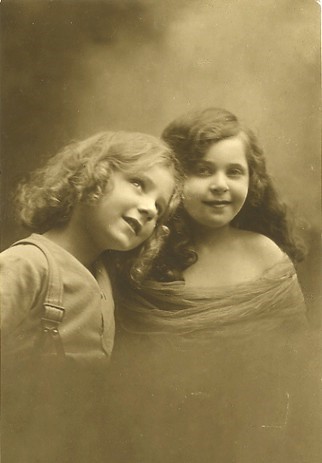
Ruth’s father liked to point out that the world had greatly changed in the last generation. Ruth had been born a few years after the turn of the century, in 1903. She was now almost eight years old. Her most constant companion was her younger sister, Bertha Jean. Even though Bertha Jean was three years younger than she, Ruth usually enjoyed her sister’s company. The twins, on the other hand, were only babies and it was often Ruth’s duty to tend to Bill and Anna whilst her mother looked after the household chores or had what she referred to as a ‘little lay-down’. Bertha Jean was still too young to be much help in the house. Ruth often found the suspicion rising in her mind that her mother favoured Bertha Jean over her. Ruth could see for herself that Bertha Jean was prettier than she…more like a doll than a child.
Normally Bertha Jean would be playing outside with Ruth, but today she had not wanted to leave the house. Instead, Bertha Jean had stayed inside, remaining close to her mother’s skirt. During breakfast that day Bertha Jean had been unusually bad-tempered, and for some reason, very thirsty. On one occasion she had spilt her glass of milk. Ruth’s mother had been unhappy about the mishap. Ruth could not help feeling a sense of satisfaction when her sister was scolded.
Ruth was glad to be outdoors and in the long, cool grass. From her hiding place she could wait to hear the reassuring sound of her father’s footsteps when he came up from the barn. Ruth adored her father. He was so kind and full of fun. Ruth loved to sit on his lap and reach up to feel the bristly comfort of his moustache. Unfortunately, because Bertha Jean was younger and lighter, she was allowed the undeniable luxury of sitting on her father’s lap more often than was Ruth.
Ruth heard a door slam. She poked her head up above the grass. Ruth could see her mother sweeping the back porch. Bertha Jean was hanging on to her mother’s long skirt. Ruth could hear her sister asking, “When is Daddy taking us for a ride?” The whine in Bertha Jean’s voice was carried on the breeze from the porch to her sister’s grass fortress. It made Ruth flinch just to hear it and reminded her of the sound that chalk sometimes made on the chalkboard at school.
Ruth plucked a blade of grass from its protective sheath and began to suck on the fleshy end of it. She lay back in the comforting nest her body had formed in the long grass. She breathed in the smells of the farm. Ruth loved the smells of her world. The scent of the spring flowers in her mother’s garden hung heavy and sweet in the air. From the barnyard came the strong but familiar odour of fresh manure. The vantage point of her grassy cocoon enabled Ruth to breathe in the sweaty smell of the work horses as they stood behind the fence on the far side of the shed.
Like Bertha Jean, Ruth was waiting for her father to finish his chores in the barn. Their father had promised to take his girls for a ride in the horse and buggy after their noon-time dinner. Ruth’s father had told his daughters they would make a call on their neighbours, the Thompson’s. He had to talk some ‘farm business’ with Mr. Thompson, to see if his neighbour would be amenable to a trade of some sort at harvest-time. Ruth especially liked Mrs. Thompson, whose face reminded the girl of a dimpled dumpling. She was a motherly woman who had no children, and whose white hair was in stark comparison to her youthful spirit. Ruth enjoyed visiting the Thompson home because freshly baked cookies were always on hand when company came calling. As well, Mrs. Thompson always made a fuss not only over cute little Bertha Jean, but also over her older and larger sister. Ruth liked the feeling of being fussed over. It made her feel somehow special.
It was just then that Ruth heard a slight sound, a rustling or slithering in the matted grass. Or had she only imagined it? Ruth sat up fully and looked around herself. Suddenly she saw it – a snake – weaving its way through the grass near her feet. The snake raised its head, its tongue flickering and searching in the air, then moving its body suddenly toward her feet. Ruth had not planned what she was about to do; it was an instinctive act. She raised her right foot and brought it down sharply, the heel of her walking boot almost severing the snake’s head from its body. It writhed this way and that, seemingly in its death throes. After a time, it stopped moving completely. It was then Ruth realized it was only a garter snake, and seemingly a baby one at that. Ruth felt a pang of regret in the pit of her stomach. She was reminded what her father had often told her and Bertha Jean, that garter snakes were helpful on a farm because they ate field mice, bugs and grasshoppers that harmed the vegetables in their garden, as well as the crops in the field. Ruth’s father had told them that it was a sin to kill a garter snake.
At that moment, with the mangled baby snake near her feet, Ruth could almost picture the small, framed painting that hung in the bedroom she shared with her sister. It was a picture of Jesus Christ, standing at a door, with a tall stick in one hand, and what seemed to be a halo around his head. Ruth often confused Jesus with God; the two were intertwined in her mind. The lines were blurred for her, the Holy Father, and the Holy Son; however, Ruth knew in her heart that if she ever sinned, she would be punished. This was a certainty, and with a heavy heart Ruth realized that she had just gone against the words of her father and killed a garter snake. She would be punished from Him above; but how, and when?
Having been lost in thought, her mind on having killed the baby garter snake, Ruth willed her mind to push away these unpleasant ideas. She wanted to think only happy thoughts, such as the plans for the afternoon. She wiped the heel of her bloodied boot in the grass until it was clean again. Then Ruth was abruptly brought out of her reverie by the sound of her father walking up the lane from the barn. When her father was nearby, Ruth jumped out of the tall grass and yelled, “Boo!” Her father grabbed his heart in pretended surprise, a wide smile on his tanned face. “Are we still going to the Thompson’s after dinner, Dad?,” Ruth asked excitedly, all the while jumping up and down in the matted grass.
“We sure are, Young Miss!” her father replied. Ruth loved it when her father called her by this term of endearment. “I just have to get cleaned up and have a bite to eat first. But right now, young lady, you best see if your mother needs any help setting things out for dinner.” Ruth’s father turned and began to make his way toward the house. He had taken only a few steps when he realized Ruth had not followed him. Turning, he saw Ruth still standing and almost hidden behind the wall of grass, with only her head showing above the foliage. “What are you waiting for?” her father asked. Ruth did not answer. Rather, she held out her hand toward her father, above the grass, the way Bertha Jean always did when she wanted her father to take her hand. With a slight hesitation, Ruth’s father held out his hand, beckoning to her. He watched as Ruth plowed through the grass, a wide smile on her face, her brown dress somewhat soiled by having sat in the grass and dirt. She grabbed her father’s hand contentedly. Ruth did not mind helping her mother when her father asked. Ruth’s heart was light whenever she was basking in the love of her father.
********************
Ruth, her father, and her sister left home in the horse-drawn, open buggy after their noon meal. Ruth’s mother and the twins remained at home to take a nap. The sun hung hot, heavy, and red in the sea-blue sky. Ruth leaned back against her father’s strong shoulder as he held the slender horse reins in his large and work-worn hands. Ruth became drowsy from the sound of the dull clip-clop of the horse’s hooves on the dirt road. On the other side of her father Bertha Jean sat quietly. It fleetingly occurred to Ruth that her sister’s face seemed to be strangely white for such a sunny day.
No sooner had Ruth, Bertha Jean and their father sat down at the old oak table in the Thompson’s summer kitchen than Bertha Jean began to grumble about wanting to go home. Ruth was secretly glad for one thing: Bertha Jean did not want any of Mrs. Thompson’s delicious gingersnap cookies, so she took her sister’s share and then some. Although she did not want anything to eat, Bertha Jean drank several glasses of the cold and sweet barley water that Mrs. Thompson had taken out of the icebox on their arrival. Ruth wondered if her sister would be badgering their father to make an unplanned stop on the way home. Ruth tried to give her sister the evil eye, but Bertha Jean took no notice.
“I want to go home, Daddy,” Bertha Jean mumbled, her lower lip quivering slightly. “But we haven’t been here very long,” her father said, “and Mr. Thompson and I have to discuss some business.” He paused for a moment. Then he put his hand under his daughter’s chin and tilting her face toward him he asked, “Is there anything wrong, honey?”
“She’s just being a big baby!” Ruth suddenly blurted out. “She’s no better than the twins!” Even Ruth was surprised at the passionate intensity of her outburst. However, she felt very much the grown-up today. She wanted Mr. and Mrs. Thompson to notice how well-behaved she was in comparison to her younger sister. The last time Ruth had been at the Thompson’s home she had been rather naughty. Mr. Thompson had said to Ruth’s father that his oldest daughter was getting to be twice the size of her younger sister. Ruth heard the comment and had stuck out her tongue at Mr. Thompson in anger. Ruth was tired of people always commenting to her parents how chubby she was when compared to her tiny sister. Adults seemed to think that children were not able to hear conversations spoken in their presence, that seemingly innocent words did not leave their mark long after adults had forgotten what they had said in passing.
The afternoon and the visit seemed to Ruth to lengthen. Time, for her, always seemed to have such a timeless quality to it. Ruth could have been sitting in the cozy kitchen for thirty minutes or three hours, for all she knew. It seemed to Ruth that the voices of the adults droned on longer and lower in the sunny enclosure of the summer kitchen. For most of the time Bertha Jean sat on her father’s lap and leaned against his chest, seemingly more awake than asleep. At one point Ruth had tried to get up on her father’s lap too, but her sister had come to life suddenly and swatted Ruth across the face.
“No, Ruth,” her father had said, “don’t be bothering your little sister! Anyway, you’re getting to be just too big to be sitting on my tired, old legs. Just sit down and act like a young lady or go outside and play.” Ruth did not want to play by herself in the Thompson’s tree-filled yard. Instead, she sat down, but not before giving her sister a look that bespoke a piece of her mind. The half-empty plate of cookies was too close at hand to resist; Ruth guiltily took two gingersnaps and stuffed them in her mouth before her father noticed. Mrs. Thompson was knitting on the far side of the table, but her eyes caught Ruth’s and twinkled conspiratorially.
After a time, Bertha Jean pulled on the collar of her father’s shirt, saying, “I don’t feel very well, Daddy. Can we go home now?” Bertha Jean did not look very well either, Ruth thought to herself as her father made motions to leave.
“So, it’s a deal then, Henry,” Ruth’s father stated in closing. “I’ll put some of my cattle in your low pasture field this summer and come fall I’ll give over to you half a cow in exchange.” Ruth had only been half-listening to the conversation of the adults, but her ears pricked up. She smiled to herself, thinking, “Now how in Heaven’s name can you give someone half a cow?” Ruth enjoyed being in close proximity to the adult world; it was a world in one way quite silly, and yet in another rather mysterious.
Ruth’s father said goodbye to the Thompson’s. Then he brought the horse and buggy to the back stoop where his daughters were impatiently waiting, Ruth hopping from one foot to the other in eager anticipation of the buggy ride home, and her sister worrying loose and unravelling a thread on the front of her dress. Their father gave a light jump down from the buggy and lifted first Bertha Jean and then Ruth up into it. The first act was effortless and automatic, the second more laboured and hesitating; the difference between the two not going unnoticed by Ruth. She was glad to be going home. Ruth was already looking forward to showing Bertha Jean the dead snake, and more importantly, later to supper time which was her favourite meal. Perhaps most of all, she was becoming tired of Bertha Jean’s constant fussing and all the attention it gave her.
The ride home from the Thompson’s always seemed to take less time than did the ride going there. Before long, the buggy was turning into the laneway of their farm. Ruth felt a warm and happy feeling at the sight of her home and her world. She turned in her seat and looked behind in fascination at the billows of dust that were being churned up by the horse’s hooves and the wheels of the buggy. It reminded Ruth of the picture in a book in their home of a dust storm in a far-away desert. As the dust rose and then settled behind the buggy, Ruth could see in the distance the gateway to the farm. This was her world, and she smiled in comfort at the safety and familiarity of such a known place.
Bertha Jean was lifted out of the buggy by her father and onto the back porch. Ruth then waited for the same luxury, but her father was busy tying the reins to the porch rail. She clambered down from the buggy and landed with a thud in a dusty patch in front of the back step. Dust flew up in a little cloud and then just as quickly settled gracefully on Ruth’s good ‘going-to-visit’ leather shoes. The girl sighed to herself, knowing her mother would give her a ‘talking-to’ about how young ladies should look after their clothes and their person, right and proper-like. Ruth walked up the steps behind her father and her sister. Usually, their father would take the horse and buggy straight away to the shed, but today it appeared that he had forgotten.
Ruth, her father, and her sister were halfway across the porch when it happened. Ruth’s whole world seemed to slow down, then grind to an abrupt stop. Ruth stood transfixed as her sister, stopping all of a sudden, gave a sharp gasp. For an instant it seemed as if Bertha Jean were choking and could not catch her breath. Before Ruth’s father could react, Bertha Jean began to retch. She bent over slightly, her little hand still clinging tightly to her father’s. A wisp of hair falling across her eyes, Bertha Jean began to throw up on the worn boards of the back porch. Ruth’s father cried out for his wife, his voice rattled and hoarse. Ruth had never heard her father sound so helpless, so afraid. Within a few seconds Ruth’s mother had rushed out to the porch. Her dainty body stood framed in the doorway, one hand clenching the doorknob, as she too stared for a too-long moment at the pool of dark liquid that had already begun to move slowly into a larger cloud, seeping into the cracks in the floorboards.
Ruth had never before seen anyone be sick in this way. Her sister had thrown up what looked to be tiny pieces of raw liver mixed with blood. The moment broke. Ruth’s mother gathered Bertha Jean up into her arms, wiping blood from her daughter’s lips with her long slender fingers in an act so loving that for a moment Ruth wished she were in her sister’s place. Then the woman rushed into the house, cradling Bertha Jean in her arms, all the time calling out instructions to her husband. Ruth’s father hurried behind his wife, his body suddenly seeming stooped and aged.
Ruth remained on the porch, alone and forgotten. She could hear her mother’s suddenly hushed voice inside the house, accompanied by the anxious words spoken by her father in response. However, most of all Ruth could hear her sister softly crying in a weakened and frightened voice. Ruth’s legs felt wooden. She remained rooted to the spot. Ruth looked back down at the pool of blood on the porch. Somehow Ruth knew that something had forever changed her world.
********************
The next few days passed by in a blur. Bertha Jean was confined to her bed, seemingly not getting any better as the week slowly churned on. Although she continued to throw up whatever she ate or drank, the little girl constantly cried out for more water. The water jug beside her bed was replenished several times a day. The doctor came and went three times. A darkness had seemed to envelop the little farmhouse in Tuckersmith Township.
A friend of the family’s, a widow-lady named Mrs. Matheson, came to stay with them. Mrs. Matheson looked after the twins whilst Ruth, who was kept home from school during this time, did her best to help with the meals and the housekeeping. Ruth’s mother faithfully remained in Bertha Jean’s bedroom for hours on end. Ruth felt some comfort catching hasty glimpses of her mother each time the bedroom door quickly opened and then closed. Ruth’s father kept his wife company much of the time, except when he had to do his chores in the barn or work in the fields. Ruth longed to accompany her father each time he made his way down the lane to that other part of their world, but she was not allowed to leave the house in case she would be needed. Instead, Ruth would wait patiently at the kitchen door as her father slowly made his way up to the house from the barn. Ruth felt sick at heart to see how red and tired her father’s once-bright eyes now were, and it pained her when he went past her like a man who was sleepwalking.
One day, about a week after Bertha Jean first became ill, Ruth sensed that her sister was getting worse. The adults talked only in low voices, and Mrs. Matheson had not pulled open any of the curtains in the house. Late that evening, as Ruth was washing up after supper, her parents came out of the bedroom. Every other night the past week they had left a candle burning in their daughter’s room because they knew they would be sitting with her throughout the long journey from dusk to dawn. Tonight, however, Ruth’s mother carried the candle holder out of her daughter’s room, her husband walking a step behind her. Ruth’s mother then set the candle holder on the kitchen table and, bending down slightly, she blew out the flame.
Ruth stood by the sink, the damp dish rag still in her hand. Drops of water began to fall from the dish rag, making a tiny pool at Ruth’s feet, but she did nothing. She was afraid to speak or to move; she did not want to be the first to break the overwhelming silence. Mrs. Matheson had been wiping off the top of the stove, but she too had turned to stand in silence. “She’s gone,” Ruth’s mother then said, her voice so low that Ruth was not quite sure if she had heard the words, or merely imagined them.
Ruth stood still, her eyes riveted to the closed door; the bedroom she and her sister had always shared until the week before. Bertha Jean can’t be gone, Ruth wanted to shout, because she’s in our room…she hasn’t gone anywhere! Ruth at one and the same time understood and yet did not quite understand what her mother’s words meant.
Living on a farm Ruth had a certain knowledge of death, the most recent being what had happened the week before to the baby garter snake. Animals sometimes died or were put to death on the farm, but Ruth had never known a person to die. And yet, Ruth now knew without wanting to know what her mother’s words seemed to mean. Ruth felt a sinking feeling in her stomach. She wanted to say something but could not. It was as if her words had turned into butterflies that were trapped in the depths of her stomach, trying to find a way out of the dark and into the light, but that would have nowhere to go if they were released.
Ruth did not say anything. She waited for the adults to make sense of the moment. “Should we get her ready?” Mrs. Matheson asked, her voice little more than a whisper. Ruth’s mother nodded faintly. “I must wash her hair,” she said quietly. “You know, she has such pretty hair.” Ruth’s mother turned away from the others and, her head sunk lower, she leaned against the sideboard cabinet, seemingly as solitary and unapproachable to Ruth as she had ever been.
Ruth’s father walked over to her. He reached down and took hold of her right hand as it hung listlessly at her side, then motioned for Ruth to accompany him out onto the back porch. She still clung to the damp dishrag in her other hand, not willing to let it go. Her father gently removed the dishrag from Ruth’s clenched fist and set it on the table. Then Ruth and her father walked across the porch, their steps echoing hollowly along the worn floorboards. Following her father’s example, Ruth then sat down on the porch step. Ruth peered up at her father, but he was looking at some point in the distance. His face was trembling as if he were sitting out on a cold evening in late autumn.
It came to Ruth only then, the half-formed realization, that somewhere underneath her father was not as strong as her mother…that things were not always as they seemed. Ruth turned away from her father, trying to follow his line of vision. She could see the sun, still burning but now rapidly sinking in the sky to the west of the farm. Ruth had a thousand questions to ask her father, but she said nothing. Her voice had deserted her, and she was left only with her thoughts. Looking out from where she sat, Ruth could already see indistinct shapes forming in the distance, and much sharper shadows materializing closer at hand.
At that moment there began to take shape in her mind a nagging thought, the germ of an idea. Although the thought was private and hidden, it was as troublesome and true as the bulky shadow its owner was beginning to cast in the dusty walkway in front of the well-worn steps. “Sit on it! Squash it! Don’t even think it,” Ruth’s mind cried out to her. However, try as she might Ruth could not stop the thought from rising up from some place deep inside her, a place she had little control over. “With Bertha Jean gone,” an insistent voice whispered inside her head, “maybe now you will…”
The two words which were to come next were lopped off before their realization. The guilty thought died the moment it was born; Ruth had wrestled it to the ground and had won the battle. She vowed to herself she would never think that thought again, that no one would ever know she had thought something so full of shame…no one, except, of course, Him. She was powerless and He was powerful. Ruth could not prevent the terrible thought from having life brought back into it and worming its way into His all-knowingness. Ruth knew that He would always know, and that one day she must pay a high price for giving life to this thought.
Ruth looked around herself…at her world. It was a world that only a short time before had seemed without end. Now Ruth’s world seemed smaller and, somehow, not as known as it once had been. She wondered how a place always so familiar could now feel suddenly so unknown. Looking up at her father, Ruth felt a surge of protective love. Her father suddenly looked so very alone, and Ruth felt closer to him for it. Ruth hung on to her father’s hand as if it were life itself. Together Ruth and her father sat side-by-side in silence and watched the darkening sky as the departing sun made way for the evening stars.
********************
“When my sister married and moved away to California, my mother gave her good dishes to Anna even though she knew I had always wanted them.”
I remember sitting across from my grandmother when she related this to me, that her mother had given the youngest daughter, Anna – one of the twins – her good set of china dishes. I have often thought how hurtful this must have been to my grandmother, despite her no-nonsense nature, by this act of her mother’s all those years before. I have never forgotten it: in my mind’s eye, I can still envision Grandma sitting in her favourite armchair by the large, picture window in her living room, telling me this story. As was the custom when she was a child and later a young woman, my grandmother, as the oldest daughter, remained to help her parents and almost certainly delayed plans of her own. She did not marry until she was in her mid-twenties, relatively late for a woman in those days. In another age, my grandmother would have gone to university and had a career. She had so keenly wanted to work in a bank or be in the business world; she certainly had the type of keen mind required for such occupations. How close to the truth is this story to the event that actually happened? My grandmother’s younger sister, Bertha Jean, died well over a century ago. Many decades have passed since I heard about this life-changing event in my grandmother’s life. She told me about this incident when I was a young teenager, no doubt on a Saturday when I was doing her gardening or other tasks. It has remained with me, as have other stories from her life. Time has passed and the details have become murky, but the key aspects have remained alive in my imagination. In truth, I have taken the bare bones of a memory and tried to flesh out a real event, to breathe life back into lives that long ago turned to dust. In doing so I have crossed that fine line between truth and fiction, and by what right?
John RC Potter is an international educator from Canada, living in Istanbul. He has experienced a revolution (Indonesia), air strikes (Israel), earthquakes (Turkey), boredom (UAE), and blinding snow blizzards (Canada), the last being the subject of his story, “Snowbound in the House of God” (Memoirist, May 2023). His poems, stories, essays, and reviews have been published in a range of magazines and journals, most recently in Blank Spaces, (“In Search of Alice Munro”, June 2023), Literary Yard (“She Got What She Deserved”, June 2023), Freedom Fiction (“The Mystery of the Dead-as-a-Doornail Author”, July 2023), and The Serulian (“The Memory Box”, September 2023). The author has over a dozen upcoming publications in the coming months, including an essay in The Montreal Review.
Website: https://author-blog.org/
Twitter: https://twitter.com/JohnRCPotter
Instagram: jp_ist
Please share this to give it maximum distribution. Our contributors’ only pay is exposure.
If you would like to be part of the Rural Fiction Magazine family, follow this link to the submissions guidelines. If you like contemporary dark stories and poems, you may also want to check out The Chamber Magazine.