Take, fer example, gross stuff. I doan get why grown ups hafta be sharin’ slobbers. Ma and Pa share spit ever’ mornin’ and I even seen Granny and Papa do it oncet or twice. Seems like a nasty habit us kids ain’t developed. I hope it ain’t genetic.
Ma says I shudn’t be sayin’ these things and tells me I’ll feel differ’nt when I’m older. She says I’m an orn’ry twerp, always watchin’ and thinkin’. But I ain’t got nuttin’ better ta do than contemplate life. ‘Sides, it’s interestin’ ta notice. I learns lots jus by watchin’ and lis’nin’. Doan need to say much. Life’s purty amusin’ on its own.
Mos’ times I see things I doan wanna unsee cuz they’re funny. Like oncet when Granny decided it was high time she learnt ta ride a bike. Dint want no lessons from noone. Nope. Fiercely independent, my Granny is. ‘Twernt long afore she was whippin’ that bike round and round the silo cuz she couldn’t figure how ta make it stop. Took crashin’ inta the back o’ the hay waggin ta bring that fiasco ter an end. Course, Granny found it amusin’. She laughs at ever’thin’.
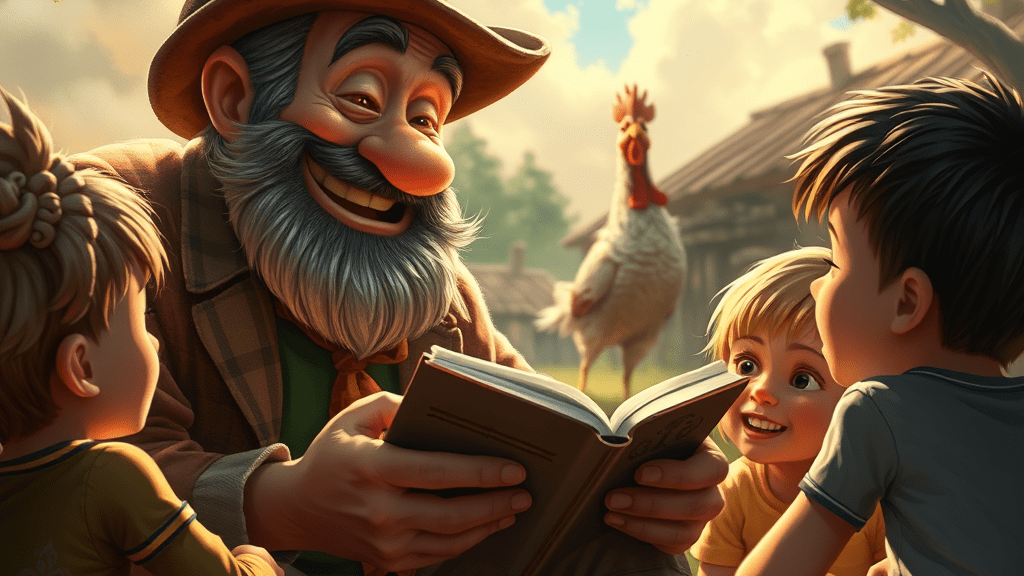
Then there were the time us kids and the dog wuz racin’ inter and outta the house and let in a chicken. Inter Granny’s kitchen. That dint go so well. She and us kids managed ta corral that hen. Fer a moment I thought Granny was fixin’ chicken fer dinner that night, but she got it outside. Then us kids and the dog resumed our shenanigans, which nearly resulted in Granny droppin’ her precious carton o’ eggs. That were the straw. Granny can get purty flustrated and she did jus then. She put down those eggs and tole us kids we hadta stop. She said we hadta put the dog in the fridge and throw the eggs outside. Bein’ the obedient children we wuz, we wuz commencin’ to stuff that flailin’ dog inter the fridge when Granny realized what she’d said and we all had a good laugh.
My Uncle Slappy, he’s a man cut outta differ’nt cloth. He ain’t quite so bright as some, but he can tell some tall tales. Uncle Slappy got ‘is name cuz he gets tickled easy and when he does, he slaps his leg or he’ll slap anyone who’s close ‘nuf to reach. It doan pay to sit near Uncle Slappy when the tales start. That can be a painful ‘sperience. I hain’t never been whaled by Uncle Slappy cuz I watched and learnt so I hain’t never sat near ‘im. Took somma t’others awhile ta figure that’n out. Now, when Uncle Slappy tells tales, he has an audience. Kinda like a play, where ever’one is sittin’ afar and watchin’. He either ain’t figured out that he slapped his audience inter submission or he’s clever ‘nuf to have created his very own assemblage. Either way, when Uncle Slappy starts talkin’, people start movin’.
Anyways, I’m not sure o’ Uncle Slappy’s real name. Ain’t heerd noone say it. But I heerd him tell some big tales. The one ‘bout the banty rooster’s my fav’rit cuz I know the truth.
Granny was plannin’ dinner one day and fell short one chicken. Havin’ bin chased inter the house mor’n oncet by the new banty rooster she’d bin given, she decided he was a prime candi’te fer her next roast. But she weren’t fond o’ the notion o’ ketchin’ him, so she set Uncle Slappy ‘bout doin’ it. He hadn’t seen that rooster yet, havin’ jus showed up, so he dint know no better.
I happenta be slothin’ ‘round in the hay stacks that mornin’, makin’ miself scarce. As I was lollin’ ‘round, starin’ at the barn ceilin’ and contemplatin’ life’s myst’ries, I heerd the screen door slam. It always slammed shut cuz the spring fell off and ain’t nobody fixed it yet. I figured Granny likes it that way. Serves as a sorta doorbell.
Anyways, I rolled onter my belly and peered over the haystack to see Uncle Slappy skulkin’ ‘round like he wuz lookin’ fer sumpin. The chickens wuz runnin’ loose jus then cuz Granny liked ‘em ta have lotsa space. Said they laid more flavorful eggs and made fer better meat that way. Uncle Slappy was walkin’ through the bunch when he met the banty rooster. I’ll never be able to unsee what I seen next. But ta understand, ya gotta hear it Uncle Slappy’s way first.
“Well now,” Uncle Slappy says to his rapt audience, who’s all settled in now after doin’ the Slappy Shuffle. “Granny says she ain’t got ‘nuf meat fer dinner and tells me she wants a ‘ticular rooster. It’s his time, she tells me. So I goes outside and, knowin’ that an’mals requires a firm hand, I eyes up that rooster. Ya know…ta let ‘im know who’s the boss n’all. Well, he eyes me back and we gets inta one big starin’ contest. I overcome his finer sensibilities by narrer’in my eyes to slits. See, like this…” and he demonstrated to us’n by narrer’in his eyes and sqwinchin’ up his face. He looked ta me like he et a saur lemon and it come out his nose. I tried not to laugh too hard so as not to set off Slappy’s hands, but it wern’t easy to hold that’n in.
Uncle Slappy unsqwinched his face and his audience lost its spasms. “Yessir, I stared ‘im inter submission. He purt near keeled over from my evil eye. But he ain’t no dummy. I wuz swaggerin’ towards ‘im when he jus jumped up and runned at me, feathers all big n’such.” Slappy’s hands were a flyin’ by now, showin’ us those wings and causin’ his audience to sway. “He sunk his beak inter my leg and owwww,” Uncle Slappy howled, “did that’n ever hurt. But I weren’t done. In one big, fast swoop, I done grabbed his neck and wuz holdin’ him up in front ‘o me, his legs jus danglin’ in thin air. We stared,” he sqwinched up his face again and I found a sudden need to pull lint offen my sock. “Then I saw this sof’ look in his eyes and I swear ta ya on my grave that a tear run down that rooster’s face and I cudn’t do it. Nope. Tol’ Granny she’d hafta find her another murd’rer.” Slappy laughed and attacked his leg with one’a his big hands, causin’ us’n ta rear back. I wuz laughin’ now at the memory o’ that rooster and him, but he dint know that. I won’t tell.
Ya see, Uncle Slappy hadta tell a tall tale cuz the truth is that rooster done got the best of ‘im. Here’s what really happened.
As he wuz skulkin’ among the chickens, the banty come runnin’ right at ‘im, feathers fluft, wings out, head low. He got Uncle Slappy in the leg, that’s about the onliest truth of it. Slappy howled (I’m supposin’ he hadta put that’n in the story cuz someone mighta heerd ‘im) and started spinnin’ his legs backwards, like Fred Flintstone goin’ in reverse. But that rooster wuz right on ‘im. He wuzn’t lettin’ up. Uncle Slappy turned and run ta the waggin. He wuz commencin’ to climb in when the rooster got the backa ‘is leg. He wuz kickin’, the rooster wuz peckin’, and it dint look too good fer Slappy ‘til he pulled hisself up inter the waggin.
Well now, that dint last long. The rooster had tekken a most def’nit dislike to Slappy and was in the waggin right baside ‘im afore my uncle’s back hit the hay. From atop the hay loft, I cud see inter the waggin. Slappy was slappin’ at that rooster, ‘is hands goin’ so fast they looked like blades. The rooster jumpt up top ‘o the waggin rail above Slappy’s head, lookin’ down at ‘im. I’m purty sure he was a’laughin’. That tear Slappy saw wuz pure mirth. Slappy retched up ter grab its legs but the rooster appeared to fall off t’other side so Slappy done retched ‘tween the slats ta grab ‘im. Well, that there wuz a bad idea cuz Slappy got ‘is arms caught ‘tween the rails. Now the rooster wuz back in the waggin and havin’ a time with Slappy’s armpits. The howl I heerd from Slappy was one thin’ but the sqwinched up, lemon-nose face he gave the rooster brought tears ta my eyes. Slappy got his arms free and the rooster done backed off. Mebbe he wuz convinced he’d made ‘is point. Anyways, Slappy set hisself on top o’ the waggin rail, holdin’ ‘is hands under ‘is armpits, a lemony look on ‘is face. Seein’ as ‘is prey wuz disabled, the rooster got onter the rail aside Slappy. They eyed each other fer a while and I’m purty sure a tear ran down Slappy’s face. Now that’n were a Norman Rockwell scene.
Vonni Sage enjoys exploring humanity through her writing and other art forms. When she isn’t creating, Vonni enjoys reading, kayaking, hiking, and snowshoeing. Recent publications include an essay, “Art in Place,” in Transformational: Stories of Northern Michigan Arts and Culture and “It Rained Down” at Friday Flash Fiction.
Vonni says about this story: “This is an oral storytelling piece based loosely on my experiences as a very young child visiting my grandparents’ farm. I noted your call, albeit in November, 2022, for oral storytelling, a tradition my Appalachian family revered. After many decades living a suburban life, I have returned to my farming roots and, as I settle into this new-old lifestyle, I find myself returning to my childhood experiences with fond remembrance.”
Please share this story to give it maximum distribution. Exposure is our authors’ only pay. You can also help our contributors gain exposure by back linking to them and to RFM’s homepage.
An ear-splitting cry ricocheted across the crumbling tombstones, sending an uneasy shiver down the backs of the tour group.
“Not to worry…,” their guide’s voice rumbled like distant thunder, “merely a screech owl on his nightly hunt for rodents and the like.”
Emily had butterflies in her stomach.
Exploring a cemetery on Halloween seemed like fun at first, which is why she accepted the dare last week from her friend Sarah with a laugh. But now that she was here, she felt a bit on edge. The Halloween Graveyard Ghost Tour, a yearly tradition in this small New England town, promised tales of local haunted history and the possibility of spirit sightings. Although Emily didn’t exactly believe in ghosts, she couldn’t completely dismiss the idea, either.
The night was chilly and, except for the cry of the owl, utterly silent. Smoky streams of clouds hung over the slivered moon before beating a hasty retreat as if sensing the spirits below would soon be out to prowl.
While waiting for the tour to begin, Emily huddled under the barren limbs of a massive oak with Sarah and the others—the cemetery loomed just ahead. Dating as far back as 1660, the ancient burial grounds sat on an eerie stretch of frost-heaved earth marked with gravestones in no logical pattern. It was as if the spirits of the dead had arranged them for some sort of otherworldly board game that only they knew how to play.
Their tour guide, Andrew, a dashing figure with his top hat and billowing black cape, carried a lantern whose flame flickered bravely against the gloom of the late October night. Emily felt a tingle of excitement at the thought of exploring the cemetery with such an attractive man leading the way—until she reached the entrance gate.
A rusty iron behemoth, it stood like a grim sentinel to all who entered, swinging inward on shrieking hinges as if expecting them. Something about that gate and the inky darkness beyond gave Emily pause as a cold sense of foreboding washed over her, creeping down into her bones. She took a deep breath and did her best to ignore it as she tucked a wayward curl behind her ear and marched along with the group.
No one spoke as they entered the cemetery. Leaves crunched beneath their feet while the hushed silence of death kept up a never-ending refrain. Through the thin rubber of her sneakers, Emily imagined she could feel the ground pulse with the souls of the dead preparing to make an entrance.
Stopping in front of an elaborate gravestone, Andrew held his lantern high to reveal its intricacies. The weathered grey stone stood about five feet tall and was flanked by what looked like angels kneeling on either side. As her eyes adjusted to the light, Emily realized they were actually snarling gargoyles with fangs bared. Their talon-like claws clutched the base of the stone as if through mere might alone, they could yank the unfortunate occupant back from the dead. A large, delicately carved skull sprouting a pair of feathery wings topped the stone, its mouth spread wide in a rictus grin. From her vantage point, Emily could only make out the words, Here lies the body of…
“Tonight, as you walk through this lonely patch of land, tread lightly, my friends,”
Andrew explained with a dramatic flourish, “For here lie the souls from centuries ago, those of the brave and the bold, those of lost youth and innocence, and those who may have struck a deal with the very devil himself!”
Sarah moved closer to Emily, grabbing her hand.
A whiff of something foul seeped into the crisp night air, growing stronger with each breath Emily took. She couldn’t place it at first, but as the fetid odor lingered, it dawned on her—sulfur. Andrew’s body stiffened, but he did nothing except raise the lantern higher while staring into the pitch-black beyond the gravestone
Strange tendrils of mist began to form above the stone—wispy outlines in vertical rows, and for a moment, Emily thought her eyes were playing tricks on her. She rubbed them with the heel of her hand but to no avail. The vaporous strands continued to multiply, swirling and rotating as if batted about by an errant breeze, though the night remained deathly still. They reminded her of the long, bony fingers of a wraith-like harpist who had performed during her senior year of high school. The woman’s fingers had flown up and down the strings as if fueled by an unseen force, their motion blurring like hummingbird wings.
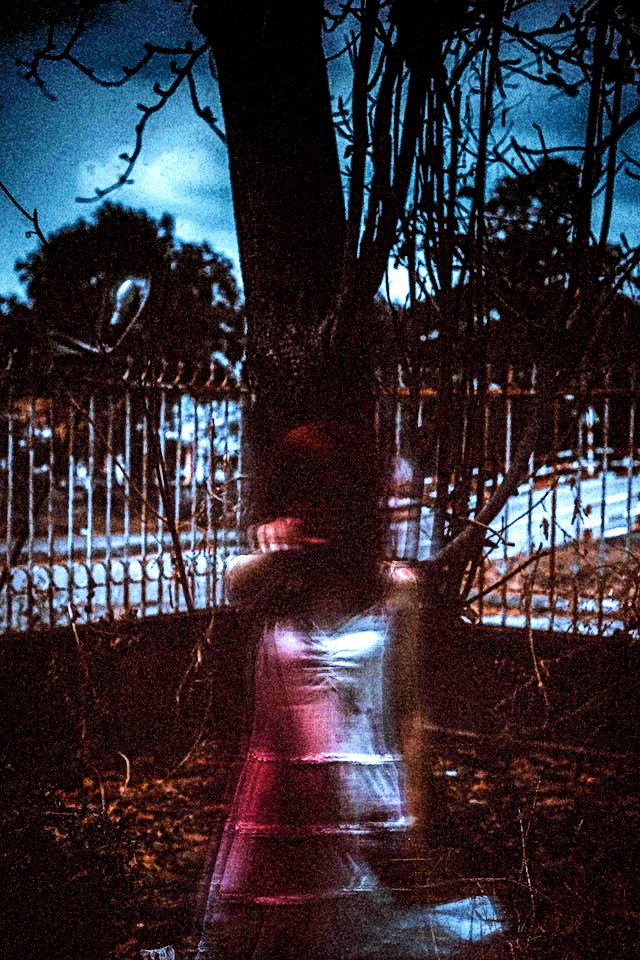
But there were no soft, melodic notes drifting in on the sulfurous cemetery air, and no harp emerged from the shadows. Emily watched in disbelief, feeling her mouth go dry as, inch by inch, the spinning mass slowly took shape, and a pale apparition appeared, hovering over the gravestone. With empty, black eye sockets and corkscrew curls cascading down its back, the spirit focused all its ethereal attention on Andrew, who seemed unable to take his eyes off the spectral display. Slowly removing his hat, he bowed deeply and exclaimed with awe, “Madame, you honor us with your presence!”
Emily’s heart skipped a beat, and she dropped Sarah’s hand. She had to get closer—had to see the spirit more clearly. Taking a tentative step forward, she crept nearer until she was standing shoulder-to-shoulder with Andrew. An involuntary squeak, like air being sucked in through tinny, timeworn pipes, leaked out of her. Her hand flew to her mouth, but it was too late. The spell between Andrew and the spirit had been broken. When the ghost whirled toward the source of the noise, Emily knew. Terror bubbled in her chest, as caustic as acid, and she began to shake. It was unlike anything she had experienced in her twenty-something years on earth—as if a looking glass from beyond the grave had suddenly materialized in front of her.
The ghost was a dead ringer for Emily!
A lifelong resident of New England, Cheryl is captivated by its haunted history. Coupled with her love of the mystery-horror genre, she is inspired to write stories of spooky New England. Cheryl is an RN with a degree in nursing and English who enjoys playing tennis and trying out new recipes.
Please share this to give it maximum distribution. Our contributors’ only pay is exposure.
Marge McCormack slowed her rusting Chevy to a stop beside the cornfield where Terry Haskin was working. His brown hair nudged above their tractor’s nearside back tire as he adjusted cultivator hydraulics. Doubtless, he was slathered in grease. Marge snatched up a manila envelope, slammed the car door and leapt the roadside ditch. “Terry!”
Short blonde hair, bare legs below a yellow sundress, her sandals filled with loose dirt in plowed cornrows. Balancing on one foot, then the other, she slipped off her shoes and waved the contract. “Terry, I got it!”
She saw his fierce, happy grin. “Marge, you only applied day before yesterday!”
She beamed as he approached, wiping his hands on an oil rag. “Lord, woman, I can see why you got the job.” He leaned close with hands tucked safely behind him. “Give you a job of work m’self.”
Marge threw down the contract pouch and clasped his face with both hands for an emphatic kiss. “Tonight, Sweetheart.”
#
At supper, Terry Haskin sat beside Mrs. McCormack, Marge’s mother. Mr. McCormack said grace, and after a round of ‘Amens,’ Marge and her two younger brothers brought celebratory platters of chicken-fried steak, cornbread and green beans to the farmhouse table. Marge settled on Terry’s right as the grinning youngsters slid into chairs opposite.
“You know this ain’t a proper nursing job,” Mr. McCormack told his daughter, “just Pokagon County politics, surveying wetbacks for communicable disease.”
“Heaven knows what she’ll pick up from those migrants,” Mrs. McCormack muttered. She blushed when her sons glanced to one another.
“What’s Marge gonna pick up?” one boy whispered. His brother shrugged.
“Daddy, they’re not wetbacks. They’re Texicans, Texas Americans.”
“Maybe some are, but not all. Not by a long shot.”
Teeth grinding, Marge held on to her temper. Dad tried again. “You and Terry have a lot of planning to do.”
“We’ll figure it out.”
Terry cleared his throat. “Marge’s contract says she’ll work mornings, six to ten, Monday to Friday, till Labor Day.”
“Four fifty an hour, Dad; enough for senior year tuition and textbooks. I can help Terry in the fields afternoons and weekends until my nursing program starts up again.”
As the boys served wedges of lemon meringue pie, Terry reassured Mrs. McCormack. “Half the township’s booked us; cultivating, baling, combining, right through August.”
Mom nodded. “This year a nursing practicum is extra. Marge will need every dime.”
“We’ll be . . . she’ll be okay. We’ve been saving for the last three years.”
#
Fireflies pulsed in tall grass; purple martins swept mosquitoes from a reddening sky. At 9 P.M. the setting sun barely touched the treetops. Her parents glided, side by side on a suspended porch swing, powered by Dad’s long legs. Marge and Terry nestled nearby on the front steps while everyone listened to Harry Caray’s radio broadcast of White Sox baseball. When a Sox ninth inning reliever gave up the winning run, Marge stood with a snort of disgust. Terry grimaced, then smiled up at her. Hands cocked on hips, her eyes sparkled. “Sweetie, it’s time I took you home. Back in a jiffy.”
As she sprinted upstairs for her clean laundry, Mr. McCormack motioned Terry out onto the farm lane, to Marge’s old red Chevy. Dad folded his arms and shook his head slowly. “Son, I gave up trying to keep you two apart a long time ago. Maybe someday she’ll have enough sense to tell you ‘Yes’.”
Terry opened the coupe’s driver-side door. “I’m counting on it, Sir.”
“Too grown up, that girl don’t mind me, but she might pay attention to you. It ain’t safe, Marge wandering round migrant camps. Those people . . . well, she just don’t listen any more.”
It was only a short drive into Pokagon Village where, at sunset, street lights had begun to flicker. They climbed an iron staircase to a one bedroom apartment above Pokagon Gas and Oil. Terry managed the gas station from November until planting season, six days a week, dawn to Cronkite News. For two years, they’d plastered, painted and spruced; tried to make things presentable to their friends – to Marge mostly – and the apartment was rounding into shape. There was a tiny kitchen next to the television room, a toilet with shower and sink off the bedroom, and two chests of drawers, one Marge used for her things. She pecked his cheek, shed her cotton sundress and broke for the shower.
#
In pre-dawn light, Marge filled the coupe’s gas tank. Beneath a red striped, safety vest, she wore a beige shirt and matching work trousers. Her hair was wrapped in a paisley scarf. Elbow propped against a pump, Terry watched the gasoline meter roll. She told him, “Price keeps going up, it’ll break a dollar a gallon before long.”
“We’re still three cents cheaper than most.”
“Eight fifty. I don’t never want to pay more than that for a fill up.” She handed him a ten dollar bill. “When’s George opening this morning?”
“Be here any minute.” Terry unlocked the station office but turned back in the doorway. “Campbell place still needs a day’s cultivating. Meet me for lunch?”
On tip-toes, she kissed him slow until both needed a breath of air. “Sweetheart, I’ve got to leave.” She towed him outside, slid into the car and rolled down the window.
Terry smoothed two calloused fingers across her cheek. “You’ll be careful, right? Anything, anything at all, you know where I am. Yes?”
“You’re getting bad as Daddy.”
“No telling which of us loves you more.”
The engine started with a roar, and she gave him a wan smile and wave. “Bye.”
#
Six minutes north from the village stoplight, Marge tromped on the gas to climb Wrecker’s Hill. Atop was a level plain with some of the county’s best farmland. A migrant work camp appeared; scores of cabins in a thirty acre park of tall hickory and oak. A dirt lane led to the company parking lot behind the administration building. As day broke over the horizon, she entered the office and did her best to exude confidence. “I’m Marge McCormack, from Pokagon County Public Health.”
Chief Administrator Arthur Wheeler was an officer of the agri-business that sold vegetables grown on the thousand acre plantation. She’d seen their product labels in grocery stores all her life. Wheeler was a tall, middle aged man wearing black-rimmed glasses, a short sleeved shirt and narrow tie. “Our company’s eager to cooperate with Public Health, Miss McCormack, but as we submitted in hearings last spring, these folks are all strong and healthy. We wouldn’t bring ’em north otherwise.”
“So my job will be a snap.”
Administrator Wheeler blinked once, then grinned. “Well, absolutely, Miss McCormack. Dead easy.” Then, “Have you inspected our camp before, seen the facilities?”
“No, never.”
“Camp Director Alvarez will show you round this morning.”
Outside in the parking lot, Marge met Jorge Alvarez, a dark, portly man wearing jeans, a white T-shirt and denim vest. The older man bowed. A little embarrassed, she extended her hand. “Mucho gusto, Señor Alvarez.”
“Ah!” His eyes lit up. “Usted habla Español. Muy bien, Señora . . .”
“Señorita McCormack. Marge McCormack.”
“Bienvenida!” he said as they shook hands.
#
Marge followed Camp Director Alvarez past rows of tiny cabins. “Hay más que un . . . hundred families this year,” he explained in Spanish as they strolled beneath century oaks. “Grandmothers, and grandfathers too, but older women don’t work the fields, only men and younger folk.”
“When I was still in high school, I saw your Spring trucks passing through town.”
“Two days and nights from Amarillo, we’re all tired after that.”
Beside them, chicas of nine or ten sauntered with buckets. Lining up at water spigots, barefoot in knee-high skirts, they giggled and chattered too quickly for Marge to follow, then ran home to mothers, some shouting “Hola, Jorge” after glancing suspiciously at the oddly dressed stranger.
“We begin work at seven, Señorita McCormack. No one expects to talk with you today, but I can introduce some of the leading families. They’ll want to know pay won’t be docked for spending time with you tomorrow.”
Half an hour later, Marge and Señor Alvarez rode in a tractor convoy to the fields. Cucumbers were first; one hundred acres of ground hugging vines, trained into rows, where already grandfathers hoed weeds that dripped morning dew. Beyond were vast plots of green beans, peas, beets and carrots. A cloudless sky overhead, he told her, “Late mornings will be cooler in the woods.”
“If I find somewhere shady, could families meet me there?”
“Por supuesto. Let’s line up some folks for you to interview tomorrow.”
Within a few minutes, Marge found a quiet glade. Families stood in a circle as she spoke with Señora Aquino, Señora Ramos, and a handful of others. “I’m not here to make trouble.”
#
Later, midmorning heat shimmered over the crops, but the glade was still a hospitable retreat. While relaxing, Marge counted blank survey forms and realized she needed more from Public Health. If immunization was as spotty as she feared, she wondered whether county officials would provide financial support for inoculation.
After swatting a mosquito drilling inside her shirt collar, she noticed it was already a quarter to ten. Director Alvarez left a couple hours ago when workers had moved farther away. She heard water flowing somewhere behind her among rustling aspen. Wandering toward the stream, she searched for a clump of bushes in which to find relief. Unknowing, she stepped upon a recently dead red fox and stirred up a swarm of bot flies. Annoyed by her carelessness, she wiped slime from her boot before heading upwind. She found a boy of six or seven, too old or too impatient for a grandmother’s care, who was herding frogs with a willow tickler. He smiled and waved. Marge decided the office restroom was a better choice.
#
In early afternoon, dust devils swirled across the Campbell cornfields. Sheltered beneath an over-sized, tractor umbrella, Marge focused on the cultivator shovels below. Her left hand rested on the hydraulic control, her right foot poised to brake if stones knocked a spade out of line. Weeding corn was tedious, attention-demanding work that Marge had done since she was thirteen; a task she did now with effortless skill.
She saw a young woman approaching between corn rows in steel-toed boots and a straw hat. Marge slowed the tractor to a stop. At seventeen, Cheryl Campbell was filling out, no longer the skinny freshman who stalked Terry when he and Marge were still in high school.
Cheryl scanned the field, then called out, “Marge, I thought Terry was coming back this afternoon.”
“He’s mending a fence break at the Tompkins’ place. Sent me instead.”
“Oh.”
Marge shut down the tractor and twisted to face Cheryl, who’d lifted an arm against glaring light. “This week Terry’s been teaching me how to cultivate. Last spring, after my high school classes, he and I planted this field. The soybeans, too.”
Marge chuckled. “Really! Been teaching us right out of a job, has he?”
Cheryl stuffed one fist in a jeans pocket and set her jaw. Marge felt a little chagrined. “Sorry, Cheryl. I’m not real proud of what I said just now. How’s your dad doing these days?’
“He isn’t getting any stronger. Mornings, he goes out to the barn, but half an hour later, he’s sittin’ down someplace.”
“It’s been nearly a year since your dad’s accident. Is that right, Cheryl?’
“Corn picker took his arm, but that wasn’t the worst. It damned near crushed his chest.”
“Come on up here. Let’s try it out. You any good at this?”
#
That evening Marge waited, wet-haired in a bathrobe at Terry’s supper table. Sipping beer from a glass, she listened as he climbed the stairs to their apartment. When the door opened, she saw he was covered in dust and fence wire scratches. He hung his baseball cap on the wall. “Hello, Honey.”
“Maybe.”
“You want us to fight about it now, or after I shower?”
“Need time to think what to tell me?”
“Maybe.”
She smiled, just a little. “Go ahead. I’m not dumping you quite yet.”
A bit later, with a bath towel wrapped round his middle, Terry sat at the table. Marge slid across a church key and bottled Lite. “I suppose you wanted me to see how Cheryl’s grown into a woman?”
“Well, she has done that.”
Below the table, Marge curled her toes and kicked his shin.
“Ow! Damn it woman. I ain’t never loved anyone but you.”
She hesitated; knew what he said was true. “Then don’t tease when I’m mad.”
“Are you, Marge? Really mad, I mean? Cause if you are, I won’t work for the Campbells anymore. But Honey, you ought to hear Mr. Campbell; he coughs and wheezes like a man with a three-pack habit.”
“A thoracic specialist should look at him.”
“Honey, how’s he gonna pay for that?”
#
Tuesday morning, Wednesday morning, by 6 A.M. Thursday, Marge found that Public Health medical surveying was definitely falling into a pattern. At dawn, when she arrived to arrange interviews, mothers and fathers completed survey forms, though no one would admit to less than perfect health. Appraising them unobtrusively, Marge often believed what they said.
Nevertheless, inoculation to prevent common diseases was as problematic as she’d supposed. Worse, only a few adults had a single smallpox scar upon an upper arm, and no one seemed to have heard of Sabin polio vaccine. Mumps, measles, chicken pox, whooping cough, youngsters old enough to work the fields had already endured these diseases, but babies and toddlers at the camp required vaccination. Still, who would pay for serum when farm workers earned less than a dollar an hour? The County Board of Health? Marge was skeptical, though surely these were the ailments she was hired to learn about. But above all, a smallpox or polio outbreak would be horrifying, a danger to any unprotected person in the county.
At Friday’s supper table, Marge admitted her father was right – it was all politics. Pokagon County, she’d learned, was willing to survey migrant health, but profoundly reluctant to make any financial contribution for immunization. Maybe in next year’s budget, she was told.
Dad scoffed. “Don’t hold your breath. Them that wanted this survey are looking for reasons to keep wetbacks out, not ways to make ’em healthy.”
Marge was about to explode, but held her peace when she glanced at her younger brothers. Terry scowled at his untouched pork chop; he’d heard his own parents express similar views.
“Darling,” Mom said, “I know you don’t hold with it much anymore, but there’s a Women’s Auxiliary at church Saturday. Maybe we can organize a fundraiser.”
Marge took her mother’s hand. “That’d be wonderful. I’ll see Doctor Hansard about how to start a vaccination program.”
#
Next morning, Marge left Terry asleep at their apartment, then drove into Doc Hansard’s parking lot. In an empty waiting room, she chatted with his receptionist until white-haired Doc emerged carrying a stack of patient records. “Well, if it isn’t Marge McCormack!” He shook her hand, then led her to his office and closed the door. “Is everything okay?”
“Fine, Doc, but did you hear? I got that Board job surveying migrant health.”
“Well, sure. I told them they couldn’t find anyone better . . . not at four fifty an hour.”
She laughed and pulled him close for a hug. “Thanks, Doc.”
“Sure glad to see you. Been thinking about you a lot.” He motioned her out into the office hallway. “Come along, Nurse McCormack.”
She wondered what he was on about. “Doc, I still got a year till graduation.”
“Over in a flash, My Dear. Meantime, we’ve got plans to make.” He drew the examination room curtain aside. “Remember how there’s a door from my office, straight into here?”
“Sure.”
“Well, I’m thinking to have another door cut from here into the supply room.” He led Marge next door.
“To get supplies?”
“No, a door to a new medical office. We’ll knock out that wall,” he said, pointing to storage racks on the parking lot side, “and enlarge this room. Put in windows, air conditioning, examination table and cabinets, anything you want. It’ll be ready for you next Spring.”
Flabbergasted, she could hardly believe her ears.
“Marge, have you thought of a nursing speciality?”
She threw up her hands. “Pediatrics, or maybe Obstetrics. I can’t decide,”
“Either’s fine by me.”
“Goodness, Doc, I never thought . . . Do you really want a nurse? Wouldn’t a doctor be better . . . you know, to take over your practice some day?” Watching for his reaction, she wondered if she’d put her foot in it.
“Still got a few good years left in me, young lady. No, mostly I’m thinking about high school dropouts. Every year, three, four girls get pregnant, cause they don’t know . . . how to be careful. But they won’t talk to an old fogy like me. Now you, that’d be different! School Board tells me they want you to teach a girls’ health unit in junior high – introduce yourself before they really need you.”
Overwhelmed, visions of a life-long career glimmered before her.
“Marge, don’t you know how much this town needs you? Now, why’d you come to see me this morning?”
#
Second Sunday in July, Marge sat beside Terry in Main Street Congregational Church. Around them were Mom, Dad and her little brothers, the Haskin and Campbell families, Doctor Hansard and scores of others. Reverend Vanderleuck stood at the pulpit as ushers readied offertory baskets.
“Before we take up this morning’s collection, there’s something I would ask everyone to consider. We all know the ways of this world, endless war, countless refugees, fear everywhere. Well, there’s something useful, something good you and I can do, right here at home. It’s a task for people seeking to do the Lord’s work in this, our own back yard. I’m going to ask a beloved daughter of this congregation to speak to us. Marge, come on up here.”
Eyes low, she walked the aisle, handwritten notes fluttering as she placed them on the lectern. Momentarily speechless, she looked to faces in the pews, to Doc Hansard watching her with confidence, Terry with such commitment. With a deep breath, she hoped for their forgiveness should she ever disappointment them. With a smile to Dad, she told the story of people who’d traveled to Pokagon County for decades, but were excluded from its community.
More than a few parishioners folded their arms and inspected the sanctuary floor, but others did not and reached for wallets. Two weeks later, with Doc’s help, there was a tiny clinic in a migrant cabin that Terry refurbished. It was there Marge counseled families, offered first aid and inexpensive vaccines to young and old.
#
* * *
#
“Señorita McCormack!”
In late August, a chica stood in the clinic doorway. With the sun high overhead, Marge was already late helping Terry cut silage at the Whitley farm. Impatient, she glanced at her watch. No time for lunch either.
“Señorita McCormack!”
“Si, Juanita?’
“Es mi hermano, Pedro.”
Sighing, Marge walked to the clinic door and watched Juanita Lopez sprint down a camp pathway. Marge glanced toward the administrative office thinking she should phone Terry, but the girl beckoned frantically, then raced into a lane leading home. Marge ran after her and found Juanita midway along a row of shacks. The girl had crouched in dirt beneath her cabin and was calling to her brother. “Pedro, come out. Papa will spank!”
“No! You can’t make me. A wasp, it hurts so much.”
Marge dropped to her knees. Among cobwebs and piles of desiccated leaves was the six-year-old she’d seen playing in the woods.
“Pedro, I’m Señorita McCormack. Do you remember me?”
“Sí.”
“Come to me.”
As Marge carried him inside, Pedro babbled constantly. He wrapped arms round her neck, then suddenly pushed himself away. She caught him in midair; felt heat from a intense fever on his forehead and cheeks. As he fought to escape, his sister was wide-eyed.
“Where are your mother and father?” Marge asked her. “Did they take lunch to the fields?”
“Sí, Señorita.”
“Run. Find them. Tell them to hurry.”
Marge lay Pedro on his cot beside a window. A wasp he said. It must be an allergic reaction.
“Señorita, it hurts. I want Mama.”
“Juanita’s fetching her. Papa too. Where were you stung?”
“Here, here.” He rolled to expose his left side, pulled his T-shirt from his collar bone. “I’m burning.”
“Sit up. Let’s take off your shirt.”
The boy whimpered. His thin shoulder and neck were unmarked, no welt, no abrasion, but he was bathed in perspiration. His body radiated heat. She stretched out her hand, but before her fingertips brushed his skin, he screamed with pain. “Mama!”
“Hush. Hush, muchacho. I won’t hurt you.”
Abuelas, grandmothers with grandbabies in arms, gathered on the Lopez front steps. “Señorita McCormack, qué pasa?”
Pedro lurched to break away, but at the door he was corralled in one grandmother’s arms. As he howled, Marge told his captor, “He says he was stung, but I can’t find a welt.”
“Ice,” Abuela shouted and another grannie scurried for the refrigerator in Administrator Wheeler’s office. Carefully, inch by inch, they examined him, searched everywhere for a mark, a puncture.
Nothing.
If he wasn’t stung, what could it be? Marge realized he shouldn’t be in this much pain, not even from a yellow jacket. And such fever, what could that mean? As he writhed to escape, she tried to swaddle him in a blanket. In only minutes, Administrator Wheeler brought ice, but at the doorway, the sight of Pedro’s struggles stopped Wheeler from closer approach. When Marge slid an ice cube over the boy’s unmarked collar bone, his shrieks were terrifying.
Panic stricken by cries heard from afar, his parents arrived and Abuela explained what had happened. Señora Lopez jostled Marge aside. Gripped by confusion and dread, Marge stumbled towards Wheeler. “I’m calling for an ambulance. This isn’t an insect sting.”
#
The voice on the phone was exasperated. “Young woman, if it isn’t a bee, a wasp, something like that, what ’n hell is it?”
“I don’t know,” Marge told Doctor Thornton, Director of Treatment at Pokagon Community Hospital. “I’m a third year, student nurse.”
“Not much use, are you? Well . . . I’m not bringing a wetback into this hospital to be treated for God-Knows-What.”
“The boy’s in trouble, Doctor Thornton.”
“Yes. Yes, Nurse McCormack. I’m coming myself. Whatever it is, we’ll deal with it there.”
“Thank you. Thank you.”
“Just hang on, we’ll hurry. I don’t suppose you have infectious disease gear; masks, gloves, anything like that?”
Realizing she might need a more sympathetic ear, Marge’s next call was to her father, who she woke from his after lunch nap. “Daddy, I need Doc Hansard. Something terrible is happening here. A child is really sick.”
“Get outta there, Girl. Right now!”
“No, Daddy, you got to find Doc. His receptionist stays home Fridays when he’s making house calls.”
“Phone the dang-blasted hospital and get the hell out!’
“I just called Pokagon Community and I’m not leaving. Terry’s at the Whitley place.”
#
Raking her memory for a diagnosis, Marge trudged back to the Lopez cabin. Administrator Wheeler and Camp Director Alvarez waited outside in a shaded lane where grandparents and little ones listened anxiously to desperate screams.
“Nurse McCormack,” Wheeler asked, “what is it? What’s wrong with Pedro?”
“I don’t know. Doctor Thornton is coming here.”
From a growing crowd, Director Alvarez shouted, “Señorita McCormack, should we move everyone farther back?”
“Probably. Yes. Do that.”
Alvarez spread out his arms as he cautioned onlookers.
Marge heard Pedro gagging inside the cabin. Slowly, she climbed the steps, paused, seized what courage she could muster, then plunged inside. Pedro’s father, mother and Abuela surrounded his cot. Abuela said, “He begs for water, but can’t swallow.”
“Por favor,” Marge whispered and took the cup from Señora Lopez. Her hand touched Mama’s shoulder. “Could you raise him a little? That might help.” She edged onto the cot, brought water to his lips, but gagging, he coughed violently and threw out his arms. He thrashed from side to side, twisting away as far as he was able. She bent closer. His throat was distended, swollen from jaw to chest. Using a wet cloth to mop his perspiration-coated body, Marge could swear it must be an allergic reaction, to something, but together with a raging fever, that didn’t make sense either.
Pedro moaned, then asked Mama, “Cinnamon? Where’s Cinnamon?”
“At home in Amarillo, My Darling.”
“No. No. She’s here. I saw her.”
Marge raised an eyebrow to Papa.
“The boy’s cat. A fuzzy tabby with reddish-brown fur.”
“Juanita, bring Cinnamon. Maybe she’s under my bed.”
Papa knelt beside the cot. “My son, Juanita is next door with Señora Ramos.”
“No, she isn’t. She’s there,” he said, pointing to an empty doorway. “Juanita, bring our cat.”
As the sun slid towards afternoon, Marge heard approaching sirens and rushed outside. Dust flying, four police cars skidded along the camp road, followed by an ambulance. Old Doc Hansard was close behind; his sedan roof now sporting a rotating emergency light. Marge watched Doctors Thornton and Hansard lead the charge from the parking lot.
“Nurse McCormack, are you all right?” Thornton frowned at Hansard who’d beaten him to the punch.
“Pedro’s hallucinating. Shouldn’t everyone stay back?” Marge, herself, then ran into the shack.
As the doctors donned breathing masks and plastic gowns, county police strung yellow, caution tape. From behind this perimeter, Director Alvarez called to Pedro’s parents, urging them to wait with Abuela and Juanita in a hurriedly designated quarantine hut. Inside the cabin, Marge held the wriggling boy firmly, and when doctors entered wearing hazard gear, he buried his face against her. Thornton untangled him from Marge, then gave her a mask. Pedro strained to tear at his choking throat and again tried to escape, but Thornton used padded, leather straps to bind his arms and legs to the bedframe.
Bound immobile, the boy was wracked with pain and soon began to convulse. Aching to run for safety, Marge bent low to cuddle him, whispered entreaties for courage. Only once did she hear a coherent reply, “Madre de Dios. Ayuadame!”
Losing all control of arms and legs, he jerked against the restraints in a helpless frenzy. During the futility of his exertions, white froth began to coat his lips. Doctor Hansard then loosened his own breathing mask and glanced at Thornton, who did the same. Hansard grasped Marge’s shoulders and turned her to face him. “It’s rabies.”
Inhaling slowly, again Marge strove to beat down her fear. “All right, Doc. What do we do for rabies?”
“Try to make him comfortable.”
Her face crumpled.
“Nurse McCormack, there is no treatment. He’s past help when these symptoms appear.”
Marge reeled outside to the line guarded by police. Beyond were scores of migrant families, and from that throng, Dad, Mom and Terry ducked below the yellow tape.
Weeping, she plunged into their arms.
#
It was long past midnight. A priest had come and gone. Final prayers for health and salvation were concluded. The little boy, prostrate in his battle for life, was silent. Marge knew the injection Doc prepared was morphine. She took each parent’s hand. “Pedro has slipped into a coma. He will not wake in this world.”
“How long?” Papa asked as his son’s body trembled.
“A few hours, I think,” Doc Hansard said. “A day at most.”
“It is a sin, but let it end now. God calls him.”
After many tears, Mama agreed.
“Give me the syringe,” Marge said.
#
* * *
#
Marge was profoundly troubled following Pedro’s death. Terry worried as she withdrew from life, from himself, and he asked Doctor Hansard to speak with her about what’d happened that night. At the end of August, they sat on Doc’s couch; Marge’s hands folded, eyes downcast.
“Doc, I’m not fit to be a nurse. I nearly left camp to let him die alone.”
“During his convulsions? I saw him. It was shocking.”
“Yes, then for sure. It was all I could do not to run away. But I mean earlier when Juanita first came to me. I was this close,” she said, rubbing first finger and thumb together, “to telling her, Mañana.” She shuddered. “I don’t want to be that kind of nurse. I didn’t think I was.”
Doc propped both elbows on the paper-strewn desk and wrung his hands. “Your first instinct was a mistake. I follow a routine, everyone does, and if the routine says it’s time to go, you go. But somehow you knew to stay, and through his greatest suffering, you held him in your arms.”
“I was useless and so afraid. Wasn’t there something I should have done to help him?”
“Please, Marge, you must understand the disease. Once late symptoms appear, the infection has run its course and medical science cannot prevent death. If initially untreated, rabies lies sleeping in the nervous system, secretly growing, spreading for days, even months, and then bursts loose to kill inexorably, with ferocious torment.”
She looked to Doc, spread her hands and implored, “How can life be like that? He was a child, an innocent little boy! Why did he have to die in such agony?”
“I don’t know. I don’t think there is an answer.”
“You can’t believe that – believe an innocent can be destroyed for no reason at all!”
“Marge, you already know that seems to happen, all too often.”
#
Labor Day’s parade came to an end and the high school marching band exited onto Maple Street. On the bank corner, American Legion Veterans and Boy Scouts saluted Old Glory. Following receding strains of Semper Fidelis, the village’s police car and fire truck crawled past with sirens clacking.
Marge and Terry climbed stairs to their apartment and sat facing one another, cross-legged on the bed. In years past, they would have clung together in devotion, on this, her last night before returning to university. For this night, they expected only tears.
“Marge?” She could barely hear his voice. “Will you come home at Thanksgiving?”
She hesitated “Sweetheart, I always do.”
“Then you’ll come back to me?”
She began to cry. “I love you, Terry. I’ll always love you.”
“We could marry in the Spring. Buy a farm of our own. You can teach and be Doc’s nurse.”
She tried to smile. “It’s all there, right in front of me. Isn’t it?”
“If you want it.”
#
The Chevy’s back seat was packed with nursing textbooks and her suitcase. Terry waved as she drove away from town.
North along the highway, migrant families were at work and she slowed to park on the berm. Leaving the car, she looked towards people scattered over fields of black earth. Doc was right, she thought, any life can be snatched away. We balance on a knife edge of destruction.
Marge leaned against the car and wondered what she should do next Spring.
The author won the Carleton University Creative Writing Contest, Passages, for 2015 and his debut historical novel ‘1812 The Land Between Flowing Waters,’ was published by Fireship Press. Nine of the author’s short stories have been published in various reviews and anthologies.
Please share this to give it maximum distribution. Our contributors’ only pay is exposure.
“Where are the bears?” David, José’s 5-year-old nephew, cried the moment he arrived with his parents—José’s brother Jorgé, and José’s sister-in-law Mariela. “I want to see the bears, tio,” he said, almost falling out of the taxi that brought him with his parents from the airport to the home of his uncle José and José’s partner Aaron in northern Vermont. “You promised.”
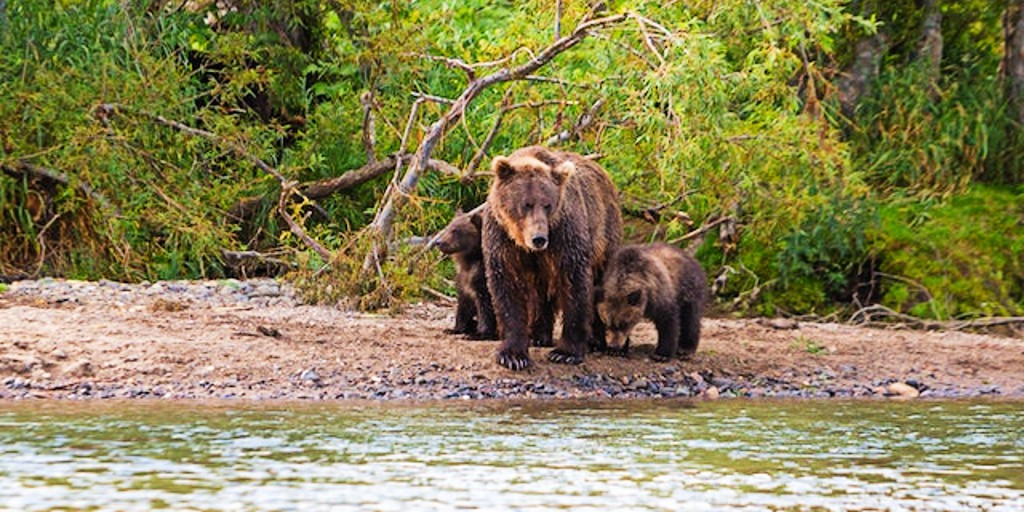
José had told his brother that almost every night a mama bear would visit, accompanied by her two recently born cubs, and when Jorgé planned their visit to Vermont, seeing the three bears was, for David, going to be the highlight.
“You don’t understand kids,” Jorgé told José when they discussed the visit. “Ever since you told David about the bears, he’s had me read the story, The Three Bears, aloud to him every night when I put him to bed, otherwise he won’t sleep. He’s obsessed.”
The first evening, while his parents and uncles ate their dinners, David watch—and rewatched—the Disney cartoon The Three Bears, his eyes glued to the television.
“You say they usually come in the early evening?” Jorgé asked, looking at the time on his iPhone. “By the way Aaron, this is the best roast chicken. Before we leave, will you let me have the recipe?”
“Generally, they show up any time until 9:00, while it’s still light out,” José told his brother. “But there’s no guarantee that they’ll show up at all.”
“I hope they do—for David,” Jorgé said. “I’ve read the story to him so many times that I feel I know it by heart. If they don’t show, he’ll be so disappointed.”
That evening the bears were no-shows. José listened to his brother read the story of The Three Bears—twice—before David calmed down sufficiently for the lights in his room to be switched off.
This pattern was repeated the next three evenings. No bears appeared.
“José, isn’t there something we can do to entice the bears to visit?” his brother asked. “I don’t want David to go home without seeing the bears. Perhaps we could leave them food; that might encourage them,” he added, hopefully.
For the last night of their visit, José promised his nephew they would have a marshmallow roast outside. That afternoon, Jorgé built a fire pit in the driveway near to where José told him the mama bear would bring her two cubs.
“Do bears like marshmallows, tio?” David asked José as they prepared for the roast.
“Bears eat berries and herbs, so I’m sure they like to eat marshmallows,” José told his nephew.
They decided to start the marshmallow roast around 8:00 while there still light, hoping the fire might attract the mama and her cubs. David sat between his father and his uncle, while Mariela brought out the tray with the marshmallows, the Hershey chocolate bars, and the sliced bread.
“This should be a real s’mores roast,” José explained. “Something of middle-America,” he explained to his brother and sister-in-law.
“I want to put the ‘mallows on the sticks,” David said, taking the branches his father had prepared that afternoon. While he began squeezing the marshmallows onto the sticks, his father lit the fire and his mother put pieces of the Hershey bars on slices of bread which she placed near the fire, to melt.
After a few minutes, José excused himself. “I should put the dogs in the house; I’ll be right back,” he told them. José left and called Lily and Mandela to follow him, while Jorgé repeated the story, The Three Bears, to David and Mariela.
Suddenly, above the crackle of the fire in the fire pit, there was a noise coming from the nearby woods.
Growl…growl…GROWL….
“It’s the bears,” David screamed and ran to his mother. “Mama, the mother bear is bringing her cubs,” he told her as he climbed onto his mother’s lap for protection.
Growl…Growl….Growl….
“Jorgé, do something,” his wife screamed. “They’re coming closer.”
Jorgé turned on the flashlight in his iPhone and shined it in the direction of the growling.
GROWL…GROWL…GROWL….
“Take David and go inside,” Jorgé told his wife. She lifted their son in her arms and ran onto the porch and into the house, returning in case her husband needed her.
“Do you see anything?” she asked, but when she saw Jorgé on the ground, his hands on his heart, she rushed to him.
“I think it’s my heart,” he said softly. At that moment, José appeared.
“What happened? Why is Jorgé lying on the ground?” he asked.
“When the bears came, I think he had a heart attack,” Mariela said. “Where’s the nearest hospital? We shouldn’t wait for an ambulance. Can you drive him there, Aaron?”
“José, help me lift Jorgé into the car. Mariela, go back in the house and wait there with David,” Aaron told her. “I’ll call you as soon as I get to the ER.”
When the truck was a distance from the house, Jorgé opened his eyes.
“I think it worked,” he said.
“You looked like you really did have a heart attack,” José told his brother.
“And the growls you made, Aaron, sounded real,” Jorgé laughed.
“They were real,” Aaron told him. “I googled sounds that black bear mothers make when they’re calling their cubs, and played the tape. Do you think David believed he actually saw the mama bear and her cubs?”
“You don’t know kids, as you and José don’t have any, but kids—especially young ones, like David—are very inventive. All you have to do is plant the seed and their creative imagination takes over.” Jorgé sat up in his seat. “David was all set on seeing the mama bear and her cubs, so by creating a scene like we did—and the growling sounded so real that I forgot for a moment that we had planned it all—David believes he actually saw the bears.”
Twenty minutes passed. Aaron turned the truck and headed back to the house.
“I think we should return now,” he said. “Mariela might be worried.”
“Call her and tell her I’m okay, that I didn’t have a heart attack but just a fright that caused my heart to beat faster.”
As they parked the truck, Mariela came running out of the house.
“You’ll never guess what happened,” she said, hugging Jorgé. “I’m so happy it was nothing serious, —but guess what happened after you left?” Without waiting she said, “The mama bear returned with her two cubs.”
“What?” Jorgé shouted.
“After you left and David and I were in the house, we heard a growling. David ran to the window. ‘Mama, come here,’ and I joined him at the window. ‘The bears are here; they came back.’ And sure enough, the mama bear was there with her two cubs, just like you told us they would be, José.”
“I can’t breathe…I need a glass of water” Jorgé whispered, falling to the floor.
“Jorgé, what’s wrong?” his wife asked as she bent over his prone body.
“I think…I think it’s a heart attack,” Jorgé told her.
“That’s not possible, Jorgé. You just came back from the hospital,” Mariela said as she caressed her husband who was gasping for breath and clutching his chest. “José, I think something is wrong; I’ve never seen your brother like this,” Mariela said, stroking her husband’s face.
“Mariela, José will help me put Jorgé back in my truck. José, you stay here with David. Mariela and I will drive Jorgé back to the hospital,” Aaron said.
When they arrived at the hospital, the attendants at the ER put Jorgé on a stretcher and wheeled him into the operating room for the doctor on duty to examine him, while Aaron took Mariela to the waiting room.
“I just don’t understand how Jorgé could have two attacks so quickly,” Mariela said, accepting the coffee Aaron offered her.
“I have to confess, Mariela, that the first wasn’t an attack….”
“What do you mean?” she asked, a worried expression on her face.
“The three of us—José, Jorgé, and me—planned it. Since we couldn’t be sure the mama would show up with her two cubs, Jorgé suggested that I go into the woods and make mama bear sounds, to scare David who would believe that she was really coming out of the woods with her two cubs. By faking a heart attack, Jorgé thought David’s 5-year-old imagination would cause him to really believe that she had come with her cubs,” Aaron explained.
“But she did come, just not when the three of you were there,” Mariela said.
“What I don’t understand is why Jorgé had a heart attack when you told him that the bears had actually been at the home,” Aaron wondered.
“You don’t understand José’s brother, Aaron. He was the one who was all excited about the possibility of seeing the mama bear and her two cubs. David was too, but it was Jorgé who got the boy all worked up, reading him the story at bedtime and watching the Disney cartoon with David. All Jorgé could do for weeks before our visit was talk about seeing the bears. He’s like a kid, really. There are times when Jorgé acts like a 5-year-old. I think when we told him that the mama bear had really come with her cubs, the disappointment of not being there and seeing them was such a shock that it caused him to have a real heart attack.”
Mr. Lande notes: “I was born in Montreal, but have lived most of my life in the south of France and in Vermont, where I now live with my partner on a 500-acre farm, writing and caring for more than 100 animals, many of which are rescues. Previously, I taught at l’Université d’Ottawa where I served as Vice-Dean of my faculty, and I have owned and managed country inns and free-standing restaurants. Recently my stories have been accepted by more than a dozen journals including Bewildering Stories, Archtype and Literally Stories.
“I live in the country where wildlife is a part of life. Every day, I am visited by hundreds of wild ducks and Canadian geese, and bears come by often. “The 3 Bears” is simply a story about everyday life around here.”
Please share this to give it maximum distribution. Our contributors’ only pay is exposure.
I cupped my hands around my eyes and peered into the scummy glass. Dan hadn’t cleaned an inch of grime off those panes, so it was like staring into pond water. There wasn’t any movement, which was enough to tell me that dog wouldn’t hunt. Wherever that jerk Dan Arnold was, it wasn’t here.
Roscoe wedged her nose out the crack in the window on the passenger side and sniffed around. Her thick golden coat remained the only bright thing in my life. “He ain’t here, Ros,” I said. “Maybe somebody got to him before we did.” I walked to the side of the trailer and stared into the thick stand of pine that seemed to stretch on for miles. The sweet syrupy smell of the forest air tickled my nose in all the worst ways—the scent guiding me back to a dark, unmentionable evening spent in that thicket. I shook it off and turned back to my truck.
I cranked the engine; the hood vibrating like always, and let my tires chuck gravel at the siding of Dan’s house as I rolled out. That mean old son of a bitch had something coming, but a lot of like the rest of life, that didn’t mean it was coming anytime soon. Hell, if Dan had answered the door, it was a longshot that I’d actually bark out the monologue I rehearsed with Roscoe on the drive over. She’d thought it was great—but I knew it needed work.
Dan’s mailbox lay on the ground at the end of the long, weedy driveway, the number eighteen barely visible beneath an army of fire ants that made camp of the abandoned structure. I saw a spot of white through the worn metal and something gnawed at me. Who the hell was writing to Dan Arnold?
I snaked my fingers into the only access point and snatched the envelope. As I drew it in, I figured it’d be a bill. Probably overdue. Hell, Dan Arnold was so broke he couldn’t pay attention. An old holler trick was to leave the bill in the box so that if the debtor ever came knocking, a man could just plead ignorance. Although with Dan it wasn’t much about pleading. Ignorance pumped through his veins beside blood, coke, and whatever prescription pills he could farm from the little league bleachers at Jaycee Park.
The exterior of the envelope appeared faded and soggy from last night’s rain, but before I could hold it up to the sun, a bright red car curved around the bend and slowed to a halt. The vehicle was spotless, one of those kinds of things you see walk off the lot in Maynard and head north towards the city. Nice things like that didn’t much belong in Bamber Lake, so when the window drew down to reveal Sara Tucker, I laughed.
“Something funny, Vic?” she said, red hair held tucked behind her ear.
“Who’d you borrow this boat from?”
She popped her gum. “A gentleman might think twice before insinuating like you are. Why can’t this be my boat?”
“Cause this is worth more than your double-wide.”
“I sold it all,” she said. “Antero Energy came knocking with a check in hand. They found what they need somewhere miles beneath my trailer. I’m flush, Vic.”
“Sure you are, Sara. And I’m the owner of Boardwalk and Park Place.”
“Oughta send your ass to jail then. I’ll call the Sheriff. Ya know, it’s criminal to look through somebody’s mail, even if it’s just Dan.”
I figured I shouldn’t admit much of anything. “You seen him?”
“Dan? Or the Sheriff?”
“Dan. We were supposed to hike into the bush today and—”
“Nah, he wasn’t down at Hoovers last night neither.”
I crossed my arms. “Don’t tell me you drove this behemoth down to Hoovers.”
“I did. I ain’t lying about Antero. I’ve got cash to burn.”
“And parked it in the lot? You’re asking for trouble, Sara Tucker.”
“I don’t have to ask for nothing, Victor Redding. I’m trouble through and through.” She glanced down at her lap, then whispered something foul. That was the girl I knew. “I’ve gotta run. Don’t worry, I won’t tell Dan you were sifting through his mail. Come by the house sometime if you want a drink. Might as well say goodbye to the place.”
“More like good riddance.”
“Don’t be sour you didn’t have the good fortune of a real estate boom when you owned the lot. Ain’t no use in blaming a friend when it was fate.”
I cocked out my middle finger and waved it. “Adios, Sara.”
As she left, I stood in her dust cloud and spit onto the ground. With my cell phone flashlight, I held the envelope over the bulb and squinted at the outline of a logo. When I recognized it, I dropped the paper to the ground and cursed. Antero. They’d bought half the holler and hadn’t quit. I didn’t own anything worth a lick, but I’d lost half my friends to the damn company, and now I was sure to lose a hell of a lot more.
I pocketed the envelope, nudged Roscoe back onto the passenger side of the cab, and sped towards home and rang John Boeringer.
An hour later, I met John at the junkyard and explained the plan I didn’t want to mention over the phone. He didn’t flinch, didn’t try to talk me down from it—just asked for the cash up front and that we keep things discrete. I knew John and Dan had bad blood from an old scrap over doe-eyed Penny Sewell, but expected more hesitation. I guess when you spend twenty years of your life killing men, it doesn’t much matter whether you’re in uniform or not. Although, I wondered how Penny would look at the whole mess down the road.
After a few minutes, John gave me the list. It was short and simple, a lot like John. He gave me an hour to get the ingredients, and I drove off into the junkyard like a kid on a scavenger hunt. By the time I’d finished, I had most of everything. The rusted propane tank rolled around my truck bed as I slowed to a halt beside John’s shack of an office.
John Boeringer looked around, hummed a bit, and then slapped the side of the truck and nodded. “That’ll do.” He flipped around the OPEN sign to CLOSED. “I’ll follow you over. Get you squared away. Then you’re on your own and we never spoke.”
“Understood.”
I swallowed hard. John paused for a second and kept his eyes on me. “There’s usually simpler ways than this, you know. You two could talk it out. This about a girl?’
“Maybe,” I said.
“I heard he went home with Sara few nights back. Knew she rents your old property but didn’t know you two had history. But I guess it’s a small town.”
“He went home with Sara Tucker?”
“Yeah—think that’s her family name at least. Reddish hair. Voice like thunder.”
“That’s Sara Tucker.”
“Look, I don’t know—maybe she was just catching a ride home with him. Not my place to ask.”
“It’s not about her. She’s good people. It’s an old matter.” “Right,” John said. “Let’s get moving.”
John called out orders like he was a chargehand, but I did what he asked and proceeded without question. My eyes drifted into the forest from time to time, but that was pure instinct. Something in my gut told me I shouldn’t stop and think, just act. That’s the horror of a secret that only two men keep—the only way out was if that number dropped to one. I didn’t hate Dan. I didn’t hate Antero Energy or their damn payments. Hell, I didn’t hate anybody or anything but myself. But a cornered cat will fight.
John knelt from the front porch and slowly laid the doormat back over his contraption. “That’ll do the trick.”
“Alright,” I said.
“No going back now, Vic.”
“Understood.”
He wiped his hands on his jeans and held one out to me. “I know you’re good for the back half of the payment. Get it to me by the end of the month. I’m not going to come break kneecaps when I’ve got this much skin in the game.”
“I’ll pay every penny.”
John walked back towards his junker of a car, and I followed. Worst-case scenarios raced through my mind. “What if he comes through the back?” I asked.
“Huh?”
“You said the rig is under the front door mat. Once he steps on that—well, what if he takes another path?”
“Eventually, the man’s going to step out the front door. Stay patient. And stay far away.”
“Right.”
“Keep your ear to the ground—this type of blast, it’ll sound like thunder in the distance from your house. Anybody else live within earshot of here?”
“My old place is about a mile down the road, but I couldn’t hear shit back there. Trees were too thick. Only sounds that made it through were the howls of coyotes. Plus, Sara drove off a while back, so we’re clear.” “Right.”
“Thanks John,” I said. “I owe you one.”
“Nah, you owe me ten grand. But I’ll be seeing you.”
John’s car sputtered down the road, and the forest went silent. I stood beside my truck and traced through every next step. Dan would be dead. The small world he kept would be sad, if only for a little while, then life would move on. Somebody, maybe his step-brother in Tulsa, would get a letter from Antero Energy and they’d stumble into a windfall. The land would be theirs and, depending on how quickly they dig, somebody would find the body of Reece Thompkins. The half-wit sheriff would look for the simplest math possible and quickly tie Dan to the murder. My hands would emerge clean and I could finally get some damn sleep.
I took one last look back at the house and then made my way down the long driveway. The mailbox was still on the ground. I cranked the radio loud, thinking maybe a little slide guitar would drown out the worry in my mind. I turned left and made it two hundred feet before sweat dripped down my forehead.
A half mile later, I passed a red car as I left the gravel roads and lurched onto the pavement. As my tires hit the concrete, I jumped on the brake. I knew that damn car. Sara.
I cranked the wheel, my front tire falling into the shoulder and then back onto the gravel. I drove faster than ever before, although I already knew what was waiting for me at the end.
John was right. The boom did sound a lot like thunder.
Benjamin Bradley is an active member of the Mystery Writers of America as well as a graduate of the Gotham Writers Workshop and the Red Bud Writing Project. He’s the author of the Shepard & Kelly Mystery series through Indies United Publishing House. By day, Benjamin supports homelessness organizations nationally on embedding healthcare for our country’s most vulnerable populations from his home in Raleigh, North Carolina. Learn more on his website: Benjaminbradleywrites.com
Please share this to give it maximum distribution. Our contributors’ only pay is exposure.