Category Archives: Poetry

“I Hear America Singing” Poem by Walt Whitman (1860)

I hear America singing, the varied carols I hear,
Those of mechanics, each one singing his as it should be blithe and strong,
The carpenter singing his as he measures his plank or beam,
The mason singing his as he makes ready for work, or leaves off work,
The boatman singing what belongs to him in his boat, the deckhand
singing on the steamboat deck,
The shoemaker singing as he sits on his bench, the hatter singing as
he stands,
The wood-cutter’s song, the ploughboy’s on his way in the morning,
or at noon intermission or at sundown,
The delicious singing of the mother, or of the young wife at work,
or of the girl sewing or washing,
Each singing what belongs to him or her and to none else,
The day what belongs to the day—at night the party of young
fellows, robust, friendly,
Singing with open mouths their strong melodious songs.

Walter Whitman Jr. ( May 31, 1819 – March 26, 1892) was an American poet, essayist, and journalist; he also wrote two novels. He is considered one of the most influential poets in American literature. Whitman incorporated both transcendentalism and realism in his writings and is often called the father of free verse. His work was controversial in his time, particularly his 1855 poetry collection Leaves of Grass, which was described by some as obscene for its overt sensuality.

from Wikipedia


If you would like to be part of the Rural Fiction Magazine family, follow this link to the submissions guidelines.


Image generated by AI


“Halloween – be prepared!” Poem by Sarah Das Gupta

"Halloween – be prepared!" Poem by Sarah Das Gupta: Sarah Das Gupta is a retired teacher from Cambridge, UK. Her work has been published in 12 countries: US, UK, Canada, Australia, India, Germany and others.
First, the right setting,
the right lighting, the right sounds.
Thick, mothy darkness,
a moment of moonlight,
preferably green and watery.
Swirls of mist, very spooky,
dark forest, empty shopping mall,
haunted house, ruined church
abandoned space station,
lonely cliff top, ghostly train.
Now, noises off-faint footsteps,
clinking chains, shocking shrieking,
harrowing hooting, crazy cackling.

Secondly, remember props:
buy those pumpkins, 
carve those faces, empty sockets,
ghastly grin, glowing orange 
in the twilight, casting shadows
in the moonlit garden.
You also need a manic mask-
think – clown, skeleton, dummy,
witch, zombie, green alien.
Costumes must be truly terrifying-
horribly hellish.
Black, flowing cloaks, blood-stained dresses,
phosphorescent rib cages, satanic goat’s horns.
All the cast of the darkest nightmares

Sarah Das Gupta is a retired teacher from Cambridge, UK.Her work has been published in 12 countries: US, UK, Canada, Australia, India, Germany and others.


Please share this to give it maximum distribution. 

If you would like to be part of the Rural Fiction Magazine family, follow this link to the submissions guidelines. If you like contemporary dark stories and poems, you may also want to check out The Chamber Magazine.


Three Poems by David Henson

Three Poems by David Henson
Tall Corn Oakley
I swear by June the corn looked down
even when I stood astride eight 
growling cylinders of Deere.
On the fourth I put two
of my broad-shouldered boys
‘tween my my number twelves and the hood
and still couldn’t reach the first husk.
August, as hot months go, went
like a fairy tale
of clouds that swallowed
ear after ear of golden eggs.
Not a kernel knuckled under
to the early September drought.
And fall didn’t stop my climb
to the top. Where I ended up
you won’t believe,
but I tell you true: That crop
gave Harvest Moon a whole new meaning —
sure as I’m standing here. 
Oakley On Mud
Mud! We’ve had fields so muddy
a man would sink to his knees
if he was walking on his hands. 
I’ve seen butterflies land on a cabbage 
and push the whole head under.
You know how muddy a field is
when you shine a flashlight on it,
and it won’t support the spot. Why
once a flock of crows
flew over a sinking tractor —
the downdraft spun’em to the ground.
I sunk in over my head once 
ten years ago. Held my breath
fifteen minutes ‘til they dug me out.
Look here — See this dirt under my nails?
Never did clean’em
so I wouldn’t forget. 
Oakley on the Level
Now, with laser controls
you can pick bacon from your teeth 
while you pull the planer
and still get the grade perfect
for irrigating. Years back
you had to study the land, plant
every bump, dip and ripple
in your brain. 
One fellow I knew
put a half-glass of water
‘tween his legs in the tractor,
cut the slope by the tilt of the water.
Another could tell by watching his collie
walk alongside him. Me — I used
the sun and the bill of my cap. Ah,
back then when you pumped water
in one end of a row
and it flowed to the other 
just right —
felt like you were flowing with it. 

These three poems appeared in Sou’wester in Fall, 1985.


David Henson and his wife have lived in Brussels and Hong Kong and now reside in Illinois. His work has been nominated for three Pushcart Prizes, Best of the Net and Best Small Fictions and has appeared in numerous journals. His website is http://writings217.wordpress.com. His Twitter is @annalou8


Please share this to give it maximum distribution. Our contributors’ only pay is exposure.

If you would like to be part of the Rural Fiction Magazine family, follow this link to the submissions guidelines. If you like contemporary dark stories and poems, you may also want to check out The Chamber Magazine.


“A Meditation on the Land” Poem by David Salner

"A Meditation on the Land" Poem by David Salner:  Of David Salner’s sixth poetry collection, John Skoyles, Ploughshares poetry editor, said: “The Green Vault Heist is not only a beautiful book, it is great company.” Salner’s debut novel, A Place to Hide, won first place for 1900s historical fiction from Next Generation Indie Book Awards. This poem is reprinted from The Green Vault Heist. Both books are available on amazon or from the author dsalner@hotmail.com 
—remembering ¬¬a farm foreclosure.
For Darrell Ringer, 1953-93
“Thank you,” he said, while the black eyes 
drilled from the shadow of his ballcap 
as we stood in the sunbaked square 
of a Kansas town where we’d just rallied 
against such business as no one with honor 
should dare to defend—then drove 
over pocked macadam, between shoulders 
cascading with purple wildflowers, wheat 
turning green to gold—the field after field, 
the rich carpet called forth, turned over, 
culled with such care that I, for one, 
don’t have blisters enough to imagine—
and beneath it the black earth seethes 
with world-feeding life. Then we arrived 
at his farm. Beautiful, I’d often thought, 
this life, how the green soybean hug 
at the earth and alfalfa explodes into pink 
and animals trudge toward us in the slow-
motion rhythm of paddock-bound shadows 
until their heads hike up with quick interest 
when haybales are pitched with a thud
between the tarnished steel rails of the crib. 
But the earth and its moods are uncertain, 
despite the disconsolate pleading it gets
when sleep doesn’t come, that a storm 
please pass by without flooding at harvest; 
that a drought not set in, the wind not whisk
topsoil to a powder-dry ash floating off 
in a glitter-filled cloud to the red 
of a summer-long sun. And of course 
words are addressed to the Notice of Debt 
that’s attached like a leech to the title, 
which is after all a mere sheet of paper 
approved by the courts but without 
the least smell of wet dirt to grace it. 
And of all he foresaw or was faced with, 
what he couldn’t agree to was losing this land 
without even a fight. They might take it all, 
but the fight, at least—they couldn’t take that. 

Of David Salner’s sixth poetry collection, John Skoyles, Ploughshares poetry editor, said: “The Green Vault Heist is not only a beautiful book, it is great company.” Salner’s debut novel, A Place to Hide, won first place for 1900s historical fiction from Next Generation Indie Book Awards. This poem is reprinted from The Green Vault Heist. Both books are available on amazon or from the author dsalner@hotmail.com 


Please share this to give it maximum distribution. 

If you would like to be part of the Rural Fiction Magazine family, follow this link to the submissions guidelines. If you like contemporary dark stories and poems, you may also want to check out The Chamber Magazine.


“Sheepwash Creek Ginko” Poem by Michael Leach

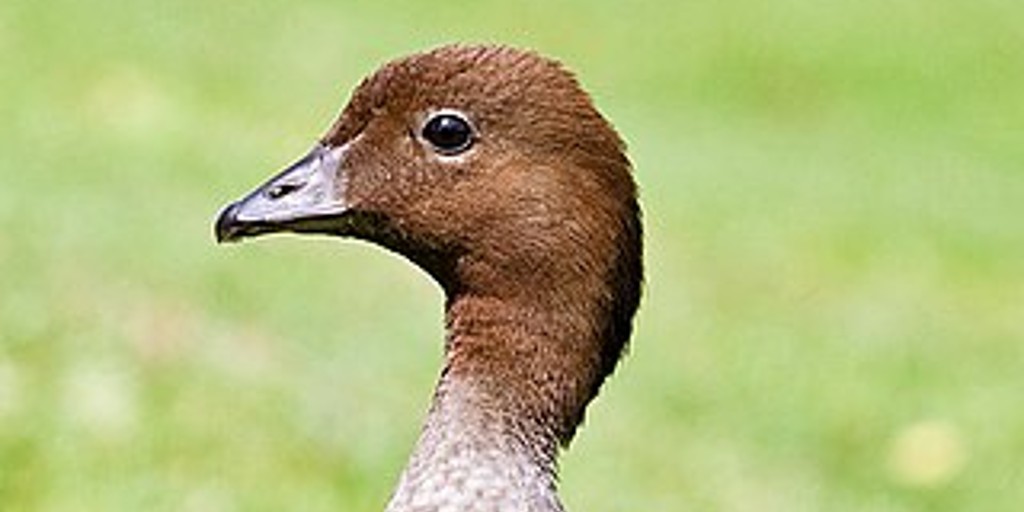
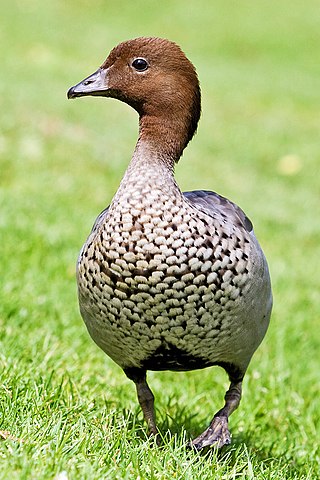
Australian Wood Duck. Photo by Fir0002/Flagstaffotos

Strathfieldsaye, Dja Dja Wurrung Country

i.
creekside—
river red gums
creak

ii.
perched
on a river red gum branch—
an Aussie wood duck 
goes gnaarrk…

iii.
amidst birdsongs—
Eastern banjo frogs
resonate

iv.
I walk along this creek—
all fellow walkers 
say hi
  • Ginko is the Japanese term for a haiku walk, which involves going on a walk to find inspiration for haiku writing.

Michael Leach is an award-winning Australian poet and academic at Monash University School of Rural Health. Michael’s poems reside in various outlets and his two books: Chronicity (MPU, 2020) and Natural Philosophies (RWP, 2022). Michael lives on unceded Dja Dja Wurrung Country and acknowledges the traditional custodians of the land.


Please share this to give it maximum distribution. Our contributors’ only pay is exposure.

If you would like to be part of the Rural Fiction Magazine family, follow this link to the submissions guidelines. If you like contemporary dark stories and poems, you may also want to check out The Chamber Magazine.