Category Archives: flash fiction

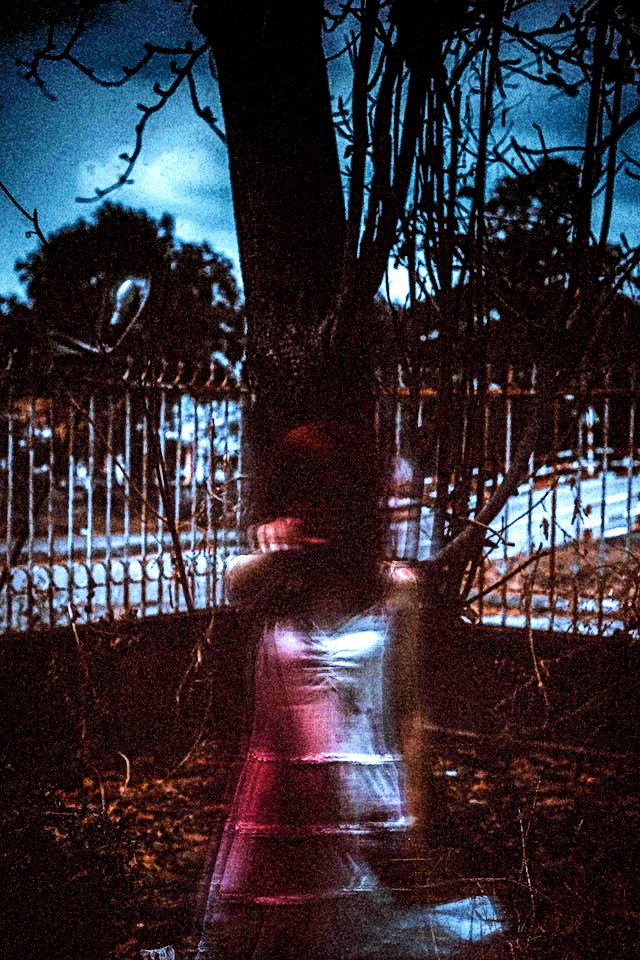
“The Tour” Flash Fiction by Cheryl Barghout

"The Tour" Flash Fiction by Cheryl Barghout: A lifelong resident of New England, Cheryl is captivated by its haunted history. Coupled with her love of the mystery-horror genre, she is inspired to write stories of spooky New England. Cheryl is an RN with a degree in nursing and English who enjoys playing tennis and trying out new recipes.

Eeeeeek…hoo-hoo-hoooo…

An ear-splitting cry ricocheted across the crumbling tombstones, sending an uneasy shiver down the backs of the tour group.

“Not to worry…,” their guide’s voice rumbled like distant thunder, “merely a screech owl on his nightly hunt for rodents and the like.”

Emily had butterflies in her stomach.

Exploring a cemetery on Halloween seemed like fun at first, which is why she accepted the dare last week from her friend Sarah with a laugh. But now that she was here, she felt a bit on edge. The Halloween Graveyard Ghost Tour, a yearly tradition in this small New England town, promised tales of local haunted history and the possibility of spirit sightings. Although Emily didn’t exactly believe in ghosts, she couldn’t completely dismiss the idea, either.

The night was chilly and, except for the cry of the owl, utterly silent. Smoky streams of clouds hung over the slivered moon before beating a hasty retreat as if sensing the spirits below would soon be out to prowl.

While waiting for the tour to begin, Emily huddled under the barren limbs of a massive oak with Sarah and the others—the cemetery loomed just ahead. Dating as far back as 1660, the ancient burial grounds sat on an eerie stretch of frost-heaved earth marked with gravestones in no logical pattern. It was as if the spirits of the dead had arranged them for some sort of otherworldly board game that only they knew how to play.

Their tour guide, Andrew, a dashing figure with his top hat and billowing black cape, carried a lantern whose flame flickered bravely against the gloom of the late October night. Emily felt a tingle of excitement at the thought of exploring the cemetery with such an attractive man leading the way—until she reached the entrance gate.

A rusty iron behemoth, it stood like a grim sentinel to all who entered, swinging inward on shrieking hinges as if expecting them. Something about that gate and the inky darkness beyond gave Emily pause as a cold sense of foreboding washed over her, creeping down into her bones. She took a deep breath and did her best to ignore it as she tucked a wayward curl behind her ear and marched along with the group.

No one spoke as they entered the cemetery. Leaves crunched beneath their feet while the hushed silence of death kept up a never-ending refrain. Through the thin rubber of her sneakers, Emily imagined she could feel the ground pulse with the souls of the dead preparing to make an entrance.

 Stopping in front of an elaborate gravestone, Andrew held his lantern high to reveal its intricacies. The weathered grey stone stood about five feet tall and was flanked by what looked like angels kneeling on either side. As her eyes adjusted to the light, Emily realized they were actually snarling gargoyles with fangs bared. Their talon-like claws clutched the base of the stone as if through mere might alone, they could yank the unfortunate occupant back from the dead.  A large, delicately carved skull sprouting a pair of feathery wings topped the stone, its mouth spread wide in a rictus grin. From her vantage point, Emily could only make out the words, Here lies the body of…

“Tonight, as you walk through this lonely patch of land, tread lightly, my friends,”

Andrew explained with a dramatic flourish, “For here lie the souls from centuries ago, those of the brave and the bold, those of lost youth and innocence, and those who may have struck a deal with the very devil himself!”

 Sarah moved closer to Emily, grabbing her hand.

A whiff of something foul seeped into the crisp night air, growing stronger with each breath Emily took.  She couldn’t place it at first, but as the fetid odor lingered, it dawned on her—sulfur. Andrew’s body stiffened, but he did nothing except raise the lantern higher while staring into the pitch-black beyond the gravestone

Strange tendrils of mist began to form above the stone—wispy outlines in vertical rows, and for a moment, Emily thought her eyes were playing tricks on her. She rubbed them with the heel of her hand but to no avail. The vaporous strands continued to multiply, swirling and rotating as if batted about by an errant breeze, though the night remained deathly still. They reminded her of the long, bony fingers of a wraith-like harpist who had performed during her senior year of high school. The woman’s fingers had flown up and down the strings as if fueled by an unseen force, their motion blurring like hummingbird wings.

But there were no soft, melodic notes drifting in on the sulfurous cemetery air, and no harp emerged from the shadows.  Emily watched in disbelief, feeling her mouth go dry as, inch by inch, the spinning mass slowly took shape, and a pale apparition appeared, hovering over the gravestone. With empty, black eye sockets and corkscrew curls cascading down its back, the spirit focused all its ethereal attention on Andrew, who seemed unable to take his eyes off the spectral display.  Slowly removing his hat, he bowed deeply and exclaimed with awe, “Madame, you honor us with your presence!”

Emily’s heart skipped a beat, and she dropped Sarah’s hand. She had to get closer—had to see the spirit more clearly. Taking a tentative step forward, she crept nearer until she was standing shoulder-to-shoulder with Andrew. An involuntary squeak, like air being sucked in through tinny, timeworn pipes, leaked out of her. Her hand flew to her mouth, but it was too late. The spell between Andrew and the spirit had been broken.  When the ghost whirled toward the source of the noise, Emily knew. Terror bubbled in her chest, as caustic as acid, and she began to shake. It was unlike anything she had experienced in her twenty-something years on earth—as if a looking glass from beyond the grave had suddenly materialized in front of her.

The ghost was a dead ringer for Emily!


A lifelong resident of New England, Cheryl is captivated by its haunted history. Coupled with her love of the mystery-horror genre, she is inspired to write stories of spooky New England. Cheryl is an RN with a degree in nursing and English who enjoys playing tennis and trying out new recipes.


Please share this to give it maximum distribution. Our contributors’ only pay is exposure.

If you would like to be part of the Rural Fiction Magazine family, follow this link to the submissions guidelines. If you like contemporary dark stories and poems, you may also want to check out The Chamber Magazine.


“Sagging” Flash Fiction by Alan Caldwell

"Sagging" Flash Fiction by Alan Caldwell: Alan Caldwell has been teaching in Georgia since 1994 but only began submitting writing in May 2022. He has since been published in over two dozen journals and magazines. He is being nominated for the Pushcart this year. 

The porch sagged under the damp weight of rotting board-lumber and planks. Many times, Ruth had seen sweating, virile men insert fresh timbers, some still secreting sticky sap, to lift and support sagging porches. Sagging porches were a common feature among the rural cottages and shacks that still stood in her memories. This porch, the very porch of her fondest recollections, was presently far too putrefied for support by even the freshest of sticky timbers and the most virile of sweating men. The remnant proud paint and poor whitewash could cling only to the very edges of the decaying siding and soffit.  Ruth surveyed the disintegrating structure from the tangled brier thicket that had once been the front yard, the bright flowers her mother had planted now throttled by hardier and more dangerous vegetation.

Ruth feared that her modest weight might represent the proverbial straw that fell the entire structure, and yet she decided that summoned souvenirs of childhood might justify the risk. She proceeded with an abundant caution.

The floor creaked, and perhaps even swayed, but didn’t collapse. The front door, though moisture swollen and stiff,  opened with a strong shoulder shove. Ruth had always been a woman of strong shoulders. The opening door stirred thick dust that then floated in the rays that bore through the cracked and dirty windows of the front room. Though the scent and sights of decay and corruption were omnipresent, the home appeared much as it did when she had found her mother those three decades ago lying on her bed, cold and stiff, her hands folded across her chest as if preparing for an inevitable and endless slumber.

Ruth recalled the sadness of that morning and how the solemn men had wrapped her mother in a white sheet and slid her into the back of the long cream-colored hearse. She recalled how she had lingered for an hour or more among her mother’s pink and blue hydrangeas and wept. She recalled how she had driven by the homeplace many times and contemplated selling it or even burning to the ground. She finally decided that the lodging should pass into oblivion at its own pace, much as she had decided for herself, as if she and the structure shared a common senescence.

Ruth examined each room, its contents, and evocations. Finally, she came to her mother’s bedroom. She approached the large travel trunk that rested at the foot of the black iron bed frame. As a girl, Ruth had fancied that the trunk cloistered priceless treasures. A brass key still protruded from the lock and Ruth had but little trouble turning the key and opening the lid. Inside, she found neatly folded fine linens and bedcovers.  At the bottom of the chest, as if purposely hidden, she discovered a most beautiful and colorful patchwork quilt with perfectly hand-sewn geometric figures forming perfectly aligned rows and columns. Her mother, and her mother before her, had faced, bated, and backed many quilts. Ruth kept and treasured those coverings, but she had never seen this one. It appeared new, as if it had been completed only a few weeks, or even days, before.

Ruth neatly folded and returned all of the other lines and bedding to the trunk, but kept the new quilt pulled close to her breast.

She then carefully placed the quilt on her mother’s bed, making certain that it was perfectly aligned. She stepped back to admire its craft and symmetry and decided that it was the most elegant quilt she had ever seen.

Ruth then noticed that she was unaccountably tired and that her shoulders sagged with fatigue. She decided to recline atop the quilt on her mother’s bed, and soon found herself in a state of what one could only describe as complete bliss, as if she had consumed a hypnotic potion of some sort. She lingered in this state for what must have been an hour or more before falling into a deep and absolute sleep.  She began to dream of her childhood and of all the seasons and of all her revelry in all of those seasons. She saw all of these things through her very eyes, as if she were seeing them once more in actual time. Dreams and visions of her youth continued, and she could identify her lodging, its fresh white paint and level porch. She could see and touch the pink and blue petals of her mother’s flowers. She could detect the sweet scent of pound cake wafting through the open window. And finally, she could hear her mother humming soothing hymns from inside the kitchen.


Alan Caldwell has been teaching in Georgia since 1994 but only began submitting writing in May 2022. He has since been published in over two dozen journals and magazines. He is being nominated for the Pushcart this year. 


If you would like to be part of the Rural Fiction Magazine family, follow this link to the submissions guidelines. If you like contemporary dark fiction and poetry, you may also want to check out The Chamber Magazine.

Please repost this to give it maximum distribution. 

“Chile Heaven” Flash Fiction by David Cameron

David Cameron catches poems and stories half-formed from an off-hand comment or a surprising twist of phrase. His career was as a Presbyterian pastor in Virginia and New Mexico, and a Meals on Wheels director in western NC where he now lives with his wife and son.
“Stringing Ristras” at El Rancho de las Golondrinas, Santa Fe, Photo by Larry Lamsa. No changes have been made to this photo. This photo is under the Creative Commons Attribution 2.0 Generic license.

It was the farthest north she had ever been, but it was nowhere near as far north as Clementina wanted to go. She had learned from maps that north was up. She had learned from lying on her back looking at clouds that the sky was up. She had learned in science class that the moon was in the sky up beyond the Earth’s atmosphere. She had learned in church that heaven was up somewhere beyond the moon—even beyond the stars.

Clementina wanted to go north to heaven and see her abuela; stand beside her again at the cracked Formica-topped kitchen counter and fold their Christmas tamales tight until they had made an even hundred. She wanted to go, but not yet.

She would settle for going north to the moon, but only if her friend Francisca could go with her. Francisca was Jicarilla Apache on her mother’s side and named after Francisco Chacon,

the Apache chief who kicked blue coat ass at the Battle of Cieneguilla in 1854. Clementina thought an ass-kicker would come in handy on the moon.

Clementina had been a little bit north before to Truth or Consequences with her mother for what her mother called a “girls’ spa weekend.” They had paid to sit in a hot spring pool and drink Coca-colas, the good ones from Mexico with real cane sugar. Her mother said she could have stayed all day soaking her bones, but they only had enough money for an hour. They saved enough to have carne adovada that night at La Cocina—with red chile, of course. Carne adovada requires red.

Clementina had traveled even farther north on a school trip to Socorro to see the Very Large Array of radio telescopes that listen for messages—greetings or jokes or recipes—from aliens in the north part of the universe. She laughed to herself to think of what an alien joke would be like. Would an alien recipe look anything like her tía Julia’s recipe for posole?

But now she was way up north in Albuquerque—the big city. It was an annual trip for her father, Miguel, a big man with a small chile farm who had been growing chiles forever. The harvest had been good, but it had been hard to find pickers. Miguel had picked along side the others from dawn to past dusk while Clementina helped feed them all. Miguel shipped most of his crop to the big processors, but he always saved the best of his chiles to bring himself to Albuquerque on his old flatbed truck with the removable sides. They were perfect chiles with just the right amount of heat.

Miguel loved having Clementina with him anytime, and she had finally been free to accompany him on his delivery to the Hatch Chile pop-up store in the South Valley that had been selling Miguel’s special chiles every year for over twenty years. Tiago, the proprietor, took time off from his regular job to sell chiles when the harvest came in. The site for his pop-up was a buddy’s vacant used car dealership, and Tiago depended on Miguel’s chiles. His customers knew they were the best.

Miguel sounded the horn when they pulled into the cracked asphalt parking lot next to the small shed where Tiago had his makeshift office. A small, black dog leapt up from under an outside table and barked a greeting. Tiago came from the shed wearing a green cap that read, “Chile Heaven.” It matched the chipped sign that hung over the shed. Tiago had used the same sign since the beginning.

The men hugged and slapped backs while Clementina patted Zoro, the grinning dog. Miguel brought his friend over and introduced him to his daughter, pride puffing his chest and widening his grin. “Bienvenida, señorita,” Tiago said, bowing low. “At last, I meet the famous Clementina. I have heard about you for 20 years!” Clementina laughed, “I’m only 13.” “Yes,” Tiago said, “But your papa has been talking about you for 20 years.”

Tiago had red chile ristras hanging across the front of the shed and roasting baskets ready to fill. It was mid afternoon, and Tiago knew it was the perfect time to begin roasting the chiles. Soon the distinct aroma would fill the neighborhood, and by the time people were getting off from work, the parking lot would be crowded with patrons carrying everything from burlap sacks to washtubs to fill with the seasonal staple they craved.

Clementina and Miguel pitched in to keep the chile roasting baskets full and turning and also to help serve customers. It was a fiesta atmosphere with mariachi music blasting from Tiago’s battered CD player. The site was crazy busy for a while, but by 7:30 p.m., the roasters were quiet. Tiago pulled a chain across the entrance.

Miguel went to Blakes for cheeseburgers, and they sat in lounge chairs eating and enjoying the evening air. They would soon drive back to Hatch, and it would be late when they got in. It had been a long, full day. Clementina felt good. Her papa had wanted her company, and she knew she had been a big help to him and Tiago.

Clementina lay back in the webbed, aluminum chair and looked up at the shifting clouds. She thought about being all the way north in Albuquerque from her little home in Hatch. Clementina knew she and Francisca may not make it to the moon, but maybe, when they were older, they could go as far north as Santa Fe. They may or may not have to kick ass when they got there. Clementina knew she would not be with her abuela for a while, but she also knew her abuela would have loved to be with her there that day under the big New Mexico sky in Chile Heaven.


David Cameron catches poems and stories half-formed from an off-hand comment or a surprising twist of phrase. His career was as a Presbyterian pastor in Virginia and New Mexico, and a Meals on Wheels director in western NC where he now lives with his wife and son.


If you would like to be part of the Rural Fiction Magazine family, follow this link to the submissions guidelines. If you like contemporary dark fiction and poetry, you may also want to check out The Chamber Magazine.

Please repost this to give it maximum distribution. 

“Grady Painted Water Towers” Micro-fiction by Alan Caldwell

"Grady Painted Water Towers" Micro-Fiction by Alan Caldwell: photo of water tower

Grady painted water towers.

He dangled in human bird cages secured by ropes. He moved from town to town, traveling with crews who followed the work. Sometimes in the early spring or fall, the sun glared off the white paint, blinding his eyes but feeling pleasantly warm on his back. Some winter days his hands were so cold he couldn’t grasp the rollers. In summer, the dog-day heat stole his water, his urine stream weak and dark. The men who painted water towers spoke of falls. Each carried stories, macabre stories about men bursting apart on impact, men impaled on fences. The farther a man fell, the luckier he was, they said, a soaring, and then a painless blackness. The men joked that they feared the stop but not the fall.

Grady had a wife. She waited tables and then waited in her cornflower blue dress, moving the curtains aside when she heard his truck tires crunching the gravel. Grady had a son, his hair curly and dark like his father’s. Grady always brought the boy a surprise when he returned, a bag of candy, a Matchbox car, and finally a bike, a Huffy with a breadloaf seat. He ran behind the boy as he pedaled on the gravel, his hand on the boy’s back, finally freeing the boy when he could maintain his own balance.

Grady fell from a worn cage in Waycross, an early Autumn storm blowing the platform away from the edge, Grady leaning to grasp the guide rope. He wasn’t lucky; he fell less than twenty feet, no time to soar and no blackness, just a cracking sound, a pain above his belt that stole his breath, a four hour ride in a pickup bed, swaddled in painter’s tarps. Grady lay in the bed for three weeks, the trailer smelling like sweat and sickness. He took the pills, and he slept, and then took the pills and slept again. He awoke and swooned and slept again and when he awoke again they were gone, they were all gone, the cornflower blue dress, the Matchbox cars, and the bike with the breadloaf seat.

Grady traded pills for a ride to the pharmacy for more pills. Then he slept, and when he awoke, the pills were as gone as the dress, the cars, and the bike with the breadloaf seat. Then they came looking for the pills that were gone and beat him for hiding the pills he no longer possessed. Then they came again, and beat him again, and told him to leave and come back when he had more pills.

Grady left, stumbling west along Highway 78, his left leg dragging a trail through the Autumn leaves that gathered along the shoulder. Grady shuffled and faltered. Some time after he turned north, Grady noticed that he was being followed, a tall and lean dog, black with white socks, a white spot on his forehead shaped like a heart.

Grady and the dog rested, and then slept, beneath an aged and sagging church pavilion. 

When they awoke, an old man in overalls was raking sweetgum balls from the gravel on the ancient graves.  

The old man helped Grady and his dog into the cab of his truck. Behind the old man’s trailer was another trailer, older and smaller than the first, but clean, a large tulip poplar dropping its yellow leaves on the trailer’s roof. The old man unlocked the door and led Grady and the dog inside. The earth tones comforted Grady and the rooms smelled neither of sweat or sickness. A pitcher of water and a loaf of unsliced bread waited on the table.


Alan Caldwell has been teaching for 29 years, but only began submitting his writings last May. He has been published in almost two dozen journals and magazines since. 


If you would like to be part of the Rural Fiction Magazine family, follow this link to the submissions guidelines. If you like contemporary dark fiction and poetry, you may also want to check out The Chamber Magazine.

“Marbles” Flash Fiction by Alan Caldwell

"Marbles" Flash Fiction by Alan Caldwell: photo of multi-colored glass marbles

The father’s breathing sounded like marbles rolling on a hardwood floor. The boy had heard this comparison used to describe the death rattle before. The old people always said this, like people on the news always said that a tornado sounded like a freight train. The boy had heard tornados that sounded like trains and now he heard death that sounded like marbles.

The nurse said this sound rarely lasted for more than a few hours. She saw death almost daily. She was a clean and pretty lady, an expert in human exits. She said this at 5pm. It was now 3am. She also said that this rattle caused no pain, but those who might confirm this never did. It sounded like it hurt.

The mother slept on the couch, soundly, not ten feet from the rattle while the boy moved from seat to seat, the foot of the father’s bed, and kitchen chairs, and even the floor.

The boy thought of the last few days, and then the last few months. He thought of the father’s questions about what sins Jesus might forgive and which ones might preclude pardon. The boy quoted the relevant red passages from memory. The father admired the scriptures and the boy who memorized them. The boy knew them all, but believed only a few. The father liked believing in the boy and the reassurance he gave, and the boy liked giving the reassurance he himself would never receive. It was a small lie, he thought, smaller than those the dying father and sleeping mother told.

Then the boy thought mostly about promises. The father made those he didn’t keep, but the boy always believed he would have kept them if he could, and he always believed he might keep the next one. It was here that he saw his faith disappear like wisps of holocaust smoke, every future lie reflecting an original one.

The boy also thought about his own promise. The father feared suffering more than retribution and made the boy promise that he would end his suffering when the time came. Believing in mercy, the boy had agreed, though he knew others had begged the father for mercy he never gave. The boy sat for two long hours, his back against the kitchen wall. The rattle never changed in tone or volume. Then the boy nodded asleep and dreamed, or remembered, the father putting his pistol to the head of the boy’s dog, his back broken, his hips twisted topsy-turvy by the car’s impact.

The sound of the shot awakened him, and something inside him.

The boy walked to the father’s bed. He placed his palm against the father’s scalp. It was cool to the touch, like the hood of a car left sitting in the shade, its engine having been shut off for hours. Cool, and yet the rattle continued.

The boy unfolded a damp cloth and wiped the father’s face one last time. He lay the cloth over the father’s face, covering his eyes. He clasped the father’s nose between his left thumb and forefinger and pressed his palm over the mouth. The process reminded him of a child forming a snowball from cold white powder.

The boy loved the father and hated that he loved him.

But, most of all, he hated the sound of the marbles, and then there was nothing left to hate.


Alan Caldwell hs been teaching for 29 years, but only began submitting my writings last May. He has been published in almost two dozen journals and magazines since. 


If you would like to be part of the Rural Fiction Magazine family, follow this link to the submissions guidelines. If you like contemporary dark fiction and poetry, you may also want to check out The Chamber Magazine.