My sister told me my mother had been crying off and on all day. Her ex-aunt-in-law hit a deer about six in the morning and was killed. She probably hadn’t seen the deer until it was too late because of the thick fog like pea soup. There were no skid marks, only tire tracks off the road, through the shallow ditch, up the embankment, and into a stand of pines.
Aunt Gracie (we still referred to ex’s as aunts and uncles) was on her way to the bread factory, a place that emanated a yeast smell throughout the region, and where she’d worked for thirty-five years, not because of the pay, but because of the health care. The large doe had destroyed the front end of her Impala, was thrown up on the hood and went through the windshield, and poor Aunt Gracie never stood a chance.
All that detail had been shared with mother, along with the fact that Gracie was at the funeral home waiting on her only adopted daughter to drive in to confirm arrangements. Fortunately, Gracie had a funeral policy that covered everything, or she wouldn’t have had a casket, funeral, or an eternal resting place at the cemetery. In fact, it wasn’t clear what would have happened had she not had the insurance because her daughter couldn’t afford to pay it being a single mother, her working and trying to make ends meet as best she could. Perhaps, they would have simply cremated her, tossed her ashes out behind the funeral home by the swelling mound of soil from dug graves.
“Mother, why are you so upset? She divorced your uncle thirty years ago and moved off. He remarried and had children by his second wife”.
“Because the last thing I said was ‘Get the hell out of my house, you crazy bitch.’”
“Why in the world would you have said that?”
“Because your brother was a toddler and bit her daughter. Then, that crazy woman bit your brother. A grown woman reacting like that. She should have known better. I would have popped him for biting her daughter, but I didn’t even have time. Then she said to your brother, ‘Well, how do you like that? That’ll teach not to bite somebody.’ He was a toddler for Pete’s sake.”
“Well, I’ll admit that’s a little off, but why are you feeling guilty about it when it was forty years ago?”
“I don’t know. I’m sorry for my behavior, but a mother is going to look after her child, no matter what.”
“I’m sure she moved on and forgave you.”
“Well, knowing Gracie, she forgave me, but she never forgot it.”
“You going to the funeral?”
“I doubt it. I’d have to rearrange my teeth cleaning and my hair appointment. You just about can’t rearrange because they are so busy.”
“I know.”
Niles Reddick is author of a novel, four short fiction collections, and two novellas. His work has appeared in over five hundred publications including The Saturday Evening Post, New Reader Magazine, Cheap Pop, Flash Fiction Magazine, Citron Review, Hong Kong Review, and Vestal Review. He is an eight-time Pushcart nominee and three-time Best Micro nominee . His website: http://nilesreddick.com/.
Please share this post to give it maximum distribution. Exposure is our contributors’ only compensation. Don’t forget to back link to this.
Financial donations through either our GoFundMe or Buy Me a Coffee accounts will help expand our global reach by paying for advertising, more advanced WordPress plans, and expansion into more extensive Content Delivery Networks.
Jimmy watched Anne coming in from her ride, leading Albion by the reins. He leaned against the side of the old truck and watched her, still not quite believing she’d picked him. You’d never guess she was a city-girl, to see her ride. Just like you’d never guess that Jimmy had grown up in the shadow of steel mills, breathing in the sulphurous reek from the coke ovens night and day. They’d both grown up down East, a long way from Alberta, and she hadn’t wanted to move out here, so far from her family.
They’d broken up over it for a while, when he first came out West. He thought she’d never join him. After a while, she came, though; he’d saved up and sent her down the train fare, hoping, but not really believing, she’d come. She did. Love is like that, Jimmy thought.
“How’d the ride go?” he asked her, lifting a last bale of hay onto the back of the pickup.
“It was good,” Anne answered. “There was a coyote out over the ridge. She had her pups out for a romp.” Nothing would convince Anne that coyotes were vermin, and Jimmy didn’t mind that, even if none of the people round here understood. It was just Anne seeing worth where others failed to; she’d realised there was something more to him, as well, when no one else had.
He drove toward the barn, slowly, while Anne rode alongside him. The setting sun glinted off her blonde hair and Jimmy wondered what she’d look like riding nude. His erection was instant and uncomfortable and he was glad it had subsided by the time they got back to the barn.
While Anne gave Albion a quick rub-down, Jimmy tossed the bales of hay off the truck. By the time he’d hauled the first one up to the loft, she was beside him, and put her hand on the rope. They pulled together, and one by one, the last bales were stored.
“Isn’t it late in the year for coyote pups?” Jimmy asked her as they walked back to the house. Jimmy didn’t care what the answer was, really, he just liked to listen to Anne talk.
“I think it happens sometimes,” Anne said. “Maybe it’s a second litter. It was a good year; maybe there were enough mice and prairie dogs to feed them.” He watched her mouth form the sounds and thought about kissing her lips.
Anne had left the stew simmering since lunchtime; the aroma filled the kitchen as they came inside. After he washed up, Jimmy set the table while Anne laddled a generous helping onto his plate. Her own didn’t hold half as much.
“Are you feeling OK?” Jimmy asked, as he took a biscuit from the pile in the middle of the table.
“I’m fine,” Anne asked, but there was something in her voice that made him look at her more closely. She smiled at him and he could see her resemblance to the photograph on the wall. It was a picture of a silent movie star – Ann Dunn who had been famous back in the early days of Hollywood. Anne was named after her. Jimmy had never seen any of her movies, and Anne had told him that many of them were lost. Still, it was something to be married to a star’s grandniece.
“I called Dad earlier,” Anne said, pushing the food around on her plate. Jimmy suddenly felt unsettled; he often worried that Doug had never forgiven him for marrying his youngest daughter. Anne always told him that was silly; their elopement was long forgiven, if not forgotten.
“How are they doing?” he asked, trying to keep his voice neutral. Wherever Anne’s father was mentioned, his voice took a defensive edge. That was ridiculous, though. Jimmy had proven he could take care of Anne to Doug, to everyone.
“Pretty good,” Anne said. “You’re not mad, are you? I know it’s expensive. I just really needed to hear him and Mom.” She got up and fetched Jimmy a beer from the fridge while she spoke. Her hips moving under the tight, faded denim, distracted Jimmy. She didn’t take one for herself, but he was thinking about other things and didn’t notice.
“He said Mom was wondering when we’d give them some grandkids.” Jimmy was about to say something flippant, when he glanced over at Anne. Her face was tilted down, as if she was looking at her plate, but he caught the flash of her blue eyes looking up at him through her bangs.
She was hanging on his answer, though he didn’t know why. He took a pull from the bottle, then scooped up a forkful of stew, while he thought about what to say.
“Aren’t we still kind of young to be having kids?” It wasn’t true, really. He was going to be 24 soon; Anne would be 20 in the Spring, but still looked like the 16 year-old he’d met working at the drive-in.
“Not really,” Anne said. “My friend Karen has three kids already.”
“Yeah, I know,” Jimmy replied. Karen had gotten pregnant with her first before she finished high school. When Anne dropped out to marry Jimmy, Doug had been furious that it was the same thing. It wasn’t though; Anne had made him wait until they were married.
“I just think that we should get more settled first, you know?” he said.
It had seemed such a good idea to get married. Well, it was, but they’d rushed, Jimmy thought. He hadn’t got a real job, and Annie hadn’t finished her diploma. After a week their savings ran out and Anne had to move back with her folks. Jimmy had come out here but, to be honest, he’d been a bit of a jerk, leaving her behind. At the time, knowing his cousin had a job waiting for him out here had seemed important.
“You’ve been managing the ranch for a year now,” Anne replied. “We’ve got the whole house to ourselves.” His cousin owned the ranch, and another one besides, now. He’d given Jimmy a job and, bit by bit, Jimmy had worked his way up to manager; not bad for a guy who never finished high school.
“I know,” Jimmy agreed, grudgingly. “But, we’re still just kids. We should have some fun.” He wanted to say he couldn’t imagine Anne with babies when, almost at once, he saw it in his mind. It wasn’t a bad idea, but he didn’t feel ready; he still wanted to enjoy their time together. Kids were such a distraction; surely Anne could understand that.
“I guess,” Anne said, her tone flat. That was never a good sign. She picked up her plate and took it over to the sink. She’d barely touched anything. The phone rang, two shorts and a long; it was for them, but Anne made no move toward it. Jimmy hurried over to pick it up.
“Macard residence,” he said. The link crackled a little; the wind on the wires made it do that, sometimes. The voice on the other end sounded very distant.
“Is that Jimmy? It’s Doc Nicholson here.”
“Yes Doc,” Jimmy answered, puzzled why Doc was calling. “What’s up?” He was distracted enough by Anne’s behaviour to miss the joke.
“You tell that little wife of yours her test came back,” Doc Nicholson said. “The answer is ‘yes.’ Congratulations.” Mystified, Jimmy set the phone black in its cradle. He turned to ask Anne what that was all about, but the screen door was swinging shut behind her. Jimmy followed her out on the porch.
She was sitting on the double rocker, crying. It reminded him of the night they split up; Anne had cried then, and so had he, but not in front of her. When she refused to move out to Alberta with him he’d been certain that getting her diploma was more important to Anne than he was. But that wasn’t it at all.
“Why are you crying? What’s going on, Anne?” Jimmy asked. “The Doc said the answer was ‘yes’, but what’s the question?” She looked up at him and shook her head. Jimmy sat down and pulled her into his arms. For a moment she struggled as if she wanted to get away, to get some space, but then she relaxed and lay against him.
“If you think I’m crying now, you should have seen me when I saw those coyote pups,” Anne said. “It was like they were the most beautiful thing I’d ever seen.”
Suddenly, Jimmy knew the answer. She lay her head on his shoulder, and he stroked her long hair, as the twilight deepened. One of the coyotes howled at the rising moon. Then its mate joined in.
Love is like that.
Eolas says: “My short stories have been published in Grim & Gilded, The Word’s Faire, Pulp Lit, and Agnes and True. My novelette “Party of the Second Part” appeared in Raiders of the Lost Plot: the 2024 Fark Fiction Anthology. My website is: https://sites.google.com/view/eolaspellorwriter/home“
Please share this post to give it maximum distribution. Exposure is our contributors’ only compensation. Don’t forget to back link to this.
Financial donations through either our GoFundMe or Buy Me a Coffee accounts will help expand our global reach by paying for advertising, more advanced WordPress plans, and expansion into more extensive Content Delivery Networks.
These days there are many books, many pages, all promising, but the right way to begin is to ask grandmother. Which grandmother? Choose one. They are all correct and never lie. Nagyi or Nagyika or Mamikam. From Pest or Dunantul or the Alfold, they each have their secrets. They were all young once. Their routes led them from little country hamlets and acres of chipped Communist blocs, down through the decades, past wall after wall, papered with propaganda, each sign promising something just beyond reach, not quite true. But the mushroom recipe doesn’t lie. It just requires the right path.
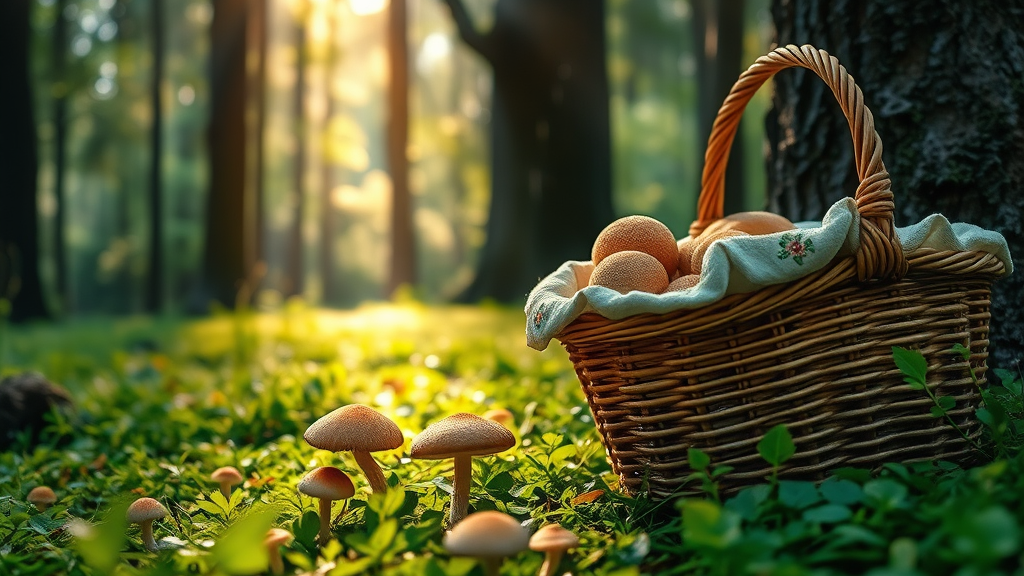
Choose favorable weather. Just after a rain followed by a humid sun, hidden away in the shadows of the forest. Not a stir of breeze among the wet trunks. The only sound, the drip drip of soaked leaves and the tiny scurrying of beetles and ants among the underbrush. Bring along a basket lined with embroidered cloth for collection and grandfather’s sharp knife for exploring beneath rotting logs, make sure you aren’t bitten by something waiting in the soaking darkness. Wear the right clothes. Tuck your tights into stockings and tie petticoats around knees. Wrap each leg carefully so nothing can be caught in the grasping, greedy branches. Walk carefully. Hold hands. Pick a partner. Step where she stepped.
Watch the ground carefully. Remember the legend of the boy who wouldn’t share his bread while he walked with his friends through the woods. He had a full mouth every time they looked back at him, so he spit out each guilty mouthful. The bread-droppings left a trail. They transformed into mushrooms, and that’s why when you find one there are always more nearby.
Once your basket is full bring it to the village examiner. Some mushrooms are safe, but some carry poisonous secrets. Some promise succor but silently wound. Some sing sweet songs but echo with a hollow gong. All taste sweet and feathery on first bite, but some have dark pools in their past. Bring home the good ones, but throw the rest into the stream and watch them float away.
Finally, prepare your soup. Mix the mushrooms with the right broth. Thin-sliced for clear soup. Thick-chunked for heavy stew. The mushrooms will take on the flavor of their companions. In this way they make good neighbors. They don’t betray secrets. They keep what is given to them. They protect what is beneath them. The preserve the family lineage deep below the earth.
Zary Fekete grew up in Hungary. He has a debut novella (Words on the Page) out with DarkWinter Lit Press and a short story collection (To Accept the Things I Cannot Change: Writing My Way Out of Addiction) out with Creative Texts. He enjoys books, podcasts, and many many many films. Twitter and Instagram: @ZaryFekete Bluesky:zaryfekete.bsky.social
This piece was originally published in Papers Publishing journal.
Please share this post to give it maximum distribution. Exposure is our writers’ only pay.
Financial donations through either our GoFundMe or Buy Me a Coffee accounts will help expand our global reach by paying for advertising, more advanced WordPress plans, and expansion into more extensive Content Delivery Networks.
There he was, on a Greyhound bus, heading from Muskogee to Fort Worth, and he was wondering how he ended up there, and if it even mattered. Just a week ago he sold most of his belongings and bought a bus ticket south. He was going to stay with some close family friends in Walnut Springs, just an hour’s drive from the Fort Worth bus terminal. He figured it was time to clean up, kick old habits, and collect summer wages. When he got to the bus station Marianne was already there. She was a lean woman with a kind face, and a warm smile. She appeared as though she had stepped right out from a Norman Rockwell painting. She wore flour sack dresses that she made herself and she kept her hair tied up in a tight bun and covered with a floral-patterned-kerchief. Marianne lived with her brother, James, in an old house trailer on their father’s land in Walnut Springs. Their father had a house about two acres from theirs.
An expanse of untidy meadow lay between the house and trailer, with swaths cut out as trails, leading from one home to the other. Behind the trailer they had a half-acre garden, fenced off and surrounded by tall grass, where they grew a retinue of vegetables, beans, hot peppers, okra, collard greens, and melons. Their father owned about twenty acres of land, the majority of which was wild, untamed fields of weeds, ending where the forest began, on the outskirts of town, and that’s where they were heading.
When Tucker stepped off the bus, he saw her immediately. She was standing in front of an old beat-up Packard, waving in his direction. The first thing he noticed was her smile. “Well, you haven’t changed a day since I saw you last, Tuck.” she exclaimed in her dulcet southern drawl. She threw her arms around him. He embraced her. He took her all in. He enveloped her entire being. There was a deep familial connection between them. In his right hand he carried a dirty blue suitcase, tied together at the buckle with a piece of cotton twine. “Shall, we?” he said, while gesturing to the car. He tossed the suitcase in the back and plopped down on the passenger seat, a real improvement from the padded plastic seats of the greyhound bus. Marianne started the car, and they pulled out.
Tucker was tired from the long ride, and one more hour or so felt like it would stretch out for days, but at least he was with a friend. He had never been to Walnut Springs, and didn’t know what to expect when he got there, but it would be a new start, and that was what he needed most. One more day living the way he was would have done him in. Something happens when you get complacent, your demons start taking roots. His life was going somewhere dark, and he knew it. He tried not to think about the past that he was leaving behind as they traveled out of Fort Worth, but he knew he’d be bringing it with him in some small way.
A few miles down the road, Marianne spoke up “You hungry Tuck?” Up until that point they had sat in silence as they paced along the stretch of open road in the dry heat of summer. He was staring out the window remembering the kudzu he had once seen in the Carolinas, the rich, almost otherworldly green of them. He was imagining being engulfed completely by the vines. Just standing there so still, they slither up around him like he was just another unsuspecting sapling.
He was wondering if he could even stay that still. If he even had it in him not to run away at the first timid touch of the tiny tendrils. “Tuck, did you hear me?” he snapped out of it and turned his head toward her, “What’s that you said?” The words fell out of his mouth in a slow slurry of molasses. He felt like he hadn’t said a single word in a million years. “I asked if you were hungry, Honey” she said “there’s a real good burger joint up the road. One of those roadside stands. Best damn burgers in the state of Texas, I can attest to that.” Her voice was so welcoming, so jovial, so full of comfort. How could he say no to a voice like that? “Sure Mari, I’d love a bite to eat.” He smiled, and they rolled along that country road like a ship through smooth waters. And the green grassy plains stretched out before them, and they really did look like the sea. He was lost in that sea. He was lost in the beauty of the land. He was lost in the sweet voice of a family friend, of the big white clouds coming down to shade them. He was lost in the old blue suitcase. He felt tucked in there somewhere between the books, and the faded old shirts. Stuffed down in the pocket of some old blue jeans and forgotten.
They pulled up to the place and he read the sign out loud, slowly enunciating each word, like a little kid who just learned how to read, “Best Burgers in Texas.” He chuckled. They parked the Packard and pulled themselves out of the car. They stepped on to the cracked dirt and little dust storms raged under their boots as they headed for the stand. Marianne ordered two cheeseburgers and two large Cokes with plenty of ice, and they sat together on the trunk of the car, staring at the vacant plain, and enjoying their burgers in silence, save from the sound of trucks rolling down the road every so often.
In the mind of Tucker, the entire world was visible. He felt like he was smaller than he had ever been. He wondered how far he would go. How long it would take him to find what he was looking for. As he stared at the sky, he saw a flock of floating vultures on the horizon, circling around the cerulean sky in perfect order, and he wondered what it must be like, to be up there soaring. He finished his burger and looked at Marianne, “What did you think of the burger?” She asked him, as she patted her lips with a napkin, and he replies, with a serious earnest “Best damn burger in Texas.” He threw his arm around her shoulder and asked, “How much further do we have to go?” and Marianne replied, “We’re about half way there, Tuck.”
J. Thacher lives in Upstate New York, where he runs a homestead with his wife and son. He finds inspiration in the rolling hills that line the country roads, and solace in the Cathartic act of infusing his stories with his own experience.
If you would like to be part of the Rural Fiction Magazine family, follow this link to the submissions guidelines.
Please share this story to give it maximum distribution. Exposure is our authors’ only pay. You can also help our contributors gain exposure by back linking to them and to RFM’s homepage.
Financial donations through either our GoFundMe or Buy Me a Coffee accounts will help expand our global reach by paying for advertising, more advanced WordPress plans, and expansion into more extensive Content Delivery Networks.
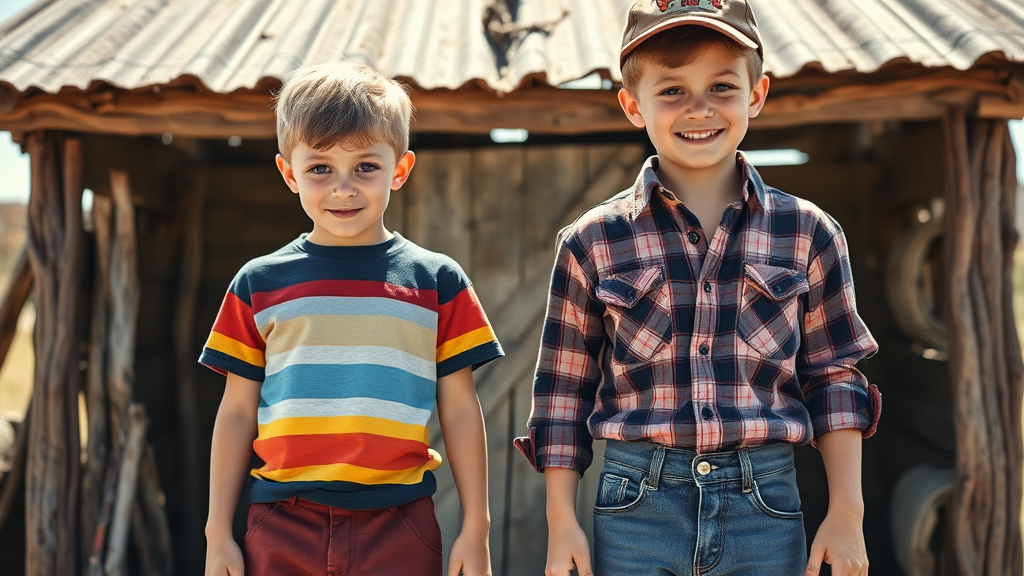
There is a Polaroid of my cousin Nathan and me standing in front of the coal shed. The coal shed is bare plank wood with a corrugated tin roof. Written on the back of the picture in blue ink is Philip and Nathan, 1972. I was 6, Nathan was 12. I’m wearing a four-color horizontally striped t-shirt and maroon pants; he’s wearing a plaid button-up collared shirt, denim bell bottoms and a Mid South Mack cap—the bulldog logo still discernible in the center of the crown. Our arms dangle at our sides after my mother, who took the photo, told us to uncross our arms. Both of us are squinting in the sun, making our smiles look forced. The photo is very faded after fifty years. I only know that my pants are maroon, not the pinkish color in the photo, because they were my favorite pants.
Nathan came to live with my family before I was born. His mother was unable to care for him because she was sick, but we were never told what her illness was. It’s not unusual to see extended families in Eastern Kentucky—cousins, aunts, uncles, grandparents all living under the same roof—but when Nathan’s mother recovered Nathan had already been with us for so long he stayed with us after she moved to Chattanooga, Tennessee. When I was brought home after being born at the Pineville Community Hospital, Nathan kicked a hole in the living room wall and ran to his bedroom.
Nathan spent his allowance money on wrestling magazines and cut out the pictures of his favorite wrestlers to pin up on the bedroom wall. He had an autographed picture of his most favorite wrestler, Ric Flair, that he often stared at in bed before going to sleep. He told me many times I was never to touch it. When I was three, I was moved out of my parents’ bedroom and into Nathan’s. “I’m your big brother,” he told me. “I was sent here to take care of you.” He would tell me stories as we lay there in the dark; stories about monsters in the woods behind our house, stories about man-eating fish in the river that could jump out of the water and get you, venomous snakes hiding in the weeds. Those stories made me afraid, but they didn’t make me afraid of him. Until he told me the story that did make me afraid of him.
When Nathan was six years old he killed our grandmother. “One night I just did it.”
“Why?” I asked.
“I don’t remember,” he said. “I think I was really mad about something. Don’t tell anyone.”
“I won’t.”
“You better not.”
“I said I won’t.”
* * *
I never met my grandmother, I knew her only from the old black and white portrait in an oval frame that hung on the wall in the living room along with portraits of other family members. Her portrait, like many of them, looked like those old west photos of women with pulled-back hair and masculine facial features. The day after Nathan told me he killed our grandmother, I walked over to the Highway 119 General Store where my mother worked as a cashier and stocker. “What happened to mammaw?” I asked.
She put the last bottle of Nehi in the cooler and slid the glass lid shut. As she stacked the plastic bottle crates she said, “Philip, God called her home when it was time. She’s in heaven with Jesus now. It’s best forgotten. I don’t want you to talk about it no more.” She went to the front of the store to ring up the purchase of someone with a Moon Pie and an RC Cola. She came back to take the bottle crates to the rear of the store for the delivery driver to pick up the next day.
“I just want to know what happened,” I said, more quietly than the first time.
“It’s something that shouldn’t be thought about. Run along back home and play. I have to work now.”
* * *
For my eighth birthday I got a Rubik’s Cube and the next day I found it under my bed with five of the colored stickers peeled off. That Christmas I got a Shazam action figure and a few days later it was in pieces after the rubber bands inside had broken. When my bicycle seat had been slashed I showed it to my mother. “Think of all the poor children in the world who don’t even have a bicycle at all,” she said.
Nathan was quick to anger and I did my best not to provoke him. Whenever I did he would punch my shoulders or pinch my ears. My parents trusted Nathan enough to leave me in his care, even letting him take me fishing to the river a half mile from our home. If I caught the first fish I risked another one of his lashings, so I learned how to secretly remove the bait from my hook before my first cast. His anger never lasted very long, within a day or two he would go back to telling me stories and reassuring me that I really was his little brother and he was there to take care of me. “You know you don’t deserve it,” he said. “but I’ll still take care of you.”
When Nathan was fourteen his face broke out in huge red boils and white pustules. He would spend evenings after supper in front of the bathroom mirror popping them, leaving pus splatter on the glass. The white cream that a doctor had prescribed for him wasn’t working and it frustrated him. One Saturday afternoon after watching a TV science fiction show where one of the characters was a swordsman, he began leaping about and parrying with a leatherman’s awl that he had taken from my father’s steam trunk and yelling, “Look! I’m Lieutenant Sulu! Prepare to swordfight!” He was jabbing the thing close enough to frighten me, but he kept telling me he was just playing and wouldn’t hurt me. Then he jabbed the thing right through my left cheek.
I howled for hours as my mom tried to stop the bleeding both inside and out. The next day as she was driving me to the Daniel Boone Clinic I told her Nathan had done it on purpose, that he was mad because his face had broken out and he wanted to mess up my face, too. “No, he didn’t sweetheart, it was an accident. You have to play careful.”
Nights in our bedroom he would repeatedly apologize and ask to look at the stitch in my cheek. He would lift the gauze and pick at it with his fingernail even as I was telling him it hurt. It was a month before it healed enough for the doctor to remove the stitch. The scar was a pink elliptical.
* * *
My father was asked to pull the float for the 119 General Store in the upcoming Mountain Laurel Festival parade. Every year Mr. Ingalls, the owner of the store, pulled the float but he had passed away a few months ago and his widow asked if my father would like to do it. My father broke the news to us as we sat at the supper table. He told me I could ride on the Massey Ferguson tractor with him in the parade like he sometimes let me do as he plowed our field. However, the day before the parade my father told me he was going to let Nathan ride with him instead of me.
“But why? You said I could ride with you.”
“You can ride next year. Nathan’s going to be 17 next year, so let’s let him ride this year.”
My mother, sitting next to my father, rose from the sofa and went to the refrigerator for a bottle of Coke to mollify me. I had been telling everybody at school I was going to be in the parade. I refused to accept the pop. Nathan, seated in the wicker chair next to the coal stove, smirked and shrugged his shoulders at me.
The volcano of my rage erupted. “He’s a murderer!” I screamed, pointing at Nathan. “He killed mammaw! He told me all about it!”
Nobody said anything, nobody’s expressions changed. My mother returned the bottle of Coke to the refrigerator.
* * *
Things happened pretty fast after that. My mother packed an old Amelia Earhart suitcase with my things and I was sent to Aunt Dorothy’s to live. Aunt Dorothy was 65, widowed, and addicted to cooking sherry. “It won’t be long,” my mother said as we walked over. Aunt Dorothy’s home was just fifty yards away across a creek and up a small hill. “Nathan’s had a hard life, Philip. I hope you understand.” No, I did not understand. I was her son and she was abandoning me. And to Aunt Dorothy of all people! Her home was a moldy shack and she hadn’t bathed or changed her clothes in nobody knows how long. She looked like a bowling ball with stick figure arms and legs.
My father had telephoned ahead, and as soon as my mother and I went in I was sent to the kitchen where a bag of Fritos and a bottle of Sprite awaited me on the round wooden table. They whispered in the front room for about five minutes or so and then came back to the kitchen. “It’ll be just for a little while,” my mother said, patting my wrist. “I’ll come by tomorrow morning to get you to go watch the parade.” I told her I didn’t want to go. “All right then.” She patted my wrist again and then walked back home.
I spent almost that entire summer at Aunt Dorothy’s. Sunday nights we had supper at my mother’s, and while Nathan and I both participated in the conversations, we never spoke to each other.
On the last Saturday night of August, Aunt Dorothy and I were watching Love Boat and Fantasy Island like we always did. She was reclining on the sagging sofa holding a plastic tumbler of sherry on her belly. “You and Nate will be friends again, Phil,” she said after a sip. “You’re like a little brother to him.”
“No we won’t,” I said without taking my eyes off the television. “And we aren’t brothers.”
“Of course you are. He loves you and you love him.”
I couldn’t take it anymore. “He killed mammaw! He’s the murderer and I’m the one that gets kicked out!”
She sat up on the sofa and set her tumbler on the cluttered coffee table after another sip. “Lord amercy, where do you young’uns come up with this nonsense,” she whispered, jiggling a cigarette out of its pack. “First of all Phil, you ain’t kicked out. We go over there once a week, sometimes more.” She paused to exhale and rub her weary eyes. “This was all so long ago. Nathan was only five or six years old at the time. Pappaw was drunker’n hell like he always was. Mammaw’d had enough and told him to get his drunk ass out of the house. He took the poker from the fireplace and commenced to beating the tar out of her. She was on the floor unconscious with blood coming out of her ears, nose, and mouth before he finally stopped. Pappaw knelt on the floor crying for her to wake up, wailing to high heaven that he was sorry and that he loved her. It wasn’t til Herschel came home that they was found. The whole kitchen floor was covered in mammaw’s blood. Nathan was hid behind the ice box, he saw the whole thing. Mammaw died the next day in the hospital.”
* * *
The weekend before the new school year started, Nathan moved to Chattanooga to be with his mother. I moved back home and had the bedroom all to myself. I wiped the booger smears off the wall next to Nathan’s former bed with a paper towel and Formula 409. Our family grew over the space that Nathan had left almost like he had never been there.
Almost five years to the day after Nathan left us, we attended his wedding in Chattanooga. During the long drive down, I wondered if he’d forgotten me, but upon our arrival I received the heartiest greeting of all when he stuck out his hand saying, “Phildo! How the hell are you little brother? Long time no see.” We stayed overnight at Nathan’s mother’s house, which he and his bride also lived in. My mother kept Nathan’s wedding portrait on her nightstand until the day she died. It scarcely resembled a wedding portrait, Nathan in a cheap Botany 500 suit, his bride Angelina in a Kmart casual skirt suit. Nathan is smiling with his lips closed, Angelina isn’t smiling at all and no matter how long I look at it I can not make out the expression on her face.
When I cleaned out my mother’s home in 1999 after she died, I found all of Nathan’s cut outs of pro wrestlers, including the autographed one of Ric Flair. I telephoned Nathan in Chattanooga to see if he’d like me to send it to him.
“I never had an autographed picture of Ric Flair,” he said.
“Sure you did. You always used to tell me not to touch it.” He insisted he’d never had an autographed picture of any pro wrestler and launched into a story about catching a 30 pound channel catfish in the Tennessee river over the summer. One fish tale led to another and as he talked, I listened for any evidence of what he’d seen as a child, listened for any trauma that might still be living within him. After his final fish tale I asked again if he wanted me to mail him the picture.
“Naw. Just do whatever you want with it.”
I fingered the small pit on my left cheek as we said our goodbyes and hung up.
Hugh Blanton’s latest book is Kentucky Outlaw. He can be reached on X @HughBlanton5.
Please share this story to give it maximum distribution. Exposure is our authors’ only pay. You can also help our contributors gain exposure by back linking to them and to RFM’s homepage.