Category Archives: Fiction

Noticers Noticing the Notices

Sandra Arnold is an award-winning writer with seven published books: Her new novella-in-flash The Bones of the Story, Impspired Books, UK; A short story collection, Where the Wind Blows, Truth Serum Press, Australia. Her novel The Ash, the Well and the Bluebell, Mākaro Press, NZ is also published in Bulgaria by Aviana Burgas; A flash fiction collection, Soul Etchings, Retreat West Books, UK;  A non-fiction book Sing no Sad Songs, Canterbury University Press, NZ; Two earlier novels, Tomorrow’s Empire, Horizon Press, NZ; A Distraction of Opposites, Hazard Press, NZ.  Her short fiction has been published and anthologised internationally and has received nominations for The Best Small Fictions, Best Microfictions and The Pushcart Prize. She has held writing residencies in The Robert Lord Cottage, Dunedin and the Seresin/Landfall/ University of Otago Press, Waterfall Bay. She has a PhD in Creative Writing from  Central Queensland University, Australia.

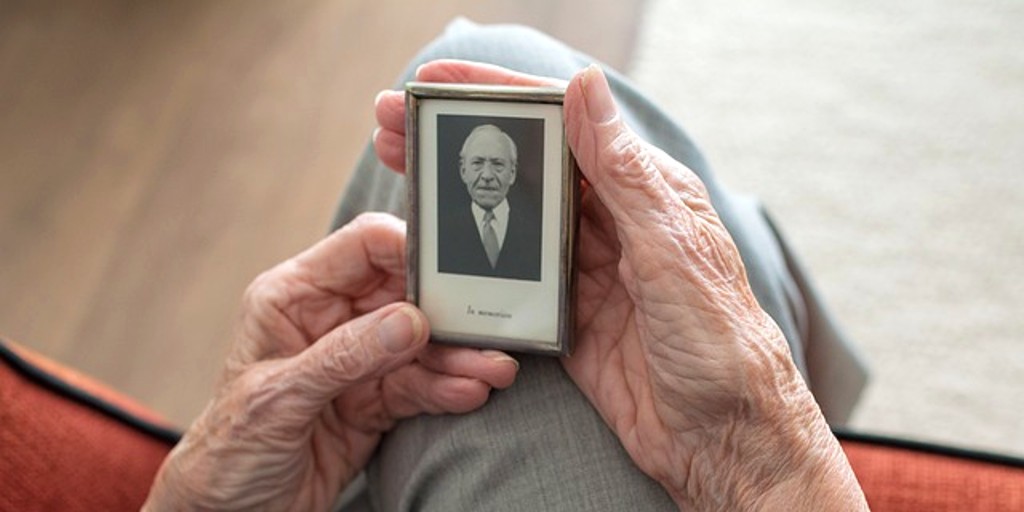
Emerald took her cup of coffee out onto the verandah in time to see the inky night morph into day. She wrapped her fingers around her cup and watched the rising sun light sparks under raindrops on bare branches. As a child she had marvelled at the tiny flares in each  frozen drop, believing they were diamonds left by fairies in the night. She smiled at the memory and walked forward for a closer look. She didn’t see the frost coating the steps of her verandah. Within seconds she was sliding on her back all the way down, landing with a thud on the brick path.

Pain shot up both legs. Her first instinct was to call out for Maurice. Her lovely, kind, caring Maurice. Then she remembered. She lay still for a moment and closed her eyes. This, like so many things now, she would have to manage herself. She  turned onto her hands and knees and reached for the verandah post to pull herself up.

Two weeks later her ankle gave way and she fell again, this time knocking her knees on the concrete drive. The pain travelled to her hip joint. It flared up and down her whole leg in fierce bursts as she limped up the path. Time to ring the doctor. Then she remembered the Medical Centre in the nearest town was closed on the weekends and she would have to wait until Monday to ring for an appointment. The only alternative was to drive fifty kilometres to the hospital’s Emergency Department in the city, but she was too sore to drive.

On Monday she rang the Medical Centre. When someone eventually answered the phone she was told she could have an appointment in three days.

She parked in front of the Medical Centre and on her way in stopped to read all the notices covering the front door. There was the notice reminding patients the Medical Centre was closed on weekends. When she’d driven Maurice to the Emergency Department in the city five years ago they’d sat in the crowded waiting room for six hours, ignored by the receptionist. She’d seen an elderly couple stagger in. After an hour the woman tried to stand  then collapsed onto the floor. She crawled on her hands and knees to the bathroom. The receptionist didn’t look up. No one offered to help. Emerald walked over to the reception desk and knocked on the window. The receptionist raised her eyes from her computer. Emerald told her a doctor was needed for the woman on the floor. The receptionist replied curtly that all the doctors were busy and everyone had to wait until their numbers were called. She turned back to her computer.

On the Medical Centre door Emerald read notices that informed patients they must not enter if they felt ill. They must go home and ring their doctor from there. The notices had been up since the time Covid had descended on the country. She hobbled through the door into the waiting room. More notices around the reception desk. Payment must be made on the day of consultation or there would be a surcharge. If an appointment ran over the allotted ten minutes there would be a surcharge on the fee. Emerald thought of her old GP from thirty years ago. He had once scolded her for not ringing him immediately when she’d been ill and told her that if she ever felt so ill again, even if it was in the middle of the night, she must ring him and he would come to her home and check on her. All that was gone now. Medical care was a business like any other. Since the government had reduced subsidies, patients were simply a source of revenue. Numbers to be ticked off a list.

The doctor who ushered her into his room was new to the Medical Centre. He was one of a steady procession of doctors from other countries helping to fill the shortage of medical personnel in this country by staying a few months in time for the skiing season. The current doctor typed on his computer with his back to Emerald while she explained what had happened when she slid on the ice. He told her she had probably torn a ligament in her leg and he would refer her to the Physiotherapy Clinic through Accident Compensation so she wouldn’t have to pay. He handed her a prescription.

At the Physiotherapy Clinic the walls were full of notices too, warning about the penalties if payment wasn’t made on the day of consultation. Warnings about being charged the full amount if a cancellation wasn’t given two days in advance.

The physio was attentive and helpful. He told Emerald she didn’t have a torn ligament, what she had was sciatica. Her fall had resulted in her muscles and spine compressing and trapping a nerve. He massaged the sore bits and gave her some exercises to do at home and assured her the condition was treatable. He advised her not to take the medication the GP had prescribed as it would give her a stomach ulcer. He told her to come back in three days for a check-up.

As Emerald was leaving the room and heading for the exit the receptionist called her back and said she had forgotten to pay. ‘I thought Accident Compensation was covering it,’ said Emerald. ‘No, they cover part but there’s a surcharge that you must pay.’ Emerald paid and limped out the door past all the notices warning of dire consequences for overdue payment and cancelled appointments.

The fog of the last three days was lifting outside although the sky was bleak.

Emerald glanced at her watch and saw she had just enough time to drive the fifty kilometres into town for her appointment at the ear clinic for her hearing test. Halfway there she had to stop for roadworks. She looked at her watch again and hoped that the snotty receptionist wasn’t on duty today. She was.

Miss Snot looked up from her computer, mouth pulled tight like a cat’s bum and told Emerald her appointment was cancelled and she would have to reschedule. Emerald tried several times to explain about the physio and the roadworks and the fact she lived fifty kilometres away. The receptionist handed her a card with the new appointment time set for next week and went back to her computer.

Emerald drove home through rain so heavy it ricocheted off the roads and made lakes in the grass verges. It was still raining when she parked her car in the garage and walked up the path to her front door. Her leg felt less painful now. She thought of the physio with gratitude.  As she reached in her bag for her key she noticed a large spider web in a corner of the porch, the delicate intricacy of its threads illuminated by a flash of sunlight behind the looming black clouds, transforming the web into  gold lace. Emerald stood watching it for a long time before turning her key in the lock. 


Sandra Arnold is an award-winning writer with seven published books: Her new novella-in-flash The Bones of the Story, Impspired Books, UK; A short story collection, Where the Wind Blows, Truth Serum Press, Australia. Her novel The Ash, the Well and the Bluebell, Mākaro Press, NZ is also published in Bulgaria by Aviana Burgas; A flash fiction collection, Soul Etchings, Retreat West Books, UK;  A non-fiction book Sing no Sad Songs, Canterbury University Press, NZ; Two earlier novels, Tomorrow’s Empire, Horizon Press, NZ; A Distraction of Opposites, Hazard Press, NZ.  Her short fiction has been published and anthologised internationally and has received nominations for The Best Small Fictions, Best Microfictions and The Pushcart Prize. She has held writing residencies in The Robert Lord Cottage, Dunedin and the Seresin/Landfall/ University of Otago Press, Waterfall Bay. She has a PhD in Creative Writing from  Central Queensland University, Australia.

www.sandraarnold.co.nz


Please share this to give it maximum distribution. Our contributors’ only pay is exposure.

If you would like to be part of the Rural Fiction Magazine family, follow this link to the submissions guidelines. If you like contemporary dark stories and poems, you may also want to check out The Chamber Magazine.



“Clyde” Short Story by Travis Flatt

"Clyde" Short Story by Travis Flatt:  Travis Flatt (he/him) is an epileptic teacher and actor living in Cookeville, Tennessee. His most recent stories appear in Heavy Feather Review, Jake, Had, and elsewhere. He enjoys dogs, theatre, and theatrical dogs. 

We stopped at a phone booth to tell mom we’d found Morganton. Cell phones were only TV props in the early ‘90s. Our motel wasn’t open yet. While my dad went to the booth to call, an old man wearing a rainbow wig and dirty tuxedo jacket rode by our truck on bicycle, jingling the bells to greet the empty street. The morning was hot. Dad’s buddy, Clyde, leaned over in the truck cab, said, “There goes the mayor.” I giggled as I giggled at everything Clyde said, joke or not. He made you laugh so much you were just ready. The Mayor was the first homeless man I’d ever seen.

Dad came back and said he’d woke her. Up the street was a diner. Clyde and dad ate bacon, biscuits, scrambled eggs–but I didn’t like eggs, thought they tasted like fart smells. I had a hamburger. The motel opened and we saw bullet holes in the door. Dad said we’d ask Carson, the man we’d come to visit, if we could stay with him. The thought of staying at Carson’s house perked me up: I’d met his daughter, Ashley, once at an art show in Nashville. I recalled her hair was blonde and her skin sun-kissed. Carson lived on the lake.

Dad and Clyde drank beer until noon. We drove to Carson’s, which was large and wood and glass. It sat on the edge of Lake James. The boat we’d hauled was Clyde’s, a white bass boat with bench seat in back, the type with built-in cooler. Clyde dove scuba for the Nashville police, and drummed on recordings with famous musicians, even if I didn’t recognize the names. Clyde was a superhero.

Carson greeted us at the drive, gave dad and Clyde beers, and offered me one, too. Dad waved this off, though I knew Clyde would pay me back on the boat.

“Ashley’s still asleep,” Carson said, as if we were great friends. Clyde took dad and I out on the water. Carson stayed back. I wasn’t sure why. 

Dad and Clyde were high on pain pills.

We fished in heat for hours, catching nothing because we’d waited too late. I drank a beer, felt nauseated, and needed my dad to bait my hook. Fish frightened me, I didn’t like the fin spines spiking my hands. I was glad we didn’t catch any, didn’t like Clyde seeing me struggle. 

Late afternoon reached the mid-ninties. Clyde called this “dog-screwing weather.” We laughed and returned to Carson’s who’d made vegetarian lasagna. Most my dad’s college friends were hippies and vegetarians. Except for Clyde. Ashley joined dinner and she was prettier than I remembered. We didn’t share a word. After dinner, Carson took us to his pottery studio. Around the country his stuff sold to galleries. It was his career. Ashley, he insisted, should show her own plates. She grew embarrassed, blushed, and tried to refuse. Clyde said he wanted to buy one. They were better than Carson’s. He nudged me. I said that they were good and I agreed.

While the adults drank and smoked hash, Ashley and I wandered the yard, floundering at conversation. I wondered about sleeping arrangements. There was no timid first kiss, no hand-holding by firefly light. It smelled like hot mud and pine. She asked me if I liked fishing; I asked if she liked comic books.

My hopes of bunking with Ashley fell far short. Dad spread my sleeping bag at his feet. I lay curled there like a dog–a sun-baked and slightly hung over dog. Clyde snored like a chainsaw and I barely slept. They woke at dawn for better fishing and we went out to catch a couple bass.

The bass we ate for lunch. Dad announced we needed to head home. Back at his clinic there was a cancerous cat that, for some reason, he didn’t trust his employees to check on during the weekends. Dad died a workaholic. Never retired. 

###

The last time I saw Clyde on his feet I was a senior in high school. He accidentally walked in on my girlfriend, Amanda, and I on the couch in my parent’s basement on his way to the garage. We were making out heavy. Hardly had time to cover up. He passed by quickly, eyes dead ahead, presumably to fetch something from his car. He’d said he’d stay the night, but instead drove straight back to Nashville. 

Between our trip to Morganton and the incident in the basement, Clyde, whose real name was Michael Bayer–“Clyde the Clap” was his musician’s nickname–continued to abuse pills in increasing dosages and strengths. Where he got them I couldn’t say, and wouldn’t if I could. His liver failed my first year of undergrad. When we visited him in the hospital, I asked him if he remembered the Mayor of Morganton. He laughed and asked if I was still dating Ashley. I think he confused Ashley with my girlfriend, Amanda. I told him I was.

Shortly after Clyde passed, my dad started drinking. Our county relaxed its liquor laws and dad sent employees Saturdays to buy cheap white wine in crates. Dad didn’t want to meet a client at the liquor store. He thought it would start gossip, hurt his business.

I bought a bass boat, started taking dad out on the lake to give us an excuse to be together. Dad was drunk when he told me about the pills. We were fishing on Old Hickory, which is where Clyde would scuba for the police. Dad told me the same stories, over and over: Clyde drumming for James Brown, how Clyde earned his nickname. He never stopped missing Clyde. When he started losing his hearing and the quiet spells grew longer–him lost in the silence, trapped in head–I began letting him bait my hook again. Or try to. His hands trembled. I don’t think my dad ever liked fishing much more than I did. Not the baiting and casting and reeling and catching parts. 


Travis Flatt (he/him) is an epileptic teacher and actor living in Cookeville, Tennessee. His most recent stories appear in Heavy Feather Review, Jake, Had, and elsewhere. He enjoys dogs, theatre, and theatrical dogs. 


Please share this to give it maximum distribution. Our contributors’ only pay is exposure.

If you would like to be part of the Rural Fiction Magazine family, follow this link to the submissions guidelines. If you like contemporary dark stories and poems, you may also want to check out The Chamber Magazine.


“Farmer Artist” Poem by Darrell Petska

"Farmer Artist" Poem by Darrell Petska:  Darrell Petska is a retired university engineering editor and a two-time Pushcart Prize nominee. His poetry appears in Verse-Virtual, 3rd Wednesday Magazine, Farmer-ish, Soul-Lit, and widely elsewhere (conservancies.wordpress.com). A father of five and grandfather of six, he lives near Madison, Wisconsin, with his wife of more than 50 years.
He painted corn rows Mondrian-straight,
seated in the sun on his tractors,
stacked his lush meadow hays
with Van Gogh's studied nonchalance,
and wintered baled straw in a barn
laved red like Turner's sunsets.

And didn't he echo each spring the classicists'
good shepherd, lugging calves from the cold,
or scan his summery cattle pasture
with the sweeping eye of a Rubens?

Artists and their works were foreign to him—
though he framed family photos,
à la Wood, against the gabled farmhouse,
reveled like Rothko in fields of vivid color,
and weathered pigment doubts worthy of Picasso:
hogs black–later white, cattle brown–later black,
tractors red–later green, but dogs ever golden.

His final canvas he composed from bed,
gazing through a window to the farm—
Move the tractor. Bring the horse to the corral.
Mow the weeds at the fence row.

His body of work brilliant in sunlight,
how to tell the farmer from his farm?

Darrell Petska is a retired university engineering editor and a two-time Pushcart Prize nominee. His poetry appears in Verse-Virtual, 3rd Wednesday Magazine, Farmer-ish, Soul-Lit,  and widely elsewhere (conservancies.wordpress.com). A father of five and grandfather of six, he lives near Madison, Wisconsin, with his wife of more than 50 years.


Please share this to give it maximum distribution. 

If you would like to be part of the Rural Fiction Magazine family, follow this link to the submissions guidelines. If you like contemporary dark stories and poems, you may also want to check out The Chamber Magazine.

“Walnuts” Short Story by Billy Stanton

"Walnuts" Short Story by Billy Stanton: Billy Stanton is a London-based working-class writer and film-maker, originally from Portsmouth. His short fiction has appeared in Wyldblood, The Chamber, Horla, The Rumen, Literally Stories, Tigershark and the ‘New Towns’ anthology. He co-runs the ‘Noli Me Tangere Short Film Festival’. His blog is: steelcathedrals.wordpress.com

“Are you washed in the Blood of the Lamb?”

He was putting those words on the wall, was Old Frankie, called old although he was only forty-two; he was putting the words on the stone wall trying for precision but falling short. They were slapdash black-paint words now, not running and dripping, but alternately thin and crooked or rounded and porcine. He was copying as best he could from the paper Reverend had given him; he was bent below the stained-glass window of the knight wrapped up in ribbons; it was a Saturday, it was August 23rd 188-, and he was all to-aching. 

The Reverend had made them sing the song, the Blood of the Lamb song where the words came from, the hymn, on each of the last four Sundays. He was very fond of it already. He received hymn books and correspondence from other men of the cloth in the Americas and he had got the words and the tune from one of them. They had sent it as an example of the sort of hard material that the hard evangelists were preaching to the people; the Reverend of St Boltoph’s liked it because he was hard too, a fire-and-brimestone man, a man of two centuries prior. He was for Cromwell and no Christmas still; he was for scaring the wits out the parishioners; he was for telling them the Devil stalked the hills around them and was waiting for them to come up; he was for letting them in on the secret that they were sinning every moment they weren’t in his church, that Chasteborough people sinned obliviously in the alehouse, in the fields, over their dinner table, crouched on the chamber pot, tending to their vegetable plots and stroking their children’s hair. No hope for the wicked, is what he would say, not the dyed-in-the-bone wicked. 

Old Frankie rounded out the second ‘o’ in blood and stood back to see if all had gone well enough. No; the first ‘o’ had almost no opening in the middle and was narrow like the trail left by a cartwheel; the second ‘o’ could let through the massed Onward forces of the Christian Soldiers. He sighed. If you want a job doing well… but then, Reverend would never deign to twist himself all up against the cold grey ground of the church and be overpowered and stifled by the musty smell of the kneeling cushions. His faith made him walk on beams, sunbeams, gilded beams; he was meant for better things, or so you gathered from his talk.

What made it all the worse was that this was dishonest labour besides. Old Frankie had got plenty of lamb’s blood on him from helping out with both the birthing season and the slaughtering; none of that had seemed to come from the Lord or do him much good- it just stank. He was still a sinner and still someone thought of as being a bit behind the rest of the men he toiled with in most respects; that’s why he was unmarried still, and that bit at him, and that’s why they called him Old, because he walked and talked slow.

He heard laughter from the tumulus across the way from the church, just beyond the low wall that marked the bounds of the holy lands; just beyond the broken old yew tree that threatened to drop a branch on a pew-filler’s head every Sunday; just beyond the gravestones of unusual names, of names that no-one seemed to be called by anymore. Frankie looked out to see who was laughing. He felt a pang of jealousy when he saw the source: it was Emily, Emily Sandwell, daughter of John Sandwell, sweet Emily Sandwell, Emily Sandwell of the darling smile, Emily Sandwell of the cherry cheek, Emily Sandwell who had grown from an ungainly child with big feet to angel-woman, to divinity, to Frankie’s vision of the mother of God, the impeccable blessed Virgin.

She had her long skirt pulled up to her knee on one side, showing a pale leg strong from both her workday tramping for her family and the Sunday afternoons she usually spent solitary walking regardless of the strain of her weekday labour, without concern for modesty or the thoughts of her companion Arthur Ranger, the wagon boy. Yes, yes- there was Arthur suddenly taking hold of her leg, almost toppling her over, and kissing up the irresistible goose-pimpled exposed skin, from pristine white ankle to cushioned red knee, not caring who knew or who saw. Emily threw her head back and laughed all the more; she touched his face; she let him for a few seconds kiss up inside what was not left bare by her hitching, deeper and deeper, then she pushed his head away and raised a finger mock-stern, like a schoolmarm secretly amused by the tearaway antics of her charges.

Old Frankie could tell by their casualness, by their easy amusement, by their lack of scruple, that they knew each other much more than leg-kissing; that the nighttime woods on the hill had not been left undisturbed by their clandestine footsteps and rustlings. He’d heard it was happening all over, this looseness; now, he knew it for sure, but he also suspected it had always been that way for everyone but himself- it just seemed that people forgot somewhere along the way, that they buried their own illicit memories deep enough in the soil that the plough could not turn them back over and bring them again to the light. 

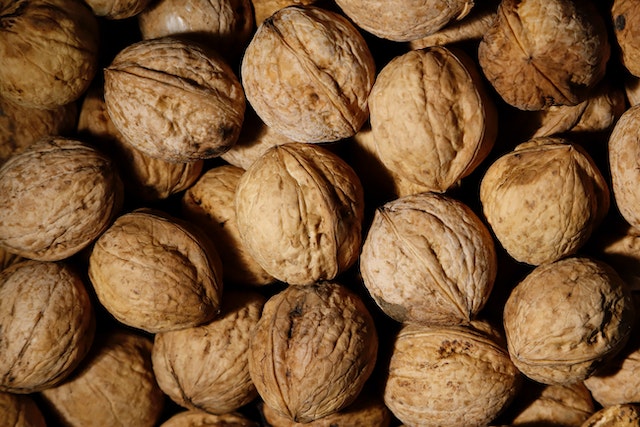
Arthur Ranger bent over and got on all fours and the reason for Emily Sandwell hitching her skirt became clear- she stepped up upon his back and her head and shoulders were lost amongst the thick leaves and branches of the walnut tree. The tree grew well here, just on the edge of a crop of beeches that crowned the tumulus as they do other such miniature eminences up and down the isle, because the rise meant it was closer to the sun; because the ground opened in craters and holes that held the rainwater in deep puddles that were a constant threat to the wayfarer looking for a shortcut home from the crop; because the tree, allowed such a prominent position overlooking the church, was respected and even venerated like it was a sign of confirmation from the Lord of the rightness of the worship within, of the truth in the words on the wonder of creation that spilled forth so often from the good book. Not many came to pick the walnuts that grew here abundantly, preferring instead to take from the more modest growth of various other trees dotted about the town, but Arthur and Emily dared; Old Frankie saw that they had with them a basket, hidden from sight up to now, and Emily had reached down and picked it up to fill it.            

Arthur, one of the slimmer boys in the village, not solid like some of the farmhands, was a surprising source of strength and determination in his task- he held Emily all the while without buckling, without wavering, without complaint. He stayed like a table, as if his one humble purpose on earth was to allow maids to climb upon him, to use him like a stool or ladder. Maybe Old Frankie shouldn’t have been surprised, though- who would have been prepared to show anything but their strength to this angel; to let down the God-touched; to make perfection feel as if she were even slightly at fault?

Emily sang a song, distinct and different in every way from the song whose title he was painting on the wall as a warning and a reminder. It was lilting but knotty in the way she sang it; she drew out the phrases she liked in long trilling notes and rushed over others to reach those she preferred. She knew the lyric well and was trying to live up to it, to reach its promise, to fulfil its dreaming, to give it flesh and realness:

“It’s of a brisk young farmer, a-ploughing of his land,
He called unto his horses, and he bid them there to stand.
As he sit down upon his plough, all for a song to sing,
His voice was so melodious, it made the valleys ring.

It’s of this fair young damsel, a-nutting in the wood.
His voice was so melodious, it charmed her where she stood.
She could no longer stay,
And what few nuts she had, poor girl, she threw them all away.

She stepped up to young Johnny, as he sat on his plough
Said she, “Young man I really feel, oh I can’t tell you how.”
He took her to some shady grove, and there he laid her down,
Said she, “Young man, I think I feel the world go round and round.”

“Do you ever feel the world go round and round?” Arthur asked her slyly, interrupting.
           

“I feel it now more than ever,” she giggled.

Then she screamed for joy, deep and long.

She had evidently done it; she had found the heart of the song that had charmed her whole life, that, from the moment she first heard it drifting from an inn window or from the mouth of her grandmother at the fireside of a winter’s evening, had whispered to her of paradise, of passion, of hidden and forbidden things, of the untold pleasures of voice and body, of days too ideal to last and yet remaining all the same, available to all with a mind to it, the glimmer in the clouds of the workhorse’s life, the shining behind all things. Her reenactment had been a perfect act of manifestation. She was enveloped within the song, her own variation of its lyric and meaning, the world outside replaced by the world within the tune.

Old Frankie could see the delight in her; he could read the quivering excitement in her limbs; he could understand the brief ignition of the flame within her, the flame that called back beyond original sin to original peace and happiness. The sun was yellow on them; the sky was blue; the grass was green; the violets purple; the primrose pink; their dress white and brown and red of neckerchief; all was as it should be and the crow’s caw had been covered by sound of Emily’s voice, caressed by innocence and experience. She and he on the tumulus were more beautiful than the nightingale; prouder than the robin; more fleet of foot and thought than the sparrow; above all things like the hovering kite. She- they- were more than the words on the wall, more than the blood of the lamb, more than Reverend’s sunbeams.            

Old Frankie threw down his paintbrush, walked through the knave and left the church. Damn the Reverend; damn him to heaven or to hell and back. He could paint for himself. Frankie didn’t need his few pence. The couple were still laughing and the nuts on the tree were ready and ripe for the picking and it was Saturday and it was summer. 


Billy Stanton is a London-based working-class writer and film-maker, originally from Portsmouth. His short fiction has appeared in Wyldblood, The Chamber, Horla, The Rumen, Literally Stories, Tigershark and the ‘New Towns’ anthology. He co-runs the ‘Noli Me Tangere Short Film Festival’. His blog is: steelcathedrals.wordpress.com


Please share this to give it maximum distribution. 

If you would like to be part of the Rural Fiction Magazine family, follow this link to the submissions guidelines. If you like contemporary dark stories and poems, you may also want to check out The Chamber Magazine.


“The Perfect Calendar” Short Story by A. R. Carrasco

A. R. Carrasco is an American author based in Oakland, California with works of short fiction appearing in 365 Tomorrows and the Street Sheet San Francisco (a publication of the Coalition on Homelessness).

Robin Swann penned by hand the “perfect calendar” on January 1st, 2255. For the last fourteen years, the retired nuclear engineer labored alone on his invention in the rural community of French Gulch, California. Rumored by some to be an illegitimate grandchild of Julius Robert Oppenheimer, all that could be said for certain about Robin is that he was born on Christmas Day in Berkeley, California, was first married in Reno, Nevada, and was hitched for the second time at Niagara Falls. Both times, Swann fell in love with gentlemen of numbers: the first an applied mathematician, the second a specialist in pure math. At holiday gatherings, after a couple mugs of spiked eggnog, Robin Swann likes to jest that his first marriage could have been an “infinite series” but for want of “pure numbers and significant digits.” He called his second go-at-love a “perfect set.” 

Every evening after supper, Robin and his partner Oliver would walk down Main Street, past the local general store, to feed the fish under Clear Creek Bridge before the one-room schoolhouse. A sizable black salmon would dance often in the shadow of the two lovers on evenings lit by moonshine and starlight. It was this same spot within which Robin experienced his greatest revelation. Mesmerized by the flickering movements of light and dark, Swann found the answer to the question that had stolen weeks of slumber from the intrepid scheduler: How can weeks and years get along? The answer was simple: “To heck with the years, by George, let the week inherit the Earth!” 

The town preacher, who also happened to be Swann’s landlord, invited Robin to debut his “perfect calendar” before the Easter potluck at the community church. Swann wore the same satin tuxedo within which he was married twice. The preacher named Max paid Robin a compliment: “I don’t think French Gulch has received a more dapper gentleman than when President Kenney visited back in 1963!” Apologetic, Robin begged the pastor’s pardon, “I don’t mean to distract! I’m very grateful for the opportunity to share my work and get feedback from my community. I hope French Gulch will become the first city in the world to adopt the “One-World-Calendar!

We ain’t a town,” interrupted Paul, the portable toilet technician. “Gotta have a Mayor to be a town and we ain’t got none. No government, no town, and sure as heck no city. If you wanted to get your calendar started in nowhere U.S.A., you couldn’t have picked a better stool to pop your squat, with all due respect,” Mr. Putter concluded. With a look capable of chilling a glacier, Robin promised with a squint, “Where time reaches its dainty hands, there shines the metropolis of our greatest honors: our most valuable treasure is time and its vault is our commonwealth. I am proud to offer to the world a new type of bank that will pay a hefty return on every moment a learned investor is wise enough to deposit.

While the flock queued up for grub, Pastor Max made a short pitch for the attention of the congregation: “Dear parishioners, we have a special presentation this Easter from our own Dr. Robin Swann. As you may recall, we all lost Oliver quite suddenly two winters ago. Ever since Robin has been dedicated to producing something he thinks will make the world better off. Without further ado, please give a warm welcome to Dr. Robin Swann!

Sheepishly Robin began his pitch, “Good people of French Gulch, this Easter Sunday I do not come to you with a message from another world, but instead a gift born of this one.” Dr. Swann began passing out laminated squares of cardstock paper. On the card was a 12×12 grid.

Swann sang, “Hate having to buy a new calendar every year? Are you done with the chore of keeping track of leap years? So were the Egyptians! I have a solution to all your chronological controversies in the form of the first ONE-SHEET per year calendar in the multiverse.” The old man was now short of breath from excitement. After a long silence, the only sounds the audience provided were the rustling of paper plates, the chatter of plastic cutlery, and the periodic pouring of water over ice. The old visage of the inventor transformed into that of a man struck by lightning, “I forgot to explain how it works! My apologies. Look here, give it a simple fold in half once and now another half — twice!” 

The elder waived the folded paper over his head like it was a winning lottery ticket, “See! Four seasons means a fourfold deal. Each season is 108 days: three 36-day months of six-day weeks. That means the year is 432 days in total. You see, we base most of our structurally defective calendars on how many times our planet circles our sun, which is all wrong since an orbit isn’t even the same every year. Imagine setting your clock to the cry of Clancey’s bloodhound. Sure, the poor boy cries every night, except – mark my words – except, on the night after Turkey Day since that lucky guy is too busy slurping bird marrow to bother us with a ballad. Plus, some folks don’t even live on this rock anymore, so why keep up the guises? Someday, we will find intelligent life in this multiversal cosmic gumbo of ours and this! This piece of paper will prove that our elevator goes to the top floor! This intellectual passport, if you will, shall prove to any new interstellar lover, that we are playing with a full deck!” 

Paul Putter swung open the bathroom door to embrace Robin with a hearty bear hug. He swung back around to bow to the church crowd yelping, “By George, this does work!” Putter waived around a completely soiled “One-World-Calendar” provoking some to vomit out the church basement side windows onto some sunbaked pews. Walking back home, Robin didn’t notice he forgot all his extra “One-World-Calendars” in the church sanctuary. The pastor’s final semi-compliment, “Great for bingo,” echoed in the noggin of the once-esteemed scientist. When he got home, he took a long look in his bedroom mirror. Some tears began to collect in the corners of Dr. Swann’s eyes recalling the quiet evenings he spent with Oliver making collages out of their old calendars. Oliver would call Robin “his one world man who just so happens to be out-of-this-world.”  Before falling asleep that night Robin got a ring from outer space. The lifeform on the other end said that they heard his presentation through a cellular phone locked in the church kitchen deep freezer. The being thanked the inventor for finally giving his superiors a good reason to visit Earth. Earth’s newest fan confided in Dr. Swann, “If the people of Earth are sensible enough to get their calendars in order, they might be worth sharing in a holiday or two with together.” Holding back tears of joy, the only reply with which Dr. Robin Swann could muster a response was as follows: “If that wouldn’t be lovely, I don’t know what is, Oliver. If setting a date with you wouldn’t be lovely, I don’t know what is.” 


A. R. Carrasco is an American author based in Oakland, California with works of short fiction appearing in 365 Tomorrows and the Street Sheet San Francisco (a publication of the Coalition on Homelessness).


If you would like to be part of the Rural Fiction Magazine family, follow this link to the submissions guidelines. If you like contemporary dark fiction and poetry, you may also want to check out The Chamber Magazine.

Please repost this to give it maximum distribution.