Category Archives: blog

“The Contract” Short Story by Doug Jacquier

"The Contract" Fiction by Doug Jacquier in The Chamber Magazine

He was up early and well gone to his work on the farm, as always. She found the envelope on the kitchen table, propped up against the tomato sauce bottle that was already attracting flies in the burgeoning heat of the day. Well, that’s a bit romantic, she thought. Hadn’t picked that up in their limited conversations to date. She put the kettle on and added fresh tea leaves to the pot. They were both old-fashioned that way.

Sitting down at the Laminex table, she opened the envelope and began to read.

Kate (no Dear she noted)

Talking’s never been something I’ve had much use for and the only way I know what I think about anything is if I write it down.

Unless I’m mistaken, and I don’t think I am, you’d like this occasional weekend thing to become a permanent arrangement. I can see the sense in that but I want you to be clear about what that will mean for our future. Women say they want honesty in a man but in my experience they don’t really mean it. Now’s as good a time as any to find out if you’re different. 

I don’t want to marry you but I do want to spend my life with you. Instead of getting rubber-stamped by the Government or the Church, we’ll have this contract and we’ll have each other’s word that we’ll stick to it. Without that, life together would be pointless. And, besides, nothing about me will ever change. There will be no negotiation.

I’ll work hard all the rest of my life to keep a roof over our heads and put food on the table. You will be responsible for the household. I’d prefer you didn’t work but if you do, the household mustn’t suffer. I want plain traditional food. You can eat whatever your like.

If you want children, that’s fine with me but you will raise them. I will never mistreat them but I will not coddle them, because the world will not when I’m gone. They will learn tasks appropriate to their age and take responsibility for their actions.

If you have visitors or relatives to our house I won’t be interested in talking to them. You and the children will be all the society I need except for necessary business arrangements. 

We will continue to have sex as long as we both want it but I won’t be ‘making love to you’. 

I will never say ‘I love you’. I have no idea what ‘love’ is except people say that there wasn’t much of it around in my house when I was growing up. I guess you can’t miss what you never had.

We will be faithful to each other. I know myself well enough to know that will be true for me for all time. If you are ever unfaithful to me, the contract is ended.

I will almost certainly not remember occasions such as birthdays and anniversaries and I will ignore all attempts to rope me into Xmas.

There won’t be any cuddling on the couch and watching TV and I won’t be interested in going anywhere to be entertained.

There won’t be any deep and meaningful conversations about books or what’s in the news.

You must be thinking, “Where are the good things about this contract?”

You will have financial security as long as you live. The farm produces well and is pretty much drought-proof. If I die before you I don’t expect you to keep the farm and the place will fetch a good price.

You will have children (if you want them) to love and nurture as you wish and they will grow up knowing how to be resourceful and resilient, putting them well ahead of the pack.

You will have a faithful and respectful partner that barely drinks, doesn’t smoke, is rarely ill and will stay strong for years to come.

You will live in a community that has kept its values and its connections tight and in that sense you’ll never be alone.

And we will sit on the back porch at dusk and look over our land and not have to say how much it means to us. We will know what we’ve done together and that’s enough peace for anyone.

So, if that’s a contract you can live with for the rest of your life and never reproach me or yourself for the choices you have freely made, let me know tonight. 

She put down the letter, made herself a pot of tea, took it out to the back verandah and sat in her favorite cane chair, gazing at the landscape that could be hers forever.

As Kate sipped her tea, she mulled over what he’d written, let the landscape in to her mind until the horizon was clear and mapped out how she would provide her answer.

She returned to the kitchen, poured a second cup of tea, sat at the table and began to write. She didn’t bother with a salutation; who else would she be writing too?

I’ve heard people say that honesty can be a weapon. However, in your case I think you’re using it as insurance or, at the very least, assurance that I won’t try to change you.

Life doesn’t work like that. No matter how we isolate ourselves, the world will have its way and we have to deal with the consequences. Even for people like you who don’t follow the news, either the grapevine or the bank will tell them when there’s no longer a market for what they grow or what stock they raise; at least not at a price that they can live on.

You talk about the farm being drought-proof but you know such a thing has long gone and last year was the driest on record. In that sense, I’m not assured by your promise to keep a roof over our heads and provide well for me and any children we may have. To be blunt, that’s the sort of promise I’d expect from a townie, not a farmer.

Like you, I can take or leave marriage. It doesn’t seem to have made relationships any stronger or otherwise amongst people I’ve known. The fact that you want to spend the rest of your life with me fills me with peace and hope. But I won’t have a life without love from my partner and promising to be faithful entirely misses the point.

You know I don’t mean romance novel love or love that has to keep telling itself over and over again that it exists. That would scare me even more than what you’ve proposed. However, at the very least, I would expect you to look me in the eye and tell me you love me enough to want to spend the rest of your life with me and promise to let me know if that ever changes. (By the way, the sex doesn’t need to change – no complaints in that department.)

But here’s the real rub. We (as distinct from me alone) need to decide if we’re going to have children. And if we decide we will, you will be their father in all the important ways; comforting them, tending to their needs, teaching them patiently and defending them to the death. Don’t worry, I’m perfectly happy to take on the traditional mothering roles but I’m not going to let the cold distance of child-rearing that you inherited from your father and grandfather enter my bloodline.

How you are with others is fine with me. In case you hadn’t noticed, I’m not much different. Besides, think of the money we’ll save on presents. But we will talk, especially about the important things and we will talk about them at the time it’s needed, not when it’s too late. 

I’m all for meaningful silences but when they end I want to know what they mean. 

I want this life. Since the beginning I’ve felt I’m coming home when I come here and I feel lost when I’m not. I love you and I want to spend the rest of my life with you, provided you are prepared to accept what I’ve asked for in your ‘contract’ (that word is so wrong my first impulse was to take off, forever.) If that much is too much then it says a lot about our chances of survival.

I think you will because I believe you are the strongest and most honest man I have ever met and that you have finally met the woman that you need to survive what’s coming.

You can give me your answer, face to face, when I come next weekend.

Signed, guess who?

Flynn read the letter several times over, climbed on to the ancient TD-18 International Harvester tractor with its metal seat shined by three generations of ample backsides and drove out to do some ploughing. His plan was for the concentration on straight lines to bring him the peace to think clearly about what Kate had said. What wasn’t helping was the ‘love’ part. 

His father had been a hard and harsh taskmaster and he found it difficult to recall any words of praise passing his lips. The most anyone could hope for was the odd grunting nod and a mumbled ‘Not bad’. His mother was only slightly better, with hugs disappearing by the time he went to school and a relentless ticking off of tasks when he came home. 

He understood they were hard years when they were trying to get the land into the condition that it needed to be in for long-term sustainability and there was little time for anything peripheral. And as he grew older he imagined that they thought that leaving him the legacy of the farm was, in the end, the only love that counted.

Breast cancer (deliberately left untreated he discovered later) took his mother in her late forties and five years later he found his father dead from a heart attack while repairing fences on a boundary paddock. When he picked him up, he half expected to be told to bugger off and get back to his work. Flynn made the necessary arrangements and stood dutifully solemn at their funerals, accepting condolences, but felt nothing. One day they were alive, the next day they were dead. That’s how life worked.

On his first night alone, he went through some old photos and lingered over a picture of his Mum, clipped from the local paper, holding one of her prize cakes at the annual regional agricultural show. Mum’s recipes were a local legend and she kept them, written in immaculate copperplate script, in a re-purposed school exercise book, kept from her teaching days. He decided to keep it safe, without knowing why.

Women rarely entered his mind as he continued to develop the farm, with some occasional hired help. Those he had met at school seemed weak or unapproachable. After he left school, he would see them again in town, usually either flaunting what he imagined were country town fashionable clothes or pregnant or walking along with a tribe of whining kids trailing behind them.

A couple of girls had pursued him (or his property) and once he had found himself suddenly engaged to Cheryl Clarke, not that he could recall popping the question. The next thing he knew was that has being paraded around the district like a prize bull with a ring through his nose. He hibernated for weeks before that blew over.

Then one day, when he was collecting his mail from the post office, in strode a statuesque female stranger. The coat and slacks could only belong to a city type and her long red hair hung in waves down her back. Her face contained eyes and a fixed smile that spoke of openness while still conveying concealed steel. 

Having collected her mail, she strode out again, unfolded herself into a dusty, dented hatchback and sped off. In the background he could hear fragments from the tongues wagging. ‘ … new schoolteacher  … not married … bit of a tyrant in the schoolroom I’ve heard but the kids seem to like her … asked for wine in the pub the other day… drives like a maniac’. This woman had certainly entered Flynn’s mind and he was totally uncertain as to how to deal with that.

Up until then, he’d go into town for the mail and shop at random times, when the opportunity arose between jobs. Now he found himself on schedule to be there, coincidentally, when she came into the post office. She’d started nodding to him, as country people do, but with an odd, crooked smile on her face when she did it.

Kate made the first move. Instead of nodding, she asked him ‘I’ve heard that sometimes you take animals for agistment.’ After a moment, from the side of a barely opened mouth, he said ‘What did you have in mind?’

‘I have an ageing horse that I’d like to have close at hand.’

‘One horse?’

‘Sum total.’

‘Not sure my fences are high enough to contain a horse.’

‘Oh, her fence jumping days are over. Besides, you could ride her. If you wanted to.’

They pretended to haggle over an agistment fee and then Kate said, ‘I’ll bring her up at the weekend.’

And so it began.

And now here he was, sitting on his veranda, waiting for Kate, who was waiting for an answer.

Kate’s traveling car wreck pulled up at the veranda. She emerged, climbed the steps and sat in his Mum’s rocking chair and waited.

‘Not sure where to start’, he said.

She offered no help.

Silence.

‘I love you and want to spend the rest of my life with you’ he blurted, as if fearful that if he didn’t get it out quickly his words would be strangled at birth.

Silence.

Kate smiled but said nothing.

‘About kids’, he nervously continued, ‘I want to be able to leave the farm to a next generation. I’m just not sure I’d be much good at the raising bit. You might have to give me a few tips.’

Kate laughed and said ‘I can always work with a willing pupil’. 

They watched a pair of kookaburras land in the giant redgum that dominated the front yard.

Kate’s voice softened and she said, ‘That’s settled then.’

Now the silence between them was easy.

Later, she said, ‘Thought I might make a cake tomorrow. What did you do with your Mum’s recipe book?’

Finn smiled and said ‘Think I might have put it somewhere in the bedroom. Want to help me find it?’


Doug Jacquier has lived in many places across Australia, including regional and remote communities, and has travelled extensively overseas. His poems and stories have been published in Australia, the US, the UK, Canada, New Zealand and India. He blogs at Six
Crooked Highways


If you would like to be part of the RFM family, follow this link to the submissions guidelines.

If you like dark fiction, you may also want to check out The Chamber Magazine.

“Mr. Guthrie’s Familiar” Short Story by Glenn Dungan

"Mr. Guthrie's Familiar" Suspense by Glenn Dungan

It’s wild, the things that come to you at night. Like memories almost forgotten and of no significance that bubble steadily, hidden in some forgotten pot. Only until you’re older do you realize the pot was a witches’ brew and you’re a frog at the bottom of the heating black cauldron.

It’s these memories that arise during the hot and clammy moments in between fever dreams, and even though I’m dealing with a flu that my wife gave me, unintentionally, on my birthday, I can’t help but become a little sentimental. I’m an accountant now, for a decent firm. It’s boring work but it pays the bills and provides good insurance. I have a king-sized bed and the acne that once plagued my face has long since been defeated. 

As I stare in the darkened reflection of the turned off television in front of my bed, sweating the sickness out, shivering at the same time, answering birthday calls and texts, I can’t help but think, with a sudden clarity of the interlocking gears, how things really came to pass, or if it was a fever dream of a memory at all.

***

I don’t know if the story of Mr. Guthrie’s Familiar is true, but if you look on any message board and crackpot website, they will tell you it is. I don’t know what I believe. But I know some kids went missing and some grew up to be adults like me.

At sixteen, my dad told me to get a summer job, and while I wanted to play my Atari all day, he took the liberty to apply on my behalf to all the “help wanted” stores in our town. The only place to call me back was for a delivery boy at Comet Pizza, right at the end of Blueberry Street the town over. All I needed was a bike, which I had, and knowledge of the streets, which I also had. 

On my first day, I rolled my bike up and was introduced to Bart, Clyde, and Lionel. Bart was the head delivery boy, which I didn’t know was a thing until that day. It’s really fascinating…I don’t think I had recalled any of their names until just now. Yes. That’s right. There were four of us. Each of us more pimple-faced and greasy-haired than the last.

Well, five. Sort of. 

Her name was Maria, and at the time I thought she was the prettiest girl I’d ever seen. Assuming she had not been stricken by some divine intervention, I imagine she has grown to become very beautiful now. She was the bosses’ daughter, and, like me, had been given a summer job. She was the counter girl, responsible for being the face of Comet Pizza, the empire she would no doubt inherent. She also took the calls, and I looked forward to hearing customers call in for a delivery so I could hear her voice. 

I spent a large part of that first day sitting around and eating pizza, which was considered a tremendous perk at the time. The orientation was minimal; turns out, the training to be a delivery boy meant being able to pedal fast. The three boys were on rotation, switching out every call. They told me stories. Bart once delivered pizza to a house and a naked woman answered the door. Lionel once delivered to the science-teacher who flunked him last year and, with a whisper, said that he made a point of licking each slice before handing it off. After about four hours of sitting in the back, reading magazines and failing to talk to Maria, I got the impression that I wasn’t going to be making any deliveries at all. 

“Not yet,” said Bart, “there is a perfect house for you.”

“You mean, it’s close?” I asked, “I go to school a town over. I know this town well enough. And I’ve been studying a map for the past four hours.”

Clyde shook his head, “Just wait, padawan.”

I remember this clearly, too. I hadn’t seen The Phantom Menace yet, but I was going to next week with my cousin. I remember being slightly offended after the fact. 

Finally, a call came in and Maria’s wonderful voice occupied the room. “One cheese pie for 451 Alberle Road.”

Then the boys lit up, and I knew it was my time to shine. 

“That’s a good house,” said Lionel, his face buried in a magazine. 

“You know where that is?” asked Bart.

I nodded.

“You been there before?” Bart furthered.

I shook my head.

“Why don’t one of us come with you?” Clyde said, suddenly standing. “Just in case you get lost.”

“It’s the perfect first house,” Lionel said, “it was my first house. I was fine.”

“And Greg chose that as my first house when I started too,” Bart said. Greg was the previous head delivery boy, who went off to college.

“I can do it,” I said, wanting to impress these guys. 

They weren’t my friends, but I was used to not having many friends. I did, however, see a lot of commonalities between them and me. We were all physically misshapen in our own ways. Lionel was a little plump. Bart walked bowlegged. Clyde was tall and lanky. The way that the three of them interacted with Maria told me they don’t talk to girls “in the real world” very much, and the number of books and magazines and comic books littered about the backroom told me they spent a lot of their time in between pages.

“He’s fine,” said Bart. Then he turned to me, “You got this. Your first house. Then tomorrow you’ll come into the rotation with us and start making tips.”

“Sure,” I said, and received the pie from Maria, inhaled the fresh-baked aura, and put them in the warming container. My heart got a little fluttered.

She said, “Mr. Guthrie is kind of a weirdo. Just so you know. But if you can handle this one, the others will be easier. Trust me.” And she winked at me. I remember that very clearly. That wink. 

Outside I got my bike out of its lock, fastened the container cradle onto the back of my bike, and latched the container so it fit snug. Clyde appeared next to me, curly hair pushed against the wind. The day had turned into swathes of tangerine and plum; twilight, but darkness by the time I’d get back.

“Hey,” he said, “I just want you to know that Mr. Guthrie is sort of strange.”

“That’s what Maria said,” I said, happy to bring up her name.

He shuffled on his feet, “Yeah, but I don’t think you understand. His house is kind of a rite-of-passage. When I started, they made me deliver to him too. And Greg made Bart do it too. He’s in community college now. Not that it matters.”

“What, is he, like, a pedophile or something?” 

“You haven’t heard about Mr. Guthrie’s Familiar?”

I took my bike and started to round down the path, past the beaten-up cars of the pizza makers, the dumpsters, the pizza trailing savory vespers behind me. “C’mon man.”

“I’m not trying to scare you,” he said. “It’s just that if you get really weirded out, leave the pizzas on the porch. Knock if you feel like you have too. And then tail it out of there.”

I slanted my eyes. “Is this a trick? Tricking the new guy? Someone will have to pay for the pizza.”

“No,” Clyde said, twisting his face, “I’ll pay for it when you come back.”

I took my bike to the road, waited for a car to pass by. The street was lined with thick elms. They looked like talons pointing towards the sky. Clyde followed me.

“What’s the deal?” I snapped.

“Look,” he said, picking up his hat and rustling his greasy hair before popping it back on. “It’s just an urban myth. But I don’t think it is.”

Another car drove past. This was typically a busy street. If I had been alone, I would have weaved my bike past the cars and taken off-beaten paths. I sometimes rode my bike in this town after school, so I knew the avenues well enough. I could feel Mr. Guthrie’s address like a beacon at the far end of the forest, nestled in the cul-de-sac that I could see in my mind’s eye. But I didn’t want my new coworkers to think I was reckless. 

“What is it then? The myth?” I said. “What’s the deal with his Familiar?”

Clyde chuckled, but it was a nervous chuckle. I would not realize until thirty years later how difficult this was for him. “The story goes that Mr. Guthrie used to be a really nice guy. He was a teacher, or a social worker, or something. A wife. Couple of kids. Then one day he must have accidentally purchased an antique or read something backwards or something because something entered his house and never came out. Something horrible. Like a mega-demon or something.” 

“A mega-demon?” I said. “You’re making me late, you know.”

Clyde shivered. Another car zoomed past. He continued: “It was around that time that Mr. Guthrie lost his job. Started talking about a voice in his noggin. Said that voices need to feed and in exchange it would give him eternal life. Then his wife and kids disappeared.”

“No wonder. He went bonkers. She probably took the kids.” I looked down the road and found myself at the end of the collection of traffic. I kicked off my bike but Clyde grabbed me by the shoulders, which I remember even then being peeved about, even though he was, by some delivery boy hierarchy, my superior.

“They say that whatever may or may not have happened, Mr. Guthrie entered into a sort of relationship with this force. But it wasn’t an even trade off. And now the mega-demon is practically keeping the man hostage, says that if it doesn’t feed, it’ll feed on him.”

“C’mon,” I said, but Clyde pulled tighter.

“He calls the shop every couple of weeks. Orders the same thing. A small cheese pie, with instructions to deliver personally. You know why he does that? Because delivery boys have a high turnover rate. And no one would miss us. Like Randall Fleck, that missing kid from the 80’s? Yeah, he worked here for three days. Or what about Bobby Finch, you know, the same last name that’s above the hardware store? That’s his older brother. I’m telling you, Harold, just leave it on the porch.”

“Okay,” I said, realizing now that Clyde actually believed this. “How do you know all this?”

“You’ll find that most towns have a myth or two.”

“And you’ve done it, and Bart and Lionel,” I said, “I’ll be fine. I can outrun an old man.”

“I did,” Clyde said, and his eyes began to blossom, which, to this day, makes me uncomfortable whenever anyone does that. “And I saw…I saw something in the window…and…and I just stayed too long. Look. I can’t stop you, because I think I’m crazy too, but if you go, just leave it on the porch. If you come back and tell everyone you did it, I’ll back you up. I’ll tell them I tried to talk you out of it, but you were adamant.”

I actually didn’t know what the word adamant meant at the time, but that didn’t stop me from pulling onto the road while Clyde kept yelling at me to just put it on the porch! I did my best to ignore his warnings, because I was too old to believe in that kind of stuff. It was this arrogance that armored me to Bart and Lionel’s challenge, this silly delivery boy rite-of-passage. But I so wanted them to like me, even though they hardly paid any attention to me. And I wanted Maria to know that I had done it. I could not imagine what would happen after the fact, but I wanted her to know. 

Yet Clyde’s fear was so genuine. I turned corners and made sharp turns down bike lanes, but I could not help to feel as if I were slipping slowly into a quick sand of dread, especially knowing that Randall Fleck and Bobby Finch had possibly ridden these very paths, with the same kind of pie, made perhaps by the same pizza Mr. Comet Pizza himself. Because I knew those names. Everyone knew those names. I don’t recall Bobby Finch much, but his name sounded familiar because when Randall Fleck disappeared, they compared his absence to Bobby’s. I was too young then, as I was at this moment of delivery, to really appreciate the pattern of how close I was to this cycle, this myth. My parents had taken me to the school at night and all the kids played in the surreal version of the playground that we played at just this morning while the cops delivered their notes. That was before we grew up. That was before I developed my pimples and my long nose and my greasy hair. 

I turned onto Aberle Road, and I recall very clearly being relieved to find the neighborhood exactly as boring as all neighborhoods should be, so unlike Clyde’s tale. No ghosts, no hockey-masked men. Not even those pedophile vans. I took my bike down the street, looking up at the ocean of stars above, a view that doesn’t really exist anymore. Then I came to 451 and for a second I thought the guys were playing a joke on me. 

The stupid run down house looked as if it had been set aflame and reduced to a charcoaled version of itself. The grass had turned into crisp, nettle-esque blades. The car had not been moved in ages, surrounded by the reclaimed nature. The house sulked, the eaves of the single rancher like heavy, weary eye brows on windows so dusty as to be one-way, even in darkness. I actually rationalized that there was no way a married couple with two kids could fit comfortably in a house like that, so point against Clyde’s validity. Still, there was something foreboding about the house, as it stood like an animated corpse, washed up and chewed on like a sperm whale that had lost a fight with a giant squid. Something had happened here. One time my uncle’s house had gone into foreclosure and when we came back it looked like Mr. Guthrie’s. So maybe that was it.

Or perhaps it would have been, except for the faint flicker of a lightbulb that swung at the far end of the house, a pendulum akin to an uvula. 

I parked my bike at the edge of the property. It felt rude to drive it across the lawn, not that I had any opportunities to do so. I put my hands in the container, felt the warmth from the pizza box. I looked around at the other houses. They seemed perfectly fine. Sleeping. 

I remembered the operations. Knock on the door, wait a little bit, knock again, receive the cash, count it, make change, wait for the tip. The entire exchange should take no longer than it would take to reach the house. 

To reach the house. 

Maria said if I could do this, I could do anything.

With the pizza balanced on my forklift spread out hands, I advanced through the thicket of overgrowth, over the uneven cobblestones, the tangle of weeds, the smell of rotting vegetables. I was certain that I could see the bent spokes of an abandoned bike, but it was an old model, so it must have been there for a long time. It was hard to think that kids once played on this lawn. 

The porch was no more than a dais, unwalled, no handrail. It was like walking into the maw of a beast, or onto an altar. My footsteps echoed in the empty street. There was a spot that reminded me of Clyde’s advice. A perfect square that I could drop the pie on and run. I could be back on my bike now. But I would know that if I left, then I would have returned to Comet Pizza a liar. I did not want to have a secret with Clyde, one that would eventually reveal that I had failed the rite. 

Balancing the pizza on my hip, I repositioned and rapped on the screen door. There was no doorbell. I waited, leaned to see if I could see inside. I knocked again. A silhouette passed in front of  the bulb. The sound of unlatching several bolts, each metal unlocking sending a shiver down the frame of the rickety door. The door opened and Mr. Guthrie appeared.

I remember him not looking particularly abrasive. Not fowl like, as Clyde had made him seem. He had not a lost eye nor a crooked nose nor an ugly scar. He looked more like a frail scarecrow, a farmer from that famous painting. Lips receded with age, hollows of his eyes from gravity’s curse. Liver spots that could be countries on a map. Mr. Guthrie was just a lonely old man. Simple as that.

“Pizza delivery,” I said, trying to sound cheery. In hindsight I realize how stupidly ingenuine I must have sounded. I repeated the order: “One small cheese pie.”

Mr. Guthrie nodded. He grunted and pushed open the screen door with a skeletal hand and then it was just the two of us, himself in the threshold, a black infinity behind him, me with the jungle of his unkempt lawn behind me. 

“One small cheese pie for Mr. Guthrie?” I said, repositioning myself so that I held the box before me, like a token. 

Mr. Guthrie licked his lips to wet them before speaking. His voice sounded unused, out of tune, as if the internal wiring was rusty. He reached into his pocket and pulled out a money clip. Yellow, cracked thumbnails sifted through the bills. A light flickered behind him, right over his shoulder, at the edge of the darkness. With shaking hands, he offered what I had hoped was the correct amount on the first try, and it was at this precise moment, yes, I remember, that I felt that our interaction had become a group, that it was not just the two of us, that someone had joined. I felt like I was being watched, and a thought flashed within the undercurrent of my psyche that this was still one big joke by the delivery boys. Hazing and all that. That they would pop out of the brush with monster masks. 

Mr. Guthrie handed me the bills. The cash was warm and damp. There were two twenties in there, which was more than enough for the pie. This money made my heart drop. I didn’t have the balance to hold both the pizza and make change, and I didn’t want to be there any longer than I had to. A second light had gone on behind him, two tiny lights as if at the end of a tunnel. A breeze swept by, moving the bent wheel of a broken bike that had become entombed by Mr. Guthrie’s unkempt lawn. Above the rancid odor of rotting vegetables, the smell of something copper carried with it. I got the sudden feeling of being on the precipice of some great void that had swept me, and my legs had a difficult time remaining steady. It felt as if the shoddy cement cube of a porch was miles above the lawn, that I was, like, standing at the edge of a cliff or something. 

Mr. Guthrie stared at me, unblinking, as I tried to make change. 

“Keep it,” he said, “the change.”

“Thank you,” I said, and I felt something stir behind him, responding to my voice. 

When I looked behind his bony shoulder I could make a faint outline of something. Something. That was it. It was human but it wasn’t. It was more like a painting, like something that was turned into human form, like a marble sculpture. The faraway lights turned into tiny jewels. I got the impression of it raising its eyebrows, for some reason. I tried handing Mr. Guthrie the pizza but he did not budge.

“Would you like me to leave it on the porch?” I said, gesturing to a spot, thinking about Clyde.

No! something croaked, but it was underneath the passing tide of a car. 

Mr. Guthrie said, “No. Please.”

“Okay,” I said, and pushed it a little further into his trembling hands. The hands receded. In the corner of my eye something black zipped around the corner. Like a black stray or something. “It’s yours.”

“I’m an old man,” said Mr. Guthrie, his voice craggy. There was a certain surreal quality about him, as if space warped within the aura of his presence, or that whatever lay behind his back knew that it was only a flesh wall between itself and the outside. He continued, his jaw dropping slightly out of sync with his words. “I’m an old man. Can you help an old man? Please.”

I didn’t say anything. Clyde said to just put it on the porch, and I already had the cash.

“Could you help an old man and come inside and put it on my kitchen table?” Said Mr. Guthrie, his wiry frame twisting slightly, the creases of his splotchy, greasy shirt forming an obscure Rorschach simulacrum. 

“Excuse me?”

“Please, I’m an old man. I can hardly lift the box,” he said, the rustle in the wind sounded like come inside and then he said, his voice deeper, more coming from within his frail frame than from just his mouth. “Please.”

A windchime somewhere startled me. I felt something move in accordance with my sudden movement, and jumped to action. Another whistle said come inside again. I think.

“Others have done it,” Mr. Guthrie said, “other young boys.”

I don’t remember exactly when I dropped the pizza box in the corner of the porch, but I do remember, in hindsight, being unsettled. That the world had suddenly become very unsafe, not for greasy losers like me. There was a figure behind Mr. Guthrie, something vague and shapeless, too far for me to see, too enveloped in the blackness of the house. The pungent smell of garlic breath seeped from the cracks in the sheeting, from the black void behind Mr. Guthrie. When I put the boxes in the corner and stood, I saw, maybe, I don’t know. I saw Mr. Guthrie floating several inches off the lip of his front door, his dirty loafers dipping slightly to give the impression of a ballerina on their toes. 

There was a loud noise, a honking of a car or some strong gust of wind, and I left Mr. Guthrie on the porch, walking backwards at first, tripping over the step and into the thicket, grabbing onto the overgrown bike and cutting my hands as I ran across his lawn and hopped onto my own bike. Before kicking off I looked over my shoulder and saw that lone bulb, moving like a pendulum with such force as to be resistant to all logic of gravity. It was swinging like a kid that tries to circulate a swing set with the force of their momentum. On the downswing of the light Mr. Guthrie’s lanky figure appeared underneath it, shoulders hunched, arms as if guarding from something. 

“I’m sorry!” Mr. Guthrie yelled, but I was already speedily away so I couldn’t be sure if it was for me or not. 

I had no idea how out of sorts I was until I returned to the Comet Pizza. Grass stains over my knees, my new Comet Pizza shirt had been chewed by the reclaimed bike on his lawn. I must have scratched my cheek to, for a small curtain of blood now lined down my chin. I parked my bike, walked into the warm glow of the Comet Pizza. 

The others looked up from their magazines. Clyde seemed visibly relaxed. Maria noticed my cut and she offered me a rag, and I hoped that interaction meant more to both of us. 

“How was it?” Said Lionel, counting his tips, not really looking at me.

“You looked like you got chewed on and spit out,” Bart said. 

“Yeah,” I said, and sat down. Someone brought me a slice of pizza. 

Clyde leaned over and whispered, “Did you leave it on the porch?”

I nodded, my mouth chewing the pepperoni and mushroom. “He left a nice tip.”

“He always does,” Bart said, shaking his head. 

“He’ll call again in a couple of weeks?” I asked, wiping my mouth.

Lionel nodded. “Yeah. Listen, I know Clyde tried talking you out of it. Glad that you went through. In the future though, just leave it on the porch and don’t stay for chit-chat.”

“Guy’s got nothing to say anyway,” said Bart. 

On the way out the four of us said goodbye to Maria and went back to our bikes. I noticed a strange, almost black tar smudged on my seat, and Lionel pointed out that a similar smear was on my lower back too. 

“Take a shower, new guy, and see you tomorrow,” he said. 

Before leaving, Clyde approached me again. “Hey,” he said, “did you really leave it on the porch like I asked?”

I nodded. “But not originally though.”

This seemed to shake Clyde, who fell silent. “So, you met him. Did you…see it?”

“It?”

“Mr. Guthrie’s Familiar. What did it look like?”

I shook my head. I wasn’t trying to be coy but it was true. I could quite place what I had seen on Mr. Guthrie’s porch, could not prove exactly if I had seen anything at all. I shook my head and said, “Next time I’m really just going to leave it on the porch. Anyway thanks, Clyde, for the advice.”

“Yeah, sure,” he smiled, seemingly pleased to be validated. It was a feeling that I yearned for too. I felt his eyes trail me as I kicked my bike into gear to follow the others down the road, and then soon it was the four of us riding home, each together, before going our separate ways until tomorrow. 

I don’t really remember Mr. Guthrie calling Comet Pizza much that summer, or at all. I hardly remember the rest of that summer, much in the way that all summers blend when you’re young. I didn’t lose my virginity, hardly had a summer fling. I don’t really remember hanging out with Bart, Lionel, or Clyde much outside of the shop, and Maria and I’s only real interaction was when she handed me a pizza for delivery. It was only a dumb summer job, one that consisted of a bunch of teenagers who hardly knew themselves, buried themselves in magazines and yo-yos and the occasional cigarette to look cool. Mr. Guthrie himself was discovered half a year later in his house, his body reportedly looking like a dropped napkin in the middle of the floor, discovered after the neighbors complained of the rotting smell that had begun to invade the cul-de-sac.

It’s funny how memories like this pop up in the middle of fever dreams, blossoming like stubborn flowers in the snow. Those two kids, Bobby Finch and Randall Fleck, were the only ones that had disappeared from town, so hardly any excuse to fuel the urban legend. But there were no calls. I guess I was the last. I don’t know if Mr. Guthrie’s familiar was real, but the memory feels on the precipice of reality, like how when you’re young you climb because you don’t realize how high you are, or the consequences of falling, and when you think back all you can remember is not how high you were, but how close to the edge you were. Mr. Guthrie was like that, for me, so inconsequential as to be buried in my mind, yet so significant for reasons that I can not as of yet determine.


Glenn Dungan is currently based in Brooklyn, NYC. He exists within a Venn-diagram of urban design, sociology, and good stories. When not obsessing about one of those three, he can be found at a park drinking black coffee and listening to podcasts about murder.


If you would like to be part of the RFM family, follow this link to the submissions guidelines.

If you like dark fiction, you may also want to check out The Chamber Magazine.
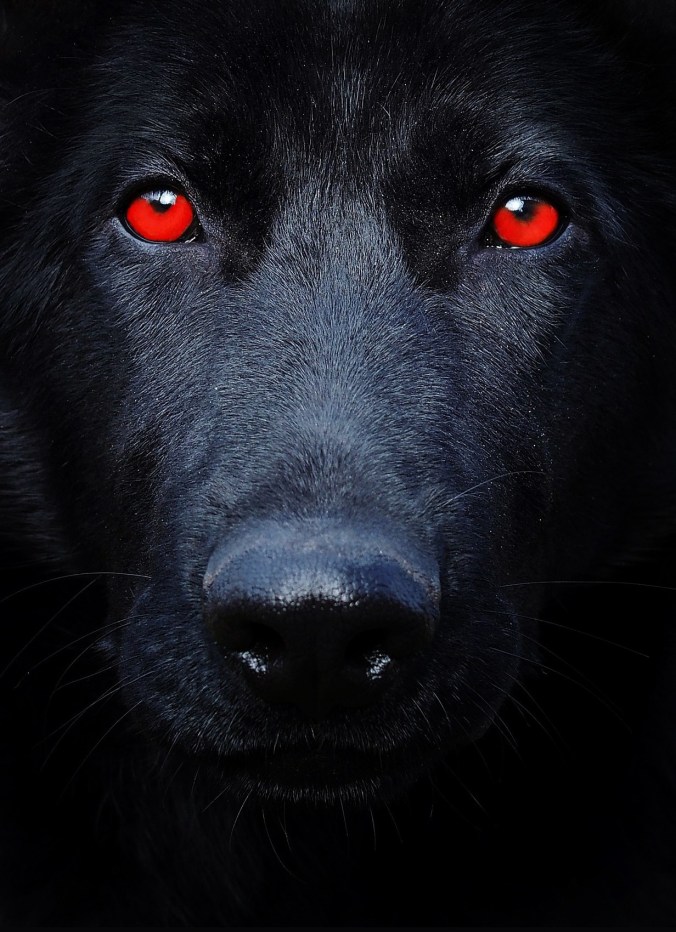
“Black Dog” Dark Short Story by Steven French

"Black Dog" Suspense by Steven French

Lucy Miller hurried along the lane, as darkness fell and the hedges on each side seemed to stretch and lean over. Cloud-rags were sweeping across the face of the moon, driven by the chill wind. She shuddered, not just from that wind but also at the thought of Lord Dacre coming up behind her while she helped the cook make gingerbread. With his foul insinuations and hands upon her body… she’d tried to squirm away as he grasped at her skirt and as a result had lost track of how much nutmeg she’d added to the mix. And Mrs Rusbridger always told her to be careful with that particular spice as too much could affect the heart. Still, if the cook hadn’t loudly bustled into the kitchen at that moment with the eggs, Lucy dreaded to think what might have happened. 

Her body shook again as she came to the crossroads and before turning for home she looked up at the night sky in despair. Before she had been taken on as kitchen help she had heard rumours, of course. Her own mother had warned her not to give Lord Dacre any reason to take an interest in her. Not that any ‘reason’ was needed, it seemed. But Lucy also knew full well that if she left she’d have a hard time finding another placement. And she and her mum had had hard times enough these past few years, that was for certain. She shook her head sadly. Her tears wet the dirt by the side of the lane.

As she wiped her face a gap appeared in the clouds and moonlight spilled across the fields and hedges. It washed across the crossroads, revealing a huge beast, so black it seemed to carry the shadows with it. As it came padding towards her Lucy could see that it was a dog with eyes bigger than those of any she’d ever seen and which glowed a fiery red. She took a step back, hoping the creature would pass by, but instead it came up to her and stopped as if waiting for some command. Tentatively, she held out her hand as if it were one of the village dogs she often met on her way home. Its great head nuzzled against her palm, before it gently licked her fingers. Without thinking she threw her arms around the animal’s massive neck and sobbed into its fur. When she’d finished and had wiped her face once more, the dog stepped away and looked at her before turning and walking back towards the mansion she had just left. As the clouds passed over the moon again, the beast was soon swallowed up in the darkness, but before it disappeared beyond the curve in the road, it turned its head. For a moment Lucy could see its red eyes looking back at her.

Bursting through the front door, Lucy could barely get the words out to tell her mother what had happened. 

“Sounds like you just met a barghest,” the older woman told her as she placed a bowl of stew on the table.

Lucy blanched and held onto a chair for support.

“Does that mean I’m to die soon, mum?” she whispered.

Her mother shook her head.

“It’s a harbinger of death, no doubt, but always of some local notable, not of the likes of you and me.”

The next day when Lucy arrived for work she found the other servants gathered outside and talking amongst themselves. 

“Oh Lucy!” Mrs Rusbridger ran to her. “Have you heard? Lord Dacre’s been found dead in his bed. One of the chambermaids hear him ranting in the night, but she was too scared to go and see what was happening. When she went in with his morning tea, well, there he was, as cold and white as the sheets themselves …”

Then she leant in and whispered, “Good riddance, I say.”

Lucy swallowed nervously, then asked, “Do they know what killed him?”

Mrs Rusbridger pointed over to a portly man with large sideburns carrying a leather bag and who was talking to a distinguished looking gentleman. “Dr Brooks there thinks it was some kind of heart spasm, no doubt brought on by overindulgence.”

“But what’s to become of the house? And us? Lord Dacre had no heirs …” Lucy went on.

The cook laid her hand on the young girl’s arm.

“Don’t worry my dear. The magistrate who’s talking with the doctor there has told us there’s a niece a few towns over who’s been sent for. From what I’ve heard say, she’s a fair employer and I’m sure she’ll see us right.”

As Lucy shook her head with worry her eye caught a shape over by the side of the house, half hidden by the shadows cast across the path. Mrs Rusbridger followed her gaze.

“Old Pete the gardener told me there was a large black dog hanging about last night. Fierce it looked, apparently. He went to chase it off, he said, but then it turned and looked at him with these glowing red eyes like it was a demon sent by the devil himself.”

“I don’t think that was the demon, Mrs Rusbridger”, Lucy replied as the magistrate began to address the small crowd.


Steven French is a retired academic who lives in Leeds, West Yorkshire, U.K. He has had a number of short stories and pieces of flash fiction published in venues such as 365Tomorrows, Bewildering Stories, Idle Ink, Liquid Imagination, Literally Stories and elsewhere.


If you would like to be part of the RFM family, follow this link to the submissions guidelines.

If you like dark fiction, you may also want to check out The Chamber Magazine.

Fiktion, fiksie,خيالي, измислицa, 小说, beletrie, fictie, fikcio, kathang-isip, fiktiota, fiction, μυθιστόρημα, fiksyon, almara, moʻolelo moʻolelo, ספרות בדיונית, उपन्यास, ntawv tseeb, kitaláció, skáldskapur, fiksi, ficsean, finzione, フィクション, 소설, ນິຍາຍ, fictio, daiļliteratūra, grožinė literatūra, Fiktioun, фикција, fiksyen, finzjoni, pakimaero, уран зохиол, कथा, skjønnlitteratur, افسانه, داستان, fikcja, ficção, ਗਲਪ, yanqalla, fictiune, вымысел, talafatu, कल्पना, ficsean, фикција, fikcia, khayaali, ficción, tamthiliya, fiktion, கற்பனை, уйдырма, นิยาย, kurgu, художня література, viễn tưởng, ffuglen, افسانہ, fiksje, intsomi, בעלעטריסטיק, arosọ, inganekwane,

Stories, Erzählungen, Geschichten, tregime, قصص, պատմություններ, গল্প, hekayələr, istorioak, гісторыі, priče, истории, ပုံပြင်များ, històries, mga istorya, 故事, 故事, storie, priče, příběhy, historier, ވާހަކަތަކެވެ, verhalen, rakontoj, lugusid, mga kwento, tarinoita, histoires, contos, მოთხრობები, ιστορίες, istwa, nā moʻolelo, סיפורים, कहानियों, dab neeg, történeteket, sögur, akụkọ, cerita, scéalta, 物語, crita, រឿង, 이야기, çîrokan, ເລື່ອງ, fabulas, stāsti, istorijos, приказни, stejjer, nga korero, түүхүүд, कथाहरू, historier, کیسې, داستان ها, historie, histórias, ਕਹਾਣੀਆਂ, willakuykunata, povestiri, истории, tala, कथाः, sgeulachdan, приче, príbehov, zgodbe, sheekooyin, cuentos, hadithi, berättelser, கதைகள், хикәяләр, కథలు, เรื่องราว, hikayeler, історії, những câu chuyện, straeon, ferhalen, amabali, מעשיות, awọn itan, izindaba, 

coffee, 咖啡, قهوة, コーヒー, café, 커피, кофе, caffè, καφές, café, Kaffee, 
Purchase, buy, ecommerce

Rural, ريفي, 田舎, 乡村的, 시골의, rurale, деревенский, αγροτικός,

Three Poems by Sun, Shih-Min

Three Poems by Sun, Shih-Min in The Chamber Magazine
Mossy stone / isled / arms / lying 
brooded / nature / perched / return again
inner voice : hatched in the heart of silence


*


Every graciously leafy-palm
grant me
anew / dawning


*


Rising / breathy 
bright / sun
sculpt the expanding land
touch / all nothingness

Sun, Shih-Min (H.S) holds a B.A degree in Fine Art and started writing while working abroad, inspired deeply by family, trainers,
and friends. Currently, she lives in Taipei, Taiwan. She loves writing as a way to interpret still life and scenes of bond through language. Her work was selected Atlanta Review 2022 Intl. Poetry Compet.in Merit Award. Her recent work will show in Academy of the Heart and Mind. IG @aura_a_u_r_a


If you would like to be part of the RFM family, follow this link to the submissions guidelines.

If you like dark fiction, you may also want to check out The Chamber Magazine.

“One Damn Photograph” Flash Fiction by Thomas Elson

"One Damn Photograph" Flash Fiction by Thomas Elson

A great resumé. Law review editor. Opinion writer for the state Attorney General. Chief counsel for the state legal ethics board. Assistant counsel for the state highway commission. Senior assistant then Chief of Staff to the Attorney General. Married. Two children.

Then a death. An off-year election. And now, Attorney General in his own right with marble-walled offices and parquet floors on the second floor state capitol building.

Political debts incurred were repaid with subtlety-slanted findings and fresh staff. Young, bright, connected, tempting.

One stood out. Given an office with an empty desk. Accompanied him on trips. Accommodating.

Restaurants. Baroque hotels in neighboring states. Reservations under assumed names lasting days longer that the scheduled meetings. Poolside. Sunglasses. Shadows.

          One newspaper.

          One front page.

          One resignation.

          One divorce.

          One damn photograph.


Thomas Elson’s stories appear in numerous venues, including Blink-Ink, Ellipsis, Better Than Starbucks, Bull, Cabinet of Heed, Flash Frontier, Ginosko, Short Édition, North Dakota Quarterly, Litro,Journal of Expressive WritingDead Mule School, Selkie, New Ulster, Lampeter, and Adelaide. He divides his time between Northern California and Western Kansas.


If you would like to be part of the RFM family, follow this link to the submissions guidelines.

If you like dark fiction, you may also want to check out The Chamber Magazine.