On the fourth day after the heifer went missing, Billy and I, twelve, ran the length of the grazing field in the snow and at the far end before the woods, found the gate bent enough the yearling might struggle through.
We picked up a trail of hoofprints, of a low belly dragging through the deepest snow, determined swipes at a sluggish pace that showed the heifer desired freedom from head to hoof.
The clouds were monochrome but after ten broke and sunlight shone on southern facing slopes.
The day’s dusting melted as we approached fearing an animal raised to be beef would be prematurely turned to hide and woodland feast for coyote, crow, and all the crawling crowd of underground microscopic feeders.
We never found her. We traipsed fence lines and woods and not a sign. In spring we took a tractor and looked for femurs and vertebrae but nary a bone poked up in the fertile earth.
Years later I woke in the early morning to find new snow fallen on my deck and that heifer came to mind, that child’s delight we had that one heifer had defied the fatal stockyard zap in the head, had defied butcher, farmer, the walking dead. It gave us hope for surviving school.
Jeff Burt lives in Santa Cruz County, California, and has contributed to Williwaw Journal, Willows Wept Review, Rabid Oak, and others. He has a digital chapbook available at Red Wolf Editions and another forthcoming from Red Bird Chapbooks.
Fog shrouds the farm.
Horses in the far field
are like a mirage -
some snow,
grizzled gray trees,
the frozen snort
of a stallion -
it doesn't take much to blur.

Jane's on her way
to the chicken coop.
A flake
lands on her cheek,
a cold, damp, wake-up.

The world is in-between.
The wind is strangely warm.
The coop wire chills.
She's sixteen -
the child, the woman,
more mirages
for uncertain vision.

Hens scatter at her approach.
The rooster rears its comb and crows -
wattles flap, brown feathers flutter,
the day's first certainty.
A Farmer Dreams
Rain-splitter shares dreams with
cool fingered splendor,
one vagueness splattering the roof,
the other touching his hard skin tender.

One moment, he's young enough
for the thrums of memory,
the woman beside him,
shedding years like undergarments.
Then he's land, groggy from drought appeased,
trickles in cracks, floods in crannies,
dust sweetly laid, mud dripping from his thoughts.

He's half awake. His wife is snoring.
He can't wait to get out on the land again.
There's been a shift in pleasure
Life of the Amish Farmer
Humidity overheats
and bursts like a boil.
Heavy thunder, hail,
torrential rain and cooling.
The Milky Way drawn
by a single farm light
dangles out of the black.
By day, tobacco bends to the harvest.
The corn is holding green.
Esther and Daniel are blessed
with a new arrival, Lena.
The burial service for Lydia Yoder
is at 2.00 A.M.

We begin with the weather,
simple thrumming heartbeat.
Then, drawn to the sky,
witness our faith
awakened by its symbols.
The work, of course, is our Gelassenheit,
our sweaty submission,
a God tutoring to muscle,
to heavy footprints in the earth
and head bent low.

In practical epiphany,
the corn fields bind the air we breathe
like veins.
The child is born,
ripens everything.
An old woman dies
so crops won't have to.
Jenna on the Farm
Her face is still smooth
despite the long days in the sun.
The skin below her eyes
has cracked like land in drought
but the cheeks are fine as sand,
brown with just a trace of red
and the lips are unlined,
from years of more doing than talking.
Only the eyes
say the work was hard and wearying.
The back is ironing-board straight
and the neck high and proud,
but the eyes, once again,
a pale and bruised green,
speak the language
of bending and scouring and digging.
Maybe she looked in the mirror one time
and it was all too beautiful
for what her eyes were telling her.
Or maybe it was all like the eyes
and the rest had nowhere else to turn
but lovely.
He painted corn rows Mondrian-straight,
seated in the sun on his tractors,
stacked his lush meadow hays
with Van Gogh's studied nonchalance,
and wintered baled straw in a barn
laved red like Turner's sunsets.

And didn't he echo each spring the classicists'
good shepherd, lugging calves from the cold,
or scan his summery cattle pasture
with the sweeping eye of a Rubens?

Artists and their works were foreign to him—
though he framed family photos,
à la Wood, against the gabled farmhouse,
reveled like Rothko in fields of vivid color,
and weathered pigment doubts worthy of Picasso:
hogs black–later white, cattle brown–later black,
tractors red–later green, but dogs ever golden.

His final canvas he composed from bed,
gazing through a window to the farm—
Move the tractor. Bring the horse to the corral.
Mow the weeds at the fence row.

His body of work brilliant in sunlight,
how to tell the farmer from his farm?
Darrell Petska is a retired university engineering editor and a two-time Pushcart Prize nominee. His poetry appears in Verse-Virtual, 3rd Wednesday Magazine, Farmer-ish, Soul-Lit, and widely elsewhere (conservancies.wordpress.com). A father of five and grandfather of six, he lives near Madison, Wisconsin, with his wife of more than 50 years.
Please share this to give it maximum distribution.
He was putting those words on the wall, was Old Frankie, called old although he was only forty-two; he was putting the words on the stone wall trying for precision but falling short. They were slapdash black-paint words now, not running and dripping, but alternately thin and crooked or rounded and porcine. He was copying as best he could from the paper Reverend had given him; he was bent below the stained-glass window of the knight wrapped up in ribbons; it was a Saturday, it was August 23rd 188-, and he was all to-aching.
The Reverend had made them sing the song, the Blood of the Lamb song where the words came from, the hymn, on each of the last four Sundays. He was very fond of it already. He received hymn books and correspondence from other men of the cloth in the Americas and he had got the words and the tune from one of them. They had sent it as an example of the sort of hard material that the hard evangelists were preaching to the people; the Reverend of St Boltoph’s liked it because he was hard too, a fire-and-brimestone man, a man of two centuries prior. He was for Cromwell and no Christmas still; he was for scaring the wits out the parishioners; he was for telling them the Devil stalked the hills around them and was waiting for them to come up; he was for letting them in on the secret that they were sinning every moment they weren’t in his church, that Chasteborough people sinned obliviously in the alehouse, in the fields, over their dinner table, crouched on the chamber pot, tending to their vegetable plots and stroking their children’s hair. No hope for the wicked, is what he would say, not the dyed-in-the-bone wicked.
Old Frankie rounded out the second ‘o’ in blood and stood back to see if all had gone well enough. No; the first ‘o’ had almost no opening in the middle and was narrow like the trail left by a cartwheel; the second ‘o’ could let through the massed Onward forces of the Christian Soldiers. He sighed. If you want a job doing well… but then, Reverend would never deign to twist himself all up against the cold grey ground of the church and be overpowered and stifled by the musty smell of the kneeling cushions. His faith made him walk on beams, sunbeams, gilded beams; he was meant for better things, or so you gathered from his talk.
What made it all the worse was that this was dishonest labour besides. Old Frankie had got plenty of lamb’s blood on him from helping out with both the birthing season and the slaughtering; none of that had seemed to come from the Lord or do him much good- it just stank. He was still a sinner and still someone thought of as being a bit behind the rest of the men he toiled with in most respects; that’s why he was unmarried still, and that bit at him, and that’s why they called him Old, because he walked and talked slow.
He heard laughter from the tumulus across the way from the church, just beyond the low wall that marked the bounds of the holy lands; just beyond the broken old yew tree that threatened to drop a branch on a pew-filler’s head every Sunday; just beyond the gravestones of unusual names, of names that no-one seemed to be called by anymore. Frankie looked out to see who was laughing. He felt a pang of jealousy when he saw the source: it was Emily, Emily Sandwell, daughter of John Sandwell, sweet Emily Sandwell, Emily Sandwell of the darling smile, Emily Sandwell of the cherry cheek, Emily Sandwell who had grown from an ungainly child with big feet to angel-woman, to divinity, to Frankie’s vision of the mother of God, the impeccable blessed Virgin.
She had her long skirt pulled up to her knee on one side, showing a pale leg strong from both her workday tramping for her family and the Sunday afternoons she usually spent solitary walking regardless of the strain of her weekday labour, without concern for modesty or the thoughts of her companion Arthur Ranger, the wagon boy. Yes, yes- there was Arthur suddenly taking hold of her leg, almost toppling her over, and kissing up the irresistible goose-pimpled exposed skin, from pristine white ankle to cushioned red knee, not caring who knew or who saw. Emily threw her head back and laughed all the more; she touched his face; she let him for a few seconds kiss up inside what was not left bare by her hitching, deeper and deeper, then she pushed his head away and raised a finger mock-stern, like a schoolmarm secretly amused by the tearaway antics of her charges.
Old Frankie could tell by their casualness, by their easy amusement, by their lack of scruple, that they knew each other much more than leg-kissing; that the nighttime woods on the hill had not been left undisturbed by their clandestine footsteps and rustlings. He’d heard it was happening all over, this looseness; now, he knew it for sure, but he also suspected it had always been that way for everyone but himself- it just seemed that people forgot somewhere along the way, that they buried their own illicit memories deep enough in the soil that the plough could not turn them back over and bring them again to the light.
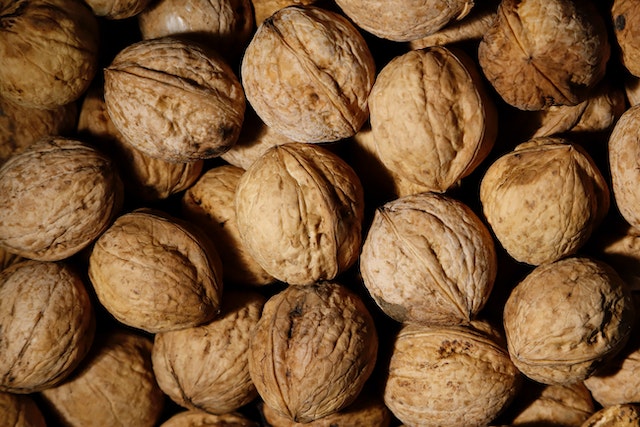
Arthur Ranger bent over and got on all fours and the reason for Emily Sandwell hitching her skirt became clear- she stepped up upon his back and her head and shoulders were lost amongst the thick leaves and branches of the walnut tree. The tree grew well here, just on the edge of a crop of beeches that crowned the tumulus as they do other such miniature eminences up and down the isle, because the rise meant it was closer to the sun; because the ground opened in craters and holes that held the rainwater in deep puddles that were a constant threat to the wayfarer looking for a shortcut home from the crop; because the tree, allowed such a prominent position overlooking the church, was respected and even venerated like it was a sign of confirmation from the Lord of the rightness of the worship within, of the truth in the words on the wonder of creation that spilled forth so often from the good book. Not many came to pick the walnuts that grew here abundantly, preferring instead to take from the more modest growth of various other trees dotted about the town, but Arthur and Emily dared; Old Frankie saw that they had with them a basket, hidden from sight up to now, and Emily had reached down and picked it up to fill it.
Arthur, one of the slimmer boys in the village, not solid like some of the farmhands, was a surprising source of strength and determination in his task- he held Emily all the while without buckling, without wavering, without complaint. He stayed like a table, as if his one humble purpose on earth was to allow maids to climb upon him, to use him like a stool or ladder. Maybe Old Frankie shouldn’t have been surprised, though- who would have been prepared to show anything but their strength to this angel; to let down the God-touched; to make perfection feel as if she were even slightly at fault?
Emily sang a song, distinct and different in every way from the song whose title he was painting on the wall as a warning and a reminder. It was lilting but knotty in the way she sang it; she drew out the phrases she liked in long trilling notes and rushed over others to reach those she preferred. She knew the lyric well and was trying to live up to it, to reach its promise, to fulfil its dreaming, to give it flesh and realness:
“It’s of a brisk young farmer, a-ploughing of his land,
He called unto his horses, and he bid them there to stand.
As he sit down upon his plough, all for a song to sing,
His voice was so melodious, it made the valleys ring.

It’s of this fair young damsel, a-nutting in the wood.
His voice was so melodious, it charmed her where she stood.
She could no longer stay,
And what few nuts she had, poor girl, she threw them all away.

She stepped up to young Johnny, as he sat on his plough
Said she, “Young man I really feel, oh I can’t tell you how.”
He took her to some shady grove, and there he laid her down,
Said she, “Young man, I think I feel the world go round and round.”
“Do you ever feel the world go round and round?” Arthur asked her slyly, interrupting.
“I feel it now more than ever,” she giggled.
Then she screamed for joy, deep and long.
She had evidently done it; she had found the heart of the song that had charmed her whole life, that, from the moment she first heard it drifting from an inn window or from the mouth of her grandmother at the fireside of a winter’s evening, had whispered to her of paradise, of passion, of hidden and forbidden things, of the untold pleasures of voice and body, of days too ideal to last and yet remaining all the same, available to all with a mind to it, the glimmer in the clouds of the workhorse’s life, the shining behind all things. Her reenactment had been a perfect act of manifestation. She was enveloped within the song, her own variation of its lyric and meaning, the world outside replaced by the world within the tune.
Old Frankie could see the delight in her; he could read the quivering excitement in her limbs; he could understand the brief ignition of the flame within her, the flame that called back beyond original sin to original peace and happiness. The sun was yellow on them; the sky was blue; the grass was green; the violets purple; the primrose pink; their dress white and brown and red of neckerchief; all was as it should be and the crow’s caw had been covered by sound of Emily’s voice, caressed by innocence and experience. She and he on the tumulus were more beautiful than the nightingale; prouder than the robin; more fleet of foot and thought than the sparrow; above all things like the hovering kite. She- they- were more than the words on the wall, more than the blood of the lamb, more than Reverend’s sunbeams.
Old Frankie threw down his paintbrush, walked through the knave and left the church. Damn the Reverend; damn him to heaven or to hell and back. He could paint for himself. Frankie didn’t need his few pence. The couple were still laughing and the nuts on the tree were ready and ripe for the picking and it was Saturday and it was summer.
Billy Stanton is a London-based working-class writer and film-maker, originally from Portsmouth. His short fiction has appeared in Wyldblood, The Chamber, Horla, The Rumen, Literally Stories, Tigershark and the ‘New Towns’ anthology. He co-runs the ‘Noli Me Tangere Short Film Festival’. His blog is: steelcathedrals.wordpress.com
Please share this to give it maximum distribution.
Each morning, when I look in the mirror, I see the scar–a quarter inch, ragged indent above my eyebrow. Seeing the scar, I remember the impact of my rifle scope “kissing” me because I was on tundra, someplace in Newfoundland, and my shooting sticks moved when the shot fired. I remember warm blood running down my face and my guide walking to a tree, getting a pinch of sap, then rubbing it into the bloody hole on the edge of my eyebrow before putting duct tape over the sap. Each morning, the scar reminds me; I missed the moose.
JD Clapp is based in San Diego, CA. His micro fiction has appeared in Blink Magazine, 50 Give or Take, Paragraph Planet, 101Words, Micro Fiction Mondays Magazine, Scribes MICRO, Vermillion, Flash Fiction Fridays, and a Story in 100 Words.