Publisher, Rural Fiction Magazine; publisher, The Chamber Magazine; founder, the Farmington Writers Circle. I have written short stories and poetry for many years. In my careers as a Naval officer and in the federal government, I have written thousands of documents of many types. I am currently working on a second edition for my poetry collection and a few novels.
We’re excited to share that on January 27, Duotrope had the pleasure of interviewing RFM’s publisher, Phil Slattery. The interview is now live, and you can read it here!
To learn more about Phil, visit his personal website philslattery.org.
Please share this post to give it maximum distribution.
You can also help our contributors gain exposure by back linking to them and to RFM’s homepage.
Financial donations through either our GoFundMe or Buy Me a Coffee accounts will help expand our global reach by paying for advertising, more advanced WordPress plans, and expansion into more extensive Content Delivery Networks.
Image: self-portrait at Arkansas Post National Memorial, 2019.
There he was, on a Greyhound bus, heading from Muskogee to Fort Worth, and he was wondering how he ended up there, and if it even mattered. Just a week ago he sold most of his belongings and bought a bus ticket south. He was going to stay with some close family friends in Walnut Springs, just an hour’s drive from the Fort Worth bus terminal. He figured it was time to clean up, kick old habits, and collect summer wages. When he got to the bus station Marianne was already there. She was a lean woman with a kind face, and a warm smile. She appeared as though she had stepped right out from a Norman Rockwell painting. She wore flour sack dresses that she made herself and she kept her hair tied up in a tight bun and covered with a floral-patterned-kerchief. Marianne lived with her brother, James, in an old house trailer on their father’s land in Walnut Springs. Their father had a house about two acres from theirs.
An expanse of untidy meadow lay between the house and trailer, with swaths cut out as trails, leading from one home to the other. Behind the trailer they had a half-acre garden, fenced off and surrounded by tall grass, where they grew a retinue of vegetables, beans, hot peppers, okra, collard greens, and melons. Their father owned about twenty acres of land, the majority of which was wild, untamed fields of weeds, ending where the forest began, on the outskirts of town, and that’s where they were heading.
When Tucker stepped off the bus, he saw her immediately. She was standing in front of an old beat-up Packard, waving in his direction. The first thing he noticed was her smile. “Well, you haven’t changed a day since I saw you last, Tuck.” she exclaimed in her dulcet southern drawl. She threw her arms around him. He embraced her. He took her all in. He enveloped her entire being. There was a deep familial connection between them. In his right hand he carried a dirty blue suitcase, tied together at the buckle with a piece of cotton twine. “Shall, we?” he said, while gesturing to the car. He tossed the suitcase in the back and plopped down on the passenger seat, a real improvement from the padded plastic seats of the greyhound bus. Marianne started the car, and they pulled out.
Tucker was tired from the long ride, and one more hour or so felt like it would stretch out for days, but at least he was with a friend. He had never been to Walnut Springs, and didn’t know what to expect when he got there, but it would be a new start, and that was what he needed most. One more day living the way he was would have done him in. Something happens when you get complacent, your demons start taking roots. His life was going somewhere dark, and he knew it. He tried not to think about the past that he was leaving behind as they traveled out of Fort Worth, but he knew he’d be bringing it with him in some small way.
A few miles down the road, Marianne spoke up “You hungry Tuck?” Up until that point they had sat in silence as they paced along the stretch of open road in the dry heat of summer. He was staring out the window remembering the kudzu he had once seen in the Carolinas, the rich, almost otherworldly green of them. He was imagining being engulfed completely by the vines. Just standing there so still, they slither up around him like he was just another unsuspecting sapling.
He was wondering if he could even stay that still. If he even had it in him not to run away at the first timid touch of the tiny tendrils. “Tuck, did you hear me?” he snapped out of it and turned his head toward her, “What’s that you said?” The words fell out of his mouth in a slow slurry of molasses. He felt like he hadn’t said a single word in a million years. “I asked if you were hungry, Honey” she said “there’s a real good burger joint up the road. One of those roadside stands. Best damn burgers in the state of Texas, I can attest to that.” Her voice was so welcoming, so jovial, so full of comfort. How could he say no to a voice like that? “Sure Mari, I’d love a bite to eat.” He smiled, and they rolled along that country road like a ship through smooth waters. And the green grassy plains stretched out before them, and they really did look like the sea. He was lost in that sea. He was lost in the beauty of the land. He was lost in the sweet voice of a family friend, of the big white clouds coming down to shade them. He was lost in the old blue suitcase. He felt tucked in there somewhere between the books, and the faded old shirts. Stuffed down in the pocket of some old blue jeans and forgotten.
They pulled up to the place and he read the sign out loud, slowly enunciating each word, like a little kid who just learned how to read, “Best Burgers in Texas.” He chuckled. They parked the Packard and pulled themselves out of the car. They stepped on to the cracked dirt and little dust storms raged under their boots as they headed for the stand. Marianne ordered two cheeseburgers and two large Cokes with plenty of ice, and they sat together on the trunk of the car, staring at the vacant plain, and enjoying their burgers in silence, save from the sound of trucks rolling down the road every so often.
In the mind of Tucker, the entire world was visible. He felt like he was smaller than he had ever been. He wondered how far he would go. How long it would take him to find what he was looking for. As he stared at the sky, he saw a flock of floating vultures on the horizon, circling around the cerulean sky in perfect order, and he wondered what it must be like, to be up there soaring. He finished his burger and looked at Marianne, “What did you think of the burger?” She asked him, as she patted her lips with a napkin, and he replies, with a serious earnest “Best damn burger in Texas.” He threw his arm around her shoulder and asked, “How much further do we have to go?” and Marianne replied, “We’re about half way there, Tuck.”
J. Thacher lives in Upstate New York, where he runs a homestead with his wife and son. He finds inspiration in the rolling hills that line the country roads, and solace in the Cathartic act of infusing his stories with his own experience.
If you would like to be part of the Rural Fiction Magazine family, follow this link to the submissions guidelines.
Please share this story to give it maximum distribution. Exposure is our authors’ only pay. You can also help our contributors gain exposure by back linking to them and to RFM’s homepage.
Financial donations through either our GoFundMe or Buy Me a Coffee accounts will help expand our global reach by paying for advertising, more advanced WordPress plans, and expansion into more extensive Content Delivery Networks.
I’d been walking in the twinkling world
left by last night’s ice storm when,
at the edge of a farmer’s field,
I glimpsed blue smoke.

Or so I thought.

Approaching closer, I realized that
bushy bare branches, ice-encased,
had gathered light from the late
winter-early-spring sky, holding
it like a glass globe, fragile and rare,
for me to find.

Blue truth moved through me,
breaking me apart like a ship’s prow,
parting ice at the pole, leaving
white shards afloat on azure waves.

Awake now, I walked back down
the empty bike trail, sight restored.
At the pond, I observed tiny gleams
in the trees, like the last remaining
Christmas strings, winking, whispering,
“All’s the world’s blue for you.”
One Step
How can death be so alive?
I ask, striding through coppery leaf-rot
to pass through the portal of woven
branches into the darkness of the gorge.
After last night’s rain, we step carefully,
the deciduous canopy diminished,
its evidence everywhere underfoot,
silence and solitude the beating heart.

At the fork where yesterday we
turned back at the threat of storm,
today we go on, cliffs on our left,
sun-striped bank to the right.
When it looks as if we can go no farther,
we descend rain-slick wooden steps
to stand at last beside singing stream.

Ahead we see a dappled bank. Treed
on either side, it’s no less a door
than the boughed arch at the glen’s
other end, openings to another world
that tells a story of an earth without
humans and their explosive emotions.

Between water’s murmur
and dark clefts’ deep listening
I envision it all without us
and am one step closer
to letting it all go.
Ed Davis has immersed himself in writing and contemplative practices since retiring from college teaching. Time of the Light, apoetry collection, was released by Main Street Rag Press in 2013. His novel The Psalms of Israel Jones (West Virginia University Press 2014) won the Hackney Award for an unpublished novel in 2010. Many of his stories, essays and poems have appeared in anthologies and journals such as Sky Island Journal, Write Launch, The Plenitude and Slippery Elm. He lives with his wife and three cats in the village of Yellow Springs, Ohio.
If you would like to be part of the Rural Fiction Magazine family, follow this link to the submissions guidelines.
Please share this story to give it maximum distribution. Exposure is our authors’ only pay. You can also help our contributors gain exposure by back linking to them and to RFM’s homepage.
Financial donations through either our GoFundMe or Buy Me a Coffee accounts will help expand our global reach by paying for advertising, more advanced WordPress plans, and expansion into more extensive Content Delivery Networks.
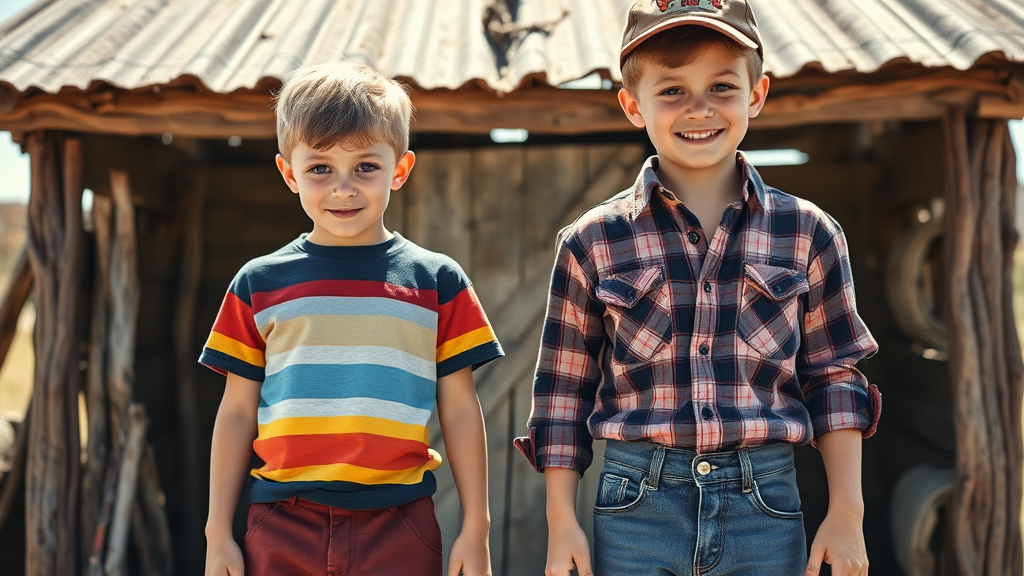
There is a Polaroid of my cousin Nathan and me standing in front of the coal shed. The coal shed is bare plank wood with a corrugated tin roof. Written on the back of the picture in blue ink is Philip and Nathan, 1972. I was 6, Nathan was 12. I’m wearing a four-color horizontally striped t-shirt and maroon pants; he’s wearing a plaid button-up collared shirt, denim bell bottoms and a Mid South Mack cap—the bulldog logo still discernible in the center of the crown. Our arms dangle at our sides after my mother, who took the photo, told us to uncross our arms. Both of us are squinting in the sun, making our smiles look forced. The photo is very faded after fifty years. I only know that my pants are maroon, not the pinkish color in the photo, because they were my favorite pants.
Nathan came to live with my family before I was born. His mother was unable to care for him because she was sick, but we were never told what her illness was. It’s not unusual to see extended families in Eastern Kentucky—cousins, aunts, uncles, grandparents all living under the same roof—but when Nathan’s mother recovered Nathan had already been with us for so long he stayed with us after she moved to Chattanooga, Tennessee. When I was brought home after being born at the Pineville Community Hospital, Nathan kicked a hole in the living room wall and ran to his bedroom.
Nathan spent his allowance money on wrestling magazines and cut out the pictures of his favorite wrestlers to pin up on the bedroom wall. He had an autographed picture of his most favorite wrestler, Ric Flair, that he often stared at in bed before going to sleep. He told me many times I was never to touch it. When I was three, I was moved out of my parents’ bedroom and into Nathan’s. “I’m your big brother,” he told me. “I was sent here to take care of you.” He would tell me stories as we lay there in the dark; stories about monsters in the woods behind our house, stories about man-eating fish in the river that could jump out of the water and get you, venomous snakes hiding in the weeds. Those stories made me afraid, but they didn’t make me afraid of him. Until he told me the story that did make me afraid of him.
When Nathan was six years old he killed our grandmother. “One night I just did it.”
“Why?” I asked.
“I don’t remember,” he said. “I think I was really mad about something. Don’t tell anyone.”
“I won’t.”
“You better not.”
“I said I won’t.”
* * *
I never met my grandmother, I knew her only from the old black and white portrait in an oval frame that hung on the wall in the living room along with portraits of other family members. Her portrait, like many of them, looked like those old west photos of women with pulled-back hair and masculine facial features. The day after Nathan told me he killed our grandmother, I walked over to the Highway 119 General Store where my mother worked as a cashier and stocker. “What happened to mammaw?” I asked.
She put the last bottle of Nehi in the cooler and slid the glass lid shut. As she stacked the plastic bottle crates she said, “Philip, God called her home when it was time. She’s in heaven with Jesus now. It’s best forgotten. I don’t want you to talk about it no more.” She went to the front of the store to ring up the purchase of someone with a Moon Pie and an RC Cola. She came back to take the bottle crates to the rear of the store for the delivery driver to pick up the next day.
“I just want to know what happened,” I said, more quietly than the first time.
“It’s something that shouldn’t be thought about. Run along back home and play. I have to work now.”
* * *
For my eighth birthday I got a Rubik’s Cube and the next day I found it under my bed with five of the colored stickers peeled off. That Christmas I got a Shazam action figure and a few days later it was in pieces after the rubber bands inside had broken. When my bicycle seat had been slashed I showed it to my mother. “Think of all the poor children in the world who don’t even have a bicycle at all,” she said.
Nathan was quick to anger and I did my best not to provoke him. Whenever I did he would punch my shoulders or pinch my ears. My parents trusted Nathan enough to leave me in his care, even letting him take me fishing to the river a half mile from our home. If I caught the first fish I risked another one of his lashings, so I learned how to secretly remove the bait from my hook before my first cast. His anger never lasted very long, within a day or two he would go back to telling me stories and reassuring me that I really was his little brother and he was there to take care of me. “You know you don’t deserve it,” he said. “but I’ll still take care of you.”
When Nathan was fourteen his face broke out in huge red boils and white pustules. He would spend evenings after supper in front of the bathroom mirror popping them, leaving pus splatter on the glass. The white cream that a doctor had prescribed for him wasn’t working and it frustrated him. One Saturday afternoon after watching a TV science fiction show where one of the characters was a swordsman, he began leaping about and parrying with a leatherman’s awl that he had taken from my father’s steam trunk and yelling, “Look! I’m Lieutenant Sulu! Prepare to swordfight!” He was jabbing the thing close enough to frighten me, but he kept telling me he was just playing and wouldn’t hurt me. Then he jabbed the thing right through my left cheek.
I howled for hours as my mom tried to stop the bleeding both inside and out. The next day as she was driving me to the Daniel Boone Clinic I told her Nathan had done it on purpose, that he was mad because his face had broken out and he wanted to mess up my face, too. “No, he didn’t sweetheart, it was an accident. You have to play careful.”
Nights in our bedroom he would repeatedly apologize and ask to look at the stitch in my cheek. He would lift the gauze and pick at it with his fingernail even as I was telling him it hurt. It was a month before it healed enough for the doctor to remove the stitch. The scar was a pink elliptical.
* * *
My father was asked to pull the float for the 119 General Store in the upcoming Mountain Laurel Festival parade. Every year Mr. Ingalls, the owner of the store, pulled the float but he had passed away a few months ago and his widow asked if my father would like to do it. My father broke the news to us as we sat at the supper table. He told me I could ride on the Massey Ferguson tractor with him in the parade like he sometimes let me do as he plowed our field. However, the day before the parade my father told me he was going to let Nathan ride with him instead of me.
“But why? You said I could ride with you.”
“You can ride next year. Nathan’s going to be 17 next year, so let’s let him ride this year.”
My mother, sitting next to my father, rose from the sofa and went to the refrigerator for a bottle of Coke to mollify me. I had been telling everybody at school I was going to be in the parade. I refused to accept the pop. Nathan, seated in the wicker chair next to the coal stove, smirked and shrugged his shoulders at me.
The volcano of my rage erupted. “He’s a murderer!” I screamed, pointing at Nathan. “He killed mammaw! He told me all about it!”
Nobody said anything, nobody’s expressions changed. My mother returned the bottle of Coke to the refrigerator.
* * *
Things happened pretty fast after that. My mother packed an old Amelia Earhart suitcase with my things and I was sent to Aunt Dorothy’s to live. Aunt Dorothy was 65, widowed, and addicted to cooking sherry. “It won’t be long,” my mother said as we walked over. Aunt Dorothy’s home was just fifty yards away across a creek and up a small hill. “Nathan’s had a hard life, Philip. I hope you understand.” No, I did not understand. I was her son and she was abandoning me. And to Aunt Dorothy of all people! Her home was a moldy shack and she hadn’t bathed or changed her clothes in nobody knows how long. She looked like a bowling ball with stick figure arms and legs.
My father had telephoned ahead, and as soon as my mother and I went in I was sent to the kitchen where a bag of Fritos and a bottle of Sprite awaited me on the round wooden table. They whispered in the front room for about five minutes or so and then came back to the kitchen. “It’ll be just for a little while,” my mother said, patting my wrist. “I’ll come by tomorrow morning to get you to go watch the parade.” I told her I didn’t want to go. “All right then.” She patted my wrist again and then walked back home.
I spent almost that entire summer at Aunt Dorothy’s. Sunday nights we had supper at my mother’s, and while Nathan and I both participated in the conversations, we never spoke to each other.
On the last Saturday night of August, Aunt Dorothy and I were watching Love Boat and Fantasy Island like we always did. She was reclining on the sagging sofa holding a plastic tumbler of sherry on her belly. “You and Nate will be friends again, Phil,” she said after a sip. “You’re like a little brother to him.”
“No we won’t,” I said without taking my eyes off the television. “And we aren’t brothers.”
“Of course you are. He loves you and you love him.”
I couldn’t take it anymore. “He killed mammaw! He’s the murderer and I’m the one that gets kicked out!”
She sat up on the sofa and set her tumbler on the cluttered coffee table after another sip. “Lord amercy, where do you young’uns come up with this nonsense,” she whispered, jiggling a cigarette out of its pack. “First of all Phil, you ain’t kicked out. We go over there once a week, sometimes more.” She paused to exhale and rub her weary eyes. “This was all so long ago. Nathan was only five or six years old at the time. Pappaw was drunker’n hell like he always was. Mammaw’d had enough and told him to get his drunk ass out of the house. He took the poker from the fireplace and commenced to beating the tar out of her. She was on the floor unconscious with blood coming out of her ears, nose, and mouth before he finally stopped. Pappaw knelt on the floor crying for her to wake up, wailing to high heaven that he was sorry and that he loved her. It wasn’t til Herschel came home that they was found. The whole kitchen floor was covered in mammaw’s blood. Nathan was hid behind the ice box, he saw the whole thing. Mammaw died the next day in the hospital.”
* * *
The weekend before the new school year started, Nathan moved to Chattanooga to be with his mother. I moved back home and had the bedroom all to myself. I wiped the booger smears off the wall next to Nathan’s former bed with a paper towel and Formula 409. Our family grew over the space that Nathan had left almost like he had never been there.
Almost five years to the day after Nathan left us, we attended his wedding in Chattanooga. During the long drive down, I wondered if he’d forgotten me, but upon our arrival I received the heartiest greeting of all when he stuck out his hand saying, “Phildo! How the hell are you little brother? Long time no see.” We stayed overnight at Nathan’s mother’s house, which he and his bride also lived in. My mother kept Nathan’s wedding portrait on her nightstand until the day she died. It scarcely resembled a wedding portrait, Nathan in a cheap Botany 500 suit, his bride Angelina in a Kmart casual skirt suit. Nathan is smiling with his lips closed, Angelina isn’t smiling at all and no matter how long I look at it I can not make out the expression on her face.
When I cleaned out my mother’s home in 1999 after she died, I found all of Nathan’s cut outs of pro wrestlers, including the autographed one of Ric Flair. I telephoned Nathan in Chattanooga to see if he’d like me to send it to him.
“I never had an autographed picture of Ric Flair,” he said.
“Sure you did. You always used to tell me not to touch it.” He insisted he’d never had an autographed picture of any pro wrestler and launched into a story about catching a 30 pound channel catfish in the Tennessee river over the summer. One fish tale led to another and as he talked, I listened for any evidence of what he’d seen as a child, listened for any trauma that might still be living within him. After his final fish tale I asked again if he wanted me to mail him the picture.
“Naw. Just do whatever you want with it.”
I fingered the small pit on my left cheek as we said our goodbyes and hung up.
Hugh Blanton’s latest book is Kentucky Outlaw. He can be reached on X @HughBlanton5.
Please share this story to give it maximum distribution. Exposure is our authors’ only pay. You can also help our contributors gain exposure by back linking to them and to RFM’s homepage.
Mitch leaned against the lamppost, cigarette smoke caressing his face, a Pabst sweating in his hand. Behind him, the thrum of the jukebox; the bartender, a middle-aged mother of eight named Karen, had switched over to southern rock to pacify the rowdier element. Mitch took it as his cue to sneak some Skynyrd into his next set. No harm in pandering.
He took a drag and a pull. The humidity felt soothing on his skin; reminded him of his childhood, playing with the other boys in the trailer park late at night, while their parents drank or screwed themselves to sleep. Midwestern summers could be a hell of a thing, but Mitch had spent a year in Montana on his cousin’s ranch, and wouldn’t trade the oppressive heat for anything. The winters balanced out the scales eventually.
Lucky’s Tavern sat across the street from the courthouse, the tallest building in Charleston County. Mitch eyed the rows of windows, impenetrable and black. Cicadas hummed from the trees that dotted the town square, filtering through the screaming electric guitars of the jukebox. There was a song in this somewhere. That part of Mitch’s mind itched to stitch the pieces together, while the rest of him tried simply to enjoy the taste of smoke in his mouth. He hadn’t played a gig in three weeks; no matter how much he played during his free time away from the factory, he was still out of practice. Singing to his dog wasn’t the same as to a crowd, some of whom actually wanted to hear him. His voice had almost gone out halfway through “Sunday Morning Coming Down.” Thankfully, the beer was on the house. It usually was, around here, long as you were still able to play. A small perk of failure.
Voices drifted into his revelry, coming from the far end of the town square. He turned, sipping the beer, and saw a group of college-aged kids approaching, six of them, jostling casually amongst themselves in a way that suggested long or at least youthful familiarity. Mitch studied them openly, taking in the careless enjoyment on their faces, the confidence in the hitch of their shoulders, the girls in short skirts and swaying their hips absently to whatever music it was women that age could always hear. Mitch had known many like them, once, during his stint at the community college. Not that long ago, in the scope of things. The half-life of a dream was longer. The desire to embrace what life had to offer and the fear of doing so. The concept of youth, the certainty of it, outlasted its physical manifestation.
The group approached the entrance to Lucky’s. Four guys, two girls. An interracial bunch, which Mitch realized one did not normally see around here. He couldn’t tell if that was surprising or not. Decided if it didn’t matter to them, it didn’t matter to him, though he felt maybe it should.
One of the guys noticed Mitch watching them and nodded in a friendly, easy manner. Mitch nodded back and returned his attention to the courthouse. He’d seen what he needed to see.
“Hey, there’s someone singing tonight,” a girl said. “Is there a cover? I don’t have cash.”
“Nah,” one of the guys answered. “It’s just some dude. There’s never a cover when it’s just some dude.”
“I don’t have cash, either,” said the other girl.
“They try to guilt you into tipping,” said another one of the guys. “Like, no thanks, man.”
“Then just don’t fucking tip,” said the first guy, as the door clanged open and they went inside.
Mitch smiled and killed his beer, tossing the bottle into the nearest trashcan. He wondered if the bars in Nashville had covers. He’d only been twice, years ago, and couldn’t remember much through the alcohol haze. Had enjoyed the trips, the overall experience of being there, the lights and music and people, but not enough to go back in the subsequent years. In fact, other than trips to St. Louis and Chicago for ballgames, he rarely visited anywhere approaching a metropolis. The majority of his life, over the past ten years, had been spent surrounded by the flatland corn and soybean fields he’d been born amongst. He wondered if he should regret that.
He took his penultimate drag on the cigarette as the door swung back shut behind him. Maybe Allman Brothers instead of Skynyrd. It was all the same to them. Mitch took one more look at the darkened windows of the courthouse, the building seemingly dead to the world. The center of town, the center of the world he had fallen into and become discerningly comfortable with. He closed his eyes for a moment, listening to the cicadas, making a music sweeter than any he or any other human being could hope to create. Yes, he thought, stringing the lines together, the fingers of his left hand reaching for the notes. He wouldn’t have to try very hard to find it. The song would come eventually. It always did.
D.W. Davis is a native of rural Illinois. His work has appeared in various online and print journals. You can find him at Facebook.com/DanielDavis05, or @dan_davis86 on Twitter.
Please share this story to give it maximum distribution. Exposure is our authors’ only pay. You can also help our contributors gain exposure by back linking to them and to RFM’s homepage.