Publisher, Rural Fiction Magazine; publisher, The Chamber Magazine; founder, the Farmington Writers Circle. I have written short stories and poetry for many years. In my careers as a Naval officer and in the federal government, I have written thousands of documents of many types. I am currently working on a second edition for my poetry collection and a few novels.
My sister told me my mother had been crying off and on all day. Her ex-aunt-in-law hit a deer about six in the morning and was killed. She probably hadn’t seen the deer until it was too late because of the thick fog like pea soup. There were no skid marks, only tire tracks off the road, through the shallow ditch, up the embankment, and into a stand of pines.
Aunt Gracie (we still referred to ex’s as aunts and uncles) was on her way to the bread factory, a place that emanated a yeast smell throughout the region, and where she’d worked for thirty-five years, not because of the pay, but because of the health care. The large doe had destroyed the front end of her Impala, was thrown up on the hood and went through the windshield, and poor Aunt Gracie never stood a chance.
All that detail had been shared with mother, along with the fact that Gracie was at the funeral home waiting on her only adopted daughter to drive in to confirm arrangements. Fortunately, Gracie had a funeral policy that covered everything, or she wouldn’t have had a casket, funeral, or an eternal resting place at the cemetery. In fact, it wasn’t clear what would have happened had she not had the insurance because her daughter couldn’t afford to pay it being a single mother, her working and trying to make ends meet as best she could. Perhaps, they would have simply cremated her, tossed her ashes out behind the funeral home by the swelling mound of soil from dug graves.
“Mother, why are you so upset? She divorced your uncle thirty years ago and moved off. He remarried and had children by his second wife”.
“Because the last thing I said was ‘Get the hell out of my house, you crazy bitch.’”
“Why in the world would you have said that?”
“Because your brother was a toddler and bit her daughter. Then, that crazy woman bit your brother. A grown woman reacting like that. She should have known better. I would have popped him for biting her daughter, but I didn’t even have time. Then she said to your brother, ‘Well, how do you like that? That’ll teach not to bite somebody.’ He was a toddler for Pete’s sake.”
“Well, I’ll admit that’s a little off, but why are you feeling guilty about it when it was forty years ago?”
“I don’t know. I’m sorry for my behavior, but a mother is going to look after her child, no matter what.”
“I’m sure she moved on and forgave you.”
“Well, knowing Gracie, she forgave me, but she never forgot it.”
“You going to the funeral?”
“I doubt it. I’d have to rearrange my teeth cleaning and my hair appointment. You just about can’t rearrange because they are so busy.”
“I know.”
Niles Reddick is author of a novel, four short fiction collections, and two novellas. His work has appeared in over five hundred publications including The Saturday Evening Post, New Reader Magazine, Cheap Pop, Flash Fiction Magazine, Citron Review, Hong Kong Review, and Vestal Review. He is an eight-time Pushcart nominee and three-time Best Micro nominee . His website: http://nilesreddick.com/.
Please share this post to give it maximum distribution. Exposure is our contributors’ only compensation. Don’t forget to back link to this.
Financial donations through either our GoFundMe or Buy Me a Coffee accounts will help expand our global reach by paying for advertising, more advanced WordPress plans, and expansion into more extensive Content Delivery Networks.
Jimmy watched Anne coming in from her ride, leading Albion by the reins. He leaned against the side of the old truck and watched her, still not quite believing she’d picked him. You’d never guess she was a city-girl, to see her ride. Just like you’d never guess that Jimmy had grown up in the shadow of steel mills, breathing in the sulphurous reek from the coke ovens night and day. They’d both grown up down East, a long way from Alberta, and she hadn’t wanted to move out here, so far from her family.
They’d broken up over it for a while, when he first came out West. He thought she’d never join him. After a while, she came, though; he’d saved up and sent her down the train fare, hoping, but not really believing, she’d come. She did. Love is like that, Jimmy thought.
“How’d the ride go?” he asked her, lifting a last bale of hay onto the back of the pickup.
“It was good,” Anne answered. “There was a coyote out over the ridge. She had her pups out for a romp.” Nothing would convince Anne that coyotes were vermin, and Jimmy didn’t mind that, even if none of the people round here understood. It was just Anne seeing worth where others failed to; she’d realised there was something more to him, as well, when no one else had.
He drove toward the barn, slowly, while Anne rode alongside him. The setting sun glinted off her blonde hair and Jimmy wondered what she’d look like riding nude. His erection was instant and uncomfortable and he was glad it had subsided by the time they got back to the barn.
While Anne gave Albion a quick rub-down, Jimmy tossed the bales of hay off the truck. By the time he’d hauled the first one up to the loft, she was beside him, and put her hand on the rope. They pulled together, and one by one, the last bales were stored.
“Isn’t it late in the year for coyote pups?” Jimmy asked her as they walked back to the house. Jimmy didn’t care what the answer was, really, he just liked to listen to Anne talk.
“I think it happens sometimes,” Anne said. “Maybe it’s a second litter. It was a good year; maybe there were enough mice and prairie dogs to feed them.” He watched her mouth form the sounds and thought about kissing her lips.
Anne had left the stew simmering since lunchtime; the aroma filled the kitchen as they came inside. After he washed up, Jimmy set the table while Anne laddled a generous helping onto his plate. Her own didn’t hold half as much.
“Are you feeling OK?” Jimmy asked, as he took a biscuit from the pile in the middle of the table.
“I’m fine,” Anne asked, but there was something in her voice that made him look at her more closely. She smiled at him and he could see her resemblance to the photograph on the wall. It was a picture of a silent movie star – Ann Dunn who had been famous back in the early days of Hollywood. Anne was named after her. Jimmy had never seen any of her movies, and Anne had told him that many of them were lost. Still, it was something to be married to a star’s grandniece.
“I called Dad earlier,” Anne said, pushing the food around on her plate. Jimmy suddenly felt unsettled; he often worried that Doug had never forgiven him for marrying his youngest daughter. Anne always told him that was silly; their elopement was long forgiven, if not forgotten.
“How are they doing?” he asked, trying to keep his voice neutral. Wherever Anne’s father was mentioned, his voice took a defensive edge. That was ridiculous, though. Jimmy had proven he could take care of Anne to Doug, to everyone.
“Pretty good,” Anne said. “You’re not mad, are you? I know it’s expensive. I just really needed to hear him and Mom.” She got up and fetched Jimmy a beer from the fridge while she spoke. Her hips moving under the tight, faded denim, distracted Jimmy. She didn’t take one for herself, but he was thinking about other things and didn’t notice.
“He said Mom was wondering when we’d give them some grandkids.” Jimmy was about to say something flippant, when he glanced over at Anne. Her face was tilted down, as if she was looking at her plate, but he caught the flash of her blue eyes looking up at him through her bangs.
She was hanging on his answer, though he didn’t know why. He took a pull from the bottle, then scooped up a forkful of stew, while he thought about what to say.
“Aren’t we still kind of young to be having kids?” It wasn’t true, really. He was going to be 24 soon; Anne would be 20 in the Spring, but still looked like the 16 year-old he’d met working at the drive-in.
“Not really,” Anne said. “My friend Karen has three kids already.”
“Yeah, I know,” Jimmy replied. Karen had gotten pregnant with her first before she finished high school. When Anne dropped out to marry Jimmy, Doug had been furious that it was the same thing. It wasn’t though; Anne had made him wait until they were married.
“I just think that we should get more settled first, you know?” he said.
It had seemed such a good idea to get married. Well, it was, but they’d rushed, Jimmy thought. He hadn’t got a real job, and Annie hadn’t finished her diploma. After a week their savings ran out and Anne had to move back with her folks. Jimmy had come out here but, to be honest, he’d been a bit of a jerk, leaving her behind. At the time, knowing his cousin had a job waiting for him out here had seemed important.
“You’ve been managing the ranch for a year now,” Anne replied. “We’ve got the whole house to ourselves.” His cousin owned the ranch, and another one besides, now. He’d given Jimmy a job and, bit by bit, Jimmy had worked his way up to manager; not bad for a guy who never finished high school.
“I know,” Jimmy agreed, grudgingly. “But, we’re still just kids. We should have some fun.” He wanted to say he couldn’t imagine Anne with babies when, almost at once, he saw it in his mind. It wasn’t a bad idea, but he didn’t feel ready; he still wanted to enjoy their time together. Kids were such a distraction; surely Anne could understand that.
“I guess,” Anne said, her tone flat. That was never a good sign. She picked up her plate and took it over to the sink. She’d barely touched anything. The phone rang, two shorts and a long; it was for them, but Anne made no move toward it. Jimmy hurried over to pick it up.
“Macard residence,” he said. The link crackled a little; the wind on the wires made it do that, sometimes. The voice on the other end sounded very distant.
“Is that Jimmy? It’s Doc Nicholson here.”
“Yes Doc,” Jimmy answered, puzzled why Doc was calling. “What’s up?” He was distracted enough by Anne’s behaviour to miss the joke.
“You tell that little wife of yours her test came back,” Doc Nicholson said. “The answer is ‘yes.’ Congratulations.” Mystified, Jimmy set the phone black in its cradle. He turned to ask Anne what that was all about, but the screen door was swinging shut behind her. Jimmy followed her out on the porch.
She was sitting on the double rocker, crying. It reminded him of the night they split up; Anne had cried then, and so had he, but not in front of her. When she refused to move out to Alberta with him he’d been certain that getting her diploma was more important to Anne than he was. But that wasn’t it at all.
“Why are you crying? What’s going on, Anne?” Jimmy asked. “The Doc said the answer was ‘yes’, but what’s the question?” She looked up at him and shook her head. Jimmy sat down and pulled her into his arms. For a moment she struggled as if she wanted to get away, to get some space, but then she relaxed and lay against him.
“If you think I’m crying now, you should have seen me when I saw those coyote pups,” Anne said. “It was like they were the most beautiful thing I’d ever seen.”
Suddenly, Jimmy knew the answer. She lay her head on his shoulder, and he stroked her long hair, as the twilight deepened. One of the coyotes howled at the rising moon. Then its mate joined in.
Love is like that.
Eolas says: “My short stories have been published in Grim & Gilded, The Word’s Faire, Pulp Lit, and Agnes and True. My novelette “Party of the Second Part” appeared in Raiders of the Lost Plot: the 2024 Fark Fiction Anthology. My website is: https://sites.google.com/view/eolaspellorwriter/home“
Please share this post to give it maximum distribution. Exposure is our contributors’ only compensation. Don’t forget to back link to this.
Financial donations through either our GoFundMe or Buy Me a Coffee accounts will help expand our global reach by paying for advertising, more advanced WordPress plans, and expansion into more extensive Content Delivery Networks.
First day in the house, and the mice are confused
their routines established by the previous family living here
suddenly disrupted. There are rooms that were safe
and almost always empty
that are now full of new furniture and footsteps
the scent and stalk of a cat
excited at the prospect of new territory to mark and own.

First night in the new house and we can hear the mice
tumbling through the rafters and walls
squeaking in dismay at emerging into rooms unexpectedly full of people
a fire burning in the fireplace, someone making themselves food
in the middle of the night, in a kitchen that belonged to them
every night after 9 pm.
Drive
We drove out of town in my dad’s old pickup truck
so full of baggage I didn’t think we’d make it out of town.
None of it made sense but it was so cool and exciting
so stupid in retrospect.
There was a whole weekend
in a hotel room about 15 stories up
with an open window with no screen
so much alcohol I thought I was going to die.

I didn’t even have my license, barely knew how to drive
just a few backstreet lessons practicing with the shift and the clutch
in that old truck with no power steering and shocks shot to shit
somehow got that truck back on the freeway in the middle of the night
pointed it down the road back home
teenagers all think they’re going to live forever.

Pulled into the driveway around one in the morning
parked the truck about fifty times until I thought it looked right
turned the lights off just in time
to see my dad standing in the doorway, arms crossed,
so much rage and terror and relief on his face
there was really nothing we could say about the whole thing.
When the Nights Grow
The air grows colder and the sky grow clearer and finally
we can see stars again from our back porch, huddled in our coats, hands in our pockets
watching our breath pool and hover in the air. The world grows so quiet
after the first hard freeze, as if all of the little birds and squirrels
all of the creatures that rustle invisible through the trees and bushes all summer
have been frozen as stiff as the blades of silvery grass crunching under our feet.

A few more snowfalls and I don’t know where I am anymore, all of my landmarks
have been obliterated and replaced with brand new ones. It’s so easy to get turned around
driving to the store, to work, to my parents’ house out in the country
to check on them and make sure they have enough food, that the heater works
that they’ve filled their prescriptions in time for the cold. Their dog
might make it through one more winter, they might, too.

My daughter texts me to tell me she’s going out with friends after school
and I tell her she can’t because it’s going to be too cold once the sun goes down
for her to stand on a bus stop waiting for her ride home. I tell her
I can’t drive in the snow, on all this hard-packed ice
and she swears at me and I spend the rest of the day worrying she won’t come home at all.
When she does come home, on time, after school, her cheeks are red and splotchy
and as angry as she is with me, she takes the cup of hot chocolate I’ve made her
just like I did when she was little and happy, asks for more marshmallows
before stomping off to her room and shutting the door between us.
Hope
The world is burning, I tell the fat, green caterpillar
as it ambles up the side of my garage. It stops for a moment,
turns its head toward me
as if deciding to listen to me for a moment. It’s true, I say
It’s all on fire. I’m so sorry, but we really fucked things up this time.
I hold a bit of birch leaf out for it, but all it wants to do is climb.

The next morning, I find a thick, white cocoon
where the lunar moth has spun itself a safe place to pupate.
I don’t know if we’ll be around long enough for this, I warn the sleeping moth
this hopeful little creature
that still dreams of growing wings and fluttering away.
The Woodchuck
The little woodchuck bounces down the alley
dives into the hedges that hide my back yard.
I take two, three steps after it,
draw close enough to look over the short hedge
but the little creature is gone, transported via woodland magic
or just into some burrow it’s dug that I haven’t yet discovered.

Later, the same woodchuck, or perhaps another one
trundles past my office window, its short, stubby legs
moving it along more efficiently than one would think possible.
It takes several attempts before it can climb out of the deep window well
pulling itself up onto and over the ledge with its small black hands
but it’s somehow still too fast for me to get my camera out in time.
Please share this post to give it maximum distribution. Exposure is our contributors’ only compensation. Don’t forget to back link to this.
Financial donations through either our GoFundMe or Buy Me a Coffee accounts will help expand our global reach by paying for advertising, more advanced WordPress plans, and expansion into more extensive Content Delivery Networks.
These days there are many books, many pages, all promising, but the right way to begin is to ask grandmother. Which grandmother? Choose one. They are all correct and never lie. Nagyi or Nagyika or Mamikam. From Pest or Dunantul or the Alfold, they each have their secrets. They were all young once. Their routes led them from little country hamlets and acres of chipped Communist blocs, down through the decades, past wall after wall, papered with propaganda, each sign promising something just beyond reach, not quite true. But the mushroom recipe doesn’t lie. It just requires the right path.
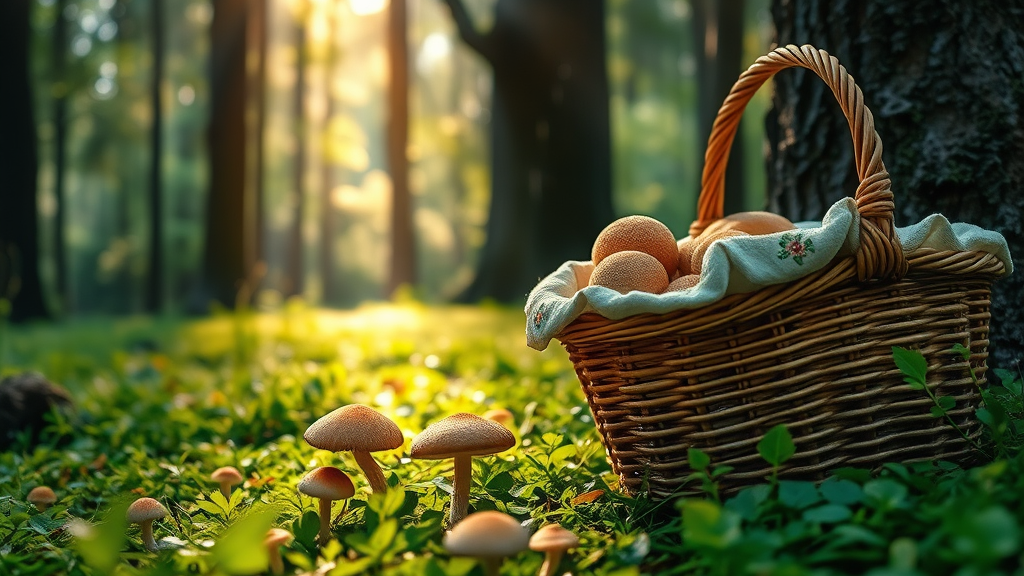
Choose favorable weather. Just after a rain followed by a humid sun, hidden away in the shadows of the forest. Not a stir of breeze among the wet trunks. The only sound, the drip drip of soaked leaves and the tiny scurrying of beetles and ants among the underbrush. Bring along a basket lined with embroidered cloth for collection and grandfather’s sharp knife for exploring beneath rotting logs, make sure you aren’t bitten by something waiting in the soaking darkness. Wear the right clothes. Tuck your tights into stockings and tie petticoats around knees. Wrap each leg carefully so nothing can be caught in the grasping, greedy branches. Walk carefully. Hold hands. Pick a partner. Step where she stepped.
Watch the ground carefully. Remember the legend of the boy who wouldn’t share his bread while he walked with his friends through the woods. He had a full mouth every time they looked back at him, so he spit out each guilty mouthful. The bread-droppings left a trail. They transformed into mushrooms, and that’s why when you find one there are always more nearby.
Once your basket is full bring it to the village examiner. Some mushrooms are safe, but some carry poisonous secrets. Some promise succor but silently wound. Some sing sweet songs but echo with a hollow gong. All taste sweet and feathery on first bite, but some have dark pools in their past. Bring home the good ones, but throw the rest into the stream and watch them float away.
Finally, prepare your soup. Mix the mushrooms with the right broth. Thin-sliced for clear soup. Thick-chunked for heavy stew. The mushrooms will take on the flavor of their companions. In this way they make good neighbors. They don’t betray secrets. They keep what is given to them. They protect what is beneath them. The preserve the family lineage deep below the earth.
Zary Fekete grew up in Hungary. He has a debut novella (Words on the Page) out with DarkWinter Lit Press and a short story collection (To Accept the Things I Cannot Change: Writing My Way Out of Addiction) out with Creative Texts. He enjoys books, podcasts, and many many many films. Twitter and Instagram: @ZaryFekete Bluesky:zaryfekete.bsky.social
This piece was originally published in Papers Publishing journal.
Please share this post to give it maximum distribution. Exposure is our writers’ only pay.
Financial donations through either our GoFundMe or Buy Me a Coffee accounts will help expand our global reach by paying for advertising, more advanced WordPress plans, and expansion into more extensive Content Delivery Networks.
Rural Fiction Magazine is on a mission to showcase the rich tapestry of rural experiences from around the globe. Whether you’re penning heartwarming tales, poignant poems, or insightful reviews on rural fiction books, we want your voice! Our open-minded approach means we welcome all genres—be it romance, horror, or magical realism—as long as it connects to rural life. Your story matters!
A Worldwide Platform for Diverse Voices
With contributors from 46* countries and counting, RFM celebrates the universal human experience. By submitting your work, you join a vibrant community that transcends borders. Share your unique perspective and connect with readers who appreciate the beauty and complexity of rural narratives.
RFM wants to develop talent, measuring it in a fair and equitable way to find hidden and disadvantaged talent in a world where not everybody has an equal chance to exhibit their abilities. RFM does not discriminate against anyone. The only personal criterium for publication is talent in use of English and in developing outstanding stories. Because RFM embraces the global community, RFM embraces differences, whether those are race, age, ethnicity, religion, gender, sexual orientation, or physical ability. RFM wants to see diversity in writing from around the world, from all time zones. RFM respects everyone’s voice and strives to create a culture in which people from all cultures, races, and backgrounds feel encouraged to express their ideas and perspectives. You can help our contributors gain exposure by sharing their works widely and also by back linking to them and to RFM’s homepage.
Fast Publication for Your Creative Work
No waiting indefinitely to see your words in print! At RFM, we pride ourselves on our efficiency—most submissions are published within weeks of acceptance. Get ready to inspire others and gain well-deserved exposure in English-speaking markets including the USA, UK, Canada, Australia, New Zealand, and Ireland.
Your Voice Matters – Take Action Today!
Ready to share your story? Visit our submissions page for detailed guidelines and join us in celebrating rural fiction’s diverse tapestry. Remember: while there’s no monetary compensation beyond publication credit and exposure, your writing will resonate with an audience eager for authentic voices like yours.
Spread the Word!
Please share this announcement far and wide to help us discover exceptional talent from every corner of the world!
Financial donations through either our GoFundMe or Buy Me a Coffee accounts will help expand our global reach by paying for advertising, more advanced WordPress plans, and expansion into more extensive Content Delivery Networks.
*These nations include Canada, United Kingdom, India, Austria, Taiwan, Australia, Thailand, Japan, Ireland, Germany, Poland, New Zealand, Lithuania, Indonesia, Costa Rica, Greece, Singapore, South Korea, France, Netherlands, Sweden, Norway, Nigeria, Finland, Saudi Arabia, Romania, South Africa, Mexico, Bangladesh, Italy, Palestinian Territories, Guatemala, Switzerland, Nepal, Portugal, Barbados, Kenya, Malta, Hungary, Spain, Ukraine, Turkey, Oman, Brazil, Estonia, and Pakistan.